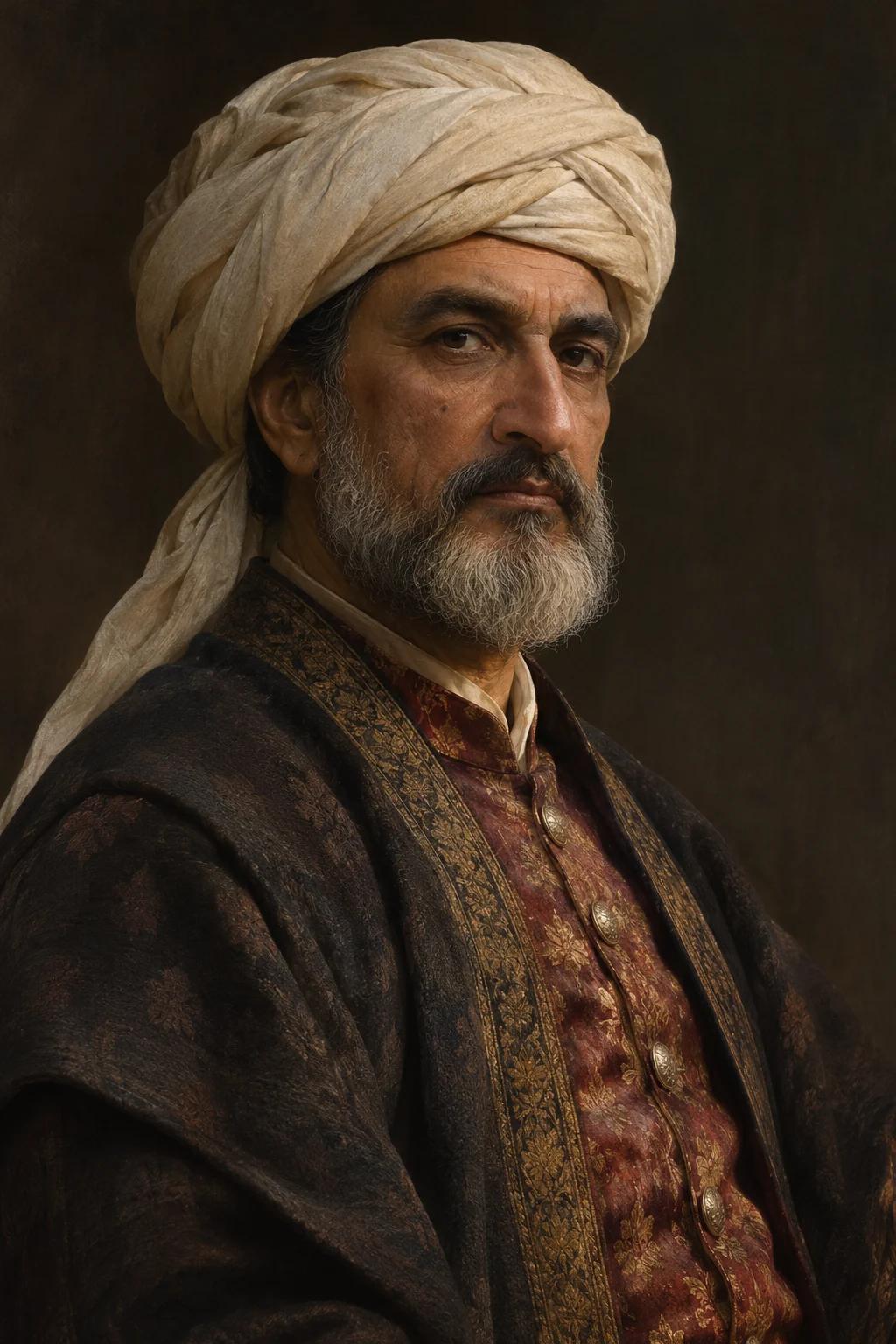
Akbar: A conqueror, administrator and religious questioner, Akbar built Mughal power through alliances and institutions while imposing devastating violence on opponents.
Born
1542 CE
Died
1605 CE
Role
Mughal emperor
Full name
Jalal al-Din Muhammad Akbar
Also known as
Akbar the Great
Region
South Asia, Northern India, Mughal Empire, Mughal India
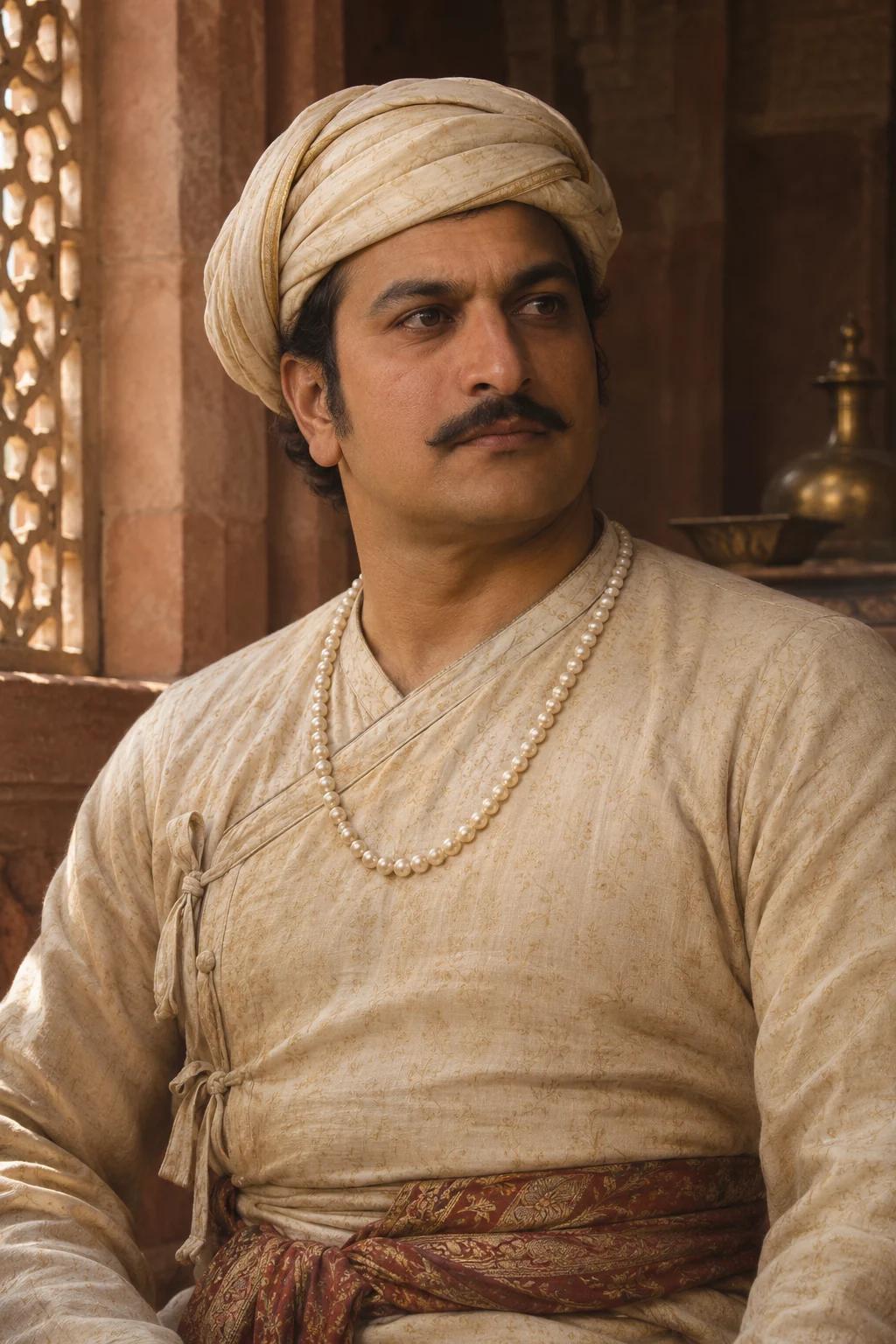
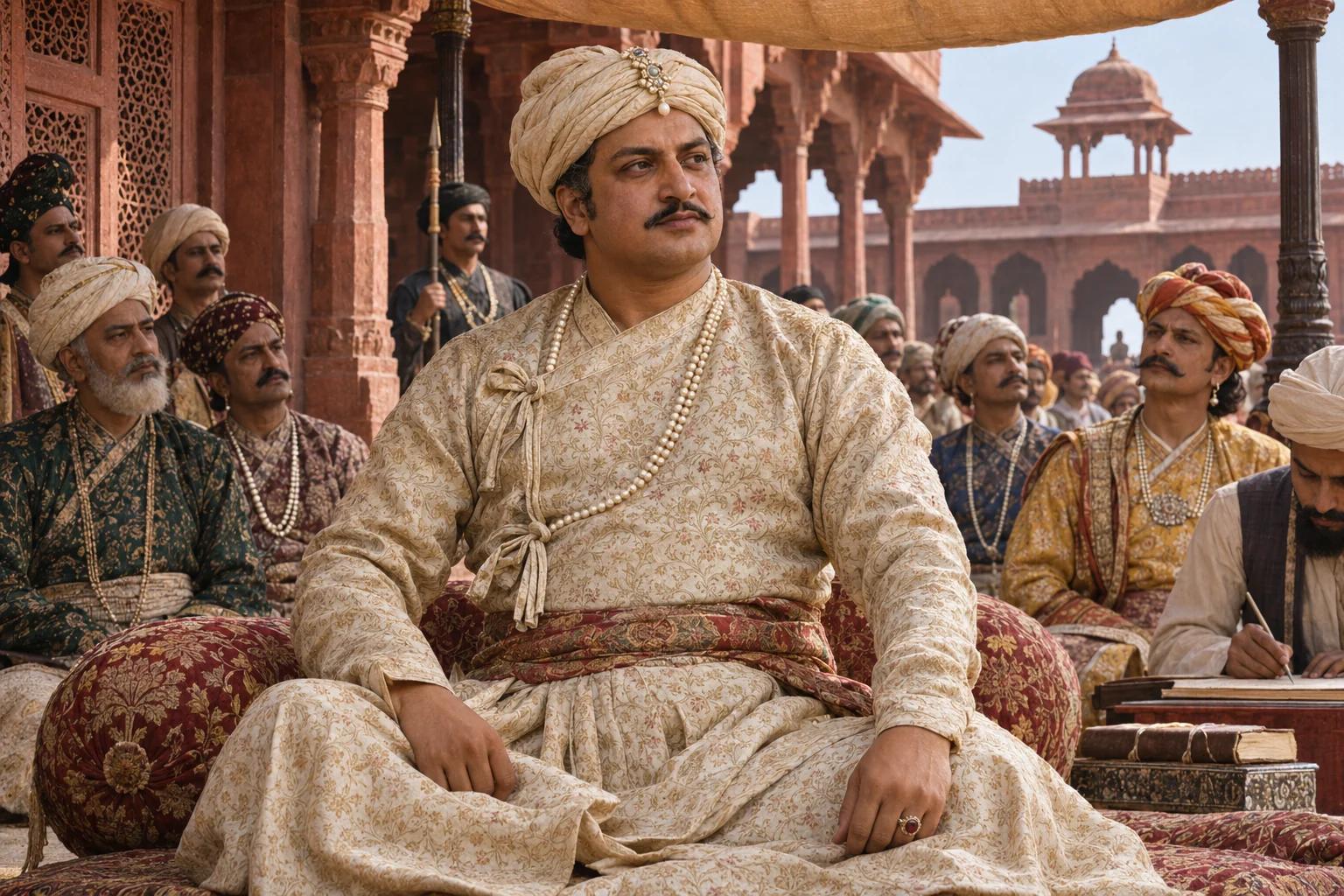
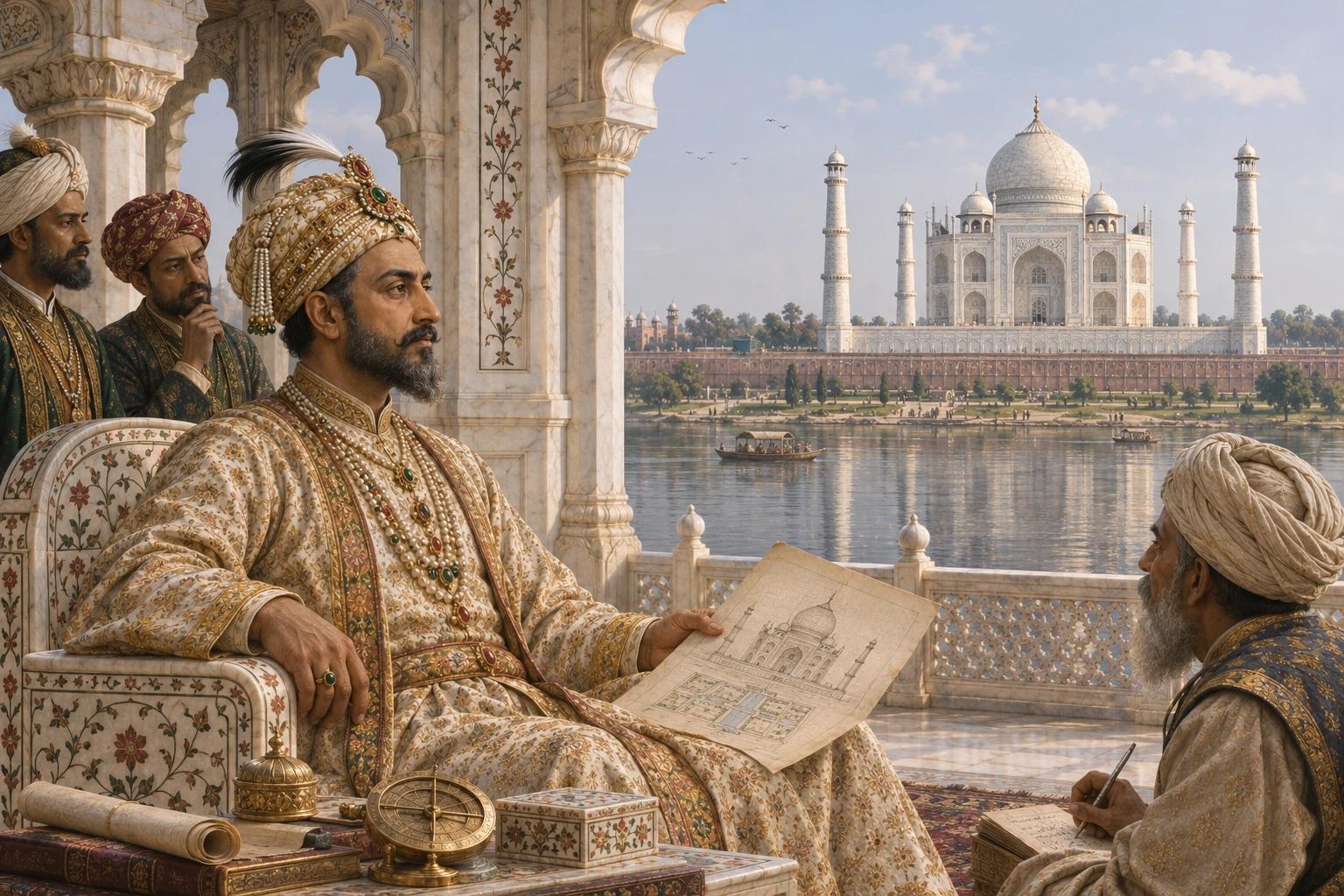
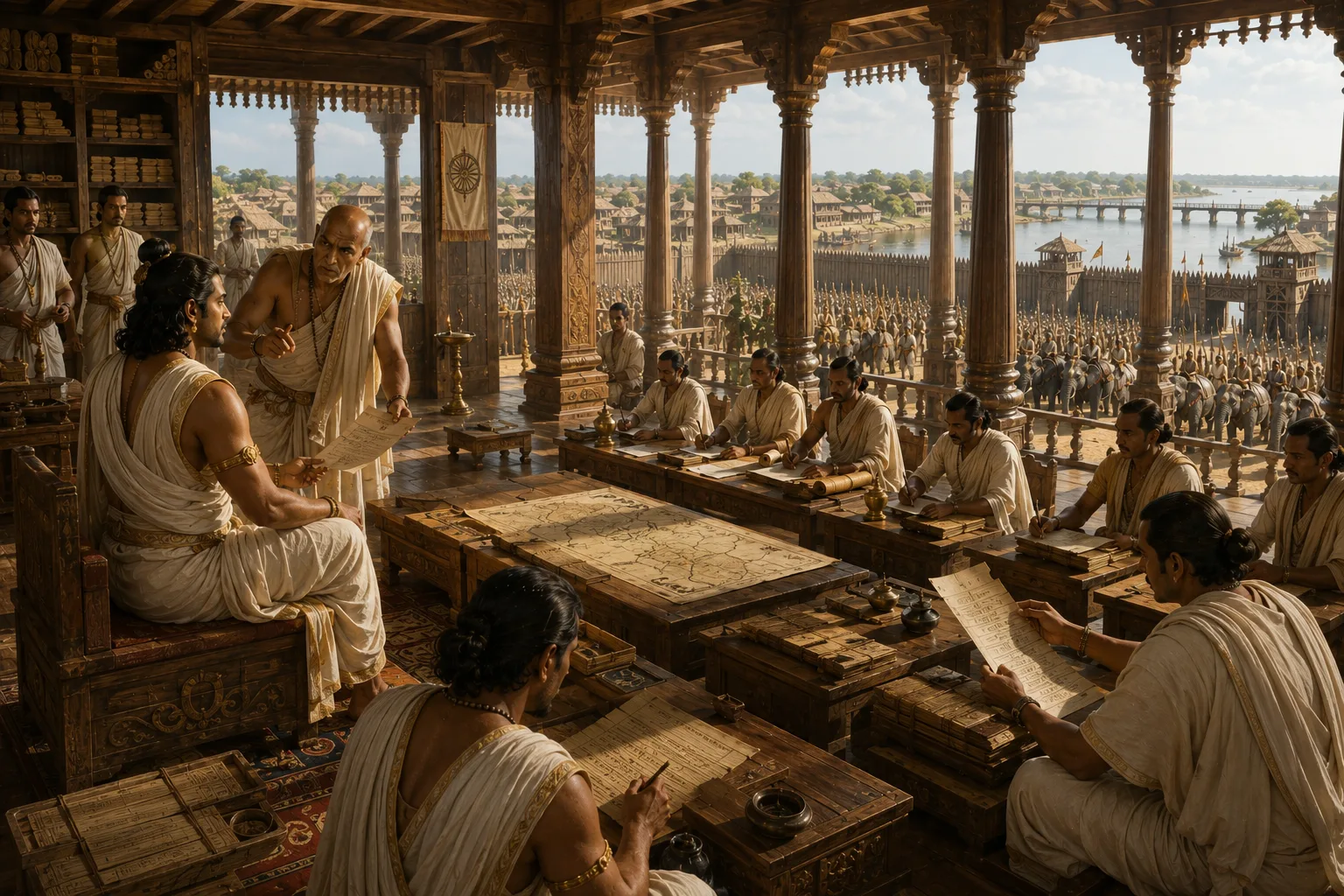
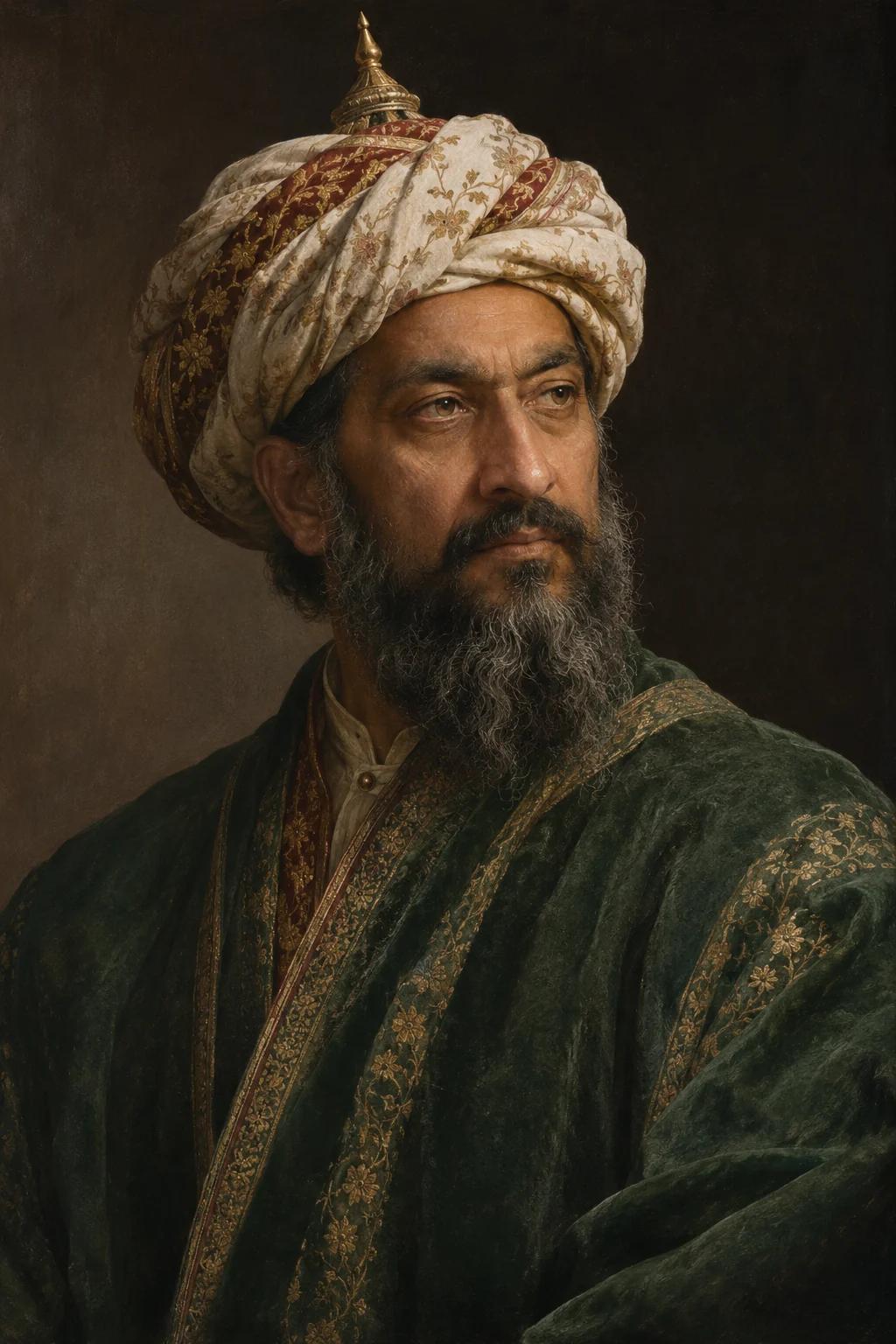
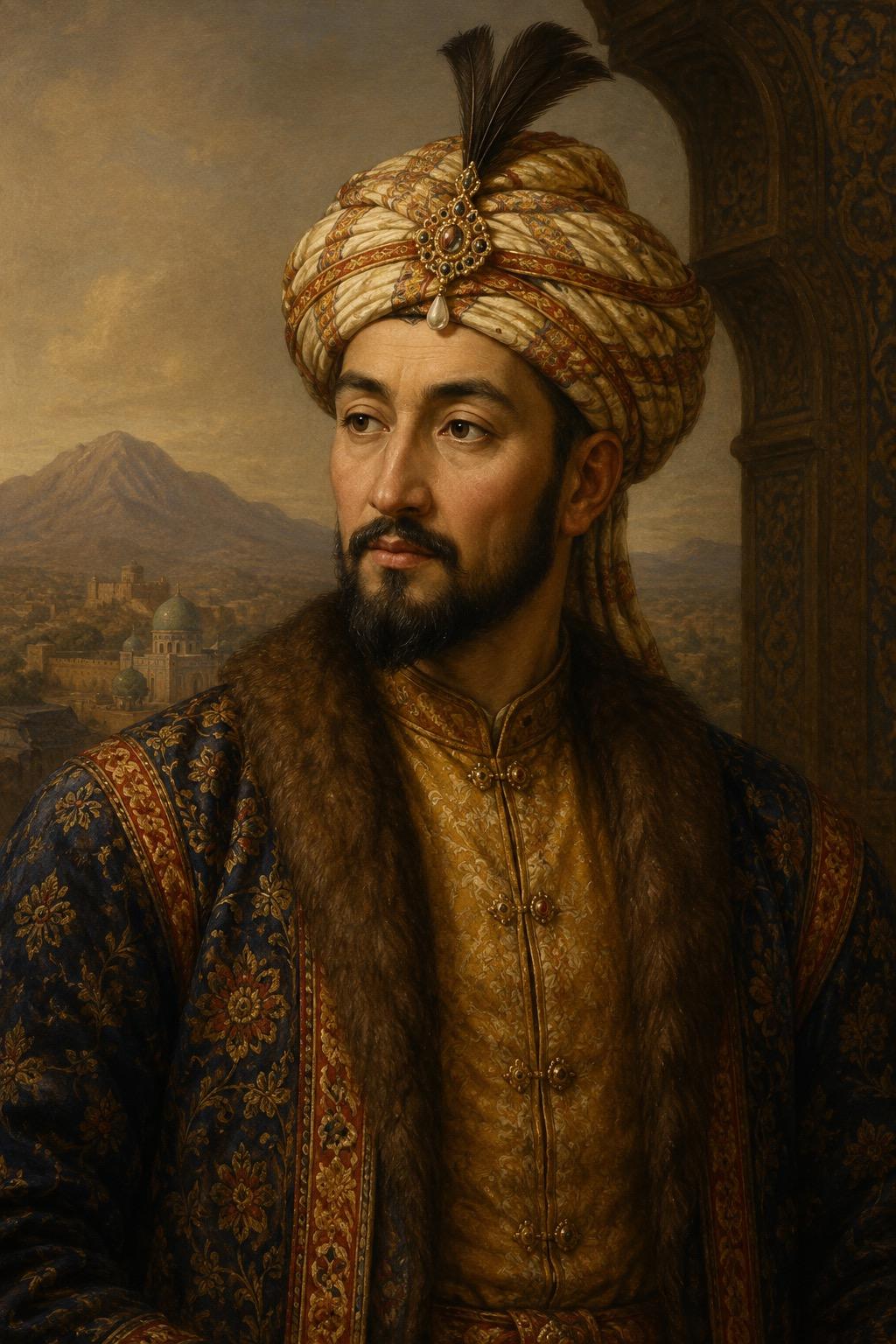
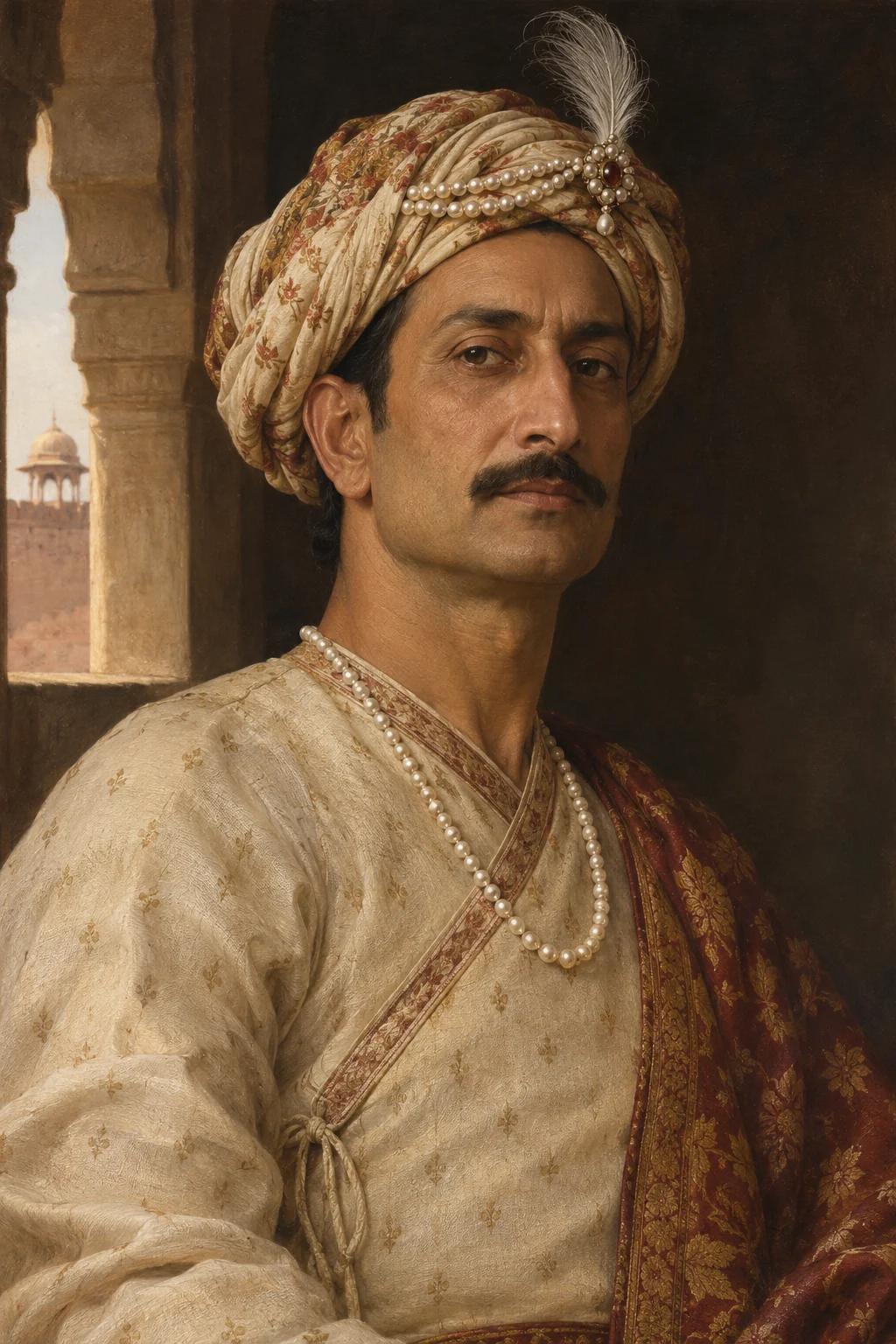
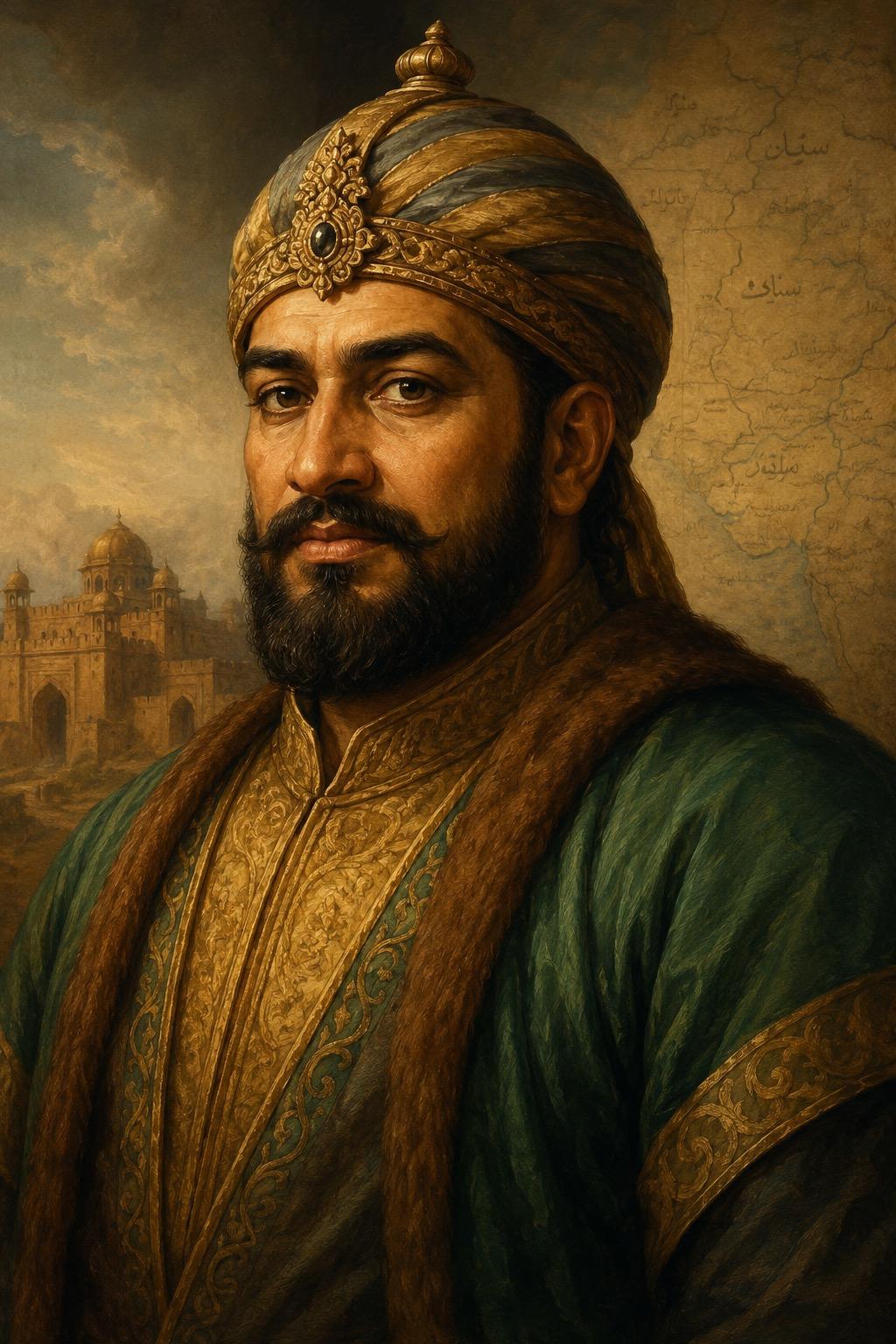
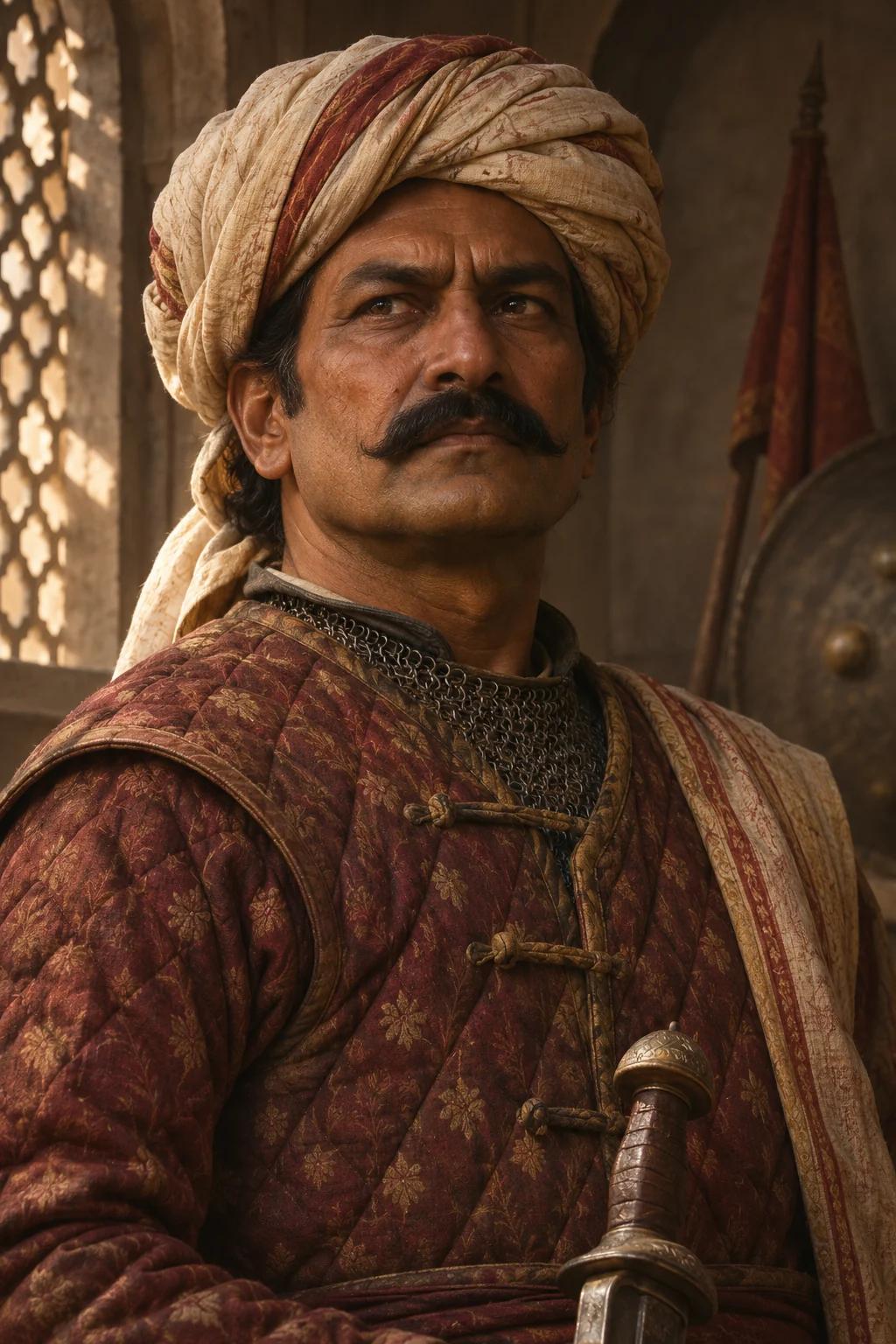
An illustrative reconstruction based on historical context. It is not a photograph or documentary likeness. Image policyAttribution
Life Journey
Conquest, curiosity and the demands of empire
Follow Akbar through nine stages of a distinct historical life.
Complete chronology
1542–1555
A child of the displaced dynasty
Akbar's early life was shaped by the loss of a kingdom, not by the settled magnificence later associated with the Mughals. His mother was Hamida Banu Begum. Humayun sought Safavid assistance while the child remained within the wider dynastic household. Kabul eventually provided a more secure base, though family rivalries continued. Riding and hunting developed alongside an uneven formal education. His later reliance on books read aloud shows that limited literacy did not prevent a sustained interest in learning.
1556
The crown and Panipat
The accession at Kalanaur followed Humayun's death in January. Hemu's occupation of Delhi in October demonstrated the weakness of the restoration. At Panipat on 5 November, Hemu was wounded and captured; his subsequent execution is secure, but accounts differ over Akbar's personal part in it. Later imperial accounts had reasons to shape the young ruler's character. Victory recovered the central cities without ending Afghan resistance or making the regency unnecessary.
1560–1562
Becoming the ruler in person
Dismissal in 1560 was followed by rebellion, submission and pardon. Bairam's murder in Gujarat in 1561 was a separate act by an Afghan assailant, not an imperial execution. Maham Anga's influential circle remained important after the regency. When her son Adham Khan murdered Ataga Khan in 1562, Akbar ordered Adham's death. These events asserted the emperor's control over his servants without removing the personal networks on which government depended.
1562–1569
Alliance beside massacre
Rajput service brought commanders and regional influence into the imperial coalition, while offering participating houses opportunities and protection. Mewar's refusal exposed the coercion behind imperial accommodation. At Chittor, the killing extended beyond a professional garrison to inhabitants. Abu'l Fazl's figure of roughly 30,000 cannot be independently checked, but his account explicitly records a general massacre. Akbar's later reputation for religious openness must be assessed alongside his deliberate use of terror against resistance.
1572–1576
Reaching the coast and the east
Gujarat linked the empire to wealthy textile towns and Arabian Sea trade. The fall of Surat in 1573 did not prevent renewed resistance, requiring Akbar's rapid return. In the east, campaigns against Daud Khan Karrani culminated at Rajmahal in 1576. Daud's execution ended his dynasty's rule without extinguishing Afghan opposition. Territorial acquisition increased the resources Akbar could claim and the cost of turning those claims into lasting authority.
1570s–1580s
Ranking servants and assessing fields
Mansabdari placed leading servants within a numerical hierarchy. Jagirs assigned revenues rather than private ownership of land. Todar Mal and other officers helped refine measurement and assessment; the dahsala settlement used ten-year information to establish rates in suitable regions. Practice varied beyond the surveyed core. These institutions made imperial resources more predictable while leaving cultivators exposed to harvest failure, war and the conduct of collectors. Administrative strength was not the same thing as rural security.
1571–1585
Building and questioning
The manuscript workshops combined Persianate and Indian skills and selectively absorbed European artistic ideas. Sanskrit works entered Persian through collaborative translation. The Ibadat Khana discussions, begun in 1575, widened beyond Muslim scholars. Sulh-i kul offered a language of peace among communities, while spiritual discipleship centred on the emperor. Din-i Ilahi should not be described as a mass religion replacing his subjects' traditions. His experiments joined intellectual enquiry to the authority of kingship.
1580–1604
Expansion and a rebellious heir
The eastern revolts of 1580 and Mirza Hakim's challenge from Kabul showed the limits of central control. Kashmir, lower Sindh and parts of the Deccan later came under Mughal authority through force and negotiation. Salim's establishment at Allahabad around 1600 challenged his father from within the ruling house. In 1602, he arranged the assassination of Abu'l Fazl through Bir Singh Deo. The emperor's political system could organise service more effectively than it could regulate succession.
1605 and beyond
An inheritance with unfinished wars
The successful succession showed the resilience of the coalition built during Akbar's reign. Its ranks, revenue assignments and court institutions continued through adaptation under later rulers. Painting and architecture developed further, supported by wealth drawn from the countryside. Mewar and the Deccan remained unfinished problems. Akbar's significance lies in the durability and range of his state-building, not in an imagined freedom from violence or contradiction. The ruler who made room for new allies also imposed devastating costs on those who resisted.
Continue in context
Connected stories
Move from the profile into the wider events and settings this figure belongs to.
This profile is written for educational use and connects to related Stories of History pages. The main portrait is an AI-assisted historical reconstruction, included as an illustrative aid rather than documentary evidence. Image policyImage attribution