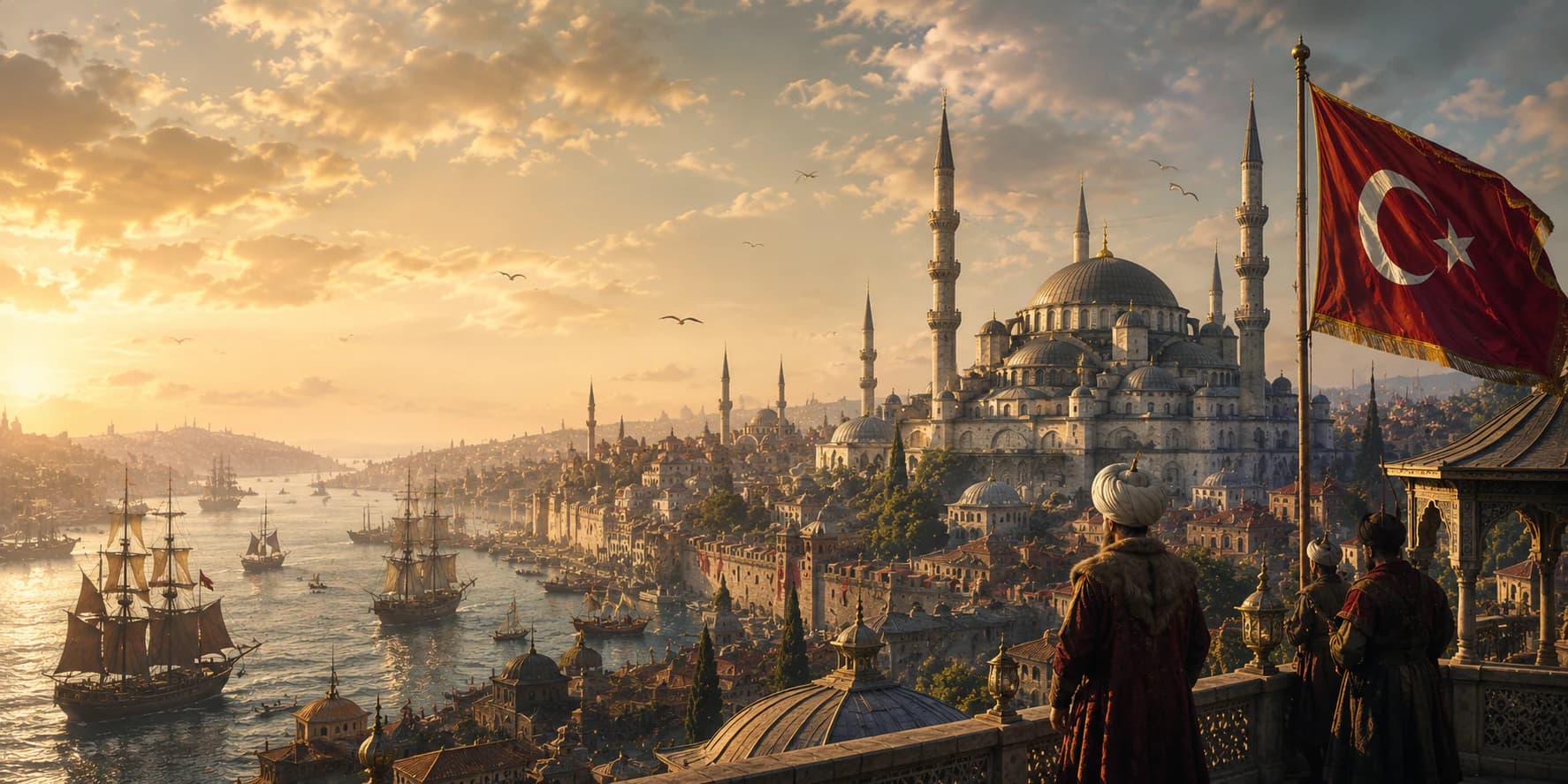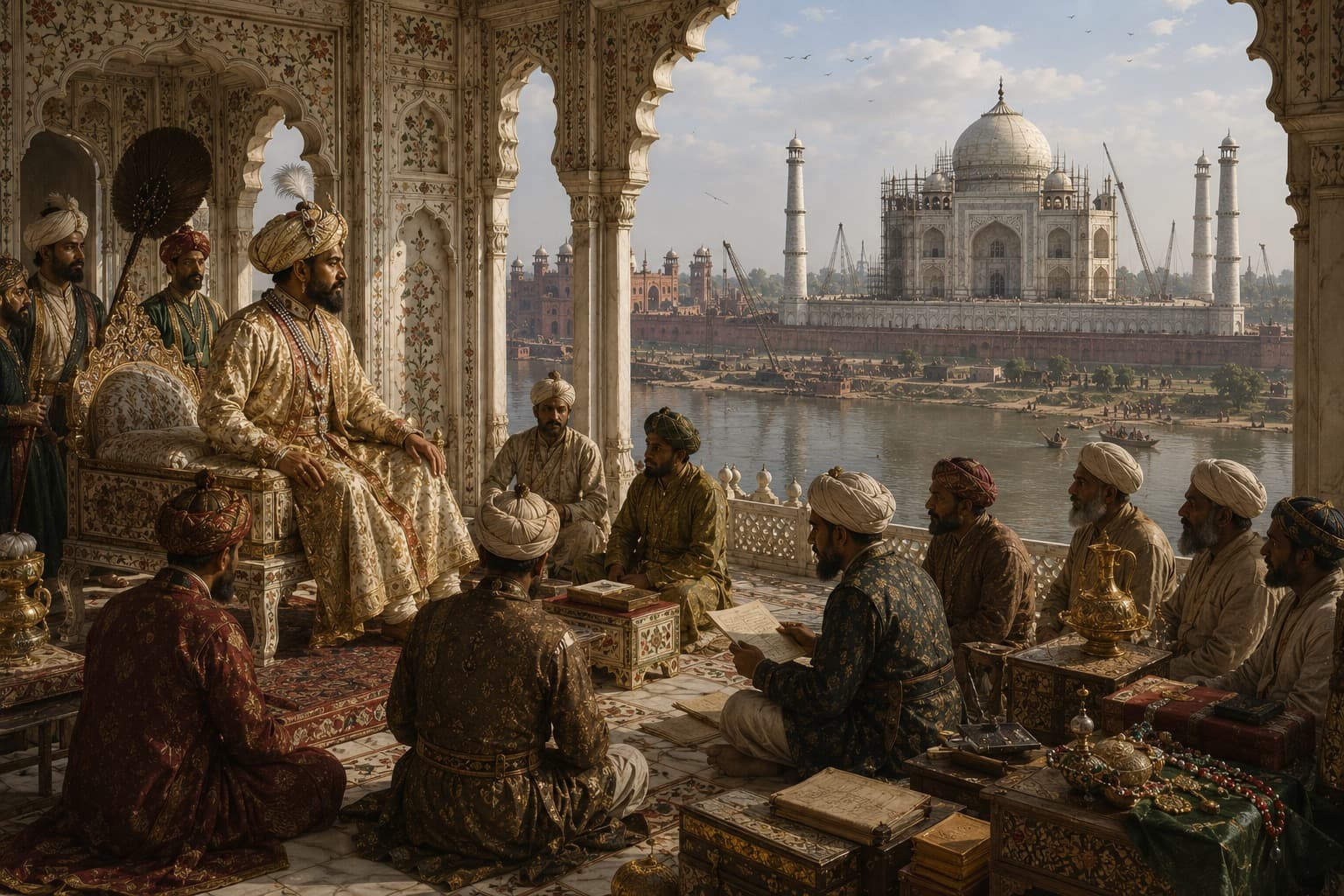
Mughal emperor and courtiers in a richly decorated palace overlooking the Taj Mahal under construction beside the Yamuna River.
Premium Story

The Mughal Empire

Follow the Mughal Empire from Babur's conquest and Akbar's state-building to imperial splendour, overextension and the sack of Delhi.

Start the storyExplore Premium

11 chapters · 20 min read

Next
Context

Introduction

Overview

Babur's victory at opened the way for Mughal rule in northern India, but his successors had to rebuild the empire after exile and defeat. Akbar turned that fragile inheritance into a durable state through alliances, revenue systems and provincial government. Later rulers presided over great wealth and artistic achievement, even as costly wars and growing regional power strained the imperial centre.

Key forces

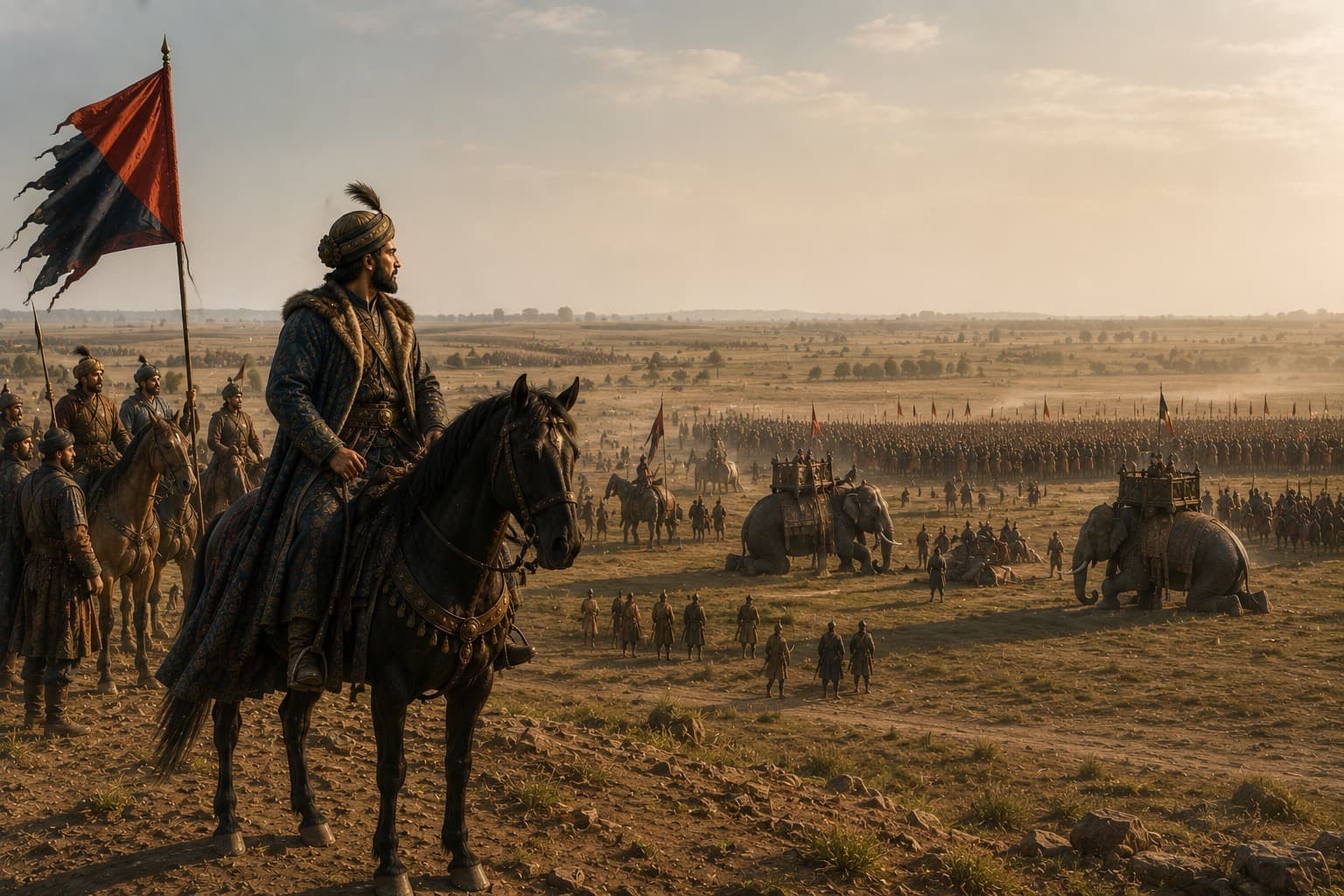
Babur surveys the battlefield at Panipat as Mughal cavalry, artillery and war elephants gather across northern India.
1526 CE
Step 1 of 101526 CEAccessible mode

Babur Conquers Northern India

In 1526, Babur defeated Ibrahim Lodi at the First Battle of and opened the Mughal age in northern India.

Babur did not arrive with the largest army. Ibrahim Lodi, the sultan of , could draw on far greater numbers and war elephants.

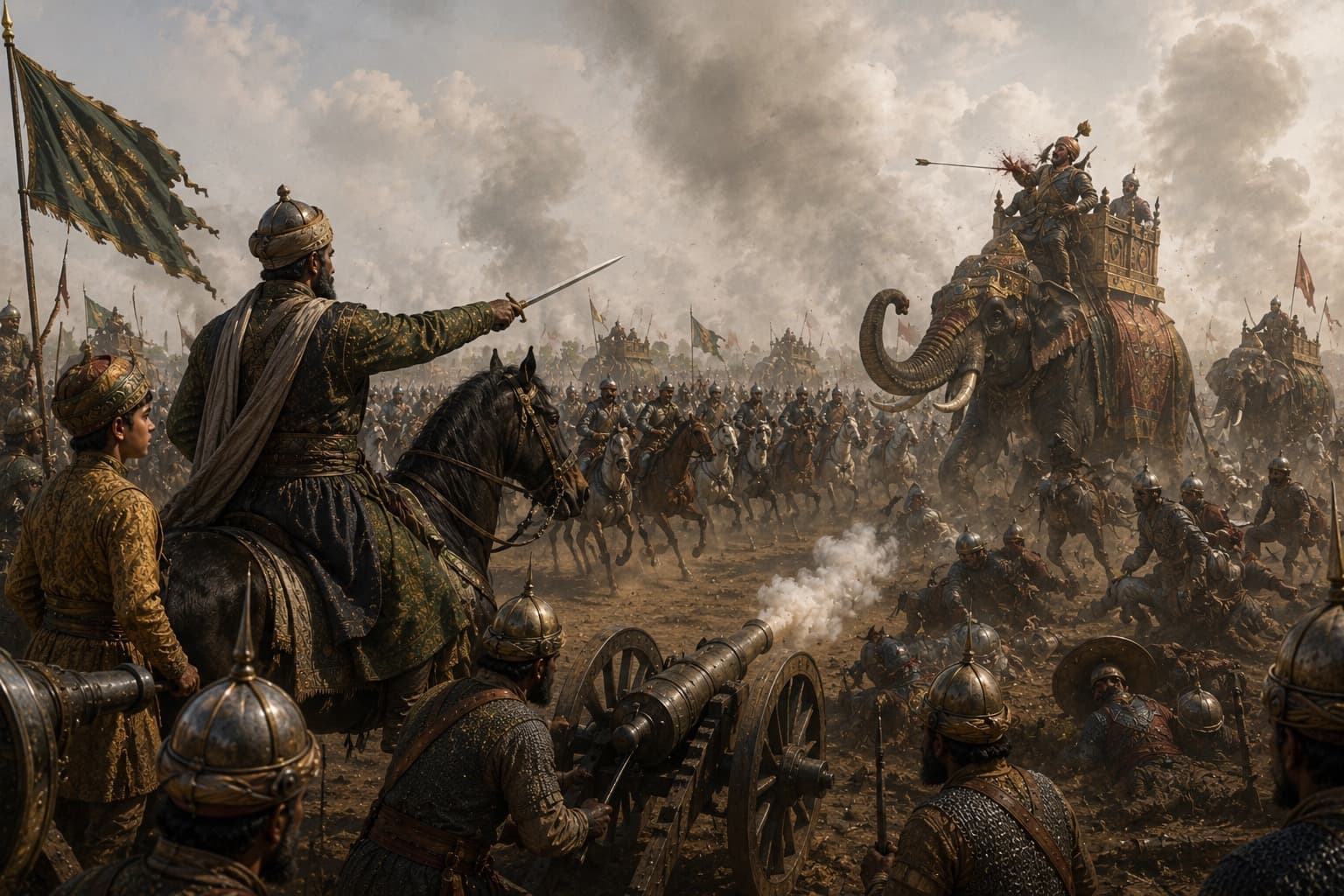
Babur's advantage lay in organisation. His army used field artillery, matchlock firearms, carts linked into a defensive line, and mobile cavalry tactics.

The guns disrupted Lodi's advance, while Babur's cavalry threatened the flanks. A smaller force could therefore fight with discipline instead of being swallowed by numbers.

Ibrahim Lodi was killed in battle. and fell to Babur soon after, giving him treasure, territory and political legitimacy.

did not make the empire secure, but it created the foundation. The Mughals now had a foothold in the richest political heartland of northern India.

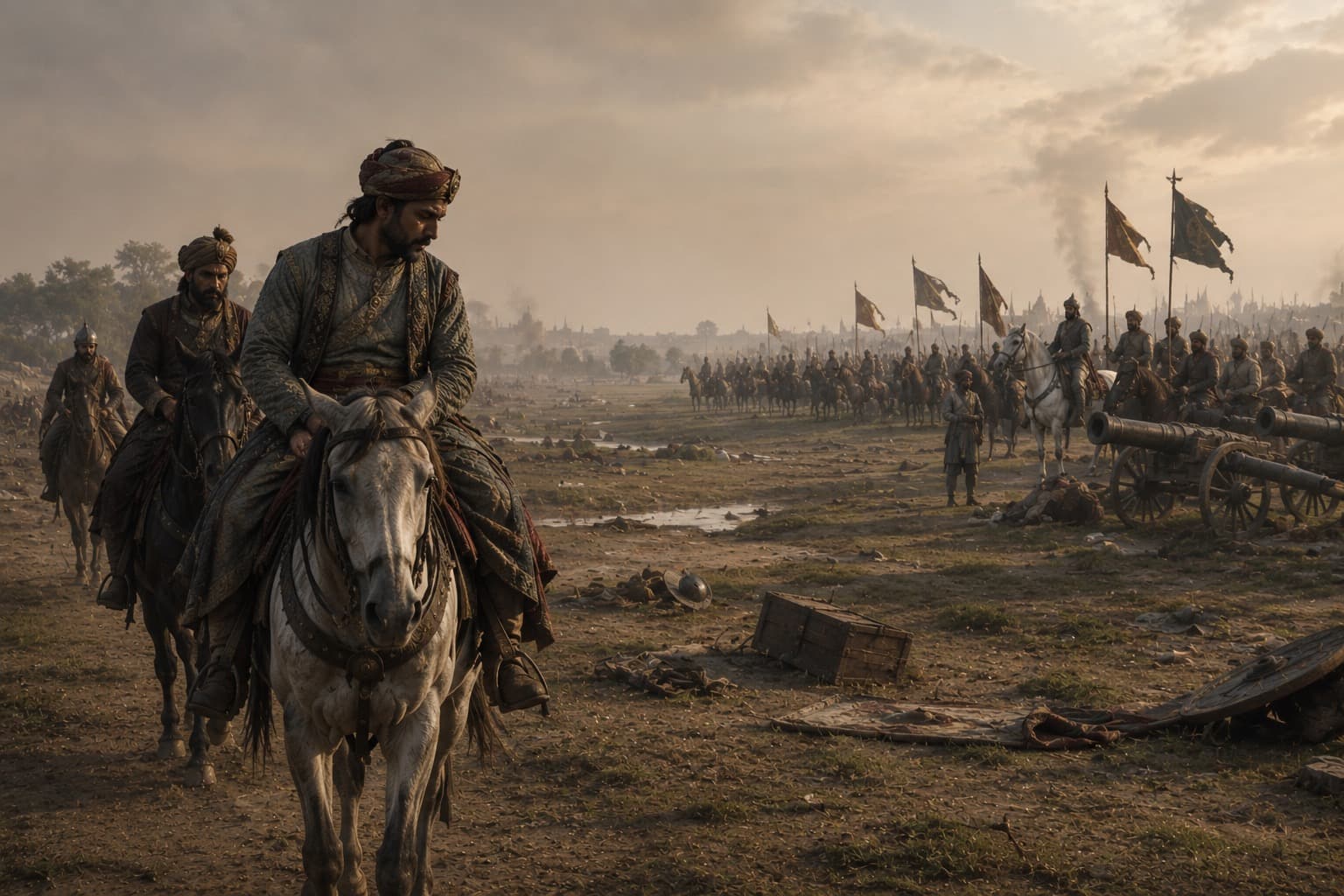
Humayun rides away from a defeated battlefield after losing Mughal power to Sher Shah Suri.
1540 CE
Step 2 of 101540 CEAccessible mode

Humayun Loses the Empire

In 1540, Humayun lost the empire his father had founded when Sher Shah Suri defeated him.

Babur's conquest had been dramatic, but the Mughal state was still young. It depended heavily on the ruler's authority, loyal commanders and control of key cities.

Sher Shah Suri, an Afghan leader of great ability, challenged Humayun and defeated him after a series of setbacks, including the battle near .

Humayun fled into exile. For years, Mughal rule in India disappeared, showing that Babur's victory had not yet produced a stable imperial structure.

Sher Shah's rule was brief, but important. His administration strengthened roads, revenue practices, military organisation and provincial control.

The Sur interlude became a lesson. Later Mughal rulers, especially Akbar, would build a stronger empire partly by learning from the system that had replaced them.

Premium2 of 10 chapters read

Akbar Secures Mughal Rule

Read the full arc from Babur's conquest to Akbar's imperial system, Mughal splendour, overextension and the sack of Delhi.

Continue the story with Premium

Coming next

  1. Chapter 3Akbar Secures Mughal Rule
  2. Chapter 4Akbar Builds an Imperial System
  3. Chapter 5Akbar's Policy of Tolerance

And 5 more chapters to follow.

Explore connected stories

Follow the connected history

Explore closely connected stories and free figure profiles. Premium stories open with a public preview.

Unlock full storyBrowse stories

References

Sources & Further Reading

Reliable sources, primary-source collections and reading paths connected to this page.

Sources used

  1. District Administration Panipat, “First Battle of Panipat (1526),” Open source
  2. District Administration Panipat, “Second Battle of Panipat (1556),” Open source
  3. Encyclopaedia Iranica, “Akbar I,” Open source
  4. Encyclopaedia Iranica, “Jahangir,” Open source
  5. UNESCO World Heritage Centre, “Taj Mahal,” Open source
  6. SOAS Research Online, “Deccan Sultanates,” Open source
  7. Library of Congress, “Emperor Aurangzeb at the Siege of Golconda, 1687,” Open source
  8. Encyclopaedia Iranica, “Nader Shah,” Open source

Further reading

  1. John F. Richards, The Mughal Empire, Cambridge University Press.
  2. Catherine B. Asher and Cynthia Talbot, India Before Europe, Cambridge University Press.

Reviewed claim sources

Loading reviewed claim sources...

A monthly route through history

Find out first about the latest published stories, feature notes and occasional Premium offers in one monthly email.