← People

Jahangir

Jahangir: As Prince Salim he challenged Akbar; as Jahangir he inherited an imperial coalition, developed a remarkable artistic court and faced rebellions within his own family.

Born
1569 CE
Died
1627 CE
Role
Mughal emperor
Full name
Nur al-Din Muhammad Jahangir
Also known as
Prince Salim
Region
South Asia, Northern India, Mughal Empire, Mughal India

Mughal emperor (1569-1627)

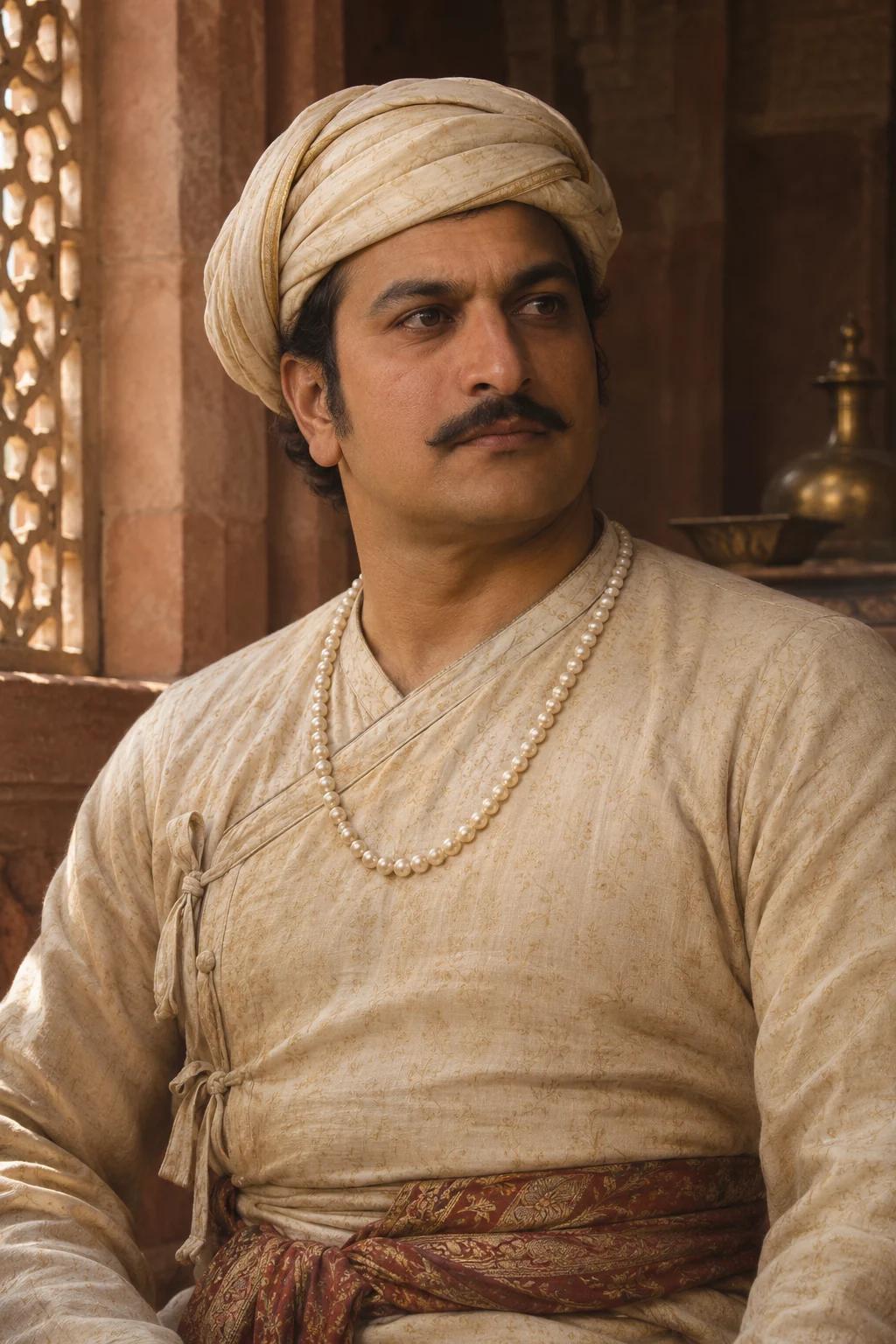
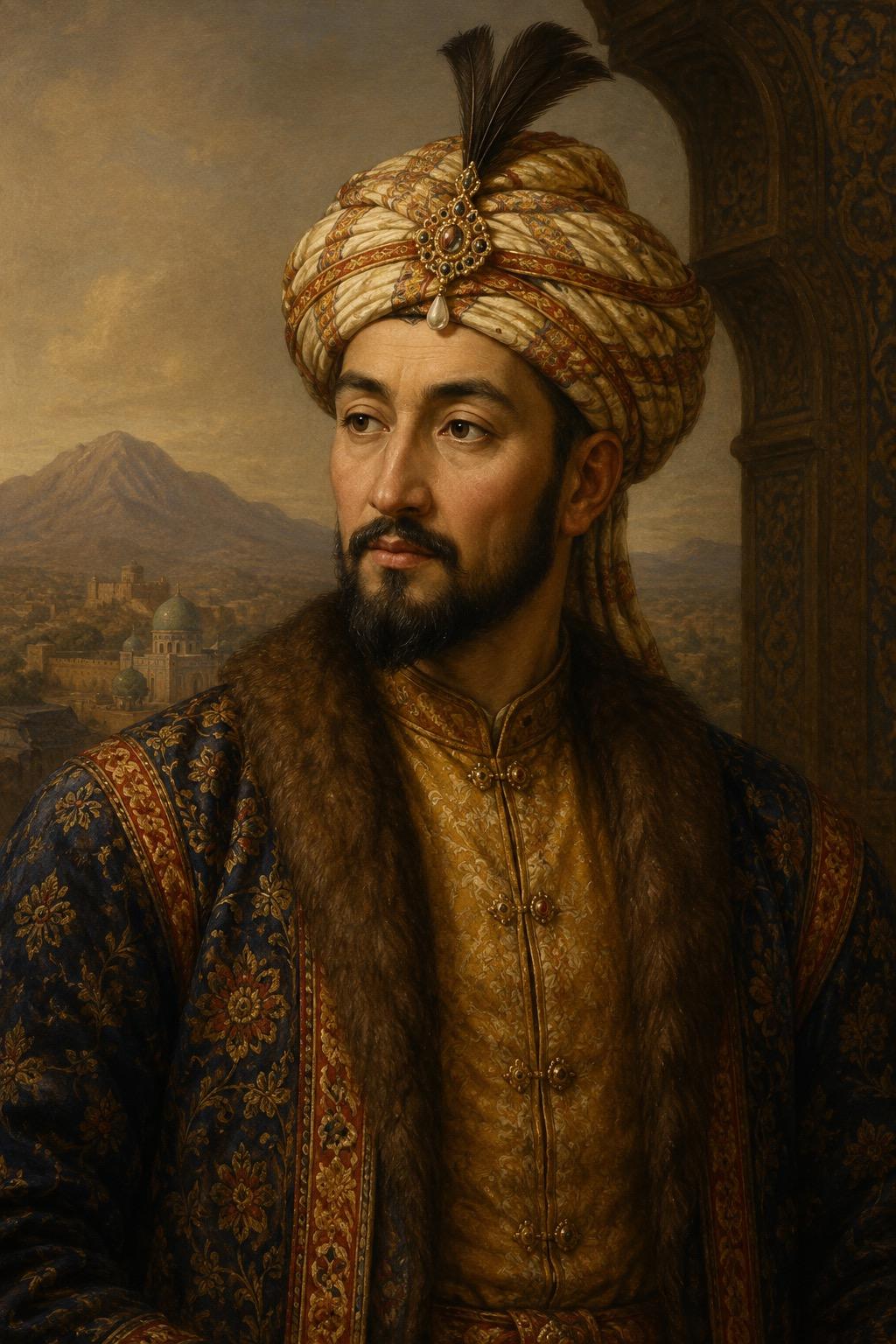
Illustrative reconstructed portrait of Jahangir in period clothing; an approximate likeness.
AI-assisted historical reconstruction

An illustrative reconstruction based on historical context. It is not a photograph or documentary likeness. Image policy Attribution

Life Journey

The heir who challenged the throne he inherited

Follow Jahangir through nine stages of a distinct historical life.

Complete chronology

1569–1570s

Salim, the long-awaited son

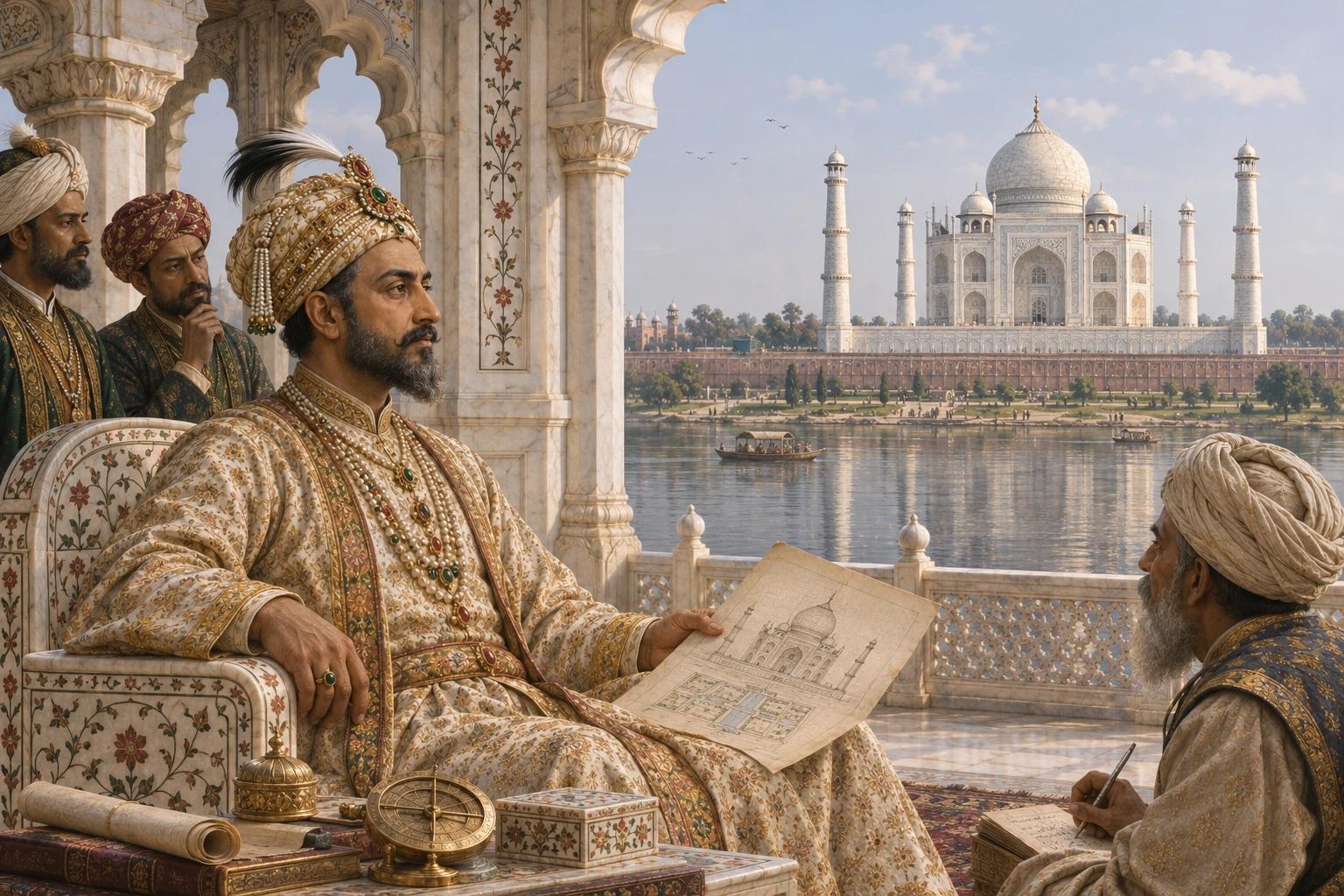
The circumstances of Salim's birth joined the dynasty to both a Rajput ruling house and a revered devotional figure. Fatehpur Sikri became a setting for his childhood and a statement of imperial confidence in succession. That confidence did not settle how an adult prince should exercise power while his father continued to reign. Salim's later career would repeatedly expose the tension between being recognised as an heir and being allowed to command independently.
1570s–1580s

Educated for imperial life

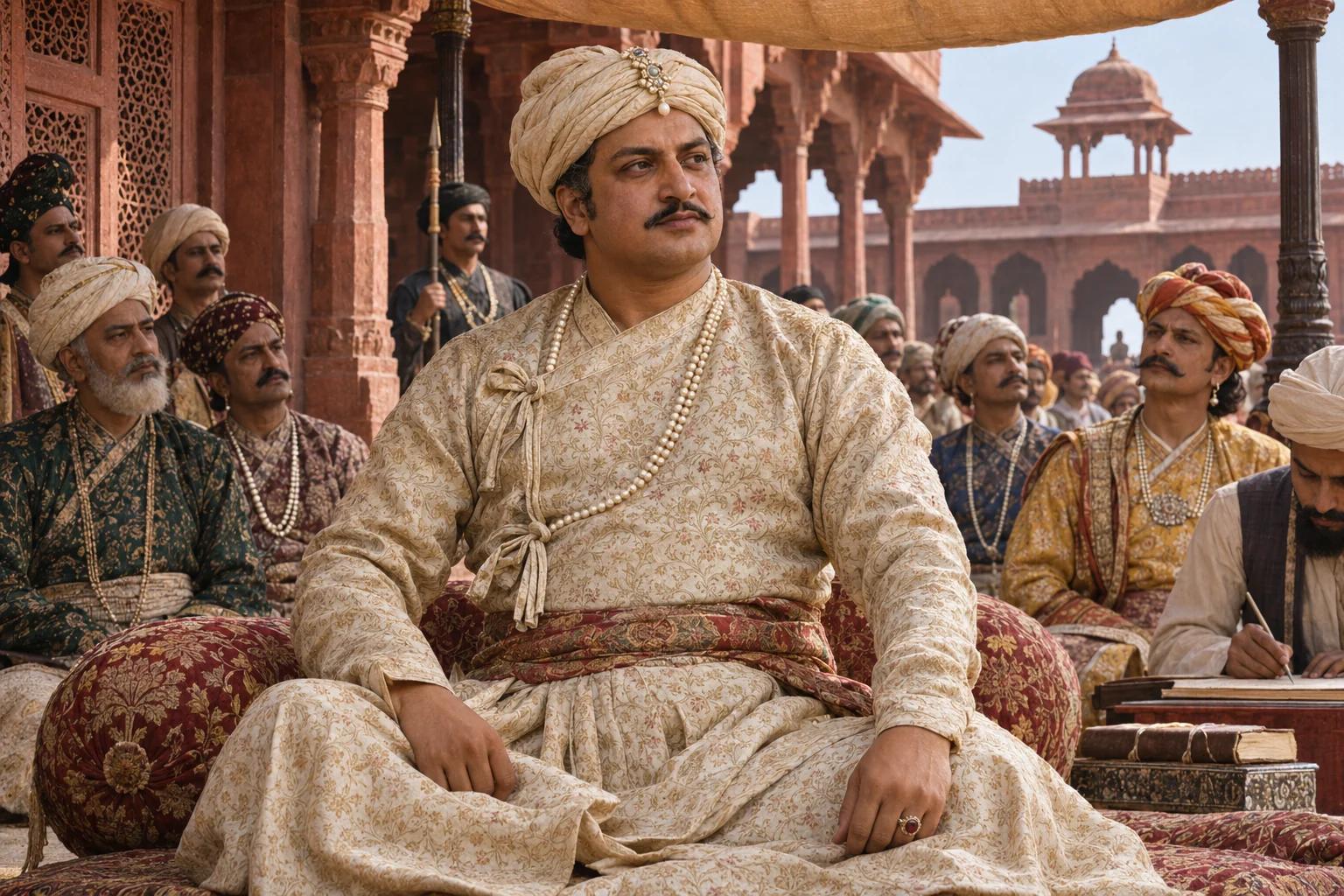
The court offered access to Persian literature, military training and a rich culture of visual observation. His development should not be presented simply as rebellion against his father's intellectual world. He inherited many of its skills and interests. At the same time, remaining close to the imperial household could make it difficult to establish an independent political identity. The prince's education prepared him to rule without guaranteeing a clear path to doing so.

1580s–1590s

Building a following

Mughal succession did not operate through a rule of automatic primogeniture accepted beyond dispute. A prince's prospects depended on supporters, competence, kinship and the emperor's favour. Marital alliances helped create a political network, while sons such as Khusrau and Khurram could eventually become rivals as well as heirs. Salim's developing position therefore belonged within the same system of competitive dynastic authority that had complicated earlier Mughal reigns.

Around 1600–1602

A rival centre at Allahabad

The conflict was more than a disagreement between father and son. A prince with a court and military following could redirect the expectations of officials and commanders. Salim's acts of authority challenged Akbar's claim to undivided sovereignty. His political prospects improved when alternative sons died or became less viable, but his rebellion also supplied reasons for nobles to consider other candidates. The succession remained a contest over who could command the imperial coalition.

1602

Removing Abu'l Fazl

Abu'l Fazl was returning from the Deccan when he was killed. Jahangir's later admission makes responsibility clearer here than in many disputed episodes of court history. The killing demonstrates the violence behind a prince's struggle for access and influence. It should not be softened into a literary feud, or explained through invented private conversations. A senior imperial servant lost his life because his loyalty to one ruler threatened the ambitions of the next.

1603–1605

Reconciliation and accession

Reconciliation reduced the immediate danger without erasing distrust. Akbar's final years brought further losses within the dynasty, and Khusrau retained supporters. Salim's accession nevertheless preserved the continuity of the state. He inherited a developed hierarchy of service, revenue arrangements and alliances rather than rebuilding the realm from exile as Humayun had done. The new title, meaning conqueror of the world, expressed an expansive claim whose practical limits remained substantial.

1606–1610

Justice proclaimed, rebellion punished

The emperor's memoir describes public justice and access to his authority, including a celebrated chain by which petitioners could seek attention. These claims coexist with severe punishment of rebels and Khusrau's confinement. Guru Arjan's death followed the crisis, but the full motives and circumstances require attention to Sikh as well as imperial traditions. It should not be reduced to a confident single-cause account. Jahangir continued aspects of Akbar's accommodation while also making choices with deeply damaging religious consequences.

1611–1622

Nur Jahan, art and imperial government

Nur Jahan's authority rested on her own ability and family networks as well as the emperor's confidence. Describing her simply as a manipulator of an inactive husband obscures their political partnership. Jahangir's patronage encouraged close observation, portraiture and the study of animals and plants, while his memoir fashioned a distinctive imperial voice. The settlement with Mewar in 1615 and Safavid capture of Kandahar in 1622 show both continuing reach and serious reverses during his reign.

1622–1627 and beyond

A mobile court and a contested ending

The emperor's declining health did not stop struggles over access to his person and the future throne. Nur Jahan's influence and competing princely networks shaped the court's final crises. Jahangir died while travelling from Kashmir towards the Punjab; succession again required political and military action rather than the calm operation of a fixed rule. His reign left a rich artistic and autobiographical record, alongside evidence that the institutions inherited from Akbar could sustain an empire without making its ruling family secure.

Continue in context

Connected stories

Move from the profile into the wider events and settings this figure belongs to.

More connected stories

Keep exploring

Content note

This profile is written for educational use and connects to related Stories of History pages. The main portrait is an AI-assisted historical reconstruction, included as an illustrative aid rather than documentary evidence. Image policy Image attribution

References

Sources and historical notes

Sources used to check this page, selected recommendations and historical notes.

Sources used

  1. Jahangir / Packard Humanities Institute, “Tuzuk-i-Jahangiri, Rogers translation revised by H. Beveridge, volume I,” accessed 11 November 2026.

    Consulted accession, justice, princely conflict, admission of responsibility for Abu’l Fazl’s murder, Nur Jahan and artistic interests. Distinguish imperial self-presentation from the translator’s commentary.

    Open source
  2. Jahangir / Packard Humanities Institute, “Tuzuk-i-Jahangiri, Rogers translation revised by H. Beveridge, volume II,” accessed 11 November 2026.

    Consulted later reign, Kandahar crisis and the limits of memoir coverage. Later events beyond the emperor’s own record require separate evidence; the translator’s judgement of Nur Jahan is not adopted.

    Open source
  3. Lisa Balabanlilar / Encyclopaedia Iranica, “Jahangir,” accessed 11 November 2026.

    Succession, court, Nur Jahan and later reign. Conflicting converted dates and a compressed household chronology are not repeated; chapters 9–10 and Jahangir profile.

    Open source
  4. Abu'l Fazl / Packard Humanities Institute, “Akbarnama, volume III, translated by H. Beveridge,” accessed 11 November 2026.

    Consulted Gujarat, eastern campaigns, ten-year revenue settlement, religious discussions, Todar Mal and later political chronology; chapters 5–10. Includes later continuation material: do not attribute all final events to the author killed in 1602.

    Open source
  5. Victoria and Albert Museum, “The Arts of the Mughal Empire,”

    Places Jahangir’s patronage of painting and natural history within Mughal court culture.

    Open source

Additional sources and notes

Loading reviewed claim sources...

Our editorial approach · Report a historical error

A monthly route through history

Find out first about the latest published stories, feature notes and occasional Premium offers in one monthly email.