Accessible gives a lighter overview. Deep Dive tells the fuller story.
Quick Answers
Who was Akbar the Great?
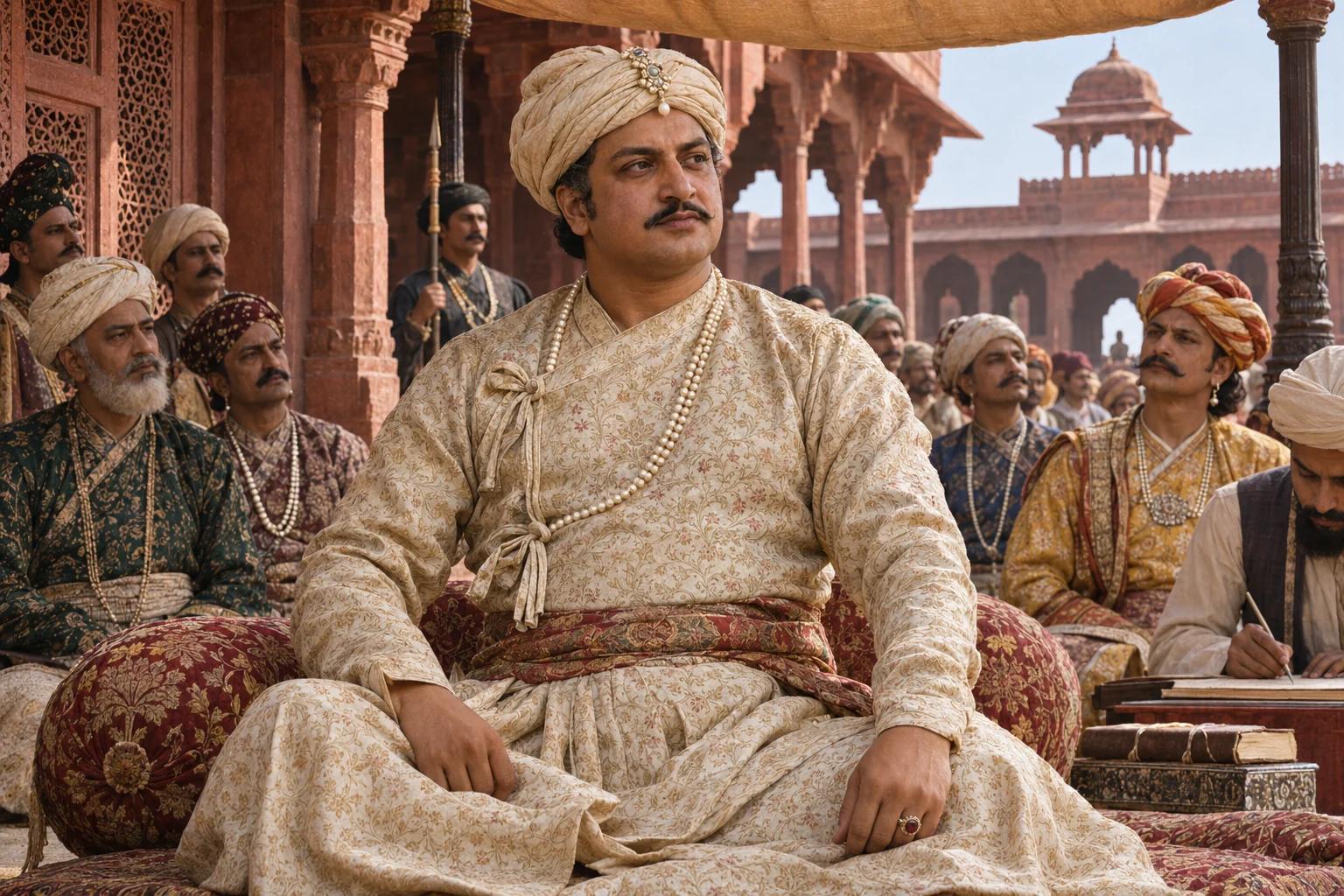
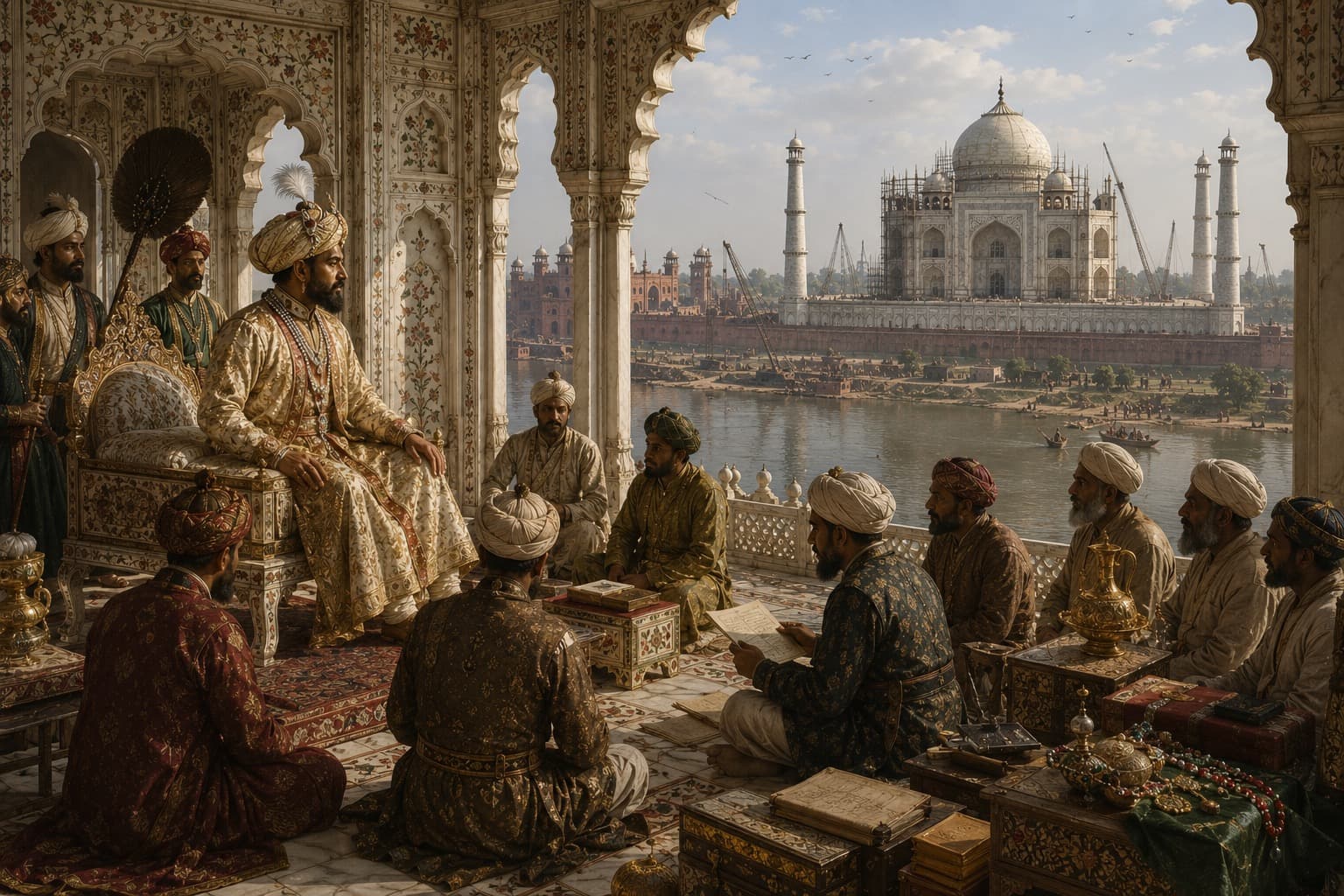
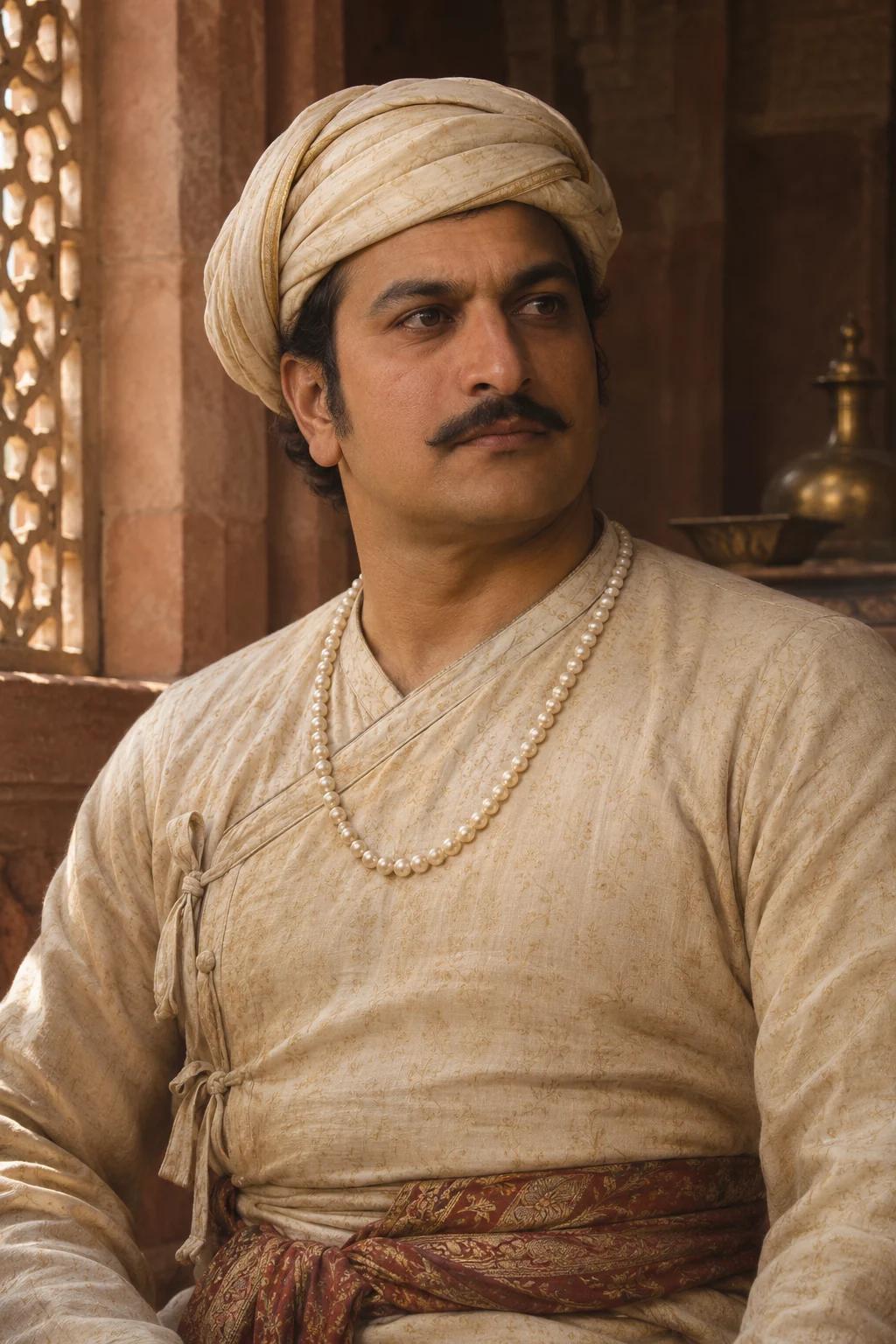
Akbar was the Mughal emperor who ruled from 1556 to 1605. He expanded his dynasty’s power across much of northern and central India, built alliances with regional rulers and reshaped imperial government. His court became a centre of art and religious debate, while his conquests brought devastating violence to those who resisted.
The small circle often called Din-i Ilahi is better approached as debated spiritual discipleship and ethical practice centred on the emperor, rather than a mass religion imposed on the population.
Context
Introduction
Overview
In 1556, a thirteen-year-old inherited a throne he might not keep. Akbar's father was dead, and rival armies threatened his family's rule in northern India.
He would become one of the most powerful emperors of his age. He won wars, made unexpected allies and welcomed people of different faiths to his court. He also crushed resistance with terrible violence.
How did this vulnerable boy build the Mughal Empire—and what did his success cost the people he ruled?
Key forces
An insecure throne and powerful rivals.
An empire built through warfare, alliances and taxes.
A ruler who welcomed religious debate but demanded submission.
Step 1 of 101542–1556Accessible mode
A Prince Without a Kingdom
Akbar was born at in Sindh in 1542, while his father was seeking shelter rather than receiving tribute. Two years earlier, Sher Shah Suri had driven Humayun from his northern Indian kingdom. The family name carried prestige; it could not guarantee a secure home.
Humayun eventually sought help at the Safavid court in Iran. The young Akbar remained behind in the care of relatives and attendants, caught within the rivalries of his father's family. His childhood passed through a world of journeys, changing guardians and contested strongholds.
He learnt to ride, hunt and handle the physical demands expected of a prince. His formal education was less successful. Accounts commonly describe him as unable to read, but his later enthusiasm for having books read aloud warns against confusing literacy with curiosity.
With Persian assistance, Humayun recovered a base in Afghanistan. In 1555, he regained after years of struggle. The restoration brought Akbar close to an inheritance that had once seemed lost.
Then, in January 1556, Humayun died after a fall on a staircase. The prince was in the Punjab with Bairam Khan. His father had recovered a crown; now others would decide whether his son could keep it.
Step 2 of 101556 CEAccessible mode
A Boy on the Throne
At in February 1556, Akbar was proclaimed emperor. Bairam Khan, his guardian and regent, directed the government and the defence of the dynasty. A ceremony could establish the succession; it could not silence rival armies.
The most dangerous challenger was Hemu. He had risen through service under the Sur rulers and become an accomplished commander. In the autumn he defeated Mughal forces near and occupied the city, assuming the royal title Vikramaditya. His forces included Afghan soldiers as well as Hindu followers.
On 5 November, the armies met at . Hemu directed his men from an elephant. An arrow struck him in the eye, and his incapacitation helped turn a hard-fought battle into defeat. Mughal soldiers captured him.
He was subsequently executed. Accounts differ over Akbar's involvement: some credit the young emperor with striking the captive, while Abu'l Fazl presents him as refusing and leaves the killing to Bairam Khan. The disagreement cannot be resolved by choosing the version most flattering to Akbar.
Victory reopened and to the Mughals. It did not settle the whole country. Akbar had survived the first great test of his reign, with his future still resting heavily in other men's hands.
PremiumFree preview: 2 of 10 chapters
Continue Akbar the Great
Sign up to a Premium account to read the remaining chapters of this story.
A paid Premium subscription also gives you full access to every other Premium story.