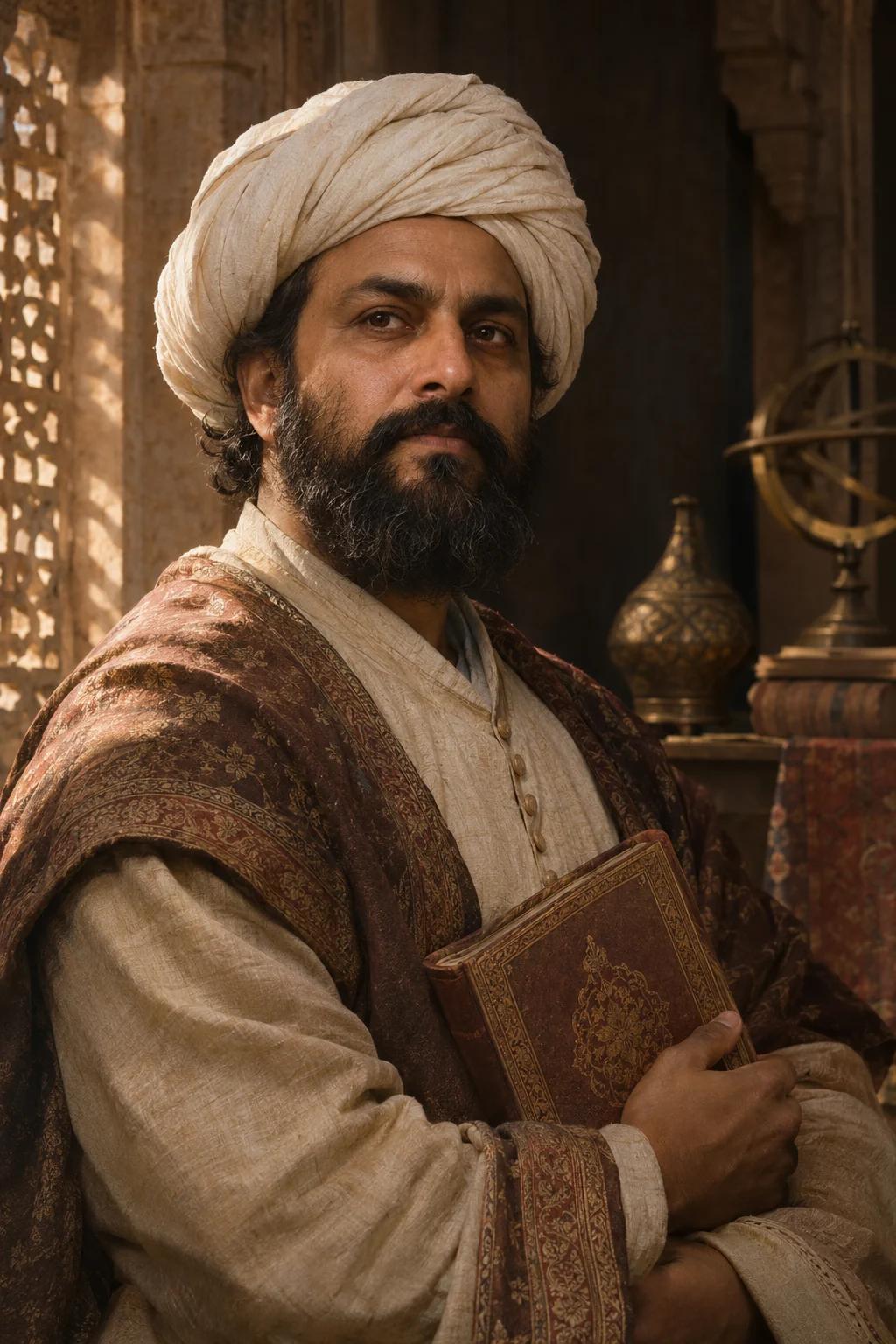
Abu'l Fazl: Scholar, adviser and officer, Abu’l Fazl assembled the Akbarnama and Ain-i-Akbari, giving influential expression to Akbar’s kingship before his assassination in a succession struggle.
An illustrative reconstruction based on historical context. It is not a photograph or documentary likeness. Image policyAttribution
Life Journey
Writing the meaning of imperial power
Follow Abu'l Fazl through nine stages of a distinct historical life.
Complete chronology
1551–1566
A scholar's household in Agra
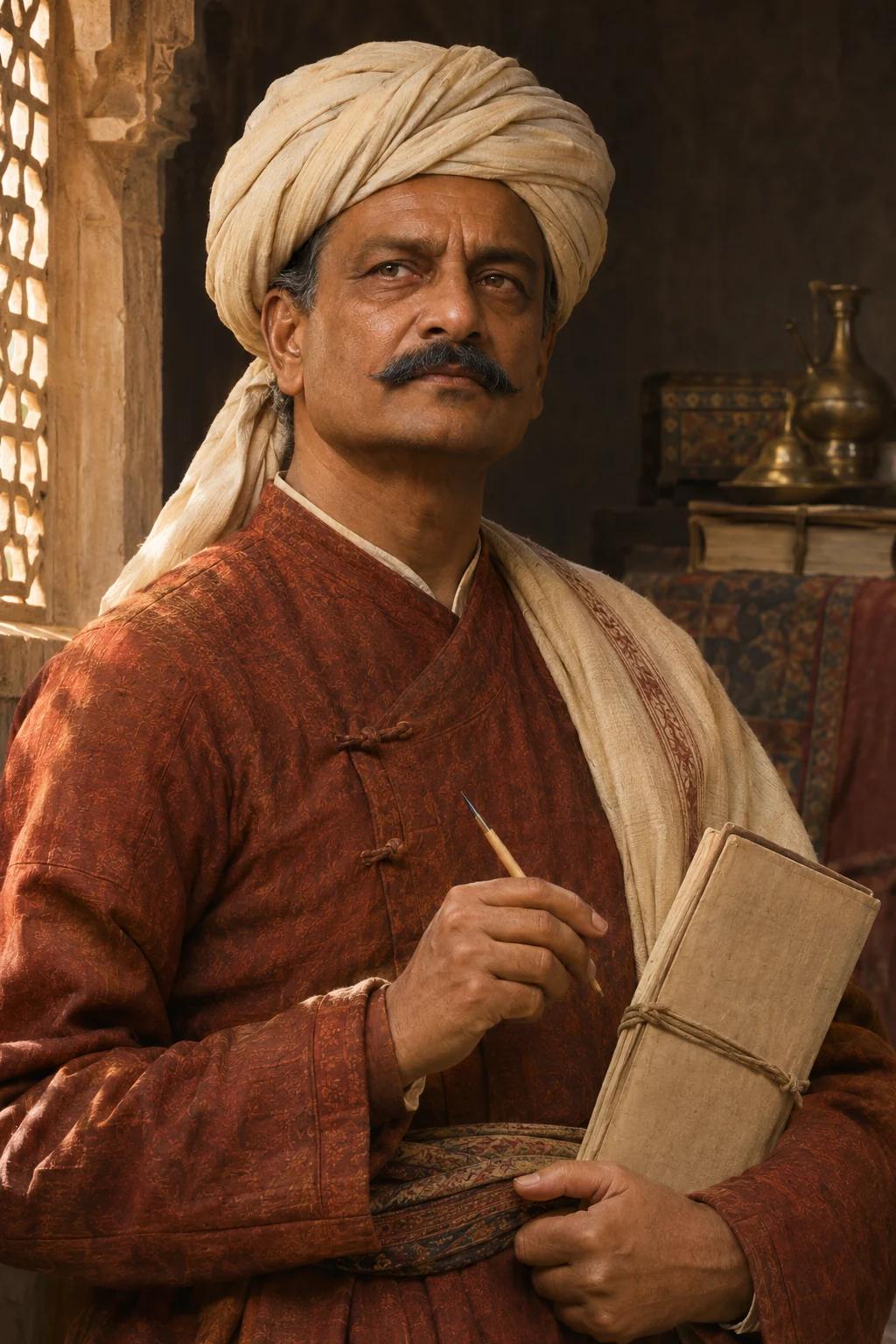
The family belonged to a learned Persianate environment without being initially secure at the centre of imperial office. Abu'l Fazl's older brother Faizi became a celebrated poet. Accounts of his own exceptional childhood learning come partly from autobiographical writing and need to be read as self-presentation. They nevertheless establish the intellectual ambition that later distinguished his court service. His formation preceded his association with Akbar and cannot be explained entirely as a response to the emperor's wishes.
Late 1560s–early 1570s
Learning under pressure
Shaikh Mubarak's defence of a figure associated with the Mahdawi movement attracted accusations and persecution. The family sought refuge while learned rivals pressed their case. Abu'l Fazl later gave these experiences a prominent place in explaining his intellectual development. His critique of the religious establishment was therefore also personal. That background helps explain his affinity with Akbar's questioning, while reminding readers that a polemic against intolerance can itself arise from a partisan struggle.
1574
Entering the imperial circle
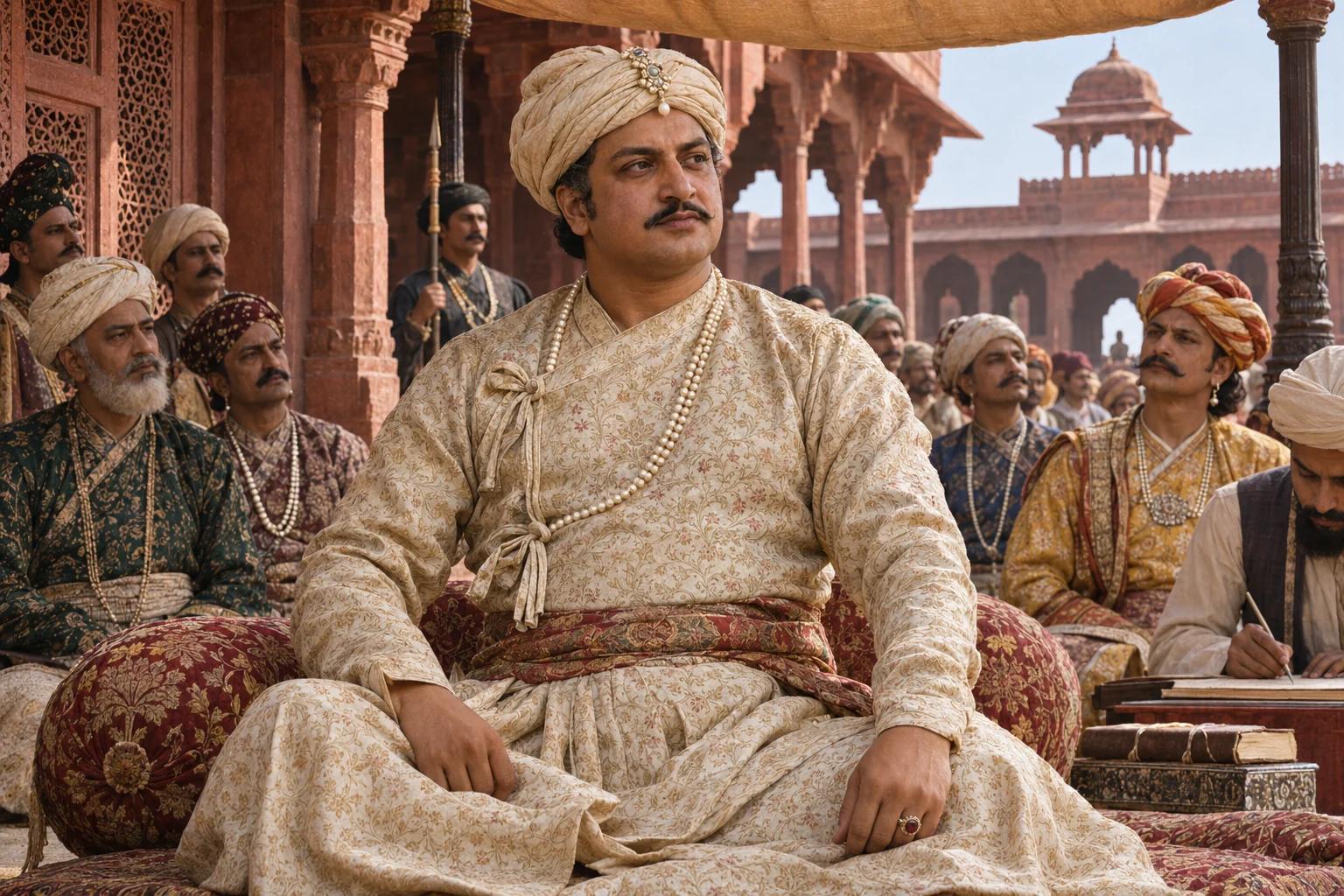
He entered a court where the emperor was strengthening personal authority and widening the range of people who could serve him. His argumentative skill and intellectual independence made him useful in disputes over kingship and religious judgement. Patronage gave him opportunities unavailable in retirement or private study. It also created an obligation to explain and defend the ruler's decisions. His later writing is both evidence of remarkable learning and the work of an invested imperial servant.
1575–1579
Debating at the Ibadat Khana
The discussions exposed disagreements among Muslim scholars and later included representatives of other traditions. Abu'l Fazl's account presents their limitations in ways that strengthen the emperor's standing. His family was associated with the formulation of the 1579 mahzar, which supported imperial choice among disputed interpretations. It did not make the emperor the founder of a modern secular state. The issue was how sovereignty should relate to learned religious authority within a sixteenth-century imperial order.
1580s–1590s
Explaining universal peace
This political language addressed the practical and moral problem of a dynasty governing a diverse population. An emperor who judged impartially could claim a wider basis for obedience than one identified with a single faction. Yet the sovereign remained the source of that judgement. Abu'l Fazl's arguments could protect pluralism and legitimate concentrated authority at the same time. Their significance does not require choosing between a purely cynical propagandist and a disinterested philosopher.
Late 1580s–1590s
Gathering the past into the Akbarnama
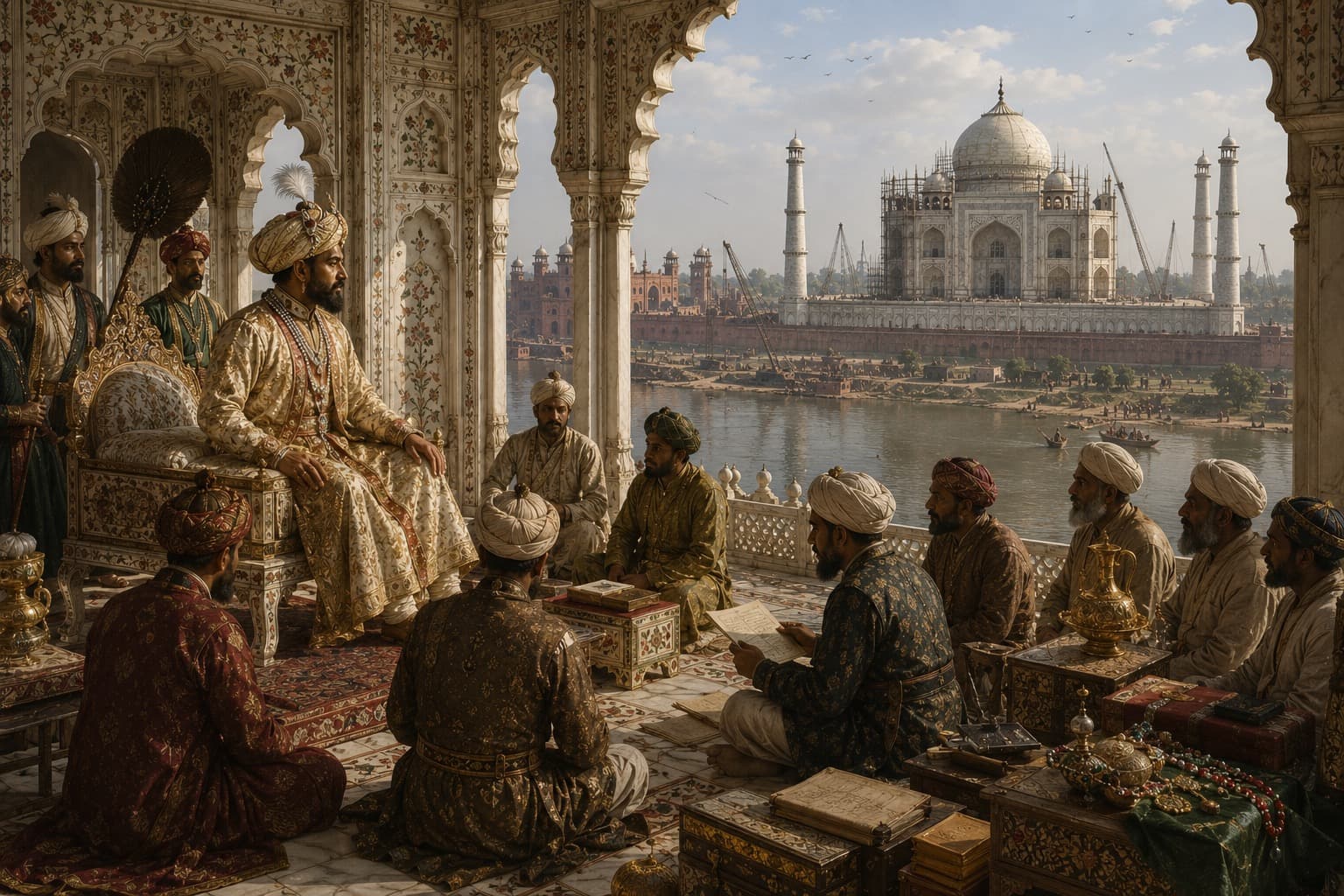
The chronicle's evidential labour was substantial: an imperial record office and commissioned recollections gave access to material unavailable to many writers. Its organisation and language nevertheless made Akbar the centre of a providential history. Successes demonstrated wisdom; opposition could appear as moral failure. The proper critical response is to examine how that purpose shaped selection and explanation, rather than to dismiss every detail or accept every judgement as neutral fact.
1590s
Recording an empire in the Ain-i-Akbari
The work records ranks, regulations, revenues, prices, provinces and forms of knowledge. It is often treated separately from the narrative volumes of the Akbarnama, though it belongs to the same imperial project. Numbers can appear more impersonal than praise, but they too present a selected and ordered picture. An assessment is not necessarily a realised collection; an instruction is not proof of universal compliance. The Ain's value grows when those distinctions are maintained.
Late 1590s–1601
Serving beyond the writing desk
His career joined learned writing to practical service. The Deccan brought him into the military work of expansion, while his influence over the emperor made him a target for a prince seeking greater independence. Salim regarded him as an obstacle between himself and his father. That hostility shows how intellectual authority could become entangled in a succession struggle. The historian was not merely observing the politics he described; he was exposed to their dangers.
1602 and beyond
Assassination and the surviving record
Jahangir later acknowledged his role in arranging the killing, providing unusually direct evidence of princely responsibility. Akbar lost a close adviser as well as a writer who had helped define his kingship. Abu'l Fazl's legacy is inseparable from that service, but extends beyond it: the records and interpretations he assembled remain fundamental to Mughal history. Reading him beside critics such as Badauni allows the historian's achievements and commitments to remain visible together.
Continue in context
Connected stories
Move from the profile into the wider events and settings this figure belongs to.
This profile is written for educational use and connects to related Stories of History pages. The main portrait is an AI-assisted historical reconstruction, included as an illustrative aid rather than documentary evidence. Image policyImage attribution