← People

Humayun

Humayun: He inherited Babur's new empire, lost it to Sher Shah Suri, then returned from exile to restore Mughal rule shortly before Akbar's accession.

Born
1508 CE
Died
1556 CE
Role
Mughal emperor
Full name
Nasir al-Din Muhammad Humayun
Region
South Asia, Northern India, Afghanistan, Persia, Northern India, Afghanistan and Persia

Mughal emperor (1508-1556)

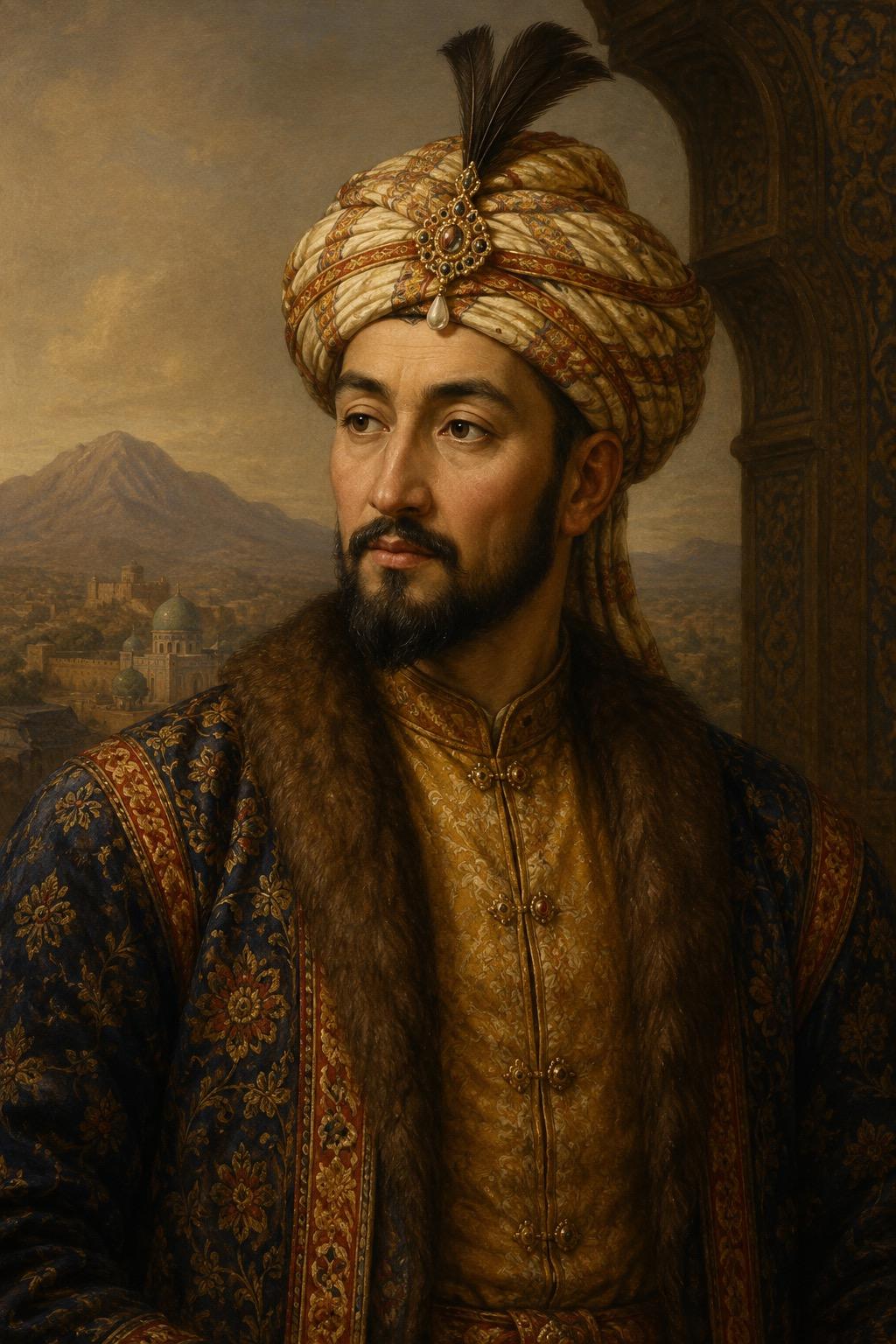
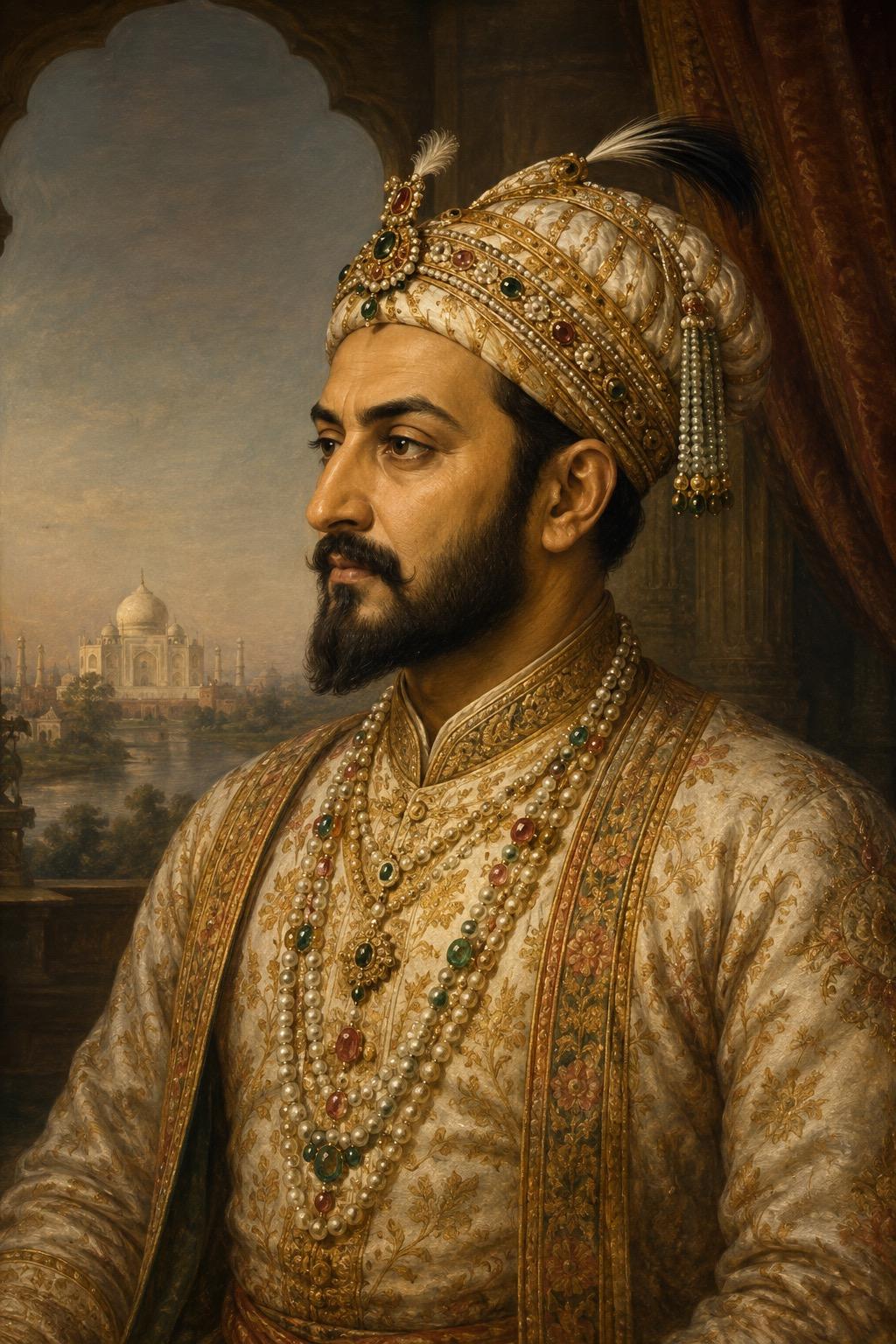
Illustrative reconstructed portrait of Humayun in period clothing; an approximate likeness.
AI-assisted historical reconstruction

An illustrative reconstruction based on historical context. It is not a photograph or documentary likeness. Image policy Attribution

Life Journey

Losing an empire and finding a way back

Follow Humayun through nine stages of a distinct historical life.

Complete chronology

1508–1525

A Timurid prince in Kabul

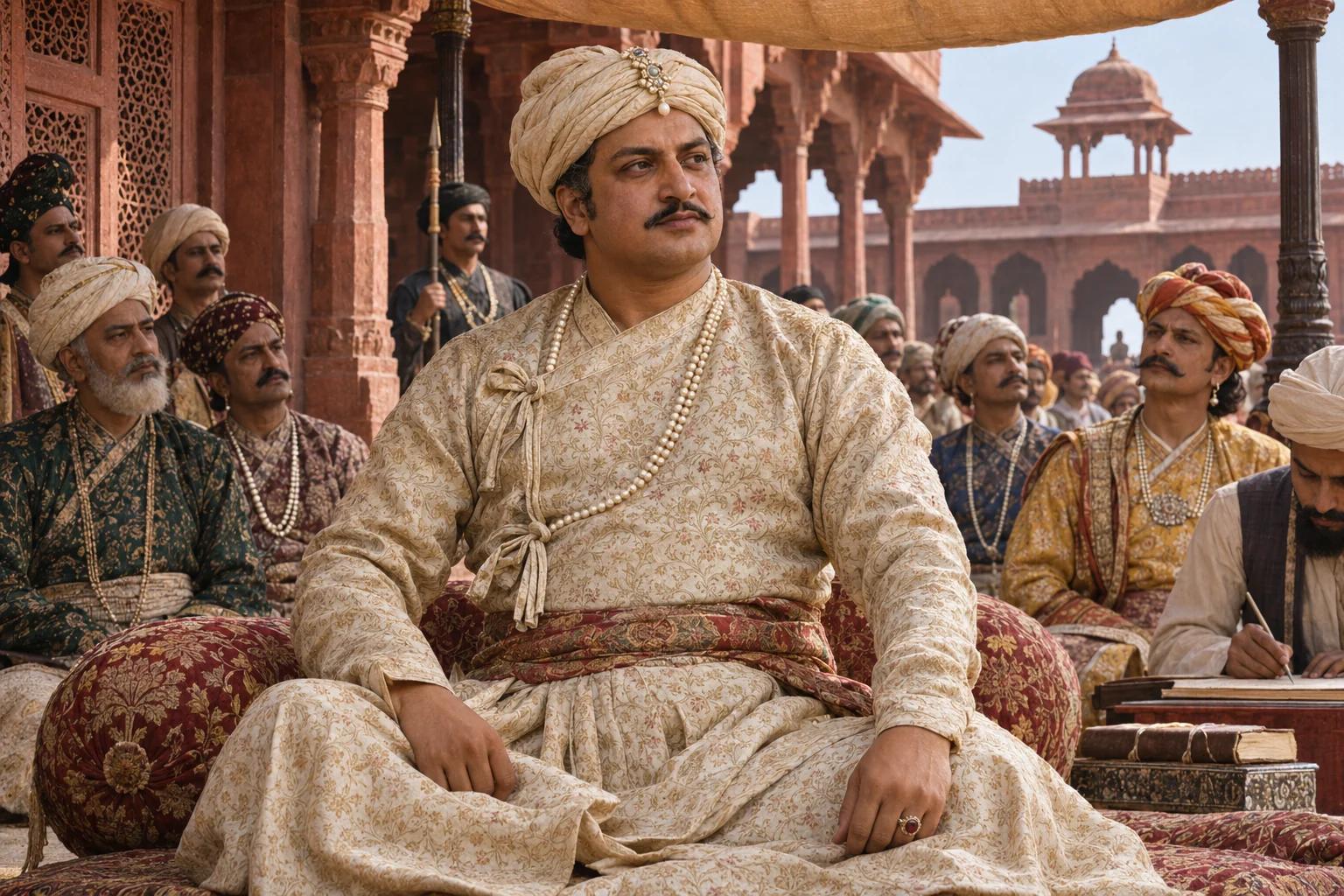
Humayun's inheritance began in the Timurid world of Central Asia and Afghanistan. A prince's education included military responsibility as well as literary cultivation. The dynasty's claims were prestigious, but its territories had repeatedly changed hands. Sharing resources among male relatives could preserve the family while also creating rivals. Those competing expectations would shape Humayun's own difficulties after he succeeded his father.
1526–1530

Helping to establish a foothold

Humayun participated in the military expansion that displaced the Lodi dynasty and challenged other regional powers. The Mughals acquired cities and revenue claims while retaining ties to Kabul and the lands beyond it. Babur's death left the problem of consolidating these gains to his successors. Humayun became emperor in 1530 with the authority of dynastic succession, but without an administration capable of making opposition disappear.

1530–1537

A crown surrounded by rivals

Humayun's campaigns against Bahadur Shah of Gujarat in 1535 showed his capacity for determined military action. Yet dispersing forces across a wide realm increased vulnerability elsewhere. His brothers Kamran, Hindal and Askari held followings and territories of their own. Judging him simply as an incompetent predecessor to Akbar misses the structural difficulty of ruling a recent conquest with a divided dynastic elite. His decisions nevertheless helped opponents exploit that weakness.

1538–1540

Defeat on the Ganges

Campaigning in Bengal drew Humayun far from the political centre while his brothers pursued their own interests. At Chausa, Sher Khan's victory nearly cost him his life; he escaped the rout across the Ganges. Defeat the following year made restoration impossible in the short term. Sher Shah's rule replaced Mughal authority across much of northern India. Humayun's imperial title survived, but the resources needed to make it effective had been lost.

1540–1543

A household seeking shelter

Exile exposed the gap between dynastic prestige and practical security. Humayun had to negotiate shelter and assistance from local rulers while relationships with his brothers remained strained. Hamida Banu Begum's presence and Akbar's birth belong to the political history of the displaced household, not merely its private background. Gulbadan Begum's later memoir preserves family memories that broaden the perspective of military chronicles, though it too was written retrospectively.

1544–1545

Assistance at a price

The Safavid reception gave Humayun a route back into power. It placed a Sunni Timurid claimant in a relationship of dependence upon a Shi'a monarch with interests in Afghanistan. Kandahar's status became especially contentious. Military aid was not a gift detached from politics: the shah expected recognition and influence. Humayun's return therefore depended on diplomacy and compromise as well as personal persistence.

1545–1554

A restored court in Kabul

Recovery of a base did not end family conflict. Kamran repeatedly challenged him before his capture and blinding in 1553. Such violence belonged to the costs of dynastic consolidation. At the same time, artists including Mir Sayyid Ali and Abd al-Samad brought skills associated with Safavid painting to Humayun's patronage. His court supplied an important bridge between Iranian artistic practice and the later Mughal workshop; Akbar's cultural achievements did not begin without predecessors.

1554–1555

Delhi recovered

The restoration depended partly on the weakening of the state that had displaced him. Sur claimants competed for authority, allowing Mughal forces to advance through the Punjab. Success at Sirhind defeated Sikandar Sur's immediate challenge without eliminating him as a threat. Humayun returned to Delhi after fifteen years outside his former kingdom. The achievement was substantial; the work of securing it was still largely ahead.

1556 and beyond

A sudden death and a lasting restoration

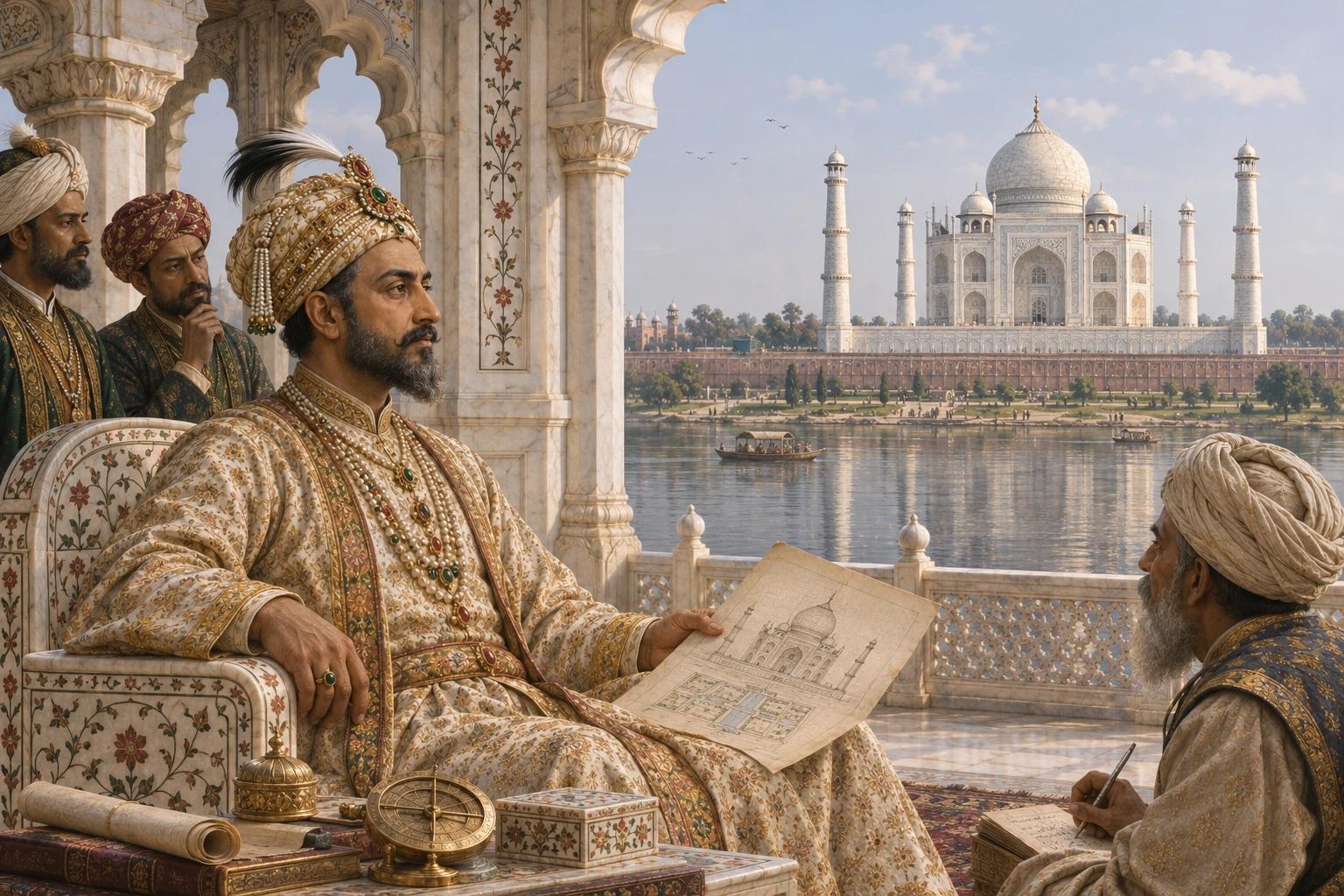
Humayun's death handed a fragile political recovery to a thirteen-year-old son. The events that followed could easily have made the return to Delhi a brief interlude. Bairam Khan's regency and victory at Panipat helped preserve it. Humayun's later tomb in Delhi, commissioned under the patronage of Bega Begum, became a major example of Mughal garden-tomb architecture. It should not be used to illustrate his lifetime as though the completed monument already existed. His reign connects loss, recovery and cultural exchange to the empire his successors built.

Continue in context

Connected stories

Move from the profile into the wider events and settings this figure belongs to.

More connected stories

Keep exploring

Content note

This profile is written for educational use and connects to related Stories of History pages. The main portrait is an AI-assisted historical reconstruction, included as an illustrative aid rather than documentary evidence. Image policy Image attribution

References

Sources and historical notes

Sources used to check this page, selected recommendations and historical notes.

Sources used

  1. Gulbadan Begum / Packard Humanities Institute, “Humayun-nama, translated by Annette S. Beveridge (1902),” accessed 11 November 2026.

    Retrospective household testimony and translator's apparatus; checked exile and family setting. Distinguish Gulbadan's memoir from the modern translator's introduction.

    Open source
  2. Wheeler M. Thackston / Encyclopaedia Iranica, “Homayun Padesah,” accessed 11 November 2026.

    Humayun's reign, defeats, Safavid support, Kabul and restoration; chapter 1 and Humayun profile.

    Open source
  3. Abu'l Fazl / Packard Humanities Institute, “Akbarnama, volume II, translated by H. Beveridge,” accessed 11 November 2026.

    Consulted accession, Hemu and Panipat, Bairam Khan, Amber and Chittor passages; chapters 1–4. Imperial narrative written later; hostile descriptions of opponents are not adopted.

    Open source
  4. Department of Islamic Art / Metropolitan Museum of Art, “The Art of the Mughals before 1600,” accessed 11 November 2026.

    Institutional account of architecture and manuscript patronage; chapter 7 and visual research. Its compressed description of religious innovation is qualified using specialist evidence.

    Open source
  5. UNESCO World Heritage Centre, “Humayun’s Tomb, Delhi,”

    Documents the emperor’s mausoleum and its place in the development of Mughal architecture.

    Open source

Additional sources and notes

Loading reviewed claim sources...

Our editorial approach · Report a historical error

A monthly route through history

Find out first about the latest published stories, feature notes and occasional Premium offers in one monthly email.