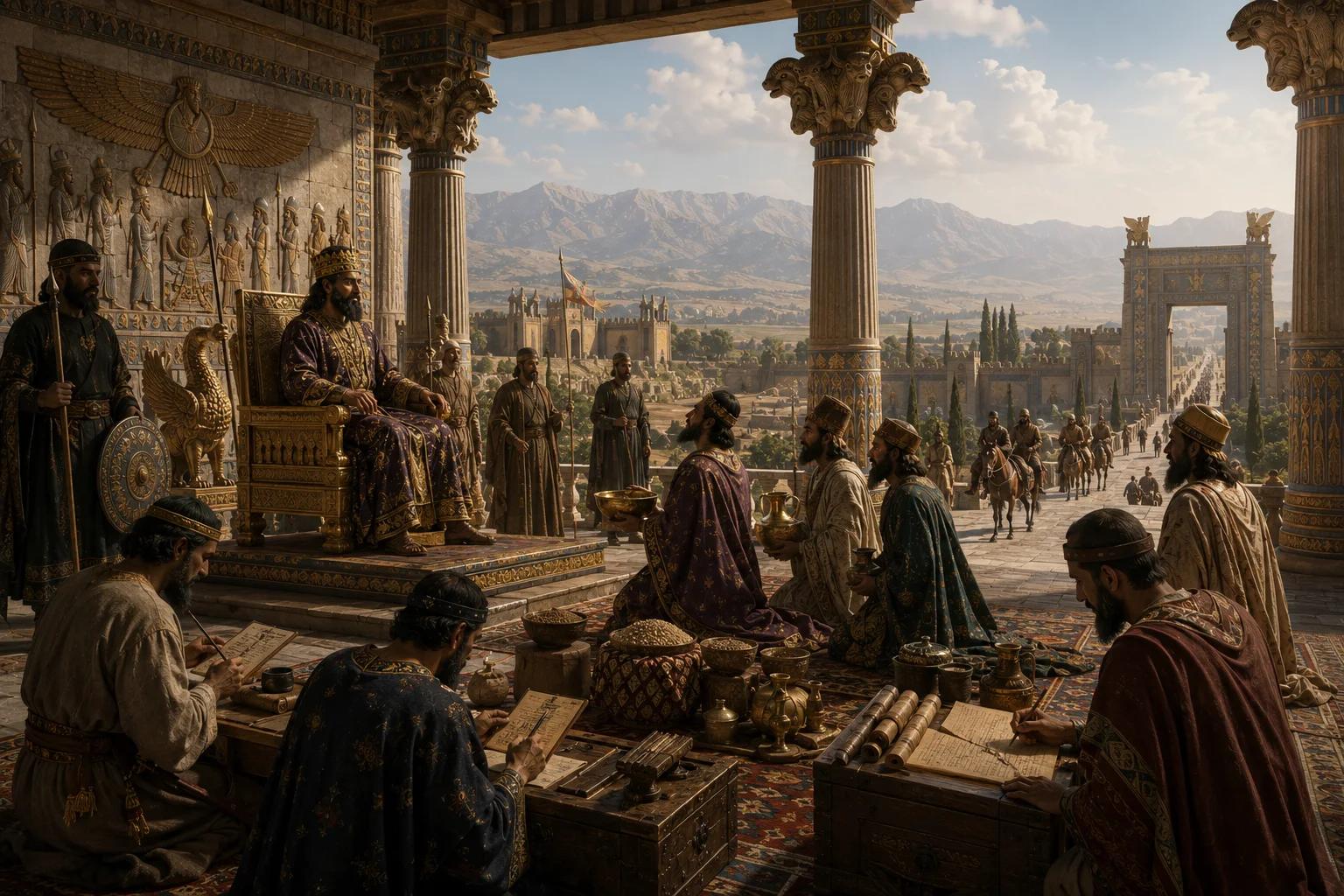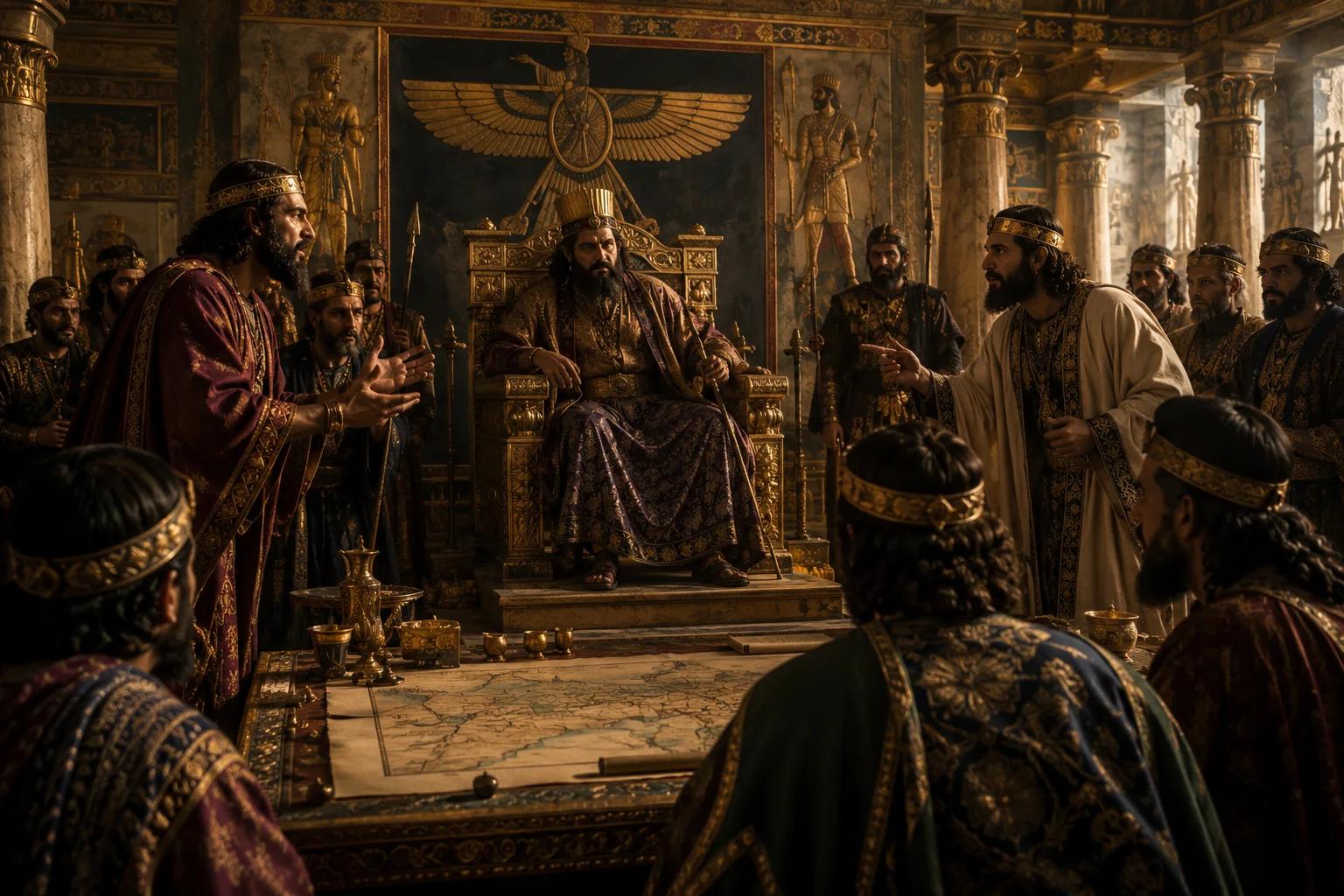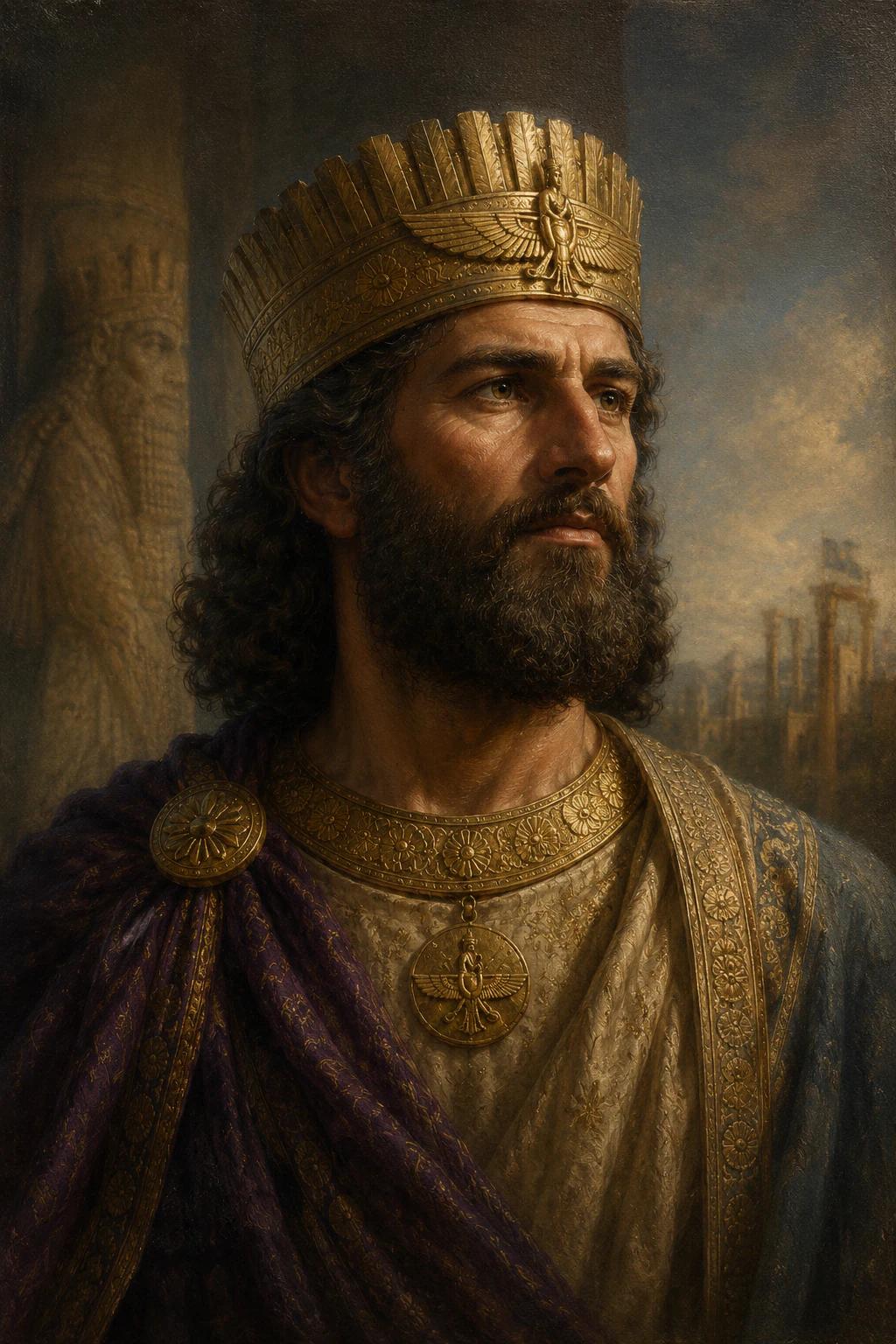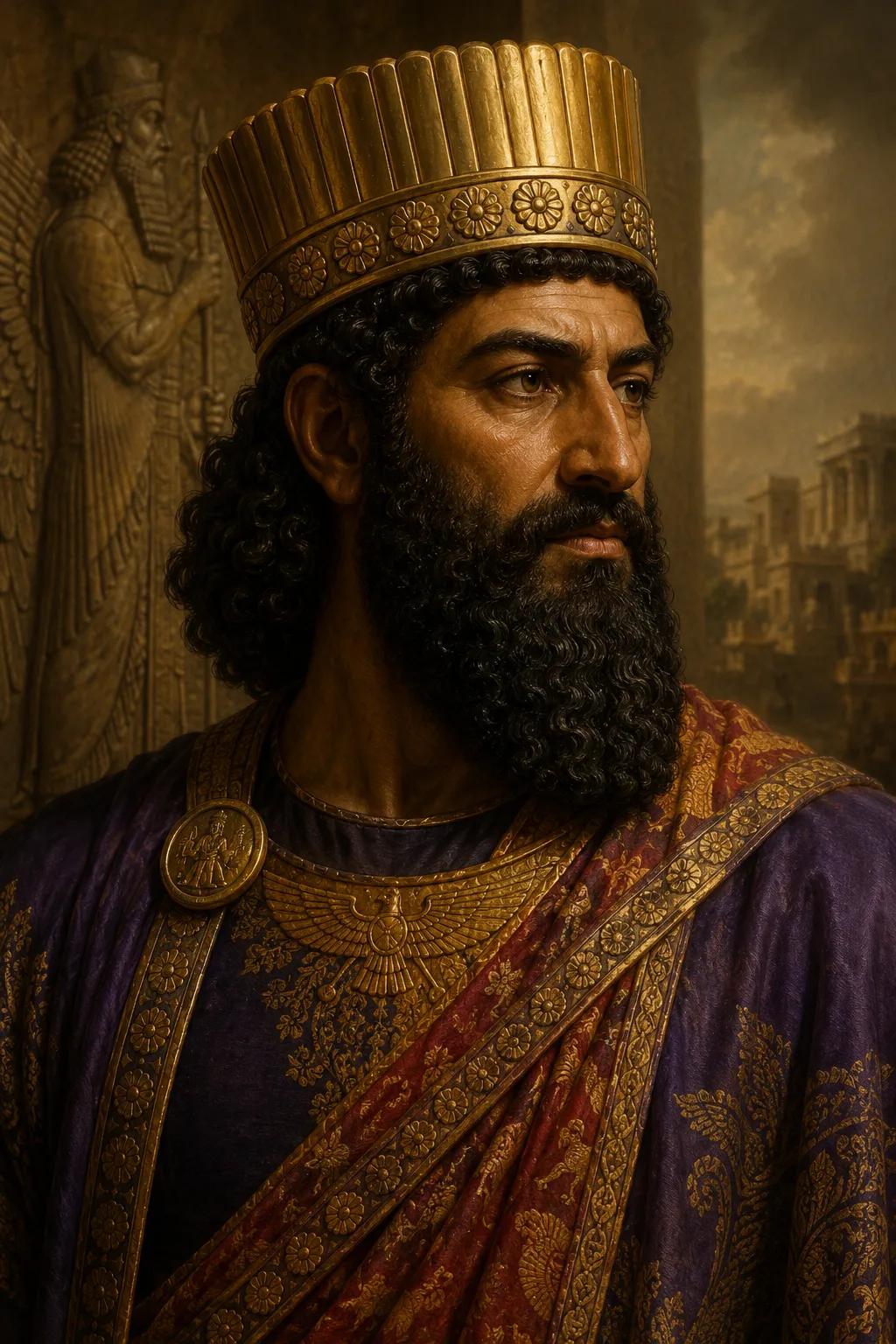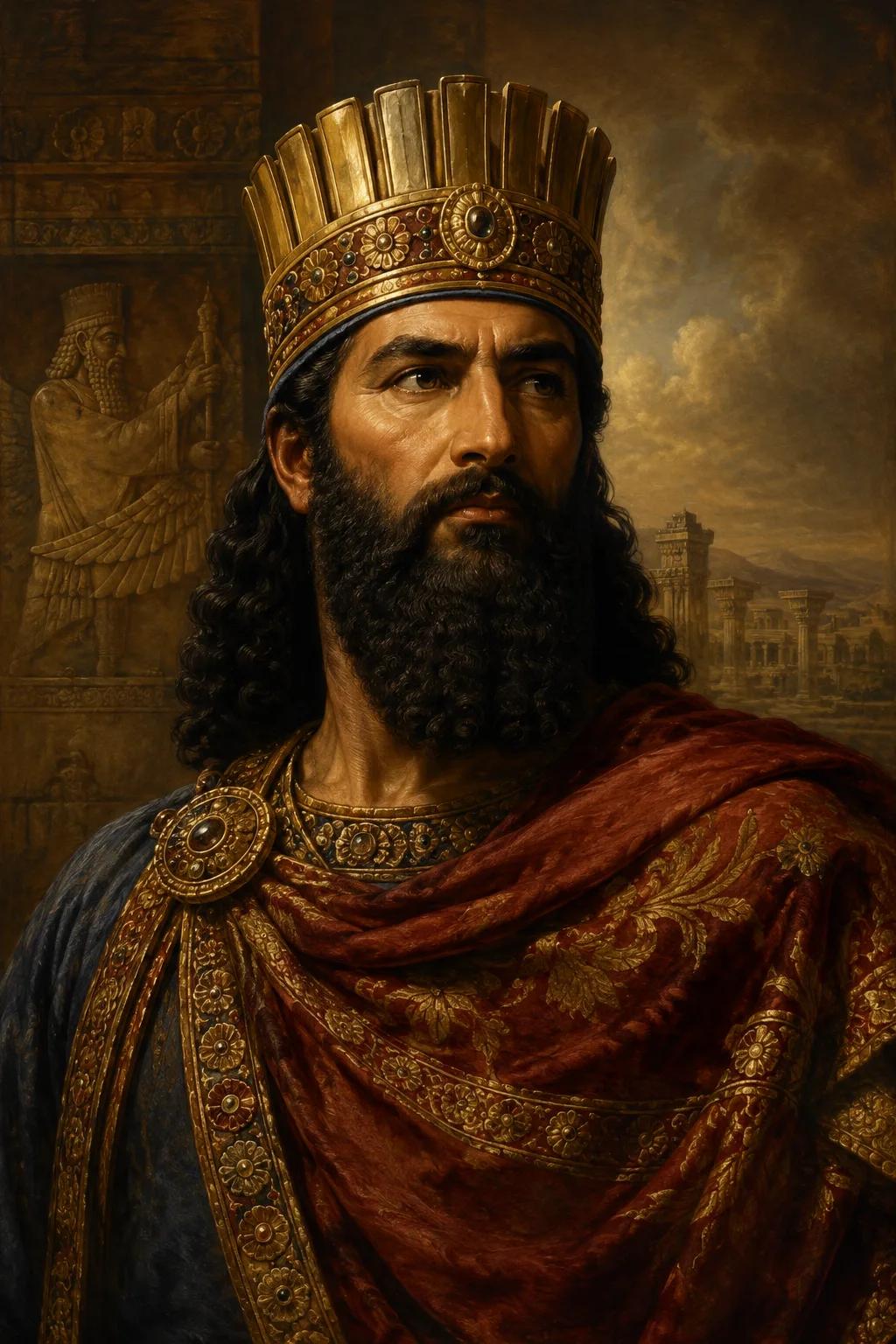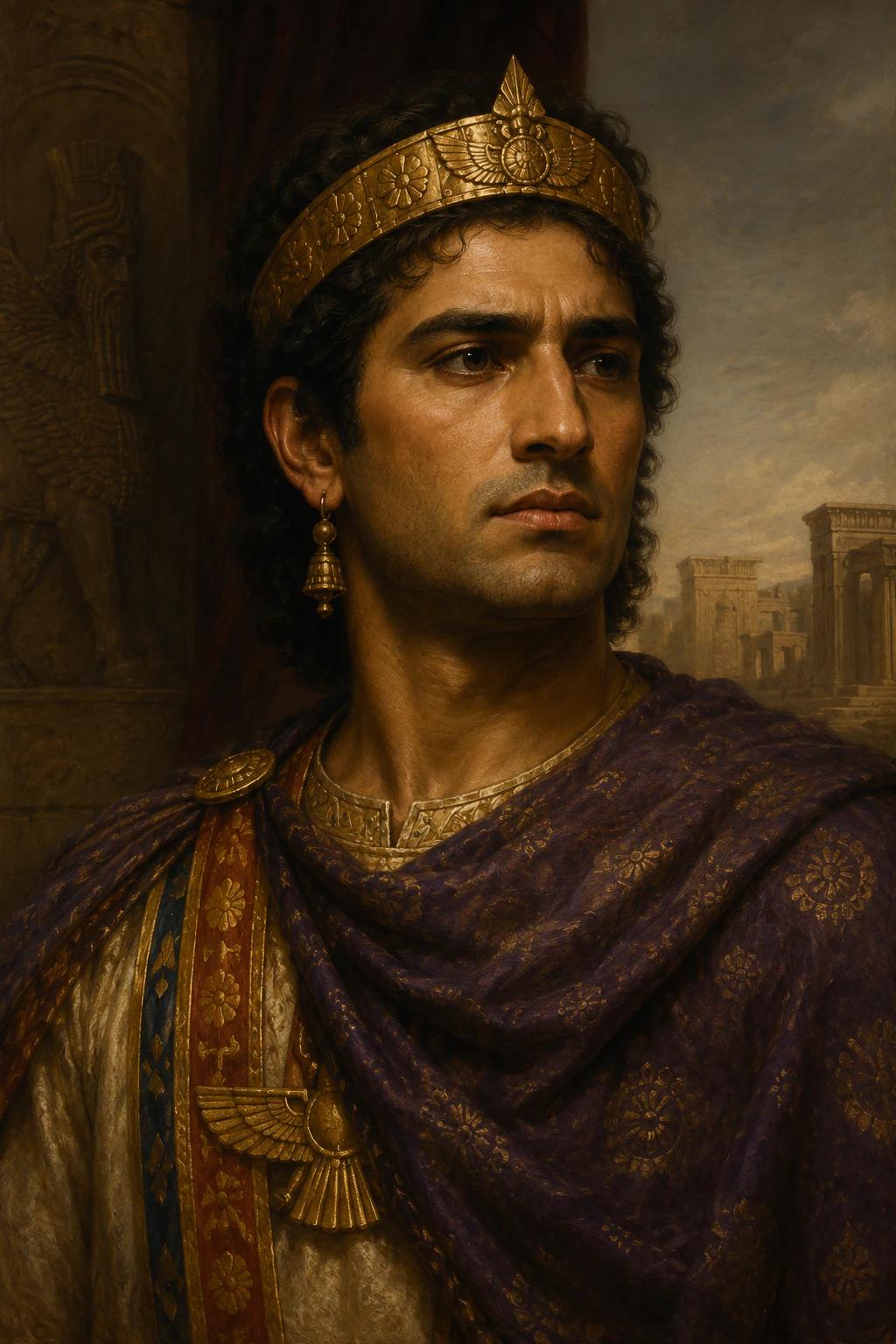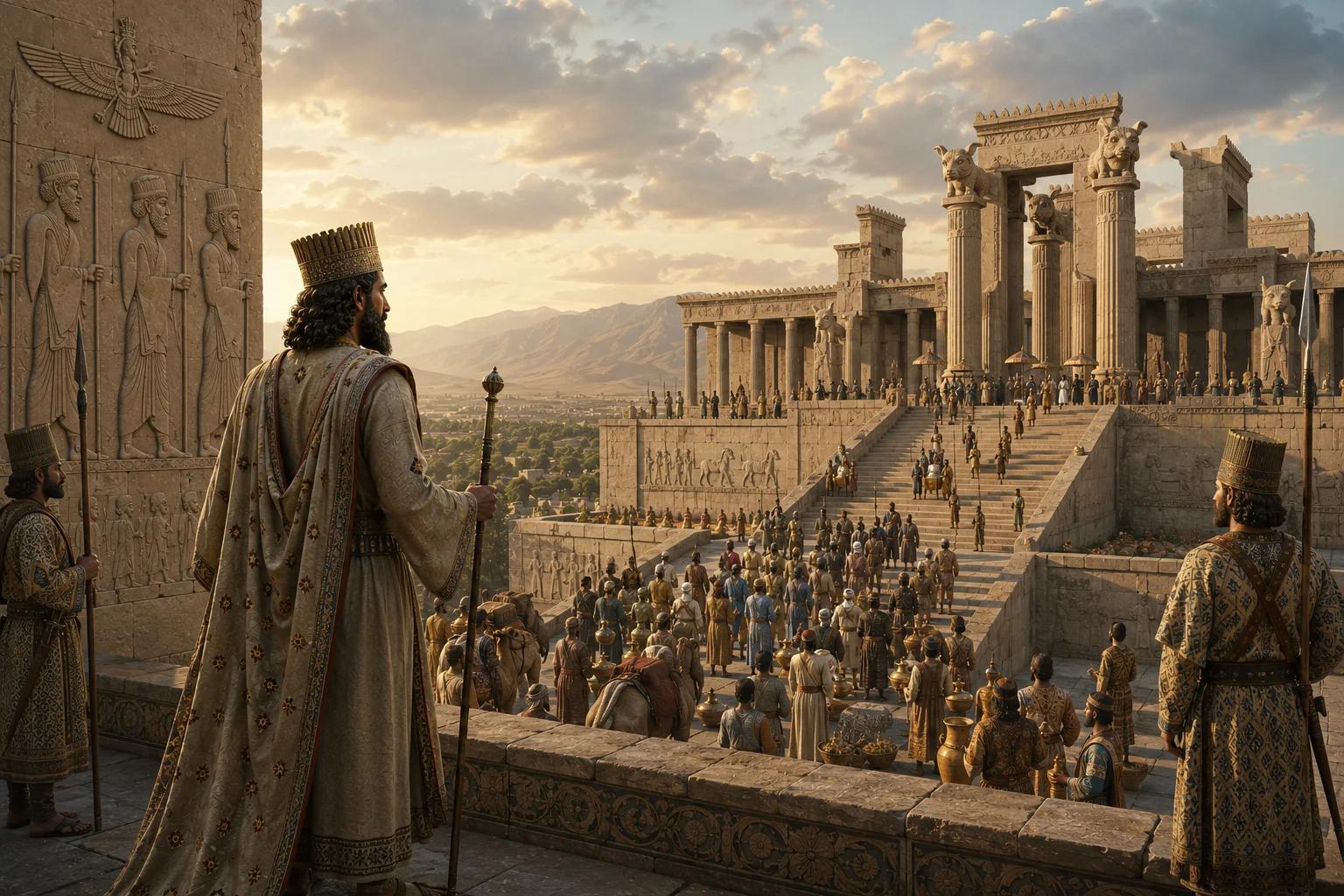
A Persian royal figure overlooking a monumental palace terrace with carved reliefs, columns, guards, and gathered subjects

Free Story

The Persian Empire

Persia rose through conquest. It endured because it learned how to rule difference.

10 chapters · 20 min read

Next
Context

Introduction

Overview

The Persian Empire, also known as the Achaemenid Empire, became the largest empire the ancient Near East had yet seen. From Cyrus the Great's victory over the Medes to the fall of , Darius I's reforms, Xerxes' wars with Greece, and the final defeat of Darius III, turned conquest into a durable way of ruling many peoples across a vast connected world.

Key forces

Cyrus the Great Unites Persia
550 BCE
Step 1 of 10550 BCEAccessible mode

Cyrus the Great Unites Persia

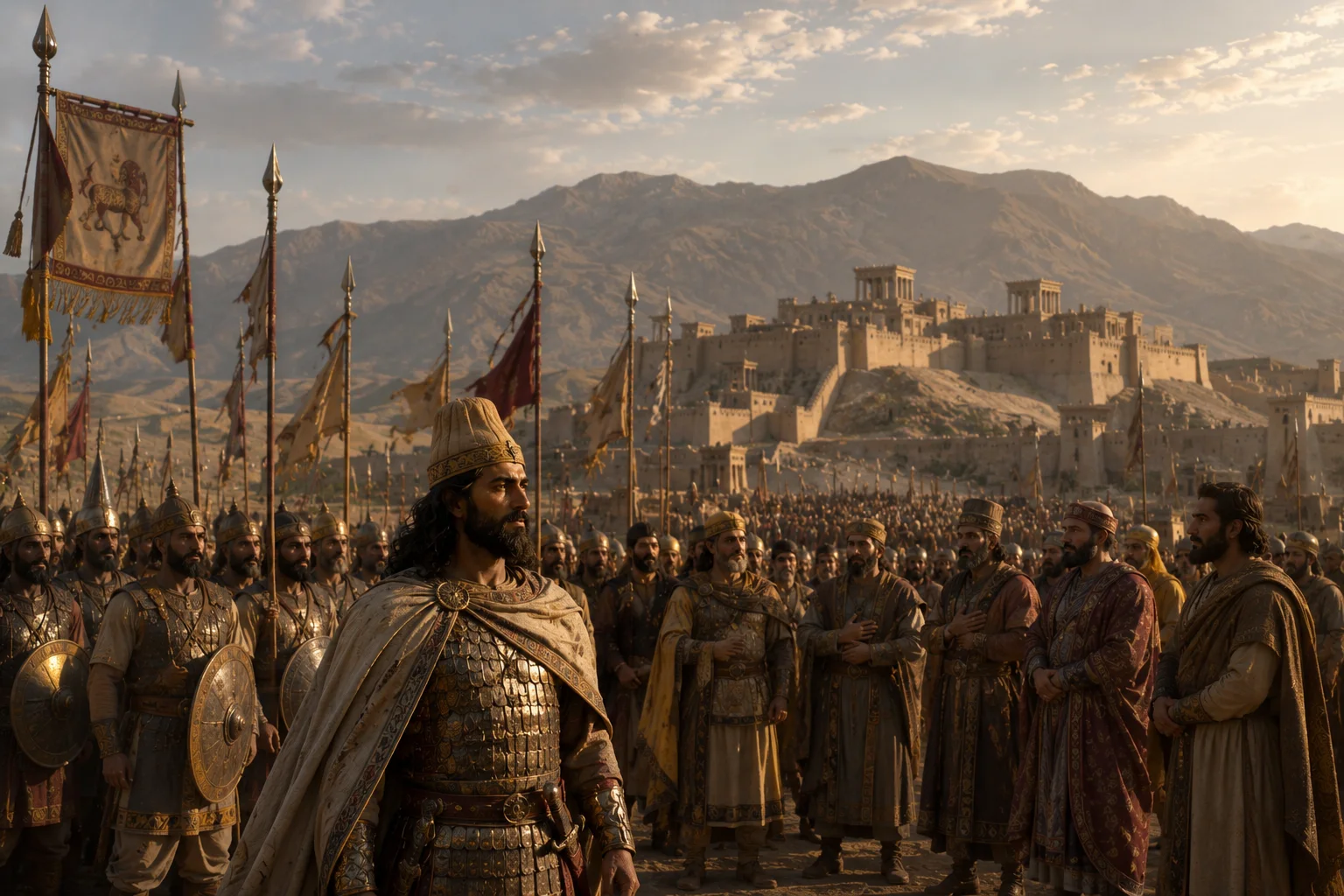
Around 550 BCE, Cyrus II turned from a smaller kingdom into the centre of a new empire.

Before this, the Medes were the stronger power in the Iranian world. was important, but it was not yet the force that would dominate western Asia.

Cyrus rebelled against the Median king Astyages and defeated him. The exact details were later wrapped in legend, but the result was clear: Persian power replaced Median leadership.

This victory gave Cyrus control over Median armies, nobles, routes, and political experience. It joined Persian ambition with the structures of a larger kingdom.

The Achaemenid dynasty now had a foundation strong enough to expand. Cyrus could present himself not only as a conqueror, but as a king who could bring order after upheaval.

The uniting of and was the first great step in the rise of the Persian Empire. It turned a regional kingdom into a power capable of challenging the greatest states of the ancient Near East.

The Fall of Babylon
539 BCE
Step 2 of 10539 BCEAccessible mode

The Fall of Babylon

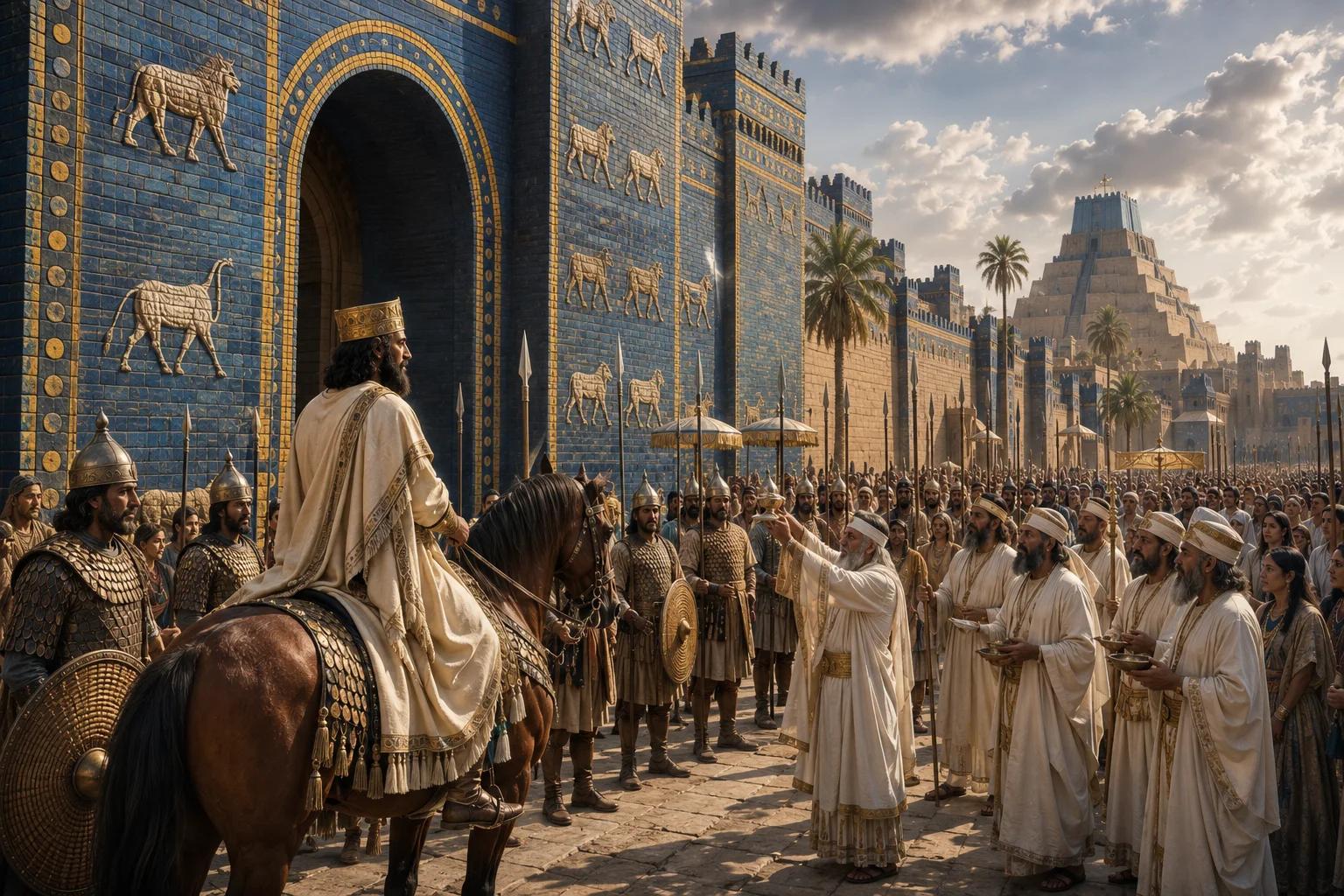
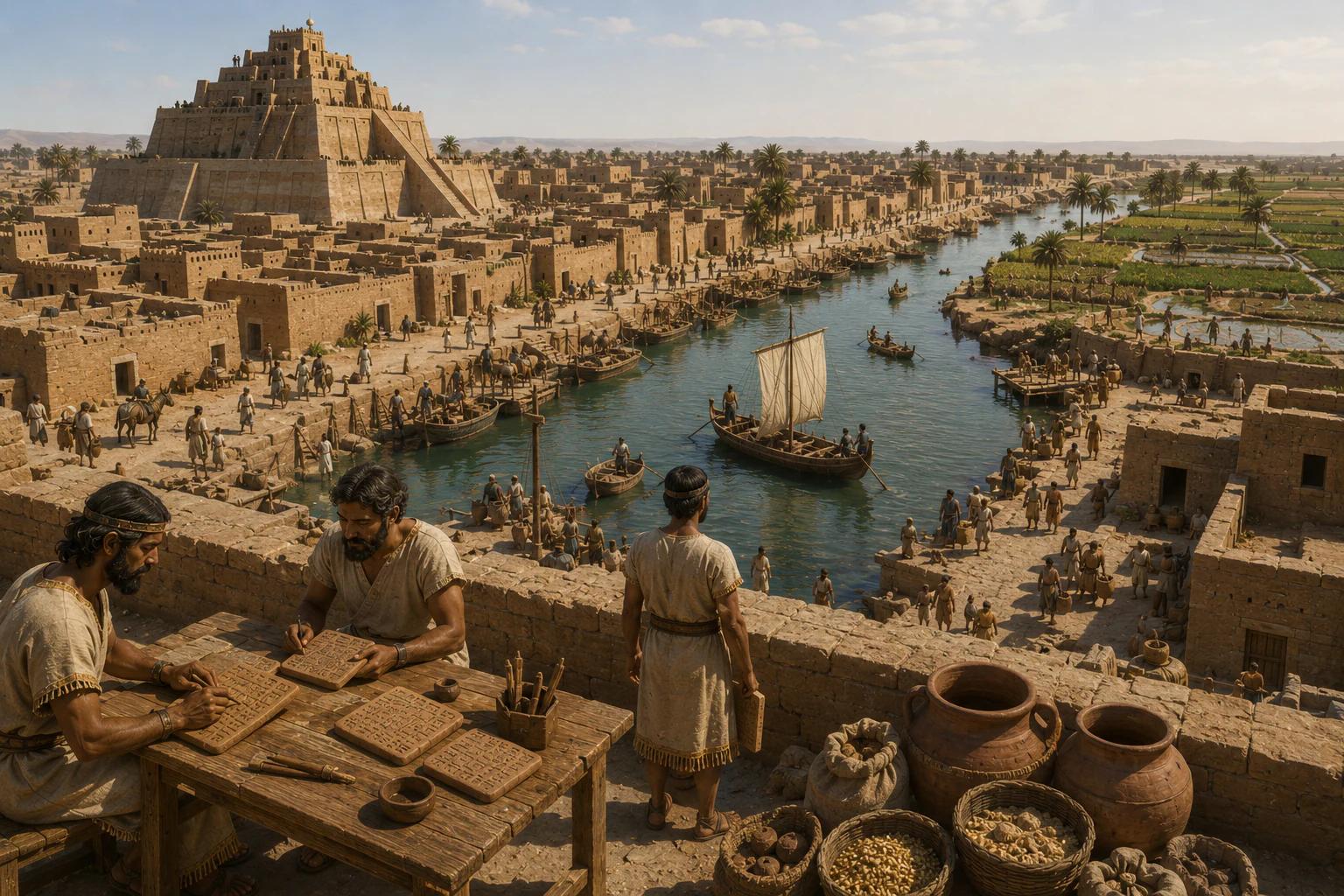
In 539 BCE, Cyrus captured and turned into the greatest imperial power of the Near East.

was one of the most famous cities in the ancient world. It was rich, sacred, learned, and tied to centuries of Mesopotamian kingship.

Cyrus defeated the forces of the last Neo-Babylonian king, Nabonidus, and entered the city. Instead of presenting himself only as a foreign conqueror, he used Babylonian language of restoration.

Persian policy respected many local traditions. The Cyrus Cylinder presents Cyrus as a ruler favoured by Marduk, 's great god, and describes the return of cult images to their cities.

Persian rule also allowed some displaced peoples to return home, including Judeans exiled by . This made Cyrus important in Jewish memory as a ruler connected with return and rebuilding.

The fall of gave Mesopotamia's wealth, prestige, and administrative experience. It transformed the Achaemenid kingdom into a world empire.

Empire Across Continents
525 BCE
Step 3 of 10525 BCEAccessible mode

Empire Across Continents

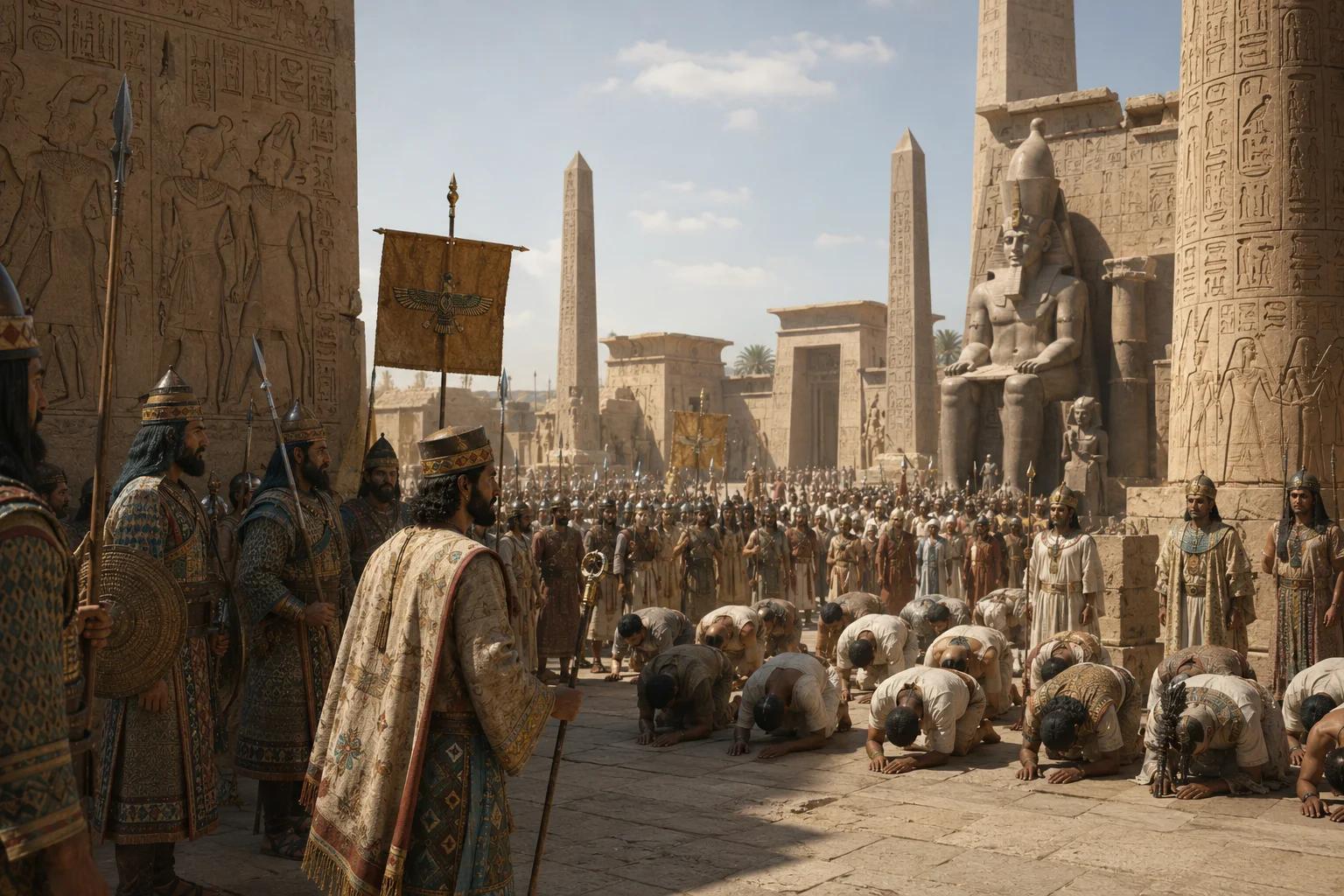
By 525 BCE, the empire reached into Egypt and became a vast realm across continents.

After Cyrus died, his son Cambyses II inherited a powerful state. The empire already stretched across , Mesopotamia, Anatolia, and parts of Central Asia.

Cambyses turned toward Egypt, one of the richest and oldest kingdoms of the ancient world. In 525 BCE, Persian forces defeated the Egyptians and took control of the country.

Egypt brought wealth, grain, temples, scribes, and great symbolic prestige. It also brought the challenge of ruling a society with its own deep traditions of kingship and religion.

The empire now joined many different peoples, languages, and landscapes: Iranian highlands, Mesopotamian cities, Anatolian routes, Egyptian river valleys, and eastern frontiers.

This scale made extraordinary. It was not a single culture spreading outward, but an imperial structure ruling many cultures at once.

Darius I Rebuilds the Empire
522 BCE
Step 4 of 10522 BCEAccessible mode

Darius I Rebuilds the Empire

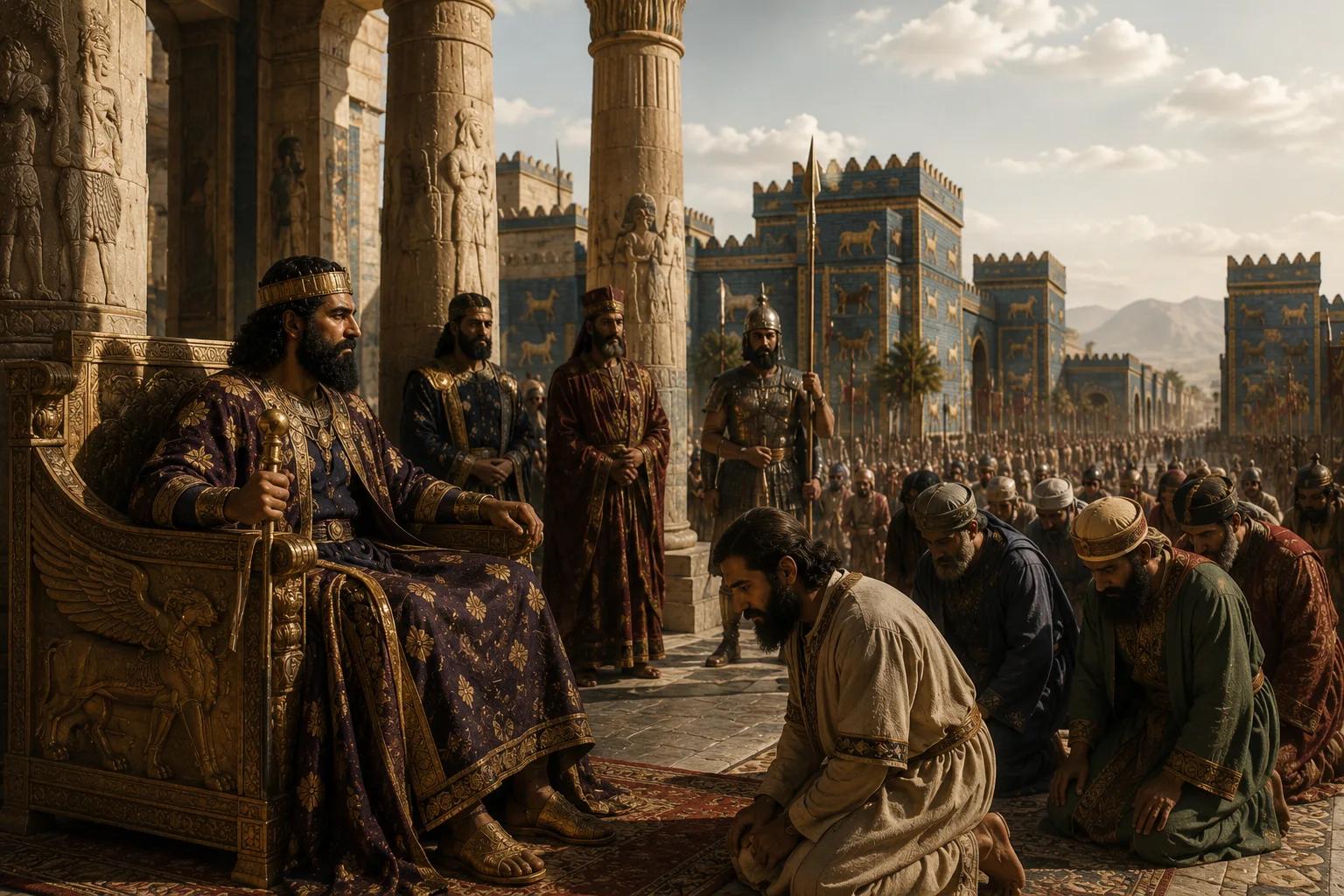
In 522 BCE, the empire nearly broke apart. Darius I took the throne by force and had to prove he could hold it.

After Cambyses died, the empire entered a dangerous crisis. A man ruling as Bardiya held the throne, and Darius I claimed this ruler was an impostor.

Darius I and a group of Persian nobles killed him and seized power. His version of events was carved into the Behistun Inscription, but historians still debate some details.

Revolts broke out across the empire, including in Babylonia, , , and other regions. Many local leaders saw the succession crisis as a chance to break free.

Darius I moved quickly to defeat these rebellions. By suppressing revolts and presenting himself as the rightful king, he restored royal authority.

His victory made him more than a successful usurper. It gave him the power to rebuild the empire's administration and define Achaemenid kingship for generations.

The Imperial System
518 BCE
Step 5 of 10518 BCEAccessible mode

The Imperial System

Darius I did not only defeat revolts. He strengthened the systems that allowed to rule a huge empire.

The empire was divided into provinces often called satrapies. Satraps governed in the king's name, collected tribute, kept order, and answered to royal authority.

Darius I made taxation and administration more regular. Different regions owed different payments and services, but the system helped turn empire into predictable royal income.

Royal roads and messenger systems helped connect distant provinces. Orders, reports, officials, and news could move across the empire far faster than before.

Persian rule also relied on records, seals, officials, garrisons, and loyal elites. The king's authority was visible in palaces, inscriptions, ceremonies, and the flow of tribute.

This imperial system became one of 's greatest achievements. It showed how a vast empire could be organized without forcing every people to live the same way.

The Ionian Revolt
499 BCE
Step 6 of 10499 BCEAccessible mode

The Ionian Revolt

In 499 BCE, Greek cities under Persian rule rebelled and pulled the empire into a wider conflict with mainland Greece.

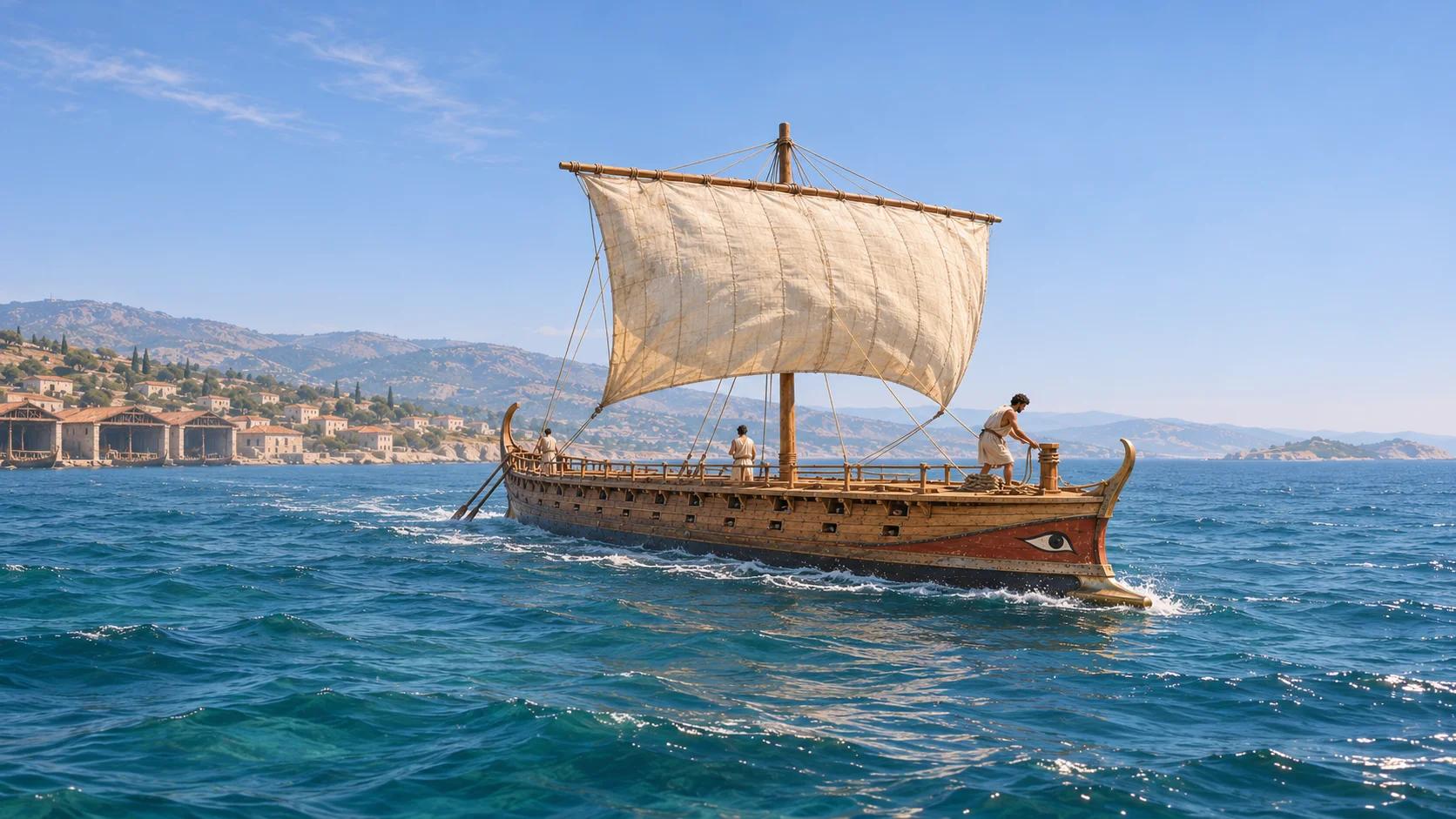
The Ionian Greek cities lay along the coast of western Anatolia. They traded across , kept strong Greek identities, and lived under Persian imperial authority.

Tensions grew over local rule, tribute, and Persian-backed tyrants. When revolt broke out, some rebels sought help from other Greeks across the sea.

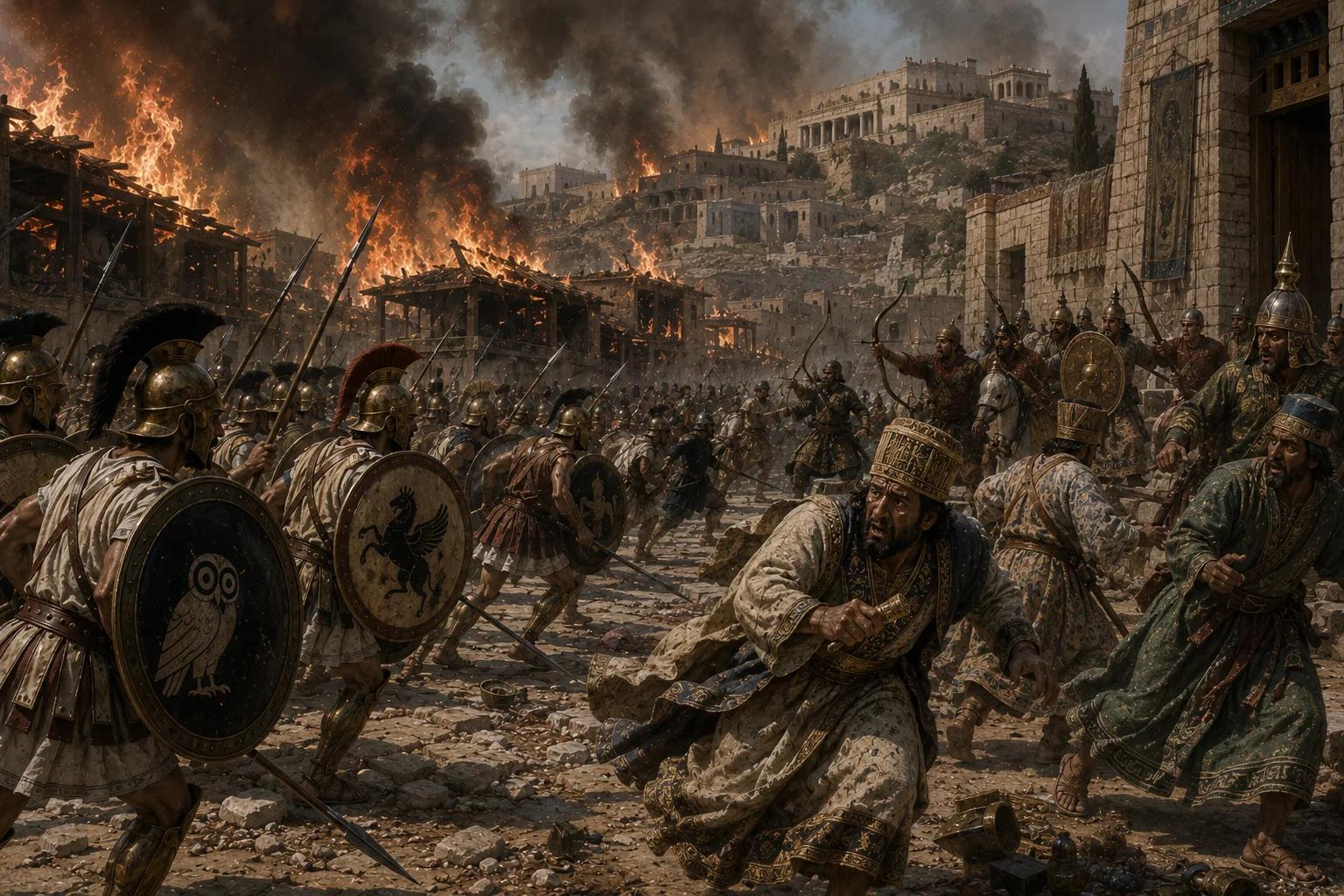
Athens and gave support to the rebels. The burning of , an important Persian centre in western Anatolia, made the revolt impossible for the empire to ignore.

eventually crushed the revolt, and suffered severely. But the involvement of mainland Greek cities changed the meaning of the conflict.

For , the Ionian Revolt became a turning point. It turned a local rebellion into a reason to punish and control powers beyond the empire's western edge.

The Wars with Greece
480 BCE
Step 7 of 10480 BCEAccessible mode

The Wars with Greece

In 480 BCE, Xerxes I launched a massive invasion of Greece to extend Persian control and avenge earlier setbacks.

Darius I had already tried to punish Athens and after the Ionian Revolt, but the Persian force was defeated at in 490 BCE.

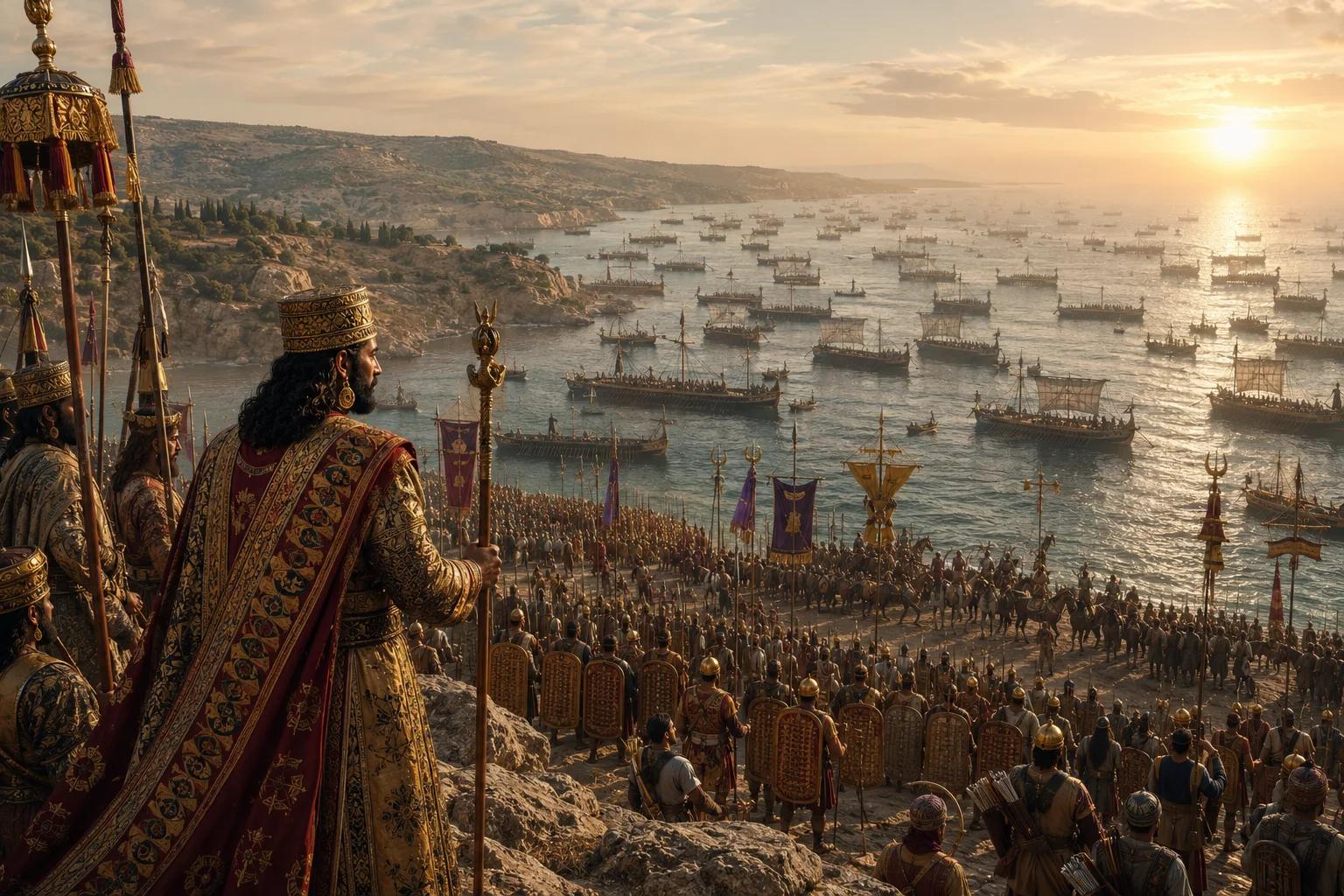
Xerxes prepared a larger campaign. Persian armies and fleets moved into Greece, supported by the resources of a vast empire.

The campaign produced famous battles. The Spartans and their allies resisted at , Athens was taken, and the Greek fleet won a crucial victory at .

In 479 BCE, Persian land forces were defeated at , and the invasion failed. remained strong, wealthy, and powerful, but it did not conquer mainland Greece.

The long-term consequences were important. Greek confidence grew, Athens built a maritime empire, and remained deeply involved in Greek politics even after the great invasion ended.

Rule Through Diversity
450 BCE
Step 8 of 10450 BCEAccessible mode

Rule Through Diversity

Persian kings ruled a diverse empire through a mixture of local cooperation, tribute and force.

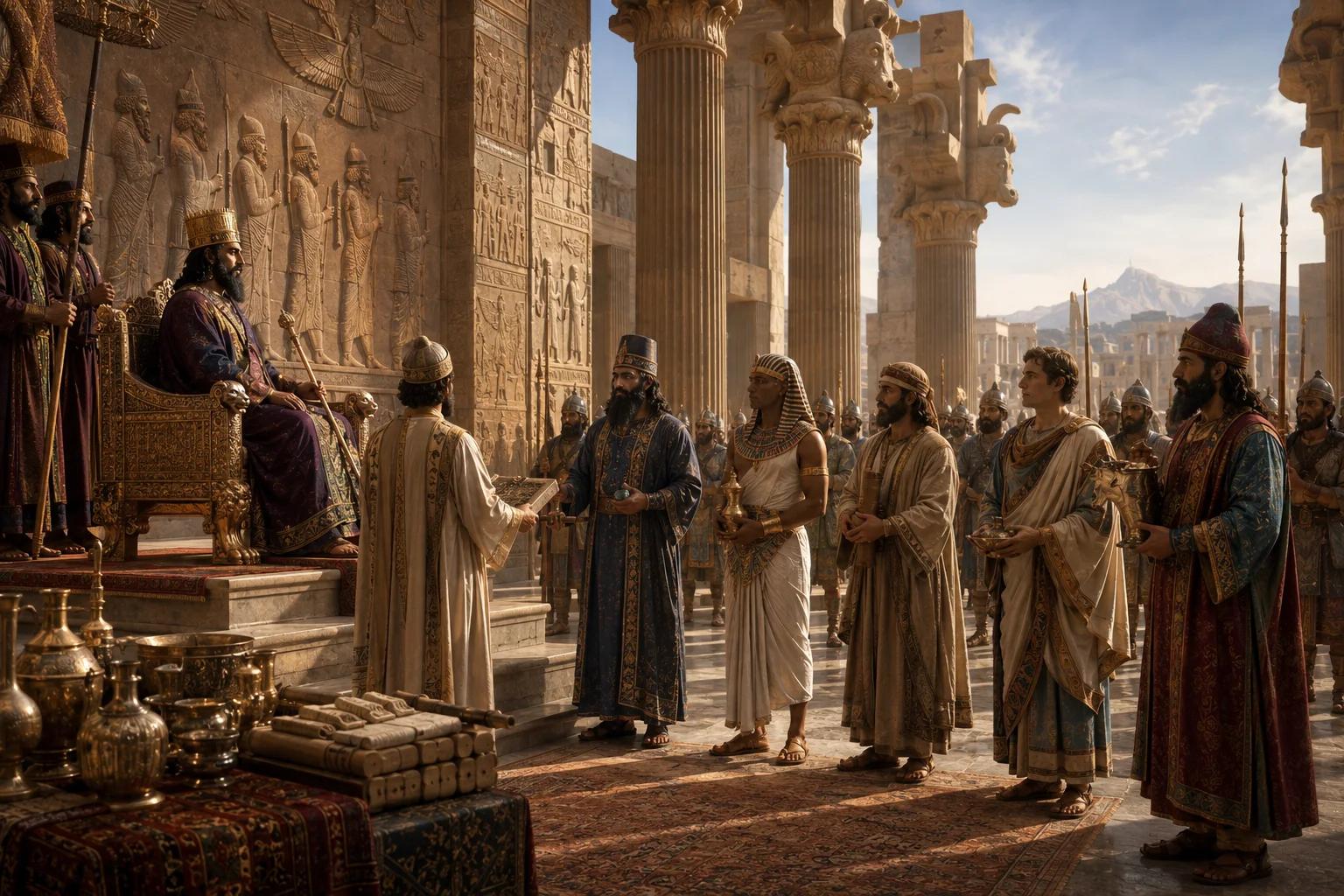
The empire ruled many different communities. Egyptians, Babylonians, Persians, Medes, Jews, Phoenicians, Greeks, Anatolians, and many others lived under Achaemenid authority.

Persian kings usually allowed local laws, languages, temples, customs, and elites to continue, as long as they accepted the king's rule and paid what the empire required.

This did not mean the empire was gentle or equal. Rebellion could be punished harshly, and tribute placed real burdens on subject peoples.

But cooperation often worked better than destruction. Regional elites helped collect taxes, manage cities, supply troops, and keep order.

These policies helped sustain stability across great distances. The empire's strength came from ruling many peoples without needing to erase them.

Challenges to Achaemenid Power
401 BCE
Step 9 of 10401 BCEAccessible mode

Challenges to Achaemenid Power

In the fourth century BCE, the Persian Empire remained large and wealthy, even as its rulers faced internal rivalries and challenges at its borders.

One major danger was succession. Royal family rivalries could turn into open conflict, especially when princes, nobles, satraps, and armies backed different claimants.

In 401 BCE, Cyrus the Younger challenged his brother Artaxerxes II for the throne. Cyrus the Younger was killed at , but the revolt revealed deep tensions inside the imperial system.

The Greek soldiers who had fought for Cyrus the Younger then marched home through Persian territory. Their survival showed Greek observers that parts of the empire could be crossed by determined outsiders.

Later rulers faced more revolts, powerful satraps, court intrigue, and pressure on the edges of the empire. Egypt broke away for long periods, and Greek powers kept interfering in western Anatolia.

remained formidable. Internal rivalries and external pressures formed part of the setting for Alexander’s invasion, but they did not make its defeat inevitable.

Alexander Ends the Empire
330 BCE
Step 10 of 10330 BCEAccessible mode

Alexander Ends the Empire

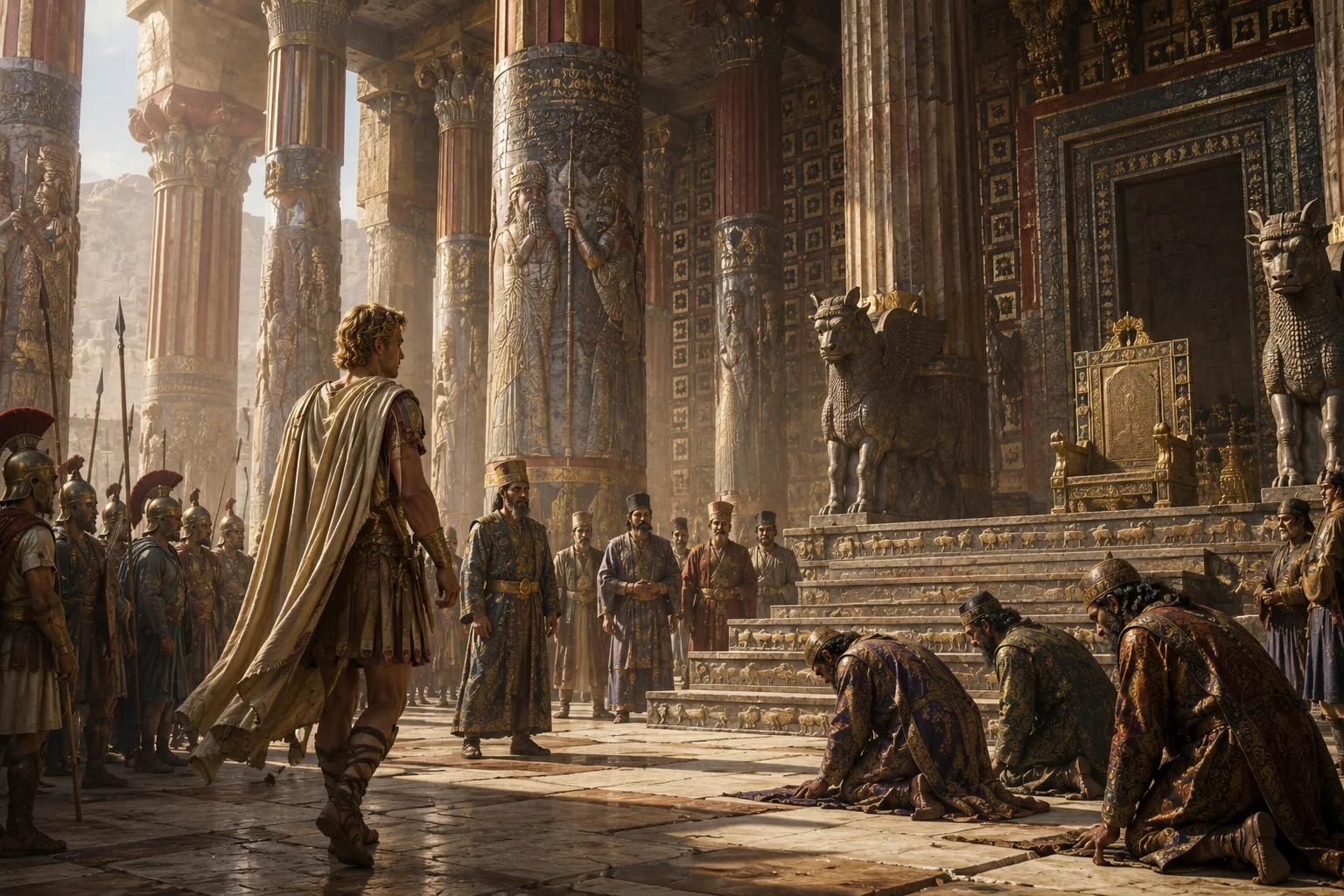
In 330 BCE, the Achaemenid Empire ended as Alexander's conquest destroyed the rule of Darius III.

Alexander of Macedon invaded Persian territory in 334 BCE. He presented the campaign as revenge for earlier Persian wars, but it soon became a fight for control of the empire.

Darius III faced Alexander at in 333 BCE and in 331 BCE. Both defeats damaged Persian authority and opened the empire's great cities to Macedonian control.

, , and fell. Darius III fled east, but his own officers seized and killed him in 330 BCE as Alexander pursued him.

With Darius III dead, Achaemenid rule collapsed. Alexander claimed the role of king and used parts of Persian ceremony, administration, and elite cooperation to govern what he had conquered.

The Persian Empire ended, but its legacy continued. Later empires learned from its roads, satrapies, royal ideology, court ceremony, and ability to rule many peoples under one imperial system.

Keep exploring

Finished The Persian Empire?

Choose the next story, follow a connected moment, or explore the people behind this story.

References

Sources and historical notes

Sources used to check this page, selected recommendations and historical notes.

Sources used

  1. The Metropolitan Museum of Art, “The Achaemenid Persian Empire (550–330 B.C.),”

    An overview of the dynasty, administration and Alexander’s conquest. The essay gives Salamis as 479 BCE, so that date should be checked against specialist accounts.

    Open source
  2. Encyclopaedia Iranica, “Achaemenid Satrapies,”

    Provincial administration, taxation and military obligations.

    Open source
  3. Encyclopaedia Iranica, “Egypt: Persians in Egypt in the Achaemenid Period,”

    Egypt under Achaemenid rule, rebellion and autonomy.

    Open source
  4. The Metropolitan Museum of Art, “The Cyrus Cylinder and Ancient Persia,”

    The cylinder, imperial culture and written sources.

    Open source

Additional sources and notes

Loading reviewed claim sources...

Our editorial approach · Report a historical error

A monthly route through history

Find out first about the latest published stories, feature notes and occasional Premium offers in one monthly email.