Accessible gives a lighter overview. Deep Dive tells the fuller story.
Quick Answers
What was Ancient Greece?
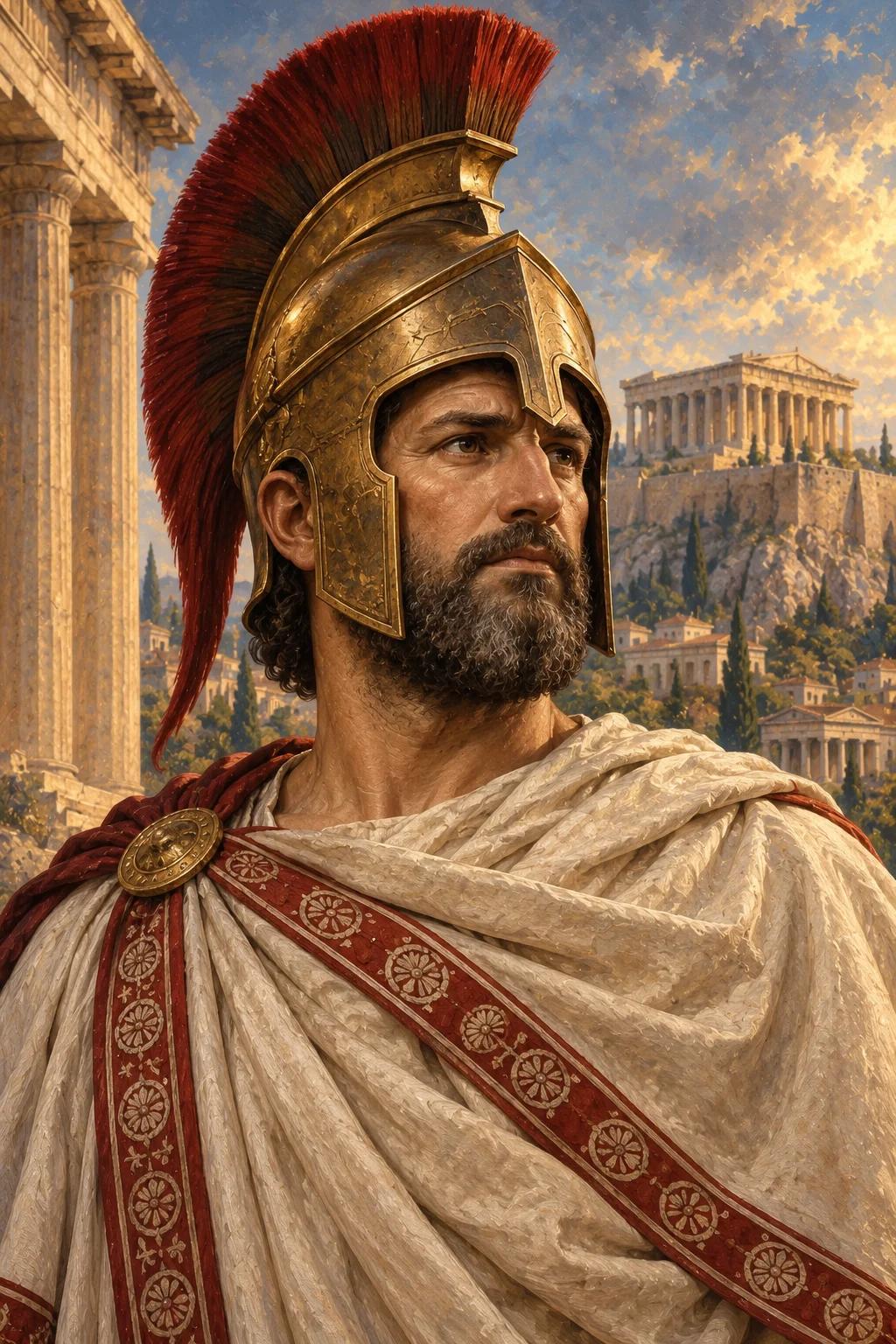
Ancient Greece included cities, kingdoms and communities across the Aegean and beyond. They shared languages and traditions while developing different political institutions. Their wars, trade, art and intellectual life continued to shape other societies.
At a glance
This story covers c. 800–146 BCE. Greek history extends before and after those dates.
Greek communities were linked by sea trade,colonies, shared gods, athletic festivals, and stories such as the Iliad and the Odyssey.
Poleis were important across the Greek world, alongside kingdoms, federations and other forms of political organisation.
and offered rival models of politics, society, and power.
Common questions
When was Ancient Greece?
The story begins around 800 BCE and ends with Rome’s defeat of the Achaean League in 146 BCE. Those are the boundaries of this story. Greek history also includes earlier societies and later periods.
Was Ancient Greece one country?
Ancient Greece was not one country. It was a world of independent city-states such as ,,, and that shared language, gods, stories, and festivals but often fought each other.
What were Athens and Sparta known for?
became known for democracy, debate, drama, naval power, and philosophy. became known for military discipline, a warrior elite, and a society organised around control of the helot labour population.
How did Ancient Greece lose independence?
asserted leadership over much of Greece after Chaeronea in 338 BCE. Rome later intervened in a series of conflicts, including the war that ended in the sack of in 146 BCE. Greek cities continued under changing forms of rule.
Context
Introduction
Overview
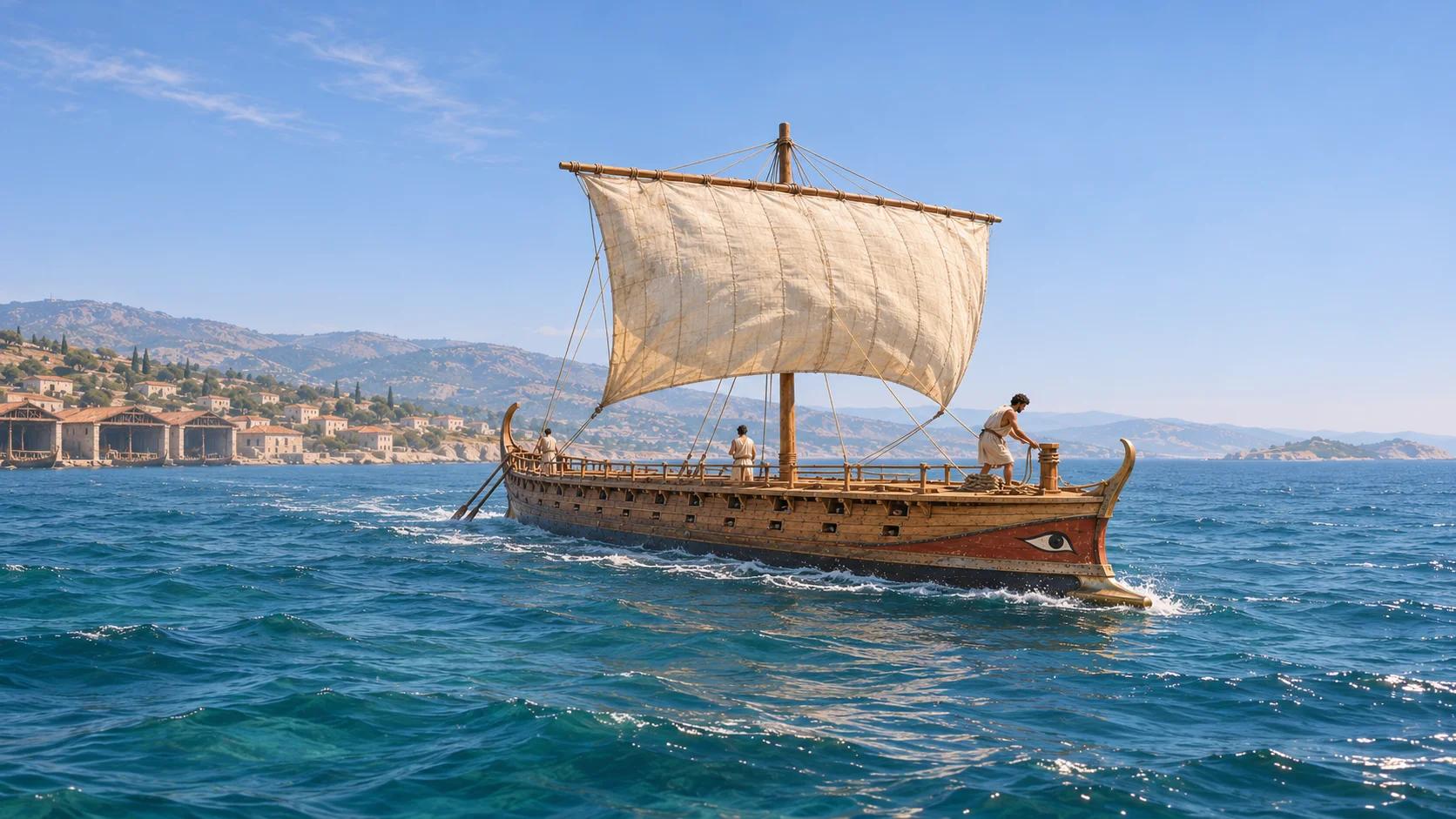
Ancient Greece was a world of rival cities connected by the sea. Its people fought wars and built empires, but they also argued over how to live and who should hold power. Their answers would travel far beyond Greece, shaping ideas that are still debated today.
Key forces
Poleis were political communities with different institutions, connected by travel, trade and shared institutions such as festivals.
Atheniandemocracy widened participation among male citizens. ’s citizen elite was supported by helot labour.
War shaped Greek history, but so did trade,colonization, and shared culture.
Macedonian and Roman power changed the freedom of Greek cities to act. The cities and their cultural traditions continued.
800 BCE
Step 1 of 10800 BCEAccessible mode
Ancient Greek City-States and the Rise of the Polis
After the Mycenaean palaces fell, communities across Greece changed in different ways. Over the following centuries, some grew into city-states.
The old palace system disappeared and its form of writing fell out of use. Finds from places such as Lefkandi show that communities still exchanged goods across the sea.
Mountains and valleys helped shape local communities. Sea routes also brought people and goods between them.
A polis was a political community, usually centred on a town and including nearby land. Each had its own customs and institutions.
Citizens could have duties in war and public life. Who counted as a citizen and how much say they had depended on the city.
The story of the polis starts with a question the cities answered differently: who belonged, and what did belonging allow them to do?
650 BCE
Step 2 of 10650 BCEAccessible mode
Sparta and the Warrior State
became famous for the discipline it expected of its citizens. That reputation tells only part of how the city worked.
Before this system was fully formed, was one Greek city among many in . Its people farmed, worshipped, and competed with nearby rivals.
conquered neighbouring over time. Helots in and Laconia were an unfree population whose labour supported Spartan citizens.
Classical writers describe a public upbringing for Spartan boys and common meals for men with full citizenship. These institutions helped define who belonged to the ruling citizen body.
also created powerful institutions. Kings led in war, elders advised, magistrates enforced order, and common meals tied citizens into a single military culture.
Spartan discipline impressed some Greek writers. The same system depended on people whose work was compelled.
594 BCE
Step 3 of 10594 BCEAccessible mode
Athens Begins Political Reform
Around 594 BCE, turned to Solon to address disputes over debt and power.
Before this, a few powerful families controlled most political life. Many small farmers struggled to survive.
Debt became a crisis. People who could not repay loans could lose their land or even their freedom.
Later Athenian accounts credit Solon with cancelling debts, ending the use of an Athenian’s person as security for a loan, and tying eligibility for some offices to wealth.
These changes gave more men a role in public life, even if the richest still held the top offices. Tension did not vanish, but the rules began to open.
This was an early step toward broader political participation. It helped shape later ideas about citizenship, law, and reform.
508 BCE
Step 4 of 10508 BCEAccessible mode
Athenian Democracy Takes Shape
Around 508–507 BCE, reforms associated with Cleisthenes changed how citizens were registered and represented.
Before this, powerful families often controlled politics. Ordinary male citizens had less say, and was unstable after bitter struggles for power.
Cleisthenes reorganised citizens into local units called demes and grouped them into ten new tribes.
Women of citizen families had civic and religious roles. Voting and officeholding were reserved for men with citizenship. Enslaved people and resident foreigners could not vote.
The new arrangements gave later Atheniandemocracy a structure to build on.
480 BCE
Step 5 of 10480 BCEAccessible mode
The Persian Wars
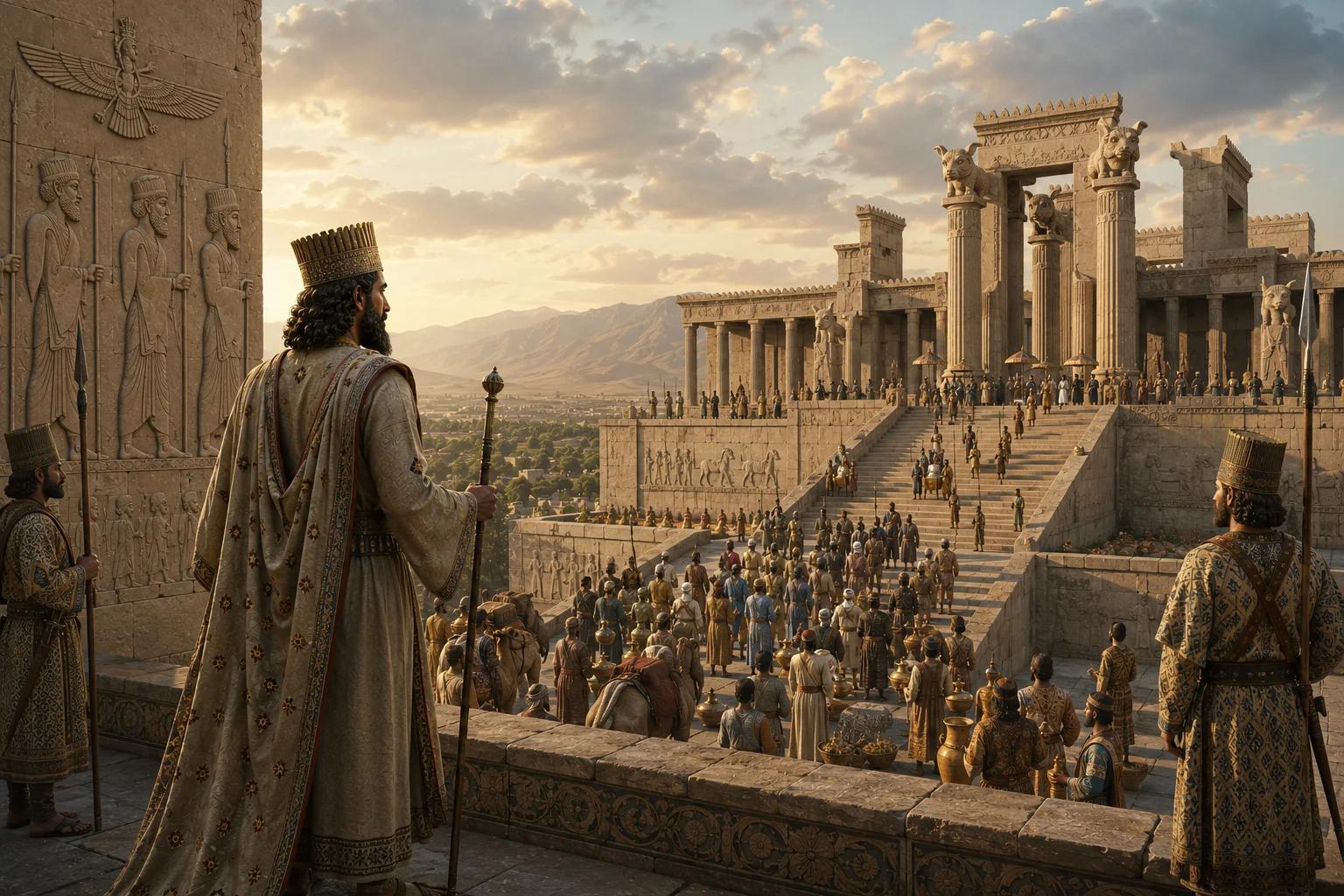
Persian forces attacked mainland Greece in 490 BCE and returned in 480 BCE, when a coalition of Greek states resisted them.
Before the wars, Greece was not one country. It was a patchwork of city-states like and , and they often argued with each other.
Then the Persian Empire pushed west. Some Greeks submitted, but others chose to resist, even though they did not fully trust one another.
and defeated a Persian force at in 490 BCE. In 480 BCE the allies lost at but won at . Victories at and Mycale followed in 479 BCE.
Victory gave the Greeks new confidence. It also raised higher than before, because its ships and leaders had played such an important part.
The alliance preserved the independence of the cities that resisted. In the years that followed, built a new alliance around its fleet.
447 BCE
Step 6 of 10447 BCEAccessible mode
Athens at Its Height
In 447 BCE, work began on . The building was one sign of how much power had gained since the Persian Wars.
After defeating Persia, led a league of Greek allies. Over time, that alliance started to look more like an empire controlled by .
Pericles was closely associated with the building programme. gave the city a new temple to Athena and put its resources on public display.
Male citizens could attend the Assembly and serve on juries. Crowds gathered for plays at festivals such as the City Dionysia.
Women from citizen families took part in religious life but could not vote. Enslaved people and resident foreigners were also excluded from political decision-making. often compelled its allies to obey.
That mix of brilliance and control still feels familiar today. shows how a society can produce great art and bold politics while also using power in unfair ways.
431 BCE
Step 7 of 10431 BCEAccessible mode
The Peloponnesian War
Ancient Greece was not one country. It was a patchwork of city-states, and two of the strongest, and , finally turned their rivalry into war.
Before the fighting, led a naval empire and grew rich from trade and tribute. was a land power with a tough army and cautious leaders.
As grew more powerful, its disputes with and other allies of helped turn rivalry into war.
suffered a plague that killed Pericles, a defeat in Sicily and the loss of its fleet at Aegospotami. It surrendered in 404 BCE.
People paid the price. Farms were ruined, citizens died, and trust inside many city-states broke down. Even democracy in came under heavy strain.
won, but Greek states continued to fight over who would lead. later restored its democracy after a brief oligarchy.
399 BCE
Step 8 of 10399 BCEAccessible mode
Greek Philosophy: Socrates, Plato and Aristotle
In ancient Greece, some people stopped asking only how to win power or honor. They began asking how to live well and think clearly.
Before this shift, Greek life centered on war, politics, religion, and public debate. Ideas were important, but they were often tied to reputation and success.
Socrates pushed something new. He questioned everyday beliefs about justice, courage, and truth, and he urged people to test their own thinking.
An Athenian jury condemned Socrates in 399 BCE on charges of impiety and corrupting the young. Most surviving accounts come from writers with their own views of him.
His example shaped Plato, who explored politics and knowledge, and Aristotle, who studied ethics, logic, and the natural world in a more systematic way.
Their questions still shape schools, law, science, and public life today. When people argue about truth, fairness, or the best kind of government, they are still walking Greek ground.
338 BCE
Step 9 of 10338 BCEAccessible mode
Macedon Takes the Lead
At Chaeronea in 338 BCE, defeated an alliance led by and .
Before this moment, places like and competed for power. Each city ruled itself and often went to war with its neighbors. This constant fighting weakened them over time.
Meanwhile, , a kingdom to the north, grew stronger under King Philip II. He built a disciplined army and used new tactics that made his soldiers more effective.
Philip II won a decisive victory over and . Both states remained, but they had less freedom to act against .
Philip organised most states into the League of . They kept local institutions while accepting Macedonian leadership. stayed outside the league.
This shift changed Greek life. Instead of small rival states, Greece became part of a bigger political world, paving the way for future empires.
146 BCE
Step 10 of 10146 BCEAccessible mode
The Legacy of Ancient Greece
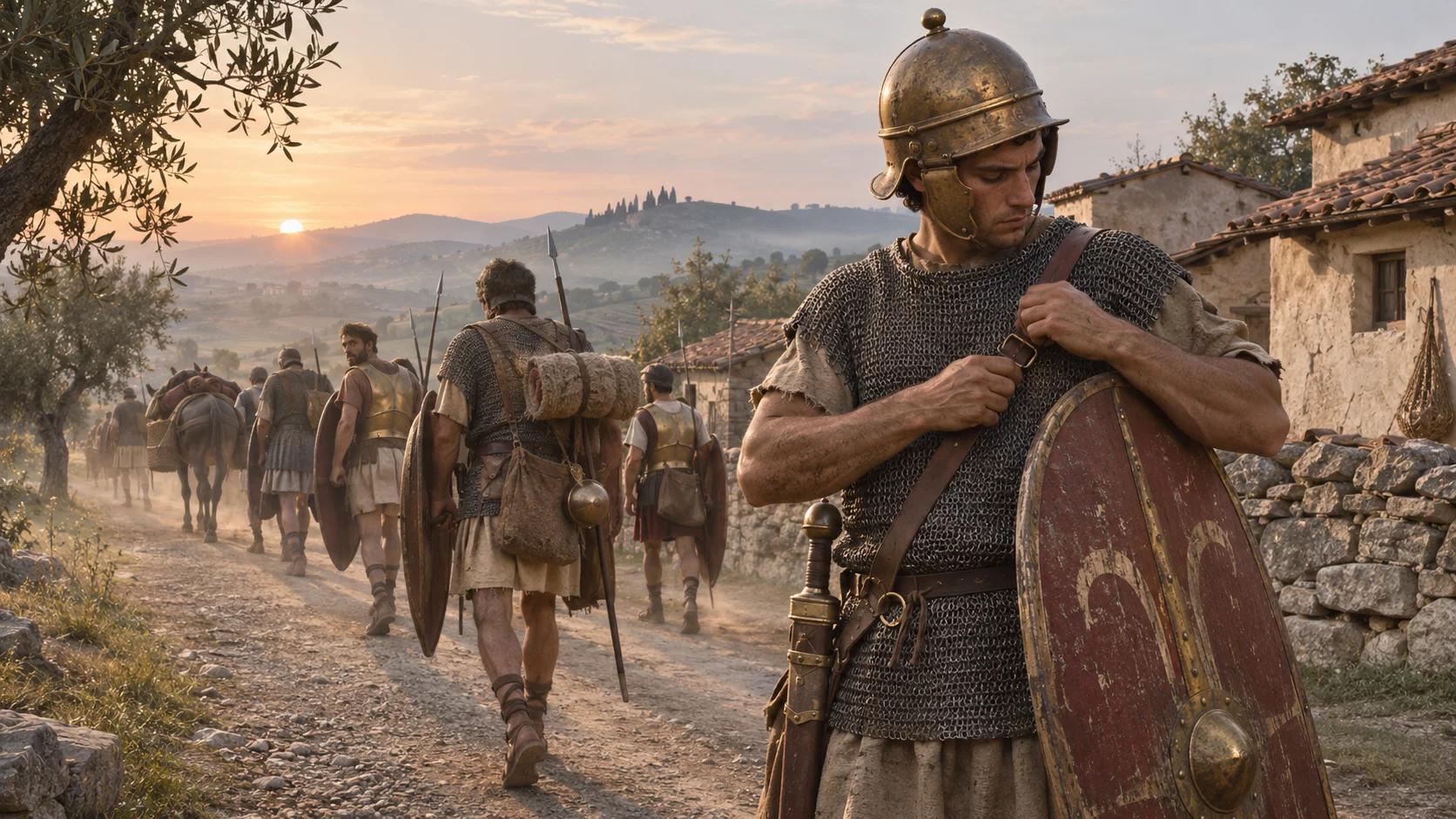
Rome defeated the Achaean League and sacked in 146 BCE. Greek cities and learning had histories that continued under Roman rule.
After Alexander, kings and leagues competed for power. Rome intervened in their affairs over generations.
The sack of was one milestone in that process. Roman readers and patrons had already begun to seek out Greek teachers, books and art.
Greek philosophy shaped Roman thinkers. Greek literature became model reading. Greek education trained young Romans in speaking, reasoning, and public life.
Greek remained widely used in the eastern Mediterranean. Texts and ideas travelled through teaching, copying and translation.
Greek works survived in several settings, including Byzantium and scholarship in Arabic. Later readers adapted them to their own questions.
Keep exploring
Finished Ancient Greece?
Choose the next story, follow a connected moment, or explore the people behind this story.