This story discusses war, violence, persecution, and death in an educational historical context.
Reading mode
Accessible gives a lighter overview. Deep Dive tells the fuller story.
Quick Answers
What was the Roman Republic?
The Roman Republic was the system of government through which grew from a city into a Mediterranean power. It used elected magistrates, citizen assemblies and a Senate. Its conventional dates run from the traditional expulsion of ’s kings to the first settlement of Augustus.
Most elected magistracies were annual. The Senate and assemblies also played important roles.
Conquest brought wealth, enslaved captives and provincial commands, and sharpened disputes over land and power.
Common questions
When was the Roman Republic?
Roman tradition dates the Republic’s beginning to 509 BCE. Historians conventionally use the settlement of Augustus in 27 BCE as the end, although power shifted over many years.
How did the Roman Republic work?
The Republic used elected magistrates, the Senate,citizen assemblies, law, patronage, and annual offices. In practice, aristocratic families held enormous influence.
Why did the Roman Republic collapse?
The Republic’s collapse had several causes. Disputes over land, citizenship and military commands repeatedly led to violence. Civil wars and extraordinary powers then gave victorious leaders control of armies and resources that ordinary offices could no longer match.
Roman tradition begins the Republic with the rejection of kingship. Over centuries, its republic grew into a Mediterranean power. Conquest brought wealth, inequality and fierce struggles for control. As rival leaders turned their armies on one another, the system that had helped rise began to unravel.
Key forces
The Senate, magistrates and citizen assemblies shared power in arrangements that developed over centuries.
Italian alliances supported ’s expansion. Conquest brought wealth, enslaved people and disputes over public land.
The Social War broadened citizenship across much of Italy. Disputes over how to enrol new citizens fed into the struggles of 88 BCE.
Augustus’s settlement in 27 BCE is the conventional endpoint. His power grew before it and developed further afterwards.
509 BCE
Step 1 of 10509 BCEAccessible mode
The Republic Replaces the Kings
Roman tradition begins the Republic with the expulsion of its last king. It places that break in 509 BCE, long before the histories that tell the story were written.
Early was ruled by kings. They led in war and had public religious duties. The details of how they governed are hard to recover.
In the story Romans later told, the last king was Tarquin the Proud. The assault of Lucretia by his son and her death prompted a revolt led by prominent Romans.
Over time the Republic developed annual offices, citizen assemblies and a Senate. Two consuls normally shared the chief office, while assemblies of male citizens elected officials and voted on laws.
Sharing offices put limits on individual power. Wealthy families still held much of the influence, and voting rules gave some citizens more weight than others.
The new government took shape over generations. Later Romans told its beginnings as the story of a single break with kingship.
451 BCE
Step 2 of 10451 BCEAccessible mode
The Twelve Tables
In the fifth century BCE, Romans began writing down some of the rules that governed disputes, debts and family life.
Roman tradition presents the demand for written law as part of a struggle between patrician families and plebeian citizens. Plebeians had fewer routes to high office, but they were a varied group.
Knowing the rules mattered. The Tables set out procedures for going to court and rules for matters such as property, debts and inheritance.
Later Romans said ten men drew up the Twelve Tables around 451–450 BCE and put them on public display. The original tablets are lost. Parts of the laws survive in quotations by later writers.
Writing the rules down made them available to cite. The rules themselves still upheld harsh penalties and differences of status.
Generations of Romans treated the Tables as an early foundation of their law.
287 BCE
Step 3 of 10287 BCEAccessible mode
The Conflict of the Orders Ends
In 287 BCE, Roman tradition places an important change in who could make binding laws.
Patricians belonged to hereditary families with privileged access to early offices. Plebeians were citizens outside that group. Some plebeian families were wealthy and eventually held high office.
Roman accounts describe plebeians withdrawing together to press their demands. Over generations they gained tribunes and wider access to office.
The law confirmed the place of the plebeianassembly in government. Political influence still depended heavily on wealth, reputation and connections.
Among the families that rose into the ruling elite were plebeians who had gained access to high office.
264 BCE
Step 4 of 10264 BCEAccessible mode
The First Punic War
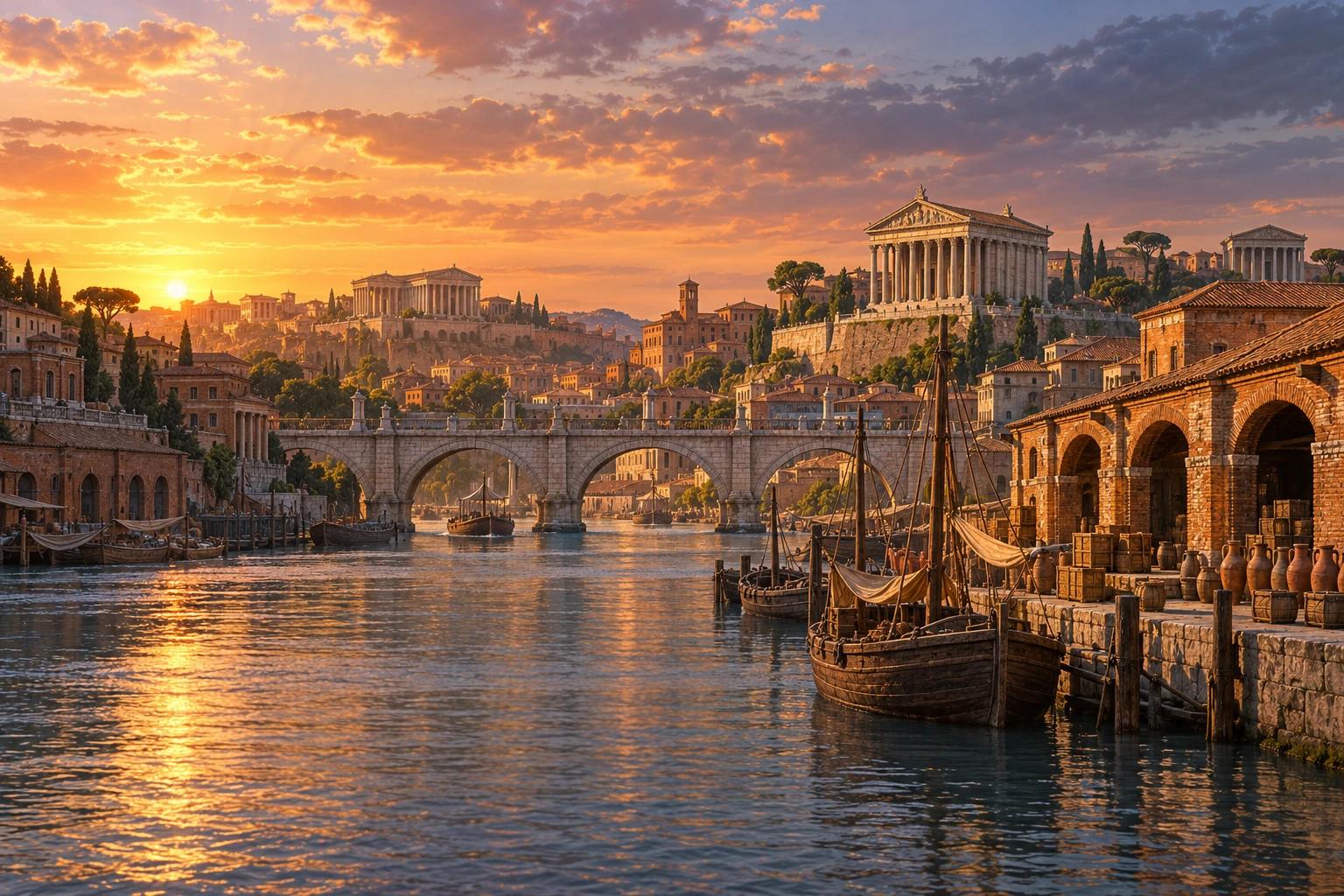
did not begin as a sea power. This war pushed it out of Italy and into a much bigger world.
Before this, mainly fought land wars against nearby peoples in Italy. was different: rich, powerful, and strong at sea.
The struggle began over . Once crossed the water to fight there, it was no longer just defending its neighborhood.
built fleets and replaced ships lost in battle and storms. After the Roman victory near the Aegates Islands in 241 BCE, agreed to give up its holdings in .
The lands acquired in became the basis of its first overseas province. Roman officials now had to govern territory across the sea.
This was a turning point. started acting like a Mediterranean power, and republican politics began to revolve around bigger wars, bigger rewards, and wider rule.
218 BCE
Step 5 of 10218 BCEAccessible mode
Hannibal Invades Italy
faced its worst war yet when Hannibal marched from Spain into Italy. It looked like the republic might break.
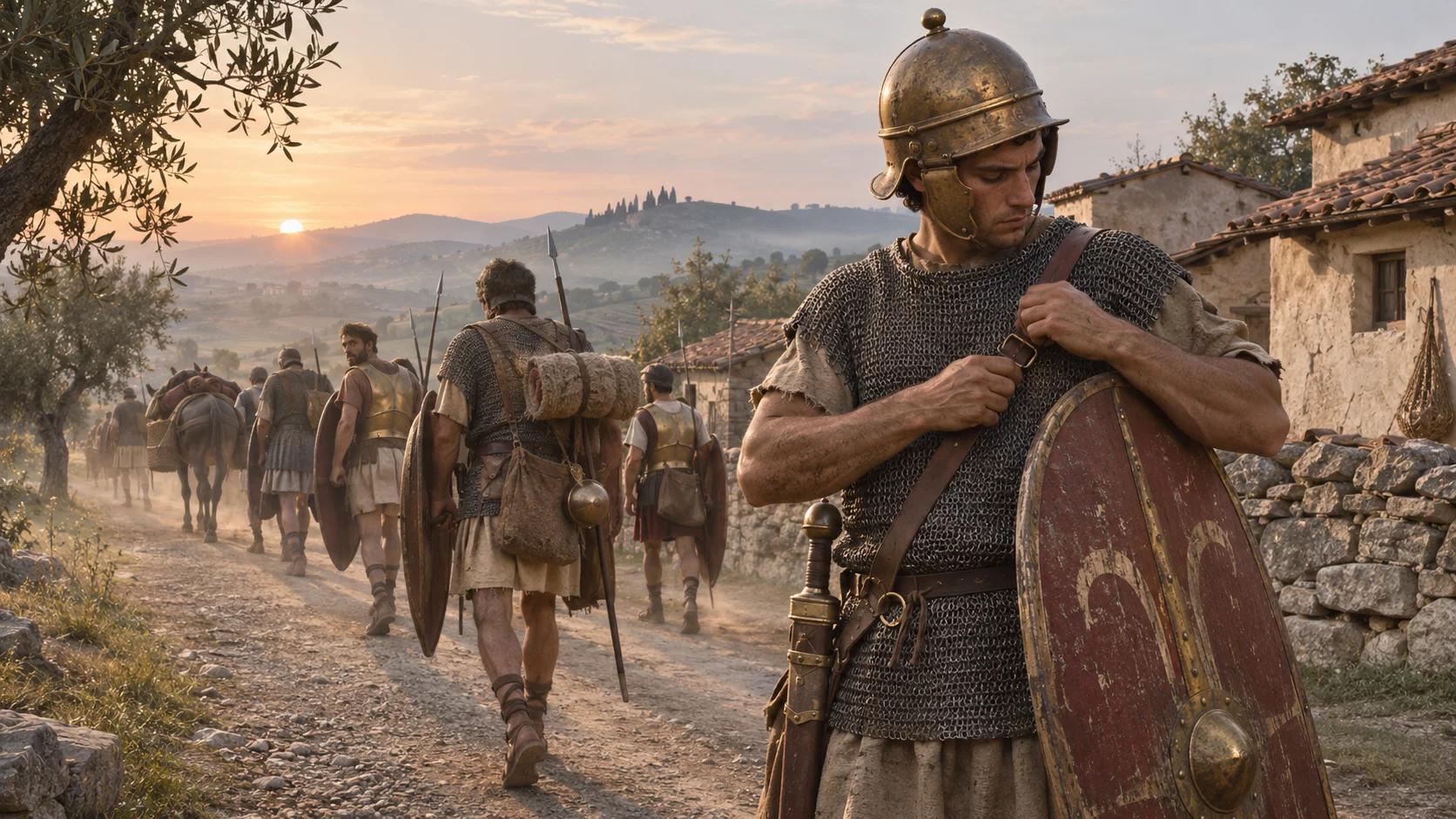
Before this, had grown strong by beating nearby rivals and controlling most of Italy. Its system depended on allied cities sending soldiers when danger came.
Hannibal crossed in 218 BCE. In Italy he threatened the system of allies that supplied much of 's military strength.
He crushed Roman armies at ,, and . Even after these disasters, kept raising new forces and avoided surrender.
Some Italian communities changed sides, including Capua. Many others stayed with . Roman armies kept fighting in Italy and Iberia before Scipio took the war to Africa.
Scipio and his Numidian ally Masinissa defeated Hannibal at Zama in 202 BCE. Peace followed in 201 BCE.
146 BCE
Step 6 of 10146 BCEAccessible mode
Rome Destroys Carthage
In 146 BCE, crushed and tightened its grip on Greece. It was no longer just an Italian power.
Before this, had spent generations fighting rivals around the Mediterranean. controlled trade and ships, while Greek kingdoms shaped politics in the east.
kept winning wars, and each victory pulled it deeper into lands far from Italy. Senators now had to manage overseas provinces,tribute, and huge numbers of captives.
Roman forces destroyed in 146 BCE after a siege. In the same year another Roman army sacked . Both victories showed how far Roman power had spread.
Conquest brought wealth, revenue and enslaved captives. The gains were uneven. Historians debate how widely small farms declined and what caused that change.
now had to govern more provinces. The opportunities and burdens of conquest became part of politics at home.
133 BCE
Step 7 of 10133 BCEAccessible mode
Tiberius Gracchus Breaks the Order
The wealth of conquest brought a question back to . Who should be allowed to use the land the state had taken?
Rich landholders occupied large areas of public land. Roman reformers argued that poorer citizens were losing access to it, though conditions varied across Italy.
As tribune in 133 BCE, Tiberius Gracchus proposed redistributing public land held above a legal limit. The aim was to allot plots to poorer citizens.
Another tribune vetoed the bill. Tiberius had the assembly remove him and the law passed. Later that year, during Tiberius's bid for another term, a group led by Scipio Nasica killed him and some of his supporters.
One dispute was over who could use public land. Another was over what a tribune could do to get a law passed and stay in office.
The killing became a precedent for the use of force in political disputes. The land commission continued its work after Tiberius's death.
91 BCE
Step 8 of 1091 BCEAccessible mode
The Social War
Many of 's Italian allies provided soldiers without holding Roman citizenship. In 91 BCE, several of those communities went to war against .
Treaties set different terms for different allied communities. Across much of Italy, allies supplied troops and fought alongside Roman citizens.
The tribuneMarcus Livius Drusus supported wider citizenship in 91 BCE. After he was killed, revolt spread. The communities that took up arms may have had different goals.
Several rebel communities formed their own federation with a capital at Corfinium and issued coins. They faced Roman armies with troops who had once fought alongside them.
Laws passed during the war offered citizenship to many Italians. extended it across much of the peninsula as resistance was defeated or negotiated away.
Citizenship changed who belonged to . New citizens still faced disputes over how they would be registered and how much influence they could have.
88 BCE
Step 9 of 1088 BCEAccessible mode
Sulla Marches on Rome
had plenty of power, but its rules depended on people accepting limits. In 88 BCE, that began to break.
For years, leading Romans competed for glory, votes, and military commands. The Senate, popular leaders, and ambitious generals all fought for influence.
Instead of accepting the decision, Sulla led his legions on itself. It was shocking. Roman soldiers entered their own city under arms and forced his enemies out.
Sulla used the army to take back the command and drive out his opponents. He left for the eastern war, and his rivals returned while he was away.
Sulla came back to Italy and won a civil war. His first march in 88 BCE and his later dictatorship were separate stages of that struggle.
27 BCE
Step 10 of 1027 BCEAccessible mode
Augustus Settles the State
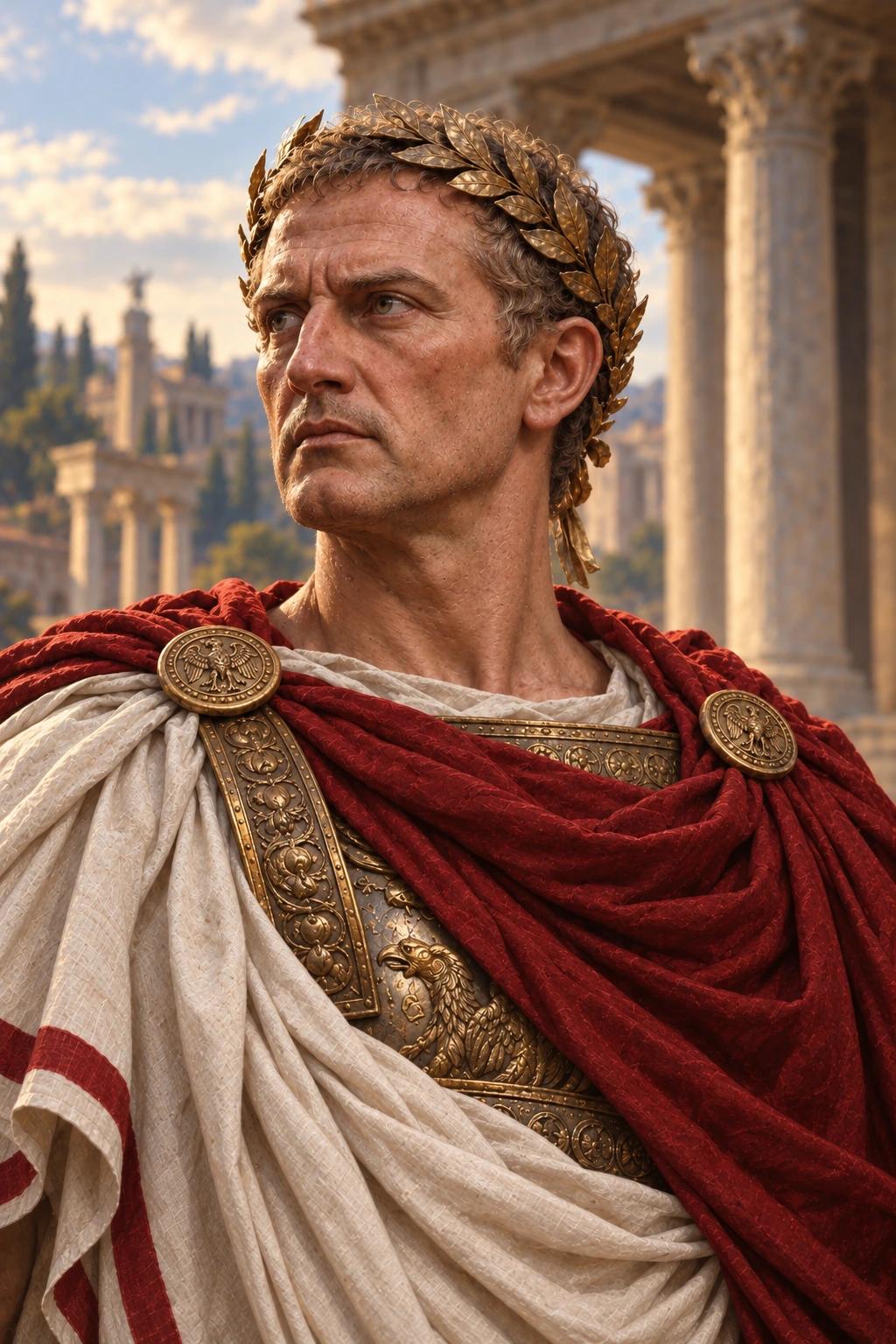
Octavian emerged from the civil wars as 's strongest leader. In 27 BCE the Senate gave him the name Augustus.
Caesar's war with Pompey began in 49 BCE, and his assassination in 44 BCE opened another round of conflict. Octavian defeated Antony and Cleopatra at in 31 BCE and took control of Egypt in 30 BCE.
The Senate,consuls and other familiar offices continued under Augustus. He also held command over provinces where major armies were stationed.
In 27 BCE Augustus presented the settlement as a restoration. In 23 BCE he took on further powers, including the authority of a tribune.
The new arrangements grew over several years. Elections and debates continued, but no other Roman could match Augustus's military resources and influence.
Later emperors inherited a system that combined one man's supremacy with offices and forms of authority familiar from the Republic.
Keep exploring
Finished The Roman Republic?
Choose the next story, follow a connected moment, or explore the people behind this story.