← People

Tiberius

Tiberius was Roman emperor from 14 to 37 CE, the adopted son and successor of Augustus. A skilled Roman general and administrator, he preserved the early Principate after Augustus's death, but his reign became associated with political suspicion, treason trials, the rise and fall of Sejanus, and his withdrawal to Capri.

Born
42 BCE
Died
37 CE
Role
Roman emperor
Full name
Tiberius Julius Caesar Augustus

Roman emperor (42 BCE-37 CE)

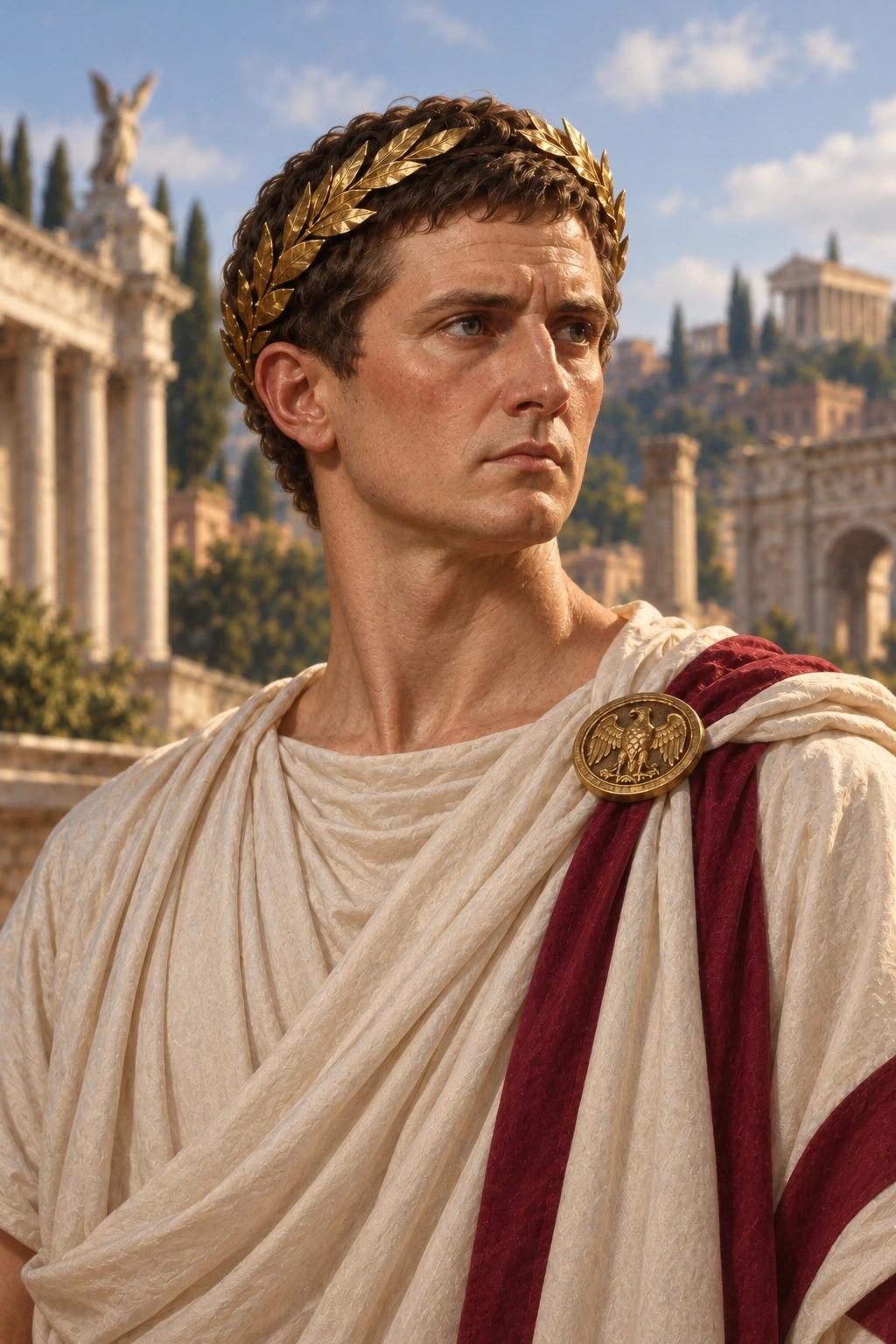
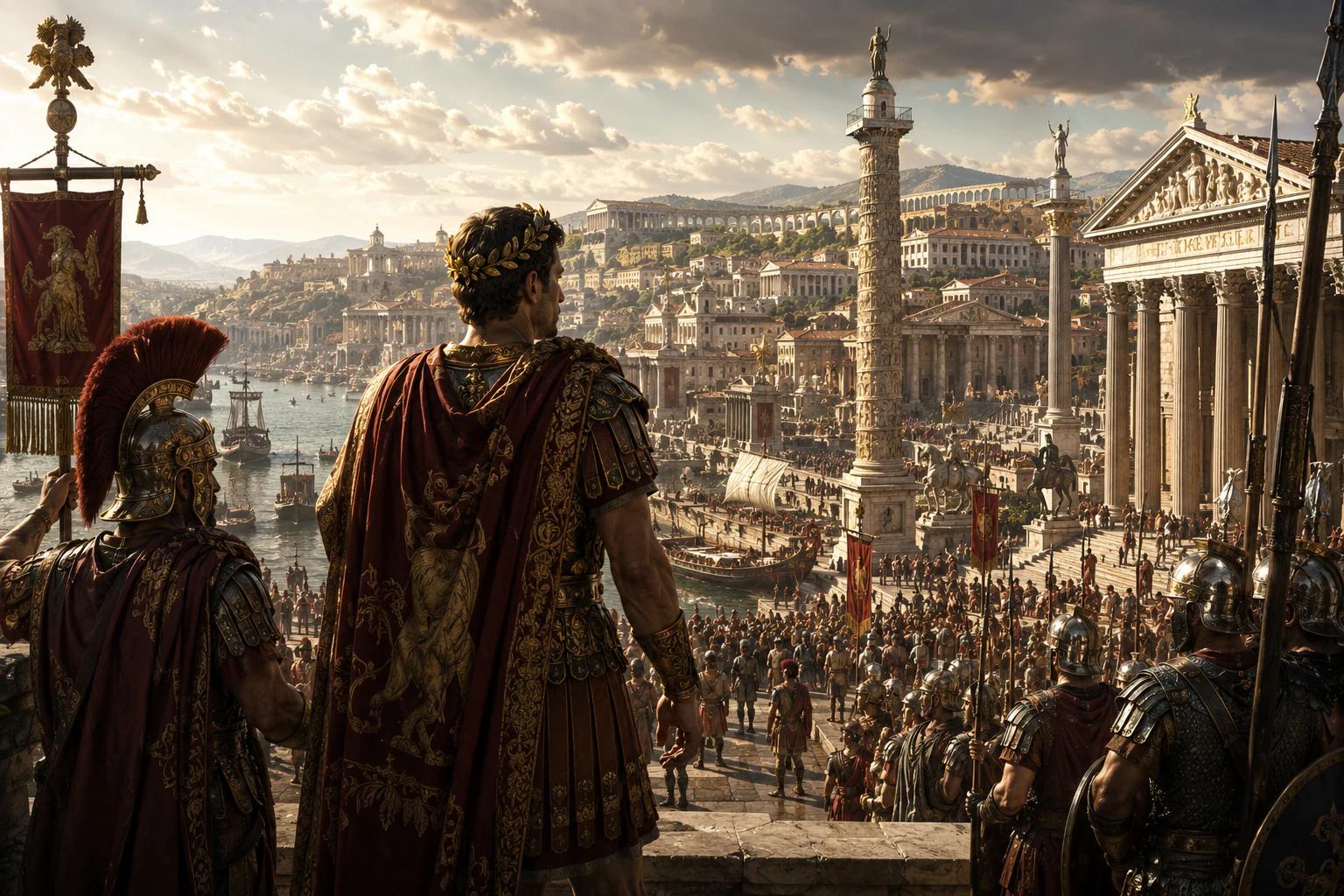
AI-assisted painted reconstruction of Tiberius
AI-assisted historical reconstruction

An illustrative reconstruction based on historical context. It is not a photograph or documentary likeness. Image policy Attribution

Life Journey

The reluctant heir of Augustus

Follow Tiberius from military commander to the emperor who tested whether Augustus's system could survive succession.

Complete chronology

42 BCE

Born into the Claudian elite

Tiberius was born in 42 BCE to Tiberius Claudius Nero and Livia Drusilla, members of the old Claudian aristocracy. His earliest years belonged to the wreckage of the Roman Republic. Julius Caesar had been murdered only two years earlier, the Second Triumvirate was remaking politics through war and confiscation, and no one yet knew what kind of state would emerge from the violence. Tiberius's family initially stood on the wrong side of Octavian's power, but the political landscape changed when Livia divorced his father and married Octavian in 38 BCE. That marriage made Tiberius part of the future imperial household. It did not make him loved, secure, or inevitable. Augustus had other hopes for succession, especially through his daughter Julia and grandsons Gaius and Lucius Caesar. Tiberius grew up near power without being its first choice, a position that shaped his guarded temperament. He belonged to the dynasty, but always with the sense that acceptance had to be earned through usefulness.
20s-10s BCE

Commander on the frontiers

Tiberius's reputation rested on competence rather than charm. He served in Armenia, helped recover Roman standards from Parthia through diplomacy backed by force, campaigned in the Balkans, and commanded on the Rhine and Danube frontiers. These were not decorative assignments. The early empire depended on armies stationed far from Rome, and soldiers needed to believe that the man at the center understood command. Tiberius did. He was methodical, austere, and effective, the opposite of a crowd-pleasing prince. His military career also placed him at the practical edge of Augustus's settlement. The Principate survived because the emperor controlled armies, provinces, pay, roads, and information. Tiberius learned those systems before he inherited them. His temporary withdrawal to Rhodes in 6 BCE, after being forced into an unhappy marriage with Julia, shows the emotional strain behind the public career. Yet the deaths of Augustus's preferred heirs brought him back. By 4 CE Augustus adopted Tiberius, making political necessity stronger than personal preference.

14 CE

Augustus's successor

Augustus died in August 14 CE after more than forty years as Rome's dominant figure. The question was not simply who would inherit. It was whether the political structure Augustus had built could exist without him. Tiberius had been prepared through adoption, tribunician power, military command, and public visibility. Even so, the transition required performance. He hesitated before the Senate, spoke as if power were a burden, and allowed republican forms to confirm what had already become reality. Ancient writers mocked this as hypocrisy, but it was also constitutional theatre. The early Principate depended on presenting monarchy as reluctant service. Mutinies among legions in Pannonia and on the Rhine revealed the danger beneath the ceremony. Soldiers tested the new regime immediately, demanding pay and terms. Tiberius survived the challenge, partly through the actions of Germanicus and Drusus, and the empire did not fracture. That mattered enormously. His accession turned Augustus's personal dominance into a repeatable imperial office, even if the rules remained ambiguous.

20s-30s CE

Suspicion and withdrawal

Tiberius's reign was not a simple descent into tyranny. In administration, he could be cautious and capable. He preserved the treasury, avoided unnecessary wars, maintained provincial order, and often resisted expensive public flattery. For many people outside Rome's political class, his rule may have felt stable. The darker reputation comes from elite politics in the capital. The law of treason, or maiestas, widened into a weapon of accusation. Informers profited. Senators learned that careless words, family connections, or suspected disloyalty could become dangerous. The rise of Lucius Aelius Sejanus, commander of the Praetorian Guard, intensified the atmosphere. Sejanus concentrated guard power near Rome, cultivated influence over the emperor, and destroyed rivals until Tiberius finally turned against him in 31 CE. Tiberius's retreat to Capri in 26 CE became the symbol of his reign: the emperor physically absent but politically inescapable. Ancient authors such as Tacitus and Suetonius wrote from hostile senatorial traditions and embroidered the island with lurid stories. Some details should be treated carefully. Yet the broad problem is real. Tiberius kept the imperial machine working, but he did not make it trusted.

After 37 CE

An uneasy legacy

Tiberius died at Misenum in 37 CE. The succession passed to Caligula, son of Germanicus, whose early popularity owed much to public affection for his father and resentment of Tiberius's old age. Tiberius left no easy reputation. He was not Augustus, the architect of the system, nor Nero, the theatrical disaster of later memory. His importance is quieter and in some ways more revealing. He showed that the Roman Empire could survive a transfer of power from one princeps to another. That achievement made the Principate durable. At the same time, his reign exposed weaknesses Augustus had never solved: no clear constitutional succession, dependence on family adoption, fear among elites, and the dangerous power of palace intermediaries. If Augustus made monarchy acceptable by wrapping it in republican forms, Tiberius showed what happened when the wrapping remained but warmth disappeared. To ask why Tiberius was important is to look beyond caricature. He was a capable soldier and administrator, a reluctant dynastic heir, a suspicious ruler, and the first proof that Rome's new monarchy could outlive its maker without becoming secure in spirit.

Continue in context

Connected stories

Move from the profile into the wider events and settings this figure belongs to.

Keep exploring

Content note

This profile is written for educational use and connects to related Stories of History pages. The main portrait is an AI-assisted historical reconstruction, included as an illustrative aid rather than documentary evidence. Image policy Image attribution

References

Sources and historical notes

Sources used to check this page, selected recommendations and historical notes.

Sources used

  1. MIT Internet Classics Archive, “Tacitus: Annals, Book I,”

    Translates Tacitus’s account of the transition from Augustus to Tiberius and the early years of the reign.

    Open source
  2. LacusCurtius, University of Chicago, “Suetonius: Life of Tiberius,”

    Translates an ancient biography of Tiberius covering his family, military career and reign.

    Open source
  3. The Metropolitan Museum of Art, “The Julio-Claudian Dynasty,”

    Places Tiberius in the Julio-Claudian family and the succession established by Augustus.

    Open source

Additional sources and notes

Loading reviewed claim sources...

Our editorial approach · Report a historical error

A monthly route through history

Find out first about the latest published stories, feature notes and occasional Premium offers in one monthly email.