Accessible gives a lighter overview. Deep Dive tells the fuller story.
Quick Answers
What was Ancient Mesopotamia?
Ancient was the region of the and , centred on what is now Iraq. Its inhabitants built some of the earliest cities, developed cuneiform writing and lived under successive city-states, kingdoms and empires.
At a glance
The story covers about 6500 BCE to the Persian conquest of in 539 BCE.
The rivers and marshes supported farming, fishing and settlement.
was one of the earliest large cities and has yielded some of the earliest surviving writing.
,, and Assyria governed different parts of the region at different times.
Common questions
Why did cities first grow in Mesopotamia?
Water, fertile soils and stored food helped sustain large settlements on the southern plain. Cities also depended on labour, exchange and institutions. Early urban centres developed in northern as well as in the south.
What was cuneiform and why did it matter?
Cuneiform was a writing system based on wedge-shaped signs. It developed from earlier signs on clay tablets, many recording goods or quantities. Scribes adapted it to several languages and used it for letters, law, literature and scholarship.
Where was Mesopotamia?
was the region of the and , centred on modern Iraq, with historical connections and settlements in neighbouring parts of modern Syria and Türkiye.
Context
Introduction
Overview
Between the and , farming villages began a long history of cities, trade and government. From and the earliest cuneiform tablets to the courts of Assyria and , the evidence shows how communities managed water, organised work and recorded the exercise of power.
Key forces
Early communities used river water for crops and drew food and materials from wetlands.
was one of the earliest large cities. Northern sites such as Tell Brak also developed early urban centres.
Early clay tablets record goods and quantities. Cuneiform was later used for letters, laws, scholarship and literature.
Royal inscriptions set out claims to authority. Administrative and legal records provide a different view of how that authority worked.
6500 BCE
Step 1 of 106500 BCEAccessible mode
The First Farming Settlements
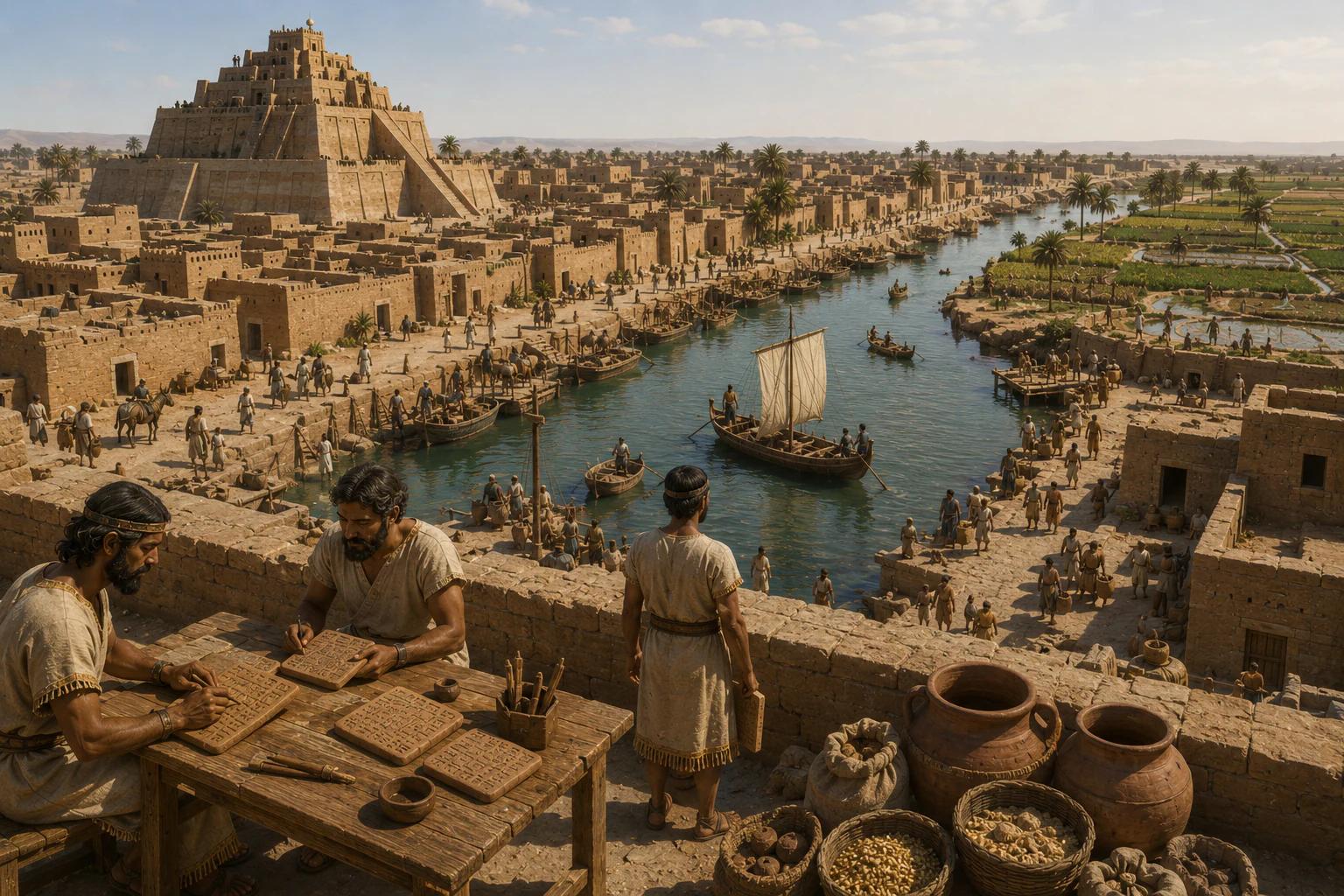
Around 6500 BCE, some of the earliest known villages in southern began to take shape. People farmed near rivers and wetlands where fresh water was within reach.
The southern plain received little rain. Farmers used water from rivers and channels to bring moisture to fields that could be too dry for crops.
Water took work. A channel had to be cleared and repaired, and people who shared it had to agree when and where the water should go.
A good harvest gave a household grain to store or exchange. The rivers and marshes also supplied fish and reeds.
Stored food could sustain people who spent part of their time making pots, building or doing other skilled work.
At Eridu, excavations uncovered early buildings often interpreted as shrines. Rebuilding on the same spot suggests that certain places already mattered to the wider settlement.
Centuries of farming, fishing and building changed what communities on the plain could support. Cities grew out of that long history.
4000 BCE
Step 2 of 104000 BCEAccessible mode
The Rise of Uruk
During the fourth millennium BCE, grew into one of the earliest large cities. Its buildings show how much work a city could bring together.
Large buildings rose in precincts later associated with the gods Inanna and Anu. People carried clay, made bricks and arranged the work of building on a new scale.
Early tablets from record goods and quantities. They show that some institutions had people who kept accounts and organised supplies.
Clay bowls made in similar shapes survive in large numbers. Some archaeologists think they were used to issue food portions. Their use is still debated.
Pots, seals and buildings in styles associated with appear far beyond the city. They trace contacts with other communities across the Near East.
Other early cities were growing too. Tell Brak, in what is now Syria, preserves evidence of urban growth in northern .
The people of built up a densely settled place that linked workshops, households and institutions. Later cities drew on some of the same practices.
3200 BCE
Step 3 of 103200 BCEAccessible mode
Cuneiform Writing and the Birth of Records
By around 3200 BCE, people at were marking clay tablets with signs and numbers. They left some of the earliest surviving evidence of writing.
Many tablets kept accounts. Signs helped people keep track of grain, animals and other goods.
Early writers drew or impressed signs into damp clay. The familiar wedge-shaped marks became common as the script developed.
Some signs came to represent sounds as well as words. That made it possible for scribes to write more of what people could say.
A letter could carry instructions to another city and a tablet could preserve an agreement. Records could survive long after the people who made them.
Learning to write took practice. Surviving exercises show how scribes learned signs, words and ways to keep accounts.
In time, scribes used cuneiform for several languages. It carried everything from accounts and letters to laws and stories such as the Epic of Gilgamesh.
2900 BCE
Step 4 of 102900 BCEAccessible mode
The Sumerian City-States
In the third millennium BCE, cities such as ,, and formed a landscape of rival powers in southern .
Each city depended on farmland, water and links with neighbouring settlements. Their rulers fought over territory while sharing forms of writing and worship.
A carved monument from records fighting with nearby . The dispute concerned land along their border.
The monument shows the ruler of , Eannatum, leading his soldiers. On another side, the god Ningirsu holds defeated enemies in a net.
The carving tells the story as wanted it remembered. Its ruler’s victory is shown as a victory for the city’s god.
The SumerianKing List, preserved in later copies, describes kingship passing from city to city. Some of the rulers in it belong to legend.
The cities developed forms of rule that lasted long after individual rulers and their victories were forgotten.
2600 BCE
Step 5 of 102600 BCEAccessible mode
Kingship, Temples and Burial
During the third millennium BCE, rulers used temples, monuments and burials to make their standing visible.
Building or repairing a temple gave a ruler a way to honour a god. Inscriptions could preserve the builder’s name long after the work was finished.
At , richly furnished graves from around 2600 BCE held gold, stone vessels and musical instruments. One of the best-known burials belonged to Puabi.
Some graves contained groups of people buried with an elite figure. Archaeologists have found evidence of violent death in some of the bodies they have examined.
Much later, ’s kings built the great ziggurat, a stepped platform for a shrine. It belongs to the time of Ur III, centuries after the earliest royal graves.
Some rulers called themselves servants of a god. A few later kings, including Naram-Sin of , were themselves treated as divine.
Temples and burial grounds give us two ways to see how rank and religious authority were expressed. The ways rulers used them changed across places and dynasties.
2334 BCE
Step 6 of 102334 BCEAccessible mode
Sargon Builds an Empire
Around 2334 BCE, by one widely used chronology, Sargon of Akkad came to power. His conquests brought several cities under one ruling house.
Sargon defeated rulers in the south and took control of cities including . Later stories about his childhood tell us how he was remembered centuries after his reign.
Local officials and elites helped the Akkadian kings govern. Their power reached some places more directly than others.
Kings of fought beyond southern . Later stories gave Sargon a reach that is hard to confirm from evidence closer to his lifetime.
In the southern city of , Sargon’s daughter Enheduanna served as high priestess of the moon god. Her appointment connected the Akkadiandynasty with an important religious centre.
Sargon’s grandson Naram-Sin had his victories carved in stone. On one monument he wears a horned helmet, a sign of divinity.
The Akkadian kings held their empire across several generations. The need to put down revolts shows how hard it was to keep that power together.
2112 BCE
Step 7 of 102112 BCEAccessible mode
The Third Dynasty of Ur
Around 2112 BCE in a conventional chronology, -Namma founded a dynasty at . Its kings brought much of southern under their rule.
Many thousands of clay tablets survive from this period. They record deliveries of animals, food given to workers and other details of running a kingdom.
Officials kept accounts of work and rations. The tablets can show how much a person or group received and what an office expected them to do.
Provinces sent goods to support the court and its institutions. The surviving records show supplies moving between different parts of the kingdom.
-Namma also began the great ziggurat at . His building programme left a record in brick alongside the officials’ records in clay.
The tablets give us a close view of what officials could track. People working outside those institutions are harder to see.
The dynasty lost control of outlying areas, and fell around 2004 BCE in the same chronology. Its buildings and records survived the kingdom itself.
1750 BCE
Step 8 of 101750 BCEAccessible mode
Hammurabi and Written Law
Near the end of Hammurabi’s reign, around 1750 BCE, a tall stone monument set out his claim to bring justice to Babylonia.
The writing on the stone describes cases about family life, debt, property, work and injury. Earlier rulers had also put collections of laws into writing.
The outcome in a case could depend on a person’s legal status. The collection treats some people differently for the same kind of injury.
The cases also set out things such as a builder’s responsibilities or a doctor’s fee. They give us a view of what the collection’s authors thought could go wrong in everyday life.
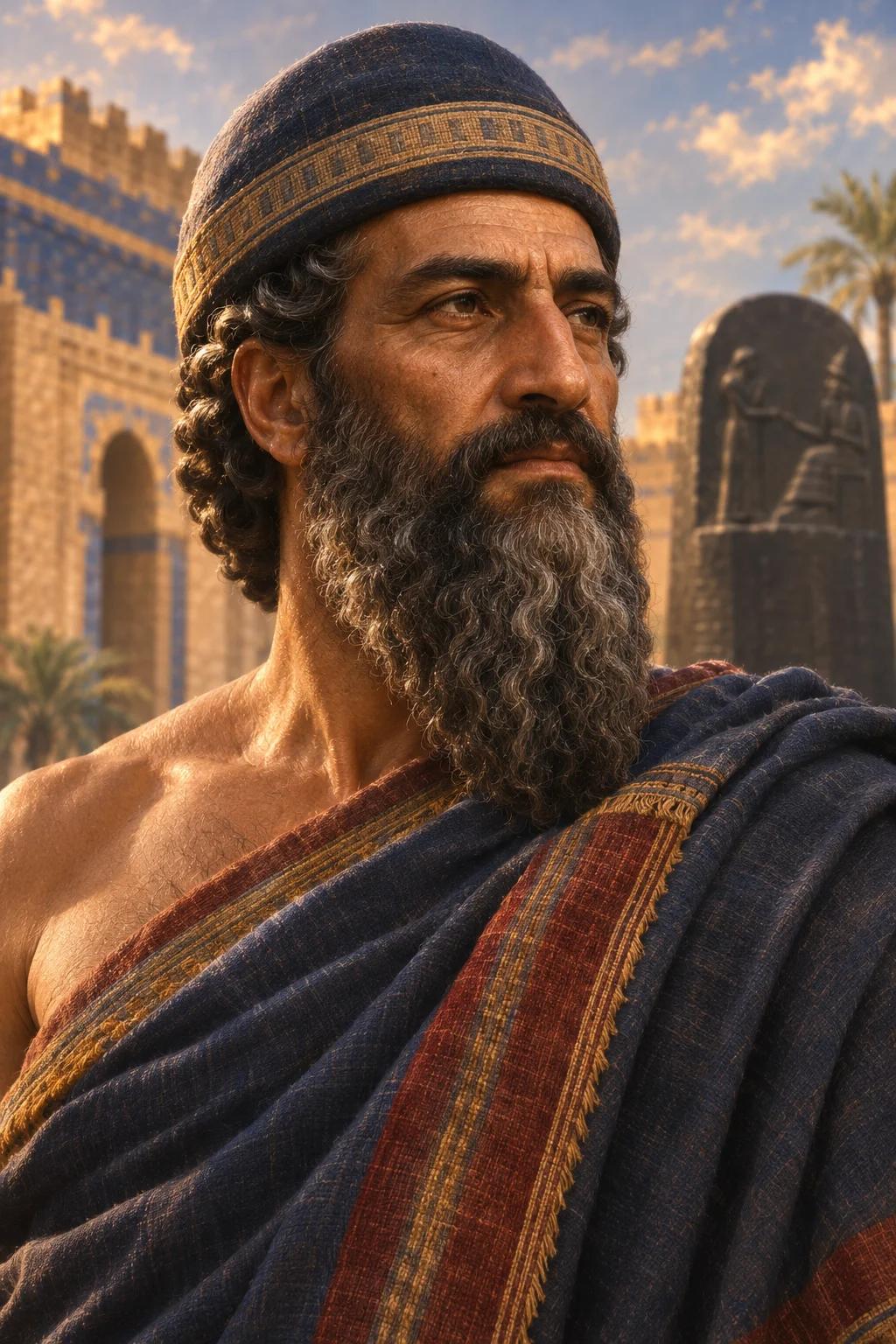
At the top of the stone, Hammurabi stands before Shamash, the god associated with the sun and justice. The image links his authority to the gods.
The monument shows how the king wanted people to see his rule. The surviving evidence leaves questions about where it originally stood, who read it and how its cases were used in court.
Scribes copied the collection for centuries. Its survival tells us as much about what they chose to preserve as about the world Hammurabi ruled.
745 BCE
Step 9 of 10745 BCEAccessible mode
How Assyria Ruled an Empire
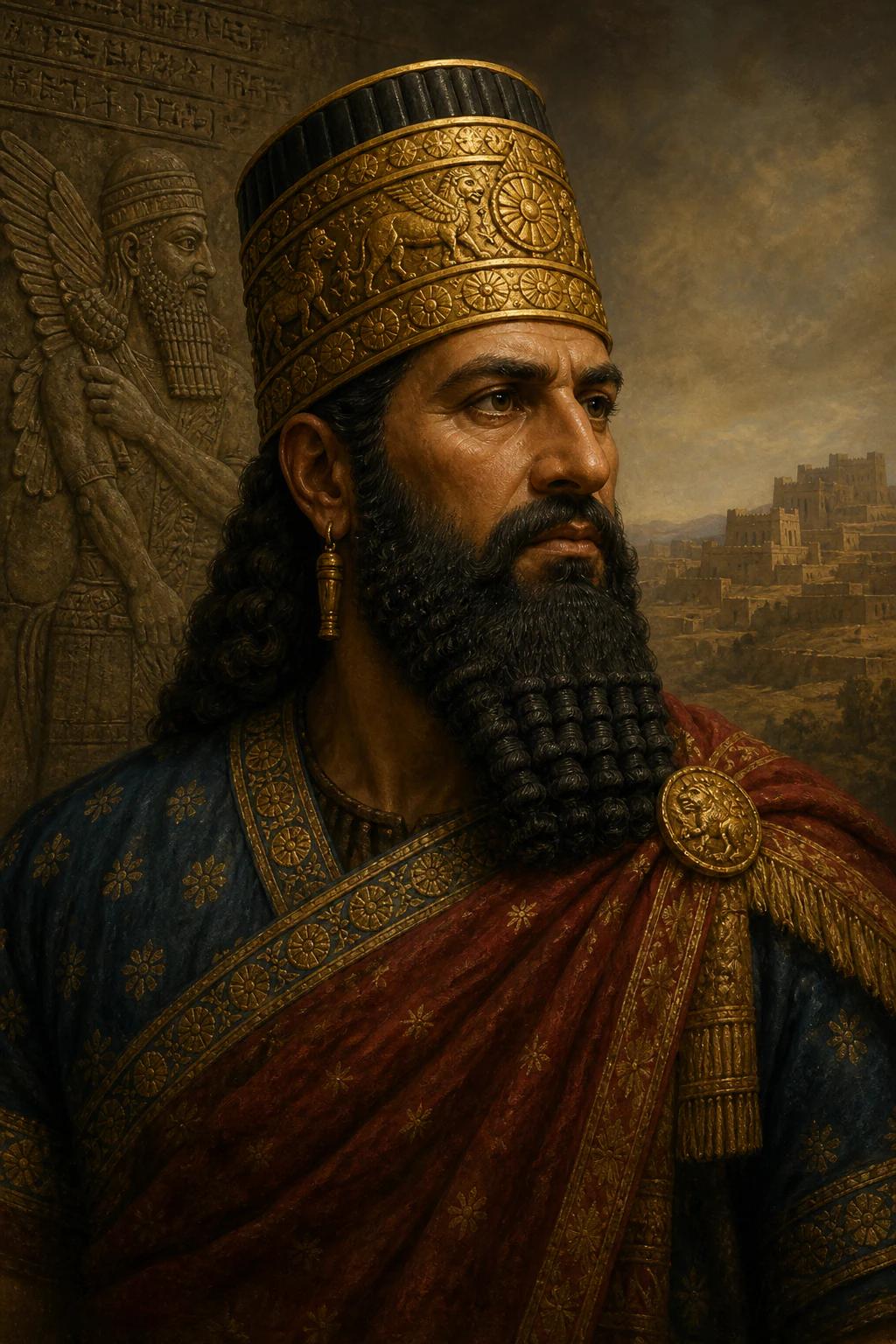
In the mid-eighth century BCE, Tiglath-Pileser III took the Assyrian throne. Under him and his successors, Assyria expanded its rule across much of the Near East.
Assyrian kings drew on organised infantry, cavalry and other troops. Carved pictures show their forces attacking walled cities.
In some places the kings appointed provincial governors. Elsewhere they left local rulers in place and demanded tribute.
The empire forced many people to leave their homes and resettle elsewhere. Kings used these moves to control conquered areas and direct labour and skills to other places.
Palace walls showed battles, tribute and royal lion hunts. An official or visitor walking through a palace encountered the king’s version of his power.
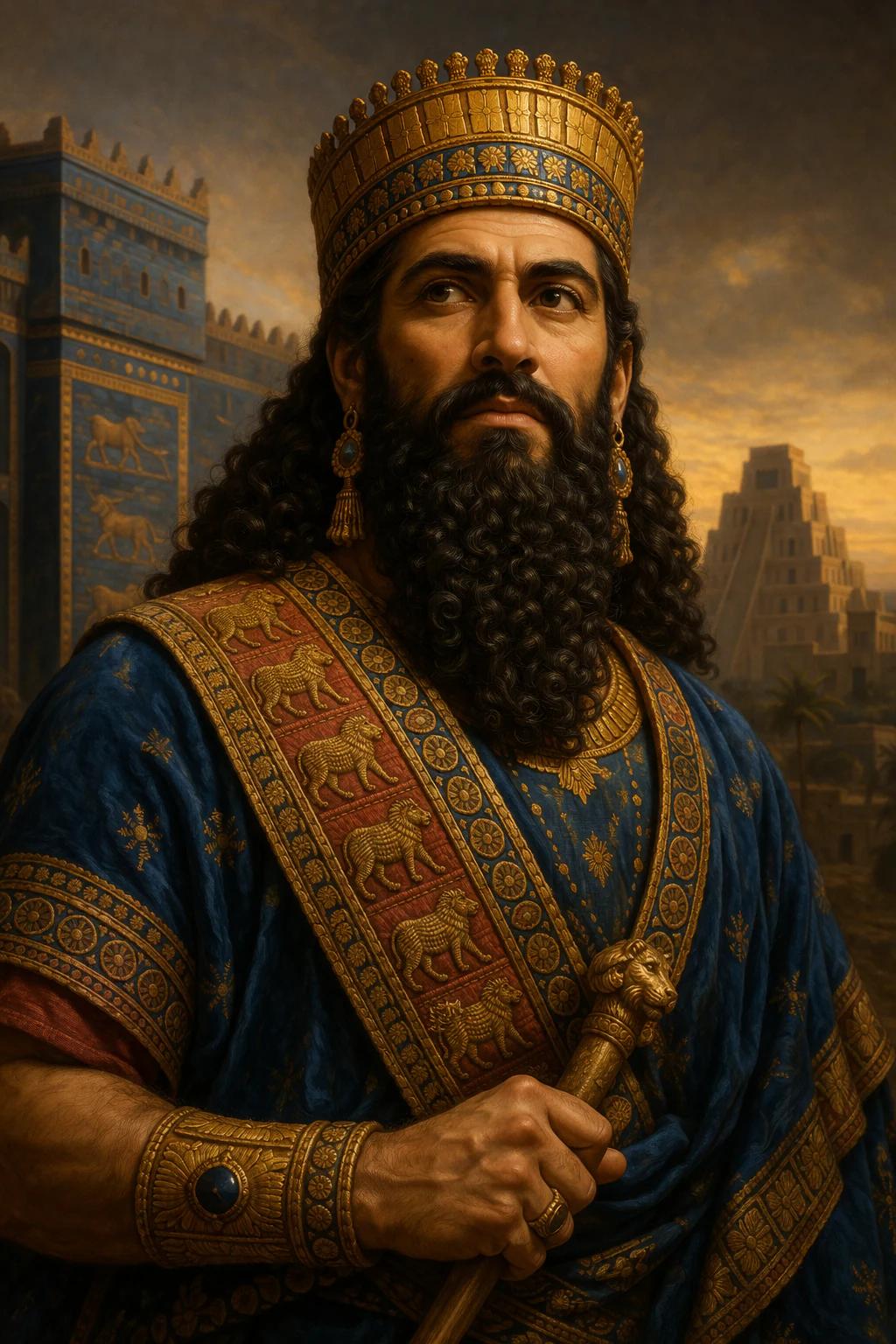
Builders renewed the walls, palaces and temples. Glazed bricks on the Ishtar Gate and along the Processional Way carried images of animals sacred to the gods.
At the heart of the city stood the temple complex of Marduk and the great stepped tower called Etemenanki. Later readers have linked the tower to the story of Babel.
brought officials, merchants, priests and scribes together. Its temples and court were places where writing and learning had practical uses.
Babylonian scholars recorded movements in the sky. They also copied mathematical, medical and literary texts as part of a tradition that stretched far beyond a single reign.
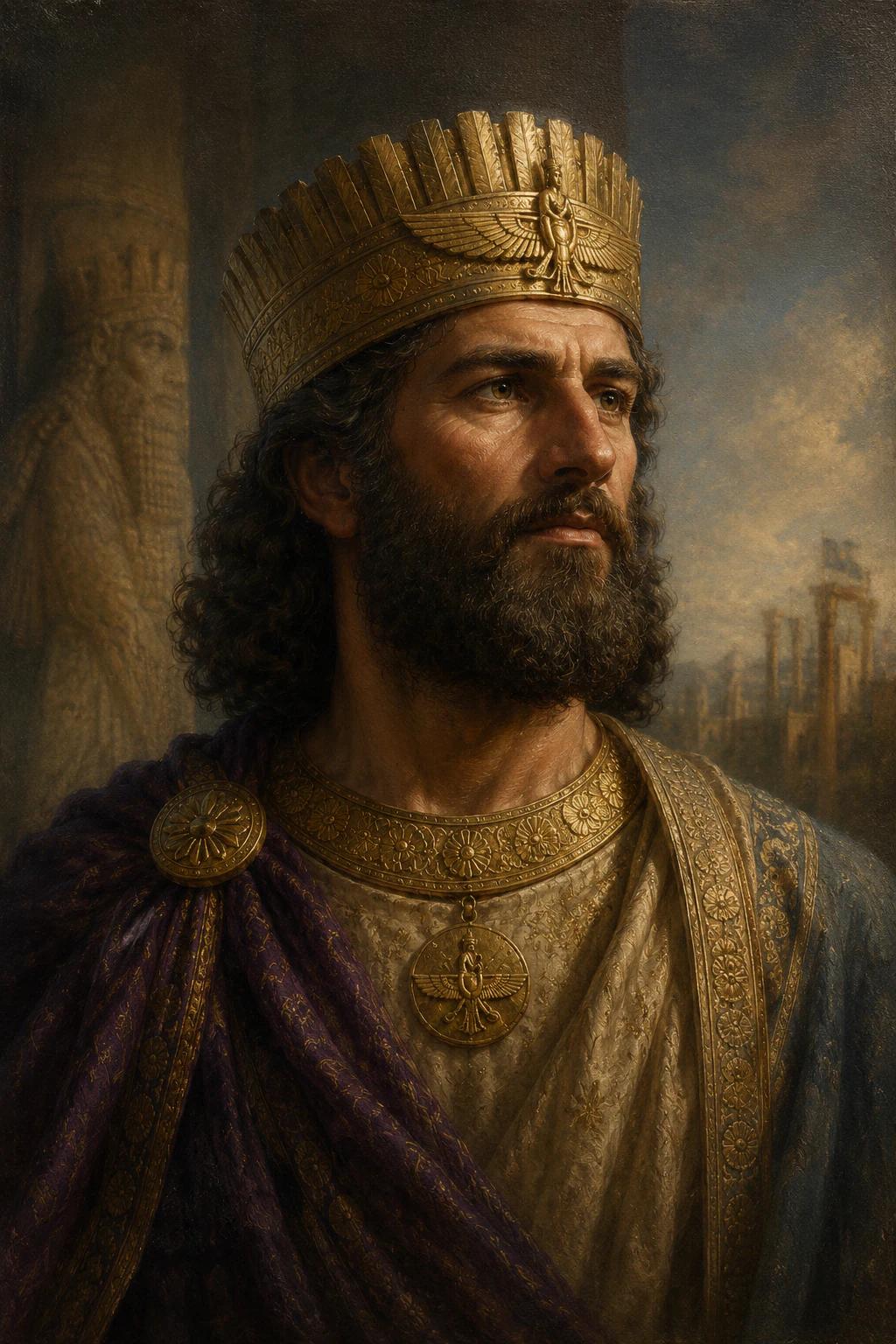
Persian forces took in 539 BCE. A royal inscription presents Cyrus as a ruler welcomed by the city’s god Marduk.
The conquest ended the Neo-Babylonian kingdom. remained a city of temples, scholarship and cuneiform writing under new rulers.
Keep exploring
Finished Ancient Mesopotamia?
Choose the next story, follow a connected moment, or explore the people behind this story.