Accessible gives a lighter overview. Deep Dive tells the fuller story.
Quick Answers
What was Ancient Egypt?
Ancient Egypt developed along the over several millennia. Its rulers built pyramids and temples, used writing to administer their lands, and expanded into neighbouring regions. The kingdom repeatedly divided, reunited and passed under new dynasties.
The supported agriculture and connected settlements, while flood levels varied from year to year.
Egyptiankingship fused political authority with sacred duty and religious order.
Common questions
When was Ancient Egypt?
This story begins with the formation of early dynastic Egypt around 3100 BCE and ends with the Romanannexation in 30 BCE. Egyptian communities existed before unification, and many cultural practices continued under Rome.
The supplied water and fertile sediment for farming and provided a route for people and goods. Its annual flood shaped agricultural life, though the level of flooding and the resulting harvest varied.
Context
Introduction
Overview
Along the ,Egyptian rulers built kingdoms, lost power and brought much of the valley under one court again. The story begins with early kings around 3100 BCE and reaches the Romanannexation of 30 BCE. Pyramids, writings and temples show what changed between those dates and what endured.
Key forces
The supported farming, travel and communication. Its floods varied, and early political unity took shape over time.
Royal imagery portrayed kings as guardians of order. Officials, estates and workers carried out the practical work of rule.
Egypt experienced divisions, reunifications, expansion and rule by dynasties with different origins.
Around 3100 BCE, early kings brought much of the Valley and under a single monarchy. The river helped connect the communities they ruled.
The usually flooded each year, bringing water and fertile sediment to farmland. Flood levels varied, and poor years could put harvests at risk.
As populations grew along this narrow river corridor, leaders could collect grain, organize labor, and control transport on the same waterway.
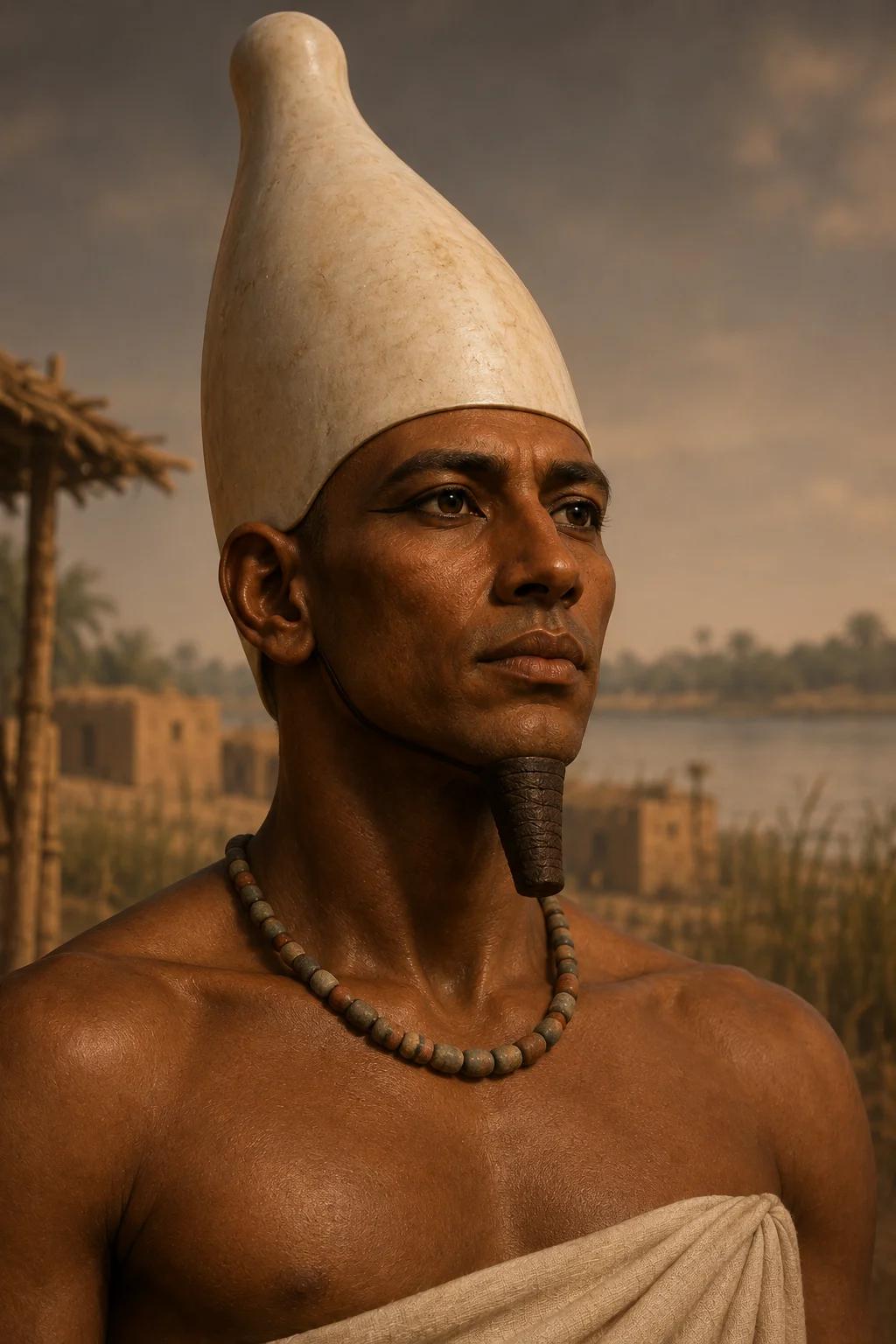
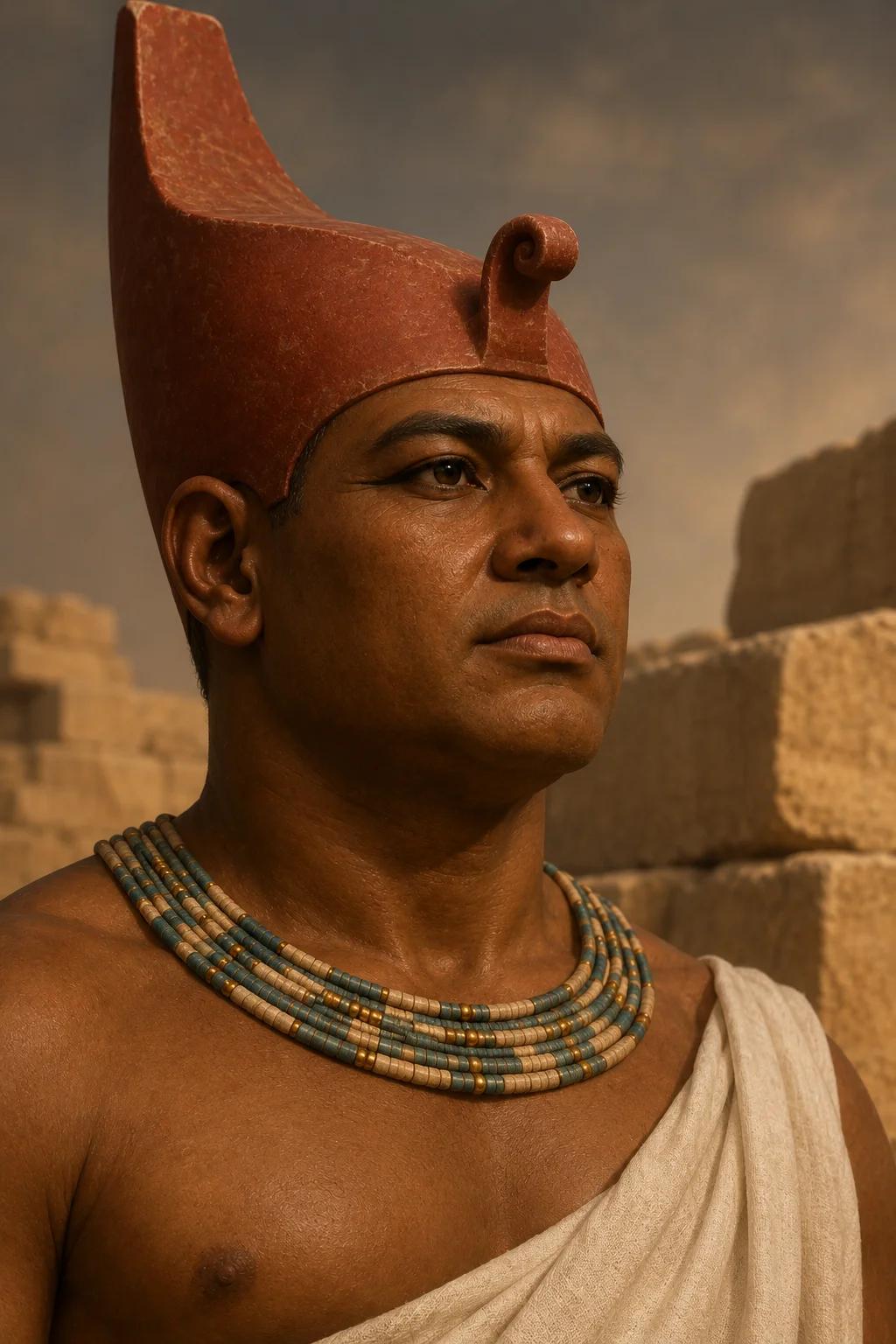
The Narmer Palette shows the king wearing the crowns associated with Upper and Lower Egypt. It is evidence for how early kings presented their authority. Unification took shape over time.
A single kingship now linked distant communities from to the south. Shared symbols, officials, and rituals made rule feel permanent.
The river made it easier to move people, food and materials. The creation of a kingdom also depended on political decisions and conflict.
It also explains Egypt's long continuity: the same river system that fed villages made lasting institutions and shared identity possible.
Kings were shown maintaining maat, the order that held the world, society and the gods in balance.
Officials, scribes and priests took part in institutions that linked royal rule to land, labour and ritual.
Administrators kept records of supplies and labour. Royal and temple estates helped support people who worked on monuments or carried out rituals.
Images of kings making offerings describe an ideal of rule. They tell us what rulers wanted to show about their role.
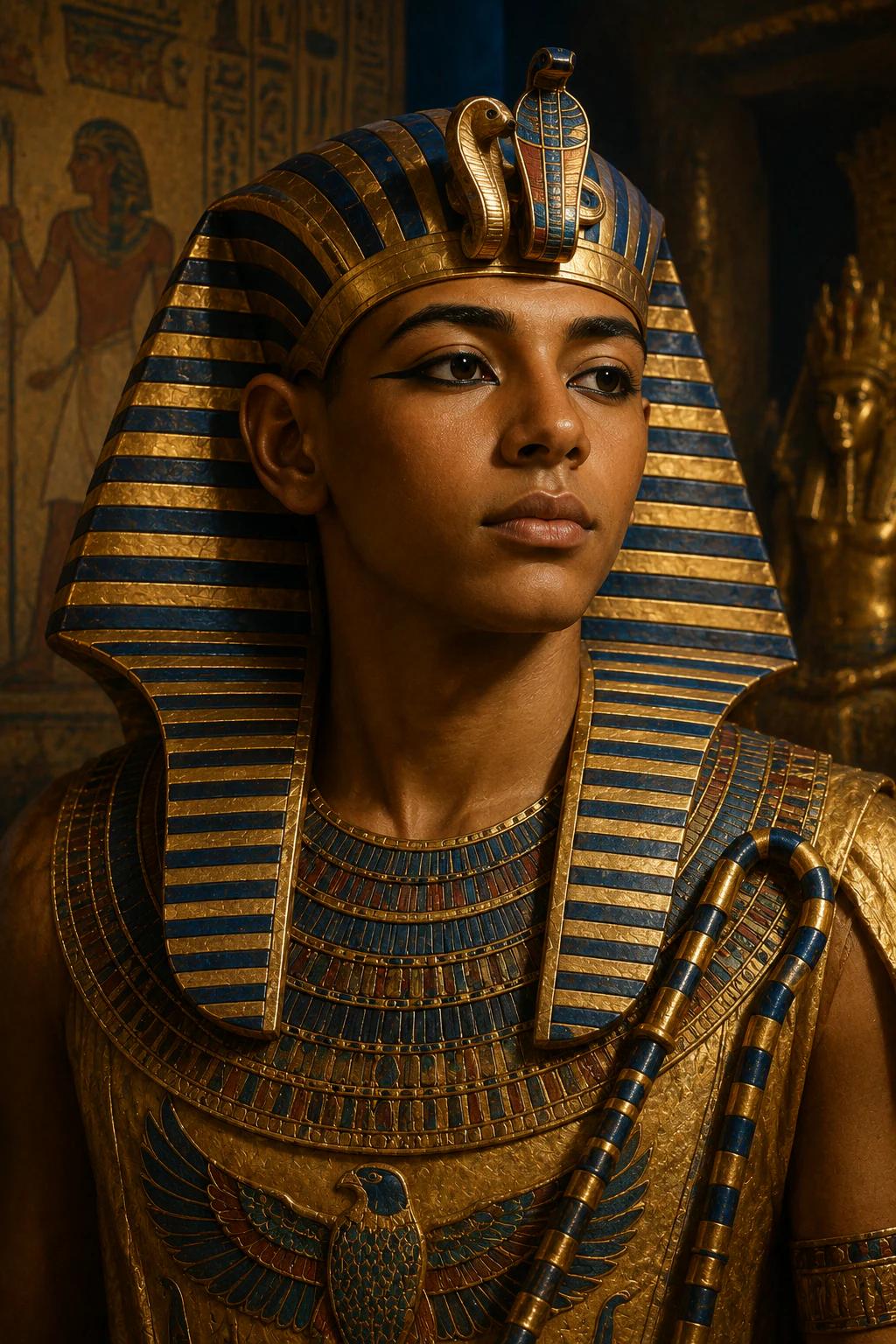
The word pharaoh comes from a term for the royal household. Its use for the ruler developed later.
The duties shown in these images remained familiar even as dynasties and governments changed.
2580 BCE
Step 3 of 112580 BCEAccessible mode
The Age of the Pyramids
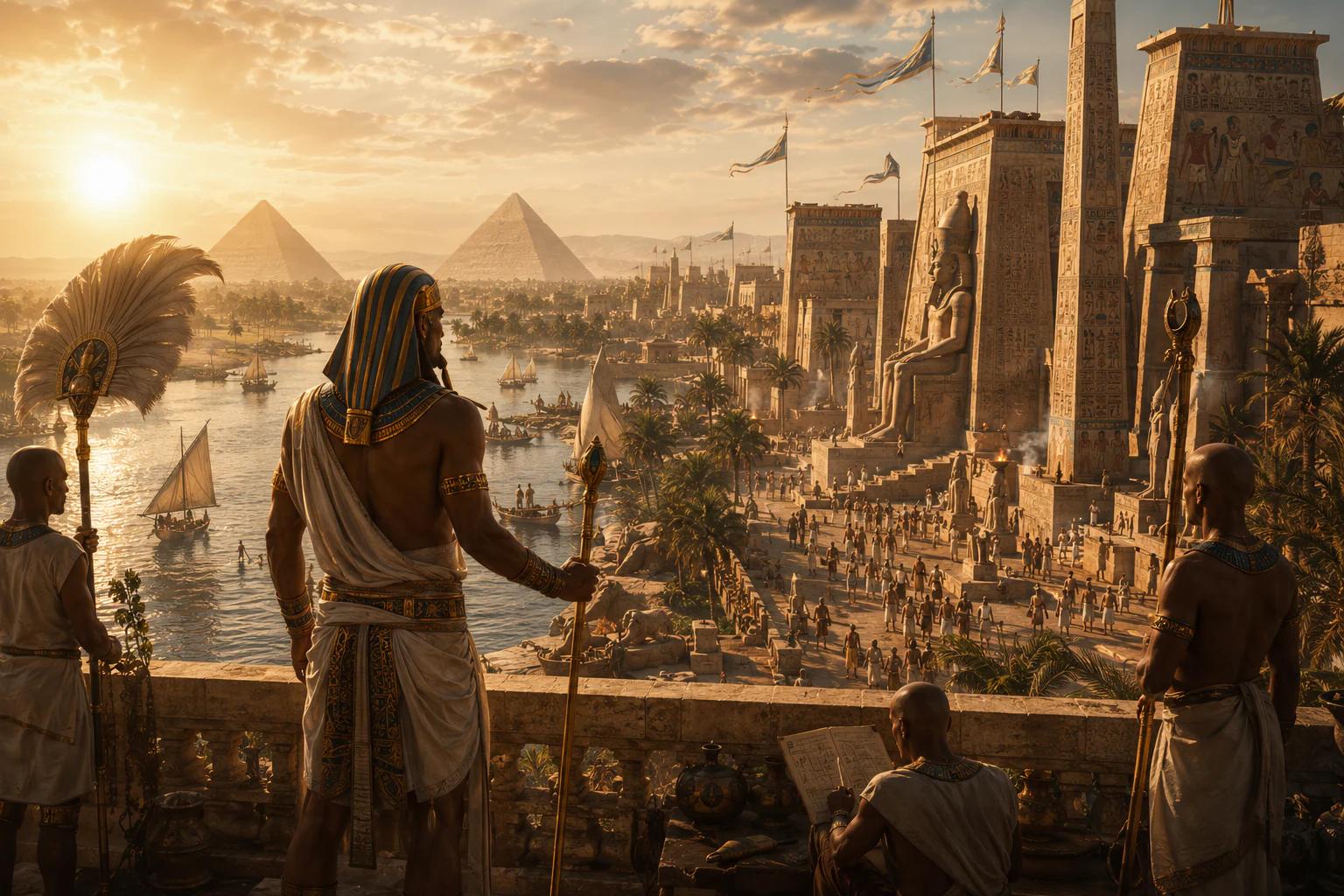
In the twenty-sixth century BCE, the Fourth Dynasty began building the best-known royal pyramids at .
These monuments were royal tombs, but they were also political statements. They showed that the state could command materials, workers, and planning on a huge scale.
At ,Khufu,Khafre, and Menkaure built the best-known pyramid complex. The work required logistics across quarries, river transport, food supplies, and skilled crews.
At , archaeologists have found a settlement that housed and supplied workers. A surviving logbook describes a boat crew carrying limestone for Khufu's complex.
Religion was central. Pyramids reflected beliefs about royal afterlife and the king's continuing role in protecting order after death.
Together, the tombs and the workers' settlement show how much planning and labour went into a royal burial.
Their survival reminds us that organized states can leave physical evidence of how power, belief, and labor once worked together.
2400 BCE
Step 4 of 112400 BCEAccessible mode
Writing, Tombs and the Afterlife
By the late Old Kingdom, some royal tombs carried inscribed spells. Other tombs used images and offerings to help sustain the dead.
Mummification was one way Egyptians tried to protect the body for the afterlife. The methods and resources people could afford changed over time.
Tombs included offerings, images, and sacred texts to help the dead continue into the afterlife. For kings and elites, burial was a religious journey and a public statement of status.
Hieroglyphs preserved names, prayers and titles on stone. Scribes also used faster forms of writing for records and other texts.
This mattered because Egyptian power was built to last. Writing kept names alive, mummification protected the body, and tombs turned belief into something visible.
The afterlife was not separate from politics. It helped explain why kings ruled, why temples mattered, and why Egypt invested so much labor in monuments and burial places.
Together, writing and burial customs show that Ancient Egypt endured through memory as much as through armies, harvests, or kings.
2180 BCE
Step 5 of 112180 BCEAccessible mode
Order Gives Way to Crisis
Towards the end of the third millennium BCE, the Old Kingdom gave way to a period of divided rule.
Power shifted away from the royal court toward local governors. Provinces that once obeyed the center gained more independence and resources.
Variable floods may have hurt harvests in some regions. The causes of the political breakdown are still debated.
Competing regional elites fought for authority. Egypt entered what historians call the First Intermediate Period, a time of divided rule.
Regional courts and communities continued to make art, keep records and bury their dead. What changed was who could claim authority over the country.
Institutions that look permanent can weaken when resources, leadership, and trust all fail at once.
Egypt eventually recovered, but this period proved that even famous civilizations could lose unity when systems stopped working together.
2055 BCE
Step 6 of 112055 BCEAccessible mode
The Kingdom Reunited
Around the middle of the twenty-first century BCE, Mentuhotep II of brought Egypt under one court again.
Reunification ended long regional conflict. A stronger kingship returned, but leaders also learned they needed tighter administration than before.
Royal officials kept records of land, supplies and labour. The government still depended on regional communities to carry out much of that work.
Middle Kingdom writers gave voice to a renewed sense of confidence after reunification. Royal building projects and monuments made the same message visible: Egypt was united again and its kings could keep order.
Egyptian kings had long been expected to uphold order. The rulers who rebuilt the state after the crisis took on that familiar duty and changed how their officials carried it out.
Recovery is possible when states rebuild institutions, manage resources better, and create a shared story of renewal.
By around 1650 BCE, the Hyksosdynasty ruled parts of northern Egypt from .
There had been people with ties to western Asia in before the Hyksos came to power. Archaeology points to contacts and migration over generations.
Chariots and composite bows were used in warfare in this period. They were part of a wider exchange of technologies across Egypt and western Asia.
Egyptian rulers in the south survived and prepared to fight back. Over time, conflict with the Hyksos pushed them to modernize armies and strategy.
Theban kings and the Hyksos fought over several reigns. Ahmose I took and brought Egypt back under one dynasty.
Outside pressure often forces states to change. Crisis in the helped create the stronger empire of the New Kingdom.
Later accounts remembered the period for conflict. Objects from also show long-standing connections between Egypt and its neighbours.
1450 BCE
Step 8 of 111450 BCEAccessible mode
Empire of the New Kingdom
By about 1450 BCE, Egypt reached one of its strongest moments in the New Kingdom.
Rulers such as Thutmose III led campaigns that expanded Egyptian influence into and reinforced control in .
Conquest brought wealth, tribute, and access to trade routes. That money and material supported temples, palaces, and elite culture at home.
Great temple complexes, especially at , celebrated kings as chosen by the gods and victorious in war. Religion and imperial power strengthened each other.
Egypt became a major international power, not just a river kingdom. Diplomacy, warfare, and monumental building all projected prestige.
Letters between courts show how rulers used gifts, marriages and negotiations alongside warfare.
Egypt's fame in later history comes largely from this era, when military success, wealth, and religion were displayed together.
1335 BCE
Step 9 of 111335 BCEAccessible mode
Gods, Kings and Sacred Change
In the later New Kingdom, religion and politics collided dramatically under Akhenaten.
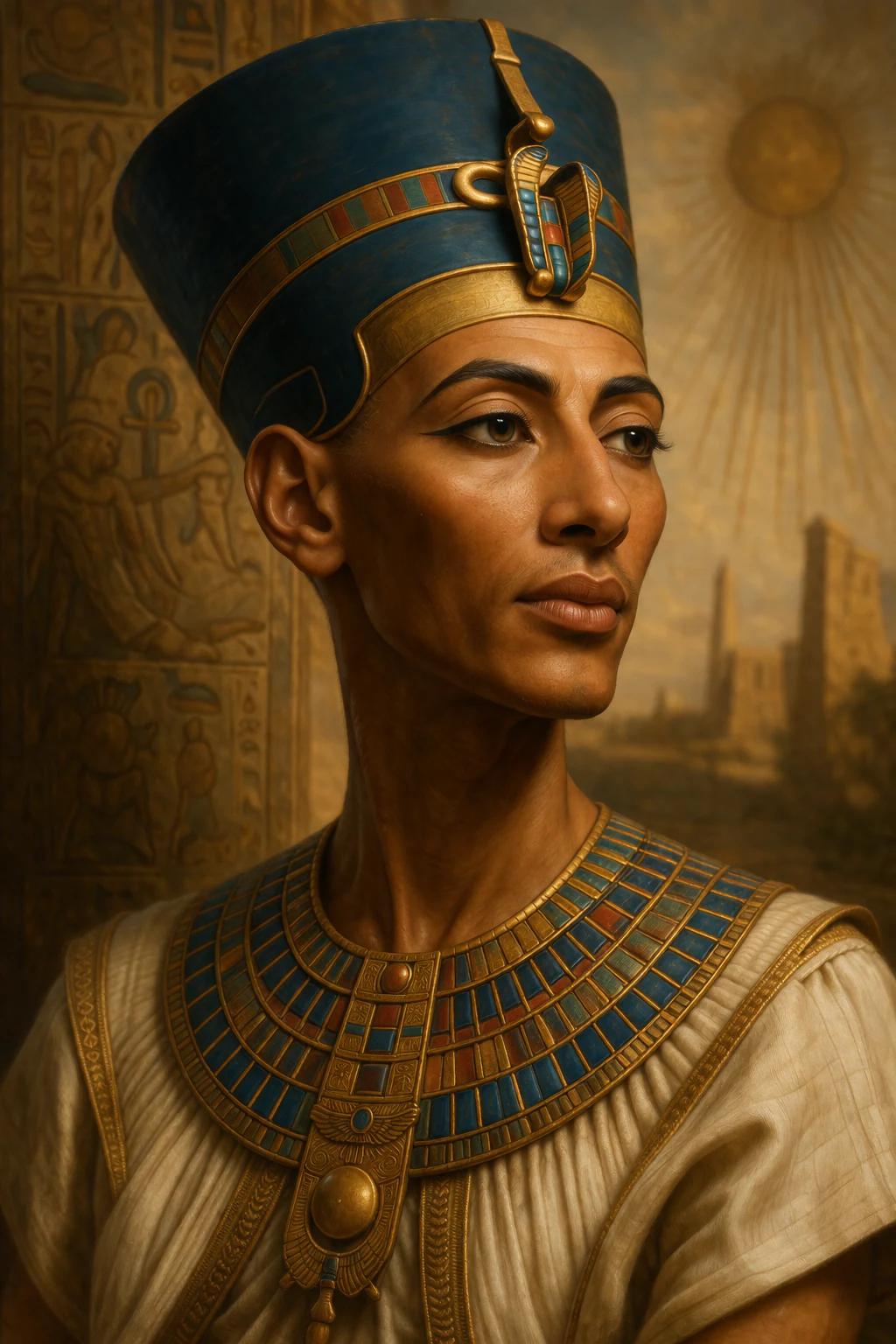
Akhenaten elevated the Aten and moved the royal court to a new city, Akhetaten, now Amarna. His reforms reduced the official place of some older cults.
Royal monuments made the Aten central. Objects from homes at Amarna suggest that older practices continued in private life.
Under Tutankhamun, the court restored older cults. His Restoration Stela presents that change as a renewal of temples and offerings.
The episode showed that pharaohs had great power, but not unlimited freedom to remake Egypt's sacred order.
The king could change the official cult and build a new capital. What people did at home was harder to direct.
The reversal after Akhenaten showed that Egyptians valued continuity and that institutions could outlast even dramatic royal experiments.
1070 BCE
Step 10 of 111070 BCEAccessible mode
New Rulers, Older Traditions
After about 1070 BCE, competing rulers and powerful temple authorities shared or disputed control of Egypt.
Different rulers controlled different regions, and outside powers became more influential. Political unity was no longer secure.
Dynasties with Libyan roots ruled parts of Egypt. Later, kings of took power, followed by Assyrian intervention and renewed rule from the Egyptian city of Sais.
Temples, writing, burial customs, and royal imagery continued. New rulers often adopted Egyptian traditions to strengthen their own legitimacy.
Persian kings later ruled Egypt for intervals. Between those periods, Egyptiandynasties returned to power.
Cultures can survive major power losses. Institutions and shared identity often outlast governments and military dominance.
That persistence helps explain why Egypt remained culturally influential long after it stopped dominating the region militarily.
30 BCE
Step 11 of 1130 BCEAccessible mode
Egypt Under Rome
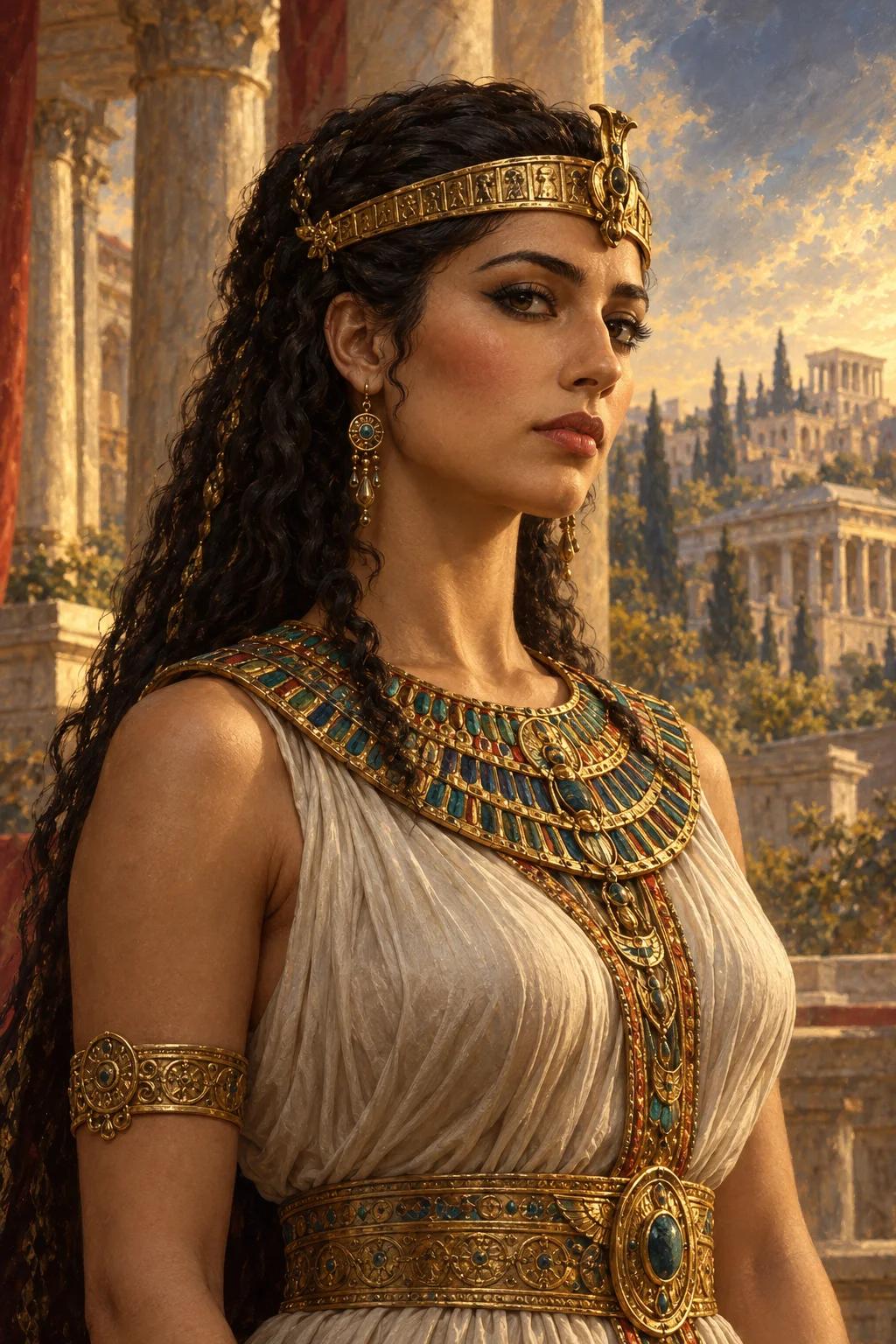
Octavian defeated the forces of Cleopatra and Antony at Actium in 31 BCE. The following year, Egypt came under Roman rule.
But Egypt's deeper legacy had already been built over millennia. Kingship, temples, monumental architecture, and farming systems had shaped a distinct civilization.
At temples such as Philae, later rulers continued to appear in Egyptian royal imagery.
People still recognize Egypt through pyramids, pharaohs, and gods, but its real achievement was long-term continuity through many crises.
The end of one dynasty can be dated closely. The changes in language, worship and daily life took much longer.
That combination of practical systems and powerful symbols is why Ancient Egypt still feels immediate, even thousands of years later.
Keep exploring
Finished Ancient Egypt?
Choose the next story, follow a connected moment, or explore the people behind this story.
Connected stories and suggestions
You have already explored some closer links, so these include unread paths from the wider catalogue.