← People

Enheduanna

Enheduanna was an Akkadian high priestess of the moon god Nanna at Ur and the daughter of Sargon of Akkad. Living in the 23rd century BC, she is often regarded as the earliest named author in world history because hymns and poems were transmitted under her name.

Born
2285 BCE
Died
2250 BCE
Role
Akkadian high priestess and poet
Also known as
En-hedu-anna

Akkadian high priestess and poet (23rd century BC)

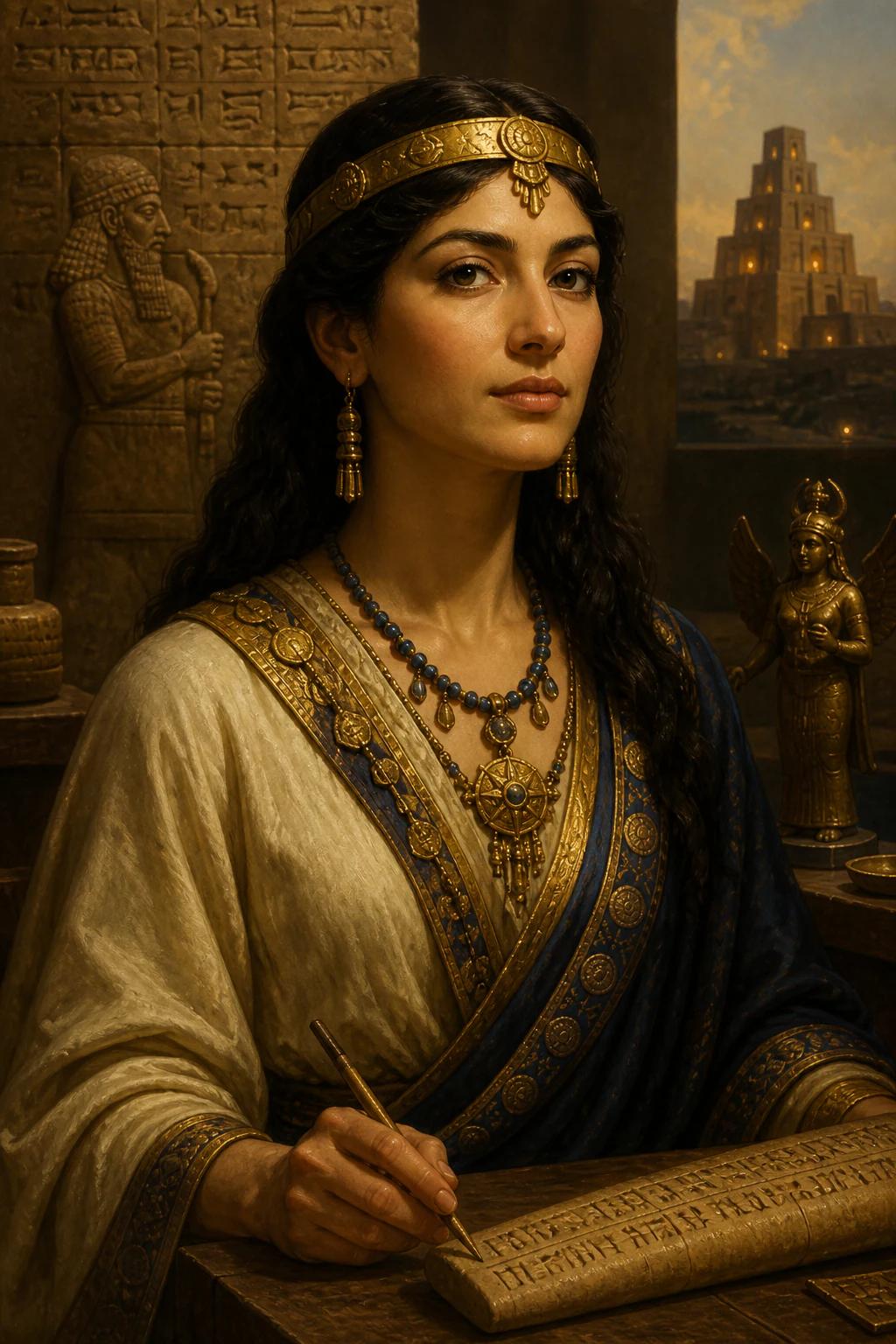
AI-generated portrait of Enheduanna writing before Mesopotamian inscriptions and a ziggurat
AI-assisted historical reconstruction

An illustrative reconstruction based on historical context. It is not a photograph or documentary likeness. Image policy

Life Journey

The first named voice in literature

Follow the key events and turning points in this life story.

Complete chronology

23rd century BC

Daughter of empire

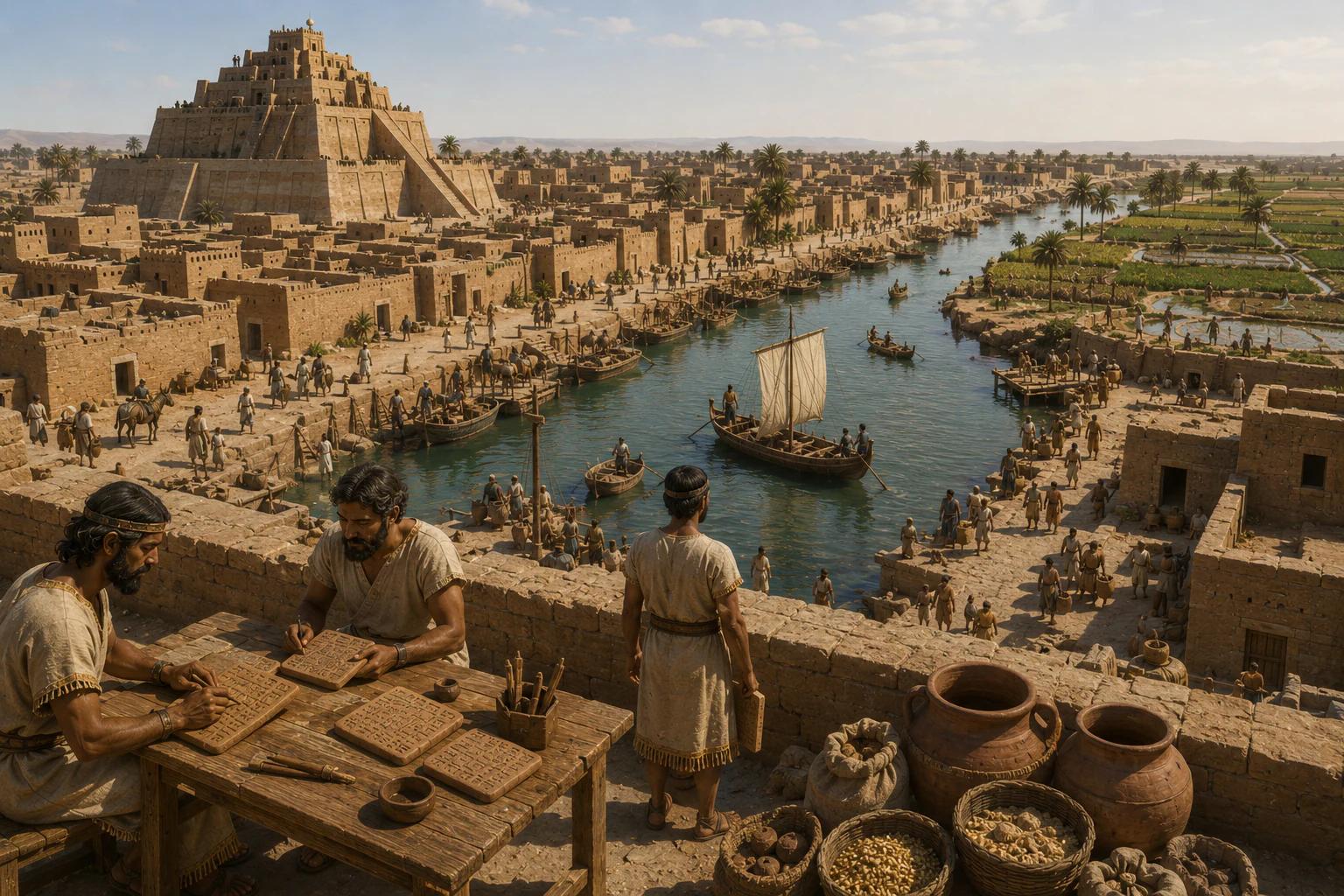
Enheduanna lived in the world created by Sargon of Akkad, one of history's earliest empire-builders. Her exact birth and death dates are uncertain, but she belonged to the 23rd century BC and was almost certainly a royal daughter. Sargon's empire had to govern older Sumerian cities with deep temple traditions, local elites, and their own sacred languages. Placing Enheduanna in a major priestly office was therefore not merely a family honour. It was statecraft.

c. 2300 BC

High priestess of Ur

Enheduanna's title placed her at the centre of temple power. As high priestess of Nanna at Ur, she occupied an institution that connected economics, ritual, astronomy, landholding, and political legitimacy. Temples were major centres of wealth, labour, learning, and authority. A royal woman in that office could mediate between Akkadian rule and Sumerian sacred tradition. Her name itself is usually understood as a title or sacred name, though exact interpretation is debated.

23rd century BC

Poet of Inanna

Enheduanna is associated with works including the Exaltation of Inanna and a body of temple hymns. The surviving manuscripts are later copies, so scholars debate the exact relationship between the historical Enheduanna and every text transmitted under her name. Even with that caution, the tradition is extraordinary. The poems speak in a named voice that praises, pleads, remembers humiliation, and claims restoration. Enheduanna's literary significance lies in that fusion of public theology and personal utterance.

23rd century BC

Exile and return

One of the most vivid traditions around Enheduanna is the account of her expulsion by a rebel named Lugalanne and her plea to Inanna for vindication. Historians treat the details cautiously, but the political setting is plausible: the Akkadian Empire faced resistance from Sumerian cities, and temple offices could become targets in struggles against royal control. If the text preserves memory of a real crisis, Enheduanna experienced empire not as abstraction but as danger.

Ancient memory

Earliest named author

Calling Enheduanna the first author does not mean nobody composed literature before her. Anonymous songs, myths, administrative texts, and oral traditions preceded her by centuries. What makes Enheduanna different is the survival of a named literary identity attached to substantial compositions. She stands at the meeting point of writing, authorship, gender, empire, and religious authority. She forces the history of literature to begin with a woman in a temple, inside an empire, addressing a goddess with political urgency.

Continue in context

Connected stories

Move from the profile into the wider events and settings this figure belongs to.

Keep exploring

Content note

This profile is written for educational use and connects to related Stories of History pages. The main portrait is an AI-assisted historical reconstruction, included as an illustrative aid rather than documentary evidence. Image policy

References

Sources and historical notes

Sources used to check this page, selected recommendations and historical notes.

Sources used

  1. University of Oxford, Electronic Text Corpus of Sumerian Literature, “The Exaltation of Inana,”

    Translates a Sumerian hymn in which Enheduanna names herself and appeals to the goddess Inana.

    Open source
  2. Musée du Louvre, “Tablet with a Hymn to Inanna,”

    Catalogues a cuneiform tablet associated with a hymn attributed to Enheduanna.

    Open source
  3. World History Encyclopedia, “Enheduanna,”

    Surveys her priesthood and poetry and notes uncertainty about her relationship to Sargon.

    Open source

Additional sources and notes

Loading reviewed claim sources...

Our editorial approach · Report a historical error

A monthly route through history

Find out first about the latest published stories, feature notes and occasional Premium offers in one monthly email.