Accessible gives a lighter overview. Deep Dive tells the fuller story.
Quick Answers
What was the Maurya Empire?
The Maurya Empire was founded by Chandragupta Maurya around 322–321 BCE. From it extended across much of the Indian subcontinent.Ashoka’s inscriptions record his response to the conquest of and set out what dharma meant for his subjects and officials.
Ashoka conquered around 261 BCE. His Major Rock Edict 13 describes deaths, deportations and suffering, records his remorse, and praises conquest by dharma. The campaign is dated to eight years after his coronation in the inscription.
How did the Mauryas govern such a large empire?
Ashoka’s inscriptions show officials at regional centres receiving instructions, travelling on tours and reporting back. The court used roads, officials and revenue to govern at a distance. Evidence is uneven about how much control it exercised in each region.
Context
Introduction
Overview
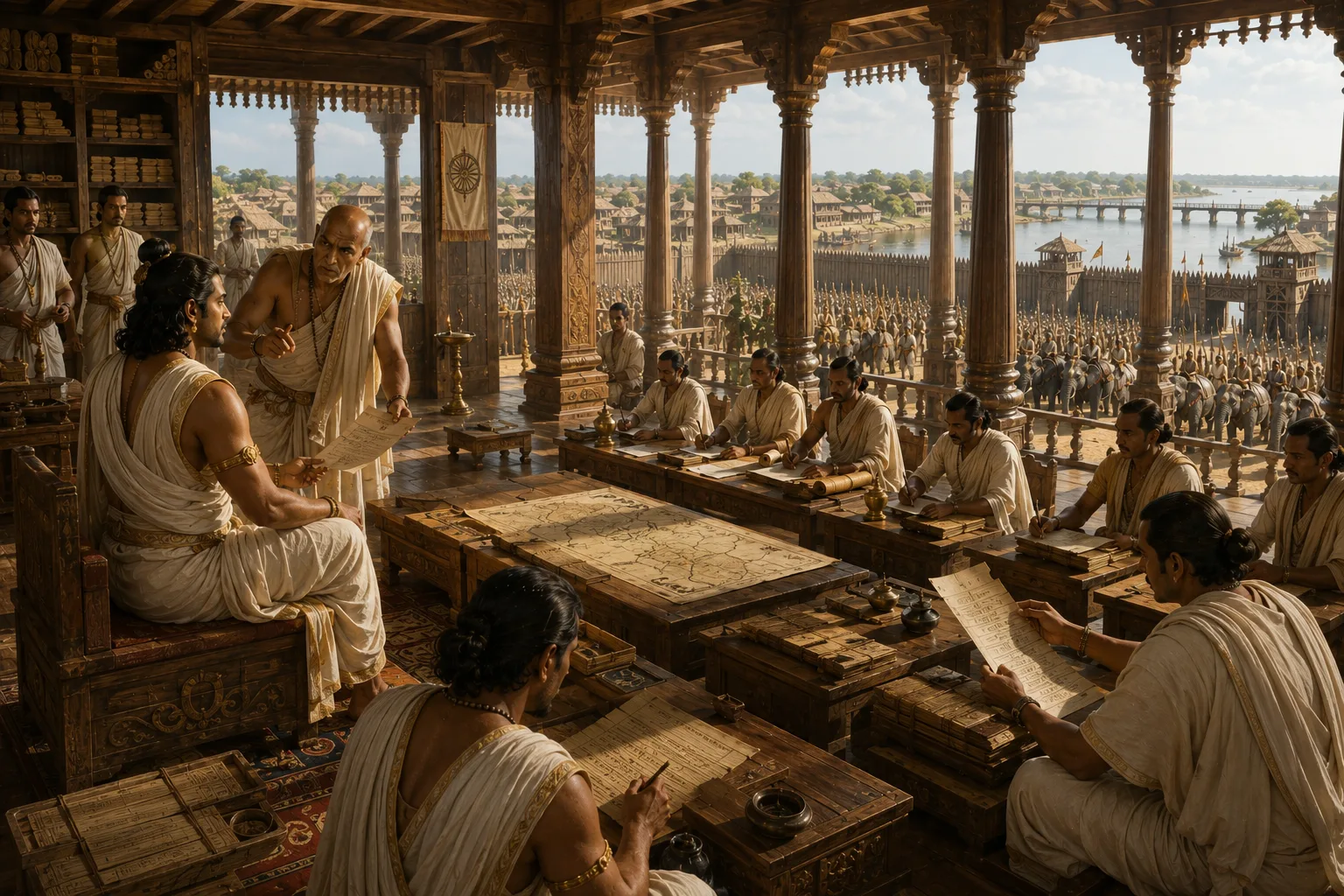
Chandragupta Maurya founded an empire in that reached across much of the Indian subcontinent. Its rulers dealt with the heirs of Alexander’s empire and governed from . After conquering ,Ashoka’s inscriptions spoke of remorse, restraint and dharma.
Ashoka’s inscriptions show royal orders reaching regional officials. They give a firmer record of some Mauryan practices than later texts on statecraft.
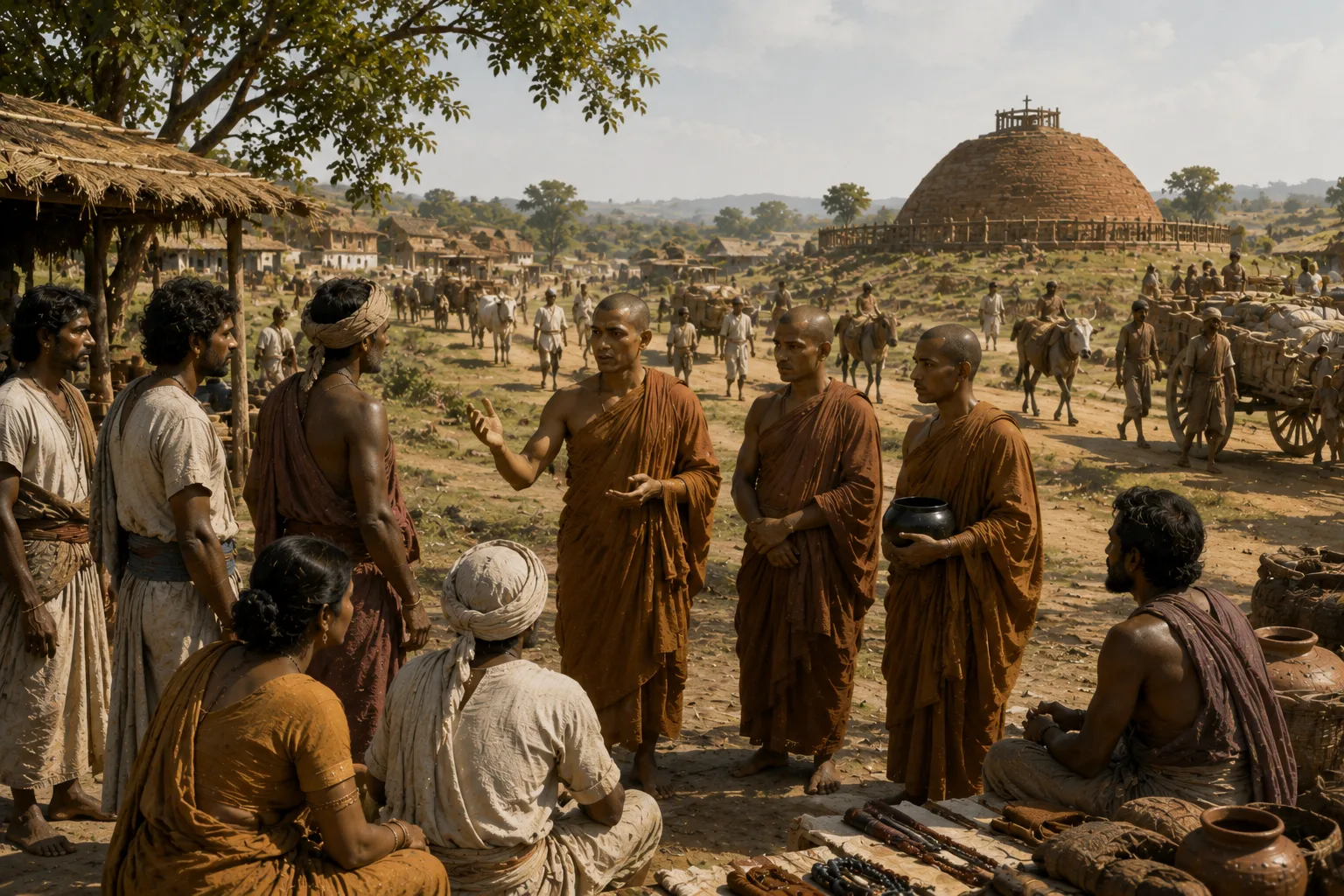
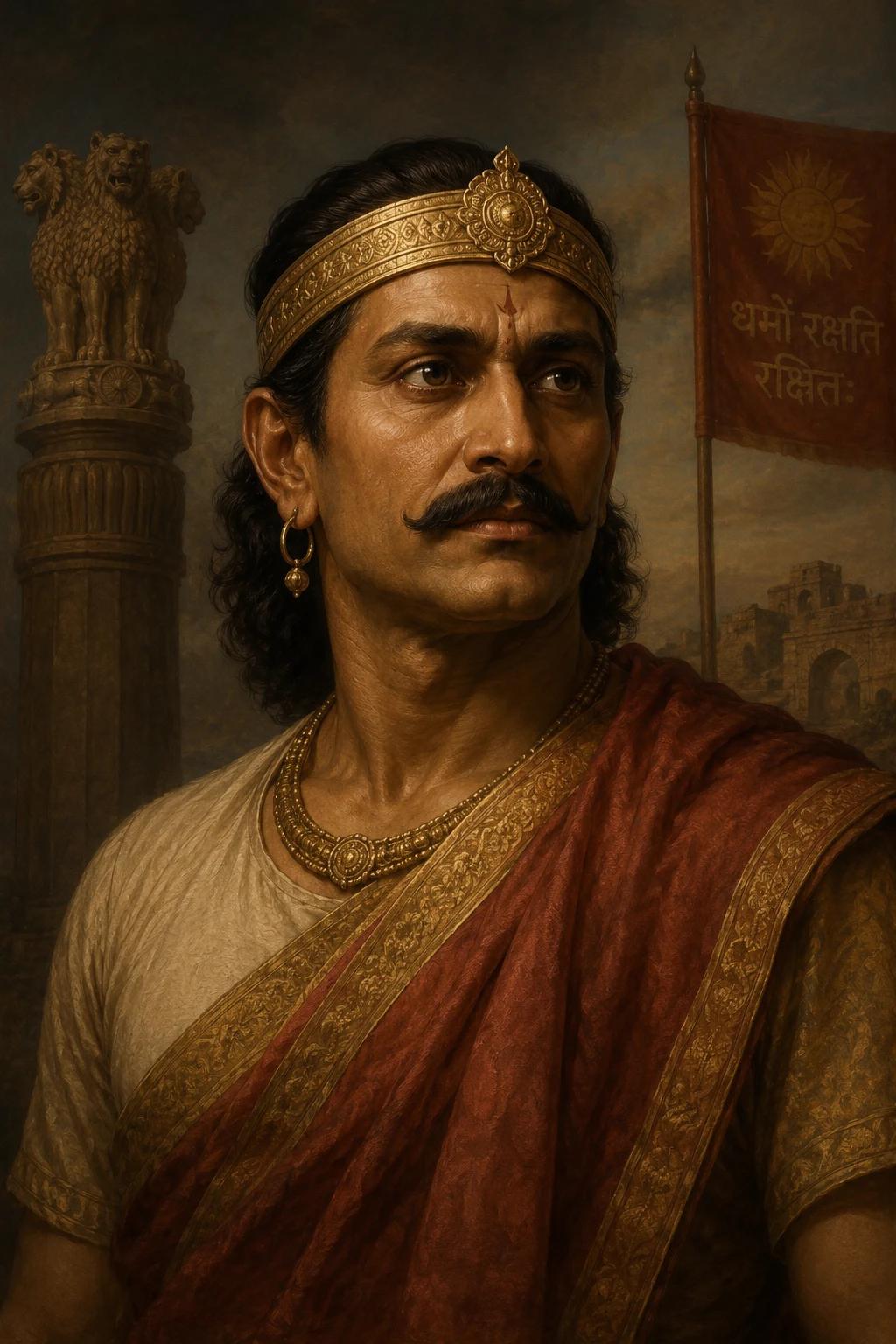
Ashoka’s account of records his remorse and sets out his preference for conquest through dharma.
322 BCE
Step 1 of 10322 BCEAccessible mode
The Fall of the Nanda Dynasty
The Maurya Empire began in , a powerful kingdom in the eastern Ganges plain. It grew out of a change of dynasty.
The Nanda dynasty controlled one of the richest regions of northern India. sat on fertile land, river routes and old centres of power. Its rulers could command wealth and large armies.
Later accounts portray the Nanda rulers as wealthy and unpopular. Those stories were told long after their fall, and it is hard to know how people in saw them at the time.
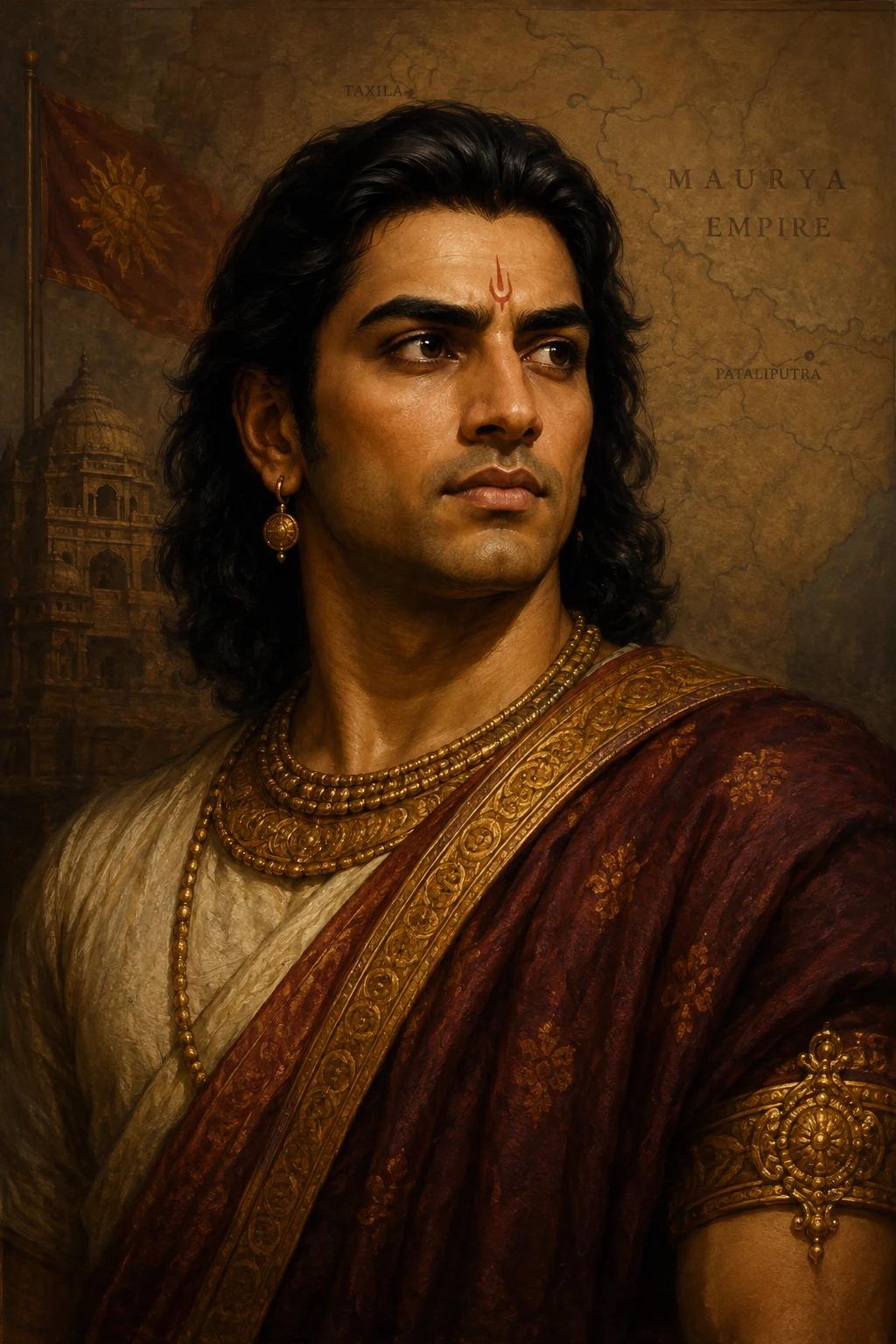
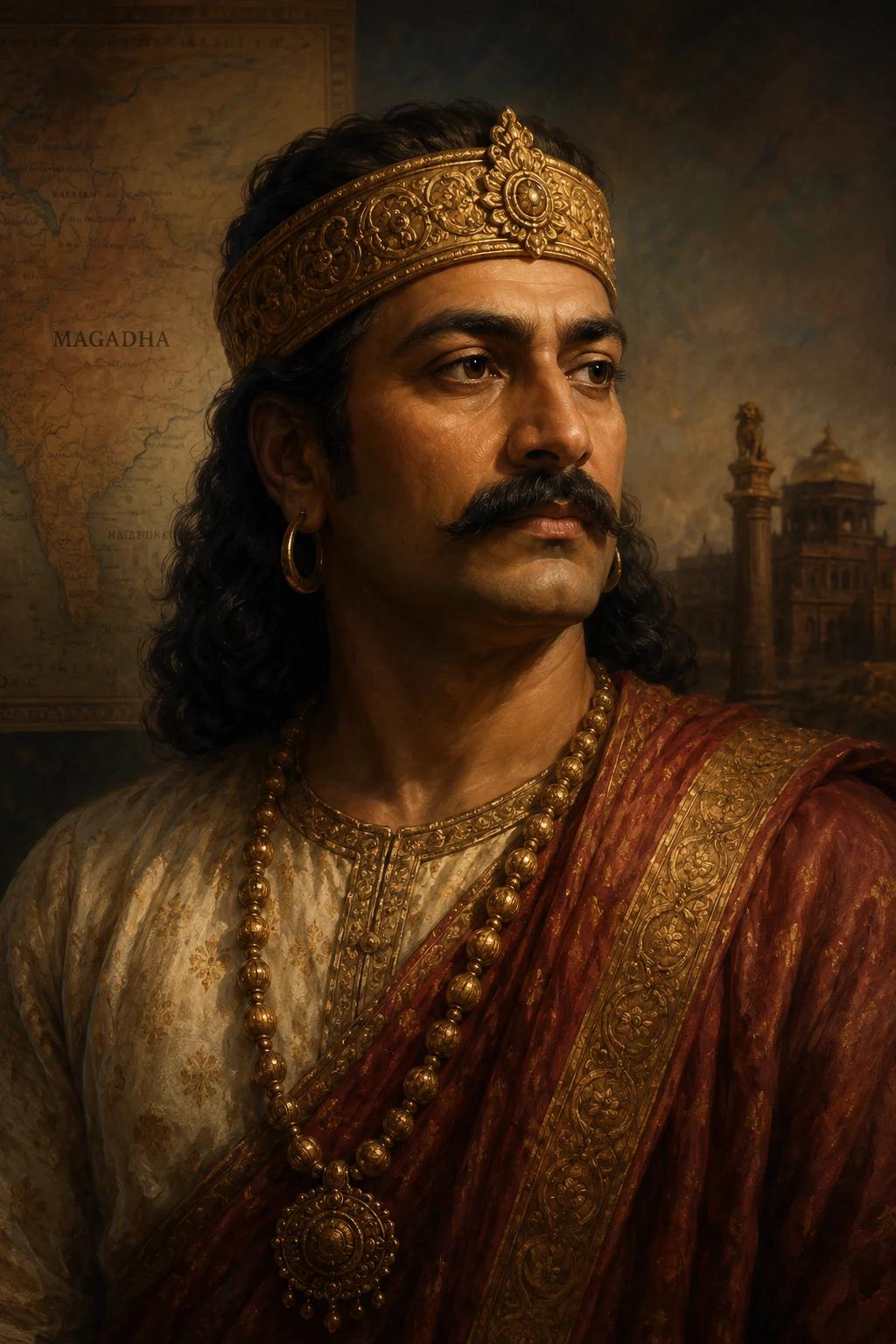
Chandragupta Maurya overthrew the Nandas around 322–321 BCE. Stories about his early life differ, so the steps that brought him to power are harder to trace.
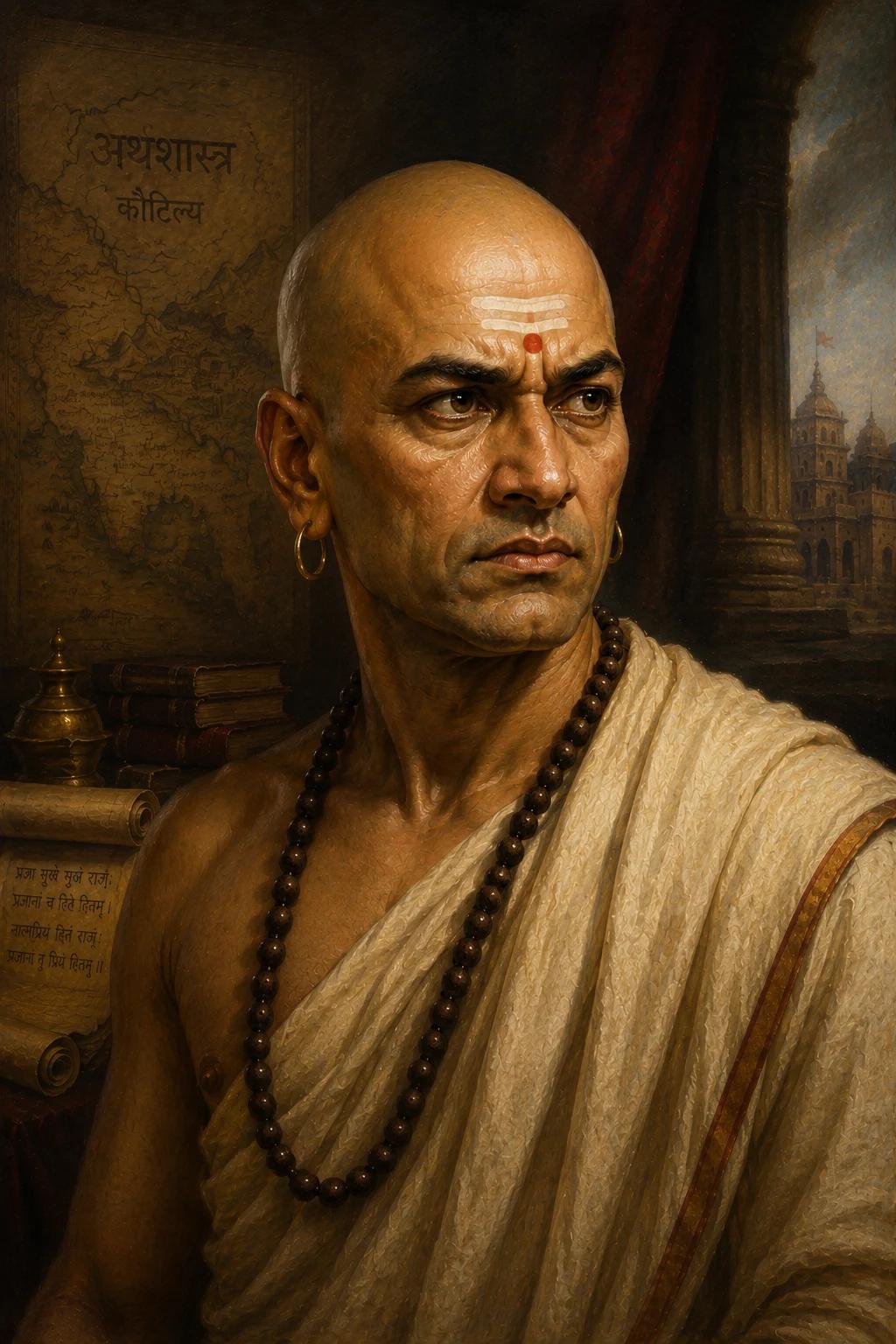
Later traditions credit an adviser named Chanakya with helping Chandragupta take the throne. He is often identified with Kautilya, the name associated with a Sanskrit work on government, the Arthashastra.
With the Nandas gone, Chandragupta held and the resources of . The capital became the base for a much larger state.
The seizure of gave Chandragupta more than a throne. It gave him , a major capital on the Ganges, and access to the resources of one of ancient India's strongest kingdoms.
From this base, the Mauryas could command armies, collect revenue, appoint officials and project power along river routes and overland roads.
This marked the beginning of India's first empire capable of unifying much of the subcontinent. Earlier kingdoms had been powerful, but Mauryan ambition operated on a wider scale.
Chandragupta's achievement was not only conquest. He had to make conquest durable. Territories had to be governed, taxes collected, soldiers supplied and local elites brought into a new order.
The new dynasty extended its authority from across the northern plain and into the northwest. Its reach would grow further under Chandragupta's successors.
PremiumFree preview: 2 of 10 chapters
Continue The Maurya Empire
Sign up to a Premium account to read the remaining chapters of this story.
A paid Premium subscription also gives you full access to every other Premium story.