Accessible gives a lighter overview. Deep Dive tells the fuller story.
Quick Answers
How did Buddhism rise and spread?
Buddhism grew from the teachings associated with Siddhartha Gautama. Monastic communities transmitted those teachings, and lay supporters sustained them. Ashoka’s inscriptions record his affiliation and patronage. Later Sri Lankan traditions connect his reign with the arrival of Buddhism on the island.
At a glance
Siddhartha Gautama’s exact dates are uncertain, and later tradition preserves the story of his renunciation.
The sangha preserved Buddhist teachings and spread them through oral tradition and monastic discipline.
Travel, teaching and lay patronage helped Buddhist communities grow. The evidence is uneven before Ashoka.
Ashoka’s inscriptions record his affiliation. Later chronicles connect his reign with missions to Sri Lanka.
Common questions
Did Buddhism begin with Ashoka?
Buddhism began generations before Ashoka, with the Buddha and his early followers. Ashoka’s inscriptions show how an emperor supported an existing tradition.
Why was the sangha important?
The sangha preserved teachings, trained monks and nuns, maintained discipline and carried Buddhism between communities. It gave the religion a durable structure beyond any single teacher.
Why is Sri Lanka important in the spread of Buddhism?
Sri Lankan tradition links Ashoka's age with missions associated with Mahinda and Sanghamitta. Sri Lanka became one of the most important early centres of Buddhism beyond India.
Context
Introduction
Overview
Buddhism began in northern South Asia with the teachings of Siddhartha Gautama. Monks, nuns and lay supporters carried the teachings through recitation, travel and patronage. Ashoka’s inscriptions offer an early record of royal support, while later chronicles tell how Buddhism reached Sri Lanka.
Key forces
The Buddha’s dates are uncertain. Buddhist tradition associates his awakening with .
The Four Noble Truths address suffering, its causes, its cessation and the path of practice.
Monks, nuns and lay supporters helped preserve Buddhist teachings and sustain communities.
Ashoka’s inscriptions record his Buddhist affiliation and patronage. They leave the timing of his conversion uncertain.
Early Buddhist tradition
Step 1 of 10Early Buddhist traditionAccessible mode
Siddhartha Gautama Seeks Enlightenment
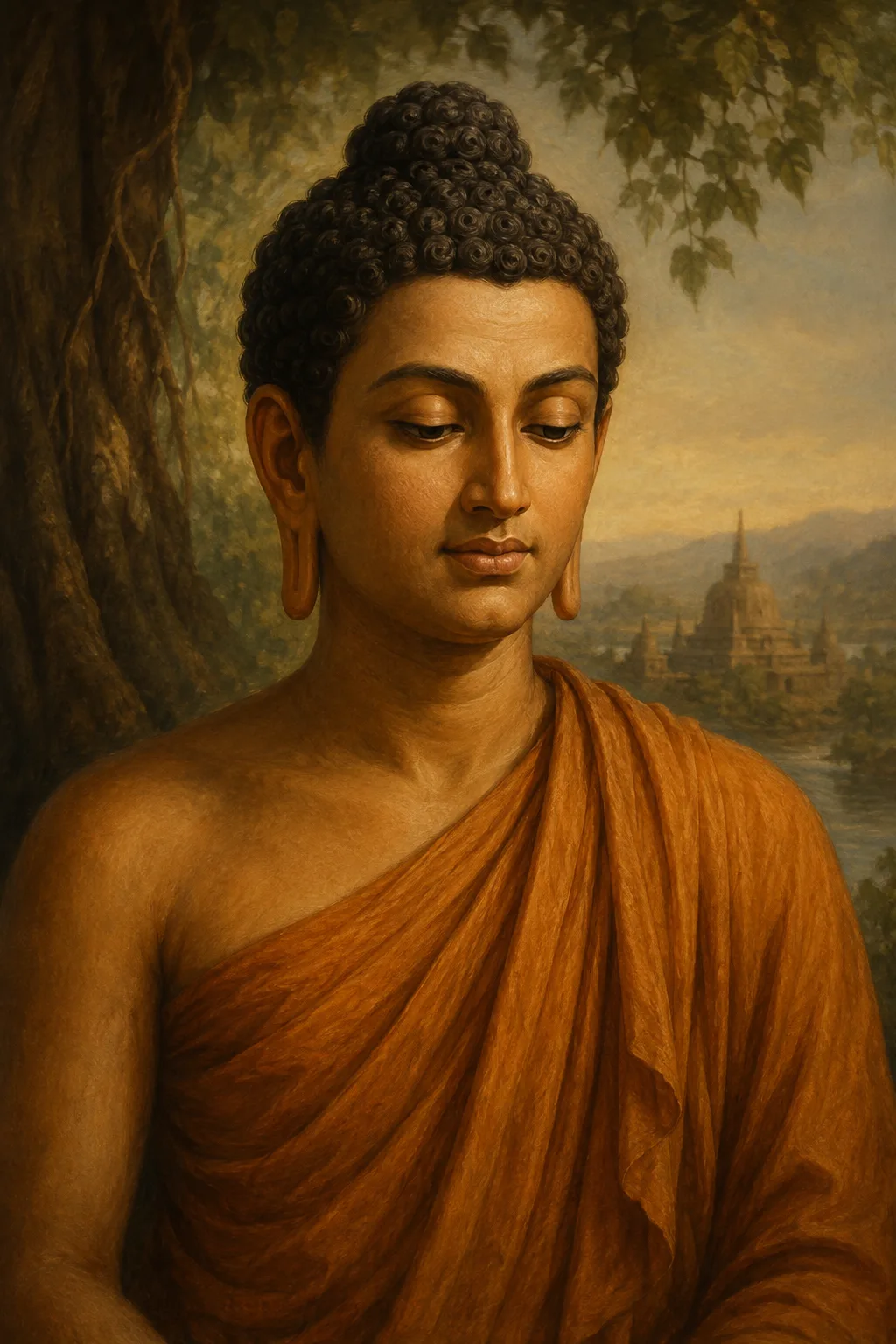
Siddhartha Gautama came from the Shakya community, near what is now the border of India and Nepal. His exact dates are uncertain.
Northern India was changing. Cities were growing, kingdoms competed for power and teachers argued about sacrifice, rebirth, duty, discipline and liberation.
In a later Buddhist story, Siddhartha grew up in comfort. Encounters with old age, sickness, death and a wandering renouncer opened his eyes to suffering.
Buddhist texts describe him leaving home, learning from teachers and trying severe austerities as he searched for release from suffering.
The search became the starting point for the teachings his followers would later preserve.
During the Buddha’s lifetime
Step 2 of 10During the Buddha’s lifetimeAccessible mode
The Buddha Attains Enlightenment
Buddhist tradition places Siddhartha's awakening beneath the Bodhi tree at .
Buddha means awakened one. His followers understood his awakening as insight into suffering, its causes and the possibility of release.
The Buddha's teaching describes suffering and dissatisfaction as part of life. Craving helps keep that suffering going.
Liberation was possible. By following a disciplined path of ethical conduct, meditation and wisdom, a person could move toward nirvana, the release from craving and suffering.
These insights became the foundation of Buddhism. They turned Siddhartha's personal awakening into a teaching others could follow.
During the Buddha’s lifetime
Step 3 of 10During the Buddha’s lifetimeAccessible mode
The First Buddhist Community
Buddhist tradition places the Buddha's first sermon at the at , near Varanasi.
The listeners in the story were five men who had known him as an ascetic. The discourse describes a Middle Way between indulgence and extreme self-denial.
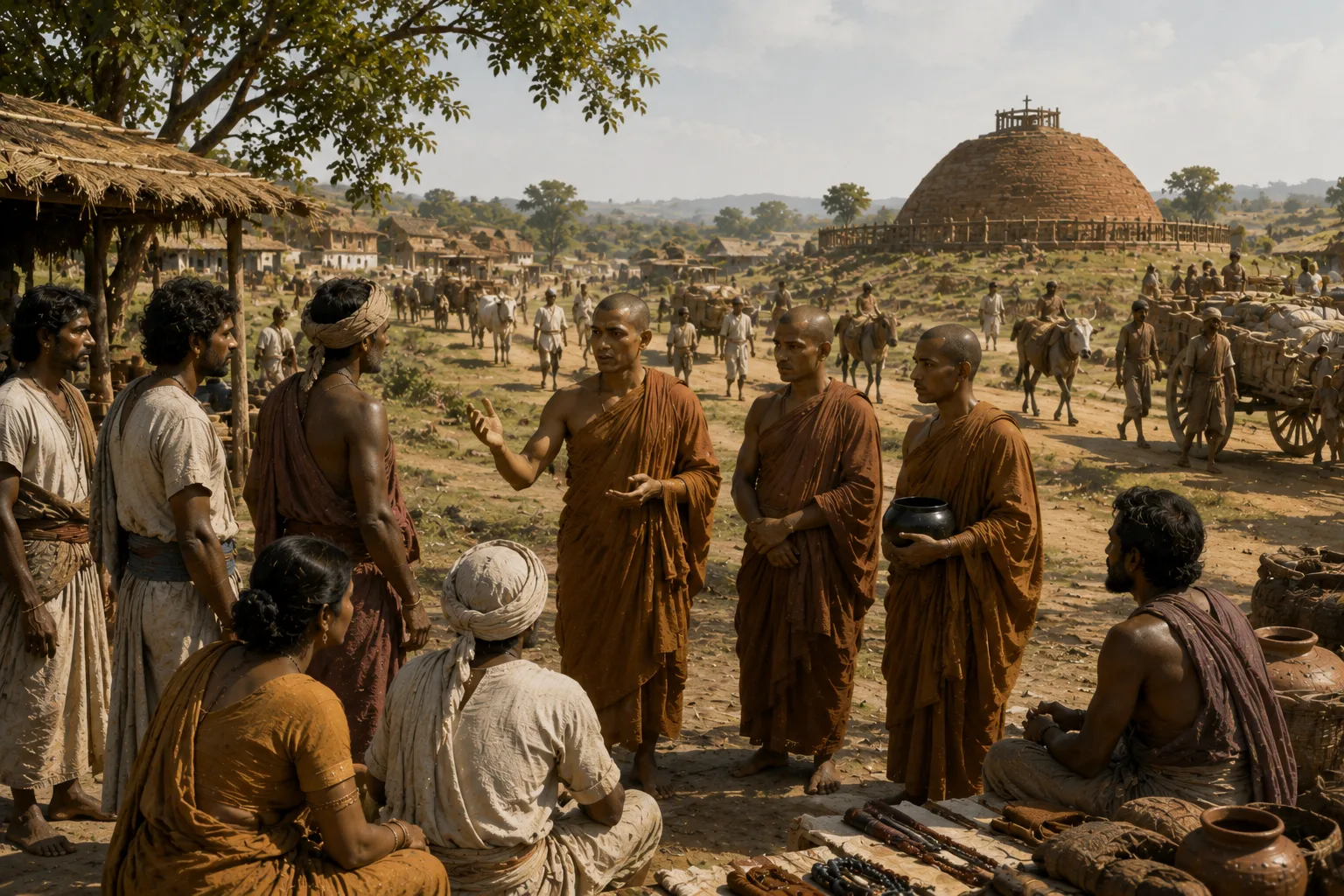
Communities of monks and nuns developed around shared rules. Lay supporters stayed in household life and helped sustain them with gifts such as food and shelter.
Buddhism spread first by voice and example. Teachings were recited, remembered and passed from teacher to student across towns and roads.
Without the sangha,the Buddha's insights might have remained a memory of one teacher. With it, Buddhism could travel.
After the Buddha’s death
Step 4 of 10After the Buddha’s deathAccessible mode
Buddhism After the Buddha
The Buddha's death did not end the movement. It forced his followers to preserve his teaching without his living presence.
Later Buddhist accounts remember councils at which monks recited the teachings and rules. The stories show how much the tradition valued preserving them by memory.
Monasteries helped the sangha remain stable. They gave monks and nuns places to study, teach, debate and maintain discipline.
Lay followers also mattered. Their gifts supported monastic life, and their devotion kept Buddhism connected to households, towns and local communities.
This period shaped the religion's future. The teachings could now outlive one teacher and move through networks of communities.
Before and during the Mauryan period
Step 5 of 10Before and during the Mauryan periodAccessible mode
Buddhism Spreads Across India
Buddhist communities grew through travel, teaching and local support. The pace of their earliest expansion is hard to trace.
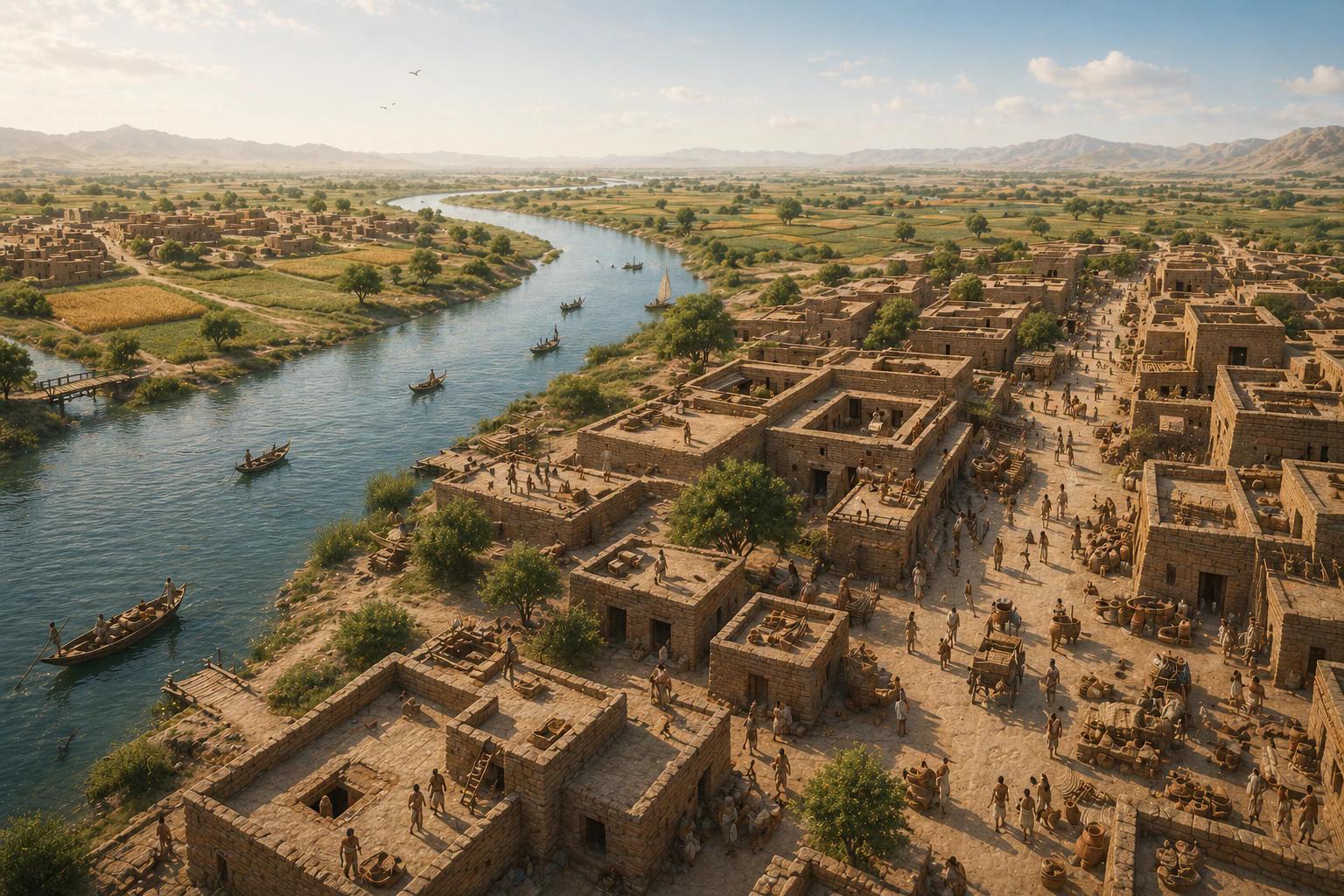
People moved between towns and settlements along roads and rivers. Buddhist teachers could find listeners there, while householders and merchants could give food and shelter.
Monasteries became centres of learning and hospitality. They connected teachers, donors and travellers across wider regions.
Local rulers and wealthy supporters sometimes gave land, shelters or protection. Their gifts helped Buddhism become visible in new places.
By Ashoka's reign, inscriptions place Buddhist sacred sites and communities across parts of South Asia. The evidence is thinner for when they first reached each region.
3rd century BCE
Step 6 of 103rd century BCEAccessible mode
Ashoka and Buddhism
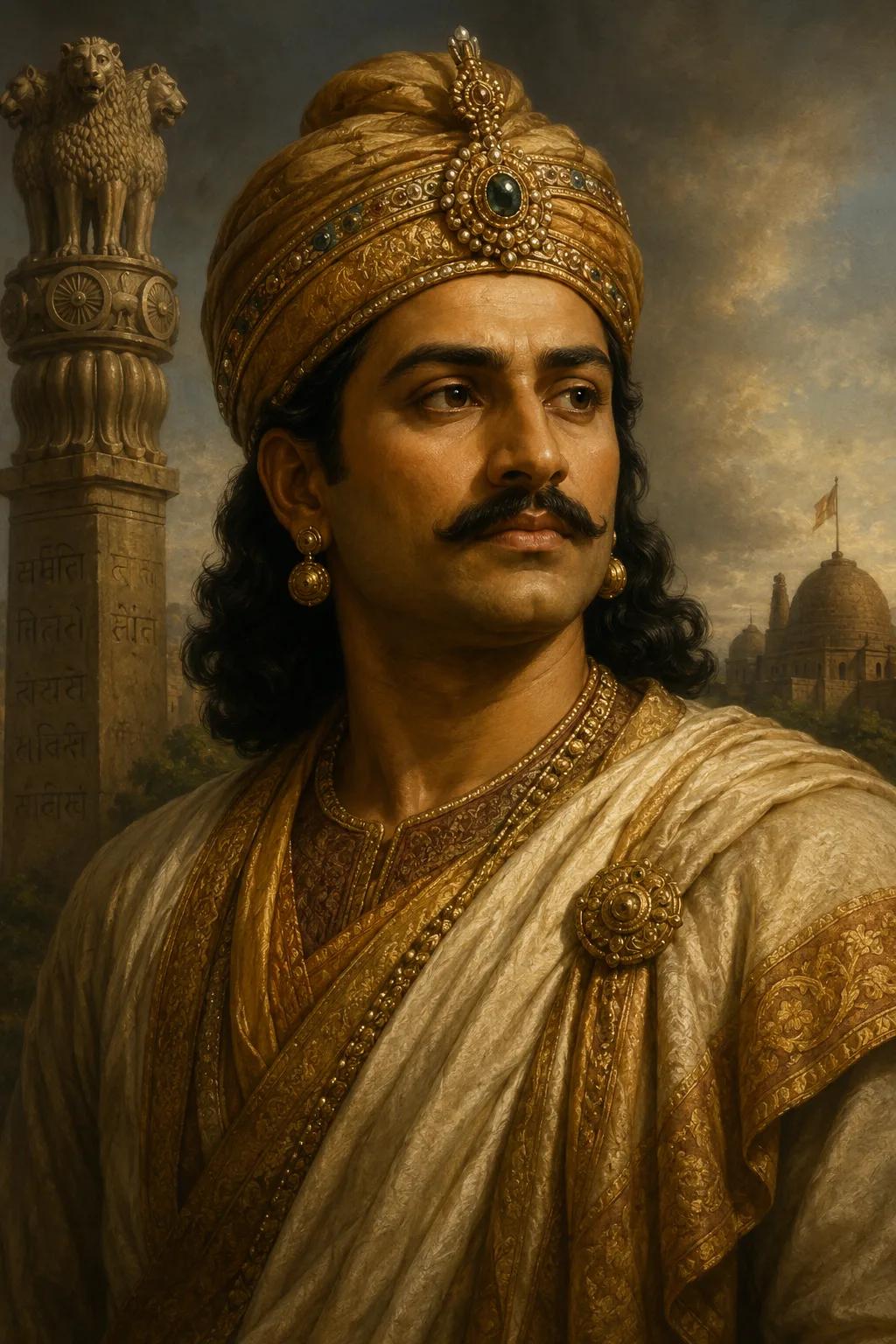
Ashoka's inscriptions make him one of the earliest Buddhist lay followers we can hear from directly.
He described his remorse after conquering . In a different inscription, he called himself a Buddhist lay follower. The inscriptions leave the timing of his conversion uncertain.
His public teaching of dhamma urged restraint, care and respect across several religious communities.
For Buddhism, Ashoka mattered because he was not a local donor. He ruled a vast empire with roads, officials, resources and public authority.
Ashoka's support made Buddhist people and places more visible. The sangha already had communities, supporters and ways of passing on its teaching.
3rd century BCE
Step 7 of 103rd century BCEAccessible mode
Buddhism Gains Imperial Patronage
Inscriptions and monuments show some of the places where Ashoka supported Buddhism.
Ashoka's inscription at records a royal visit to the place remembered as the Buddha's birthplace.
The early monument at Sanchi is associated with Ashoka. Later generations enlarged and embellished it, leaving a site shaped by more than one period of patronage.
Relics and sacred landscapes mattered. They connected local communities to the Buddha's memory and made devotion part of public life.
Stupas and pilgrimage sites gave people places to return to. Their histories continued as monks, nuns and lay donors supported them.
Ashoka’s reign, in later tradition
Step 8 of 10Ashoka’s reign, in later traditionAccessible mode
The Tradition of the Third Buddhist Council
Buddhist tradition links Ashoka with the Third Buddhist Council at .
The council is remembered as a gathering that strengthened the sangha, clarified teaching and addressed disputes inside the monastic community.
Ashoka's own inscriptions include orders about unity in the sangha. They give no account of the council.
Later Sri Lankan chronicles connect the council with missions to other regions. Those stories became part of how Theravada communities remembered their beginnings.
The council is important in Theravada tradition. Its date, proceedings and connection to the missions remain uncertain.
Ashoka’s reign and after
Step 9 of 10Ashoka’s reign and afterAccessible mode
Buddhism Takes Root in Sri Lanka
Ashoka's patronage is traditionally connected with Buddhist missions beyond India.
The most famous mission is associated with Mahinda, remembered in Sri Lankan tradition as bringing Buddhism to the island during the reign of King Devanampiya Tissa.
The chronicles also tell of Sanghamitta bringing a branch of the Bodhi tree and helping establish a community of nuns.
Early caves and inscriptions in Sri Lanka show local gifts to monastic communities. They tell us about the communities that took root.
Sri Lanka became an important Buddhist centre. The story of Mahinda is one way its chronicles remembered that beginning.
c. 232 BCE and after
Step 10 of 10c. 232 BCE and afterAccessible mode
Buddhism After Ashoka
By the end of Ashoka's reign, Buddhist communities had patrons and sacred places across parts of South Asia.
It had monasteries and sacred sites across parts of India. It had royal patronage, public visibility and stronger connections between communities.
Sri Lanka became a major centre of Buddhist life. Its chronicles trace those beginnings to Ashoka's time, while archaeology gives evidence for early local communities.
Ashoka died around 232 BCE. The places he patronised and the communities he supported had histories of their own.
In later centuries, traders, monks, pilgrims and translators helped carry Buddhism into Central, East and Southeast Asia.
Keep exploring
Finished The Rise and Spread of Buddhism?
Choose the next story, follow a connected moment, or explore the people behind this story.