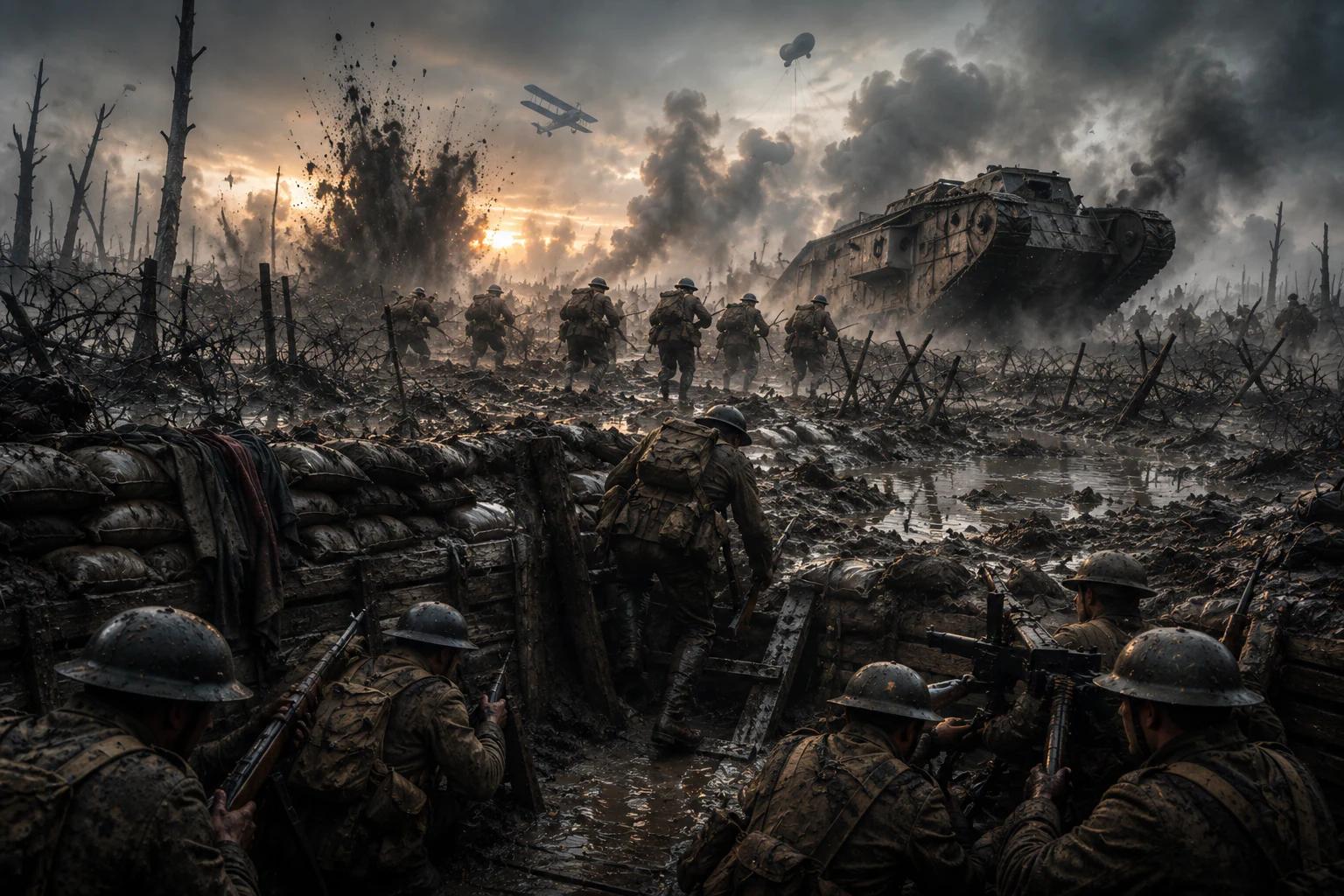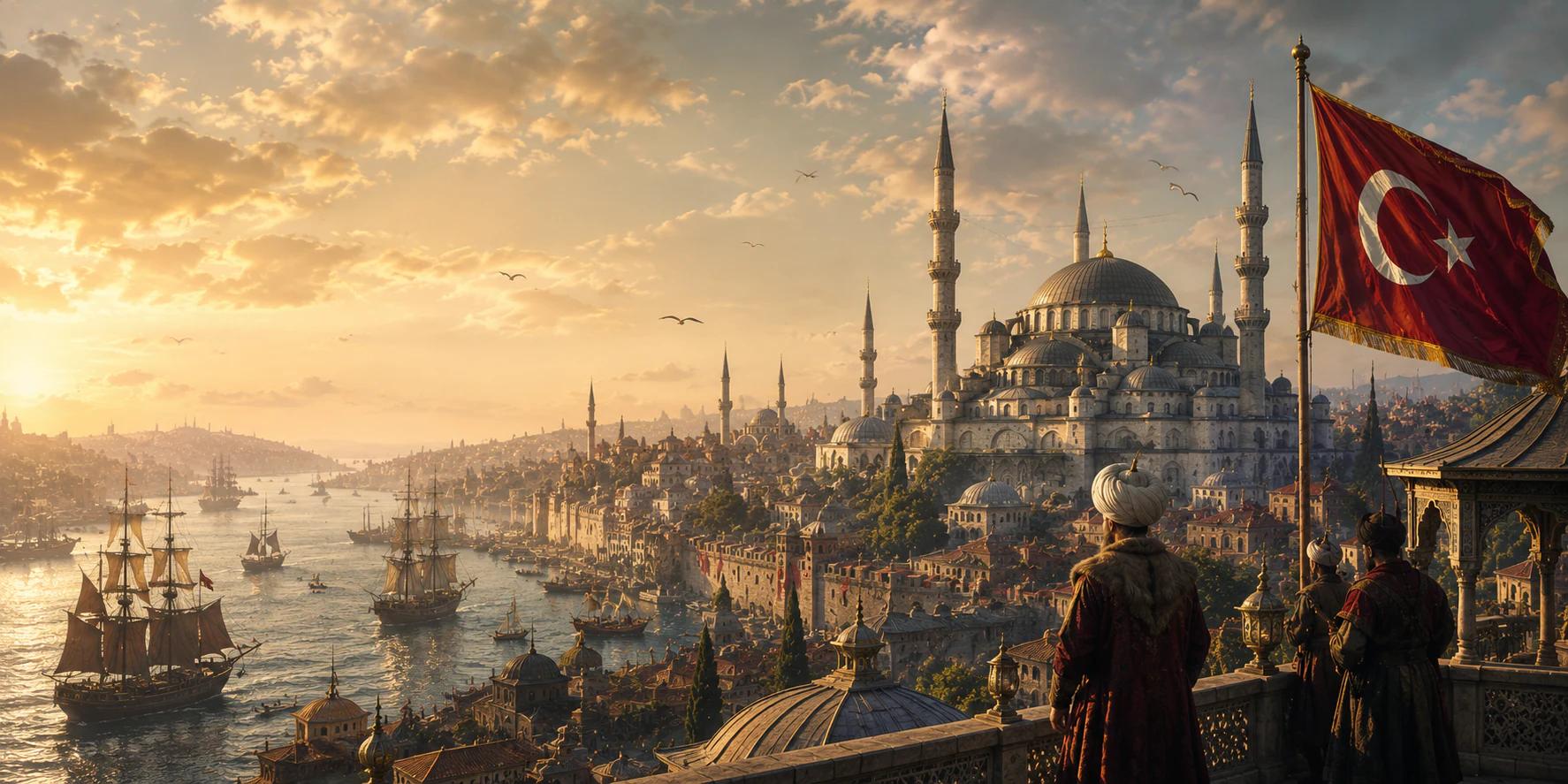
Ottoman banners over Istanbul, with soldiers, merchants, mosques, and imperial ships linking three continents.

Premium Story

The Ottoman Empire

Follow the Ottoman Empire from frontier warband to world empire, reforming state, and modern collapse.

11 chapters

Next
Context

Introduction

Overview

The Ottoman Empire grew from a small frontier principality in Anatolia into a vast multiethnic empire spanning parts of Europe, the Middle East, and North Africa. From the conquest of in 1453 to its collapse after the First World War, the empire shaped Islamic, Mediterranean, Balkan, and European history. Its long life was marked by military expansion, religious diversity, reform, nationalism, and the struggle to survive in a changing world.

Key forces

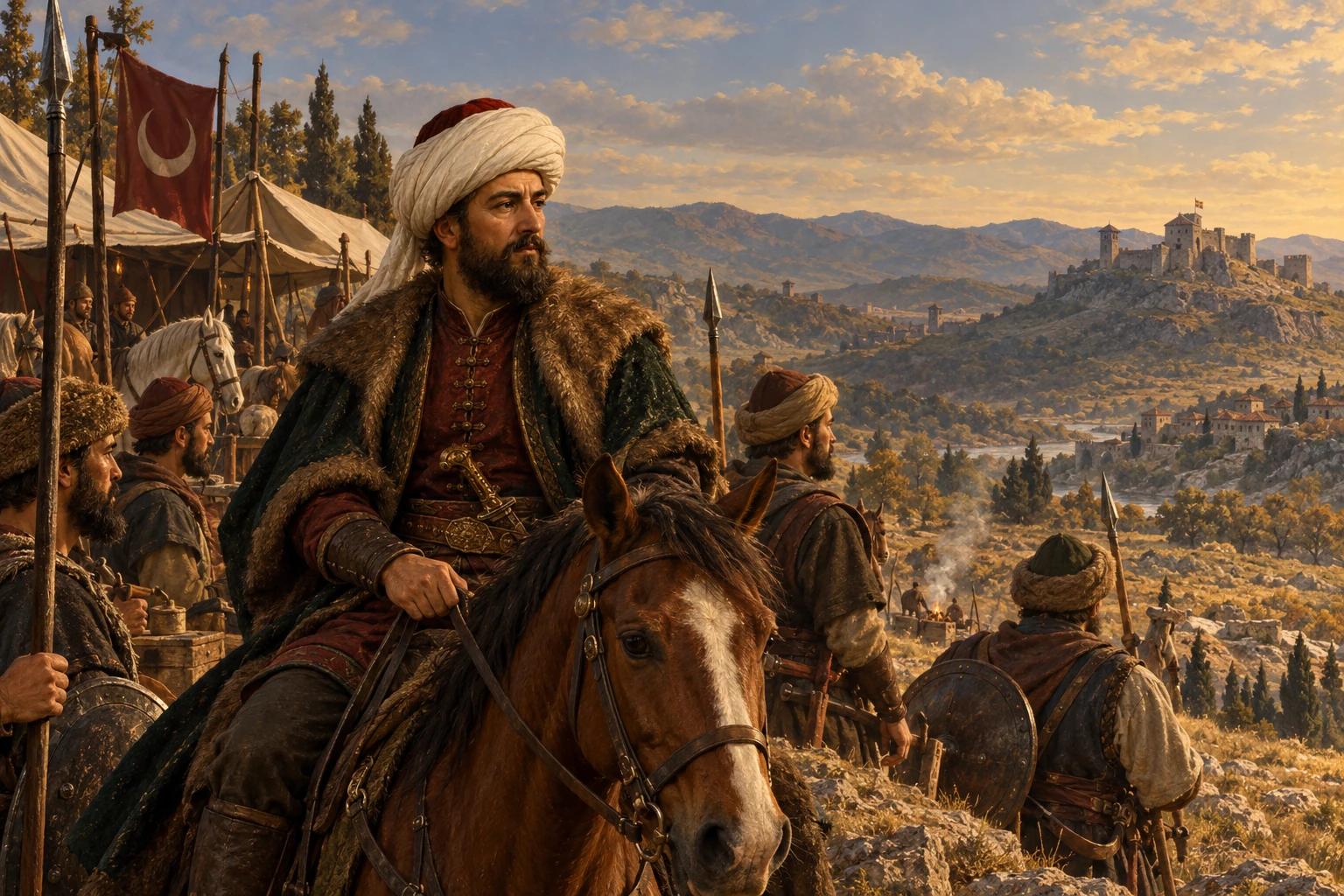
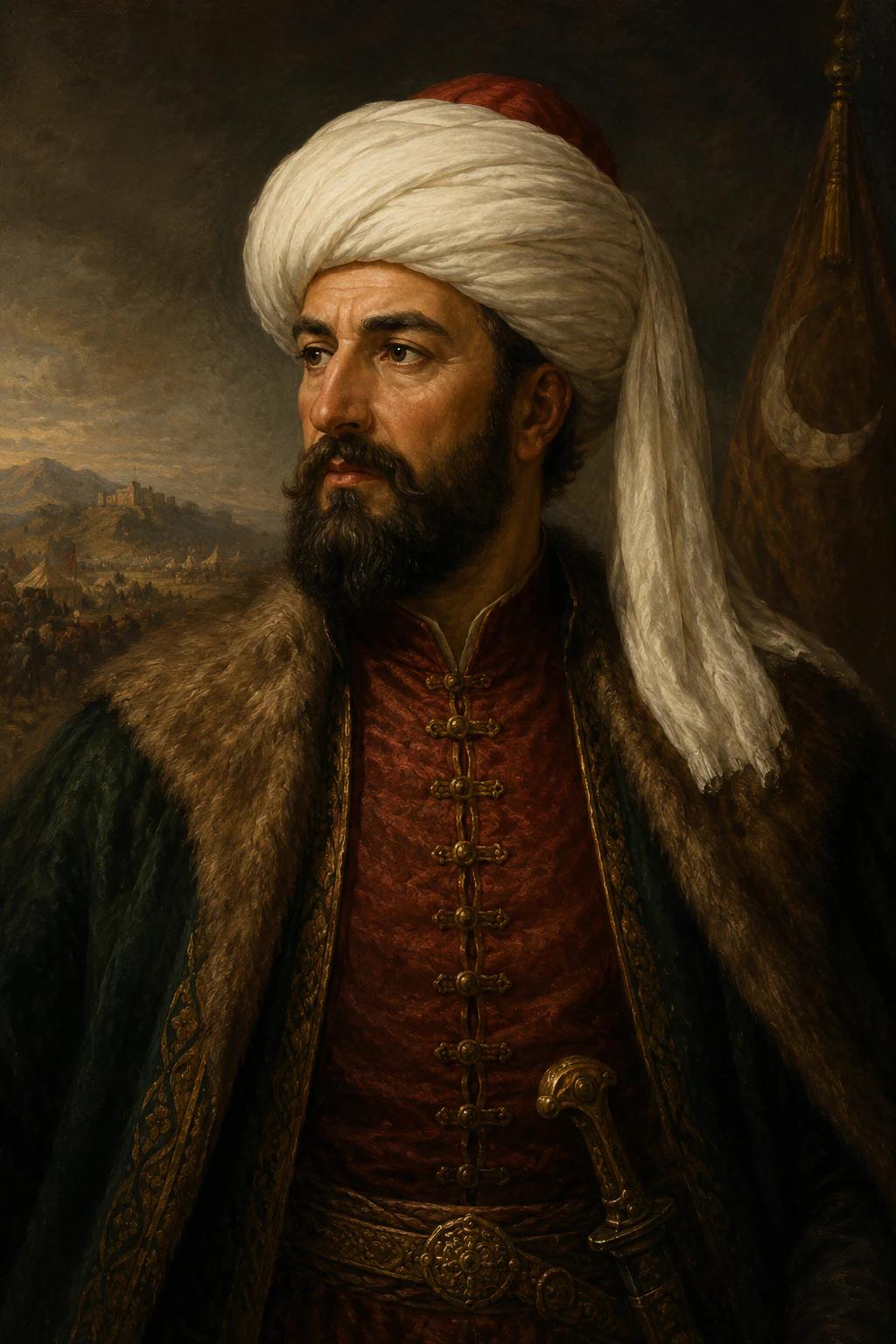
Illustrative reconstruction: Osman I surveys a Byzantine frontier fortress from horseback beside a small Anatolian camp around 1299.
1299 CE
Step 1 of 101299 CEAccessible mode

Osman's Frontier Principality

Around 1299, the Ottomans began as one small principality on a violent frontier between Byzantine lands and Turkish-speaking Anatolia.

Osman I did not rule a rich kingdom. He led a frontier warband in a region where power changed quickly and borders were unstable.

His followers included nomads, fighters, and local allies drawn by land, plunder, and status. This mix made the group flexible and hard to predict.

Ghazi warfare against nearby Byzantine strongholds gave Osman prestige. Success in battle attracted more men, which made new campaigns possible.

Frontier society helped him. Local Christians, Muslims, and mixed communities often cared more about security and taxes than old imperial loyalties.

Because this principality sat at a fault line between collapsing and rising powers, even small victories had big consequences.

A small frontier principality grew through changing alliances, opportunities and conflict, though its future was far from certain.

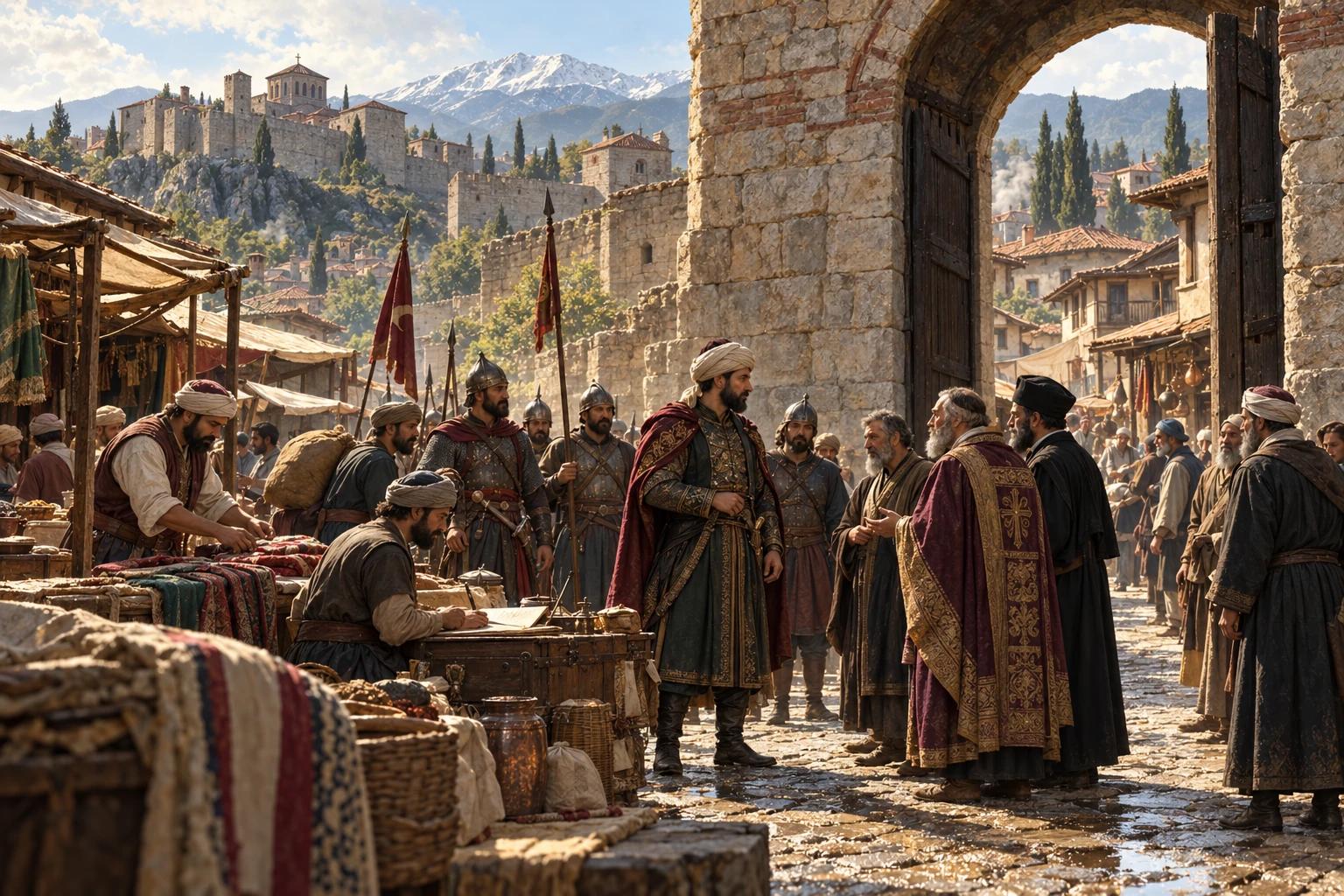
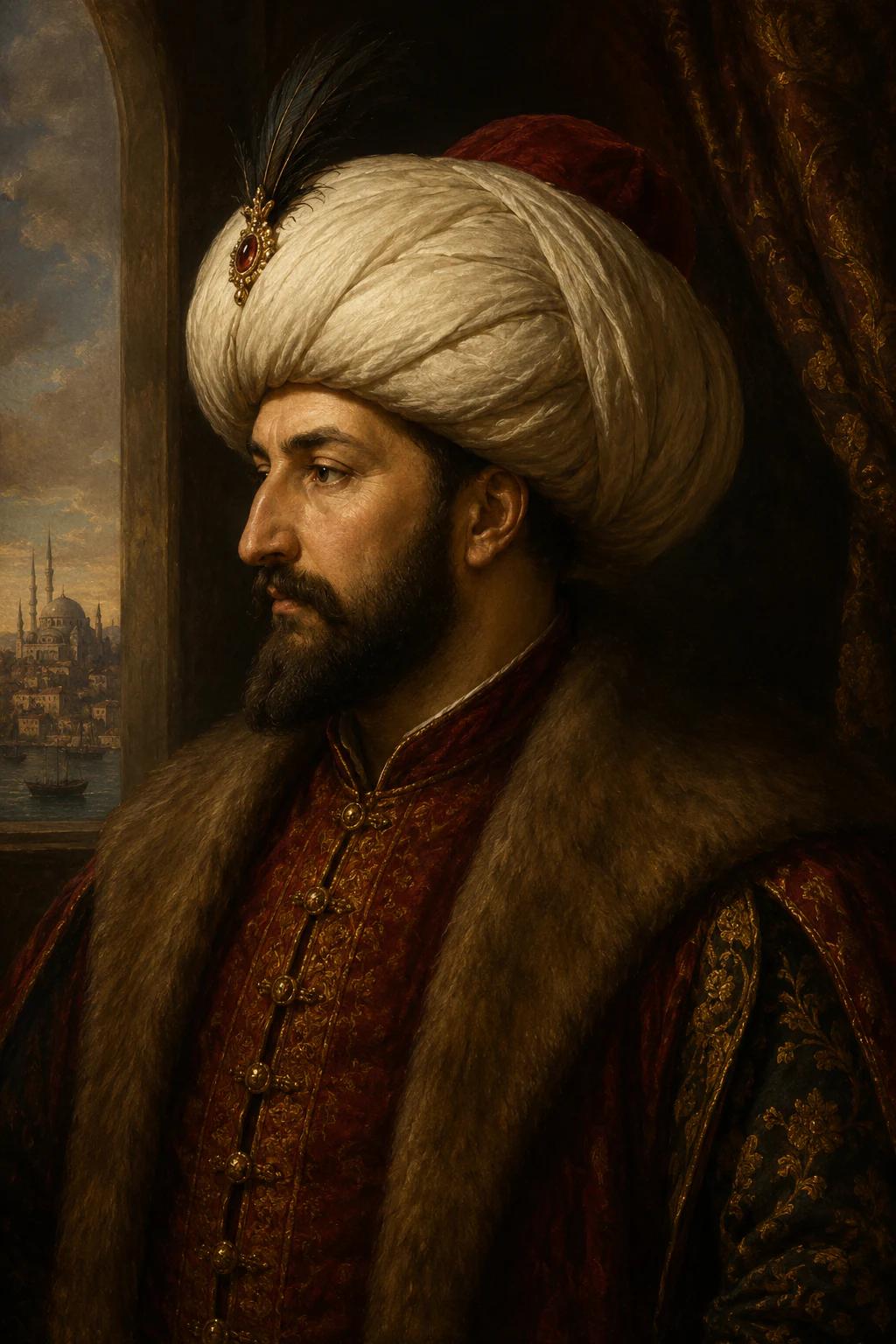
Illustrative reconstruction: Orhan and city elders discuss the handover of Byzantine Bursa in 1326 while merchants and a clerk resume work near the gate.
1326 CE
Step 2 of 101326 CEAccessible mode

Bursa Becomes a Capital

In 1326, the Ottomans captured , turning a frontier force into a state with an urban center.

was wealthy, productive, and connected to regional trade. Taking it gave the Ottomans far more money than raiding could provide.

The city became an early Ottoman capital. From there, rulers could organize taxation, courts, and military supply in a more stable way.

Urban control also changed legitimacy. Governing a major city made the dynasty look less like a warband and more like a lasting regime.

Mosques, markets, and charitable endowments tied political authority to daily life and public order.

sat close to Byzantine territories still under pressure. That made it a strong launch point for further campaigns.

With , the Ottomans gained what every rising power needs: wealth, administration, and a base that could sustain expansion.

PremiumFree preview: 2 of 10 chapters

Continue The Ottoman Empire

Sign up to a Premium account to read the remaining chapters of this story.

A paid Premium subscription also gives you full access to every other Premium story.

See Premium options

Coming next

  1. Chapter 3The Crossing into Europe
  2. Chapter 4The Conquest of Constantinople
  3. Chapter 5Suleiman's Imperial Order

And 5 more chapters to follow.

Keep exploring

Follow the connected history

Explore closely connected stories and free figure profiles. Premium stories open with a public preview.

References

Sources and historical notes

Sources used to check this page, selected recommendations and historical notes.

Sources used

  1. The Metropolitan Museum of Art, “The Ottoman Empire,”

    Origins, Constantinople, Suleiman and imperial institutions.

    Open source
  2. The Metropolitan Museum of Art, “Venice’s Principal Muslim Trading Partners,”

    Ottoman commercial and diplomatic links in the Mediterranean.

    Open source
  3. Library of Congress, “Ottoman Turkish Collections: Reference Works,”

    The abolition of the sultanate, Lausanne and the proclamation of the republic.

    Open source
  4. United States Holocaust Memorial Museum, “The Armenian Genocide, 1915–16: In Depth,”

    The genocide of Armenians under Ottoman rule during the First World War.

    Open source
  5. Encyclopaedia Britannica, “Ottoman Empire,” Open source
  6. The Metropolitan Museum of Art, “The Ottoman Empire, 1300-1600,” Open source
  7. Fordham University, “Internet Modern History Sourcebook,” Open source

Additional sources and notes

Loading reviewed claim sources...

Our editorial approach · Report a historical error

A monthly route through history

Find out first about the latest published stories, feature notes and occasional Premium offers in one monthly email.