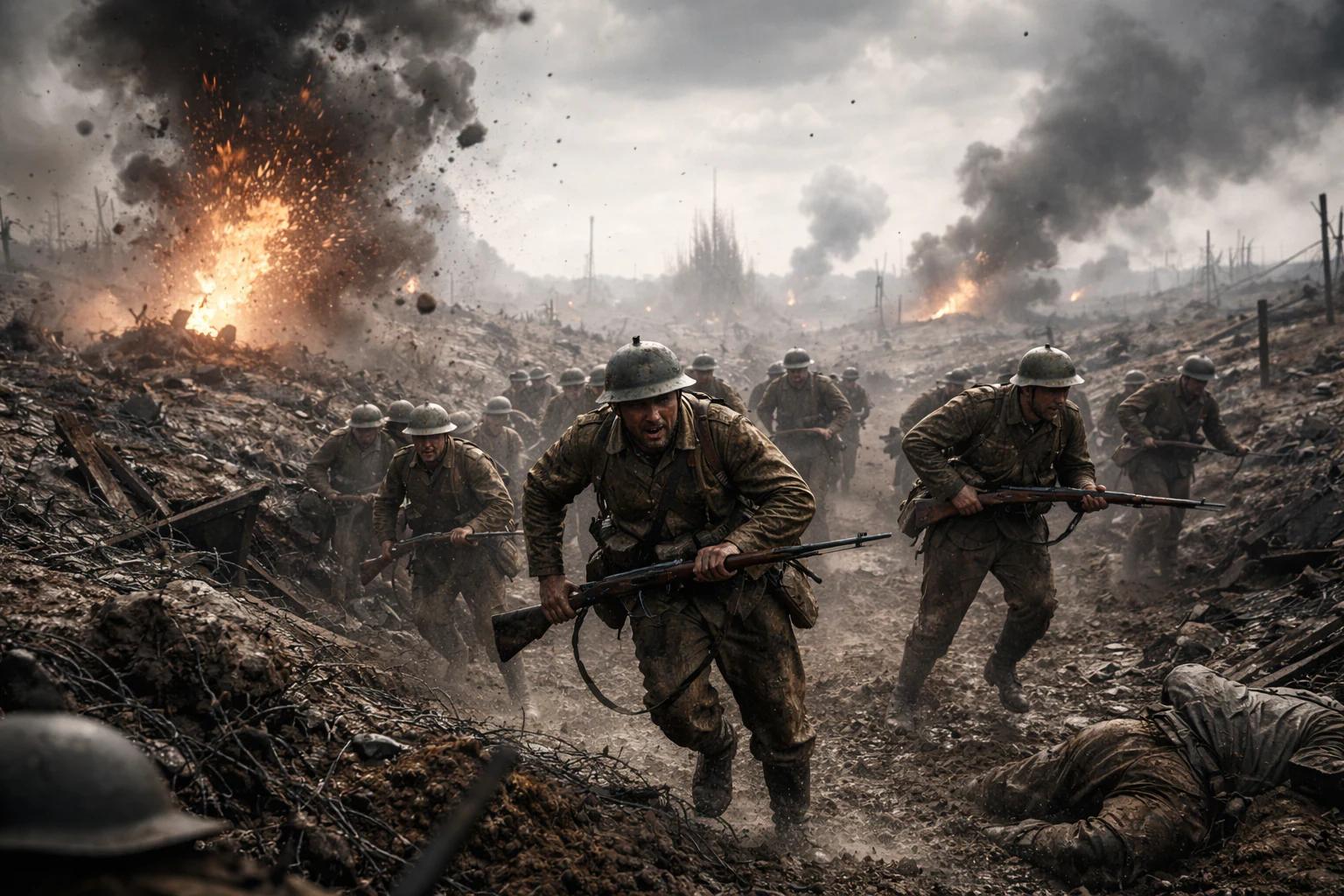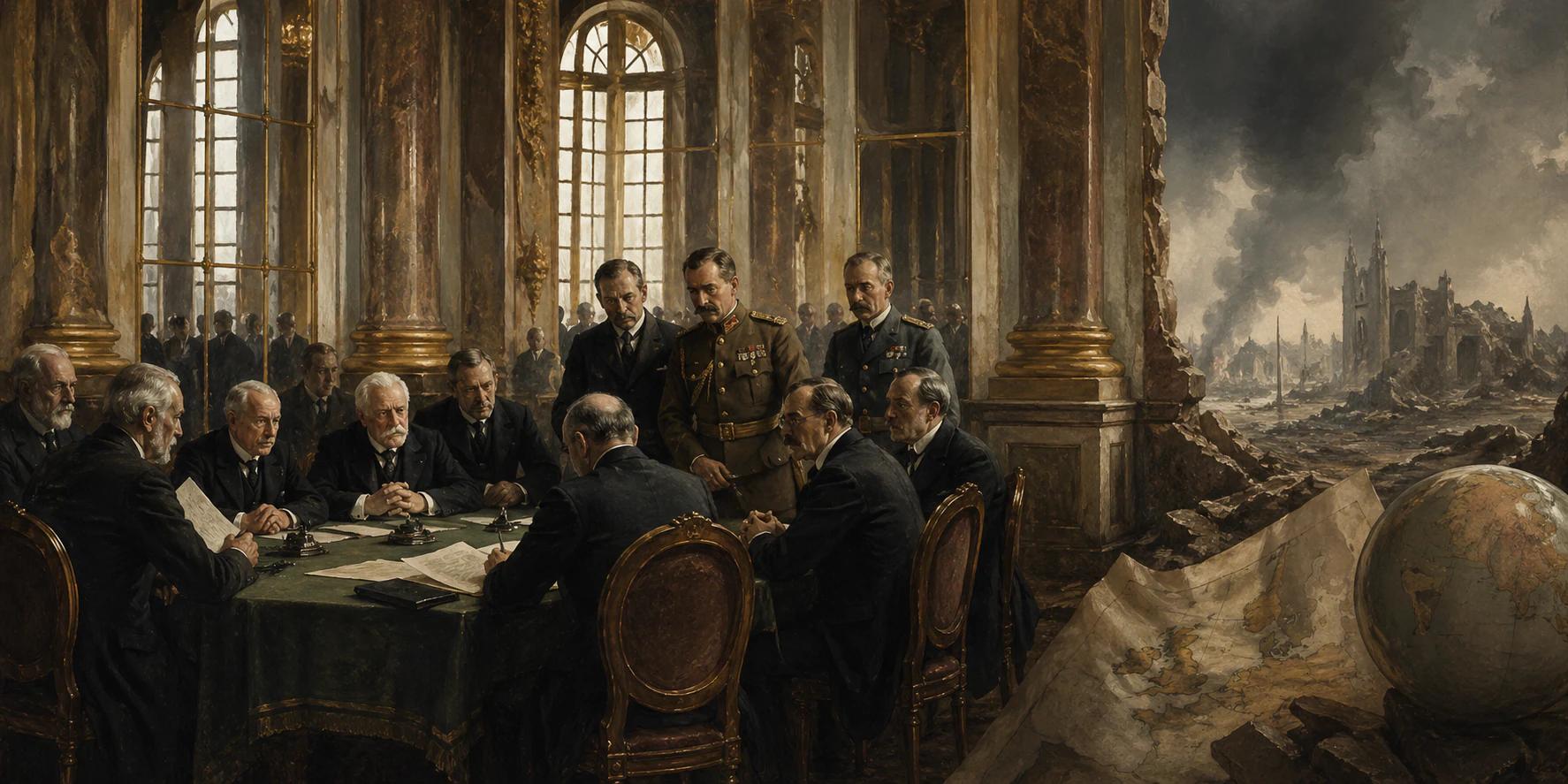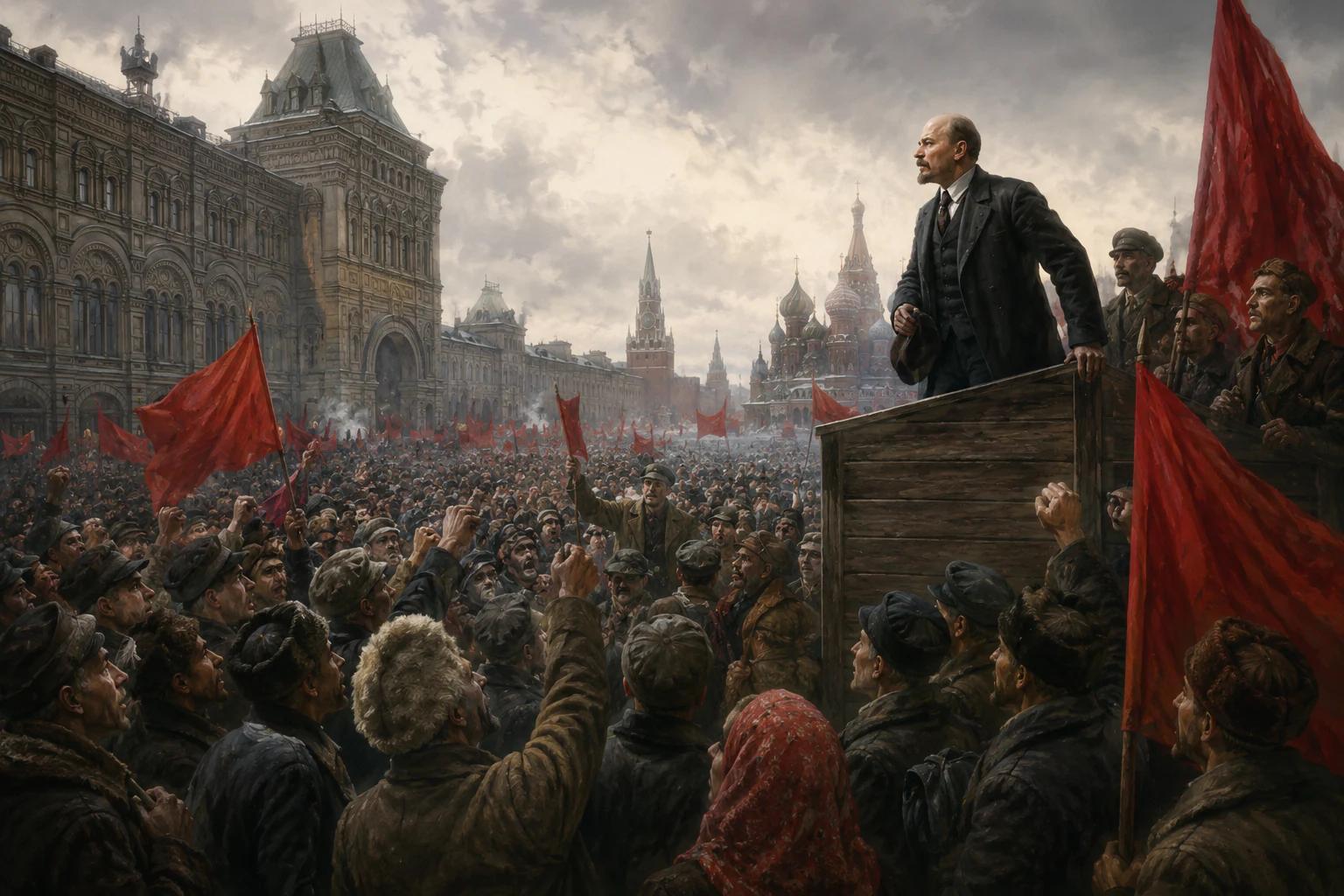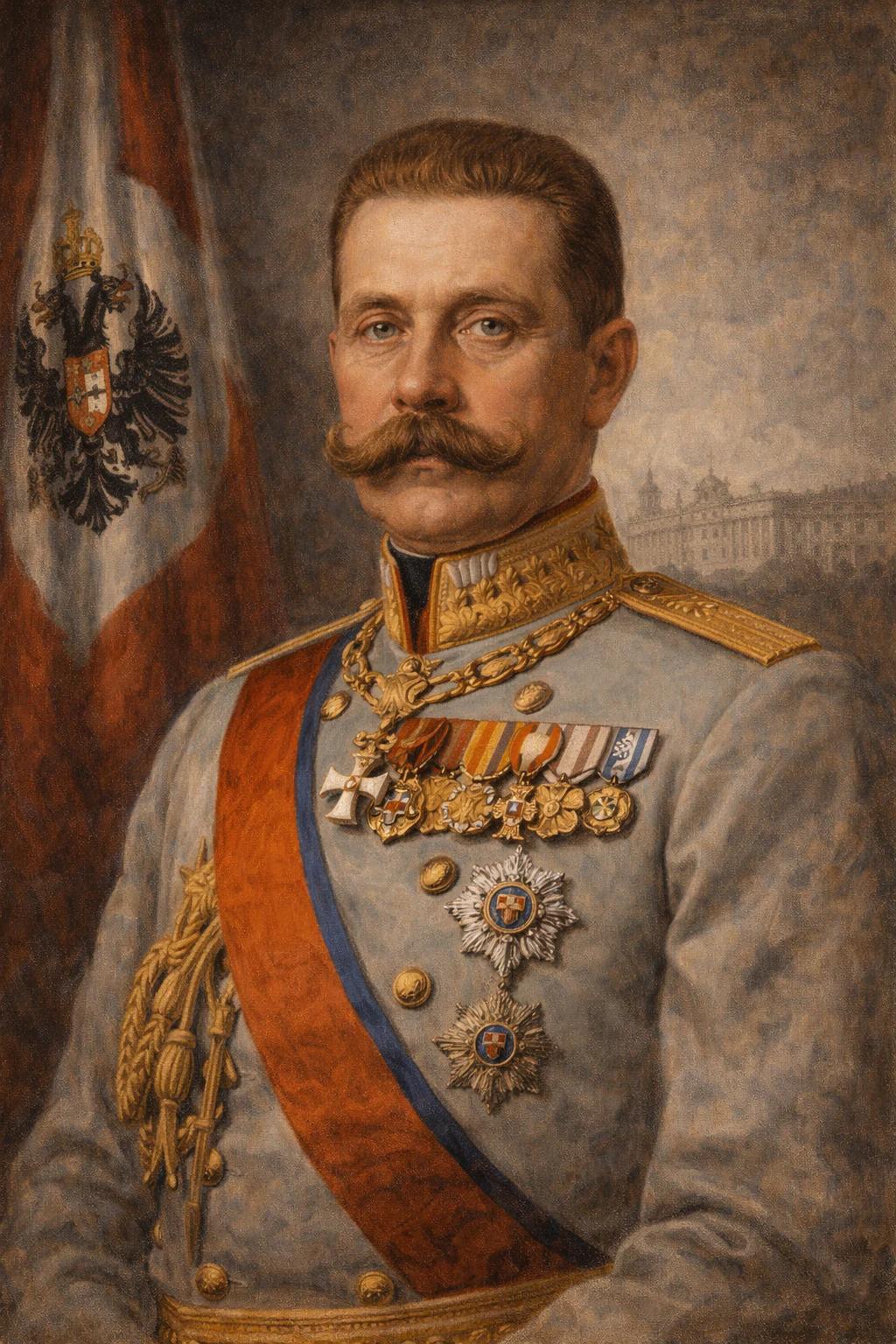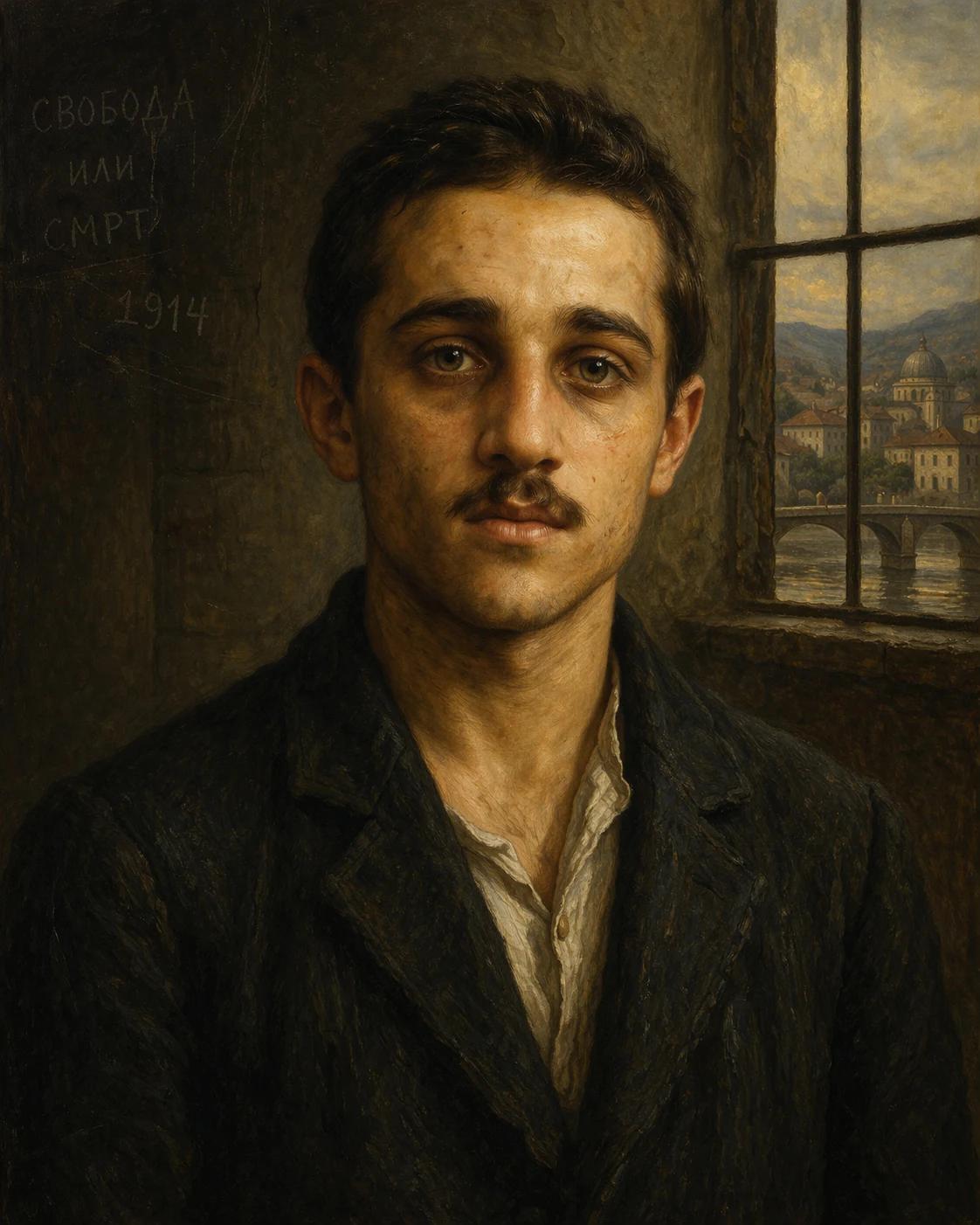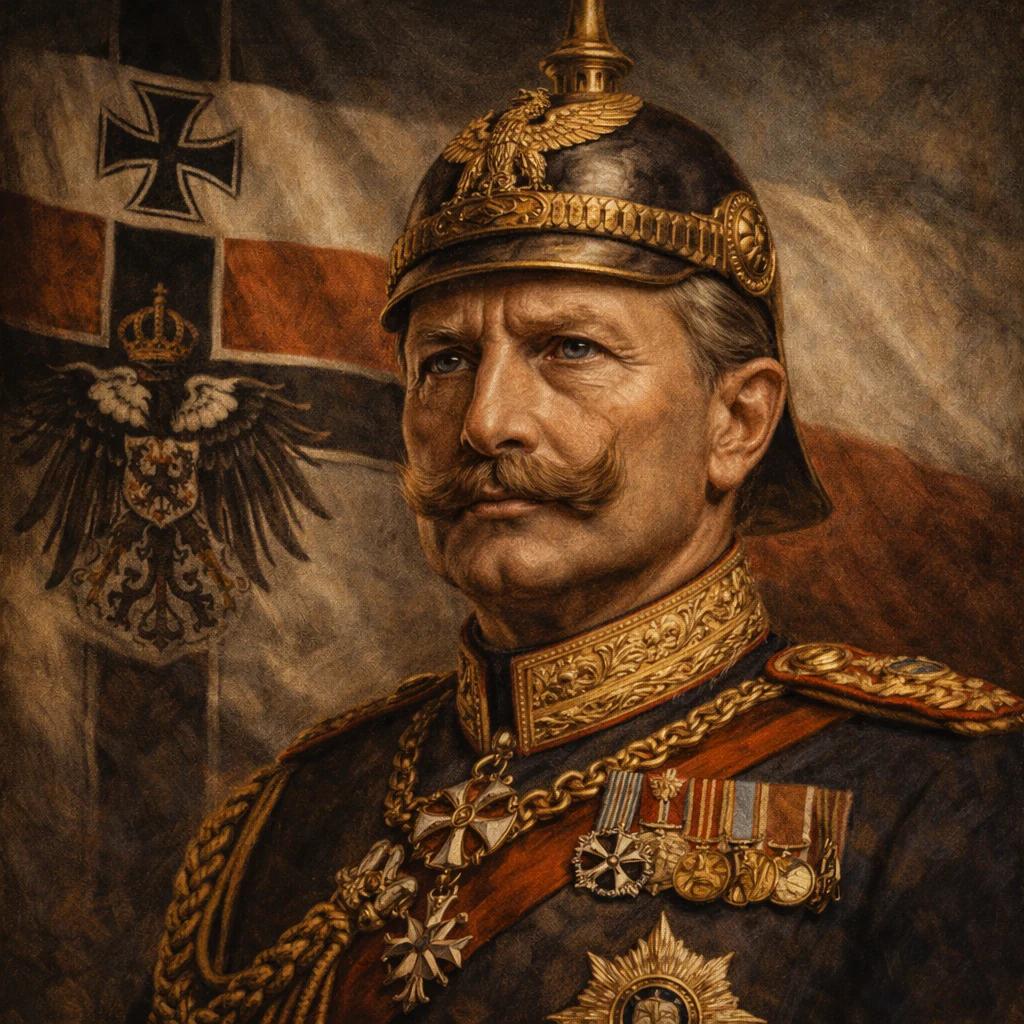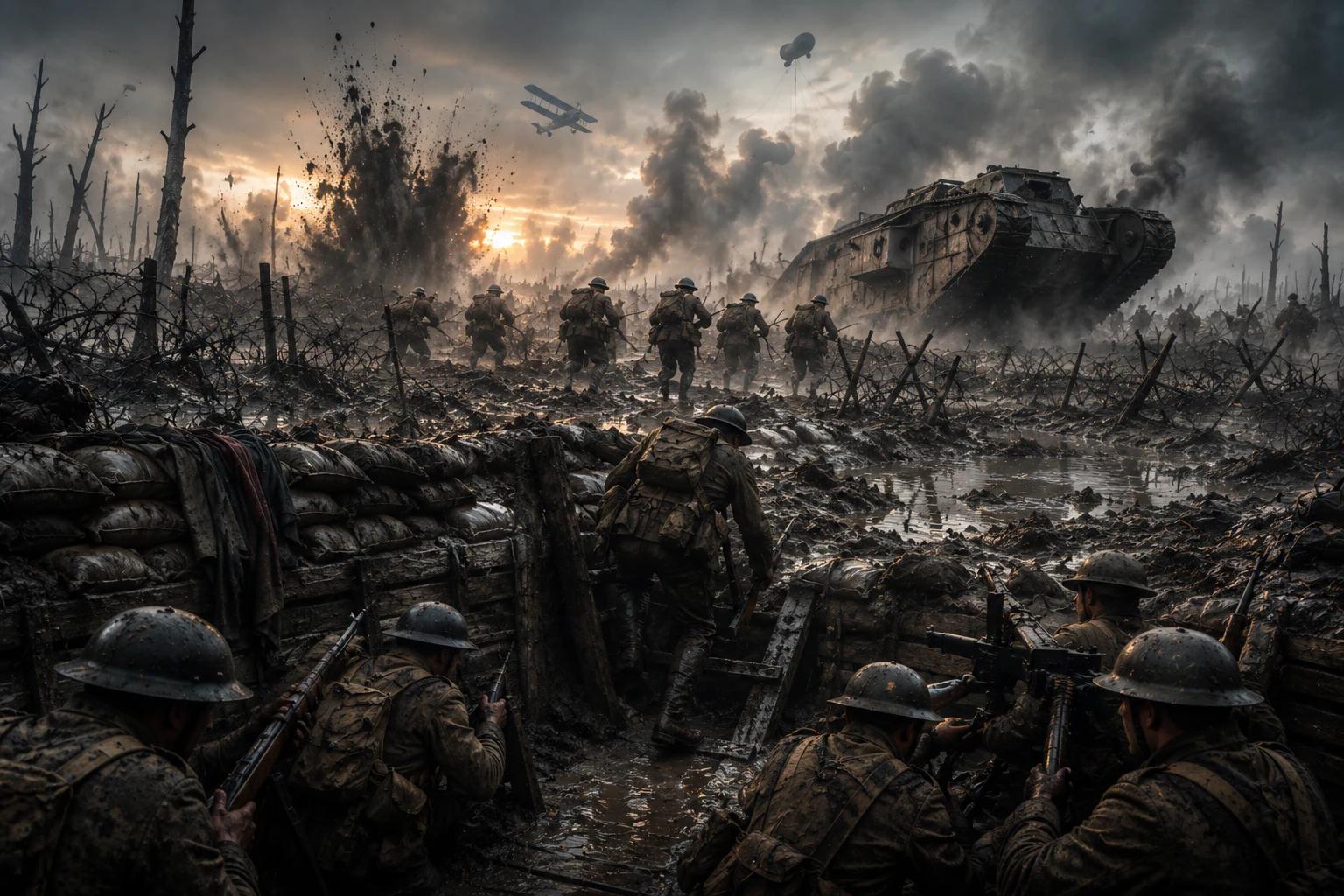
muddy trench lines under heavy shellfire with soldiers advancing across a devastated battlefield

Free Story

The First World War

Follow the First World War from Sarajevo and the failed opening campaigns to global conflict, armistice and the peace of 1919.

15 chapters

Next

Content note

This story discusses war, violence, persecution, and death in an educational historical context.

Context

Introduction

Overview

The First World War was a global conflict fought from 1914 to 1918. Rivalries and political decisions turned the Sarajevo assassination into a widening war. Failed offensives, trenches, overseas campaigns and the struggle at sea drew soldiers and civilians into years of industrial conflict. Revolution, American intervention and Allied advances changed its outcome. This story follows that course through the armistice of 1918 and closes with the uncertain peace of 1919.

Key forces

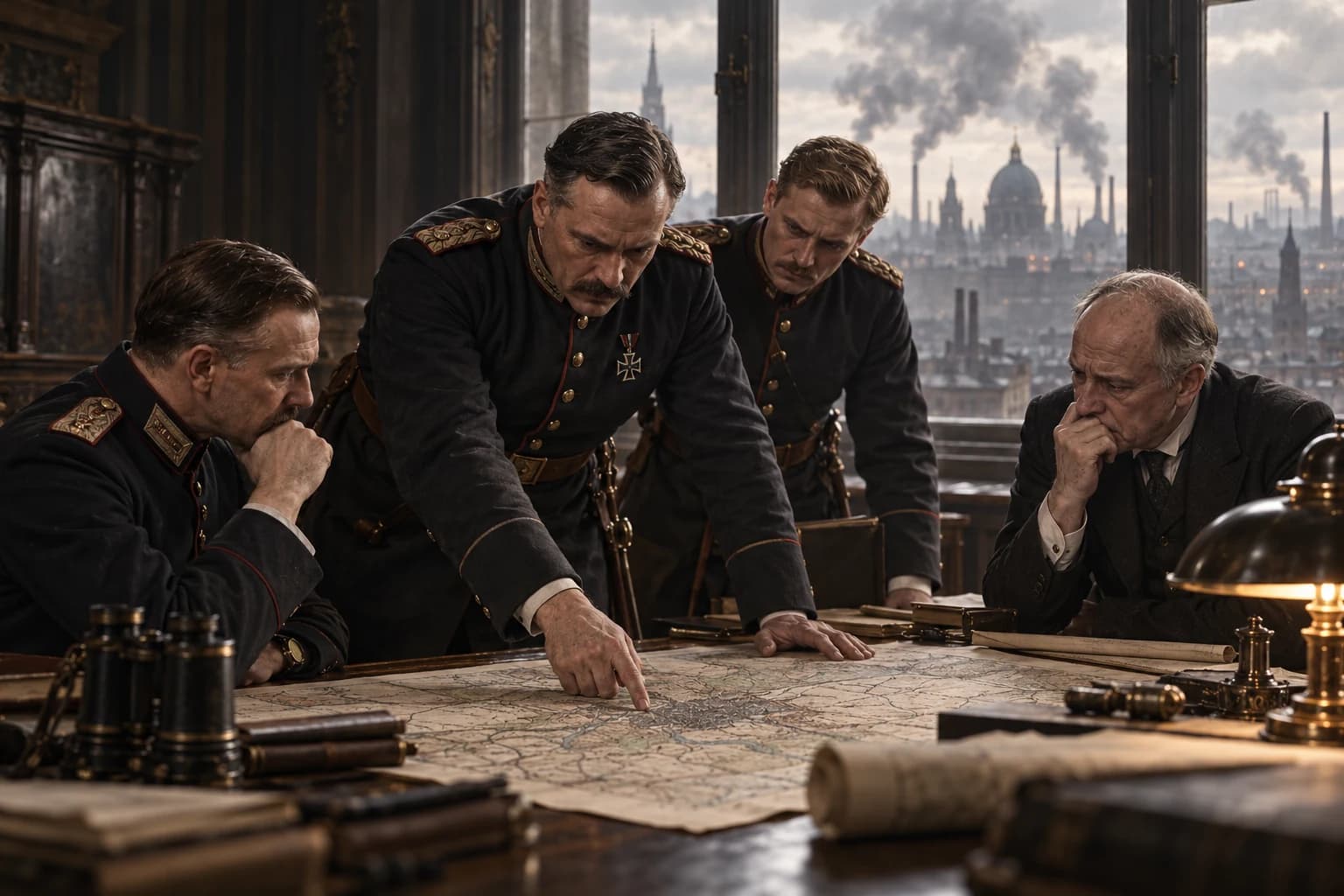
German officers examine military plans in a Berlin office before the war.
1914 CE
Step 1 of 151914 CEAccessible mode

Why World War I Started

By 1914, Europe looked strong and modern. Under the surface, rival powers feared one another, but war was still a choice.

The causes of the First World War included rival alliances, militarism, imperial competition, nationalism and instability in the Balkans. For years, the biggest powers had built rival alliance systems. Germany and Austria-Hungary stood together. France and Russia did too. Britain moved closer to France and Russia.

At the same time, armies grew larger, navies expanded, and war plans were drawn up in detail. Leaders feared falling behind their rivals.

Competition overseas made things worse. Britain, France, and Germany competed for colonies, trade, and power. Nationalist anger also grew, especially in the Balkans, where empires ruled many unhappy peoples.

Military spending and national pride increasingly shaped industry, schools and politics.

That is why one crisis in 1914 could trigger a continental war. The system was unstable. Alliances increased the danger, but leaders still chose whether to escalate.

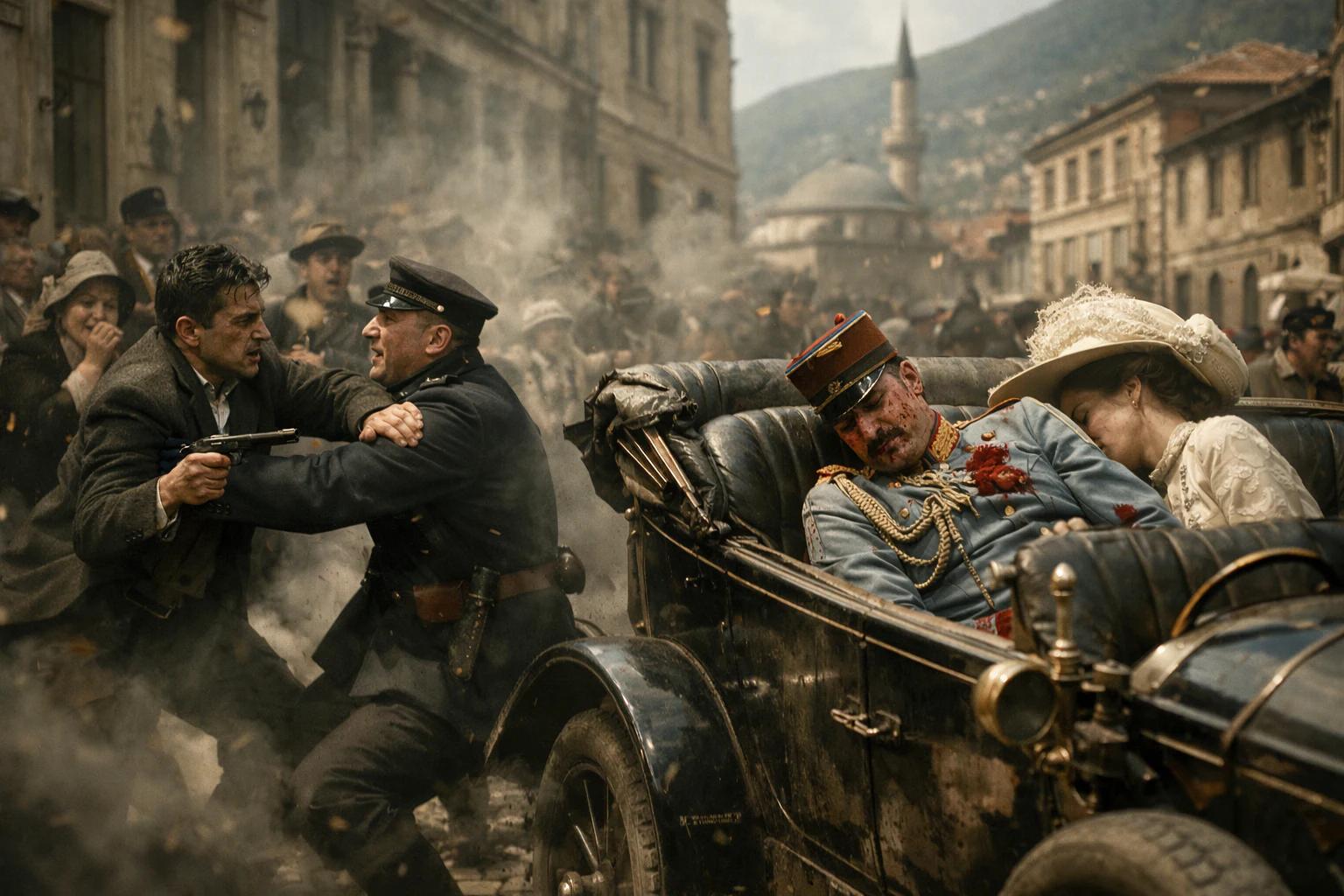
The assassination of Franz Ferdinand and Sophie during their visit to Sarajevo.
1914 CE
Step 2 of 151914 CEAccessible mode

Sarajevo Ignites the Crisis

One killing in Sarajevo did not automatically start a world war. It became one because powerful governments kept choosing to raise the stakes.

Before June 1914, Europe was tense but still at peace. Big powers had armies, alliances, and old fears, especially in the Balkans.

After Archduke Franz Ferdinand was assassinated, Austria-Hungary blamed Serbia and wanted to crush it. Germany backed Austria-Hungary, while Russia felt pressure to protect Serbia.

Austria-Hungary sent Serbia a harsh ultimatum. Serbia accepted most of it, but not all. Austria-Hungary declared war. Russia began to mobilise. Germany answered with its own threats and plans.

France supported Russia. Britain hoped to stop the crisis, but once Germany invaded Belgium, London entered the war too. A regional clash had become a continental one.

This still connects to the present because it shows how fast alliances, fear, and rigid military plans can turn one violent event into a much bigger disaster.

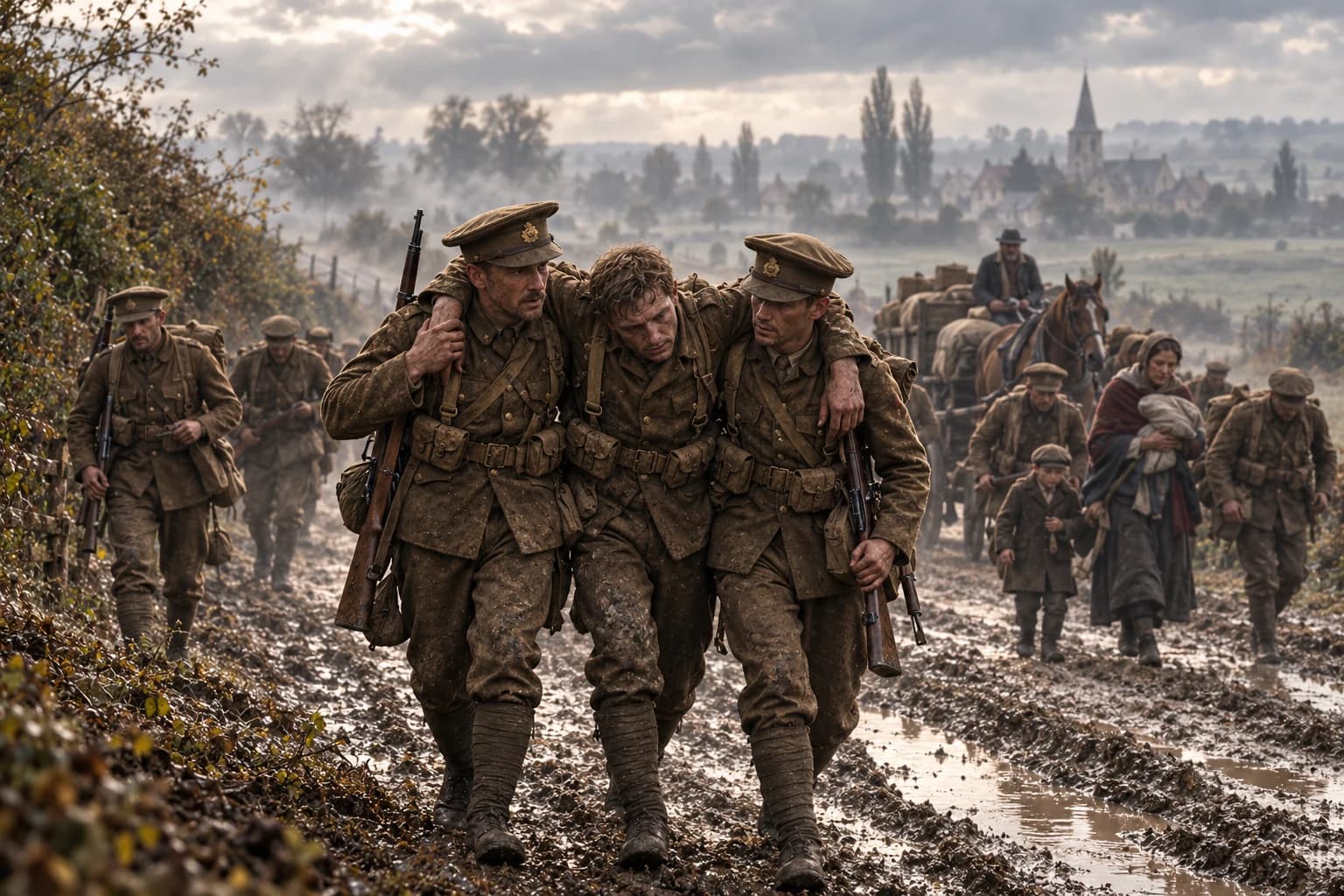
Exhausted British soldiers retreat through the French countryside in soft service caps, September 1914.
1914 CE
Step 3 of 151914 CEAccessible mode

The Promise of a Short War Collapses

In August 1914, armies crossed borders expecting a decisive campaign. Within weeks, their plans were coming apart.

Germany wanted to defeat France quickly before turning its main strength against Russia. Its armies marched through neutral Belgium, bringing Britain into the fighting.

Belgian resistance, fierce battles and long supply routes slowed the advance. Soldiers and civilians found themselves moving through the same crowded roads.

In September, French and British forces stopped the German advance at . In the east, Russia suffered a major defeat at , but remained in the war.

Neither alliance achieved the victory it needed. In France and Belgium, both sides tried to get around the other, then dug in to hold their ground.

The opening campaigns explain the trenches that followed. The war became prolonged because the armies could block each other without forcing a final decision.

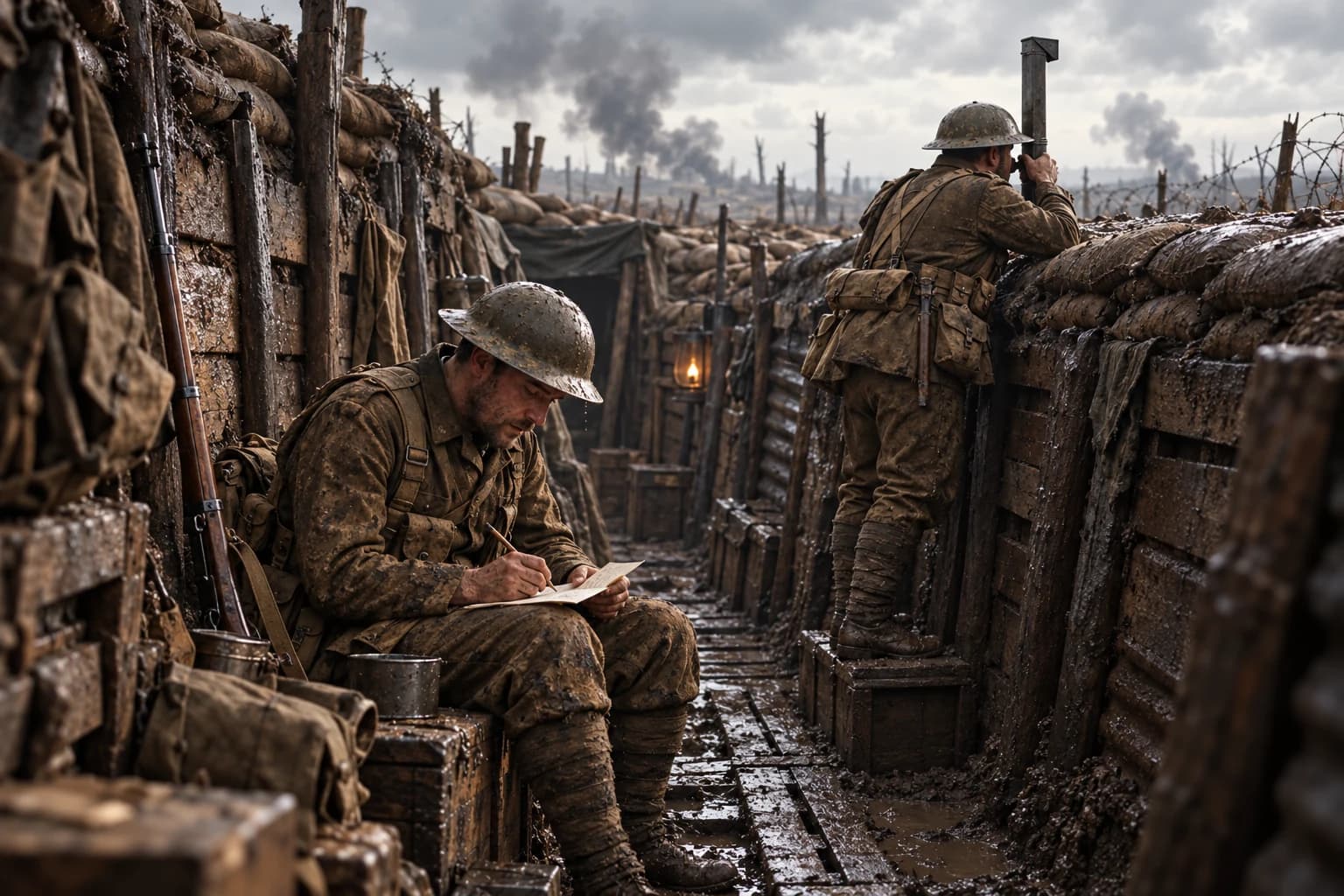
British soldiers rest and keep watch inside a timber-lined trench with duckboards and sandbags.
1915 CE
Step 4 of 151915 CEAccessible mode

The Trenches Harden

The war was supposed to be quick. Instead, both sides got stuck in the mud.

After the opening campaigns failed to settle the war, both sides dug in. By 1915, a long defensive front stretched across France and Belgium.

New weapons changed everything. Machine guns could cut down waves of attackers in seconds. Heavy artillery blasted the land into craters. Barbed wire slowed soldiers and left them exposed.

To survive, soldiers dug trenches. These deep lines stretched for miles. Attacking meant climbing out, crossing open ground, and facing constant fire. Most attacks failed with huge losses.

Factories kept both sides supplied with guns, shells, and new troops. This meant the fighting could go on and on without a clear winner.

Soldiers lived with mud, vermin, fear and long periods of waiting. The trench system made a quick breakthrough difficult, while the fighting and its demands kept spreading beyond Europe.

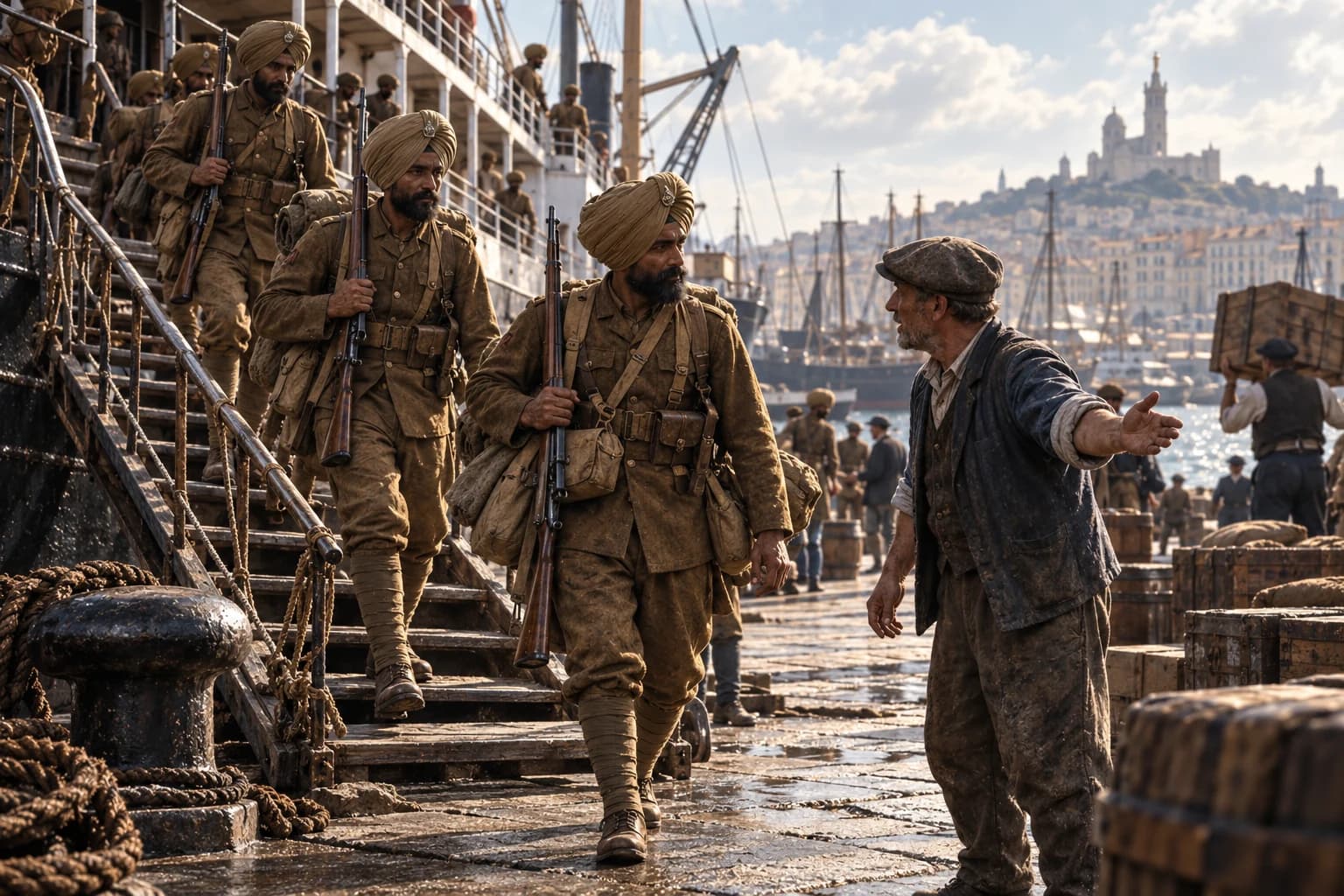
Indian troops in khaki and turbans disembark at Marseille and meet a French dockworker.
1914 CE
Step 5 of 151914 CEAccessible mode

War Spreads Across Continents

While armies dug into France and Belgium, the conflict was already drawing in distant societies. Rival empires made this a world war from its opening months.

At first, many saw the fighting as a European struggle between rival empires and alliances. But those empires ruled land and people across the world.

Britain, France and Germany ruled overseas territories and relied on global routes. Their demands pulled soldiers, workers and supplies into a struggle far beyond Europe.

Indian troops fought for Britain, African territories became battle zones, Japan moved against German holdings in Asia, and navies hunted each other across distant seas.

This changed the war completely. Millions of people who had little say in European politics now carried its costs, from battlefields to ports and farms.

These connections widened the search for victory. With the Western Front blocked, Allied leaders looked towards the Ottoman Empire and the sea passage at .

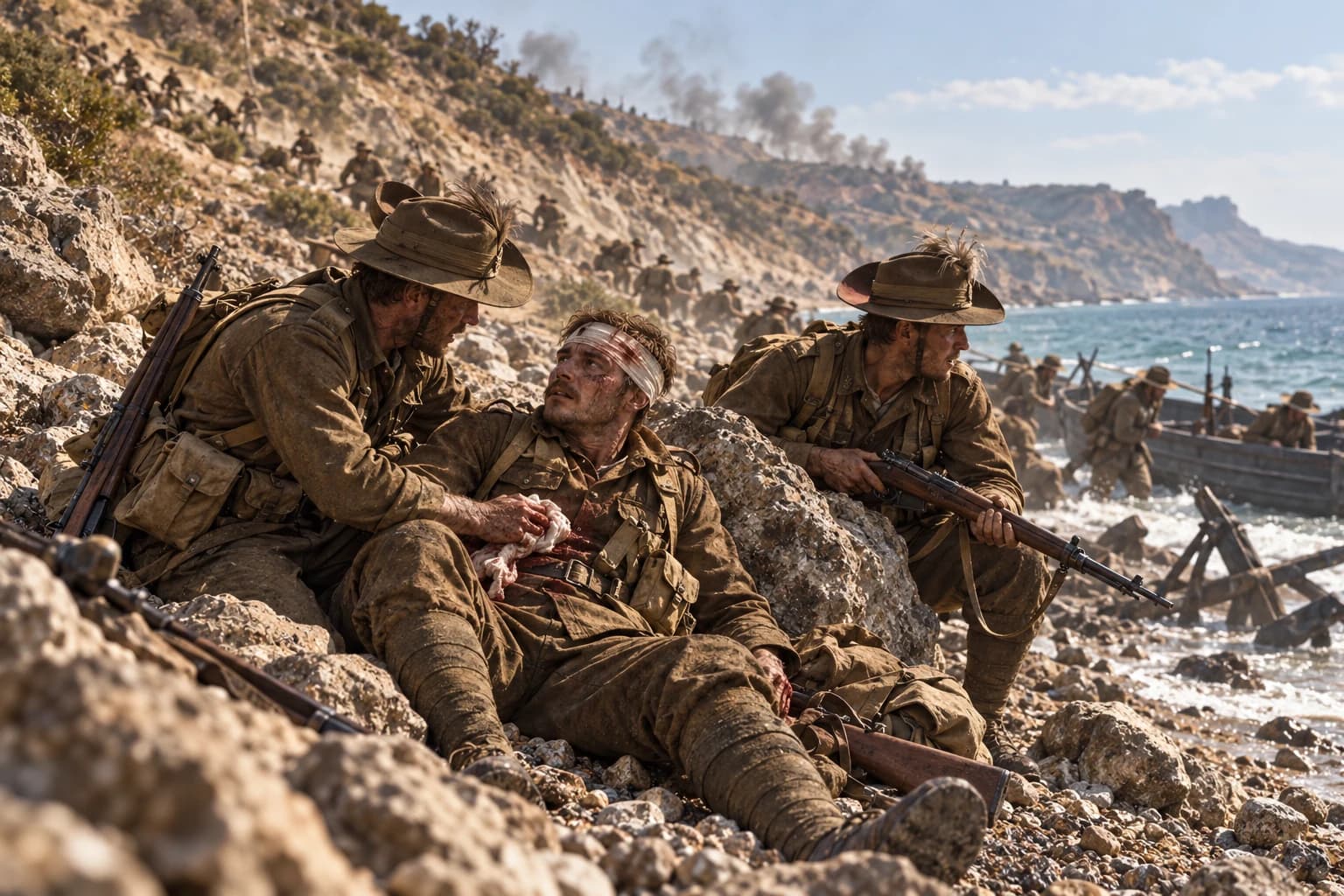
Anzac soldiers shelter beneath the scrub-covered heights above a Gallipoli beach.
1915 CE
Step 6 of 151915 CEAccessible mode

Gallipoli: Another Route to Victory

With the Western Front blocked, Allied leaders looked for another way to change the war. Their attention turned to the Ottoman Empire.

The Ottomans had entered the fighting in late 1914. They controlled , the narrow sea passage leading towards Constantinople and the Black Sea.

Britain and France hoped to force that passage, threaten the Ottoman capital and open a supply route to Russia. Naval attacks failed to break through.

Allied troops landed at in April 1915. British, French, Australian, New Zealand and other forces met determined Ottoman defenders and difficult terrain.

Steep slopes, poor supplies, disease and repeated attacks made life brutal. The Allies could not achieve their aims and withdrew by January 1916.

widened the human story of the war. It shaped Turkish, Australian and New Zealand memory, while showing how a plan to escape deadlock could reproduce it elsewhere.

British infantry advance through shell-damaged ground on the Western Front.
1916 CE
Step 7 of 151916 CEAccessible mode

Verdun and the Somme

In 1916, two huge battles showed how the war had turned into a test of pain, stamina, and survival. and became names people would never forget.

By then, the Western Front was stuck. Long trenches, barbed wire, and machine guns made quick victories almost impossible.

Leaders still believed they could win by draining the other side of men, shells, and willpower. That idea shaped both battles.

At , Germany attacked a place France felt it could never give up. At , Britain and France launched a massive offensive, hoping to relieve and smash German lines.

Instead, both battles became slaughter. Hundreds of thousands were killed or wounded, while gains on the ground stayed small.

The battles became symbols of industrial slaughter. Yet the ability to keep fighting depended on more than trenches: food, raw materials and ammunition also had to reach the armies by sea.

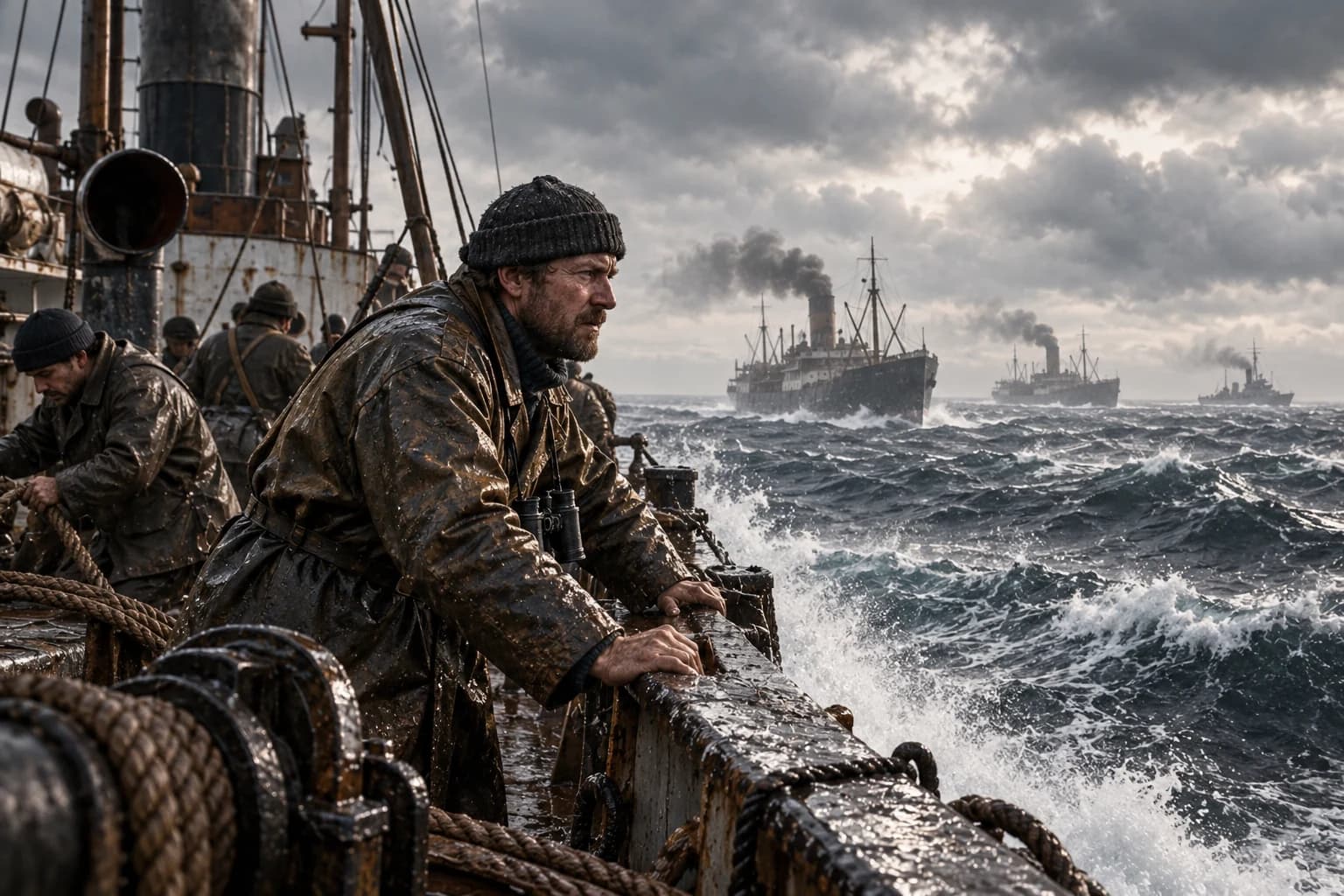
A merchant seaman watches cargo steamers and their escort crossing a grey Atlantic.
1917 CE
Step 8 of 151917 CEAccessible mode

Blockade and the War Beneath the Waves

While armies fought on land, ships carried the food and materials that kept them going. Control of the sea could weaken whole societies.

Britain used its navy and wider trade controls to restrict supplies reaching Germany. Over time, shortages deepened the strain on German civilians.

Germany answered with submarines that attacked shipping serving Britain. These attacks threatened merchant crews, passengers and countries outside the war.

The sinking of the Lusitania in 1915 caused international outrage. In 1917, Germany resumed unrestricted submarine warfare, hoping to force Britain out before America could intervene effectively.

Britain increasingly grouped merchant ships into escorted convoys. Keeping cargoes moving helped sustain the Allied war effort, although danger and losses continued.

Blockade and submarine warfare connected civilian hunger, industrial production and diplomacy. They help explain both the pressure on the home fronts and the American decision to enter the war.

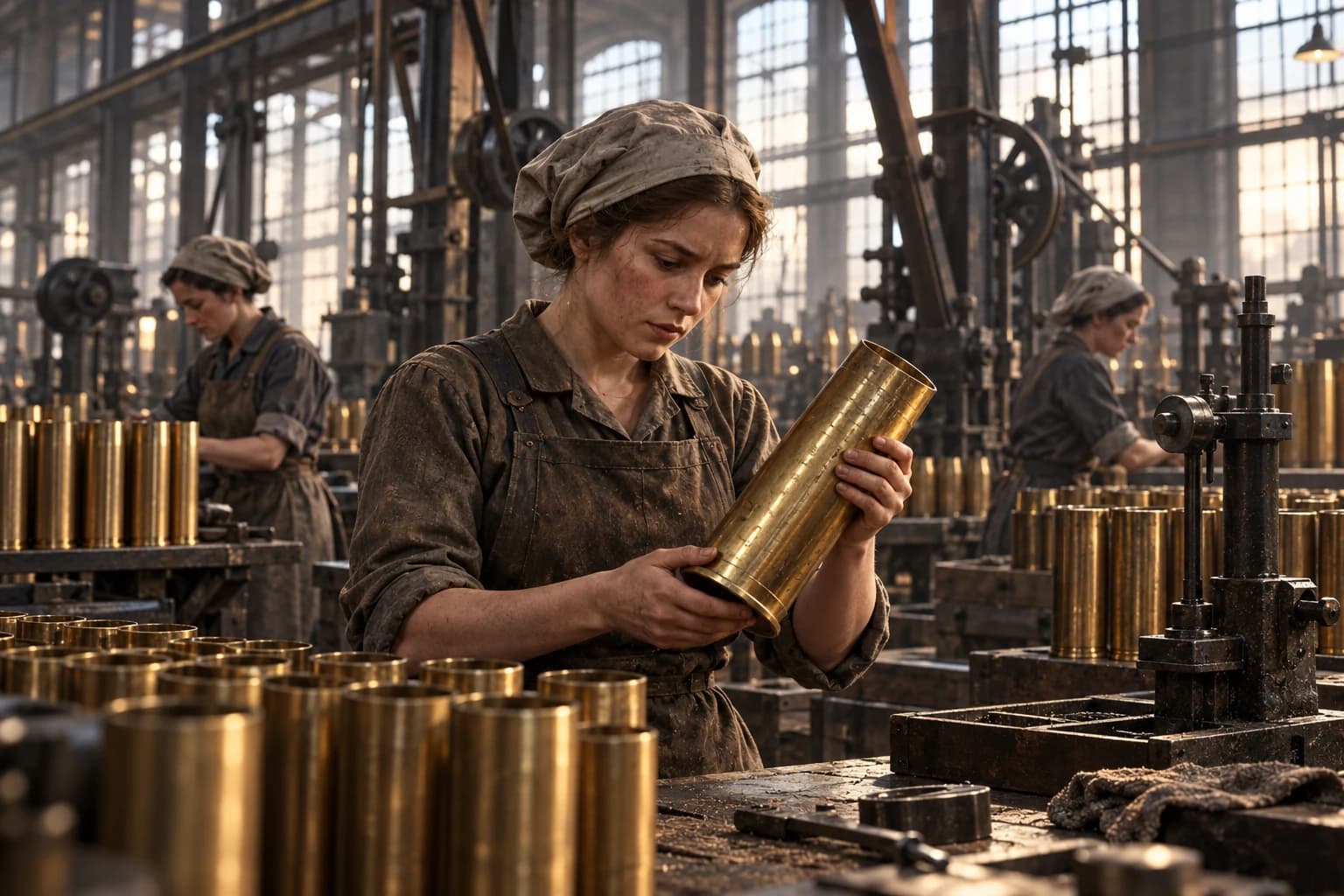
A female munitions worker inspects an artillery shell casing in a British factory.
1917 CE
Step 9 of 151917 CEAccessible mode

Total War on Society

By 1917, the war was no longer only at the front. It had reached kitchens, factories, shops, and streets across Europe.

Blockade and shipping losses added to strains created by mass mobilisation. Governments needed food, fuel, weapons and workers on a scale that transformed civilian life.

States took tighter control of daily life. They rationed bread and coal, directed industry, censored news, and flooded the public with posters and slogans to keep morale up.

Women, many already working before the war, took on expanded roles in transport, farming and munitions. Workers were pushed harder, and strikes grew as pay, food, and hours worsened.

This changed family life and politics. Governments gained new power, but people also grew angry, tired, and doubtful.

That pressure helped weaken trust in governments. In Russia, military defeats and shortages would turn wartime strain into a struggle over who should rule.

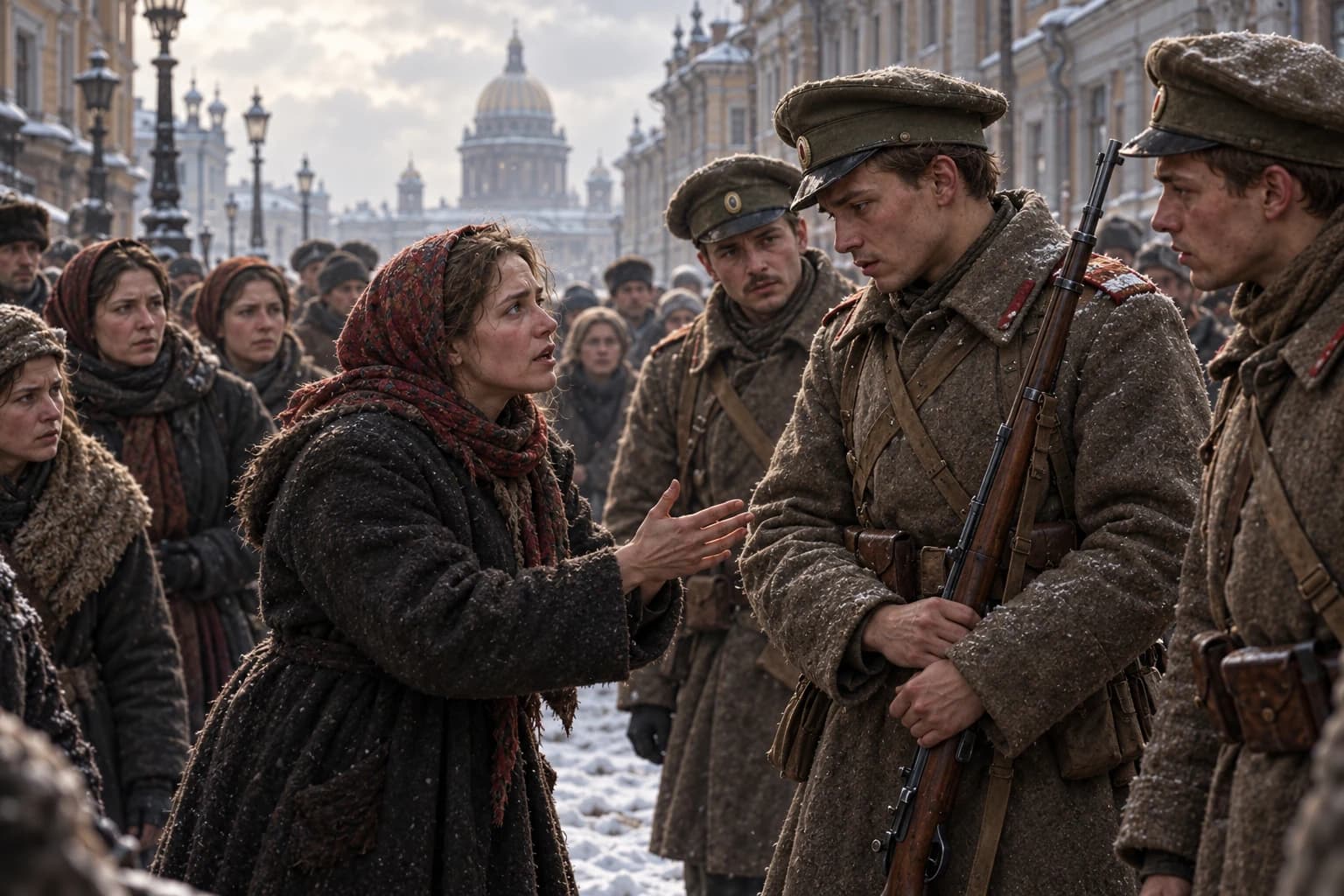
A woman worker addresses Russian soldiers with lowered rifles on a snowy Petrograd street.
1917 CE
Step 10 of 151917 CEAccessible mode

Revolution Breaks the East

By 1917, Russia was breaking under the weight of war. Hunger, defeat, and anger turned a huge empire into a country in revolt.

Before the revolutions, millions of Russian soldiers were badly led, poorly supplied, and exhausted. At home, food and fuel were scarce, prices soared, and trust in Tsar Nicholas II collapsed.

The war pushed every weakness into the open. Military defeats humiliated the government, while strikes and protests grew in the cities.

In March 1917, the tsar fell. A temporary government took over but stayed in the war. That choice ruined it. In November, the Bolsheviks seized power, promising peace, land, and bread.

The Bolsheviks sought peace, signing the Treaty of Brest-Litovsk in March 1918. Russia faced civil war, while Germany could shift more troops west.

Russia's withdrawal weakened the Allied position. Meanwhile, the United States had entered the war in April 1917, although its military strength took time to reach Europe.

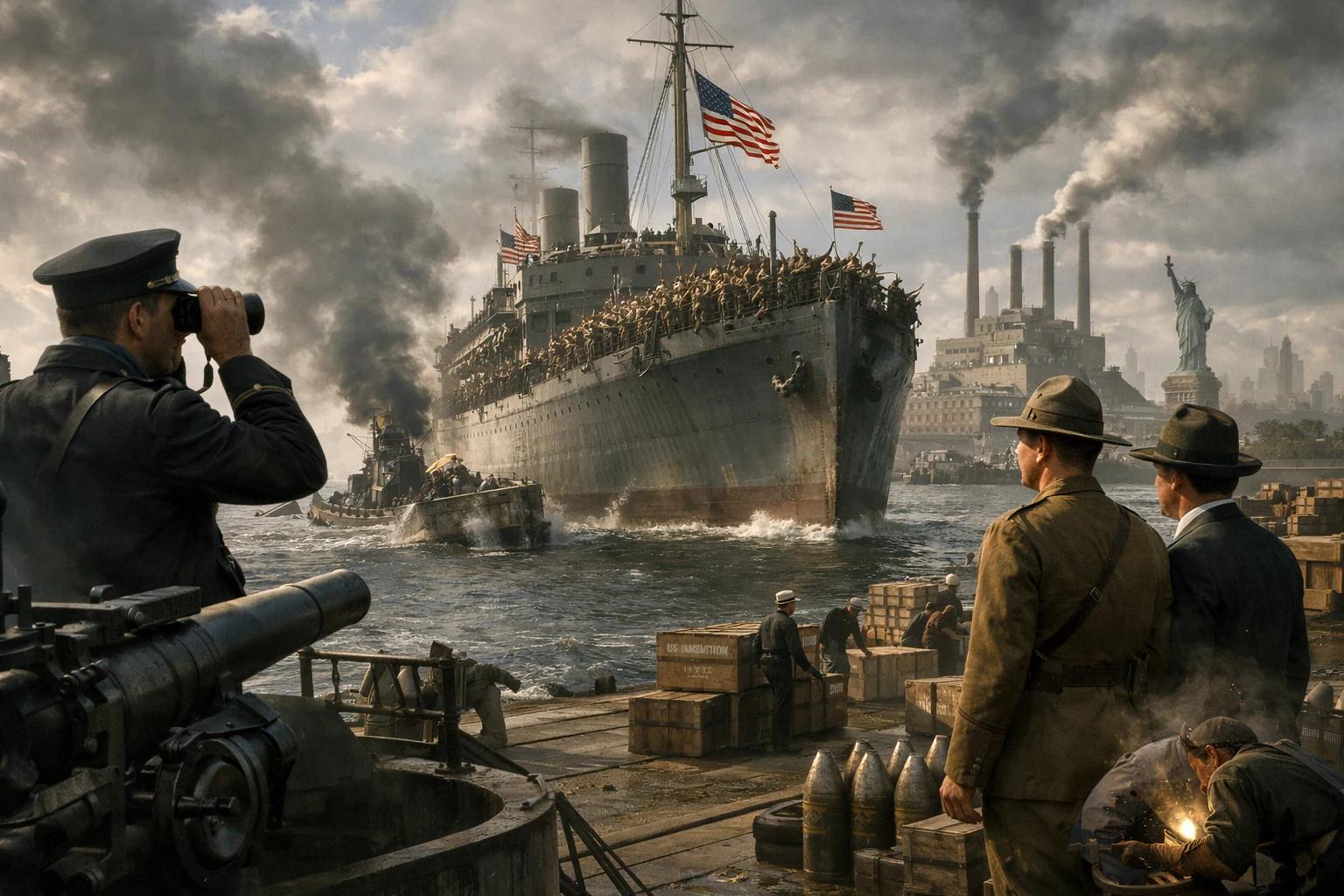
An American troop transport prepares to depart as men watch from the quayside.
1917 CE
Step 11 of 151917 CEAccessible mode

America Enters the Struggle

As Russia moved towards revolution, the United States entered the war in April 1917. Submarine attacks and fears about the wider conflict helped end American neutrality.

Before this, many Americans wanted to stay out. But the country was already tied to the war through trade, loans, and supplies sent mostly to Britain and France.

Germany changed the situation by using unrestricted submarine warfare. Its U boats sank ships without warning, including vessels linked to American lives and business.

When the United States entered the war in April 1917, its army was still small. But its factories, farms, banks, and shipyards were already powerful, and they could support the Allies on a huge scale.

American troops took time to arrive in large numbers, yet American money, food, steel, and fuel helped keep Britain and France going during a dangerous period.

The troopship illustration shows the later build-up. Germany faced a narrowing opportunity to win before American strength became overwhelming.

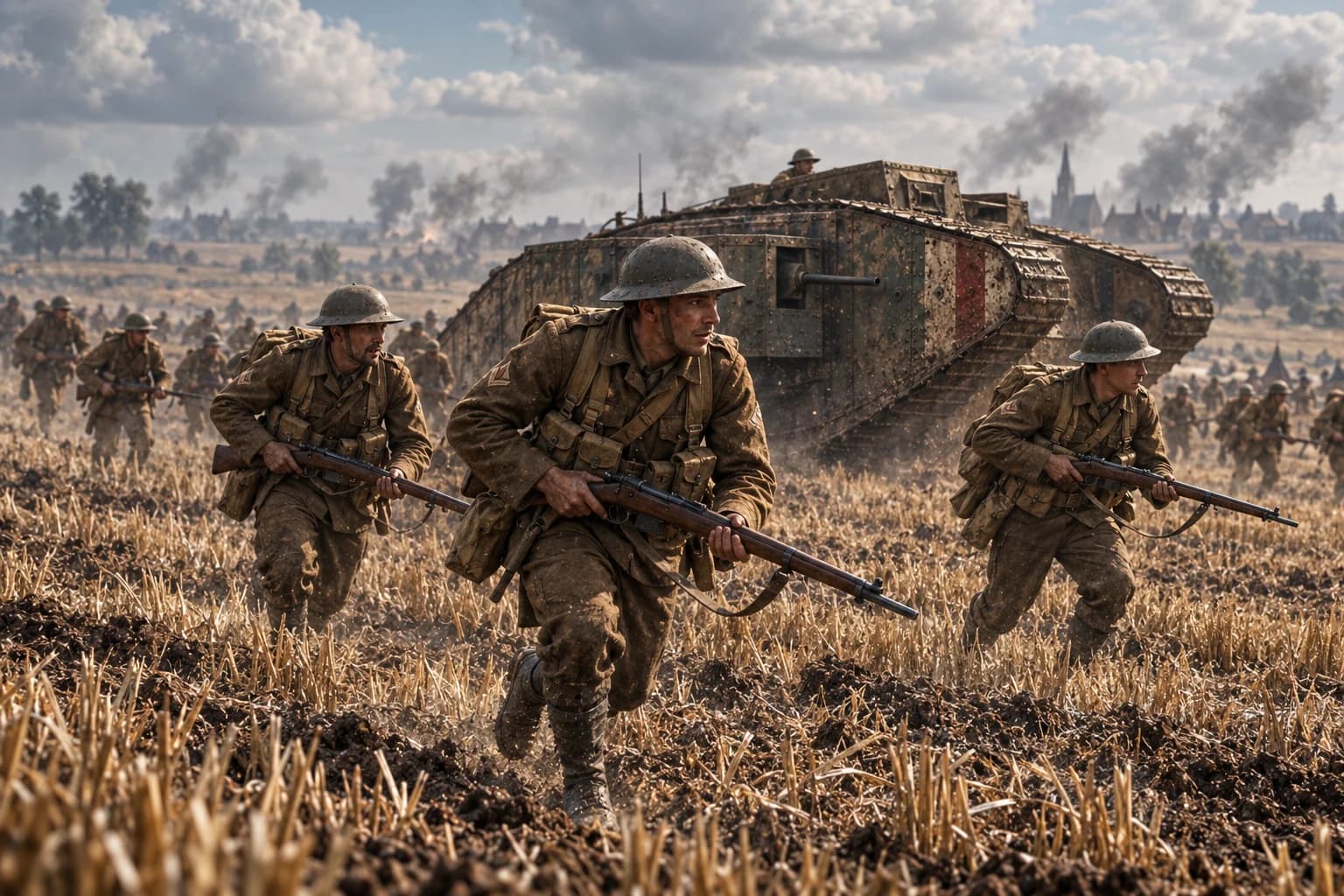
British infantry and a Mark V tank advance across open farmland during the Allied offensive.
1918 CE
Step 12 of 151918 CEAccessible mode

The Last Gamble and the Allied Advance

In spring 1918, Germany tried to win before American troops arrived in overwhelming numbers. For a time, the Western Front moved again.

Russia's withdrawal allowed Germany to transfer soldiers west. German leaders used that temporary advantage to launch a series of major attacks.

The offensives broke through some Allied positions. But the attackers suffered heavy losses, struggled to supply their advances and failed to force a decisive victory.

The Allies held together and improved their coordination. From the summer, French, British, American and other Allied armies took the offensive, including the attack at Amiens in August.

Infantry, artillery, aircraft and tanks worked together more effectively. Repeated advances pushed German forces back while Germany's allies and home front came under growing strain.

This explains how the stalemate ended. Defeat came through sustained military pressure and exhaustion, not a sudden disappearance of the German army.

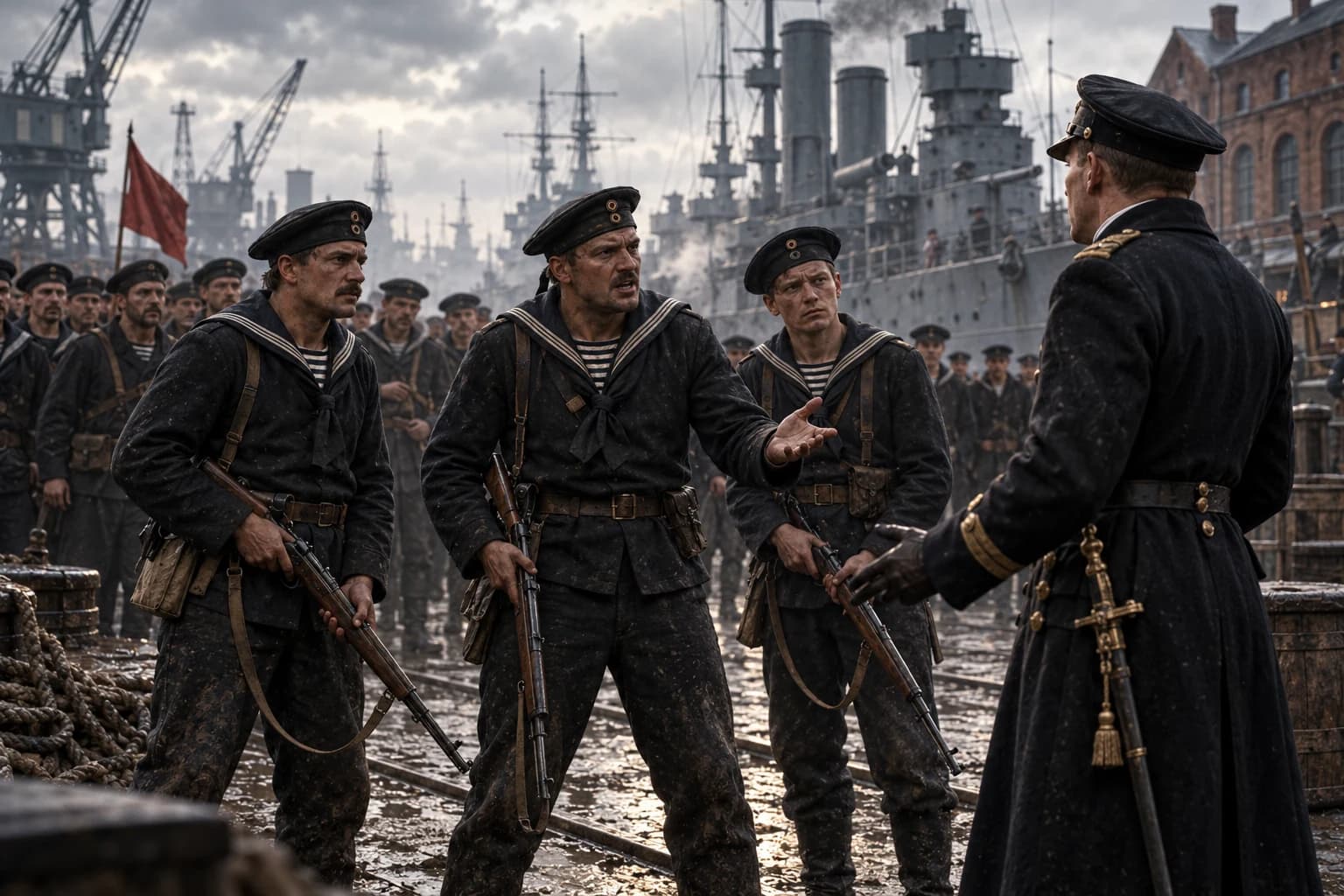
German sailors confront an officer at Kiel naval docks as discipline breaks down.
1918 CE
Step 13 of 151918 CEAccessible mode

Empires Fall in Defeat

By autumn 1918, battlefield defeat and exhaustion were shaking whole states. Military reverses exposed how little authority some governments still possessed.

Millions were dead, supplies were scarce, and soldiers and civilians were exhausted. Germany, Austria-Hungary and the Ottoman Empire faced deepening crises.

The Allies attacked hard in the final months, and the Central Powers could not keep up. At the same time, many groups inside these empires wanted their own nations, not rule from distant capitals.

German sailors mutinied, and revolution helped end the Kaiser's rule. Austria-Hungary broke apart as peoples claimed independence. Ottoman defeat opened the way to occupation and eventual imperial dissolution; its sultanate survived until 1922.

Russia's monarchy had already fallen in 1917. Across the defeated powers, soldiers and civilians increasingly refused the sacrifices their rulers demanded.

Collapse did not follow one timetable in every country. But by November 1918, Germany could no longer sustain the war. Its new government faced the terms of an armistice.

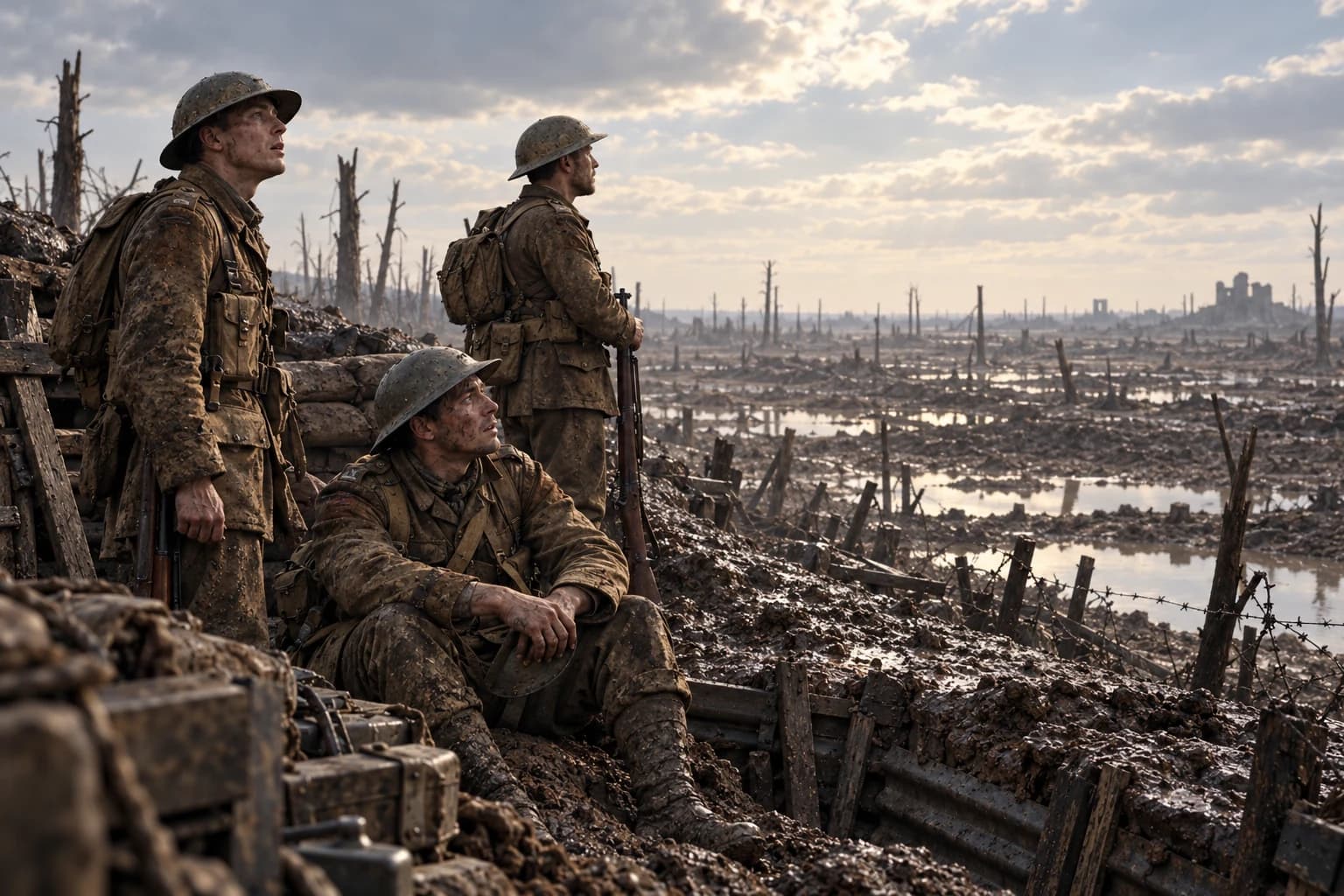
Exhausted British soldiers look across a quiet battlefield after the armistice takes effect.
1918 CE
Step 14 of 151918 CEAccessible mode

The Guns Fall Silent

On 11 November 1918, the fighting against Germany stopped. For soldiers who had lived by the sound of artillery, silence could feel almost impossible.

Germany's allies had already sought armistices. Its own armies were retreating, its government was changing and people at home were demanding an end.

German representatives signed an agreement with the Allies near . It came into effect at eleven in the morning.

Some people celebrated in the streets. Others felt relief, disbelief or grief for those who would never return. Soldiers still faced months of waiting before going home.

An armistice was an agreement to stop fighting, not a final peace treaty. Occupation, shortages, displacement and political violence continued in parts of Europe and beyond.

The anniversary became a time of remembrance. But the people living through that first silence also faced an urgent question: what kind of peace could follow such a war?

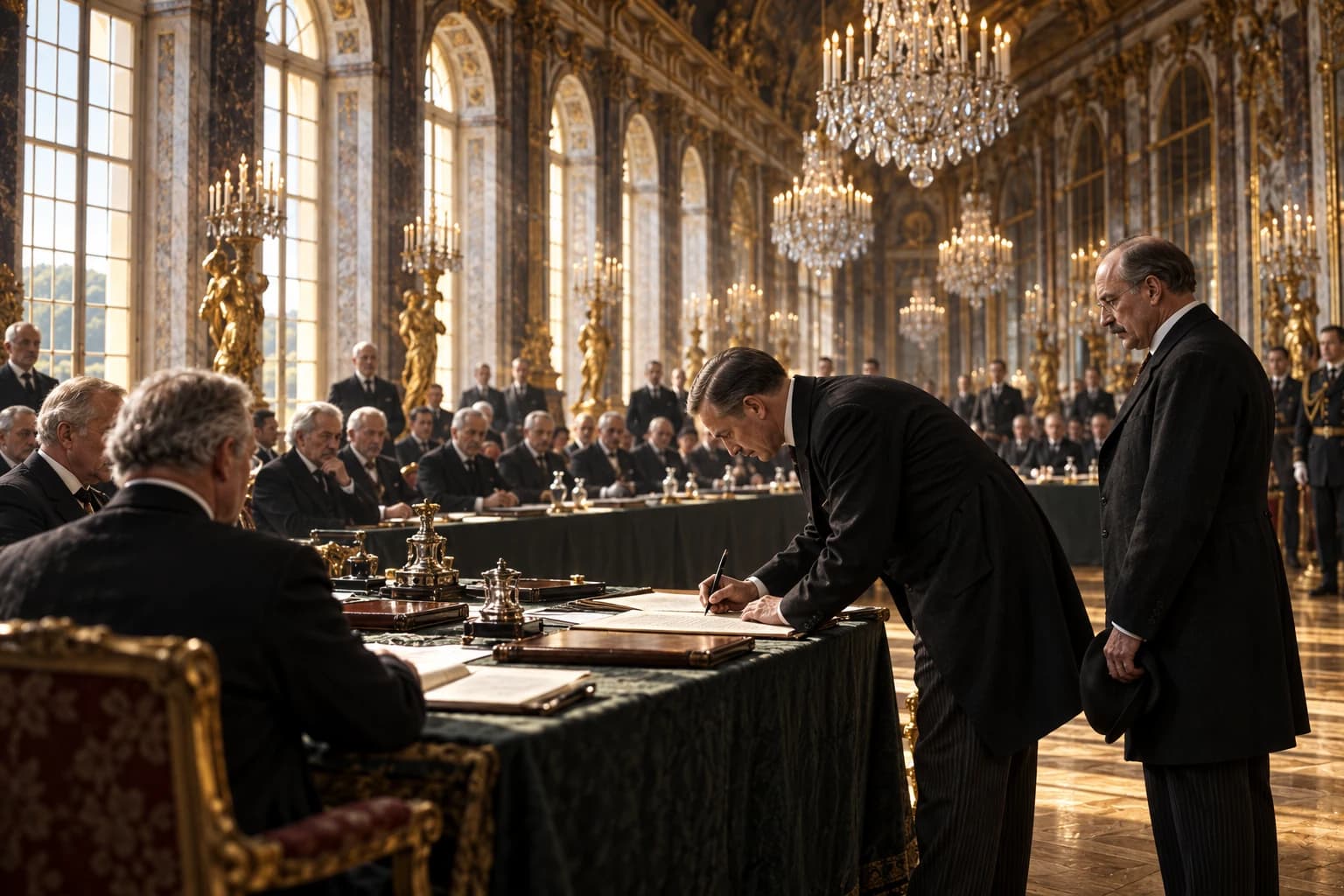
A German delegate signs the peace treaty as other delegates watch in the Hall of Mirrors.
1919 CE
Step 15 of 151919 CEAccessible mode

A Peace That Unsettled the Century

In 1919, the victors tried to build a new order from a shattered world. They agreed that another war must be prevented, but disagreed about how.

France wanted security against another invasion. Britain sought recovery and a workable balance of power. American president Woodrow Wilson argued for international cooperation and national self-rule.

The Treaty of Versailles imposed territorial losses, military restrictions and reparations on Germany. German representatives signed it on 28 June in the Hall of Mirrors.

Other treaties addressed the defeated powers and helped redraw the map. New states gained independence, but many minorities remained inside borders they had not chosen.

The League of Nations offered hope that disputes could be settled through cooperation. That hope competed with resentment, insecurity and continued imperial rule beyond Europe.

Another world war was not inevitable. The settlement left difficult problems, but later economic crises and political choices also shaped what followed. The Versailles story explores those consequences in greater depth.

Continue reading

Finished The First World War?

Choose the next story, follow a connected moment, or explore the people behind this story.

Browse stories

References

Sources & Further Reading

Reliable sources, primary-source collections and reading paths connected to this page.

Sources used

  1. National Army Museum, “First World War,”

    Overall chronology, multiple theatres and opening campaigns.

    Open source
  2. National Army Museum, “Gallipoli campaign,”

    Dardanelles strategy, landings, Ottoman resistance and evacuation.

    Open source
  3. Australian War Memorial, “Gallipoli 1915,”

    Anzac participation, campaign experience and remembrance.

    Open source
  4. National Army Museum, “Battle of the Somme,”

    The 1916 offensive and its costs.

    Open source
  5. Imperial War Museums, “First World War Galleries: large print guide,”

    Industrial warfare, blockade, civilian deprivation, revolution and armistice.

    Open source
  6. National Army Museum, “Paul Sarrut: Interpreting the Army on the Western Front,”

    Indian Army arrival at Marseille in autumn 1914 and visual context.

    Open source
  7. National Army Museum, “1918: Year of victory,”

    Spring offensives, Allied recovery and final campaigns.

    Open source
  8. Imperial War Museums / Google Arts & Culture, “Amiens 1918,”

    Combined-arms attack, Allied contributions and Hundred Days.

    Open source
  9. Deutsches Historisches Museum, “Die Revolution von 1918/19,”

    Naval mutiny, revolution and end of German imperial government.

    Open source
  10. Kiel City Archives, “4 November 1918: Sailors’ uprising in Kiel,”

    Local context for the Kiel replacement illustration.

    Open source
  11. UK Government / Commonwealth War Graves Commission, “The Centenary of the Armistice,”

    Armistice chronology, continued casualties and varied responses to the end of fighting.

    Open source
  12. Palace of Versailles, “The Treaty of Versailles, 1919,”

    Signing date, Hall of Mirrors setting and delegates.

    Open source
  13. Imperial War Museums, “First World War,” Open source
  14. U.S. National Archives, “World War I Records,” Open source

Further reading

  1. Margaret MacMillan, The War That Ended Peace, Random House.

Primary sources

  1. Yale Law School, “President Woodrow Wilson’s Fourteen Points, 1918,” Open source

Image references

  1. Imperial War Museums, “Collection search: First World War,” Open source

Reviewed claim sources

Loading reviewed claim sources...

A monthly route through history

Find out first about the latest published stories, feature notes and occasional Premium offers in one monthly email.