Accessible gives a lighter overview. Deep Dive tells the fuller story.
Quick Answers
What was the Byzantine Empire?
The Byzantine Empire was the Roman Empire that continued in the east from . Its people often called themselves Romans. Its territory, languages and institutions changed over centuries, and its traditions of law, worship and learning survived the Ottoman conquest of the capital.
At a glance
This story runs from Constantine’s dedication of in 330 to its conquest by the Ottomans in 1453.
From Constantine's new capital to the fall of , preserved Roman law,Orthodox Christianity,imperial government and classical learning through more than a thousand years of adaptation.
gave the eastern empire a strategic capital between Europe and Asia.
The dates depend on where the story begins. This page uses the dedication of in 330 and the Ottoman conquest of the city in 1453.
Who was Justinian?
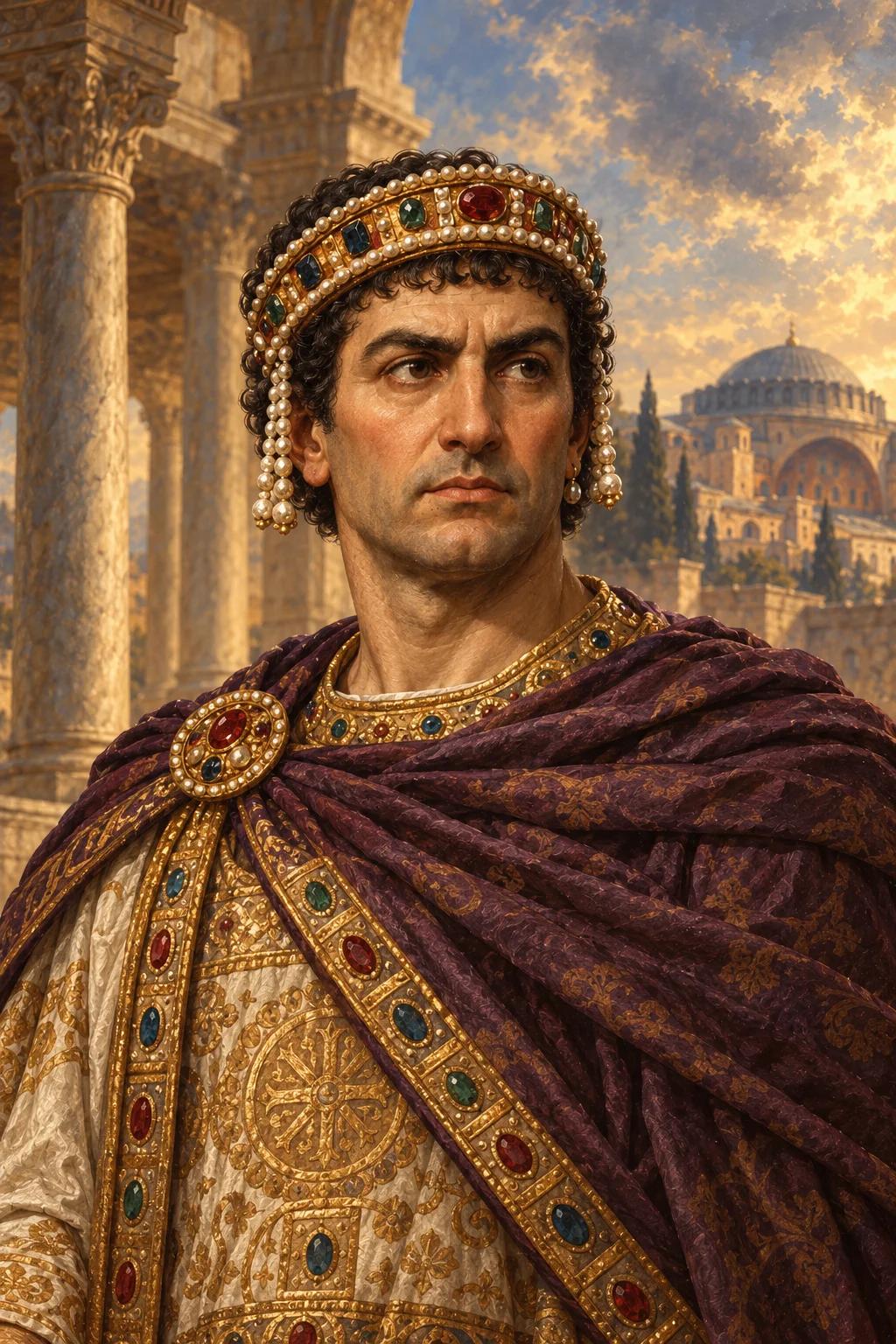
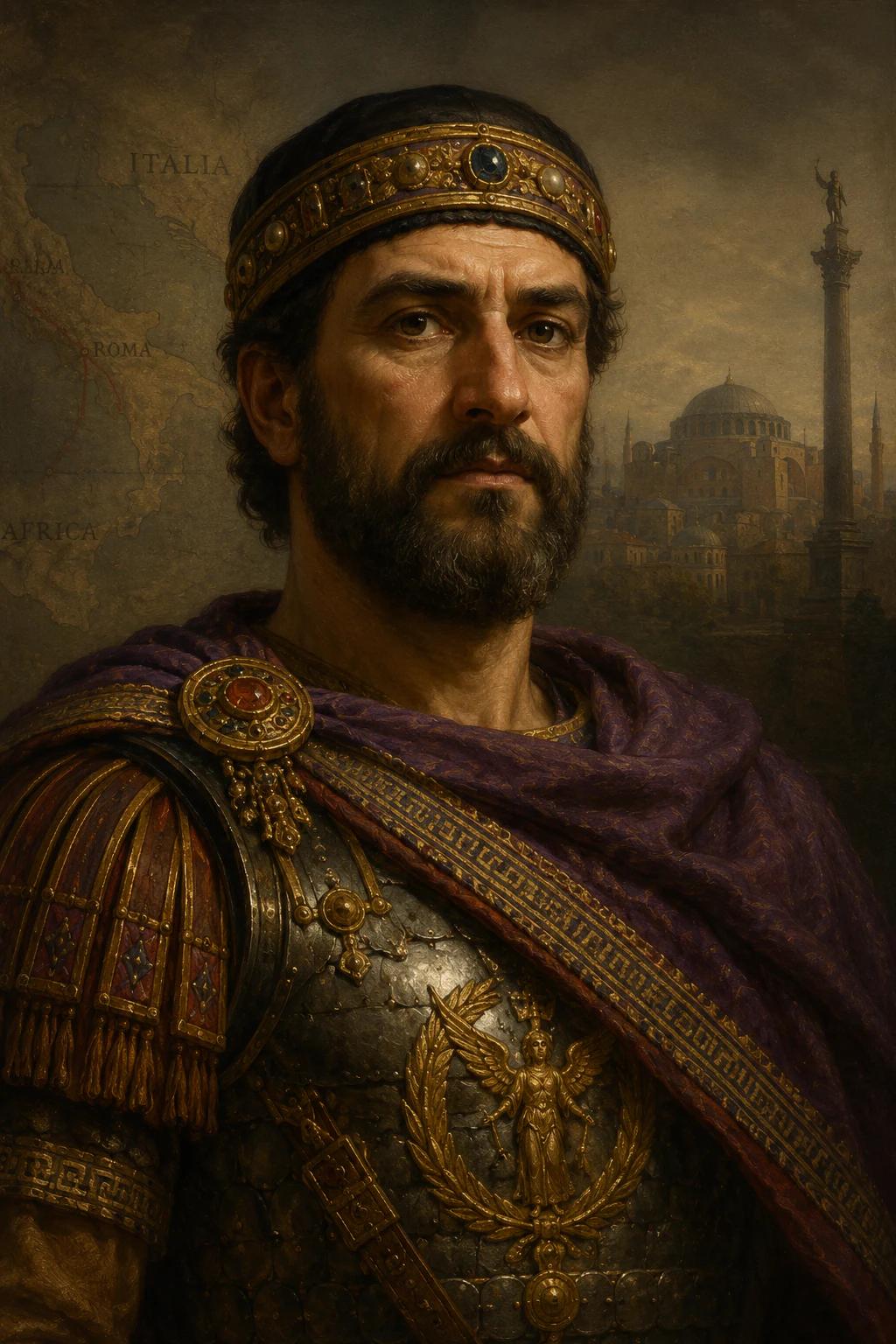
Justinian I ruled from 527 to 565. His armies regained former Roman territory, his officials compiled laws, and his court commissioned the rebuilding of .
How did the Byzantine Empire fall?
Territorial losses, internal conflict and Ottoman expansion narrowed the imperial government’s reach. Mehmed II conquered on 29 May 1453. The Morea and fell separately in the following years.
Where is Byzantium?
began as an ancient Greek city on the , in the area of modern in Turkey. The name later became a shorthand for the wider Byzantine Empire, whose heartland stretched across the eastern Mediterranean rather than a single modern country.
Where is Constantinople?
is modern , in northwestern Turkey, where Europe and Asia meet across the . Its position between the Black Sea and the Mediterranean made it one of the most strategic cities in medieval history.
Context
Introduction
Overview
The Byzantine Empire was the eastern continuation of the Roman Empire, centred on and shaped by imperial government, Orthodox Christianity, Greek learning, Roman law, diplomacy, warfare and trade. From Constantine's new capital in 330 to the Ottoman conquest in 1453, preserved and transformed the Roman inheritance while linking the ancient Mediterranean world to medieval Europe and the Islamic Near East.
Key forces
gave the eastern empire a strategic capital between Europe and Asia.
Justinian's reign joined reconquest, law, architecture and religious authority.
Seventh-century conquests, the Fourth Crusade and Ottoman expansion changed the empire’s territory and resources.
330 CE
Step 1 of 10330 CEAccessible mode
The Founding of Constantinople
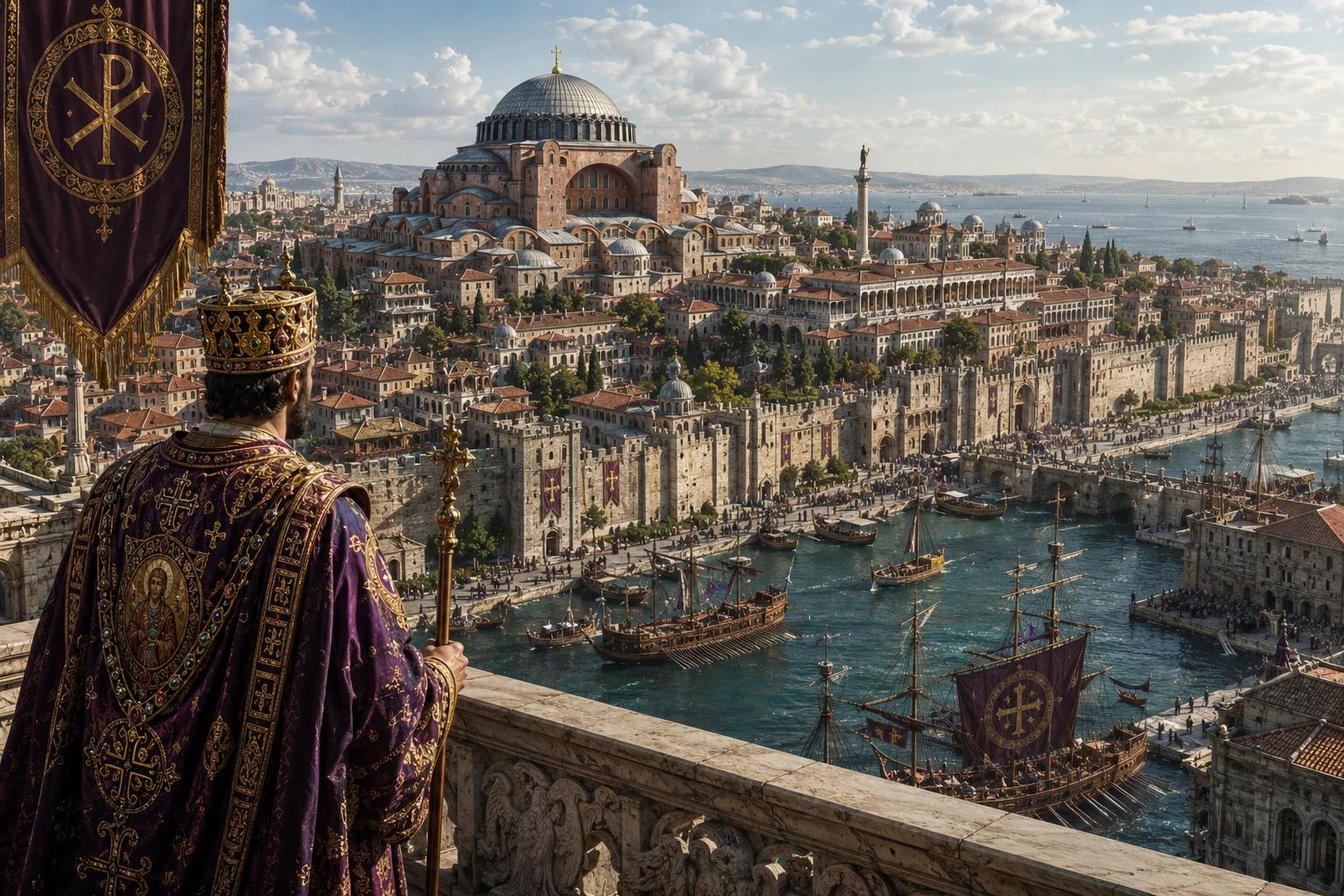
In 330, Constantine dedicated as a new Roman capital on the site of .
looked out over the . Ships passing between the Black Sea and the Mediterranean travelled through the strait.
The city gave emperors access to routes into the Balkans and Anatolia. Ships also brought supplies and trade from across the eastern Mediterranean.
Rome remained an important city. Emperors had already ruled from several centres, and Constantine built a capital of his own.
The new capital had palaces, public squares and a hippodrome for races. Churches became part of a city that drew on older Roman traditions.
did not create the Byzantine Empire overnight. But it gave the eastern Roman world the capital that would anchor its survival for more than a thousand years.
476 CE
Step 2 of 10476 CEAccessible mode
The Fall of the Western Empire
In 476, Odoacer removed Romulus Augustulus from power in Italy. Julius Nepos still claimed the western title from Dalmatia until 480. The Roman Empire continued in the east.
The eastern empire still had an emperor, a capital, armies, laws, tax systems, court offices and provincial administration.
Kingdoms took shape in the former western provinces. The eastern court kept governing in the name of the Roman emperor.
Some western rulers sought recognition from . That gave eastern emperors a way to influence affairs beyond the territories they ruled directly.
The empire in the East was changing in language, religion and geography, but it did not see itself as a new state.