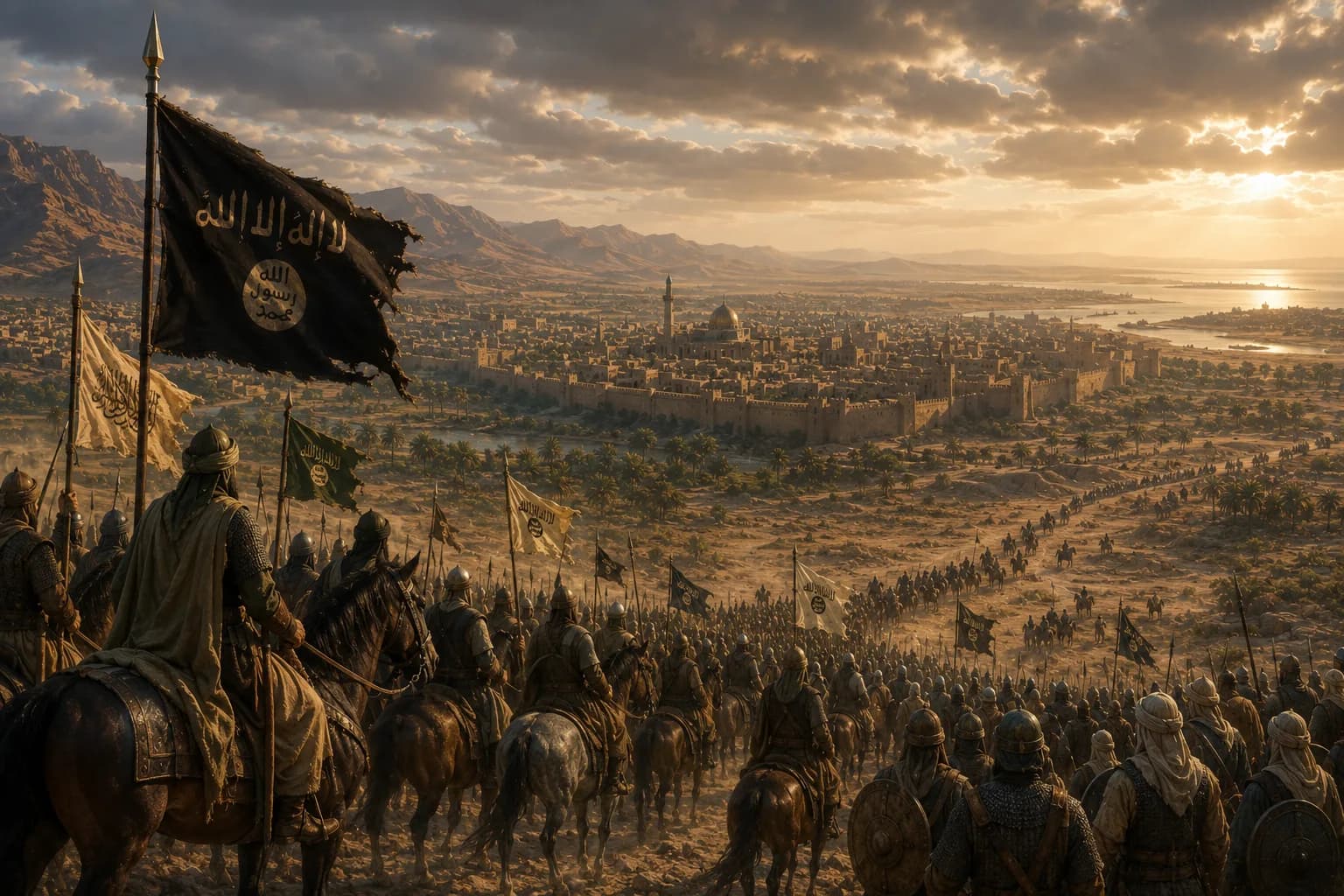
Early Muslim armies overlooking a walled city across a desert landscape at sunrise.

Free Story

The Rise of Islam

Follow the rise of Islam from Arabia before Muhammad to the Hijra, the caliphates, the great conquests, Baghdad and a lasting civilisation.

10 chapters

Next
Context

Introduction

Overview

Islam emerged in seventh-century and formed a community whose religious and political life changed the region. After the Prophet Muhammad's death, the early caliphates expanded across lands that connected Africa, Asia and Europe. Those connections helped create a civilisation shaped by faith, government, exchange and debate.

Key forces

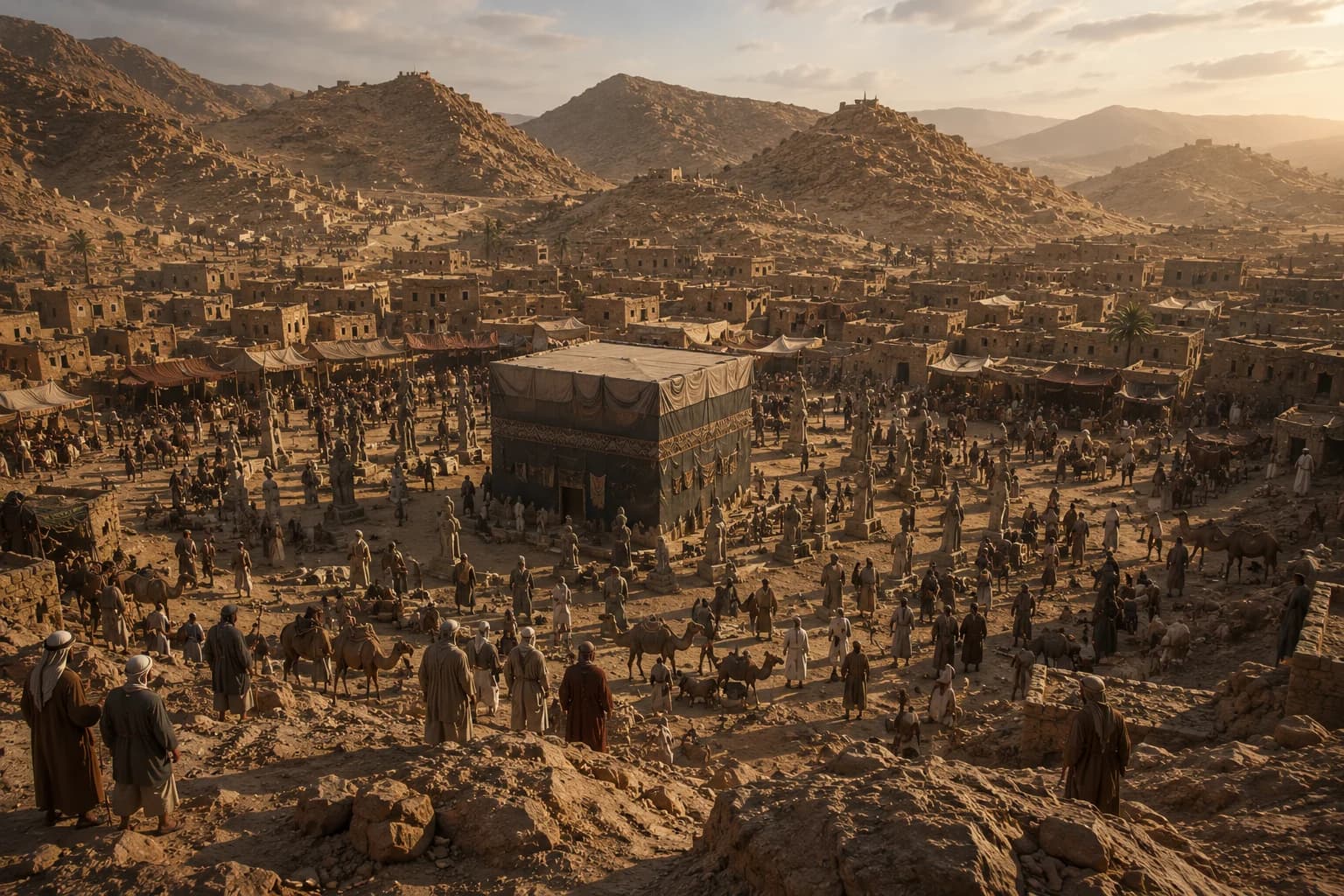
A busy pre-Islamic Meccan sanctuary and market surrounded by rocky hills.
610 CE
Step 1 of 10610 CEAccessible mode

Arabia Before Islam

Before Islam, was not a single kingdom waiting to be converted. It was a world of tribes, trade routes, sanctuaries and competing loyalties.

Most people in lived through kinship. A person's tribe offered protection, honour and identity. Without that network, survival could be difficult.

Power took different forms across . In many communities, chiefs, clan elders, merchants and warriors shaped local alliances; southern also had a history of kingdoms and outside imperial influence.

Religion was varied. Many Arab groups honoured local deities, sacred stones and shrines, while Jewish and Christian communities lived in and around . Some individuals were remembered as seeking a purer monotheism.

mattered because of , pilgrimage and commerce. The Quraysh, Muhammad's tribe, gained status from managing a sanctuary where violence was restrained and visitors could gather.

This setting shaped the new faith. Islam would speak to a world where tribal loyalty was powerful, inequality was visible, and many people already understood the force of sacred obligation.

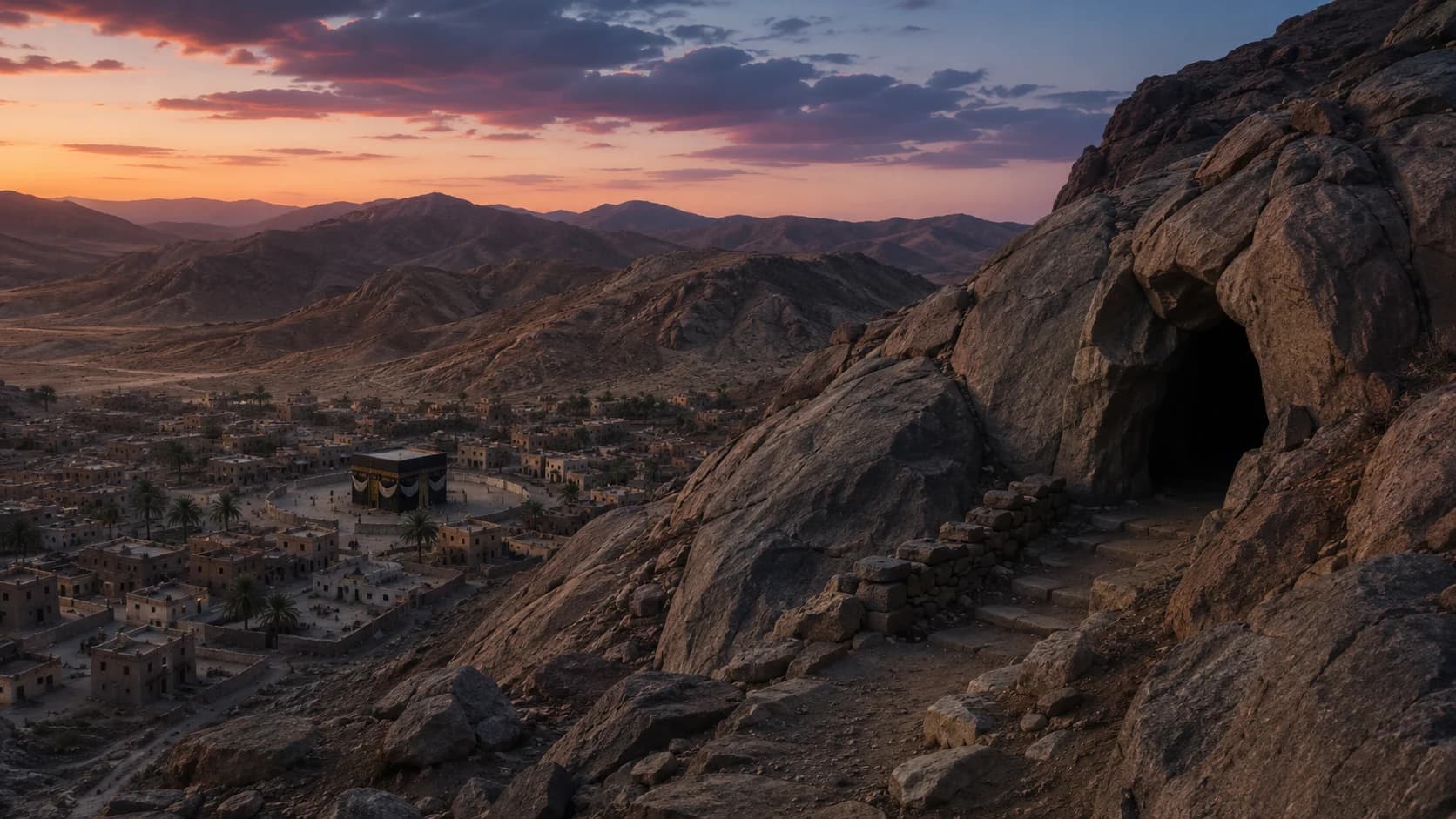
The Cave of Hira above Mecca at dusk, with the sanctuary city visible below.
610 CE
Step 2 of 10610 CEAccessible mode

The First Revelation

In 610, Muslim tradition says Muhammad received his first revelation in the near .

Muhammad was known in as a member of the Quraysh. He spent periods in retreat outside the city, away from its trade, politics and religious life.

At , Islamic tradition holds that the angel Jibril, or Gabriel, brought the first words of revelation. Muhammad returned shaken, and his wife Khadija gave him crucial support.

The message that followed was direct and demanding: there is one God, human beings will be judged, and worship must be joined to justice, charity and moral seriousness.

Early followers came from Muhammad's household, friends and people drawn to the message. They prayed, listened and formed a small community around the recitations that became the Qur'an.

Many Meccan elites resisted. Monotheism threatened the prestige of shrine religion, and Islam's moral claims challenged a society built around status, wealth and tribal hierarchy.

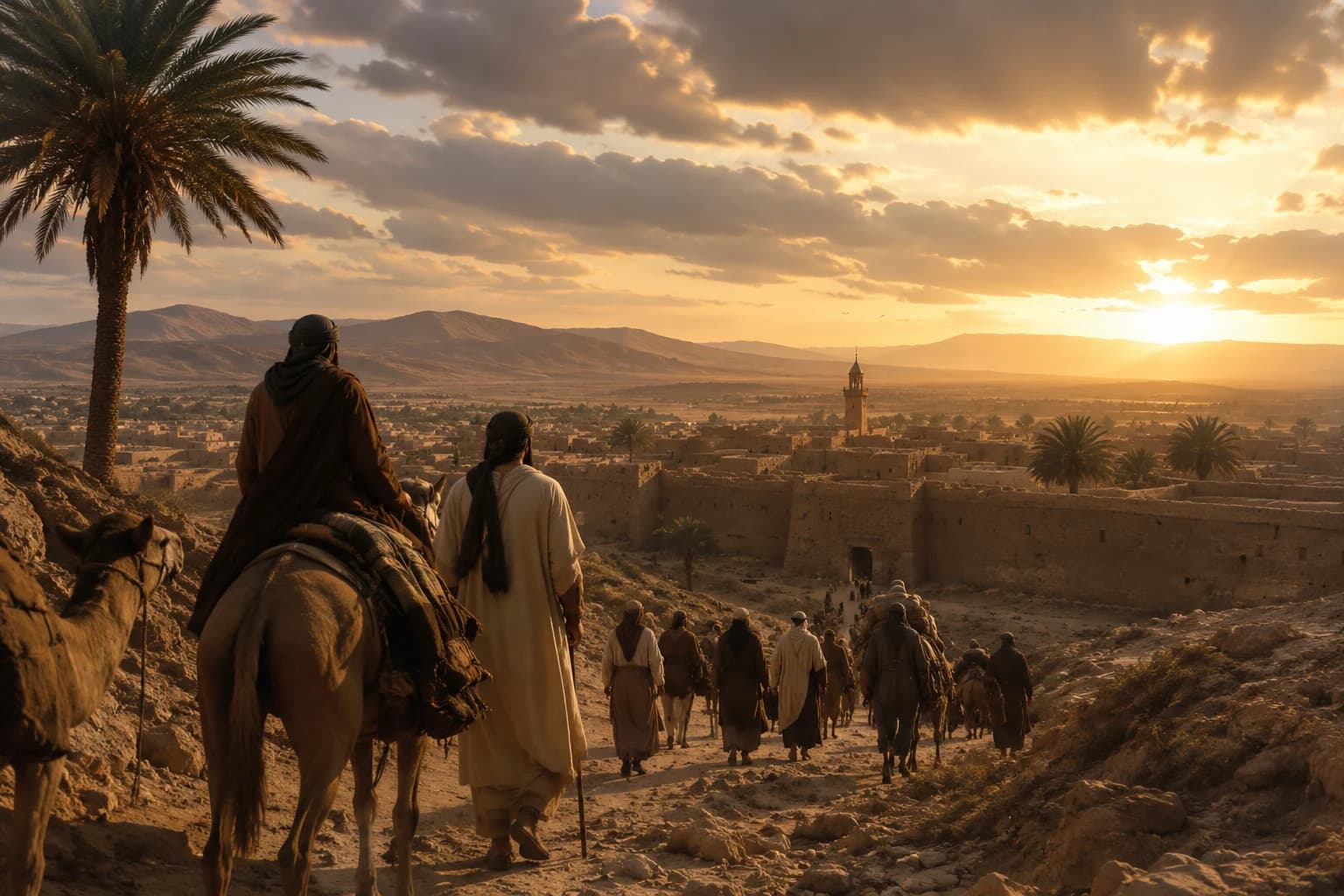
A group of migrants descending toward Medina at sunset during the Hijra.
622 CE
Step 3 of 10622 CEAccessible mode

The Hijra to Medina

In 622, Muhammad and his followers left for . This migration, the Hijra, changed Islam's history.

The Meccan Muslims had faced pressure, insult and danger. , then known as , offered a different possibility: a city looking for arbitration and order.

The Hijra became so important that Muslims later counted it as the beginning of their calendar. It marked a new phase, not an escape from history.

In , Muhammad was not only a preacher. He became a community leader, judge, diplomat and commander. Religious belief now had to become public organisation.

The emerging umma joined migrants from with supporters in . Their bond was no longer only bloodline, but shared loyalty to God and the community.

This new order did not remove conflict. faced warfare, internal tensions and difficult relations with surrounding groups. But it gave Islam a political home.

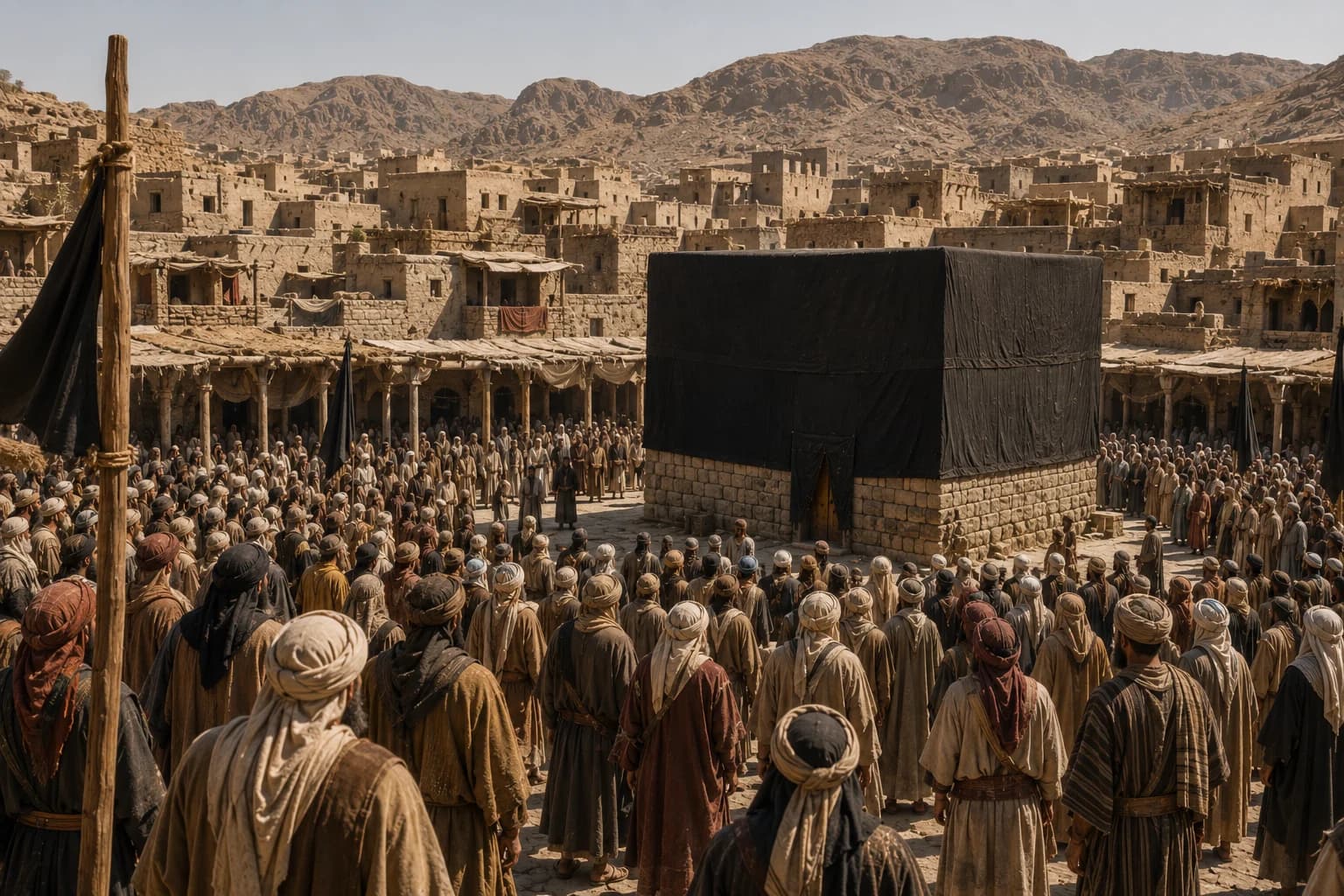
A large crowd gathered around the Kaaba during the unification of Arabia.
630 CE
Step 4 of 10630 CEAccessible mode

The Unification of Arabia

In 630, Muslim forces entered and brought the city that had resisted Muhammad under Islamic authority.

The conquest followed years of conflict and negotiation between and . By this point, the balance of power had shifted toward Muhammad's community.

The entry into was largely peaceful, with limited fighting. Muhammad offered a broad amnesty, turning victory into a moment of reconciliation as well as triumph.

was rededicated to the worship of one God. Removing its idols made the central sanctuary of Islam, not a shrine shared by many local cults.

After , many Arabian tribes sent delegations or entered alliances with Muhammad. Some accepted Islam; others entered political submission within the new order.

By Muhammad's death in 632, much of had been drawn into a community in which religious authority and political leadership were closely joined.

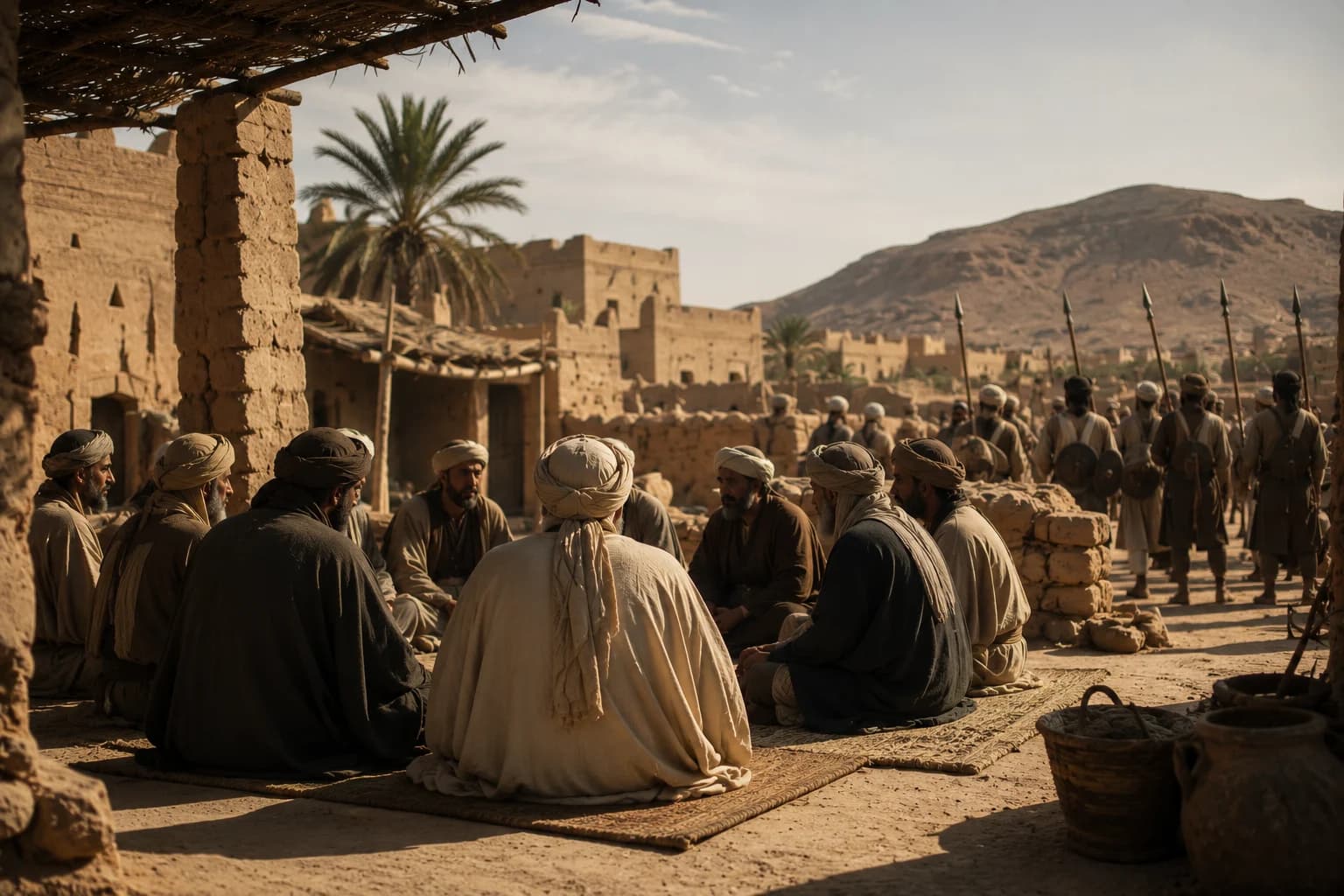
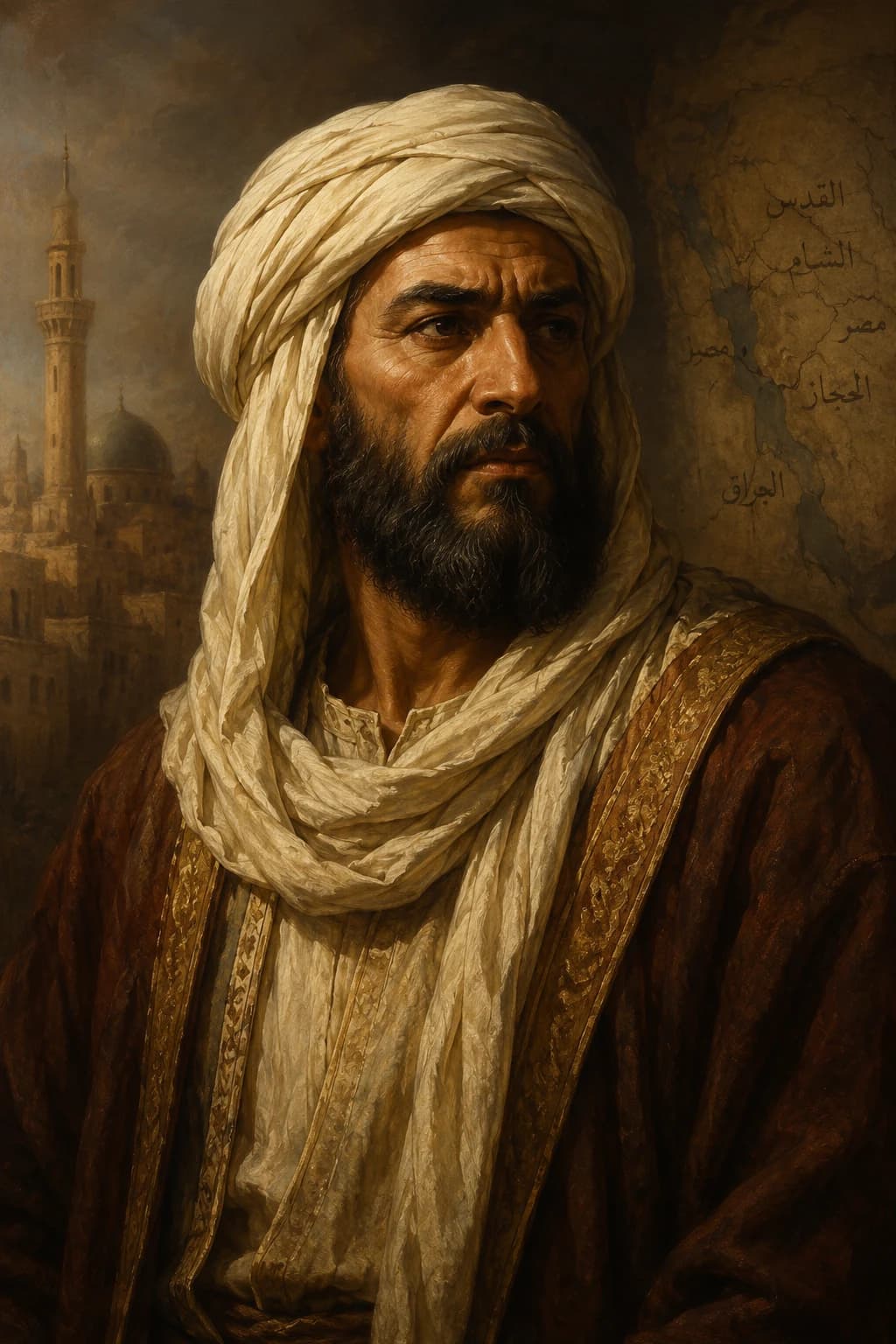
Early Muslim leaders meeting in a desert settlement as soldiers move beyond the walls.
632 CE
Step 5 of 10632 CEAccessible mode

The Rashidun Caliphate

Muhammad's death in 632 created an urgent question: who would lead the Muslim community now?

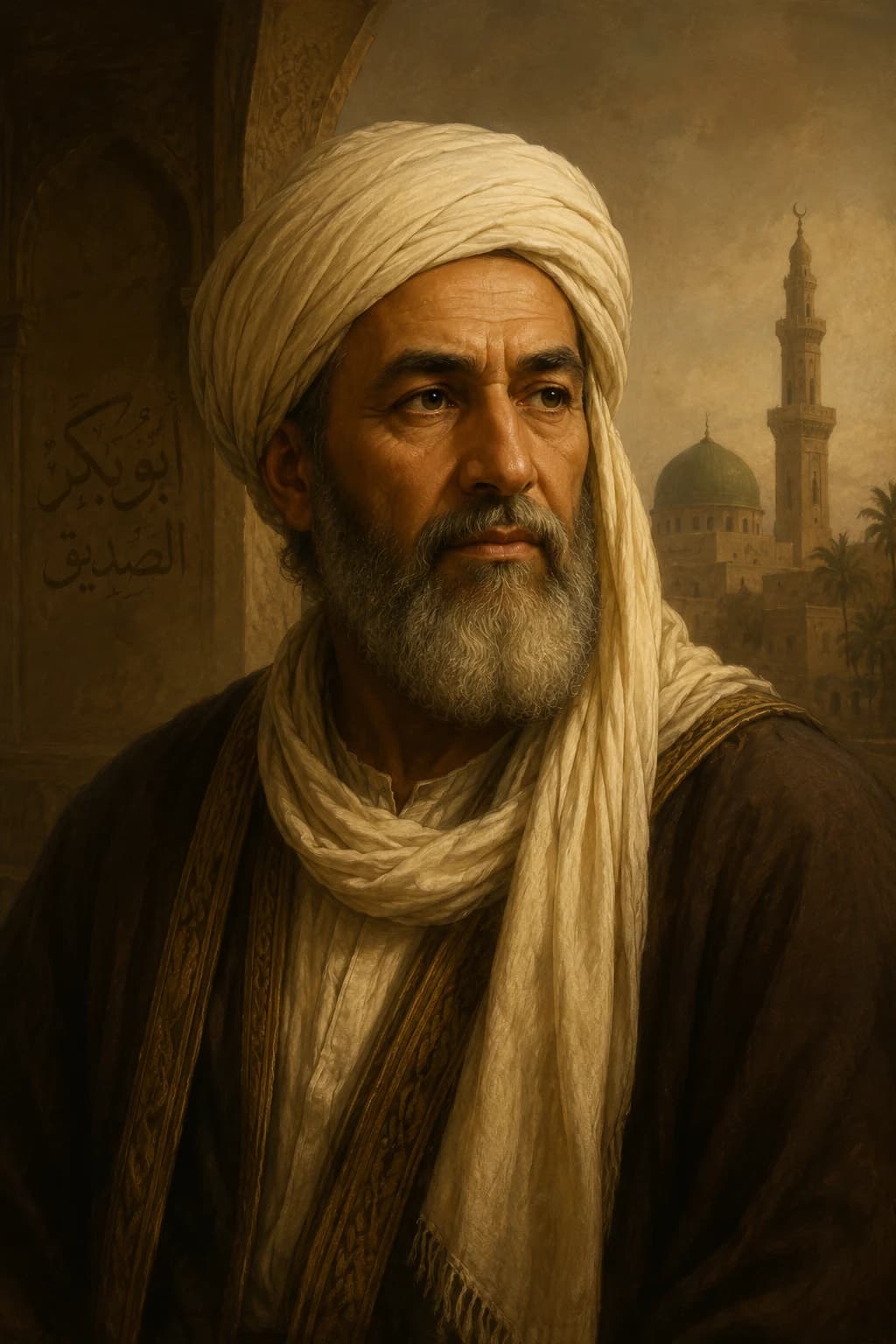
Leading companions recognised Abu Bakr as caliph, a successor who would guide the community but not replace Muhammad's prophetic role.

Unity was immediately tested. Some Arabian tribes rejected 's authority or refused obligations they had accepted under Muhammad. Abu Bakr fought the Ridda Wars to restore control.

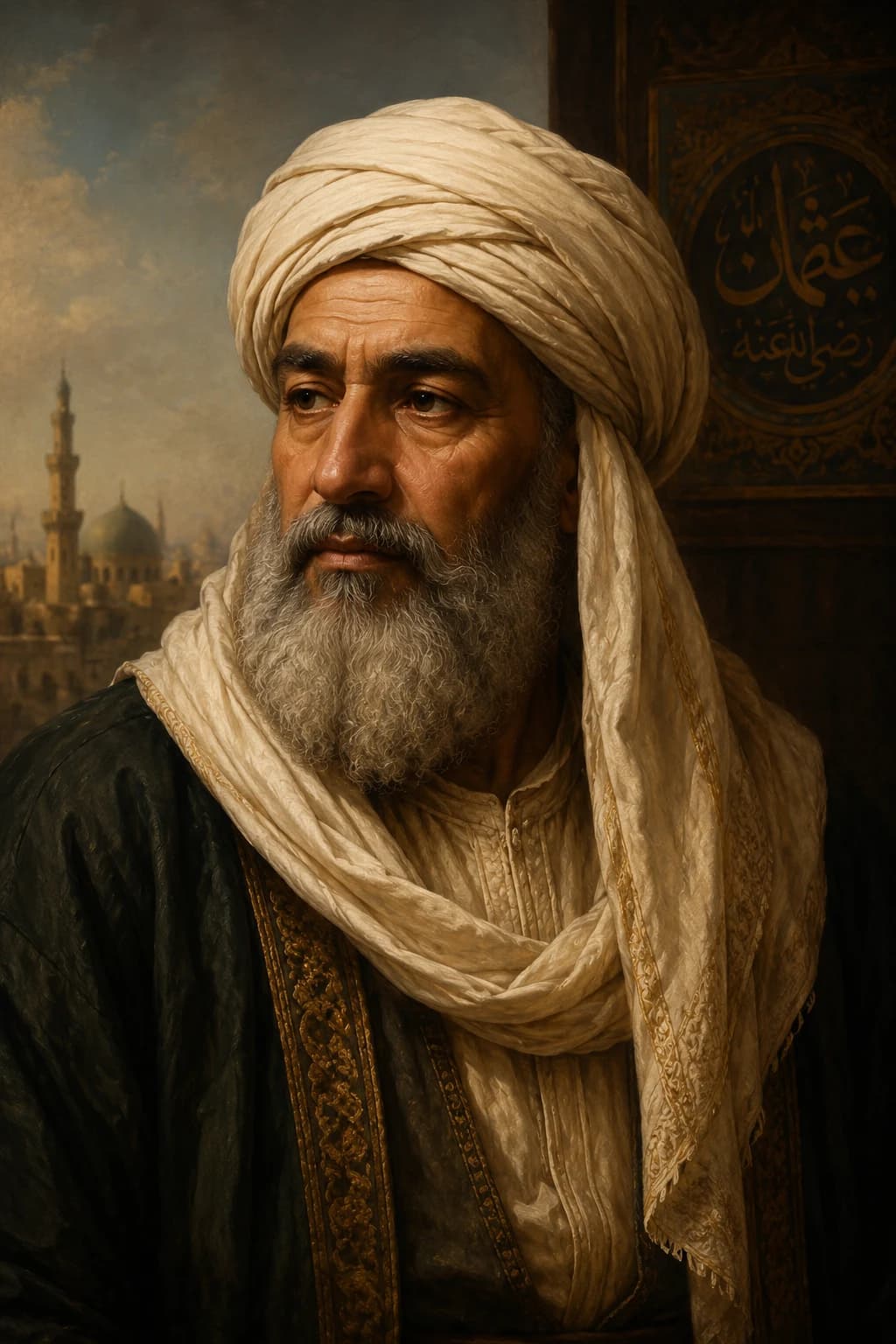
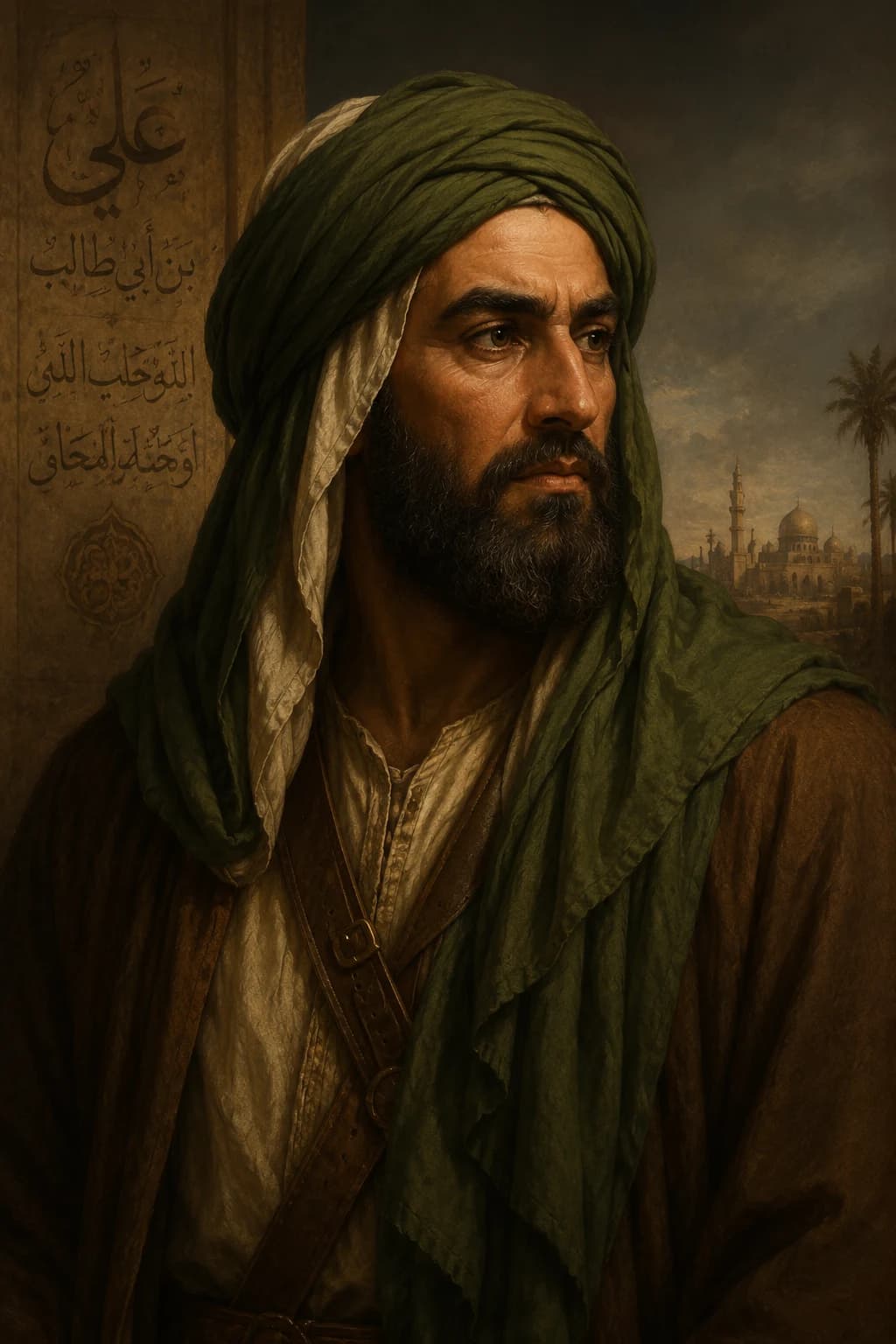
The early caliphs - Abu Bakr, Umar, Uthman and Ali - are often called the Rashidun, or rightly guided, in Sunni tradition.

Under the Rashidun, Islamic rule developed practical foundations: commanders, governors, tax arrangements, garrison towns and records for soldiers and revenue.

Succession remained contested and painful. Later Sunni and Shi'a traditions remembered these early disputes differently, but all recognised their lasting importance.

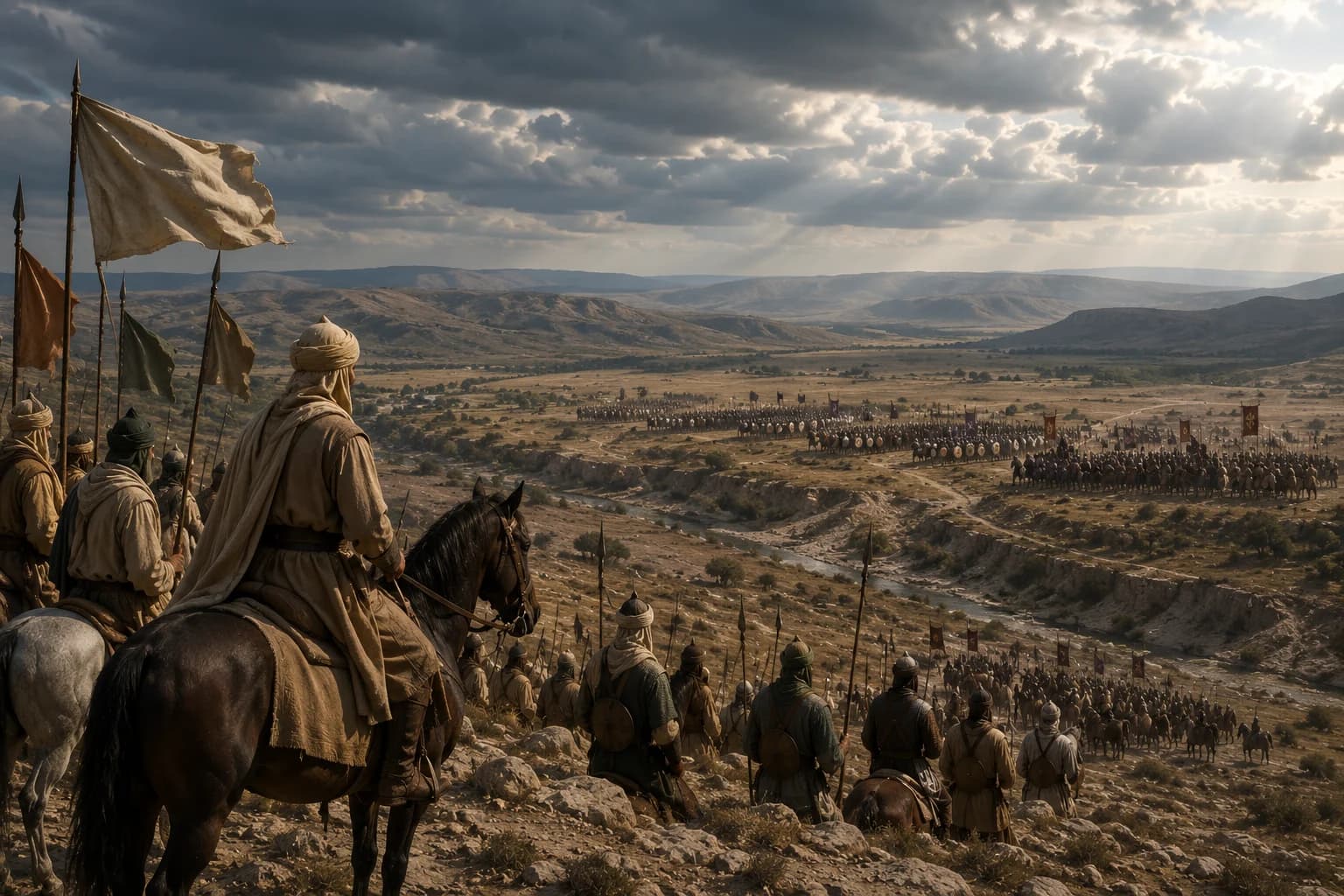
Early Muslim armies overlooking a broad battlefield beneath dramatic clouds.
636 CE
Step 6 of 10636 CEAccessible mode

The Great Conquests

In the 630s, Muslim armies won victories that changed the balance of power in the Near East.

The Byzantine and Sasanian empires had fought exhausting wars for decades. Their armies, taxes and borderlands were strained before the Muslim conquests began.

At in 636, Byzantine power in Syria suffered a devastating defeat. Cities such as and Jerusalem soon came under Muslim rule.

In Iraq, victory at and the capture of broke the Sasanian grip on Mesopotamia. Persia itself would follow through further campaigns.

Muslim armies were mobile, disciplined and often able to work through local agreements after victory. Garrison cities helped separate soldiers from older urban populations while anchoring control.

The result was extraordinary. Lands once ruled by Rome's eastern empire and the Sasanian shahs now belonged to a new Islamic political order.

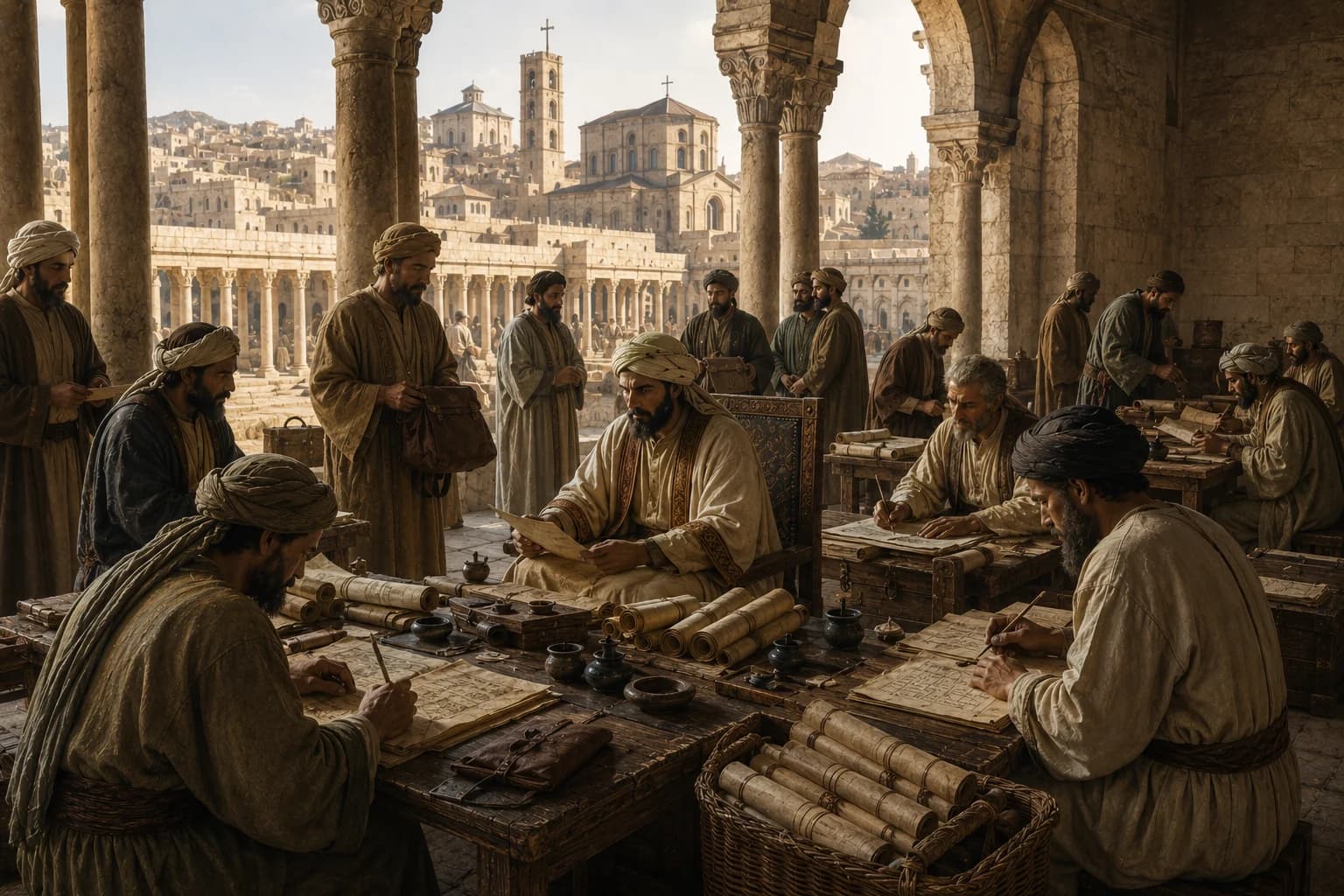
Administrators and scribes working with scrolls in an early Islamic imperial office.
661 CE
Step 7 of 10661 CEAccessible mode

Building an Islamic Empire

In 661, the Umayyad Caliphate rose from the conflicts that followed the Rashidun period.

Muawiya, governor of Syria, established his authority and made the centre of the caliphate. Leadership now became more dynastic.

The Umayyads ruled a vast and diverse empire. Arabs, Persians, Syrians, Egyptians, Berbers, Christians, Jews, Zoroastrians and others lived under the same political order.

Conquest alone could not govern such a world. The caliphate needed officials, taxes, governors, courts, coinage and systems for moving information and money.

Many older Byzantine and Sasanian practices were adapted. Over time, Arabic became more important in administration, and Islamic symbols appeared more clearly in public power.

The empire remained unequal and sometimes unstable, but its institutions helped Muslim rule endure far beyond the first wave of conquest.

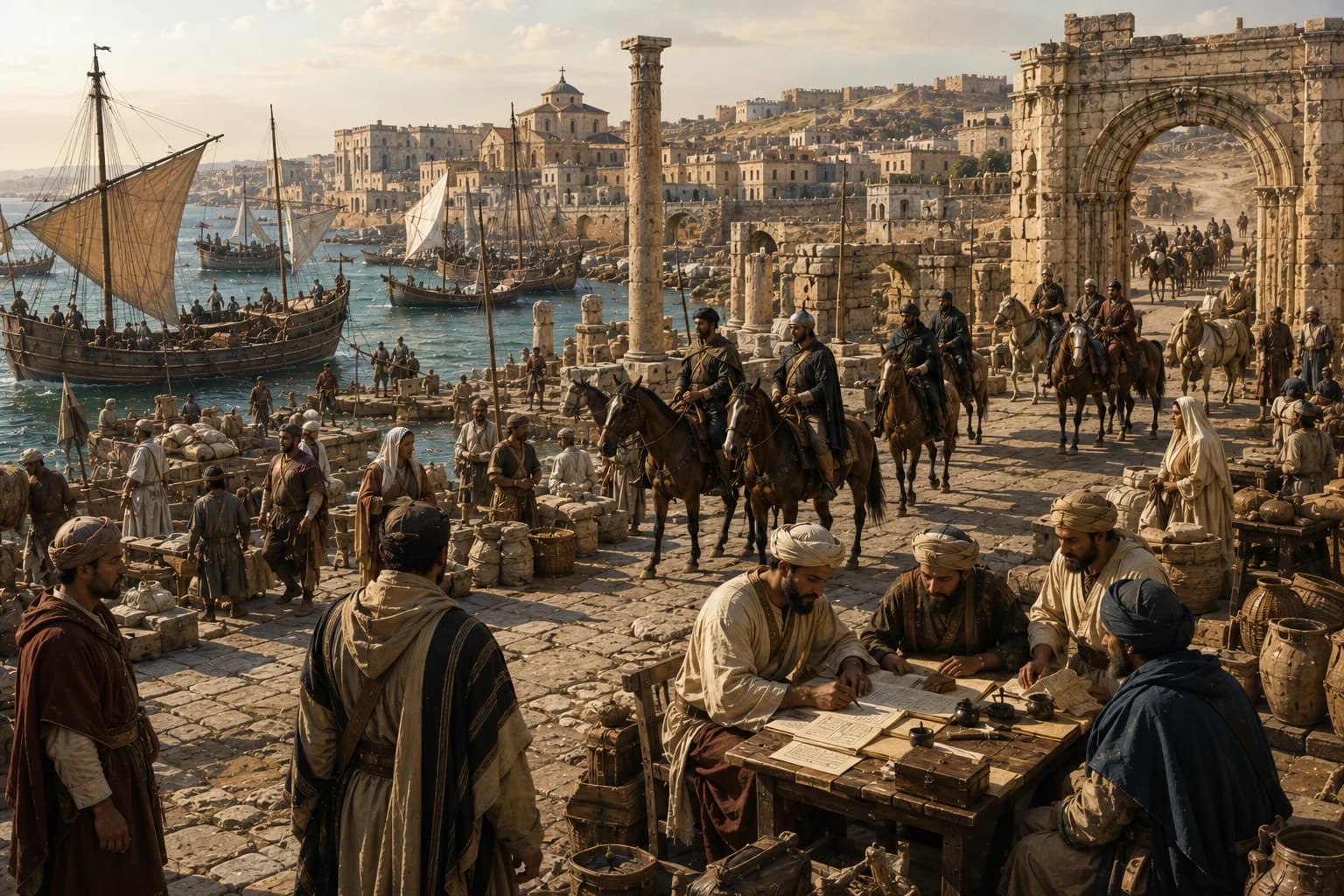
Merchants, officials and cavalry gathered at a Mediterranean port under Islamic rule.
711 CE
Step 8 of 10711 CEAccessible mode

Expansion Across Three Continents

By 711, Islamic rule was expanding across three continents: Africa, Asia and Europe.

In North Africa, Muslim armies and administrators pushed westward through lands shaped by Roman, Byzantine, Berber and local traditions.

In 711, Tariq ibn Ziyad crossed into the Iberian Peninsula. Within a few years, much of Visigothic Spain had become .

To the east, campaigns moved into Central Asia and . Cities, frontier zones and trade routes were drawn into the expanding Islamic world.

Expansion did not mean instant conversion. Many people remained Christian, Jewish, Zoroastrian, Buddhist or attached to local traditions for generations.

What changed quickly was connection. Arabic, pilgrimage, trade, law, administration and scholarship began linking distant regions into a shared civilisation.

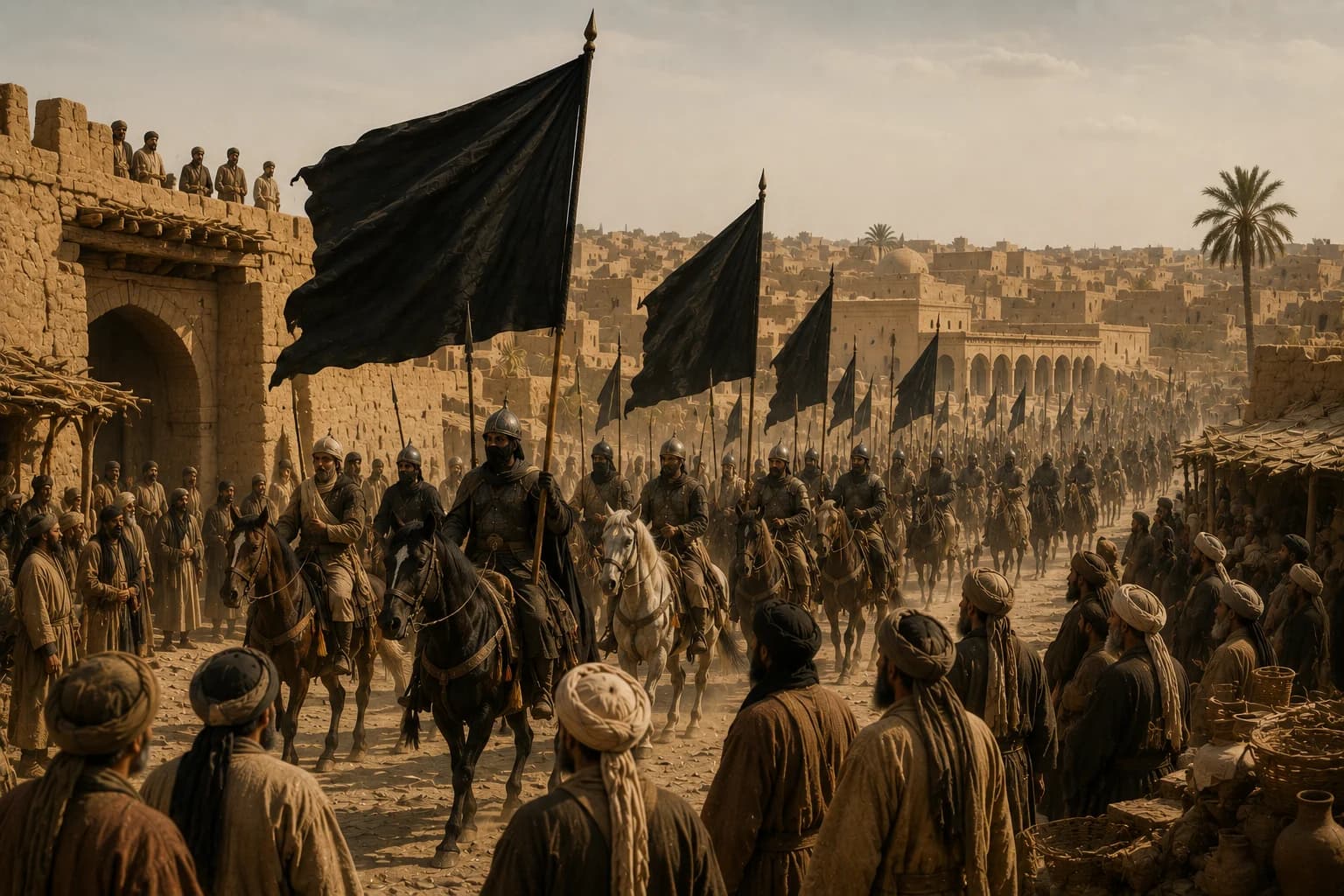
Abbasid cavalry carrying black banners through a crowded city street.
750 CE
Step 9 of 10750 CEAccessible mode

The Abbasid Transformation

In 750, the Abbasid Revolution overthrew Umayyad rule in most of the Islamic world.

The revolution drew strength from eastern lands, especially , where many people resented Umayyad rule and Arab privilege.

The Abbasids claimed legitimacy through descent from Muhammad's family, presenting themselves as a renewal of just leadership.

Power shifted away from and Syria toward Iraq and the east. This changed the cultural balance of the caliphate.

Persian administrative traditions, eastern elites, scholars, merchants and translators became increasingly important in the new order.

The founding of soon after gave the Abbasids a capital suited to this wider vision: imperial, urban, connected and cosmopolitan.

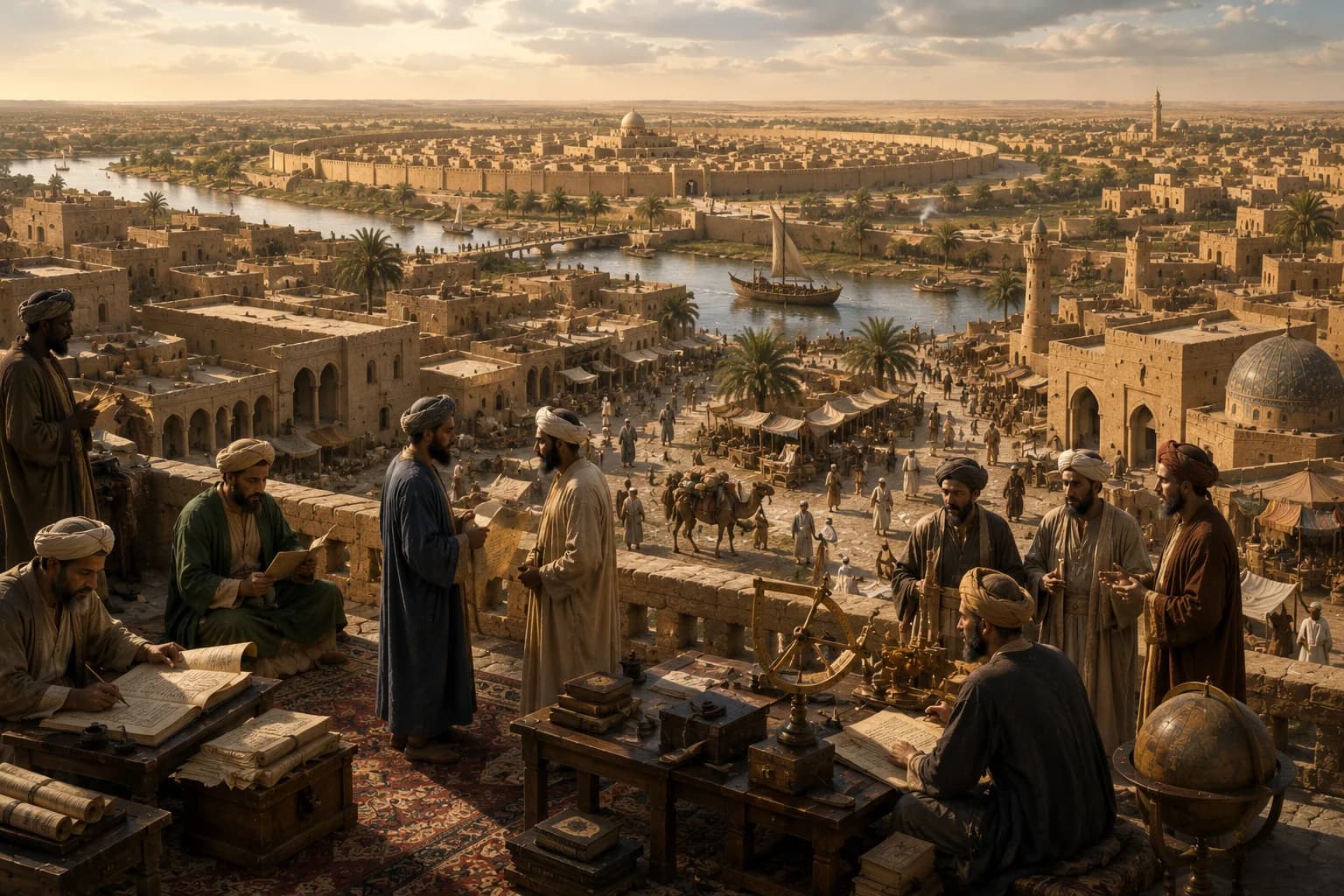
Scholars and officials overlooking a prosperous river city of the medieval Islamic world.
762 CE
Step 10 of 10762 CEAccessible mode

A Lasting Civilisation

In 762, the Abbasids founded , a city that came to symbolise the lasting power of Islamic civilisation.

stood near old routes, canals and imperial landscapes. It was designed to be a capital for a world larger than .

By this point, Islam had become more than a movement of conquest. It was a framework for worship, law, government, learning and community.

The Qur'an, Arabic, pilgrimage, prayer, scholarship and legal debate gave distant regions shared points of reference.

Trade linked the Mediterranean, Red Sea, Indian Ocean and Central Asia. Goods moved with ideas, books, techniques and people.

Islamic civilisation did not make Africa, Asia and Europe identical. It created a shared language of belief and rule that local societies adapted in their own ways.

Keep exploring

Finished The Rise of Islam?

Choose the next story, follow a connected moment, or explore the people behind this story.

Suggested stories

You have already explored some closer links, so these include unread paths from the wider catalogue.

Browse stories

References

Sources and historical notes

Sources used to check this page, selected recommendations and historical notes.

Sources used

  1. The Metropolitan Museum of Art, “The Prophet Muhammad and the Origins of Islam,”

    Muhammad, Muslim belief, Mecca and Medina.

    Open source
  2. The Metropolitan Museum of Art, “Arabian Peninsula, 1–500 A.D.,”

    Earlier Arabian trade and southern kingdoms.

    Open source
  3. OpenStax, Rice University, “The Arab-Islamic Conquests and the First Islamic States,”

    Early caliphates, conquests and administration.

    Open source
  4. The Metropolitan Museum of Art, “The Art of the Abbasid Period,”

    The Abbasid transition and the founding of Baghdad.

    Open source

Additional sources and notes

Loading reviewed claim sources...

Our editorial approach · Report a historical error

A monthly route through history

Find out first about the latest published stories, feature notes and occasional Premium offers in one monthly email.