← People

Uthman ibn Affan

Uthman ibn Affan was the third Rashidun caliph. His rule from 644 to 656 saw continued expansion and the standardisation of the Qur'anic text, but accusations of favouring relatives and provincial unrest ended with his murder.

Born
c. 576 CE
Died
656 CE
Role
Caliph
Also known as
Uthman, Osman ibn Affan
Region
Arabia, Syria, Iraq, Egypt, Persia, Arabia and the early caliphate

Third caliph (c. 576-656)

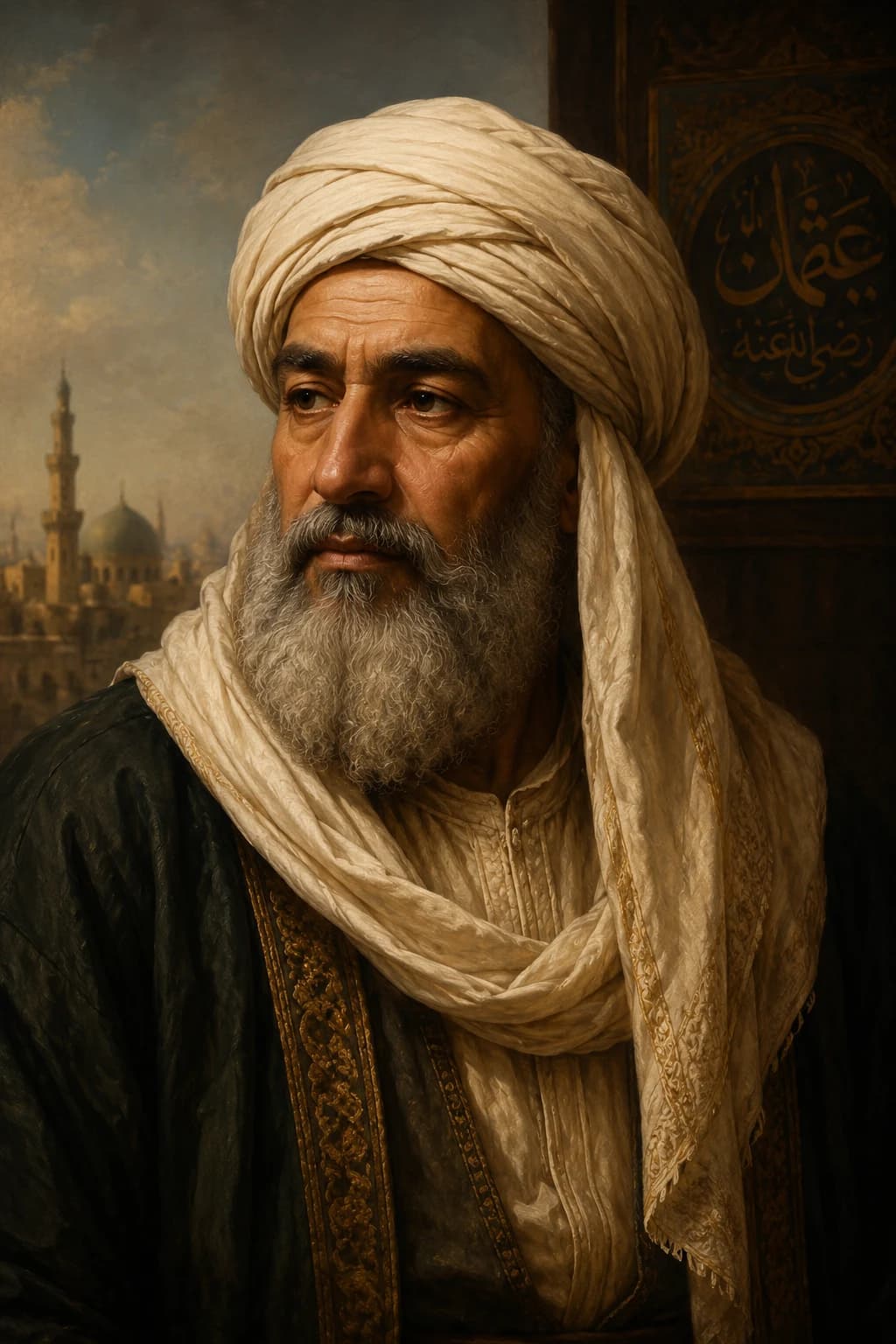
Portrait-style illustration of Uthman ibn Affan in an early Islamic setting
Life Journey

The caliph whose rule ended in civil crisis

Follow Uthman from early companionship to expansion, textual standardisation and the unrest that fractured the caliphate.

Complete chronology

c. 576-622

Early Muslim and Quraysh notable

Uthman ibn Affan came from the Umayyad branch of the Quraysh, giving him standing within Meccan society before Islam became politically powerful. Islamic tradition remembers him as an early convert and a close member of the first Muslim community. His background mattered because the early caliphate was never detached from Arabian social networks. Kinship, reputation, wealth and loyalty all shaped who could command trust during moments of transition.

644

Third caliph

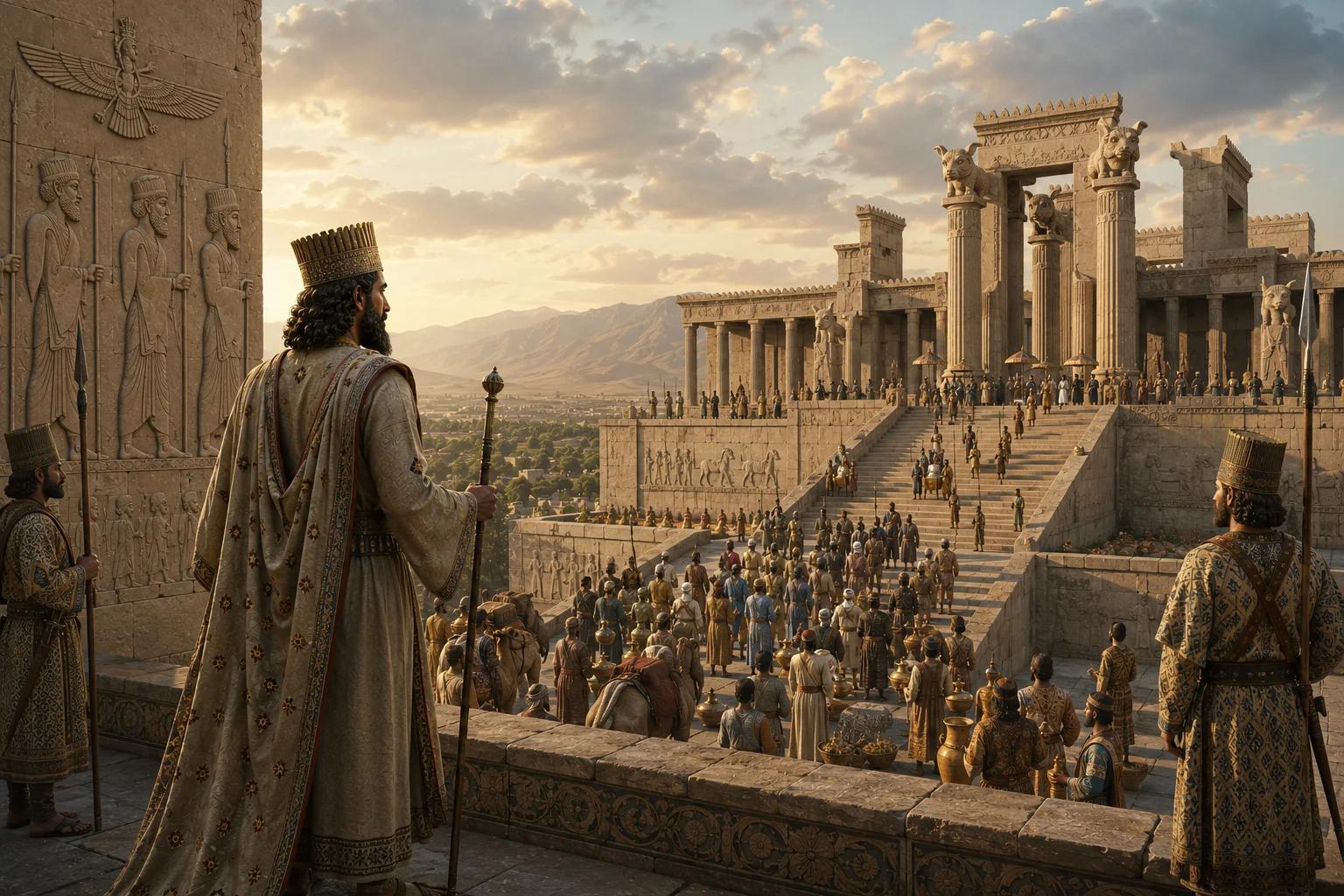
Uthman became caliph in 644 after a selection process following Umar's assassination. He inherited an expanding realm whose scale was already stretching early institutions. The caliphate had to appoint governors, distribute revenue, maintain armies and manage old imperial populations from Egypt to Iraq. Uthman's rule therefore took place in a harder political world than the one faced by Abu Bakr in 632. The community was larger, richer and more exposed to disputes over power.

mid-7th century

Qur'an standardisation

One of the most important memories of Uthman's rule is the standardisation of the Qur'anic text. As Islam spread beyond Arabia, recitation and transmission had to remain coherent across distant communities. Islamic tradition credits Uthman with authorising a standard recension and sending copies to major centres. The process is central to Muslim memory of how revelation was preserved after Muhammad's death. It also shows how religious authority and state authority could overlap in the early caliphate.

644-656

Expansion and resentment

Muslim rule continued to expand under Uthman, but the pressures of empire intensified. Provincial armies and communities expected fair access to revenue, land and office. Critics accused Uthman of favouring relatives from the Umayyad network in appointments, though the politics behind opposition were complex and varied by region. These tensions reveal a central problem of the early caliphate: authority had grown faster than the habits and institutions needed to settle disputes peacefully.

656 onward

Murder and aftermath

In 656, rebels entered Medina and killed Uthman. His death was a profound rupture. Ali became caliph afterward, but the question of justice for Uthman and the legitimacy of competing claims opened the First Fitna. Later Muslim memory looked back on Uthman's murder as one of the great turning points in early Islamic history. It exposed how difficult succession, accountability and communal unity had become once the caliphate ruled far beyond its Arabian beginnings.

Continue in context

Connected stories

Move from the profile into the wider events and settings this figure belongs to.

Keep exploring

Content note

This profile is written for educational use and connects to related Stories of History pages. Visuals are reviewed for educational context and may include historical images, archival material, or interpretive reconstructions. Image policy

References

Sources and historical notes

Sources used to check this page, selected recommendations and historical notes.

Sources used

  1. Cambridge University Press, “ʿUthmān: the Vicegerent of God and the reign of ʿAbd Shams,”

    Examines Uthman’s accession, appointments and the opposition that culminated in his killing.

    Open source
  2. The Metropolitan Museum of Art, “The Third Caliph: Uthman ibn Affan,”

    Summarises Uthman’s reign and the traditional account of the standardisation of the Qur’an.

    Open source
  3. Centre for Islamic Studies (İSAM), “The Qur’an Manuscript Attributed to Caliph ʿUthmān,”

    Describes a manuscript traditionally associated with Uthman and the study of its attribution.

    Open source

Additional sources and notes

Loading reviewed claim sources...

Our editorial approach · Report a historical error

A monthly route through history

Find out first about the latest published stories, feature notes and occasional Premium offers in one monthly email.