Further agreements in 1843 granted additional privileges.
Common questions
Why did the First Opium War begin?
Qing efforts to suppress the illegal opium trade led to the seizure of foreign stocks in 1839. Britain sent an expedition seeking redress and changes to the trading and diplomatic relationship.
Who won the First Opium War?
Britain defeated Qing China. British forces used naval power to attack the coast and advance up before the Qing agreed to peace.
Did the Treaty of Nanking legalise opium?
No. The 1842 treaty opened ports and imposed other concessions, but it did not legalise the opium trade.
Why did the war matter?
The settlement began a treaty system that reduced Qing control over trade and foreign relations. The war remains a major point of reference in Chinese historical memory.
Context
Introduction
Overview
The First Opium War grew out of a confrontation over illegal opium, trade and sovereignty. Between 1839 and 1842, British military power forced Qing China to accept a settlement that reshaped its relations with foreign states.
Key forces
Qing regulations concentrated most Western maritime trade at .
Opium from India was smuggled into China despite Qing prohibitions.
Lin Zexu confiscated and destroyed foreign opium in 1839.
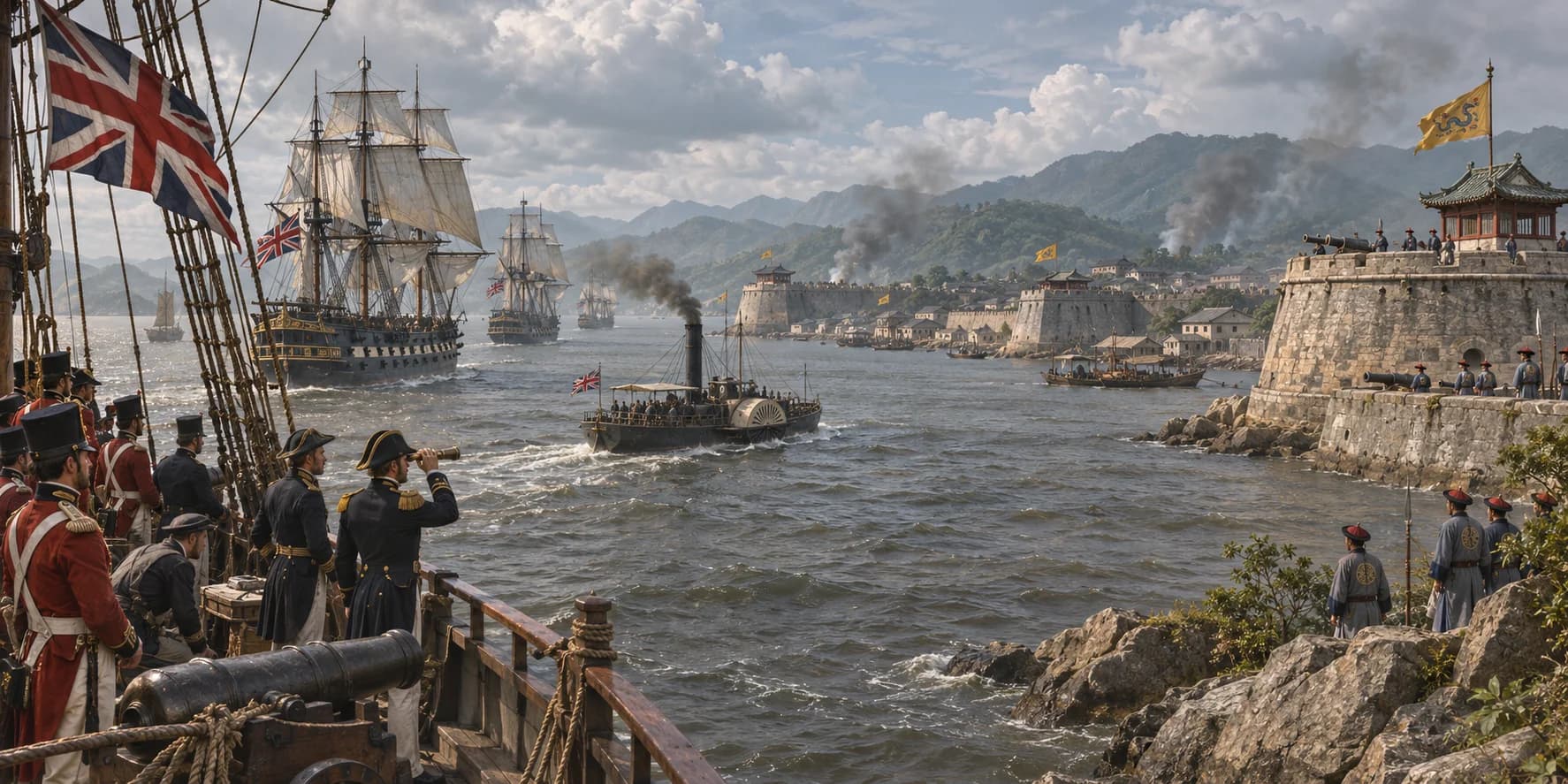
British forces advanced along the coast and during the war.
1757 CE
Step 1 of 101757 CEAccessible mode
The Canton Trade System
A cup of tea in Britain helped connect two empires. In China, the ships carrying that tea passed through a trading system designed to keep foreign merchants under control.
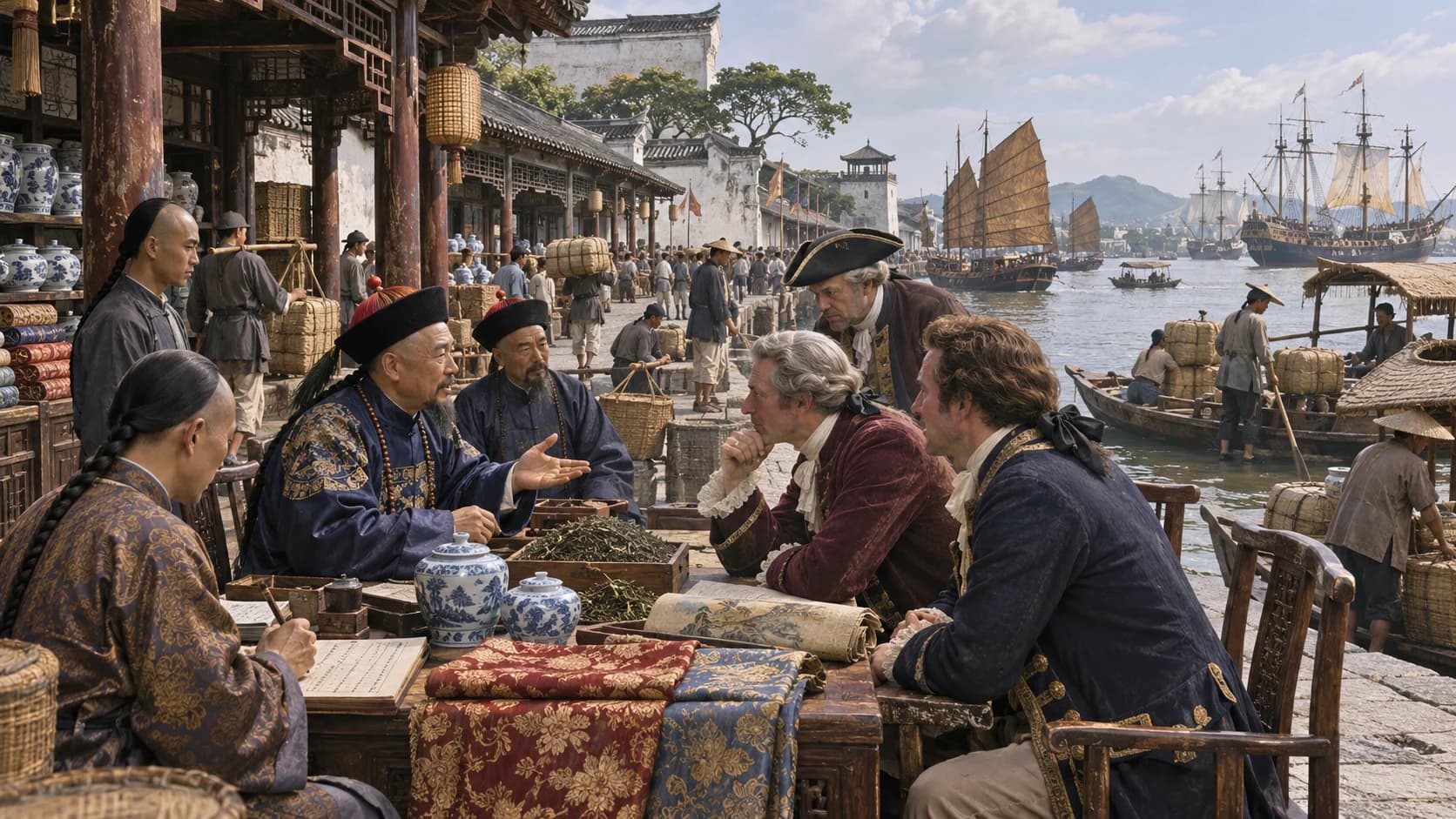
In 1757, the Qing dynasty, the family ruling China, restricted most Western sea trade to , now called . Foreigners could buy and sell there, but they could not simply choose another port or travel inland to find customers.
Instead, they worked through approved Chinese merchant houses known as the Cohong. These merchants arranged deals and answered to officials. The system made a busy international trade possible while keeping it within boundaries set by China’s government.
British traders wanted more freedom. Back home, tea was becoming an everyday purchase, and Chinese silk and porcelain also attracted buyers. Anyone who could make this trade cheaper or larger stood to earn considerable money.
For decades, business continued despite the friction. But the two sides expected different things from the relationship: Qing officials wanted to manage foreign access, while British merchants pressed to expand it. That disagreement would become dangerous when a highly profitable illegal cargo entered the picture.
1800 CE
Step 2 of 101800 CEAccessible mode
Tea, Silver and Opium
Tea was easy to sell in Britain. Finding something Chinese customers wanted in return proved harder. Merchants found a profitable answer in a drug that China had banned.
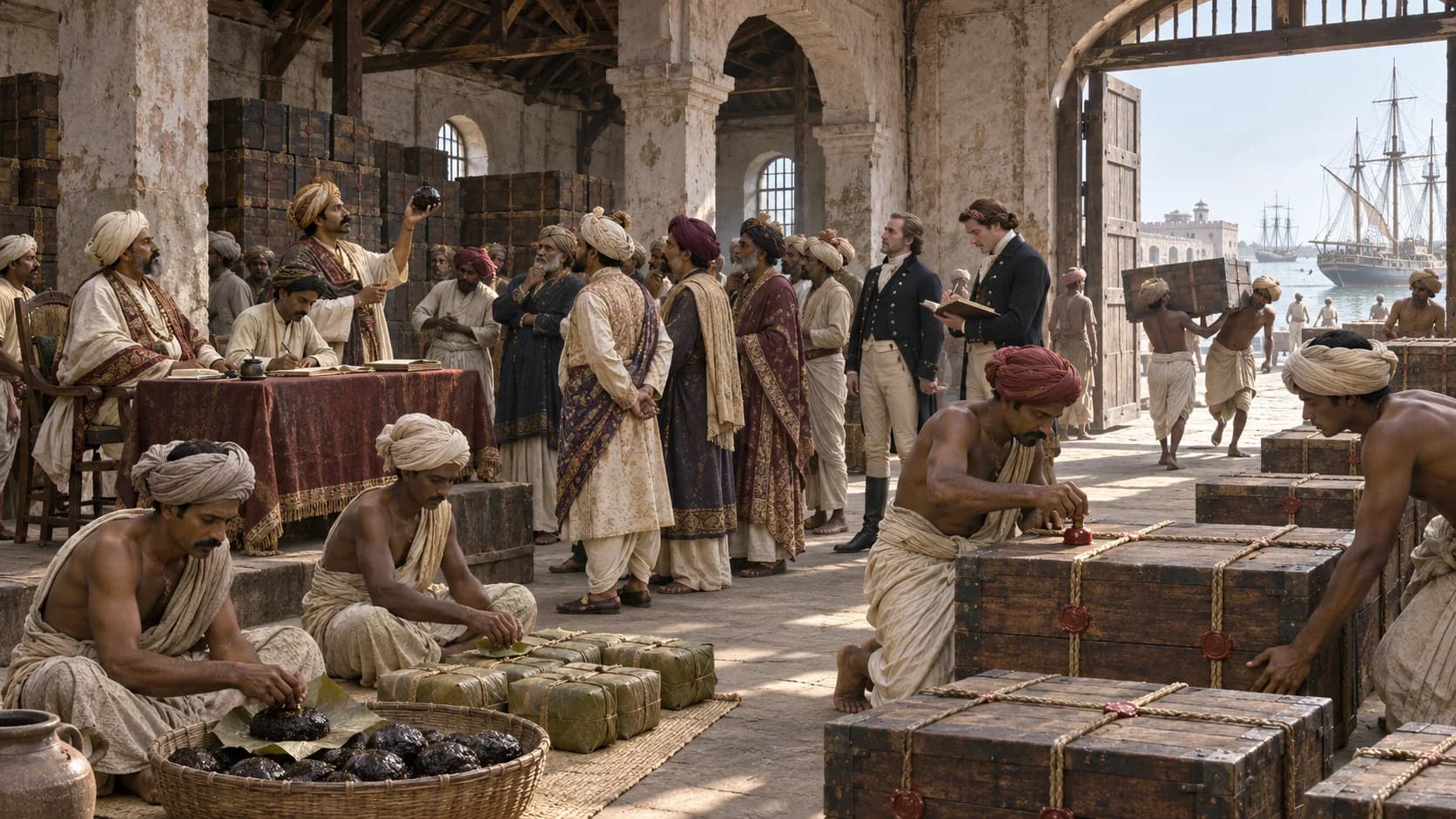
That drug was opium, made from the opium poppy. It could relieve pain, but it could also cause dependence. Supplies grown in India reached Chinese buyers through smugglers who worked around the government’s restrictions.
British rule in India helped sustain the business. The East India Company, a trading company that also governed large territories, controlled production in important growing areas and auctioned the drug to private merchants. Those merchants carried it towards China.
The money connected the whole system. Chinese buyers paid for opium, and the proceeds helped merchants purchase tea and other Chinese goods. Traders could earn money from both journeys, while the government in British India collected valuable revenue.
The benefits and damage fell in different places. Merchants and imperial officials profited, while dependence harmed Chinese users and their families. Payments moving out of China also worried its government. A business that looked rewarding to its sellers was becoming a crisis for the country receiving it.
Premium2 of 10 chapters read
A Crisis for Qing China
From the opium trade at Canton to the Treaty of Nanking, the First Opium War brought Qing law and British imperial power into collision.