← People

Henry IV

Henry IV was King of England from 1399 to 1413 and the first Lancastrian monarch. Born Henry Bolingbroke, he deposed Richard II, faced rebellions by Owain Glyndwr and the Percy family, and left a contested legacy of usurpation and survival.

Born
1367 CE
Died
1413 CE
Role
First Lancastrian king of England

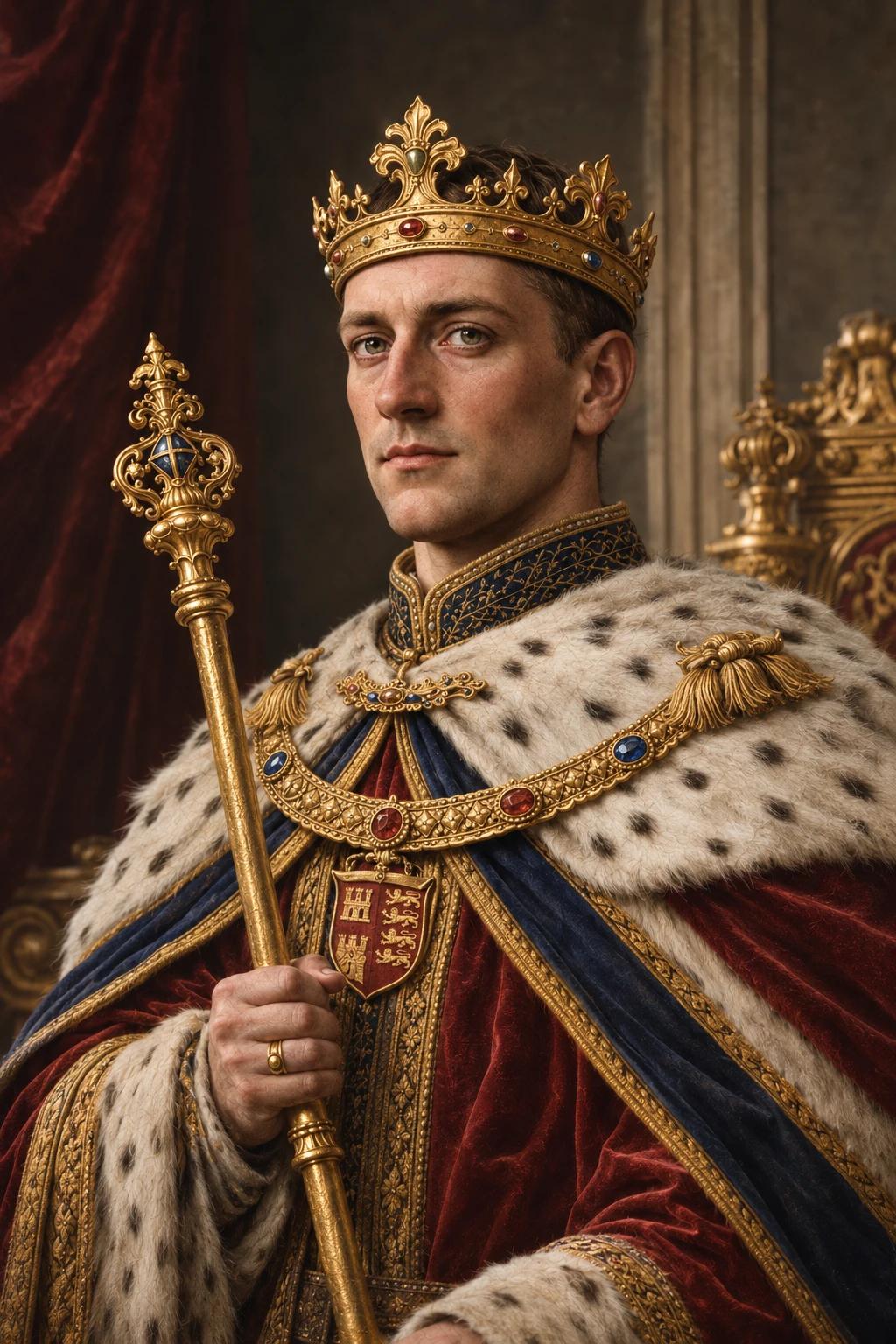
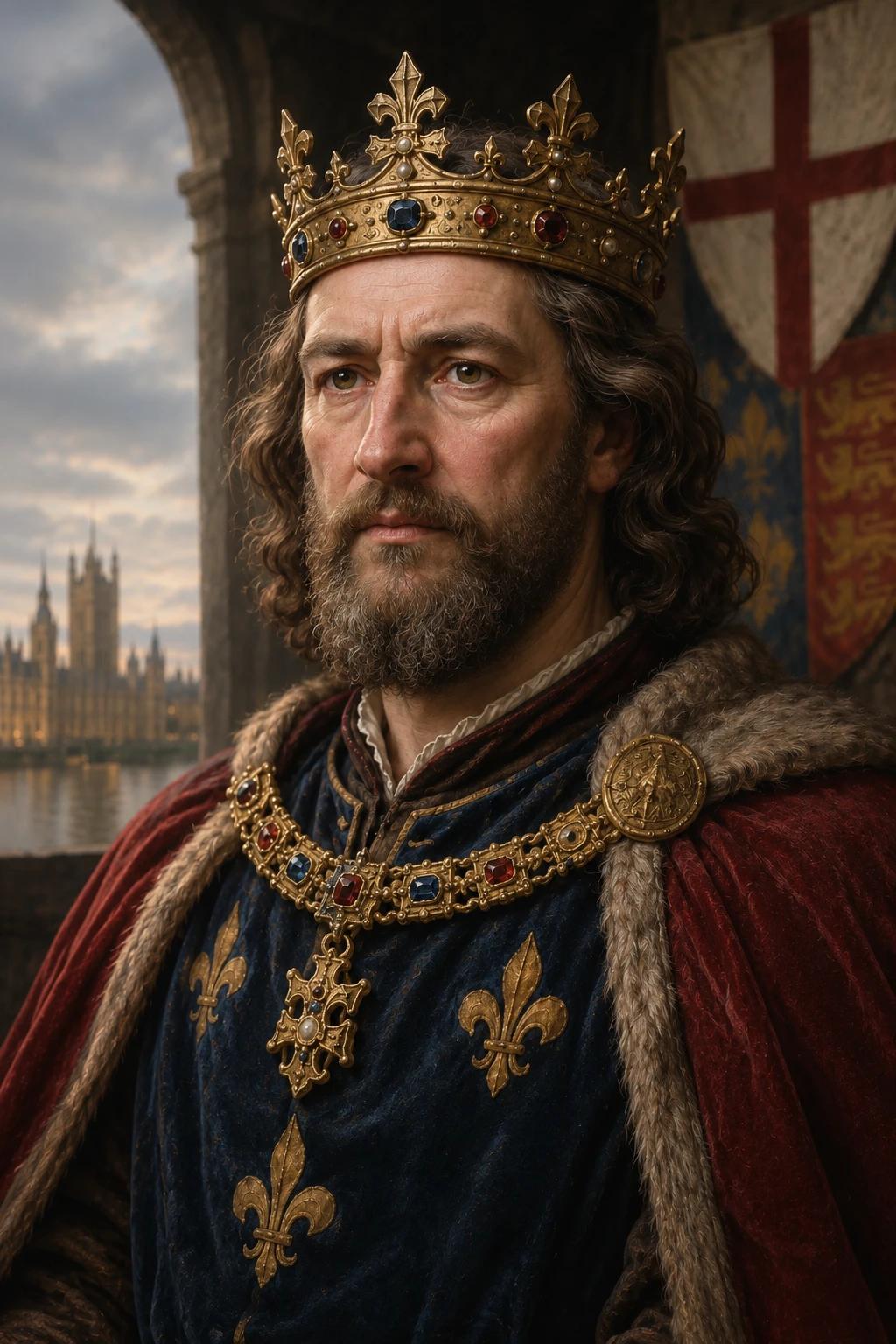
First Lancastrian king of England (1367–1413)

AI-assisted photorealistic reconstruction of Henry IV in period attire; an illustrative interpretation, not an archival photograph.
AI-assisted historical reconstruction

An illustrative reconstruction based on historical context. It is not a photograph or documentary likeness. Image policy Attribution

Life Journey

A crown won by force and held through strain

Follow the key events and turning points in this life story.

Complete chronology

1367

Born to high rank

Henry of Bolingbroke entered the highest tier of English aristocracy. His father, John of Gaunt, Duke of Lancaster, was one of the richest and most influential men in Europe, while his grandfather Edward III gave Henry a royal lineage few nobles could match. That inheritance brought castles, lands, followers, and expectations of public service. It also placed him close to a throne occupied by his cousin Richard II, whose kingship became increasingly tense and personal. Henry's early life was not a straightforward march toward usurpation. He was a great lord in a political world where kinship, honour, military reputation, and royal favour could elevate a man quickly or turn him into a threat.
1370s–1380s

Training for lordship

As a young man Henry learned lordship in the practical sense: commanding retainers, managing estates, cultivating affinity, and displaying courage in public. He was involved with the Lords Appellant, the aristocratic group that challenged Richard II's favourites in the late 1380s, though he later returned to royal favour. He also travelled to Prussia and the eastern Baltic on crusading expeditions with the Teutonic Knights, experiences that enhanced his chivalric reputation. These details matter because Henry was not an obscure rebel who stumbled into power. He was already recognised as wealthy, pious, martial, and politically serious. When crisis came, men could imagine him as an alternative centre of authority.

1390s

Conflict with Richard

Richard II's later rule was marked by vengeance against old opponents, heavy use of favourites, and a heightened language of royal majesty. Henry's position became precarious not because he openly sought the throne at first, but because he possessed the ingredients of a rival: noble support, Lancastrian wealth, Plantagenet blood, and a reputation for honour. The immediate quarrel came through Henry's dispute with Thomas Mowbray, Duke of Norfolk, which Richard handled by exiling both men in 1398. For Henry, exile was severe but survivable. The deeper rupture came when John of Gaunt died and Richard seized the Lancastrian inheritance instead of allowing Henry to receive it. That act transformed mistrust into a cause.

1398–1399

Exile and return

Henry landed at Ravenspur in 1399 with a carefully limited public claim: he wanted his inheritance restored. The timing was devastating for Richard, who was campaigning in Ireland and had alienated enough of the political nation to leave his regime brittle. Support gathered around Henry with remarkable speed, including men who had grievances against Richard and others who judged the king's conduct unlawful. The return became a rolling political collapse. Henry's genius lay in allowing the movement to widen without immediately declaring its full destination. By the time Richard returned, the issue was no longer only Lancastrian property. It was whether Richard could still command obedience as king.

1399

Taking the crown

Richard II was forced to abdicate, and Henry claimed the throne through a mixture of Lancastrian descent, public grievance, and parliamentary acceptance. The legal arguments were never completely comfortable. Other descendants of Edward III had claims that could be presented as stronger by strict primogeniture, especially through the Mortimer line. Henry therefore needed performance as much as paperwork: coronation, parliamentary recognition, promises of good rule, and visible restoration after Richard's perceived tyranny. His kingship was immediately real, but it was never innocent. By replacing an anointed king, Henry opened questions that later generations would sharpen during the Wars of the Roses.

1400s

Rebellions erupt

Henry's reign began under pressure. The Epiphany Rising of 1400 tried to restore Richard II, whose subsequent death in captivity removed one danger while deepening suspicion. In Wales, Owain Glyndwr led a rebellion that became one of the most serious threats to English authority in the region, drawing on local grievances and moments of French support. Henry also had to manage parliament, taxation, church politics, and the expectations of men who believed their support in 1399 deserved reward. Usurpation created a permanent political debt. The king had to be strong enough to command, generous enough to retain allies, and legitimate enough to survive every rumour of Richard's return.

1403

Battle and survival

The Percy family had helped Henry take the crown, but by 1403 they had turned against him, frustrated by money, policy, and influence. Henry Percy, known as Hotspur, joined a rebellion that threatened to combine northern discontent with Welsh resistance. At Shrewsbury, Henry fought for his crown in brutal conditions. Hotspur was killed, the rebels were defeated, and the king survived a crisis that could have ended the Lancastrian experiment almost before it settled. Yet victory did not erase the lesson. If former kingmakers could become rebels, Henry's support was conditional. The battle saved him militarily while confirming the political insecurity at the heart of his reign.

1406–1413

Illness and strain

After Shrewsbury, Henry continued to face rebellion, including the rising associated with Archbishop Scrope in 1405 and further Percy resistance. His health deteriorated, possibly through a chronic skin disease or another recurring illness that contemporaries interpreted through moral and religious language. Financial pressure remained severe because rebellion and defence were expensive, and parliament became an essential partner in supply. Meanwhile his son, the future Henry V, gained military experience in Wales and increasing prominence in council politics. Later Shakespearean legend turned father and son into a drama of wayward youth and royal anxiety, but the political reality was sharper: the Lancastrian monarchy needed a successor strong enough to make usurpation look like continuity.

post-1413

A precarious inheritance

Henry IV's achievement was survival. He had returned as a dispossessed exile, become king, defeated rebellions, contained Wales, and passed the crown peacefully to his son. That orderly succession to Henry V gave the Lancastrian regime a triumphal next chapter, especially after Agincourt. But the deeper legacy remained unsettled. Henry had proved that a king could be removed if enough political force and moral argument gathered against him. His own claim, never wholly immune to challenge, left later rivals with material to use when Lancastrian authority weakened. He was neither a mere opportunist nor a secure hereditary monarch. He was a founder under pressure: capable, devout, resilient, and permanently marked by the act that made him king.

Continue in context

Connected stories

Move from the profile into the wider events and settings this figure belongs to.

More connected stories

British Monarchs lineage
Lineage42 rulers
British Monarchs
1066 CE–present

Trace the English and later British monarchy from William I to today.

View lineage

Keep exploring

Content note

This profile is written for educational use and connects to related Stories of History pages. The main portrait is an AI-assisted historical reconstruction, included as an illustrative aid rather than documentary evidence. Image policy Image attribution

References

Sources and historical notes

Sources used to check this page, selected recommendations and historical notes.

Sources used

  1. The Royal Household, “Henry IV (r. 1399–1413),”

    Bolingbroke’s return from exile, seizure of the crown and struggles to keep it.

    Open source
  2. Westminster Abbey, “Henry IV,”

    Coronation, family and burial at Canterbury Cathedral.

    Open source
  3. Royal Commission on the Ancient and Historical Monuments of Wales, “In the Steps of Owain Glyndŵr,”

    Glyndŵr’s revolt and its Welsh setting.

    Open source

Additional sources and notes

Loading reviewed claim sources...

Our editorial approach · Report a historical error

A monthly route through history

Find out first about the latest published stories, feature notes and occasional Premium offers in one monthly email.