Accessible gives a lighter overview. Deep Dive tells the fuller story.
Quick Answers
Who were the Plantagenets?
The Plantagenets were the royal family that ruled England from Henry II’s accession in 1154 to Richard III’s death at in 1485. This includes the later Lancaster and York branches. Their reigns shaped royal justice, Magna Carta, Parliament and England’s conflicts in France and the British Isles.
At a glance
Date range: 1154–1485.
Henry II was the first Plantagenet king of England.
John agreed to Magna Carta in 1215.
Lancaster and York were branches of the same dynasty.
The name comes from the nickname of Geoffrey of Anjou,Henry II’s father, traditionally associated with the broom plant. It became a later family label rather than a surname routinely used by the early kings.
Did the Plantagenets end in 1399 or 1485?
The main line ended when Richard II was deposed in 1399. The wider dynasty continued through its Lancaster and York branches until Richard III’s death at in 1485. This overview uses that broader scope.
What did the Plantagenets change?
They expanded royal justice and administration, fought for territory, and faced demands for limits on royal power. Magna Carta and the growth of Parliament emerged from these conflicts. Plague and war also transformed society during their rule.
For more than 300 years, one royal family ruled England through rebellion, war and plague. The Plantagenets built a powerful kingdom, but their kings faced challenges from their own subjects and even their own relatives. Discover a story of contested crowns, changing laws and the people caught in between.
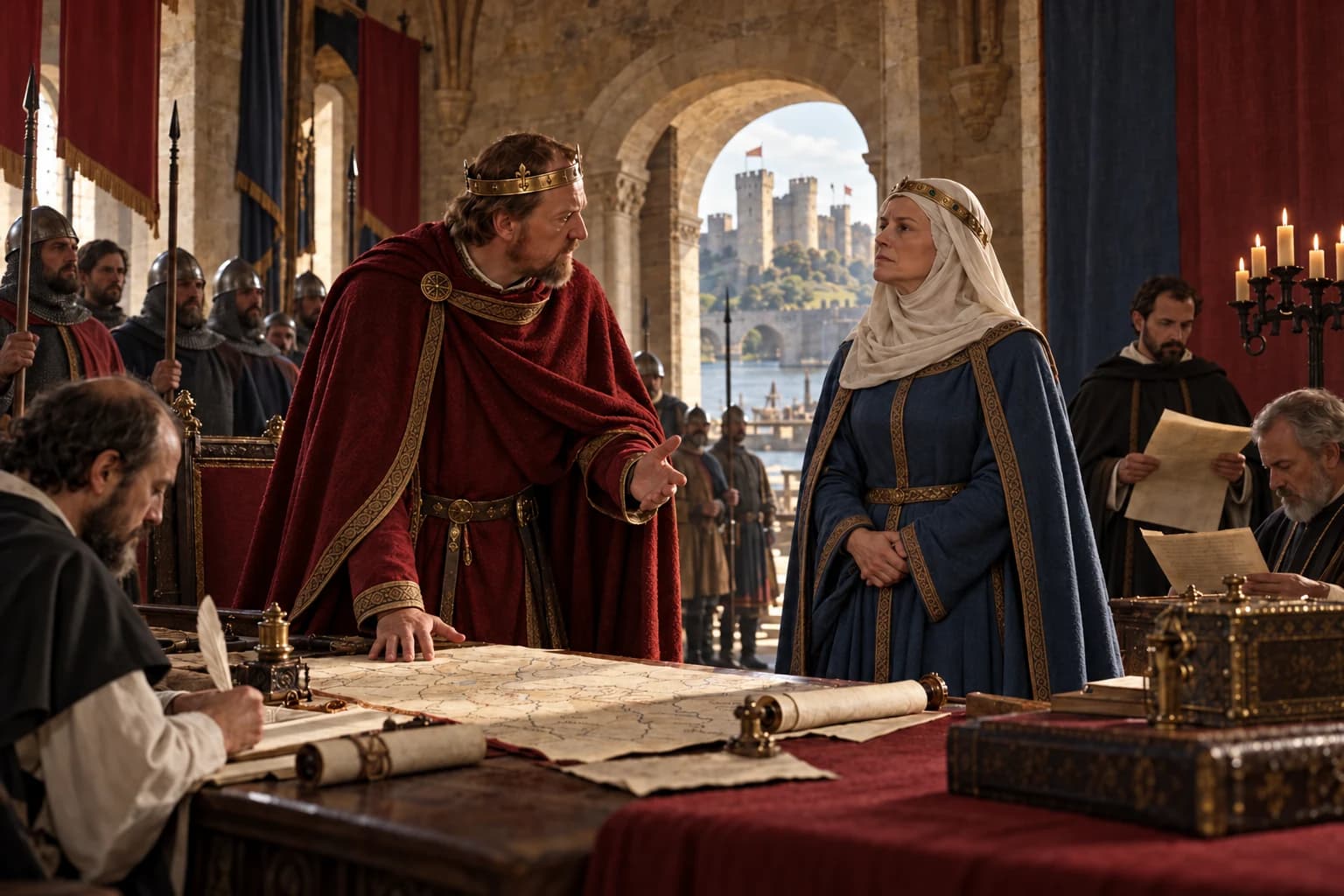
Eleanor was a duchess in her own right, with wealth, connections and political authority. was her inheritance, and her role in the dynasty went well beyond producing heirs.
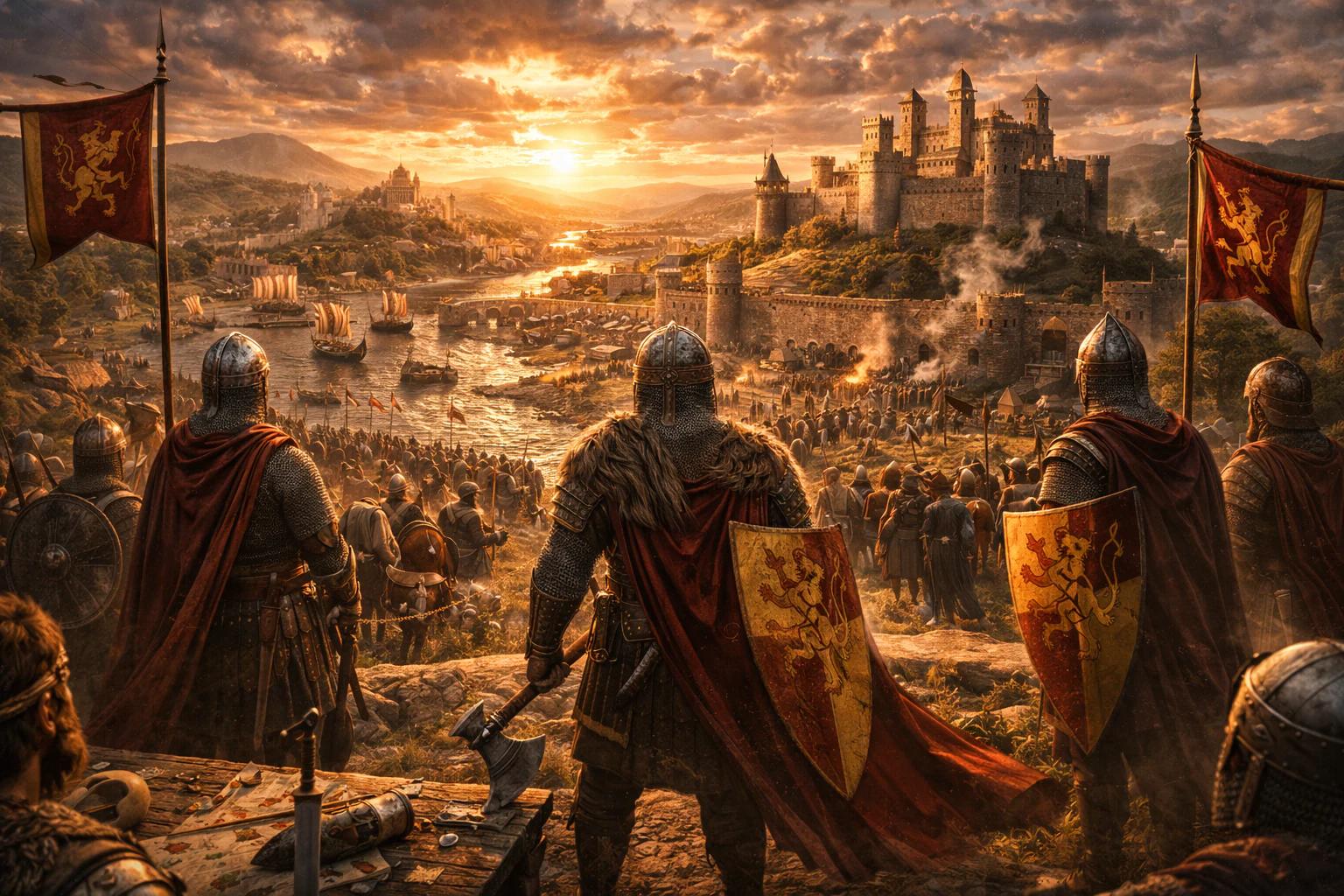
Historians call these lands the Angevin empire. They were a collection of territories with different customs and obligations, held together by a ruling family.
Henry restored royal authority after England’s civil war. In 1171, he also went to Ireland and established his position as lord over an expanding, contested English presence. Governing this scattered inheritance would demand constant travel, money and negotiation.
1170 CE
Step 2 of 101170 CEAccessible mode
The King’s Justice Meets Its Limits
Henry II made royal government stronger by bringing the king’s justice into more corners of the kingdom.
Travelling judges heard cases, royal officials kept records, and local juries helped report crimes and establish facts. These practices helped develop English common law: rules applied through royal courts across the realm.
Justice also increased royal power. It brought fees, influence and a greater ability to intervene in disputes that had once been settled elsewhere.
Henry’s conflict with Thomas Becket, Archbishop of , exposed that question. They disagreed over the relationship between royal and Church jurisdiction, including the treatment of clergy accused of crimes.
In December 1170, four knights murdered Becket in Cathedral. The killing damaged Henry’s reputation and made Becket a celebrated martyr. Henry later performed public penance. A stronger monarchy still had to reckon with religious authority and public judgement.
1191 CE
Step 3 of 101191 CEAccessible mode
Richard’s Glory Comes at a Price
Richard I became famous as a warrior king. Much of his reign was spent fighting beyond England.
He succeeded Henry II in 1189 after joining the rebellion against his father. The family’s wealth and military strength passed into another pair of ambitious hands.
Richard joined the Third Crusade and fought Saladin’s forces in the eastern Mediterranean. He helped secure coastal positions and access for pilgrims, but he did not recover Jerusalem.
Returning from the crusade, Richard was captured in 1192. Raising his enormous ransom placed a heavy burden on England and the dynasty’s other lands. Eleanor helped organise his release, while his brother John manoeuvred for power.
Once free, Richard fought to defend his French possessions. His death during a siege in 1199 left John with a contested inheritance and a dangerous rival in the French king.
1215 CE
Step 4 of 101215 CEAccessible mode
John Is Forced to Accept Magna Carta
By 1215, King John’s demands had pushed many of his leading subjects into rebellion.
John had lost Normandy to Philip II of France in 1204. His attempts to recover the family’s continental lands required money, and his government pressed hard on fees, fines and military obligations.
After another failed campaign in 1214, rebel barons confronted the king. At in June 1215, John agreed to the charter later known as Magna Carta. It was authenticated by a seal, not his signature.
The charter addressed particular grievances and protected the rights of the Church and some subjects. It was not a promise of equal rights or democracy for everyone.
The settlement soon collapsed into civil war. Yet revised versions survived under John’s successors. A failed peace agreement became an enduring reference point for arguments about lawful government.
1265 CE
Step 5 of 101265 CEAccessible mode
Henry III’s Troubles Help Parliament Grow
Henry III inherited the crown as a child. His long reign showed how difficult it could be to rule without the confidence of the kingdom’s leading men.
The monarchy survived the civil war left by John. But Henry’s spending, foreign commitments and choice of advisers later brought renewed conflict with the barons.
In 1258, reformers demanded controls over royal government. The dispute eventually led to armed conflict. At Lewes in 1264, forces led by Simon de Montfort overcame the king's army.
The following year, de Montfort called an assembly that brought together nobles and clergy with knights chosen from the shires and men from selected towns. This Parliament helped establish an important precedent for representation.
De Montfort was killed at Evesham later that year, and royal authority recovered. Parliament’s growth continued under later rulers, especially when kings needed consent for taxation. Its beginnings lay in bargaining and conflict, not universal voting rights.
1283 CE
Step 6 of 101283 CEAccessible mode
Edward I Extends the Crown’s Reach
Edward I used law, armies and castles to make royal authority harder to resist.
He succeeded Henry III in 1272. His government issued major laws and drew on Parliament to support the demands of rule and war.
In Wales, campaigns ended the independent rule of the princes of Gwynedd in 1282–83. Edward built castles and fortified towns to secure the conquest. Their walls expressed power, but they also depended on labour, supply and money.
Edward also tried to impose his authority in Scotland. Scottish resistance outlasted him. His son Edward II suffered a major defeat at in 1314.
Royal power could be destructive at home as well. Edward I expelled England’s Jewish communities in 1290 after decades of persecution and restrictions. His reign strengthened institutions while inflicting lasting harm on those they excluded.
1337 CE
Step 7 of 101337 CEAccessible mode
Edward III Takes the Struggle to France
Edward III turned a troubled inheritance into an ambitious challenge to the French crown.
His father, Edward II, had been removed in 1327. Edward III took personal control of government in 1330 and rebuilt the prestige of the monarchy.
Disputes over English-held lands in France combined with rival claims to the French succession. Open war began in 1337. Edward later asserted his claim to be king of France.
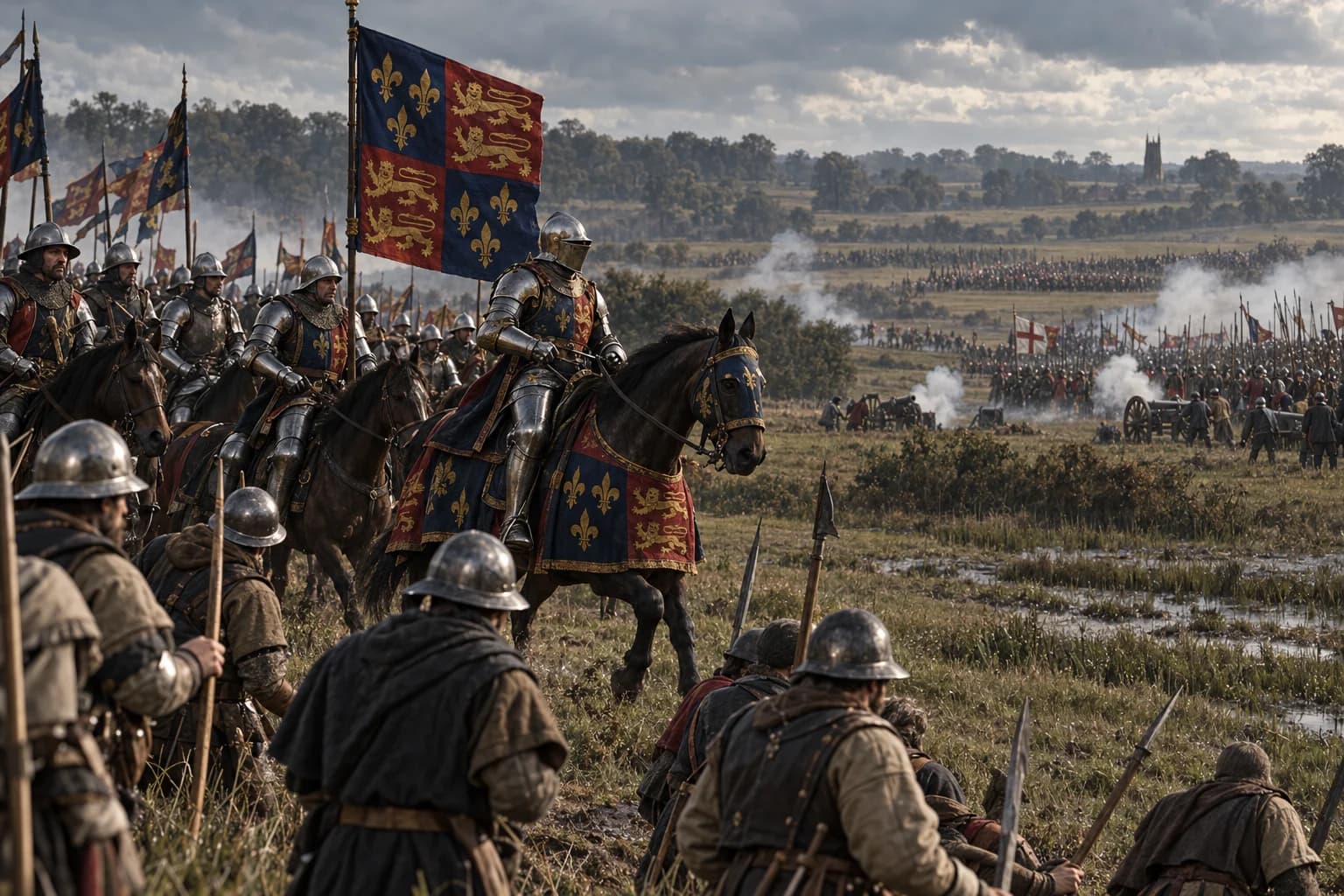
in 1346, the capture of Calais in 1347 and the Black Prince’s victory at Poitiers in 1356 brought wealth and military fame. They also demanded armies, taxation and repeated negotiation at home.
The struggle became the Hundred Years War. French recovery showed that Plantagenet victories did not guarantee lasting control. Edward’s many sons also founded powerful family branches whose descendants would eventually compete for England’s throne.
1348 CE
Step 8 of 101348 CEAccessible mode
Plague Changes the Balance of Daily Life
In 1348, the Black Death reached England. No royal army or law could keep the old world intact.
The plague killed on a devastating scale. Families, villages, towns and religious communities lost people on whom their daily work depended.
The shortage of labour gave some who survived greater bargaining power over their pay and conditions. Landowners and royal government tried to hold labour to older obligations and rates of pay.
The Statute of Labourers of 1351 attempted to restrict wages and movement. Later taxes for war added to resentment. In 1381, rebels from several regions entered London and demanded major changes.
Richard II’s government suppressed the revolt and withdrew concessions. Yet the pressures behind it endured. The Plantagenet story was being reshaped by ordinary people’s work and expectations as well as by the decisions of kings.
1399 CE
Step 9 of 101399 CEAccessible mode
Richard II’s Fall Opens a New Divide
In 1399, a Plantagenet king lost his throne to a cousin. The family still ruled, but its succession had become more dangerous.
Richard II had quarrelled with powerful nobles and tried to make his authority harder to challenge. When he confiscated the Lancaster inheritance after John of Gaunt’s death, he pushed Henry Bolingbroke towards open resistance.
Bolingbroke returned from exile, gathered support and deposed Richard. He became Henry IV, the first Lancastrian king. Richard died in captivity in 1400.
Henry V strengthened Lancaster’s reputation with victory at Agincourt in 1415. The Treaty of Troyes in 1420 recognised him as heir to the French throne, but he died before inheriting it.
His infant son Henry VI received an immense burden. French resistance recovered, English possessions were lost, and weakness at the centre gave rival nobles room to compete.
1485 CE
Step 10 of 101485 CEAccessible mode
The Divided Dynasty Reaches Bosworth
The Wars of the Roses were a struggle within the Plantagenet family. Lancaster and York were rival branches of the same dynasty.
Civil war broke out in 1455. Edward IV took the crown for York in 1461, lost it briefly, and recovered it in 1471. Henry VI died in the Tower soon after the Lancastrian defeat.
Edward IV’s death in 1483 left his young son Edward V as king. Richard, the boy’s uncle, took the throne as Richard III.Edward V and his brother disappeared from public view; their fate remains unresolved.
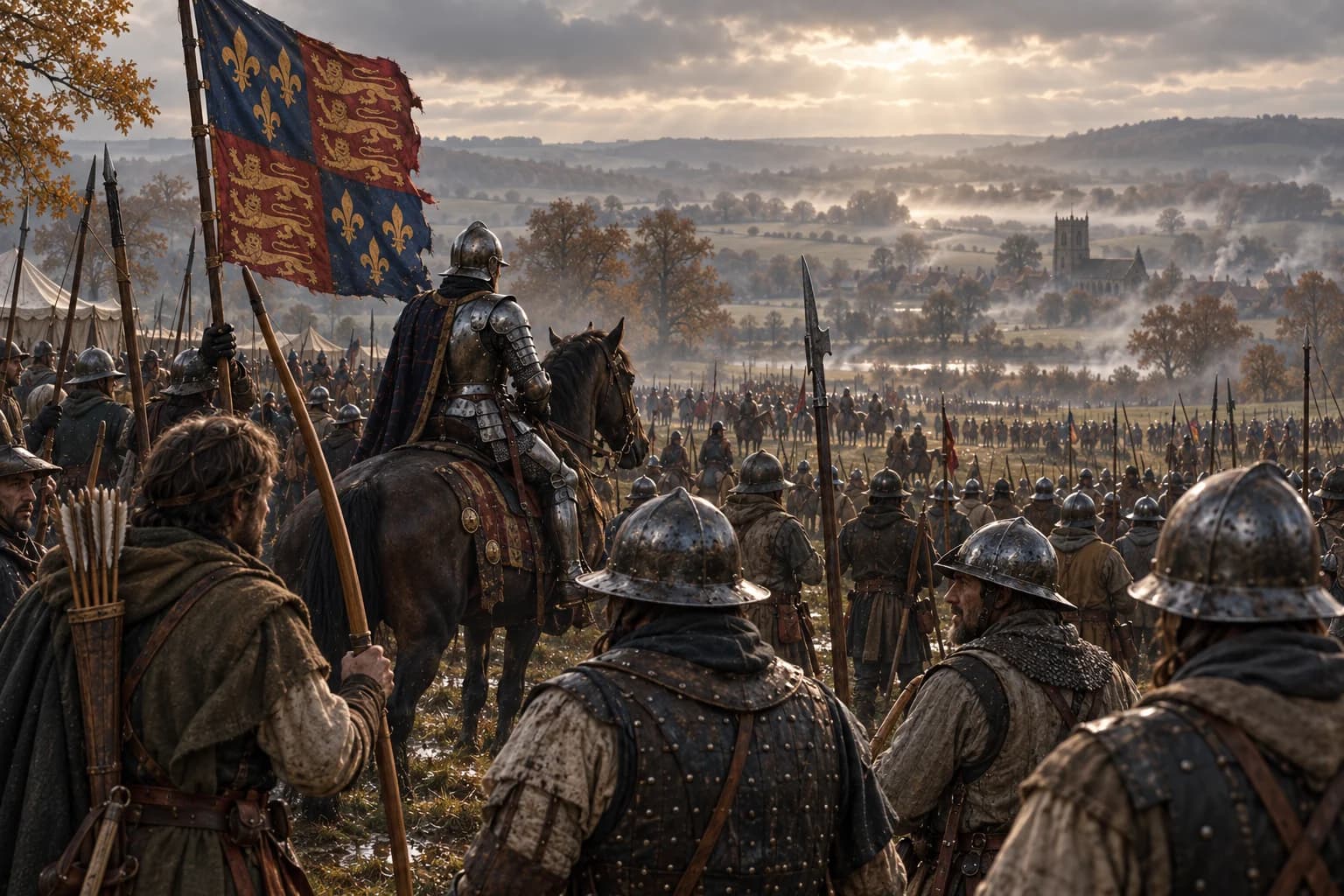
ended Plantagenet rule, not every family claim. The dynasty left royal courts, parliamentary traditions and a kingdom changed by war and plague. Its institutions endured longer than its ability to agree who should inherit them.
Keep exploring
Finished The Plantagenets?
Choose the next story, follow a connected moment, or explore the people behind this story.