Accessible gives a lighter overview. Deep Dive tells the fuller story.
Quick Answers
What was the Norman Conquest of England?
The Norman Conquest was William of ’s takeover of England, beginning with his invasion and victory at in 1066. Years of resistance and campaigning followed. Norman rule replaced much of the English elite, redistributed estates, and spread castles, while making use of the kingdom’s existing royal institutions.
At a glance
Story range: c. 911 to 1135, including Norman origins and the conquest’s aftermath. The invasion of England began in 1066.
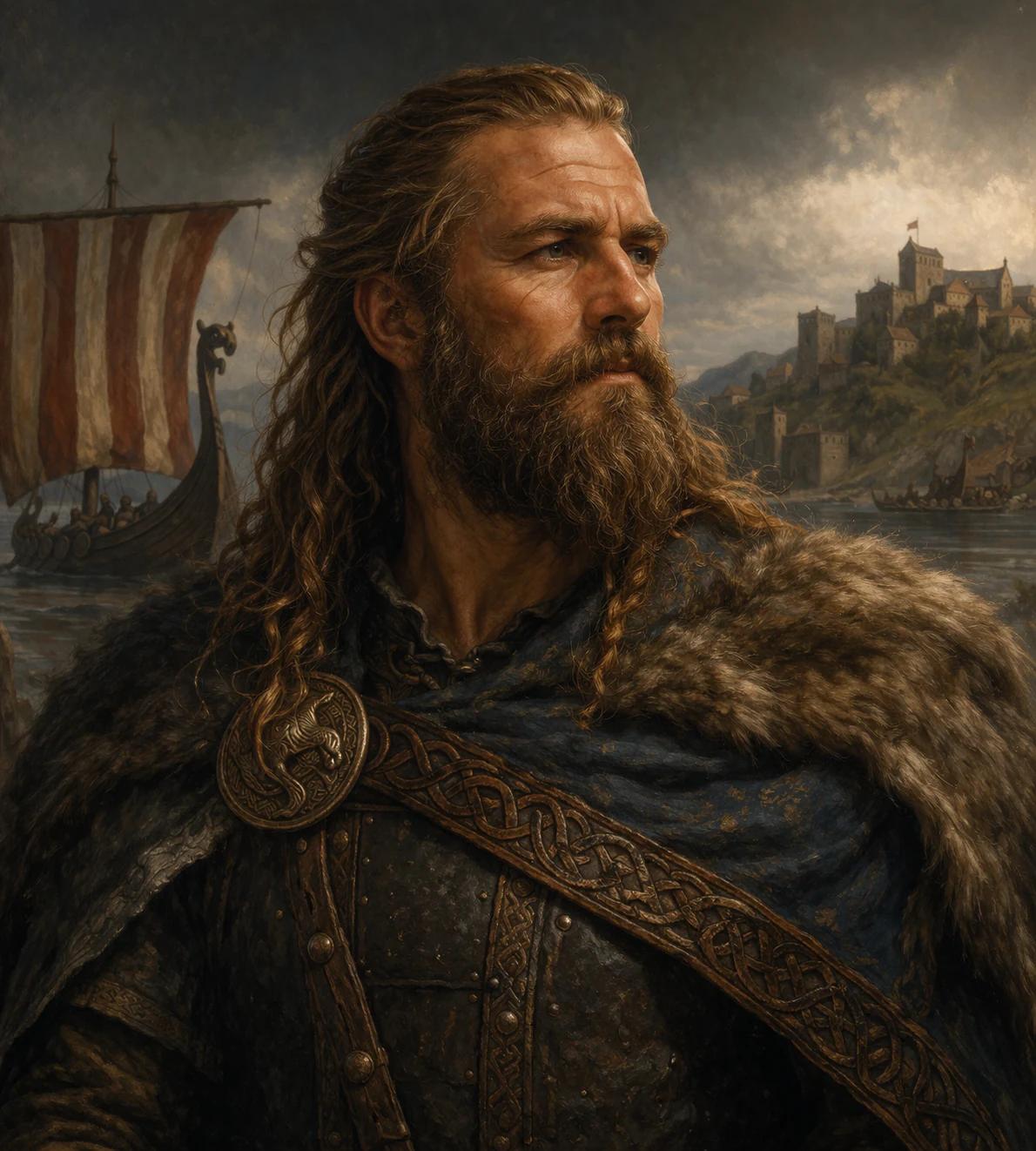
From Viking settlers to conquerors, the Normans reshaped England, Italy, and the medieval Mediterranean.
Norman society developed through Scandinavian settlement and adaptation in northern France; separate families later ruled in England and the Mediterranean.
William’s victory in 1066 transformed England’s monarchy, land ownership, and ruling class.
William claimed Edward had promised him the throne and Harold had sworn to support him. Those promises are disputed, but they formed part of his justification for invasion after Harold became king.
Who fought at the Battle of Hastings?
William’s invading army fought Harold Godwinson’s English army on 14 October 1066. Harold was killed. William secured his coronation that December, and further resistance followed.
How did the Normans change England?
They replaced much of the English elite, redistributed estates, built castles, and increased the crown’s ties to . They also retained and adapted established English institutions, including shires, officials, and royal taxation.
Context
Introduction
Overview
The Norman Conquest of England began with William of ’s victory at in 1066, but securing the kingdom took years. Norman rule replaced much of the English elite, reshaped landholding, and tied the crown more closely to .Castles,Domesday Book, and French-speaking lords marked a profound change, built partly on the strong government the conquerors inherited.
William’s victory in 1066 transformed England’s monarchy, land ownership, and ruling class.
Castle-building was central to Norman control, helping them dominate territory and suppress resistance.
England and became closely linked, while separate Norman dynasties built power in the Mediterranean.
911 CE
Step 1 of 10911 CEAccessible mode
The Making of Normandy
A settlement traditionally dated to 911 gave Rollo and his followers land in northern France. It was a beginning, not the creation of all at once.
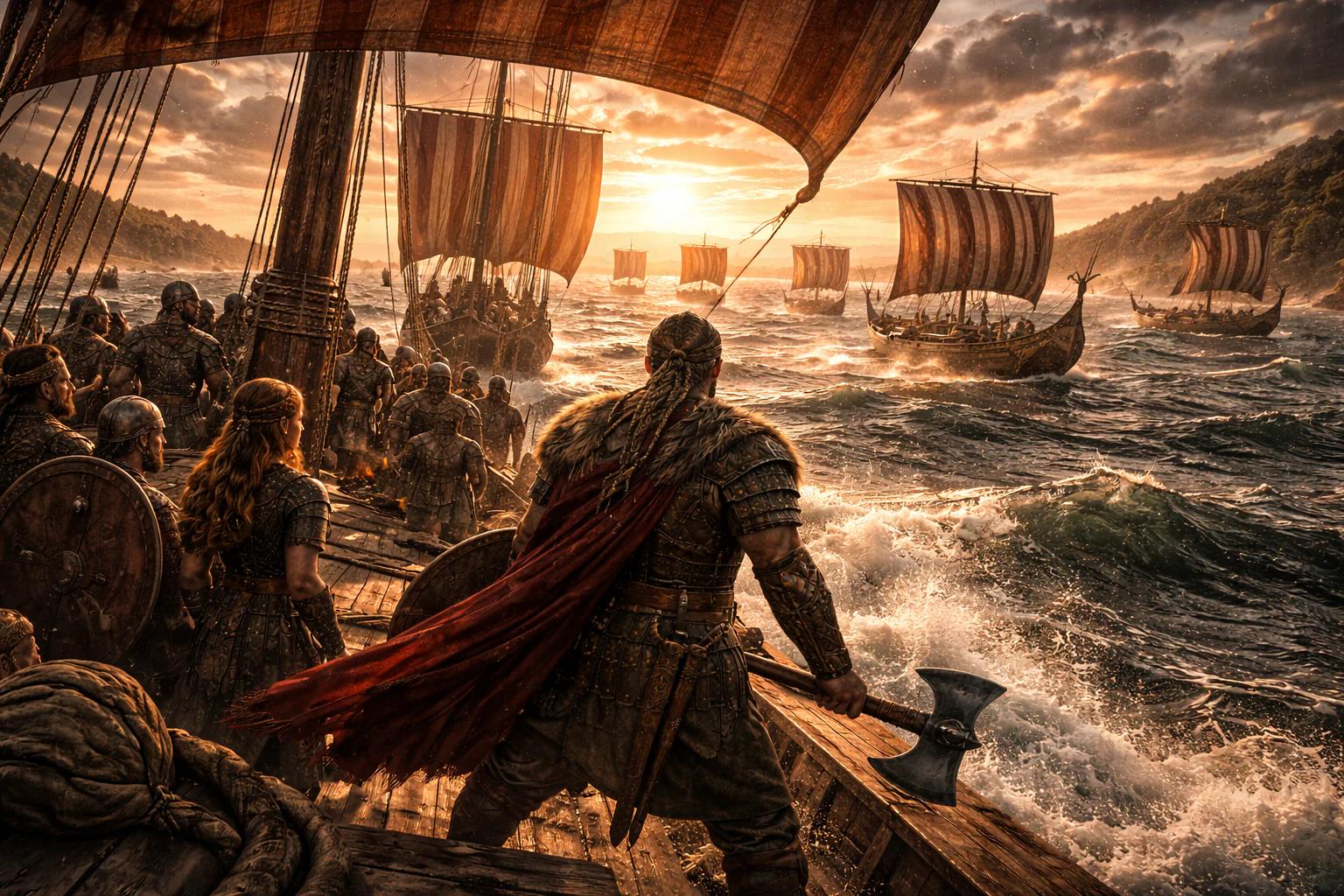
For years, Viking raiders attacked the lands of the Frankish kings. They sailed up rivers, struck towns, and then vanished.
Rollo became a leading figure among the Scandinavians around the lower . Later accounts describe King Charles the Simple granting him land around in return for protection.
Rollo accepted Christianity, and his followers settled among local people. Over generations, their descendants adopted the local language and many customs. The territory they ruled also grew.
This changed daily life. The violence did not vanish at once, but the newcomers became landholders, rulers, and soldiers tied to local society.
later produced Duke William, who conquered England in 1066. This step shows how a settlement can reshape both a people and a kingdom.
1047 CE
Step 2 of 101047 CEAccessible mode
Ducal Power Takes Shape
was not always strong. Young Duke William had to fight to stay in power.
William became duke as a child in 1035. Rival nobles and struggles over castles made his position dangerous, and several of those protecting him were killed.
This began to change when William, still young, faced a major rebellion. He needed allies and strong leadership to survive.
At the , William and his ally, the King of France, defeated the rebellious lords. This victory helped William take real control.
Victory strengthened William’s position, but it did not end every challenge. He still had to manage powerful nobles, reward supporters, and defend his duchy.
His former ally, KingHenry I of France, later turned against him. Through conflict and alliances, William built relationships that would help him assemble an invasion force.
1066 CE
Step 3 of 101066 CEAccessible mode
Edward’s Death Sparks a Crisis
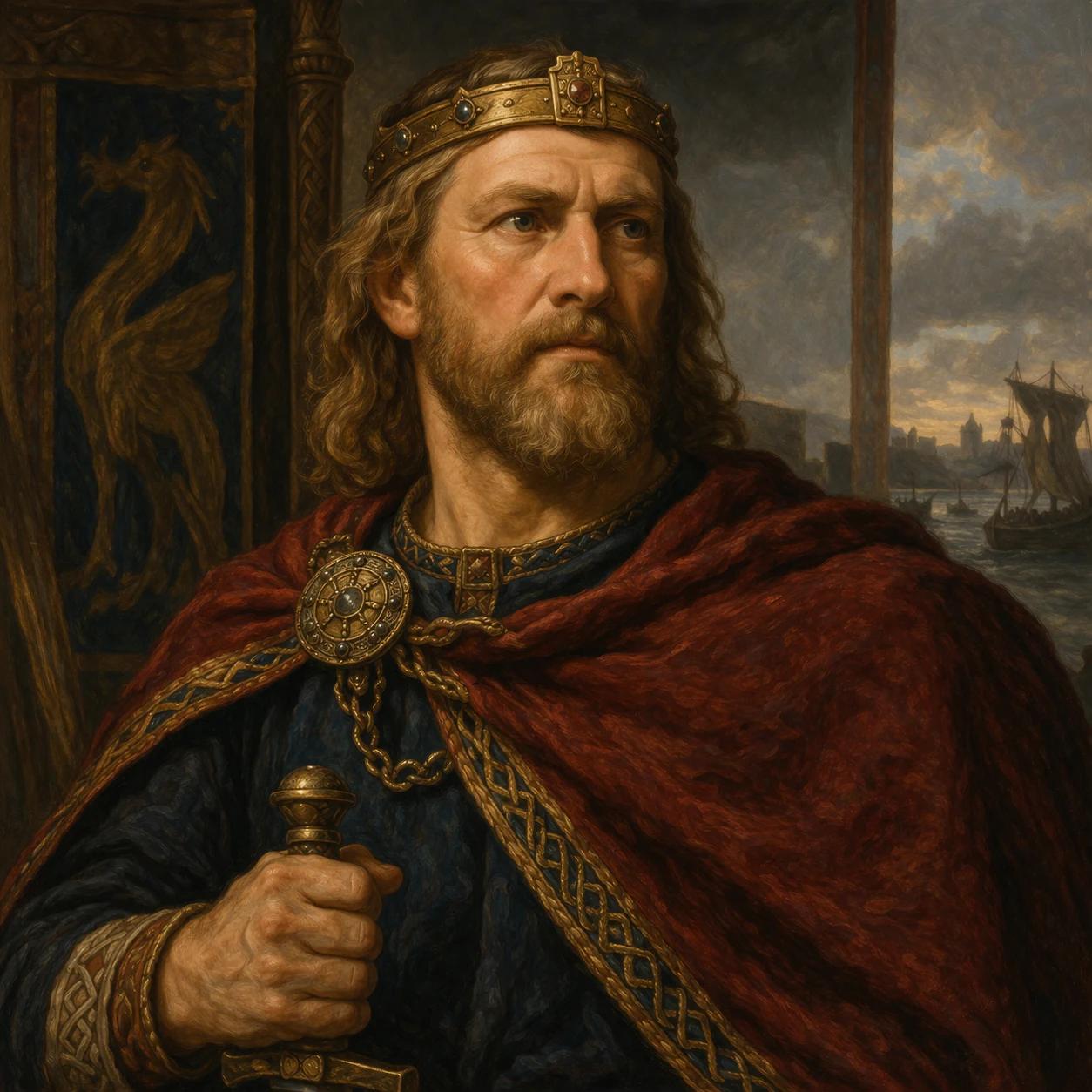
When Edward the Confessor died on 5 January 1066, he left no children to succeed him. Harold became king the next day, but powerful rivals challenged his right to rule.
Before Edward died, England was rich, organized, and well connected across . Its throne was not just important to English nobles. Powerful rulers abroad were watching too.
Harold Godwinson, England’s strongest earl, was chosen king. Across , William of believed the crown should be his. He maintained that Edward had named him as successor and that Harold had pledged his support. These promises are disputed. Harald Hardrada of Norway also invaded, backed by Harold’s exiled brother Tostig.
The claims drew England into a struggle across and . A young member of the old royal family, Edgar the Aetheling, also had a claim by descent, though he was passed over in January.
For communities called on to supply men, ships, and food, the danger became immediate. Harold had to prepare for invasion while trying to hold the kingdom together.
This crisis helps explain why 1066 changed England so deeply. The battle was not only about one crown. It tied England’s future to the wider politics of Europe.
1066 CE
Step 4 of 101066 CEAccessible mode
The Battle of Hastings
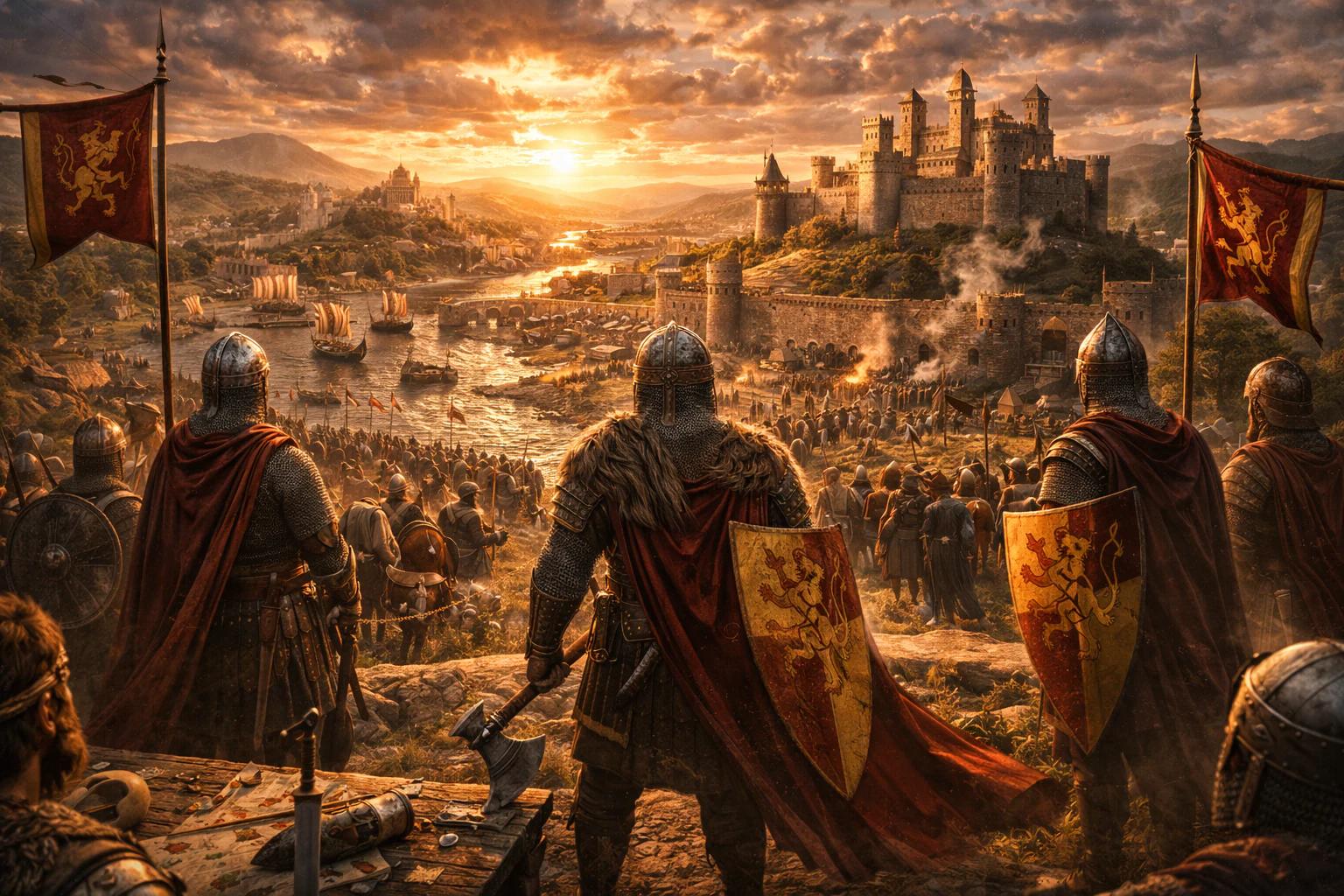
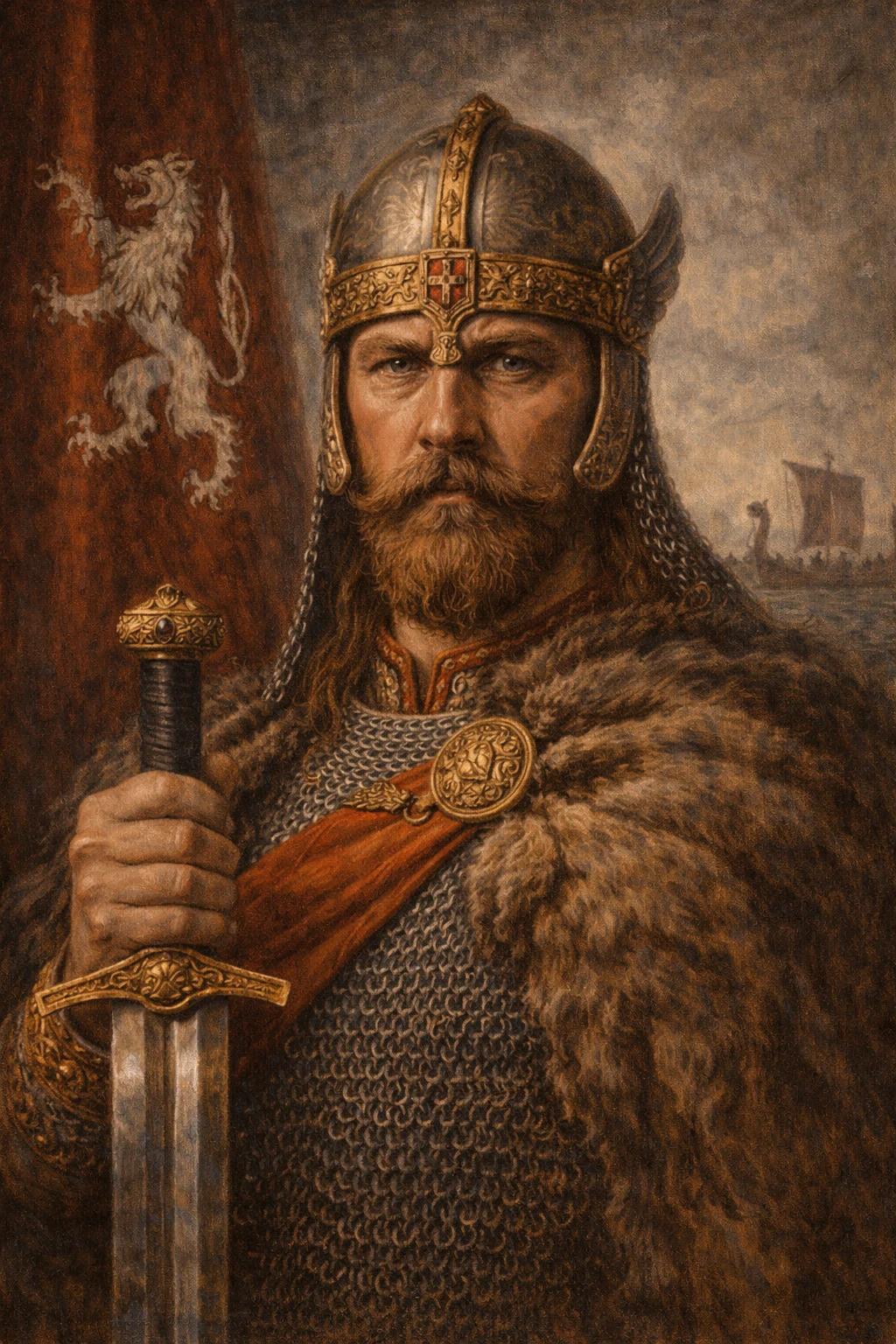
On 14 October 1066, two armies fought near the place now called Battle. William won the day, but he had not yet secured England.
Harold had defeated Harald Hardrada at on 25 September. He then returned south and gathered more troops. We do not know how many men fought in both battles or exactly how they travelled.
William landed at Pevensey on 28 September. His army brought cavalry, archers, and infantry. Harold now faced another invasion, this time on the south coast.
Harold’s men defended high ground behind a shield wall. William’s troops attacked repeatedly. Norman accounts describe retreats that drew some English fighters away from their position, though the battle’s details remain debated.
By evening, Harold was dead and his army was broken. Edgar the Aetheling became a focus for resistance, and William still had to force England’s leaders to submit.
This battle changed everything. It opened the door for Norman rule, reshaping England’s language, power, and culture in ways still felt today.
1066 CE
Step 5 of 101066 CEAccessible mode
William Secures England
Winning one battle was not enough. William still had to turn victory into control.
After , England did not instantly become Norman. was still outside William’s hands, and important English nobles still had choices to make.
William marched through southern England instead of rushing straight into . He burned and threatened where needed, but he also showed that resisting him would only bring more loss.
Key churchmen and nobles finally gave in. Edgar the Aetheling, Earls Edwin and Morcar, and Archbishop Stigand submitted as William closed in on the capital.
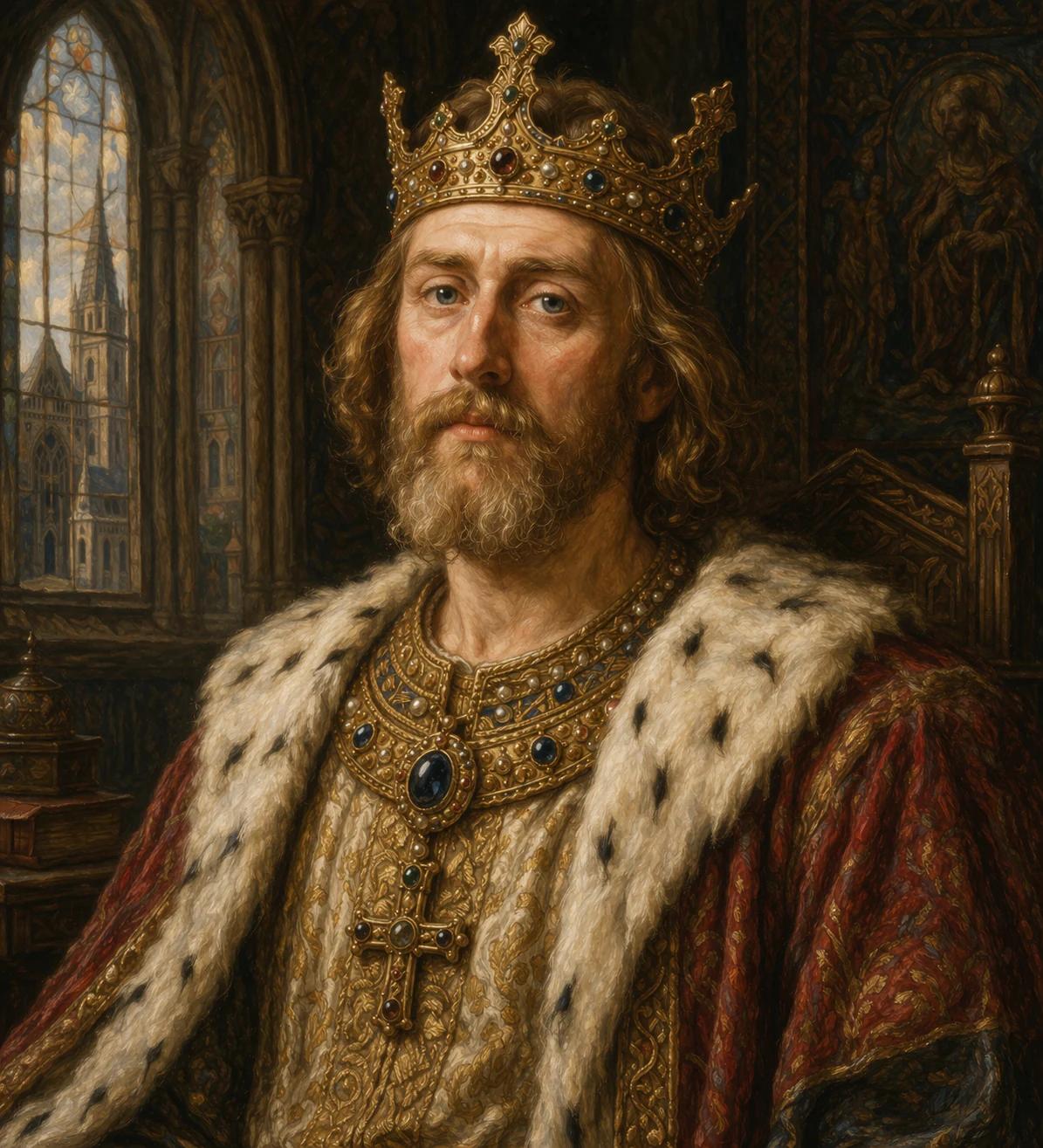
On Christmas Day 1066, William was crowned king in Westminster Abbey. That ceremony turned a foreign invasion into a new monarchy people now had to live under.
This is why the Norman Conquest shaped England so deeply. It was not only about a battle, but about who held power, land, and the crown.
1069 CE
Step 6 of 101069 CEAccessible mode
Castles and Resistance
England did not quietly accept Norman rule. In 1069, William still had to fight to hold the kingdom he had won.
After 1066, many English people, especially in the north, were angry, fearful, and ready to resist. Local leaders joined rebellions, and some even looked to Danish help.
William answered with force. He wanted to crush revolt fast and show that resistance would bring terrible consequences.
During the Harrying of the North in 1069–70, William’s forces destroyed homes, food stores, and livestock. Famine and displacement followed. The extent of the destruction and the number who died remain uncertain.
These castles were forts, warning signs, and power centers. Soldiers could control roads, collect taxes, and watch nearby towns from behind their walls.
This changed England for generations. The conquest was no longer just one battle. It became an occupation, and castles still show how rulers used violence and building to hold power.
1086 CE
Step 7 of 101086 CEAccessible mode
A New Feudal Order
Twenty years after , England looked very different. By 1086, Norman rule had been built into the way land, power, and government worked.
Before the conquest, English nobles held much of the land. After William’s victory, huge estates were taken from them and handed to Norman lords loyal to the king.
Land grants tied powerful followers to William through loyalty and service. But England already had royal officials, taxes, and local courts. The newcomers took over these tools as well as changing the people in charge.
William ordered the Domesday survey at Christmas 1085, and officials gathered its information in 1086. The surviving books record landholders, estates, resources, and values across much of England. They were not a complete census of its people.
For many villages, conquest brought a new lord and different demands. Much of the English elite lost its land. Farming and local customs often continued, though the consequences varied from place to place.
That new order shaped England for centuries. Ideas about land, taxation, records, and royal power still echo in how states track property and govern today.
1091 CE
Step 8 of 101091 CEAccessible mode
Norman Power Crosses Frontiers
England was only one part of the Norman story. Other families built their own power in southern Italy and Sicily.
Norman adventurers had reached southern Italy before 1066. Some first served as hired soldiers, then gained lands and lordships of their own.
Roger I and Robert Guiscard began the conquest of Sicily in 1061. It was largely completed by 1091. Roger II later united southern territories as a kingdom in 1130, separate from England.
Southern Norman rulers dealt with popes and fought Byzantine forces. In Sicily, Latin Christian rulers governed communities that included Muslims and Greek Christians.
Buildings and court culture drew on these different traditions. That mixing did not make conquest peaceful or give every community equal power.
England already had links across Europe before 1066. The new rulers changed those connections, while other Norman dynasties followed different paths in the Mediterranean.
1100 CE
Step 9 of 101100 CEAccessible mode
Kingdoms Become Connected
After William died in 1087, different sons ruled England and . Shared estates and family rivalry kept politics moving across .
England already had strong royal government before 1066, with shires, courts, taxes, and written orders. Norman kings inherited much of that machinery.
Robert received and William Rufus became king of England. Henry became king in 1100 and conquered from Robert in 1106. Family connections brought conflict as well as cooperation.
Kings used English officials, courts, and revenues to govern at home and support campaigns abroad. Holding England and did not make either territory free of powerful opponents.
Everyday life slowly changed too. Normancastles, French speech, and new church styles mixed with English law, farming, and local habits.
That blend helped shape the English monarchy, legal system, and language. It is one reason England developed with strong links to both the British Isles and continental Europe.
1135 CE
Step 10 of 101135 CEAccessible mode
The Norman Legacy Endures
Long after the battles ended, the Normans kept shaping England. Their influence did not fade with time.
Before 1066, England already had a strong monarchy, taxes, local courts, and royal officials. Norman rulers inherited those foundations while replacing much of the elite.
They built castles in earth, timber, and stone, granted estates to followers, and sponsored churches and monasteries. These changes made conquest visible across the country.
By Henry I’s death in 1135, many changes had taken root. Yet the succession was disputed: Stephen took the crown claimed by Henry’s daughter Matilda. Lasting institutions did not guarantee peaceful rule.
For ordinary people, the effects varied. Some faced dispossession, violence, and new demands, while much farming and local life continued. The conquest’s legacy included both change and survival.
Traces remain in language, buildings, and government. English law kept developing afterwards, with major common-law reforms coming under Henry II, whose reign began in 1154.
Keep exploring
Finished The Norman Conquest of England?
Choose the next story, follow a connected moment, or explore the people behind this story.