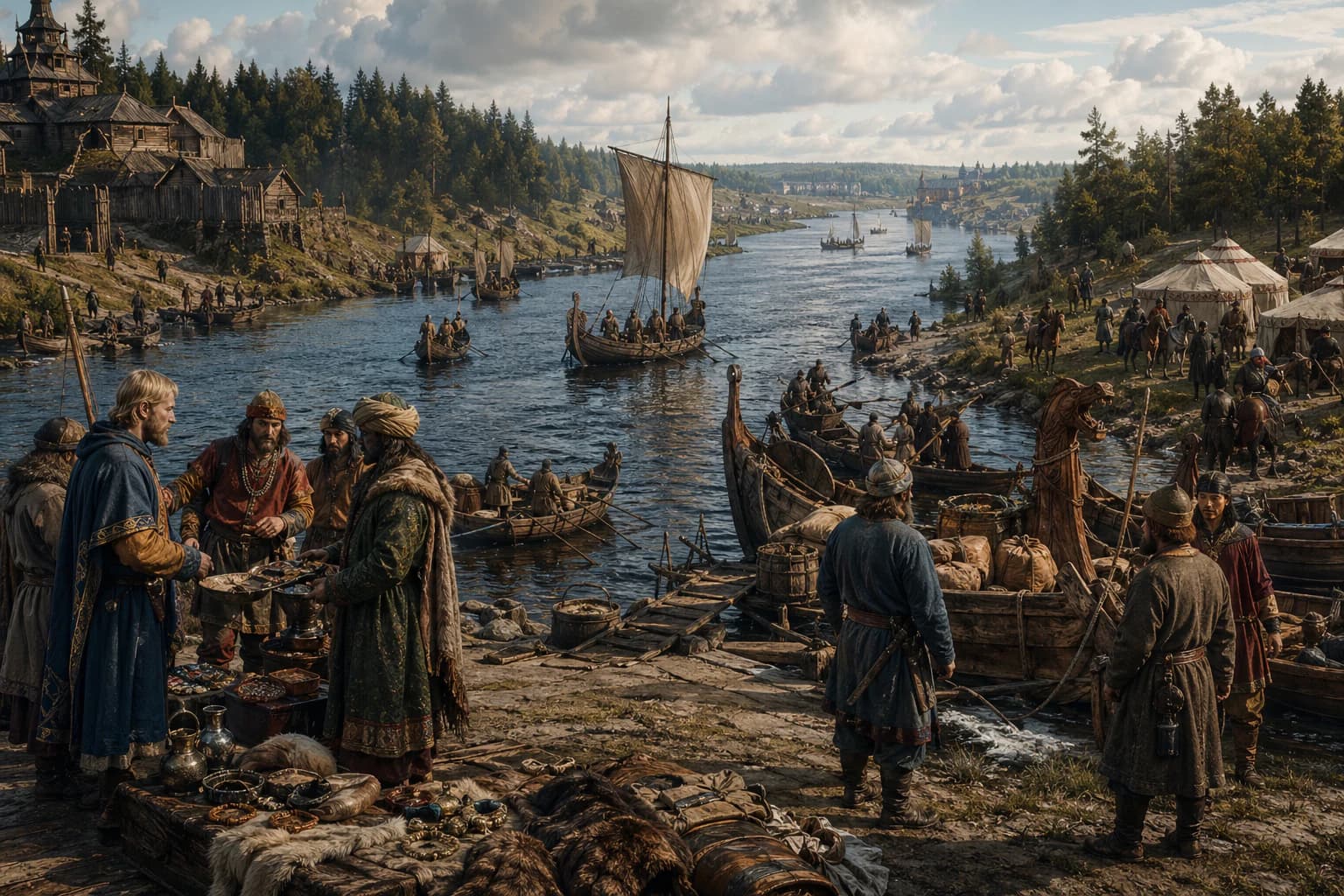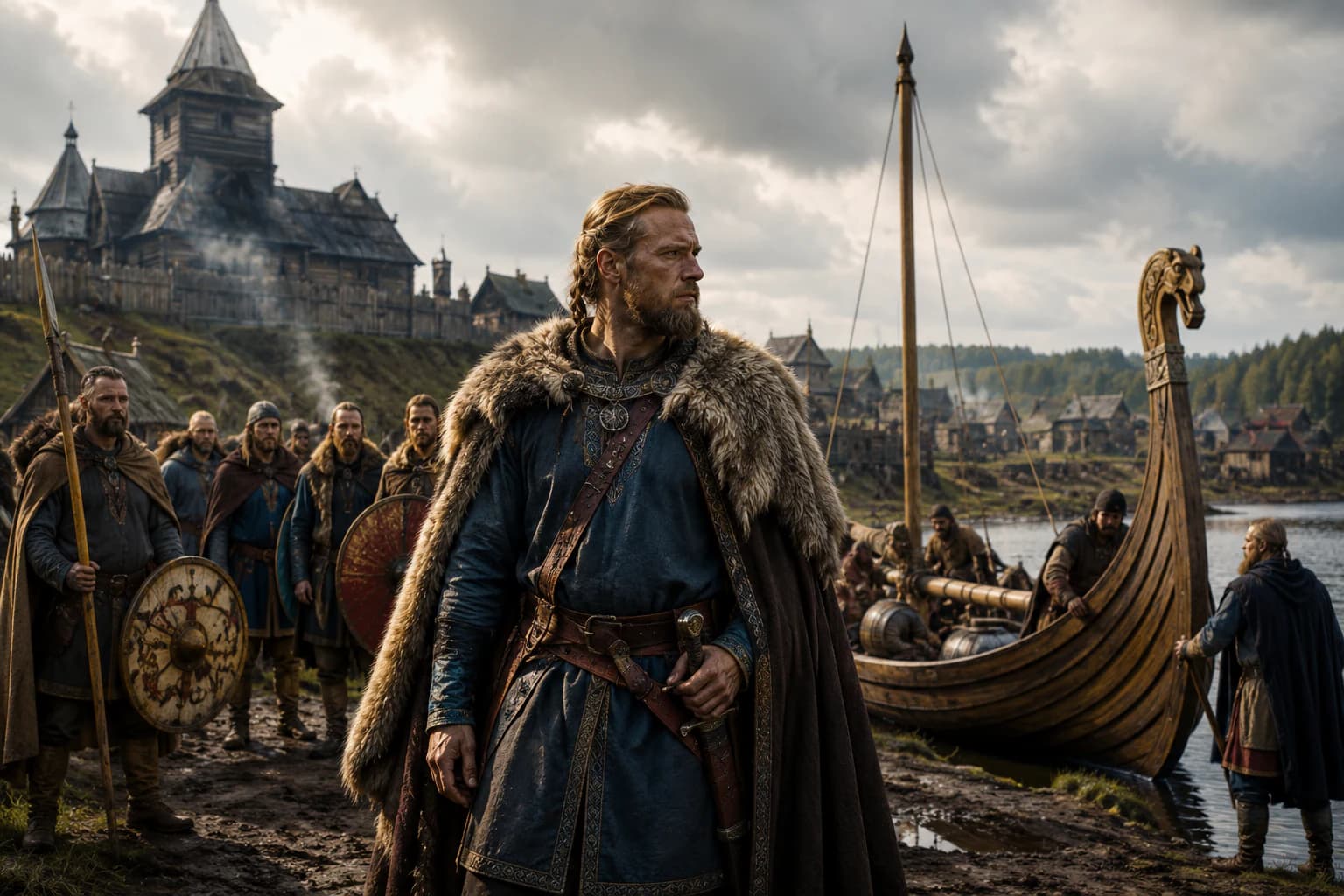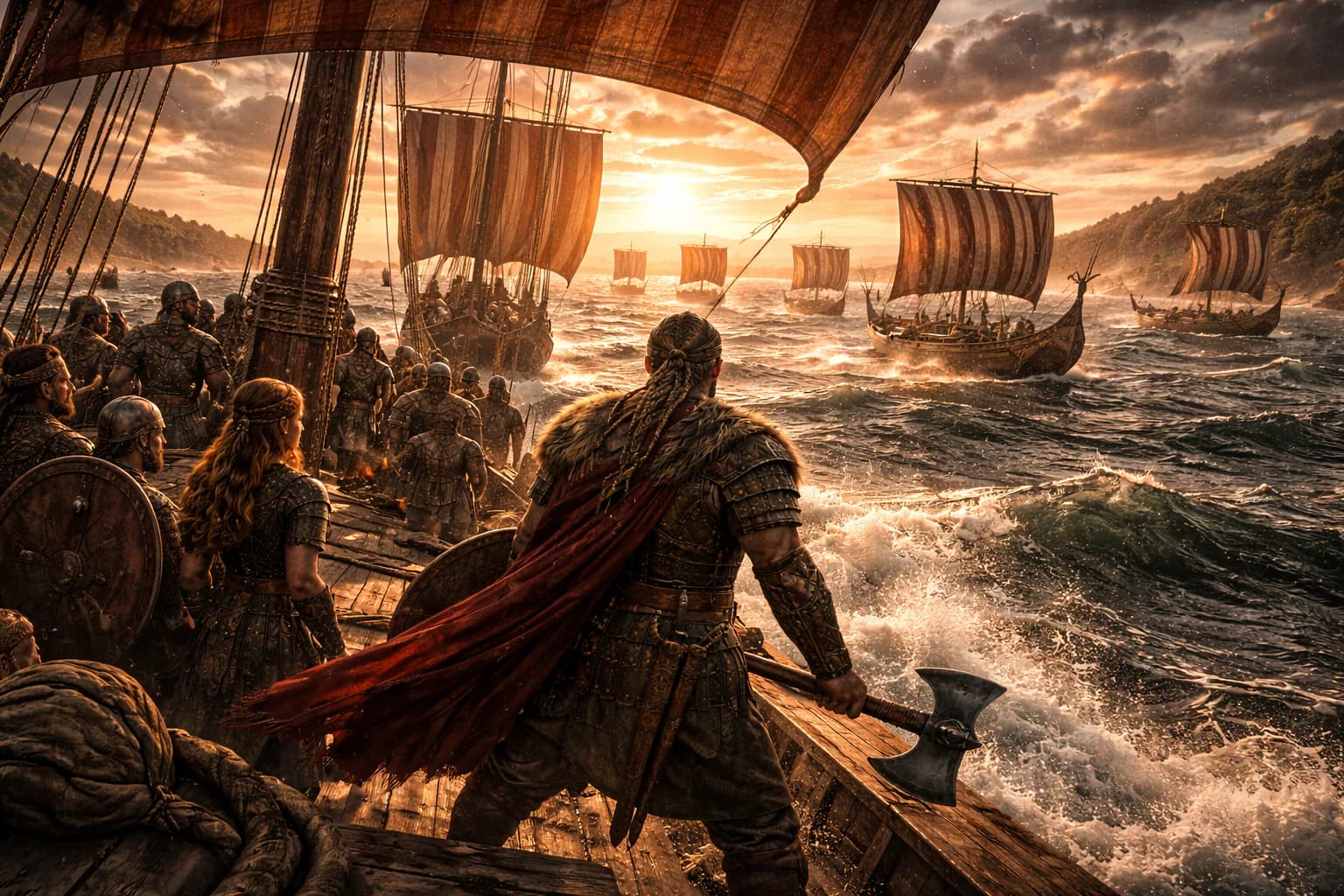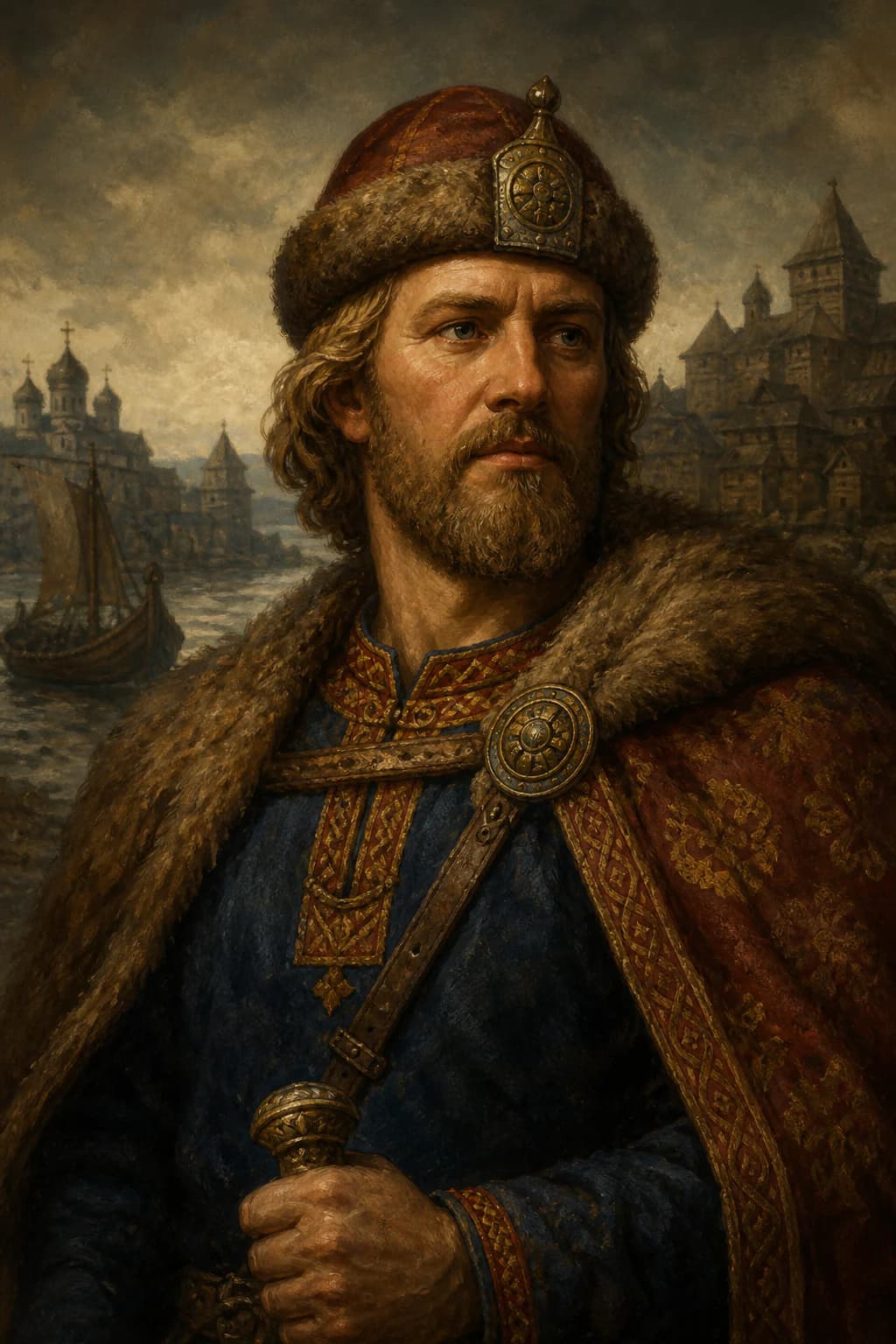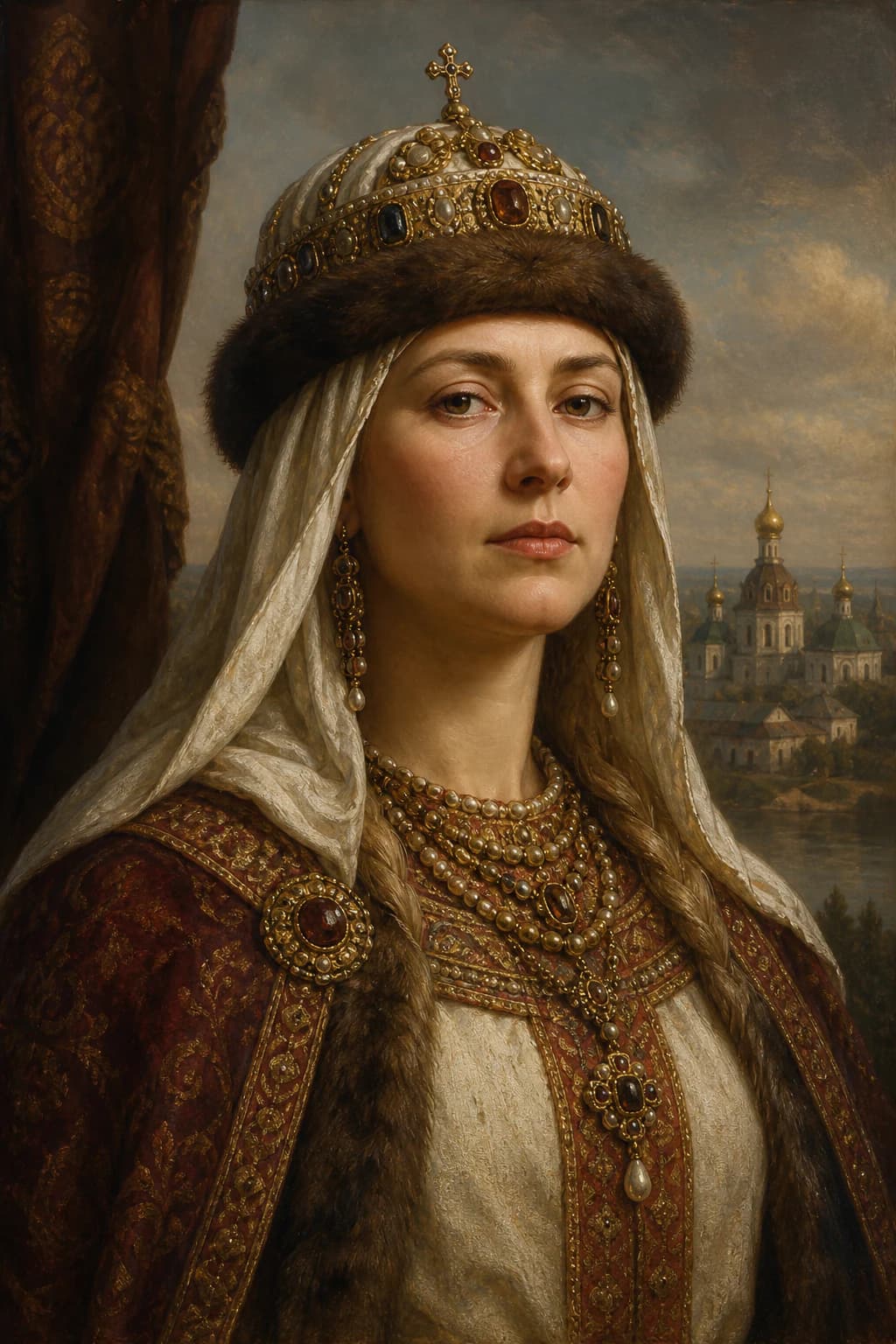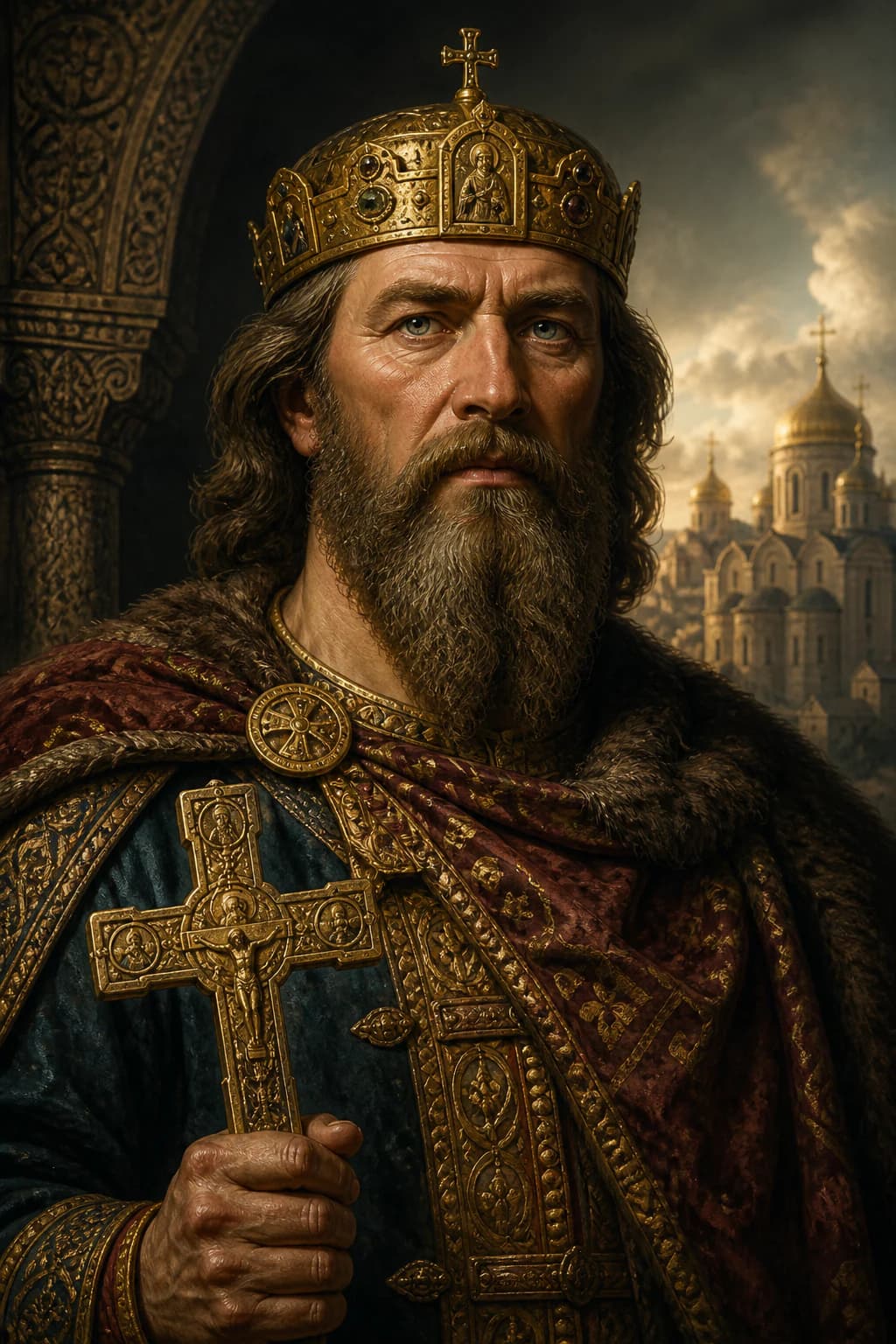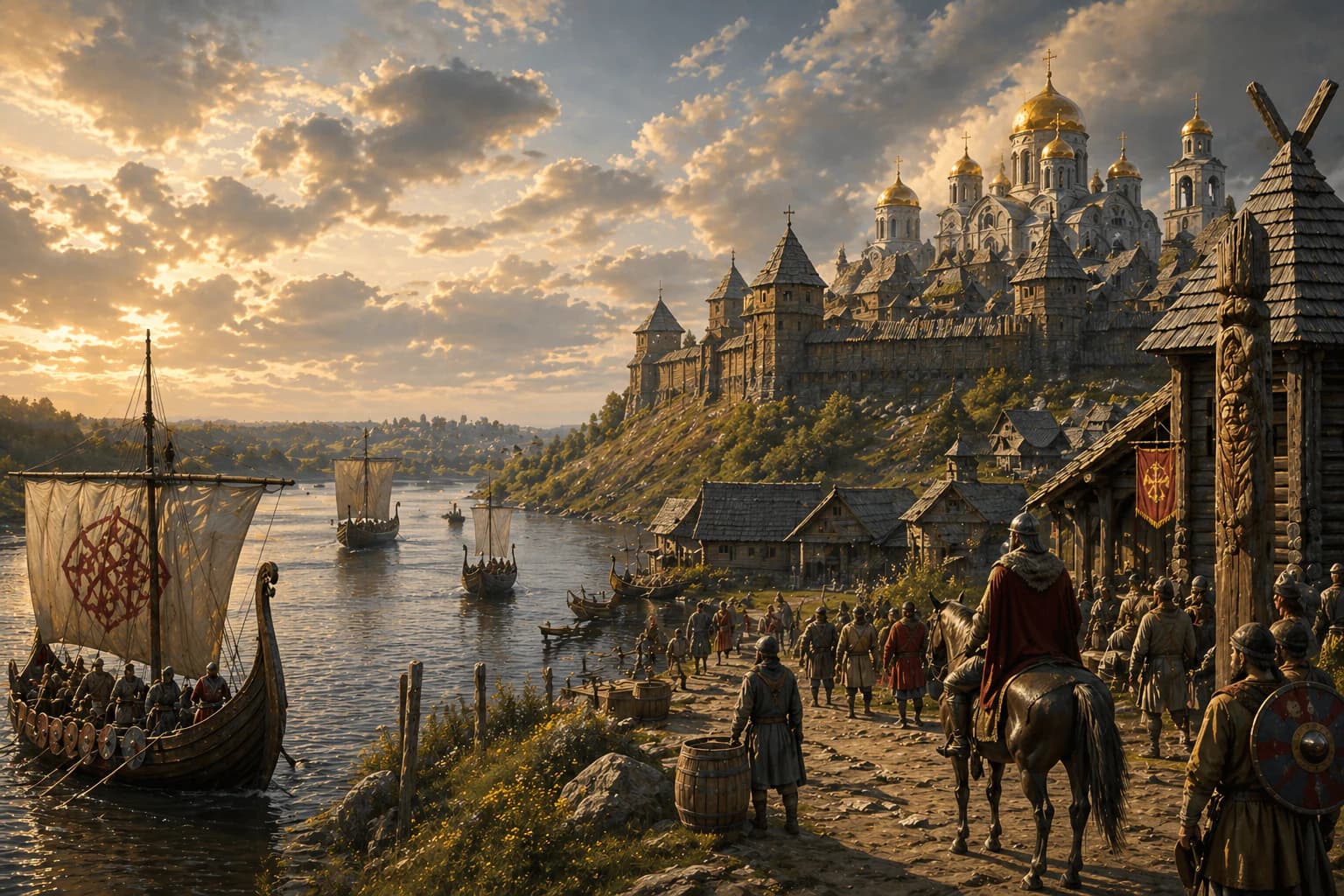
River traders, wooden strongholds and domed churches in the medieval world of Kievan Rus.
Premium Story

Kievan Rus

Trace Kievan Rus from river trade and Viking-linked rulers to Christian splendour and fragmentation.

Start the storyExplore Premium

11 chapters

Next
Context

Introduction

Overview

River routes linked the communities of eastern Europe to trade and power far beyond them. From those networks, Rus rulers built a state centred on and adopted Christianity from Byzantium. Its cities and dynasties flourished, but competing claims to authority eventually divided the realm.

What you'll learn: You will follow how river trade became political power, how rose through war and diplomacy, how Christianity transformed the Rus world, and why fragmentation left it vulnerable to Mongol conquest.

Key forces

River Roads of the Rus
750 CE
Step 1 of 10750 CEAccessible mode

River Roads of the Rus

Long before any kingdom existed, the rivers of eastern Europe were the highways that built the Rus world.

A network of rivers connected in the north to and in the south. Furs, honey, wax, and enslaved people moved one way. Silver and luxury goods moved the other.

Different peoples lived along these routes. Slavic farmers, Finnic hunters, Turkic nomads, and Scandinavian traders all met and overlapped in this space.

“Control the rivers and you controlled the wealth.”

Where rivers did not connect directly, goods had to be carried overland. These crossing points were naturally powerful places. The communities that controlled them could tax whatever passed through.

No single ruler dominated this world yet. But the rivers, the trade flows, and the mixing of peoples were quietly building the foundations for one to emerge.

The Varangian Arrival
862 CE
Step 2 of 10862 CEAccessible mode

The Varangian Arrival

Scandinavian leaders known as Varangians brought new authority to the river towns of the north — and set a dynasty in motion.

Around 862, according to the oldest Rus chronicles, a Varangian leader named Rurik was invited to rule in and around . Whether or not every detail is accurate, it reflects a real process: Scandinavian-linked leaders were taking control of key northern trading centres.

sat at the heart of a remarkable web of rivers. Whoever ruled it could manage the flow of goods between the and the deeper river routes to the south.

“The Vikings didn't just raid here. They settled, traded, and ruled.”

Rurik and the Varangians were outsiders, but useful ones. They could protect trade and enforce order along routes where wealth moved constantly and peacekeeping mattered.

This northern base of power was the starting point for everything that followed. The Rus polity did not begin in . It began in the forests and river towns of the north.

Premium2 of 10 chapters read

Oleg Takes Kiev

From the river networks of eastern Europe to the golden domes of Kiev, Kievan Rus rose from scattered trading powers into a major Christian state — before fracturing into competing principalities.

Continue the story with Premium

Coming next

  1. Chapter 3Oleg Takes Kiev
  2. Chapter 4War and Treaty with Byzantium
  3. Chapter 5Olga's Reform of Tribute

And 5 more chapters to follow.

Explore connected stories

Follow the connected history

Explore closely connected stories and free figure profiles. Premium stories open with a public preview.

Unlock full storyBrowse stories

References

Sources & Further Reading

Reliable sources, primary-source collections and reading paths connected to this page.

Sources used

  1. Encyclopaedia Britannica, “Kievan Rus,” Open source
  2. Harvard Ukrainian Research Institute, “Resources on Ukrainian history,” Open source

Further reading

  1. Simon Franklin and Jonathan Shepard, The Emergence of Rus 750-1200, Longman.

Primary sources

  1. Fordham University, “The Russian Primary Chronicle,” Open source

Reviewed claim sources

Loading reviewed claim sources...

A monthly route through history

Find out first about the latest published stories, feature notes and occasional Premium offers in one monthly email.