← People

Rurik

Rurik was a ninth-century Varangian ruler traditionally credited with founding the Rurik dynasty, the ruling house of Kievan Rus and later medieval Rus principalities.

Born
830 CE
Died
879 CE
Role
Varangian ruler and traditional founder of the Rurik dynasty

Varangian ruler and traditional founder of the Rurik dynasty (c. 830-879)

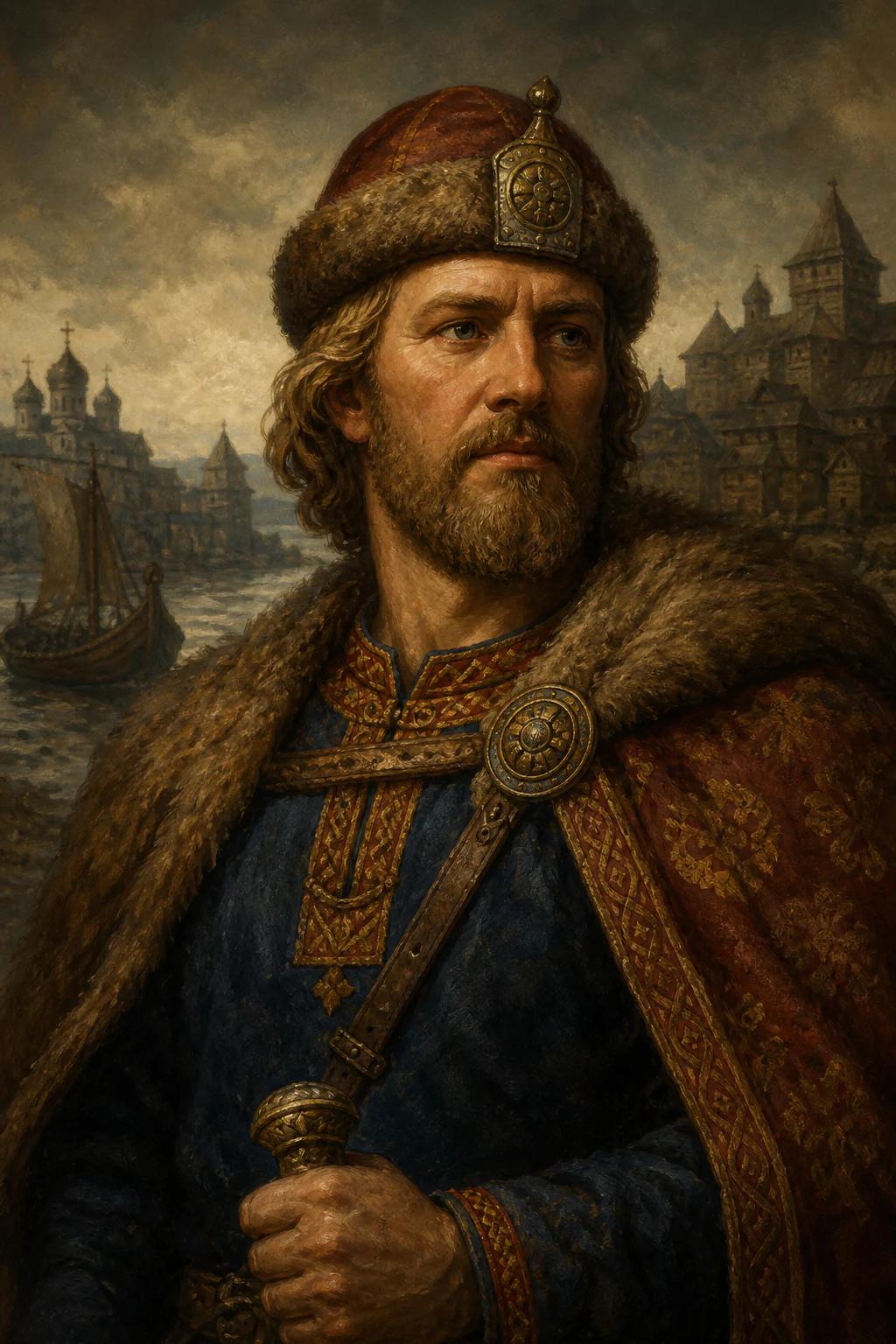
AI-generated portrait of Rurik in Varangian attire beside river craft
AI-assisted historical reconstruction

An illustrative reconstruction based on historical context. It is not a photograph or documentary likeness. Image policy

Life Journey

Why Rurik matters

Follow the key events and turning points in this life story.

Complete chronology

9th century

Varangian world

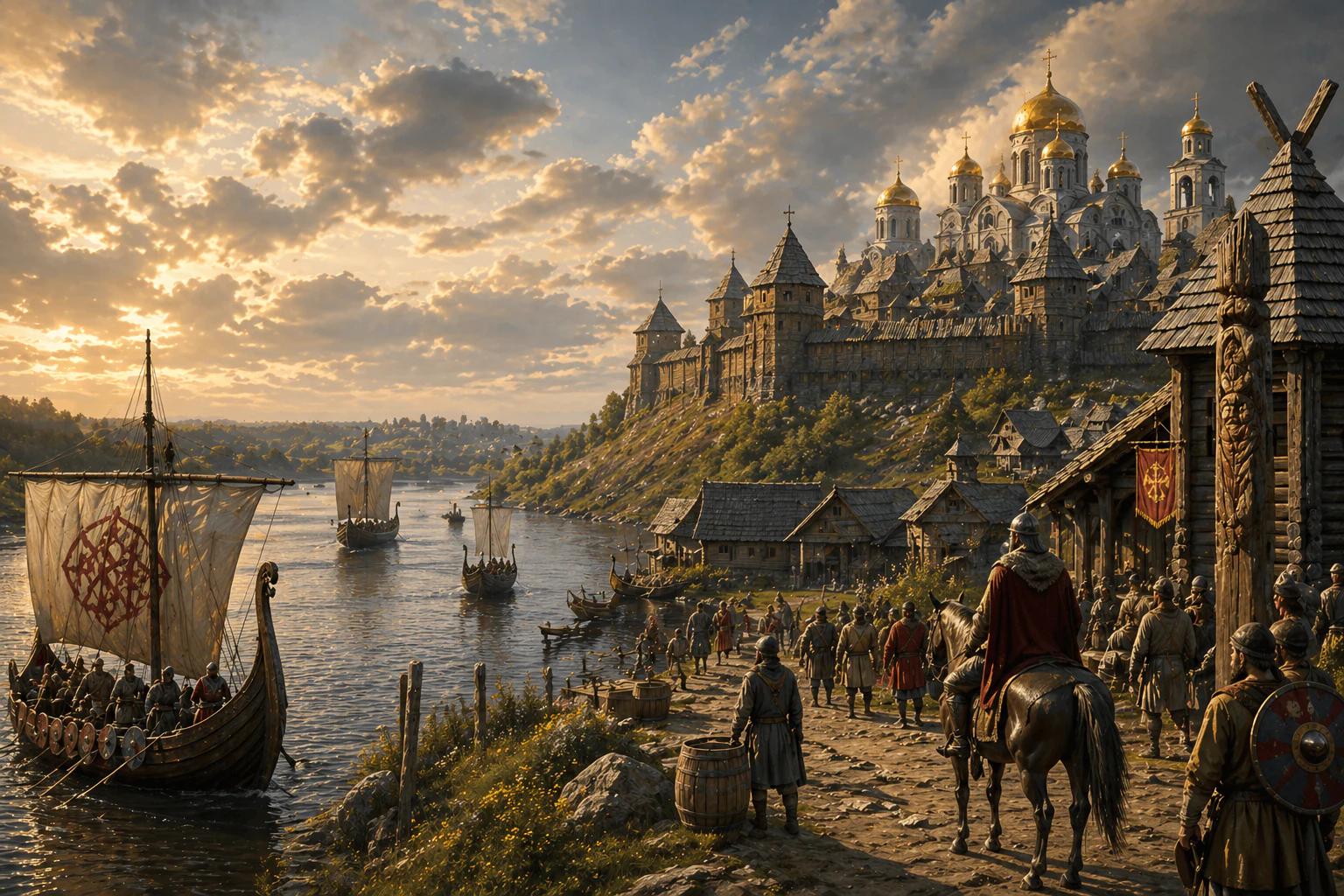
Rurik's historical setting matters as much as the sparse details of his life. In the ninth century, Scandinavian and Slavic communities were being drawn together by river routes that carried furs, slaves, wax, silver, weapons, and political influence between the Baltic and Byzantium. The people later called Rus were not a modern nation but a shifting world of war bands, merchants, local elites, tribute takers, and fortified settlements. Rurik is remembered as a Varangian, a term used in eastern Europe for Scandinavian-connected warriors and traders. The early chronicles place him at the point where mobile military power began to harden into dynastic rule. Whether every detail of the later story is reliable is doubtful; that a northern warrior elite helped shape early Rus power is widely accepted.
862

Called to rule

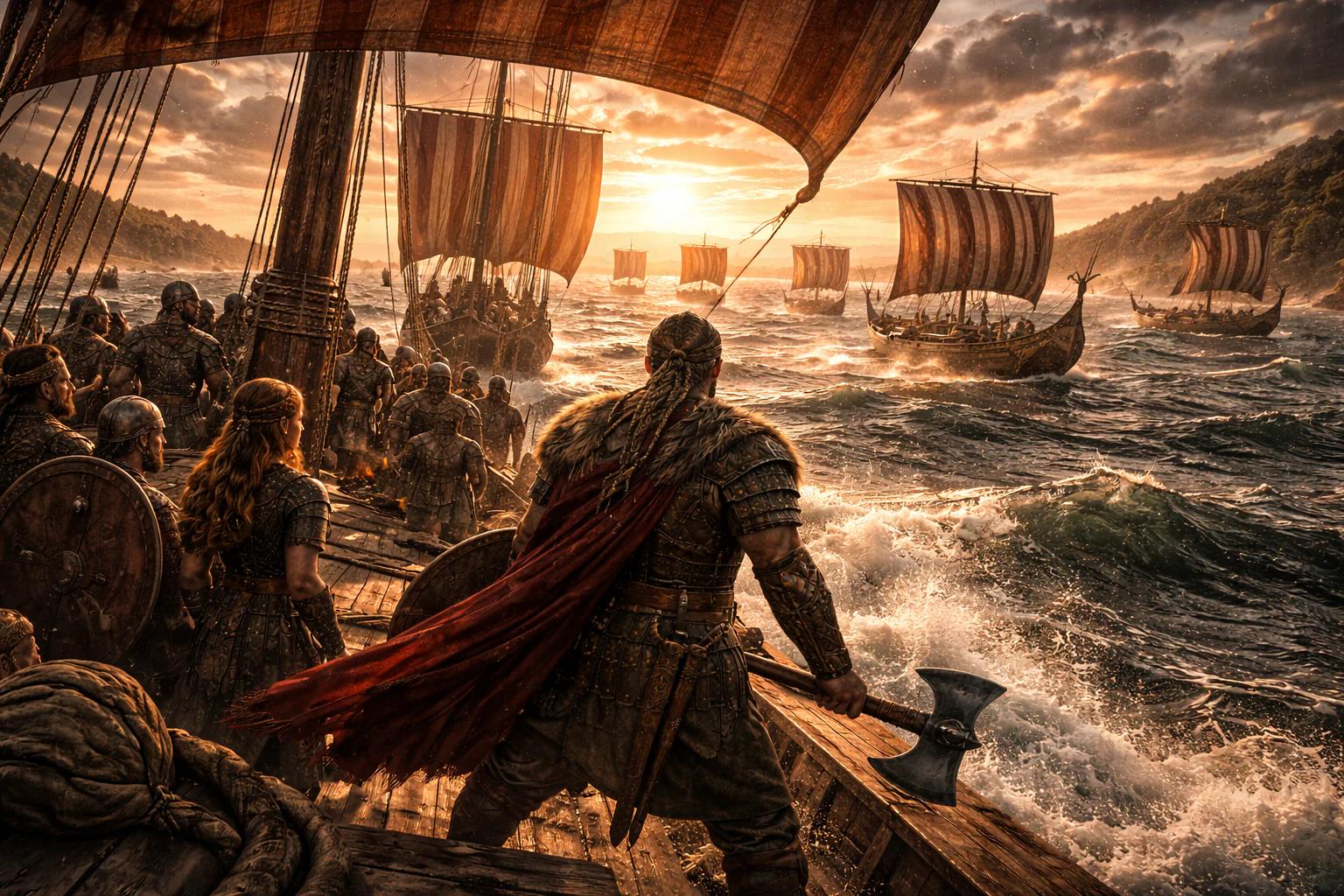
The famous chronicle tradition says that local peoples, divided by conflict, invited the Varangians to rule them in 862. Rurik came with his brothers Sineus and Truvor, settled first at Ladoga or Novgorod in different traditions, and became the surviving centre of authority after his brothers died. The story is too polished to read as a simple transcript of events. It explains political rule as consent, gives a foreign dynasty a legitimate beginning, and reduces a complicated process of violence, bargaining, trade, and tribute into a memorable scene. Yet it preserves something important: northern Rus power seems to have depended on the ability of armed outsiders and local elites to cooperate. Rurik's authority, whether invited or imposed, became the remembered starting point for a ruling house.

860s-870s

Northern power base

Rurik did not found a state in the modern sense. His significance lies in the formation of a durable ruling centre in the north, tied to fortified settlements, tribute networks, and long-distance commerce. The later city of Novgorod became central to his memory, though the earliest archaeological and textual details remain debated. What is clear is that the northern zone was strategically valuable. Control there meant access to the Volkhov, Lake Ladoga, the Dnieper approaches, and the routes that connected Scandinavia to Constantinople. Rurik's rule belongs to a moment when leadership was personal and military, but already dynastic enough for succession to matter. His name became the hinge between raiding society and princely government.

879

Succession to Oleg

Rurik is said to have died in 879, leaving his son Igor too young to rule independently. The chronicle presents Oleg as a kinsman or guardian who took power on Igor's behalf. This transition is crucial because it connects Rurik's northern base with the next great step in Rus history: the seizure of Kiev in 882. Rurik himself may have ruled only a regional power, but the dynasty attached to his name soon controlled the Dnieper corridor and built a political centre capable of dealing with Byzantium. The succession also shows why Rurik's importance is dynastic rather than biographical. Almost everything known about him is filtered through later memory, but the rulers who claimed descent from him shaped eastern Europe for centuries.

After 879

Dynastic memory

Rurik's legacy is enormous precisely because it rests on a thin foundation. The Rurikids became the ruling house of Kievan Rus and later supplied princes to Novgorod, Vladimir-Suzdal, Galicia-Volhynia, Tver, Moscow, and other Rus lands. Ivan IV, known as Ivan the Terrible, still claimed Rurikid descent in the sixteenth century. That long afterlife turned Rurik from a ninth-century frontier ruler into an ancestor of statehood. Modern debates about him can become tangled in national claims, especially because early Rus history is shared by the histories of Ukraine, Russia, Belarus, and the wider Baltic-Black Sea world. The careful view is that Rurik is both historical problem and historical force: difficult to reconstruct as a person, impossible to ignore as a dynastic idea.

Continue in context

Connected stories

Move from the profile into the wider events and settings this figure belongs to.

Keep exploring

Content note

This profile is written for educational use and connects to related Stories of History pages. The main portrait is an AI-assisted historical reconstruction, included as an illustrative aid rather than documentary evidence. Image policy

References

Sources and historical notes

Sources used to check this page, selected recommendations and historical notes.

Sources used

  1. Internet Encyclopedia of Ukraine, “Riuryk of Novgorod,”

    Summarises the tradition of Rurik’s rule and his place in the genealogy of the Rus’ princes.

    Open source
  2. Cambridge University Press, “The origins of Rus’ (c. 900–1015),”

    Provides historical context for the Scandinavian presence and the formation of the early Rus’ polity.

    Open source
  3. University of Toronto, “The Rus’ Primary Chronicle,”

    Includes the chronicle’s account of the invitation to the Varangians and the arrival of Rurik and his brothers.

    Open source

Additional sources and notes

Loading reviewed claim sources...

Our editorial approach · Report a historical error

A monthly route through history

Find out first about the latest published stories, feature notes and occasional Premium offers in one monthly email.