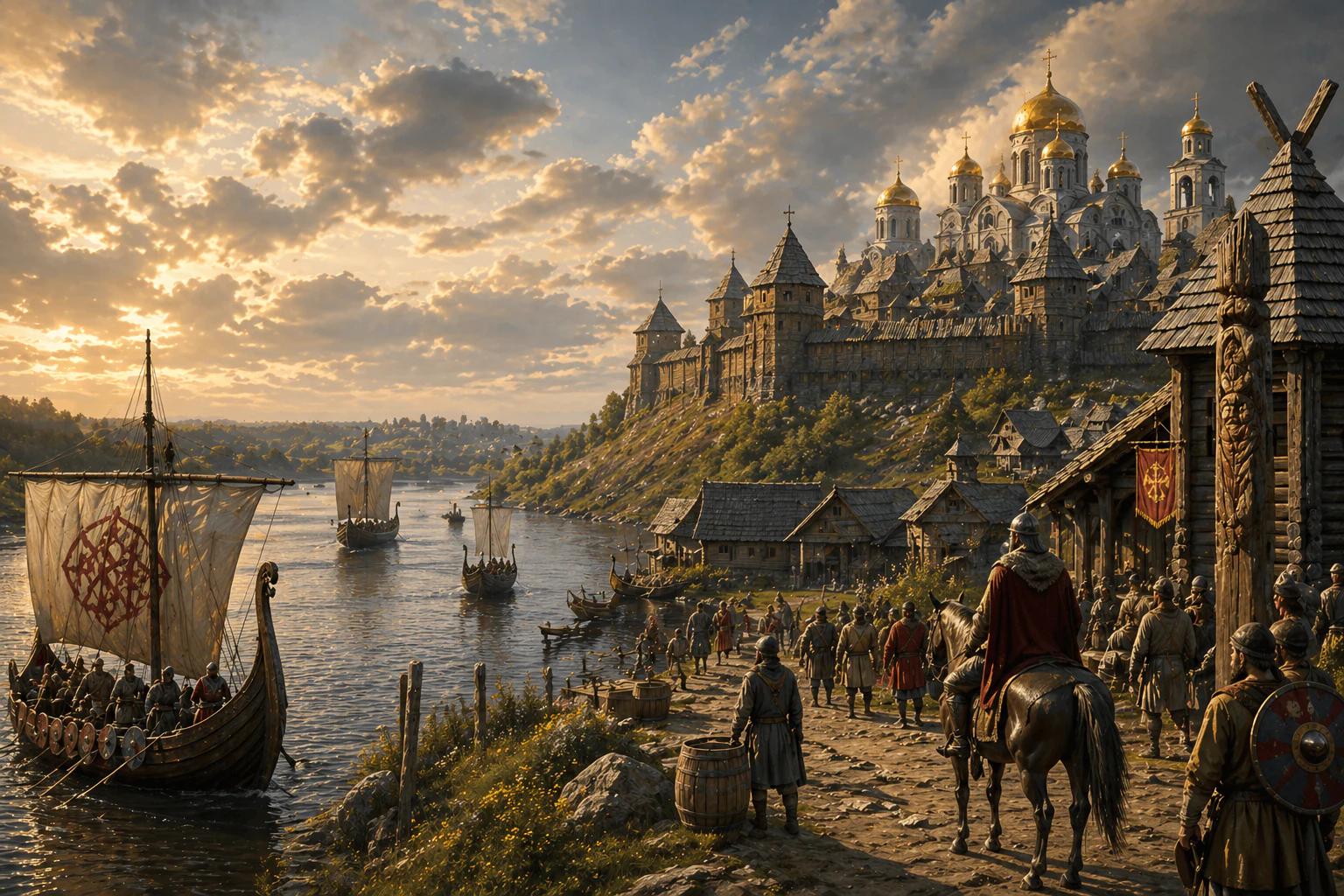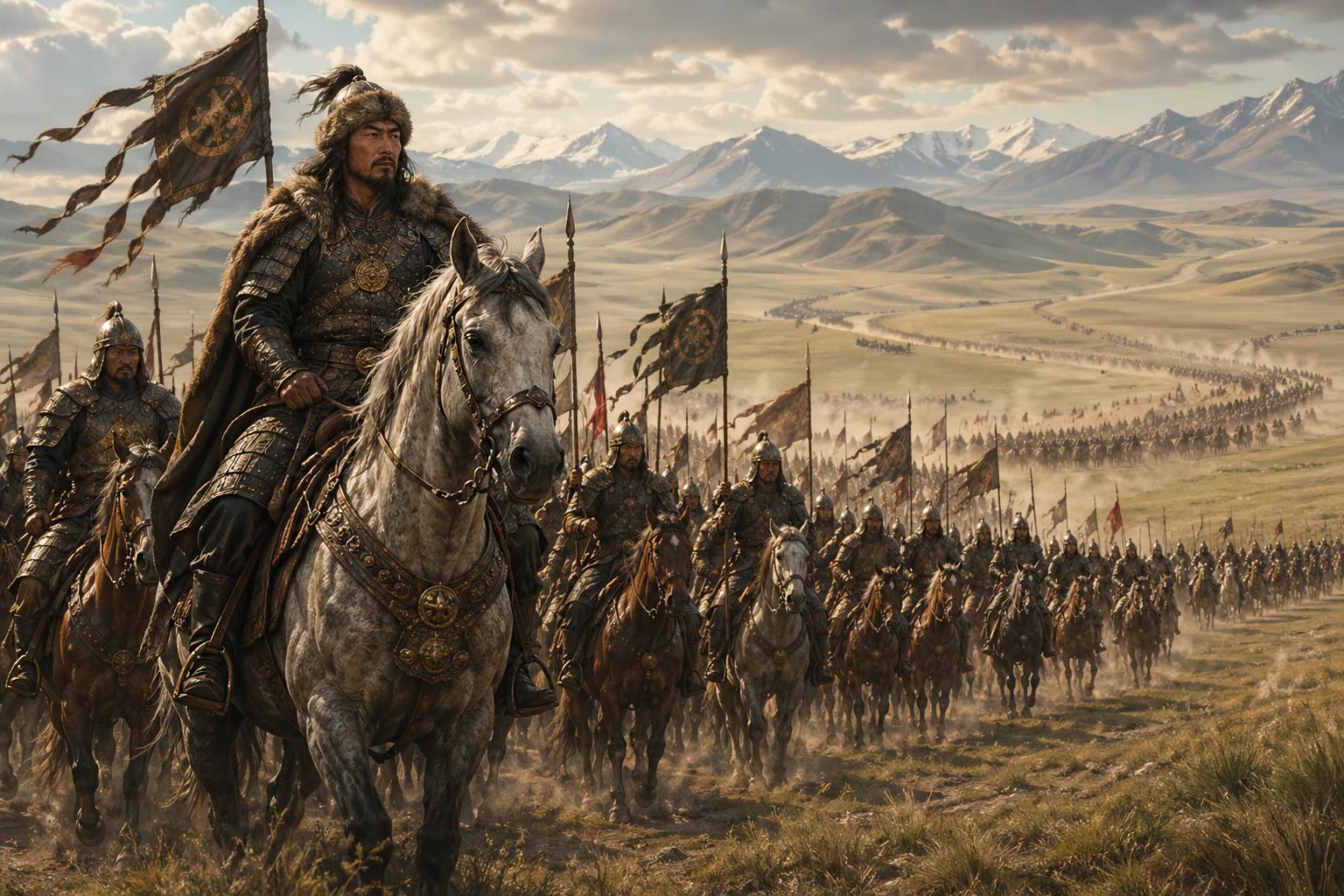
Illustrative reconstruction of a mounted Mongol commander leading columns of horsemen across a broad steppe valley.

Premium Story

The Mongol Empire

How the Mongols conquered and connected Eurasia.

11 chapters

Next

Content note

This story discusses violence, persecution, mass death, and human suffering in an educational historical context.

Context

Introduction

Overview

The Mongol Empire was the largest contiguous land empire in history, created by Genghis Khan and his successors in the thirteenth century. Mongol armies used mobility, discipline, intelligence, siege warfare, and terror to conquer states from China and Central Asia to Persia, Russia, and eastern Europe. Their empire devastated many societies but also connected Eurasia through trade, diplomacy, movement, and exchange.

Key forces

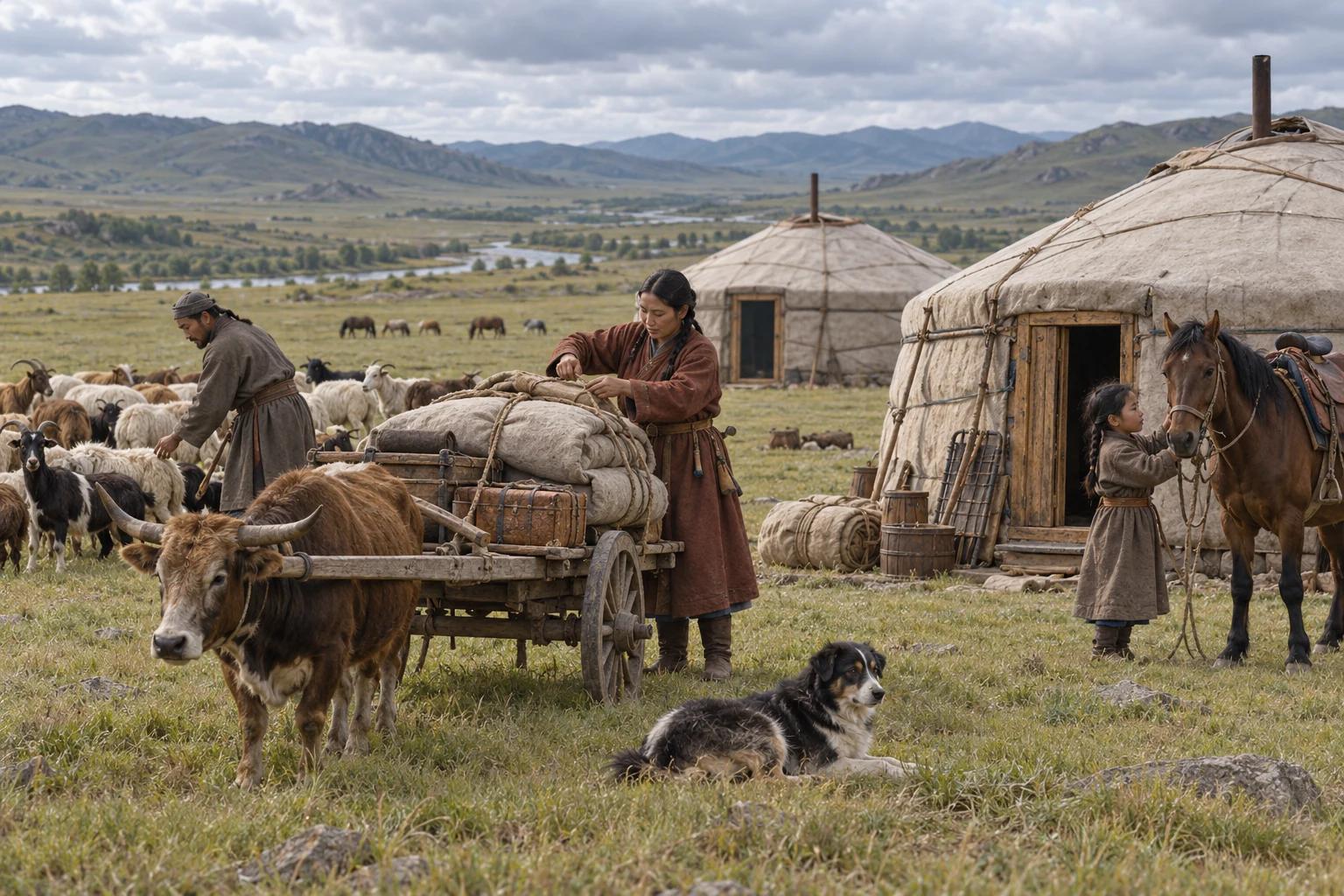
Illustrative reconstruction: families tend sheep and horses beside felt gers while a loaded ox cart prepares for a seasonal move.
1162 CE
Step 1 of 101162 CEAccessible mode

The Steppe World Before Temujin

Before the empire, Mongol communities were part of a wider world of pastoral households, rival confederacies and long-distance exchange.

The Eurasian steppe stretched across Inner Asia and eastern Europe. On the Mongolian grasslands, pastoral communities moved between seasonal pastures. Rival chiefs and confederacies competed for animals, followers and trade.

Life centred on herds and seasonal movement. Women and men sustained households through herding, food production and trade. Horses were central to transport, status and warfare.

Power depended on animals, allies and the ability to hold a coalition together.

No leader controlled the whole Mongolian steppe. Alliances could shift quickly, while raiding, feuds and the taking of captives added to insecurity.

The Jin dynasty in northern China intervened in steppe politics, supporting allies and attacking potential threats. These policies could deepen rivalries, but could not prevent strong coalitions from forming.

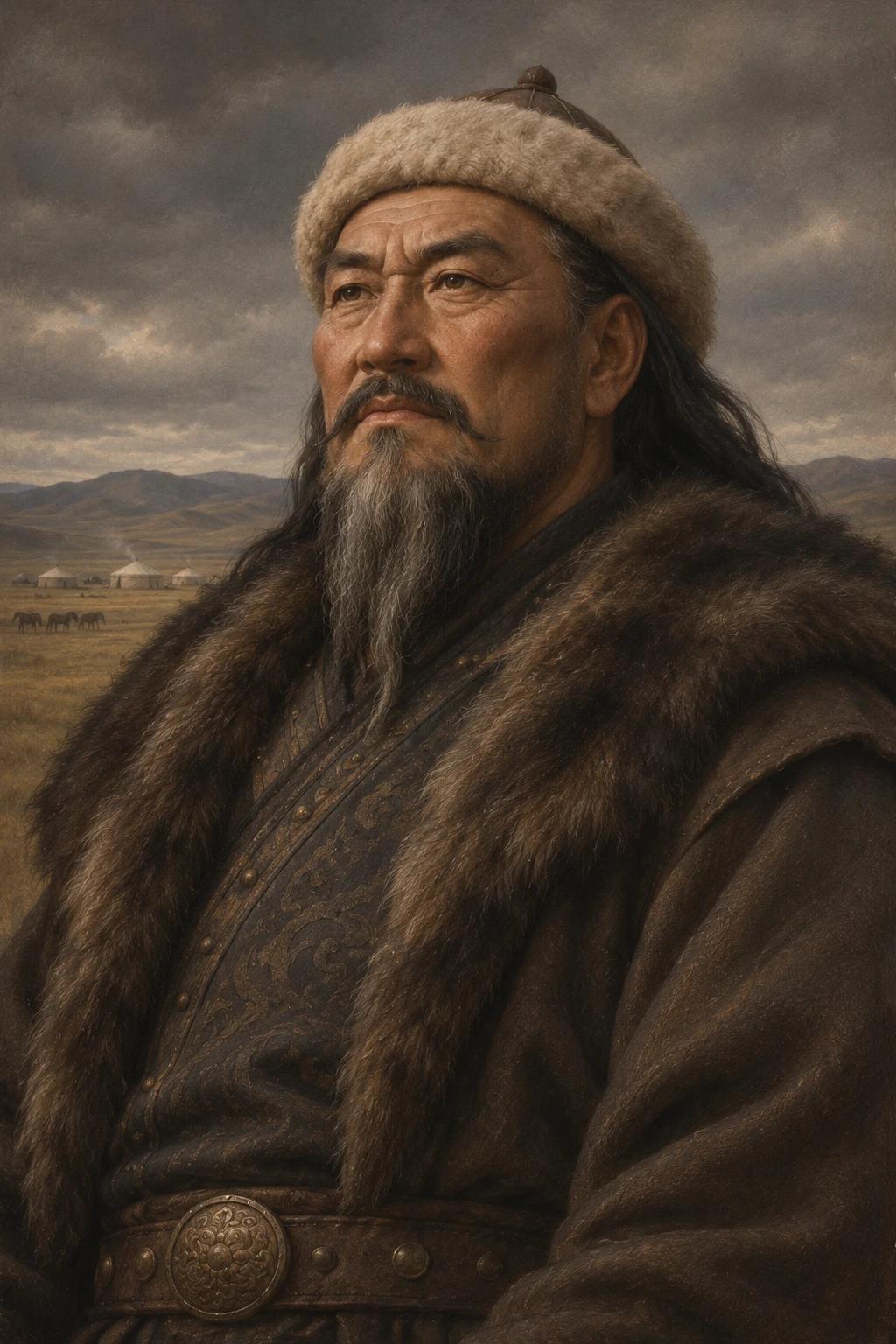
Into this dangerous world, a boy named Temujin was born around 1162. His father was a minor clan leader killed by rivals. His family was abandoned and left to survive alone. That experience would shape everything that followed.

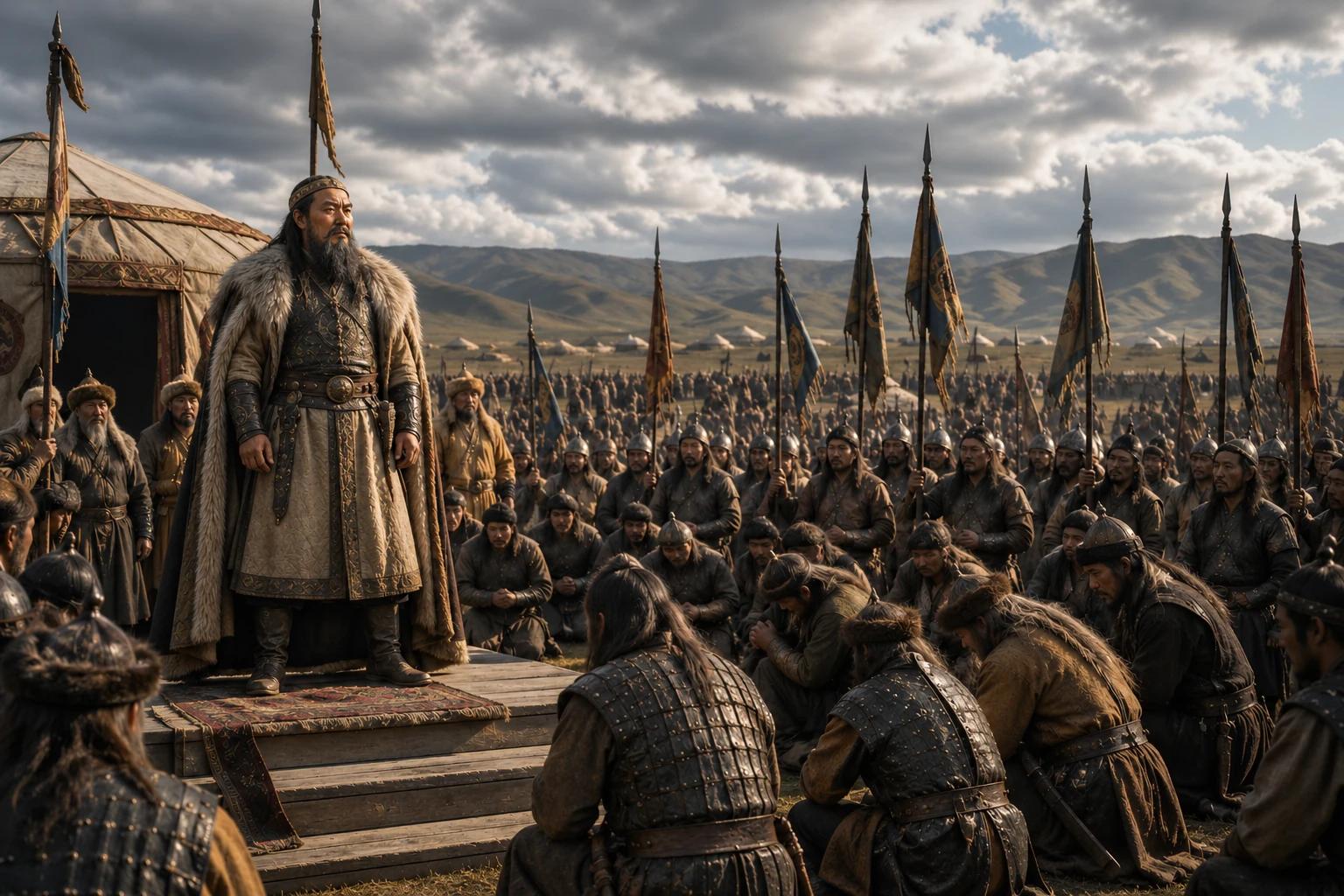
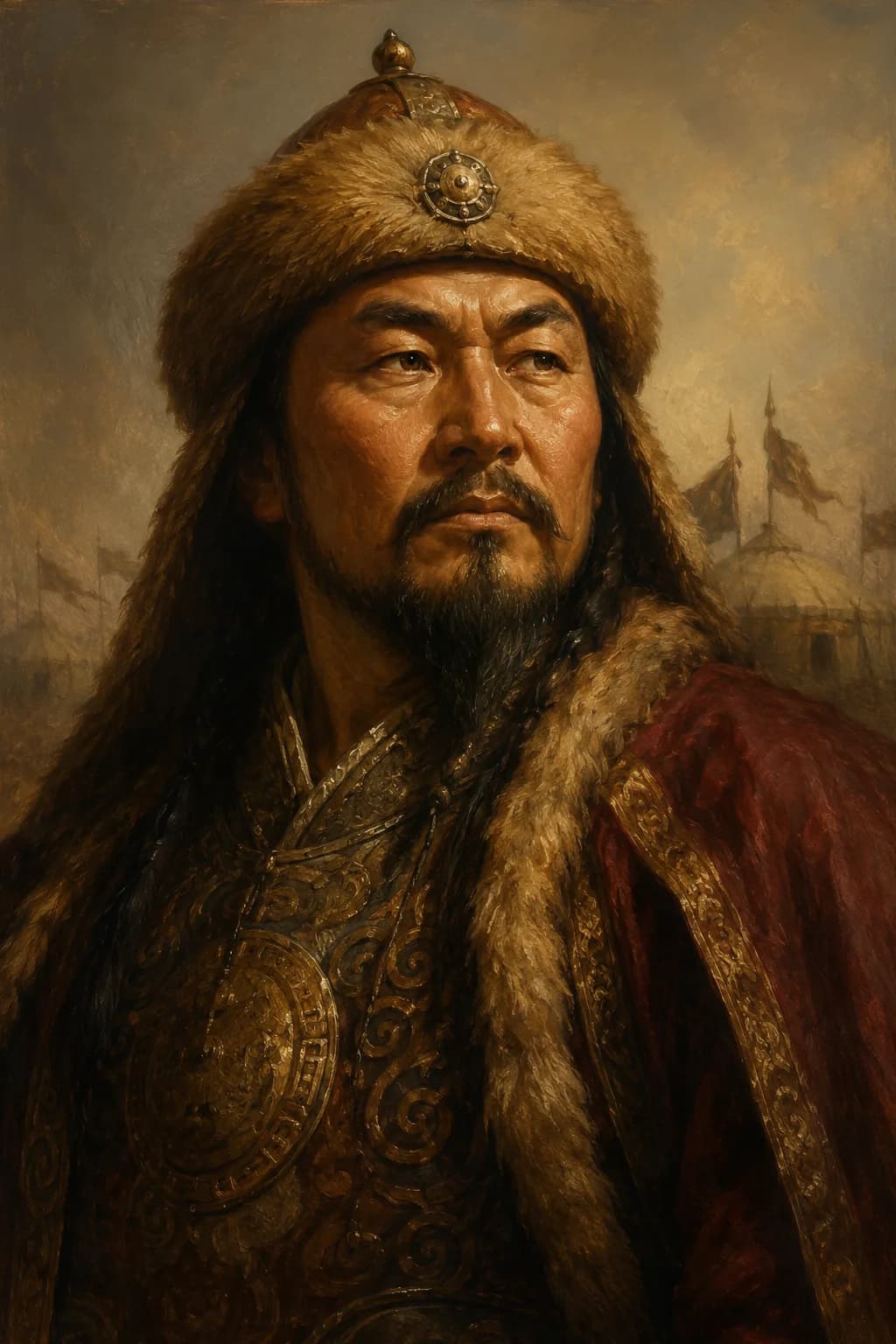
Illustrative reconstruction: Temujin stands before an assembly of Mongol leaders and followers gathered on the steppe.
1206 CE
Step 2 of 101206 CEAccessible mode

Temujin Unites the Mongols

Over decades of struggle, Temujin defeated major rivals and reorganised a powerful coalition on the Mongolian steppe.

After his difficult childhood, Temujin slowly gathered followers. He rewarded loyalty generously and welcomed able fighters regardless of their background or clan.

His coalition overcame the Tatars, Keraits and Naimans, among other opponents. Some defeated people were incorporated into his forces; others suffered execution, enslavement or displacement. Resistance did not disappear everywhere in 1206.

He didn't just win battles. He broke the old world and built something entirely new in its place.

In 1206, a gathering called a kurultai proclaimed Temujin Genghis Khan. The title expressed his new supremacy; its precise original meaning remains debated.

He reorganised the army into units of ten, a hundred, a thousand and ten thousand. Skill and loyalty could bring advancement beyond a person’s original clan, although family connections and elite status still mattered.

Old clan loyalties were broken apart and replaced with loyalty to the Khan. This made the Mongols far more cohesive and disciplined. By 1206, they were no longer scattered tribes. They were a unified military force ready to expand.

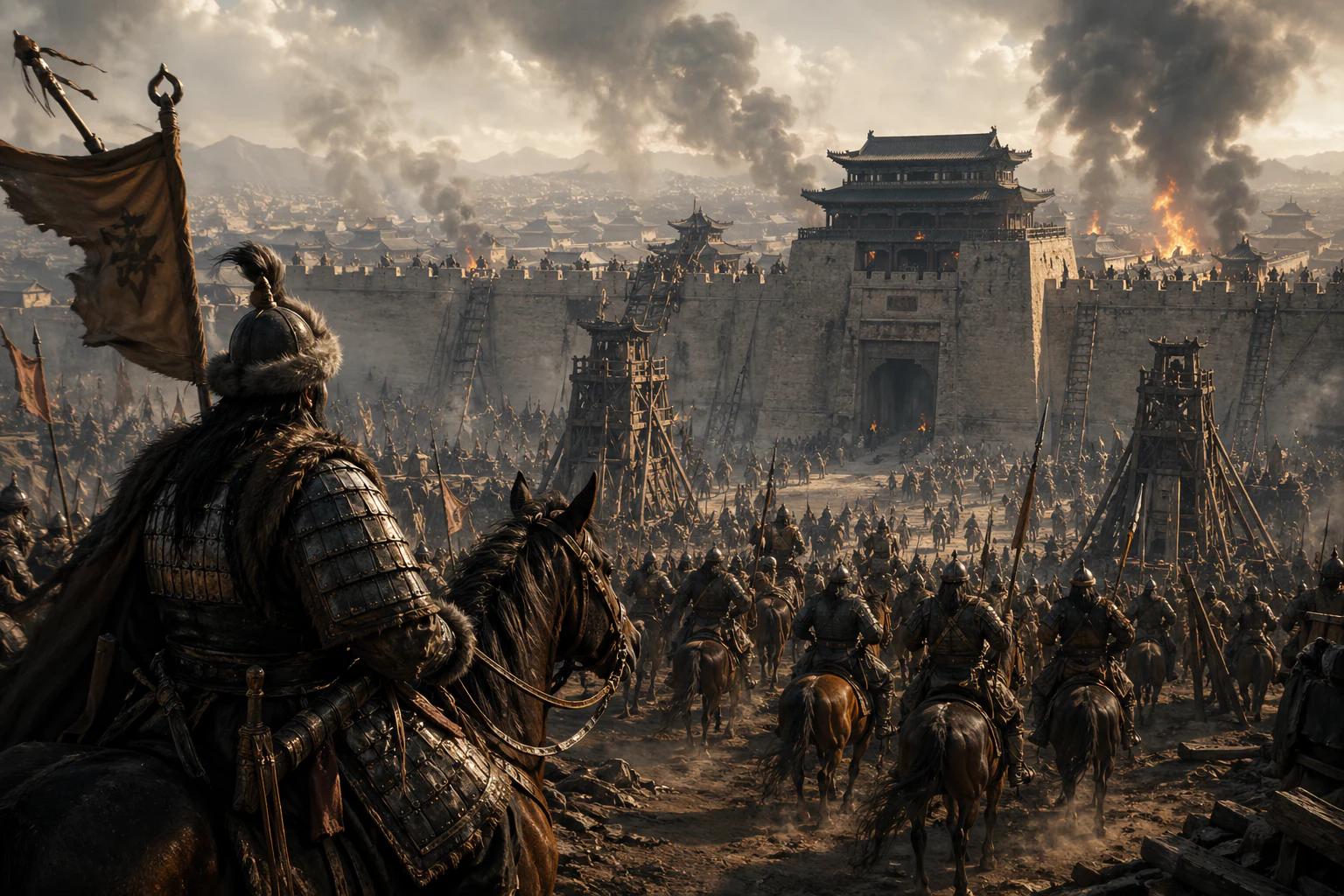
Illustrative reconstruction: Mongol forces and wooden siege engines approach the walls and gate towers of a northern Chinese city.
1215 CE
Step 3 of 101215 CEAccessible mode

The Conquest of Northern China

Conquering the Jin dynasty required the Mongols to develop their ability to besiege large fortified cities.

After unifying the Mongols, Genghis Khan turned south to China. The Jin dynasty was wealthy, powerful, and protected by walled cities and large armies.

Cavalry tactics effective against steppe opponents could not simply be applied to fortified cities. The Mongols had to adapt quickly.

Speed had carried them to the steppe's edge. Now they had to learn a different kind of war.

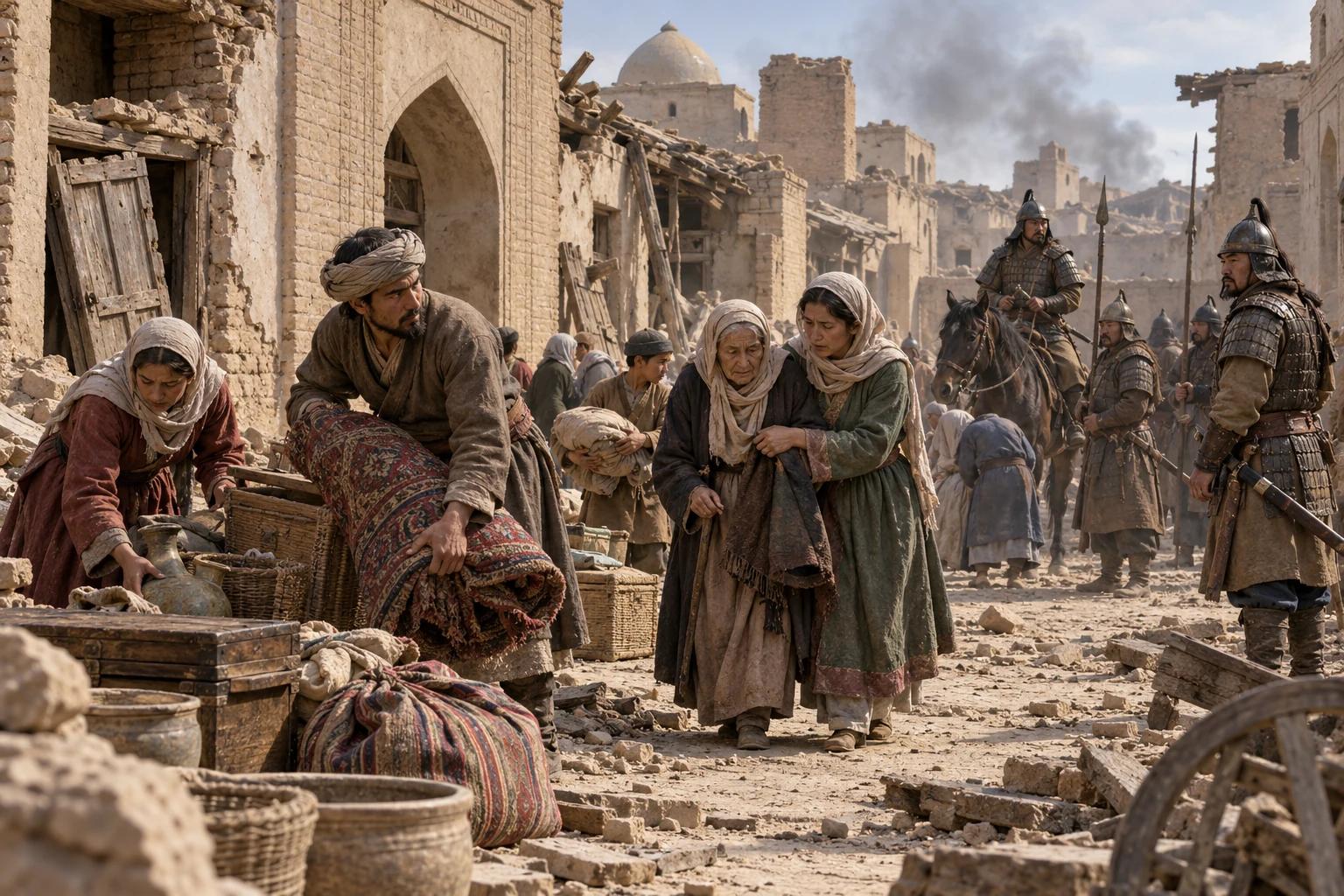
They recruited and coerced engineers and other specialists from conquered peoples. Terror encouraged surrender, but submission did not always protect a city’s inhabitants from plunder, forced labour or killing.

Intelligence was equally important. Before each campaign, Mongol scouts gathered detailed information about roads, defences, and internal politics. The enemy rarely knew where the attack would fall.

fell in 1215, showing that Mongol armies could take major fortified cities. The Jin dynasty survived until 1234, and siege techniques continued to develop through later campaigns.

PremiumFree preview: 3 of 10 chapters

Continue The Mongol Empire

Sign up to a Premium account to read the remaining chapters of this story.

A paid Premium subscription also gives you full access to every other Premium story.

See Premium options

Coming next

  1. Chapter 4The Destruction of Khwarezm
  2. Chapter 5The Empire After Genghis Khan
  3. Chapter 6Ogedei Expands the Imperial Machine

And 4 more chapters to follow.

Keep exploring

Follow the connected history

Explore closely connected stories and free figure profiles. Premium stories open with a public preview.

References

Sources and historical notes

Sources used to check this page, selected recommendations and historical notes.

Sources used

  1. Columbia University, Asia for Educators, “The Collapse of the Empire,”

    Succession disputes and fragmentation from the 1260s.

    Open source
  2. The Metropolitan Museum of Art, “The Yuan Revolution: Art and Dynastic Change,”

    Conquest of the Southern Song in 1279 and unequal access to office under Yuan rule.

    Open source
  3. Columbia University, Asia for Educators, “What was the Mongols’ Influence on China?,”

    Institutions and social hierarchy under Mongol rule.

    Open source
  4. Ulf Büntgen and Nicola Di Cosmo, “Climatic and environmental aspects of the Mongol withdrawal from Hungary in 1242 CE,” 2016.

    One proposed explanation for the 1242 withdrawal; read alongside the published reassessment.

    Open source
  5. Scientific Reports, “Climate of doubt: A re-evaluation of Büntgen and Di Cosmo’s environmental hypothesis for the Mongol withdrawal from Hungary, 1242 CE,” 2017.

    Reassessment showing why a single settled explanation should not be asserted.

    Open source
  6. Encyclopaedia Britannica, “Mongol Empire,” Open source
  7. The Metropolitan Museum of Art, “The Mongol Empire,” Open source
  8. Fordham University, “Internet Medieval Sourcebook,” Open source

Additional sources and notes

Loading reviewed claim sources...

Our editorial approach · Report a historical error

A monthly route through history

Find out first about the latest published stories, feature notes and occasional Premium offers in one monthly email.