← People

Michelangelo

Michelangelo was an Italian Renaissance sculptor, painter, architect and poet whose David, Sistine Chapel ceiling and later architectural work made him one of the defining artists of European history.

Born
1475 CE
Died
1564 CE
Role
Italian sculptor, painter and architect
Full name
Michelangelo di Lodovico Buonarroti Simoni
Also known as
Michelangelo Buonarroti

Italian artist (1475-1564)

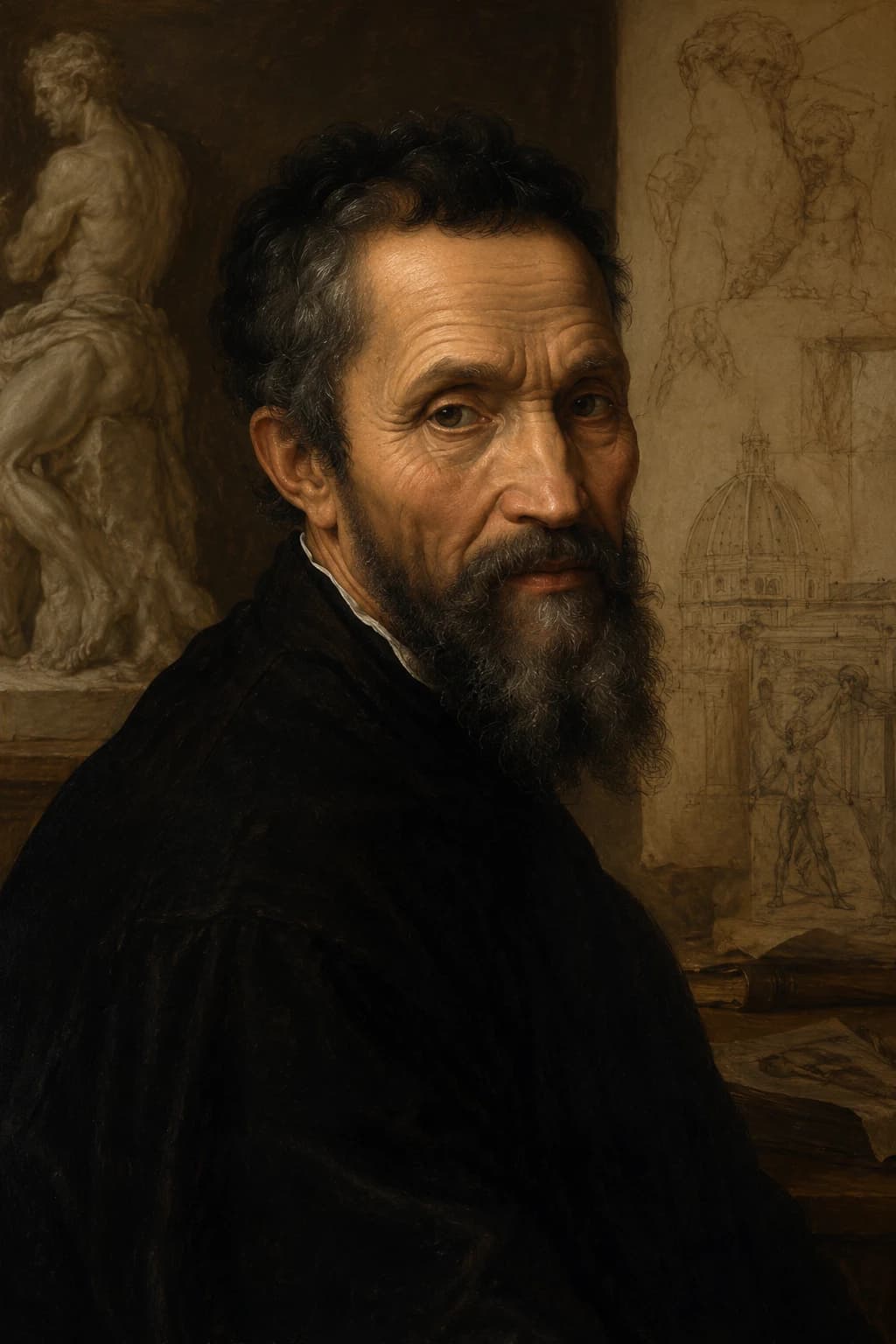
AI-generated portrait of Michelangelo with sculpture and architectural drawings
AI-assisted historical reconstruction

An illustrative reconstruction based on historical context. It is not a photograph or documentary likeness. Image policy

Life Journey

The body made monumental

Follow Michelangelo from Florentine training to sculptures, frescoes, and architecture that gave Renaissance ambition a physical force.

Complete chronology

1475-1490s

Florentine formation

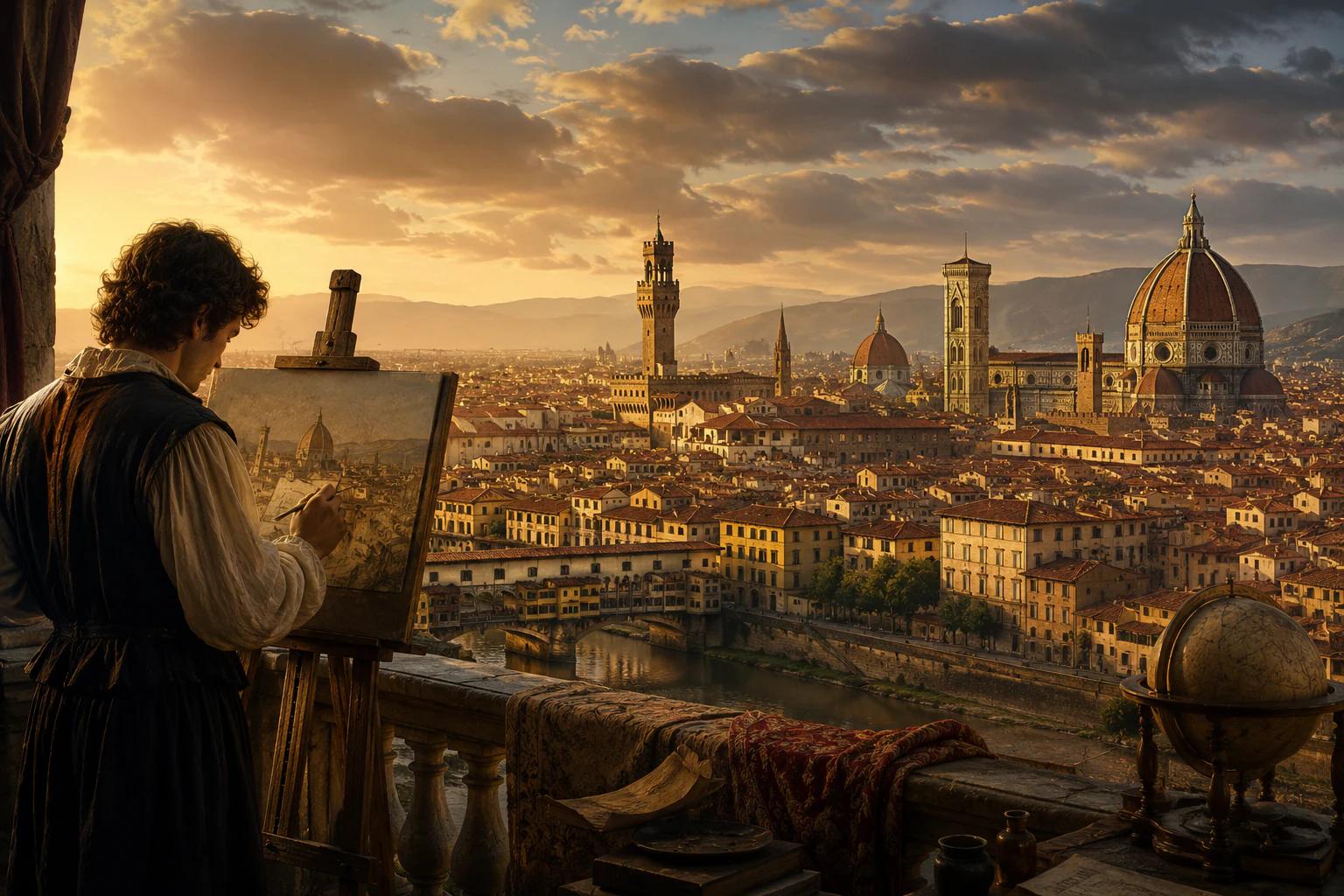
Michelangelo Buonarroti was born in 1475 in Caprese and raised in the orbit of Florence. He trained first as a painter but quickly became devoted to sculpture. Florence mattered because it joined workshop discipline to civic pride, Medici patronage, and intense interest in classical form. Michelangelo's early study of antique sculpture and the human body gave him a lifelong artistic language: the body as a site of force, struggle, beauty, and spiritual meaning.
1490s

Roman breakthrough

Michelangelo's Roman Pieta, completed when he was still young, made his reputation. The sculpture joined technical control to emotional restraint: marble became flesh, grief, and devotional presence. It also showed Michelangelo's command of surfaces and anatomy. He was not simply copying nature. He was intensifying it, creating bodies that seemed more charged than ordinary life. That combination of physical truth and idealized force became central to his mature work.

1501-1504

David in Florence

The David, carved from a difficult block of marble, became one of Florence's great public symbols. Michelangelo chose the tense moment before action, not the victory after it. The figure's scale, anatomy, and concentrated alertness made the body a political statement: vigilance, courage, and republican pride. The sculpture also elevated the artist's status. Michelangelo was not merely a craftsman fulfilling a commission. He was a creator whose interpretation could reshape public meaning.

1508-1512

Sistine Chapel

Michelangelo did not think of himself primarily as a painter, yet the Sistine Chapel ceiling became one of painting's defining achievements. Working under papal commission, he filled the ceiling with prophets, sibyls, ancestors, and scenes from Genesis. The bodies are monumental, compressed with energy, and arranged as if architecture, theology, and anatomy had fused. The work shows Renaissance ambition at full scale: art serving religion, papal authority, intellectual drama, and the display of almost impossible skill.

1530s-1564

Architect of Rome

Michelangelo's later career moved increasingly through architecture, poetry, and large papal commissions. His work on St Peter's Basilica helped define the shape of Catholic Rome. The later Last Judgment in the Sistine Chapel also showed a darker, more turbulent vision than the ceiling. Michelangelo's long life carried him from early Renaissance Florence into the age of religious fracture. His art changed with that world, becoming more severe, searching, and spiritually intense.

After 1564

The artist as force

Michelangelo died in 1564, leaving a body of work that changed the status of the artist. His fame rested on more than individual masterpieces. He embodied the Renaissance claim that artistic creation was intellectual, spiritual, and public. Later generations sometimes turned him into a myth of solitary genius, but his real career was deeply connected to patrons, cities, popes, theology, and politics. His legacy is the idea of art as a force capable of shaping how societies imagine power, beauty, and the human body.

Continue in context

Connected stories

Move from the profile into the wider events and settings this figure belongs to.

Keep exploring

Content note

This profile is written for educational use and connects to related Stories of History pages. The main portrait is an AI-assisted historical reconstruction, included as an illustrative aid rather than documentary evidence. Image policy

References

Sources and historical notes

Sources used to check this page, selected recommendations and historical notes.

Sources used

  1. Vatican Museums, “Sistine Chapel,”

    The commission and decoration of the ceiling and the later Last Judgment fresco.

    Open source
  2. Uffizi Galleries, “Holy Family (Tondo Doni),”

    The museum’s record of Michelangelo’s painted panel and the commission behind it.

    Open source
  3. World History Encyclopedia, “Michelangelo,”

    Michelangelo’s life and major works in sculpture, painting and architecture.

    Open source

Additional sources and notes

Loading reviewed claim sources...

Our editorial approach · Report a historical error

A monthly route through history

Find out first about the latest published stories, feature notes and occasional Premium offers in one monthly email.