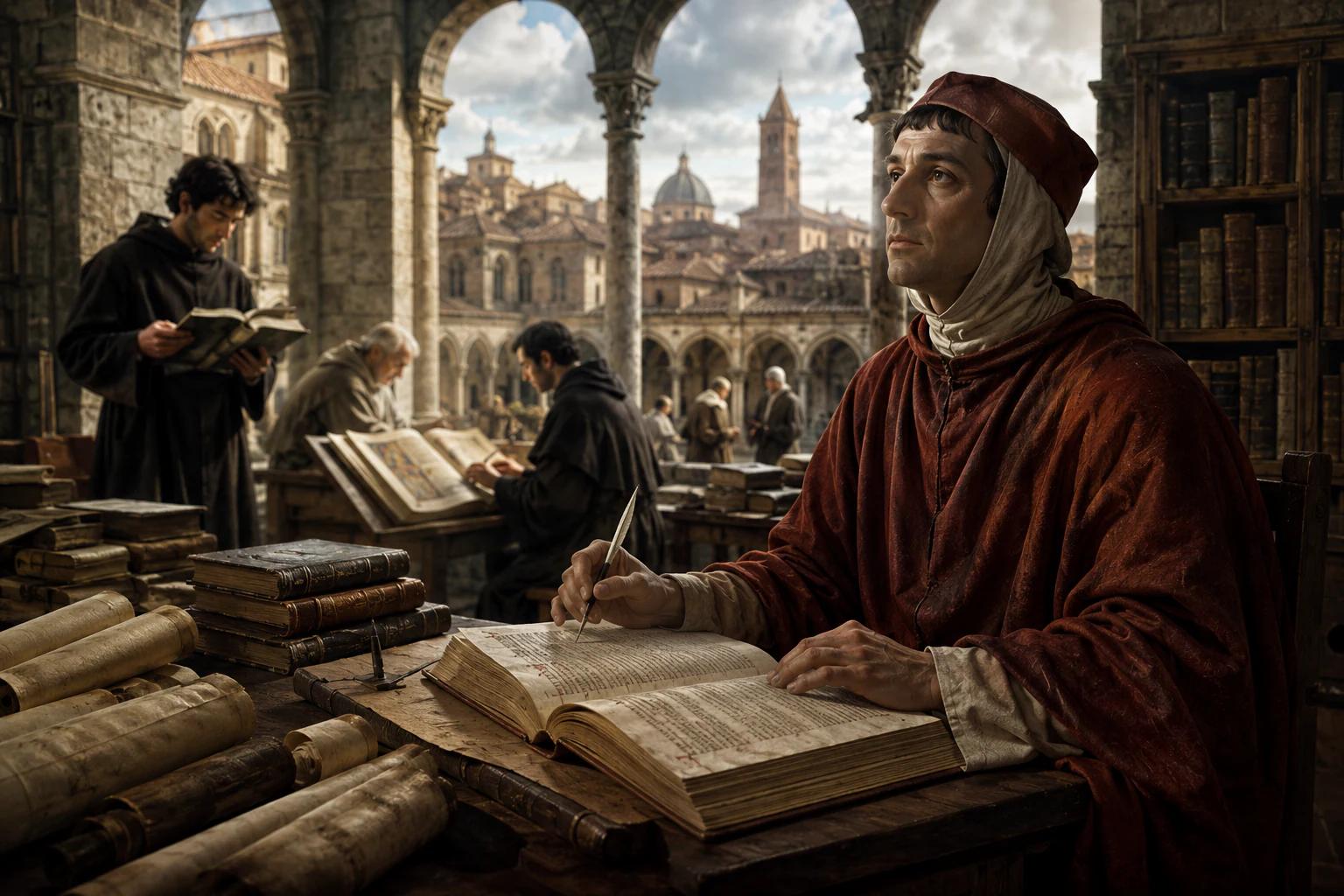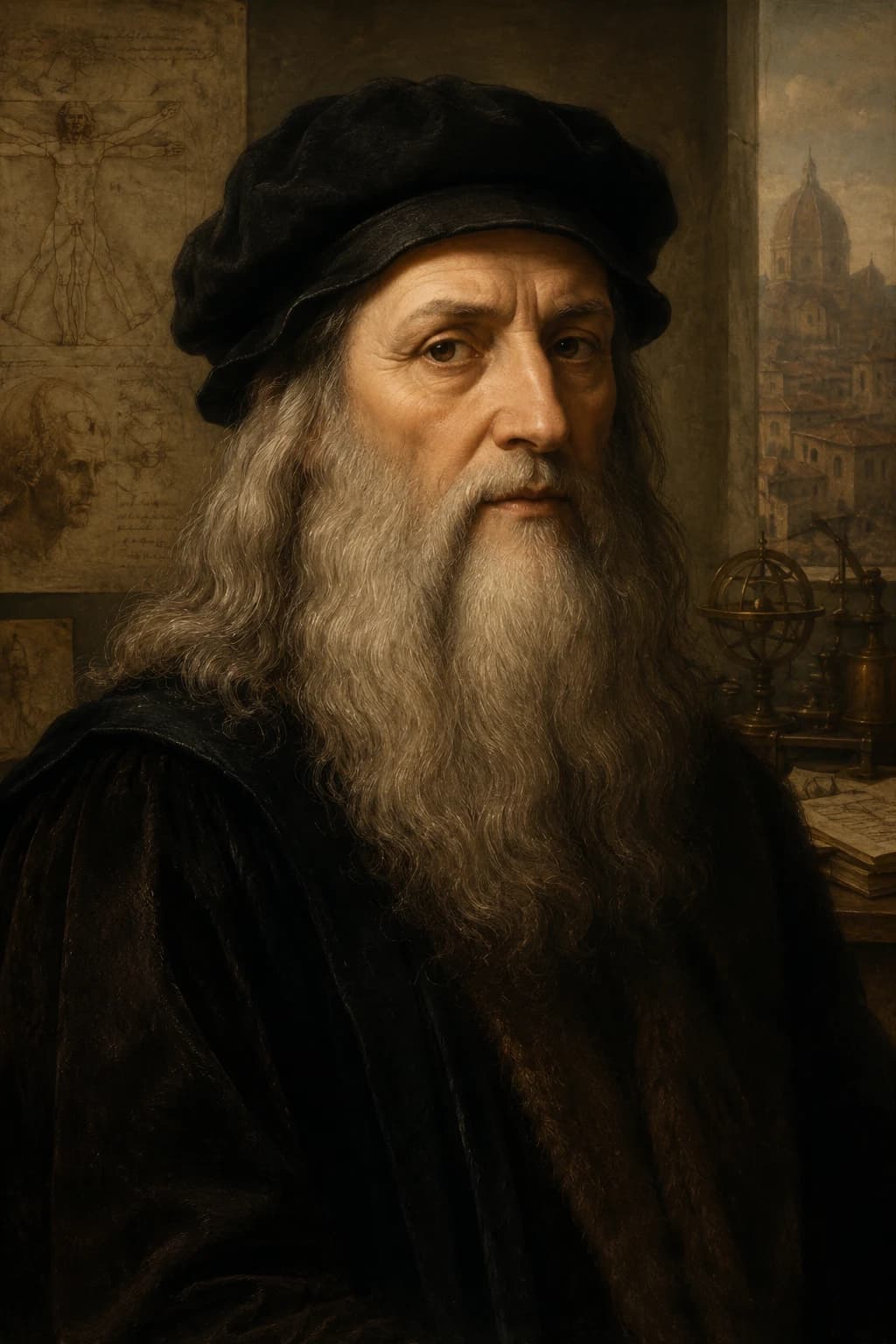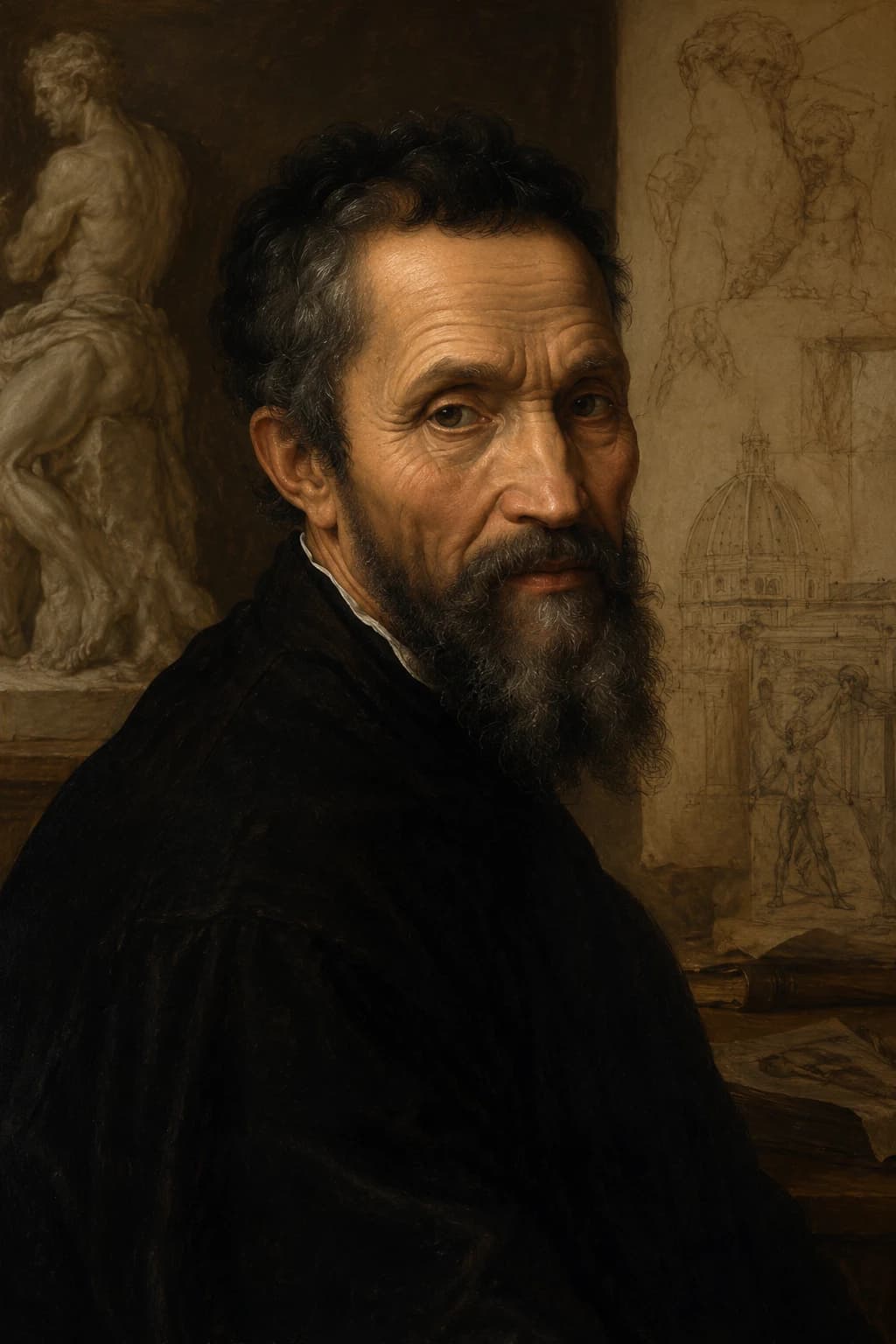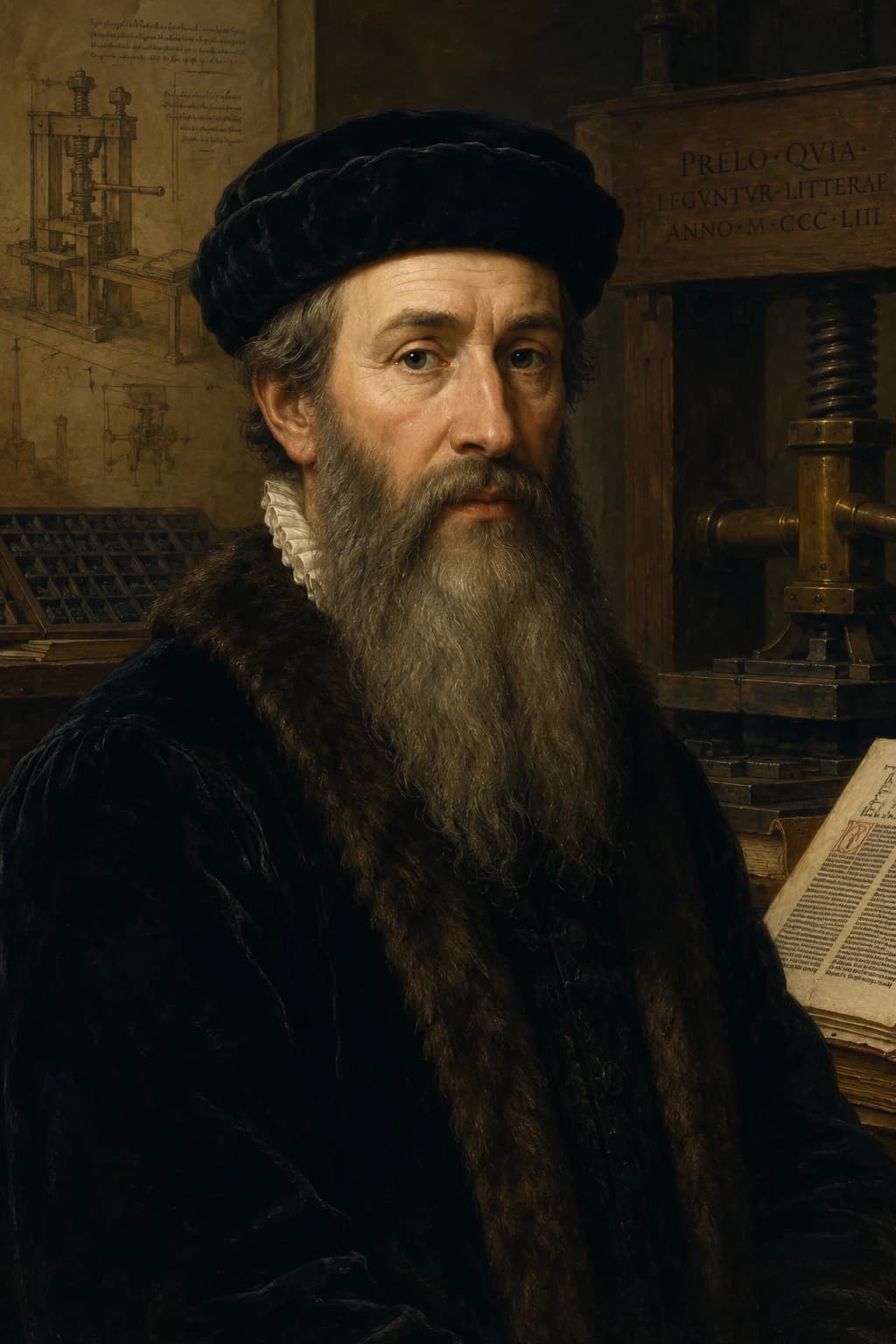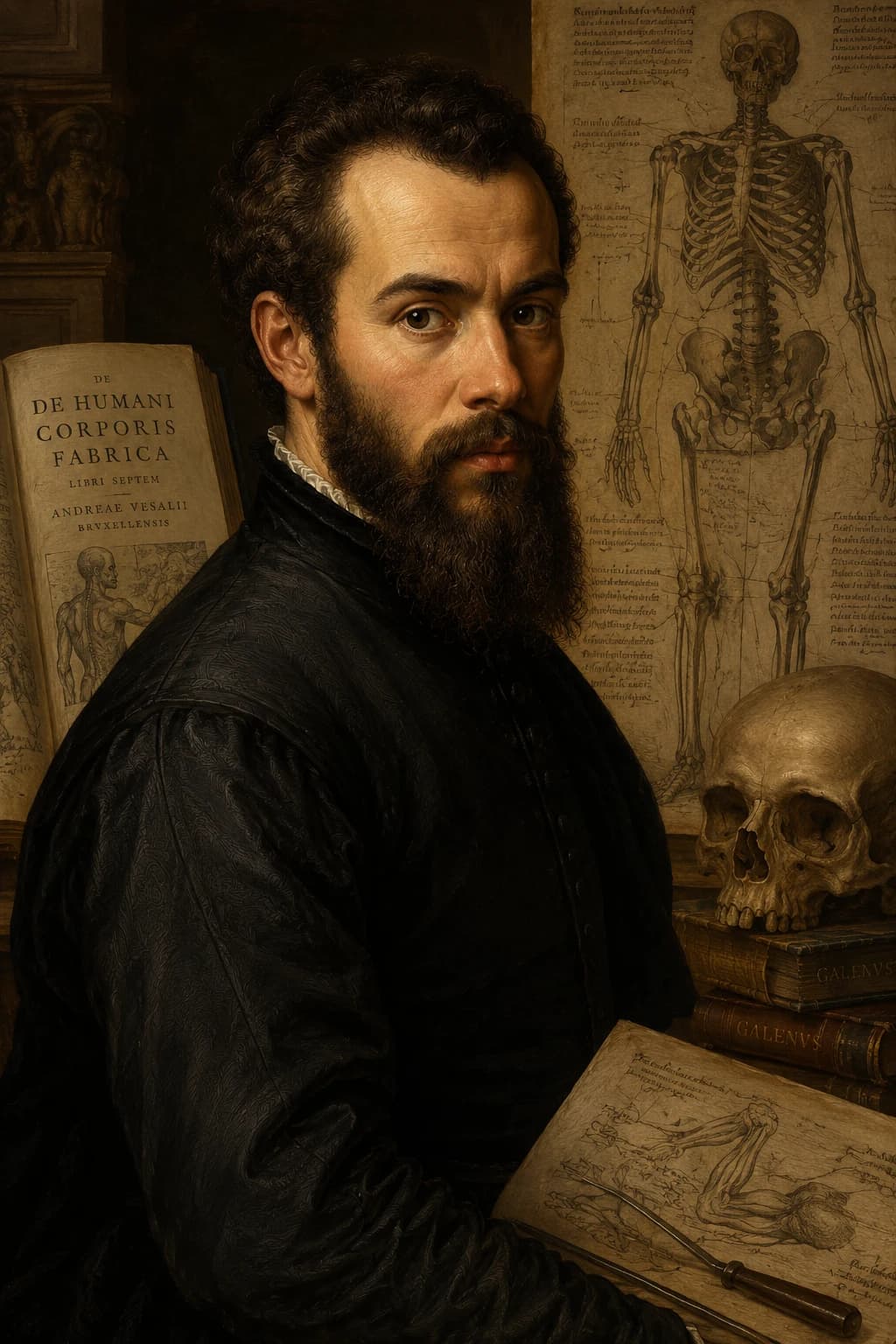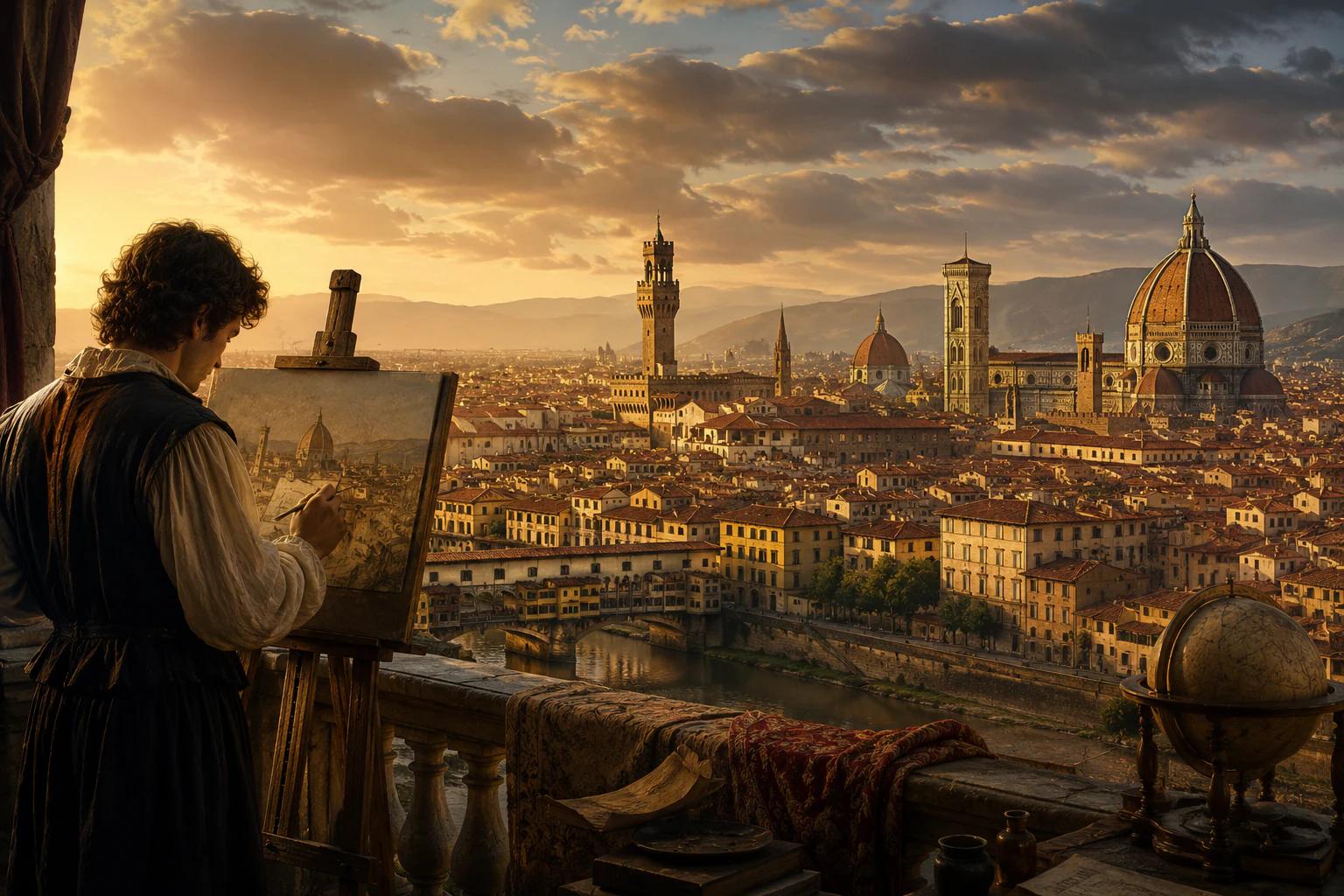
Renaissance scholars and artists in an Italian city, surrounded by books, architecture, and scientific instruments.

Premium Story

The Renaissance

Follow the Renaissance as Europe revives classical learning, reshapes power, and builds a bridge from medieval to modern worlds.

11 chapters

Next
Context

Introduction

Overview

The Renaissance was a cultural and intellectual movement that began in Italy and spread across Europe between the fourteenth and sixteenth centuries. It revived interest in classical learning while transforming art, science, politics, literature, education, and religious debate. From and humanism to printing, exploration, and new forms of artistic realism, the Renaissance helped connect the medieval world to the modern age.

Key forces

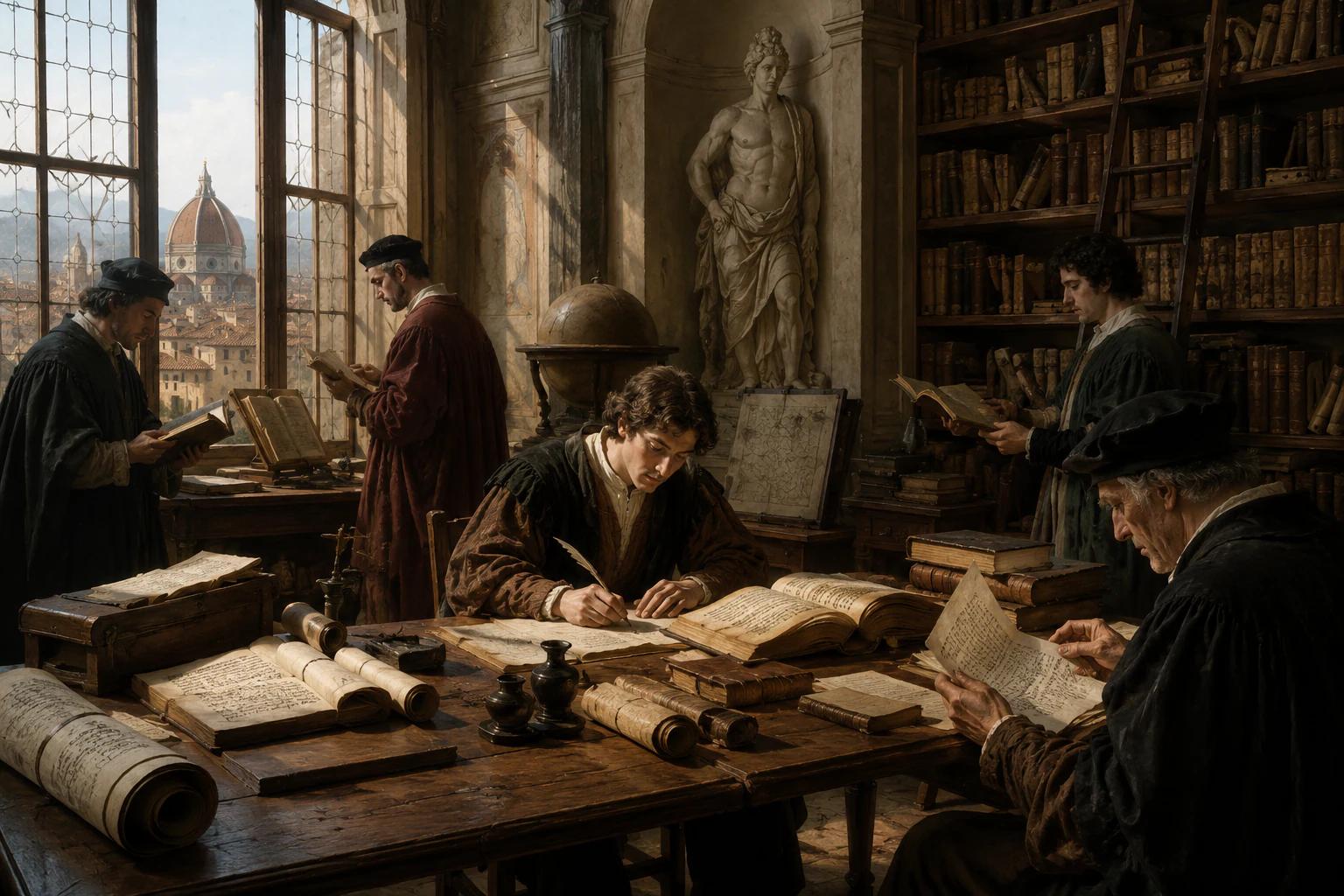
Monks and early scholars preserving and studying classical manuscripts in a medieval library.
1304 CE
Step 1 of 101304 CEAccessible mode

The Classical Inheritance

The Renaissance began with old books that never fully disappeared.

During the Middle Ages, monasteries copied many Greek and Roman works into Latin manuscripts. They did not preserve everything, but they kept a vital core alive.

Universities then taught logic, law, theology, and classical language skills. That training gave later scholars the tools to read old texts carefully and compare versions.

In the fourteenth century, Petrarch treated classical authors as living guides to character and public life, not just old authorities for grammar lessons.

He searched for forgotten manuscripts and urged readers to imitate Roman eloquence and civic virtue. This helped create a new ideal called humanism.

So the Renaissance did not appear from nowhere. It grew from medieval institutions, then redirected inherited learning toward a new cultural confidence.

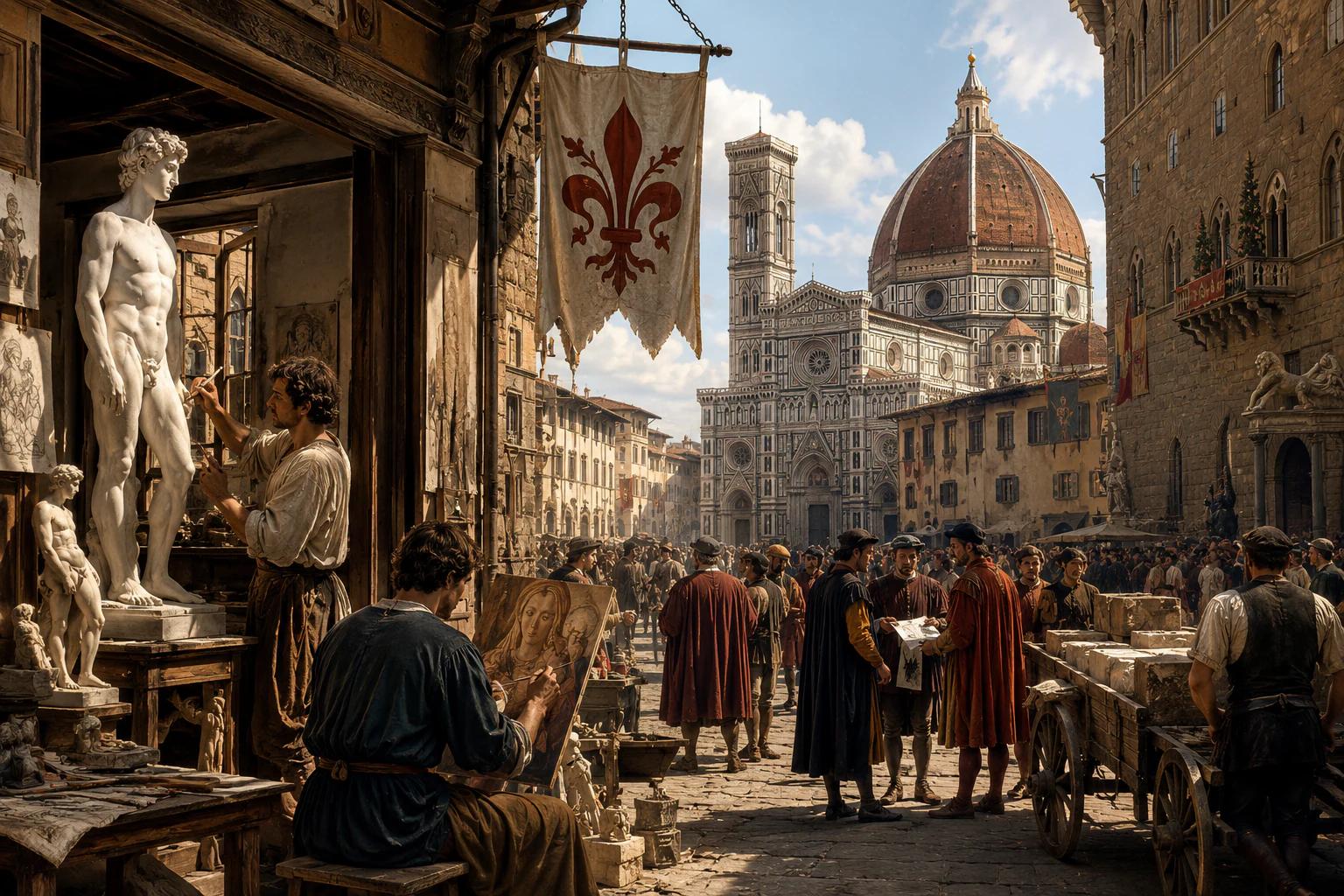
Artisans and patrons in fifteenth-century Florence preparing bronze and marble commissions in a busy civic workshop.
1401 CE
Step 2 of 101401 CEAccessible mode

Florence Becomes the Workshop

In the early 1400s, became the engine room of the Renaissance.

The city was rich from banking, cloth, and trade. Wealthy families and guilds spent money on churches, statues, and public buildings to show status.

Guilds were not just business groups. They organized civic life and funded major commissions, so art became part of politics and identity.

In 1401, a famous competition for bronze doors at the Florentine baptistery pushed artists to outperform rivals in design and technical skill.

Such contests rewarded daring ideas. Artists explored movement, depth, and emotion more boldly than before, aiming to impress citizens and patrons.

showed Europe that art could be civic ambition made visible. The city became a model others wanted to copy.

PremiumFree preview: 2 of 10 chapters

Continue The Renaissance

Sign up to a Premium account to read the remaining chapters of this story.

A paid Premium subscription also gives you full access to every other Premium story.

See Premium options

Coming next

  1. Chapter 3Humanism Takes Shape
  2. Chapter 4The Fall of Constantinople
  3. Chapter 5Printing Spreads the New Learning

And 5 more chapters to follow.

Keep exploring

Follow the connected history

Explore closely connected stories and free figure profiles. Premium stories open with a public preview.

References

Sources and historical notes

Sources used to check this page, selected recommendations and historical notes.

Sources used

  1. The Metropolitan Museum of Art, “Florence and Central Italy, 1400–1600 A.D.,”

    Florentine patronage, art and Renaissance chronology.

    Open source
  2. The Metropolitan Museum of Art, “Balkan Peninsula, 1400–1600 A.D.,”

    Byzantine scholars in Italy and the Ottoman conquest of Constantinople.

    Open source
  3. British Library Journal, “The Mainz indulgences of 1454/5,”

    Evidence for early European movable-type printing.

    Open source
  4. Stanford Encyclopedia of Philosophy, “Nicolaus Copernicus,”

    Copernicus’s models, astronomical sources and reception.

    Open source
  5. The Metropolitan Museum of Art, “Italian Renaissance Art,” Open source
  6. The British Library, “The Renaissance,” Open source
  7. Fordham University, “Internet Modern History Sourcebook: Renaissance,” Open source

Additional sources and notes

Loading reviewed claim sources...

Our editorial approach · Report a historical error

A monthly route through history

Find out first about the latest published stories, feature notes and occasional Premium offers in one monthly email.