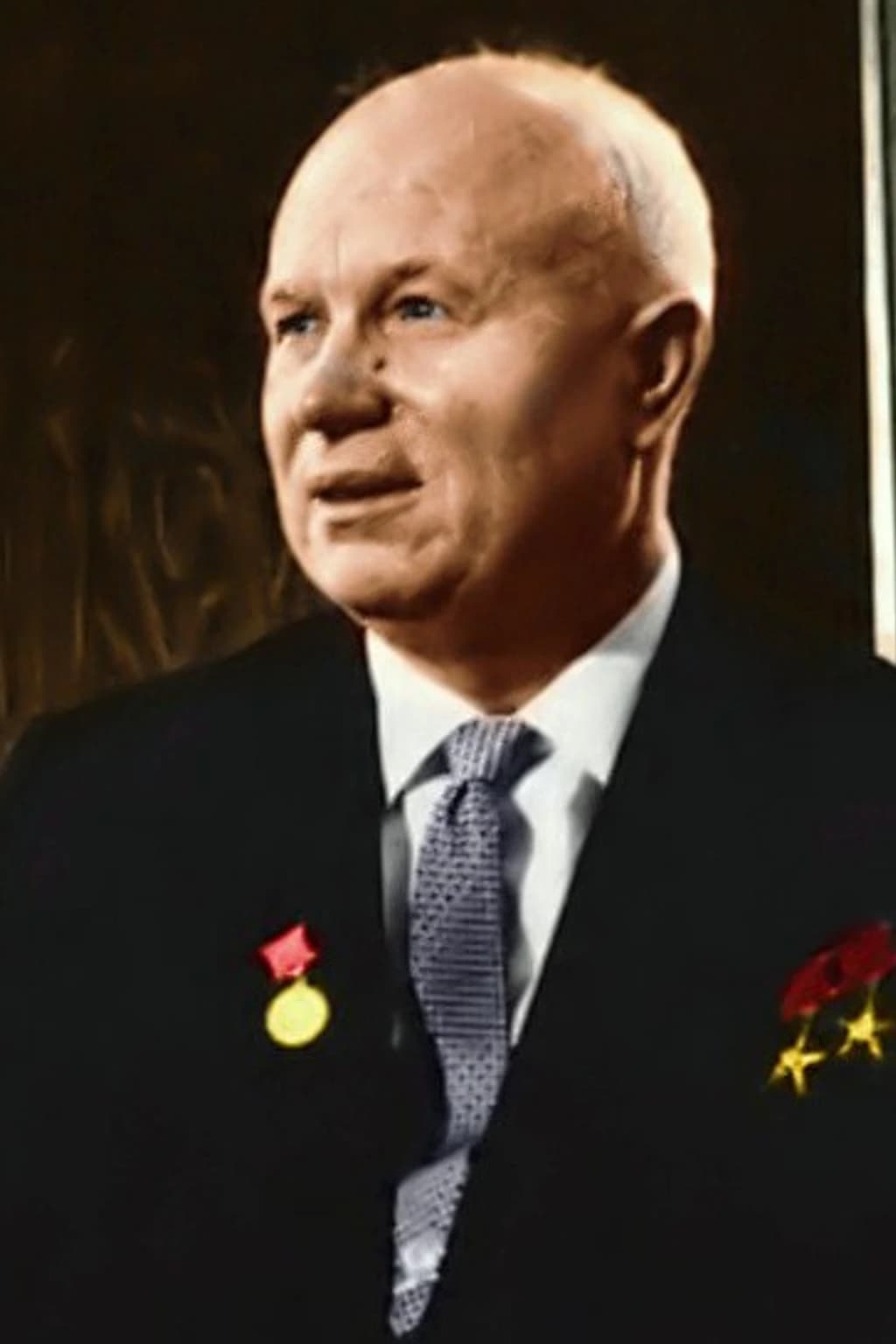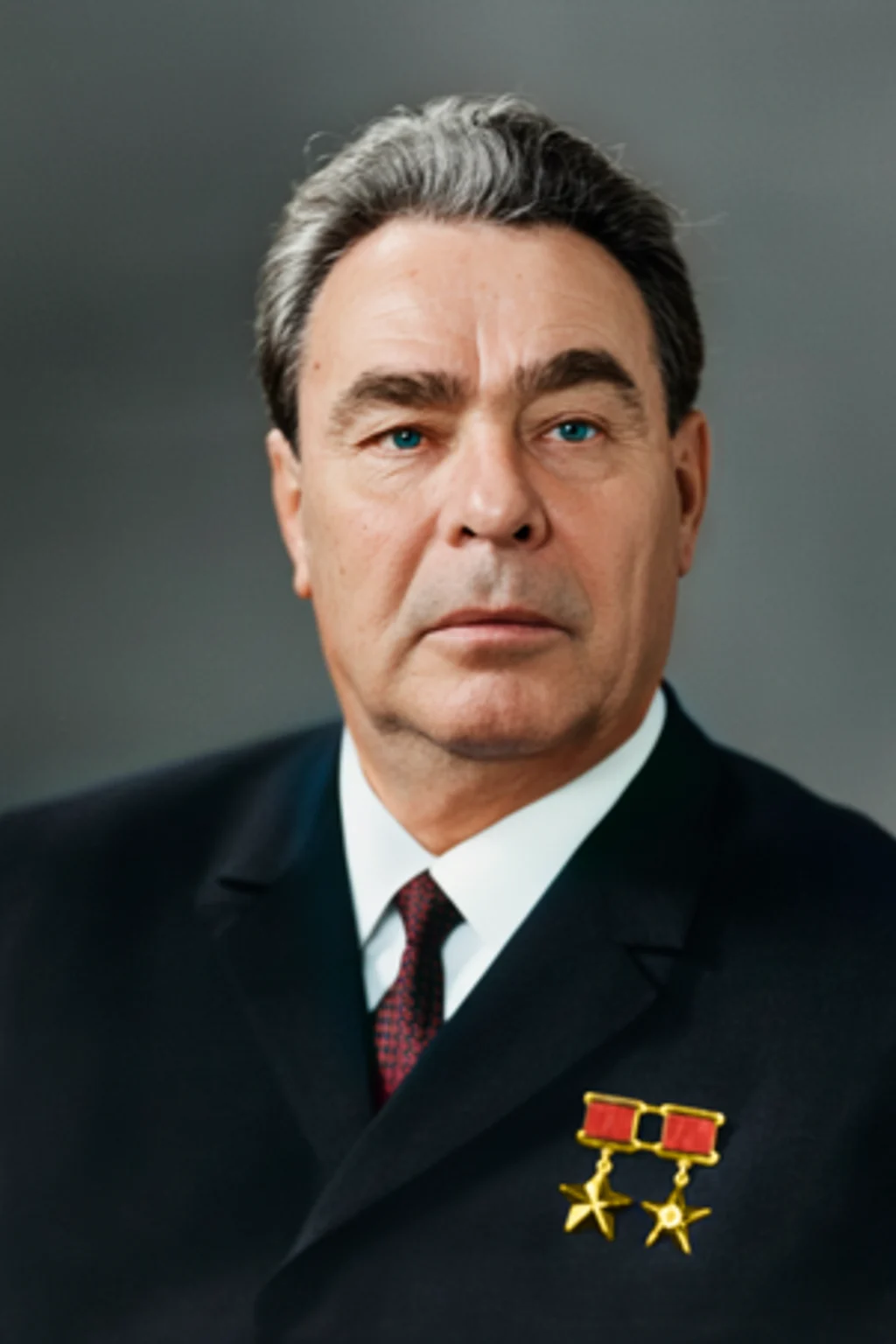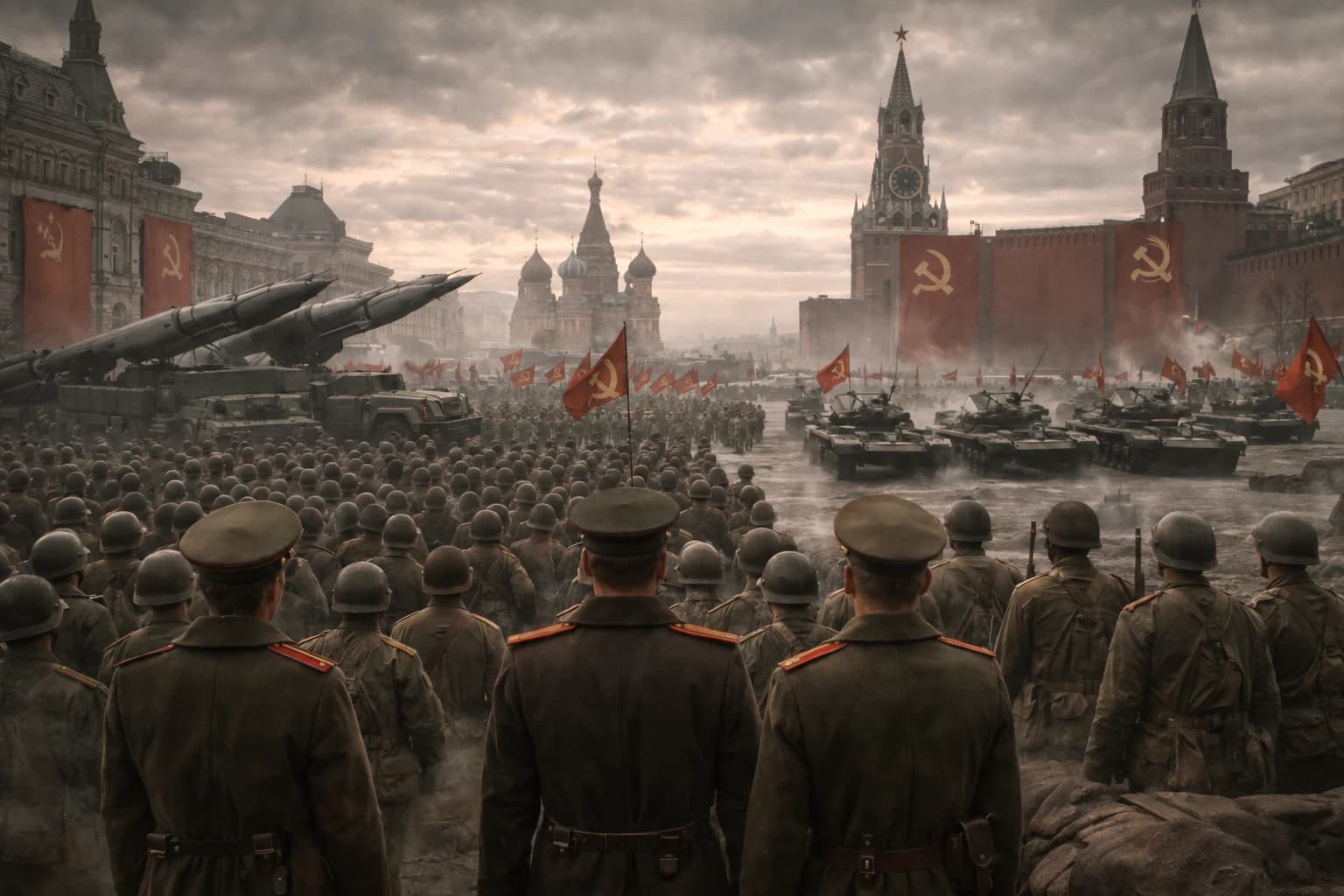
Soviet military parade in Moscow with red banners, soldiers, armoured vehicles, and a plain red wall panel.
Premium Story

The Soviets

Trace Soviet history from revolution and Stalinism to superpower rivalry, stagnation, reform, and collapse.

Start the storyExplore Premium

11 chapters

Next

Content note

This story discusses violence, persecution, mass death, and human suffering in an educational historical context.

Context

Introduction

Overview

The Bolsheviks seized power in Russia in 1917 and tried to build a state that would transform society. The Soviet Union that emerged became a major world power through industrialisation and war, but its rule also brought repression and immense human cost. Its collapse in 1991 ended a defining political experiment of the twentieth century.

What you'll learn: You'll understand how communist ideology, one-party rule, and state violence built and sustained the Soviet Union, why it became one of the most powerful states in history, and why it ultimately collapsed. This story connects Soviet origins to Cold War rivalry, everyday life under communist rule, and the world the Soviet experiment left behind.

Key forces

The Bolshevik Seizure of Power
1917 CE
Step 1 of 101917 CEAccessible mode

The Bolshevik Seizure of Power

Russia in 1917 was a country at breaking point. A century of imperial rule was about to end in a single autumn night.

By October 1917, Russia had suffered nearly three years of catastrophic losses in World War One. The tsar had already fallen months earlier, replaced by a Provisional Government that made a fatal mistake — it kept fighting the war.

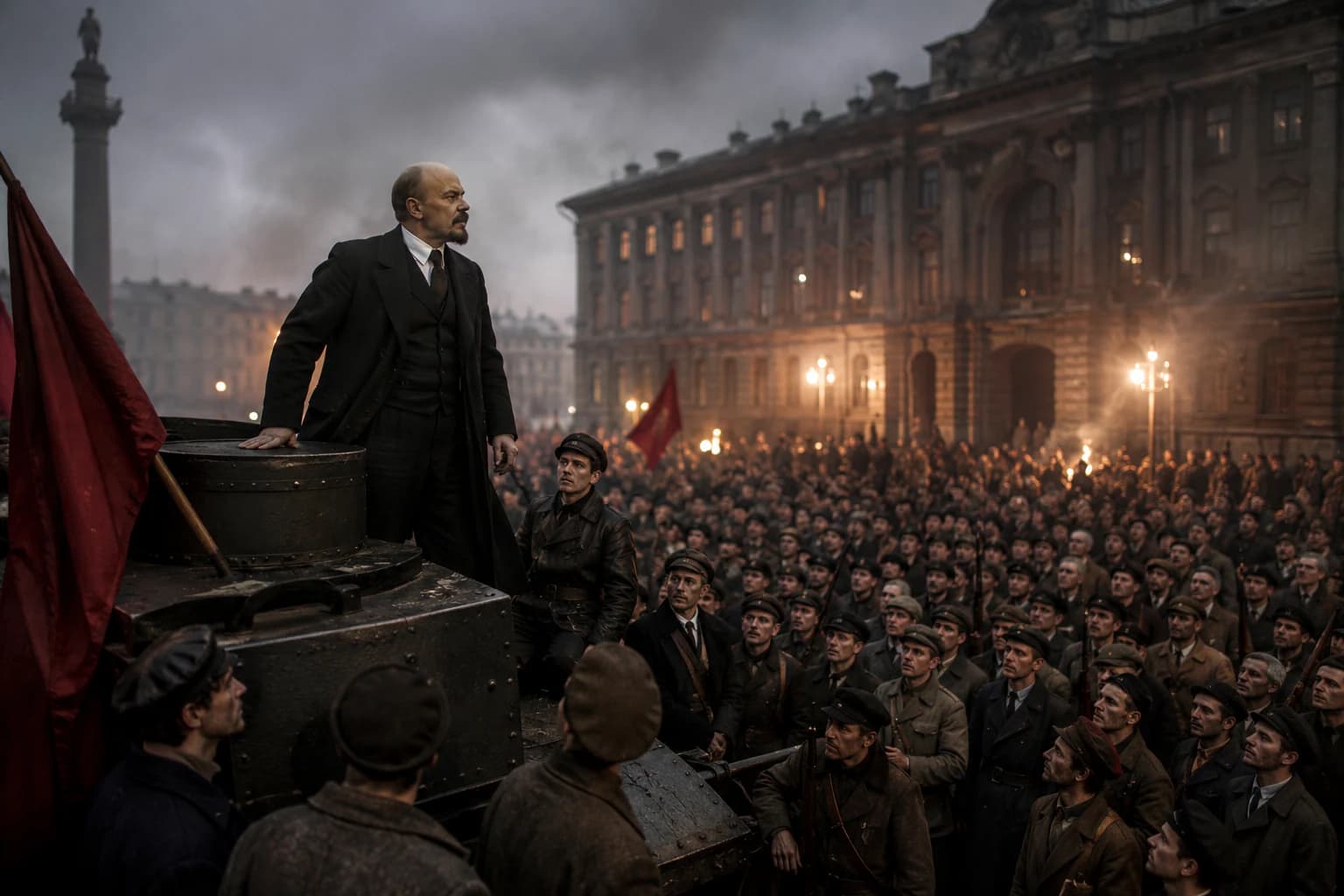
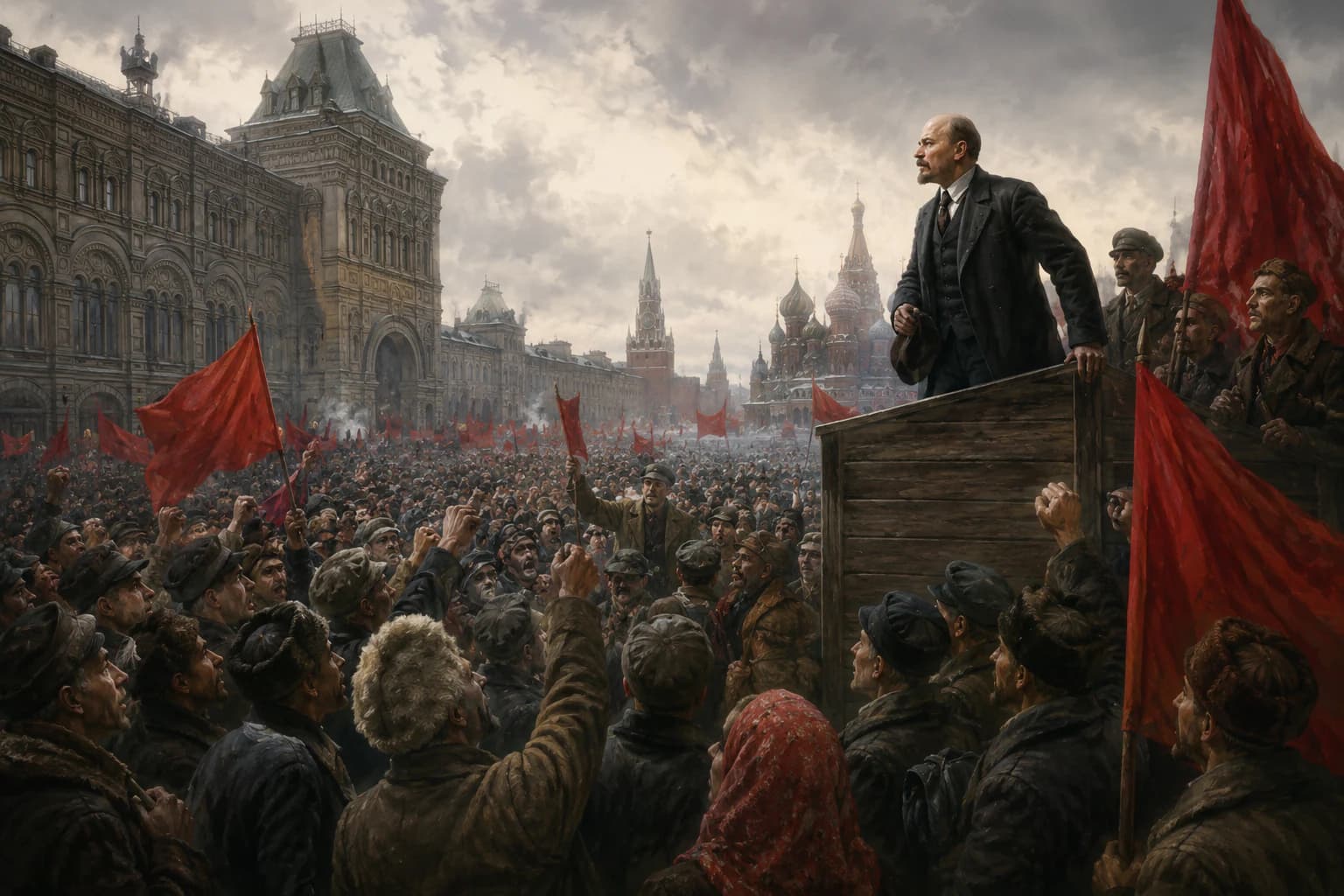
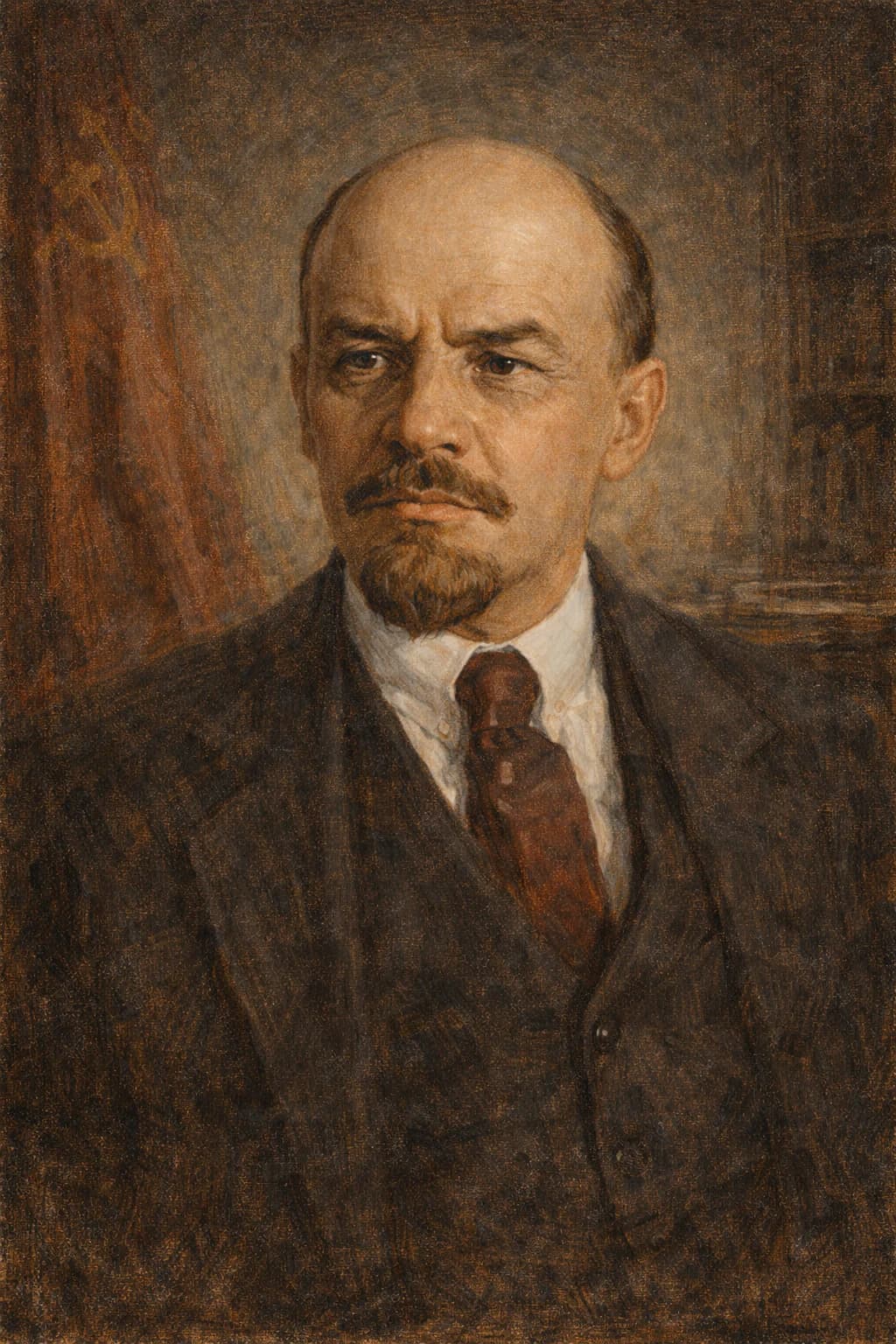
The Bolsheviks, led by Vladimir Lenin, offered something different. Peace. Land. Bread. Three words that cut through the noise of a country exhausted and hungry.

“The Provisional Government chose the war. Lenin chose the people.”

In October 1917, Bolshevik forces seized key buildings in and overthrew the government. There was little resistance. It was not a mass uprising — it was a swift, organised seizure of power.

From that moment, Russia was set on a radically different path. A one-party communist state began to take shape, and the modern world would never be quite the same.

Civil War and Red Victory
1918 CE
Step 2 of 101918 CEAccessible mode

Civil War and Red Victory

After the Bolsheviks seized power, most of Russia refused to accept them. What followed was one of the most brutal civil wars of the twentieth century.

The Russian Civil War lasted from 1918 to 1921. On one side were the Reds — the Bolsheviks and their supporters. On the other were the Whites — a loose coalition of tsarists, liberals, foreign-backed armies, and anyone who opposed communist rule.

“The Reds won not because they were strong — but because the Whites were divided.”

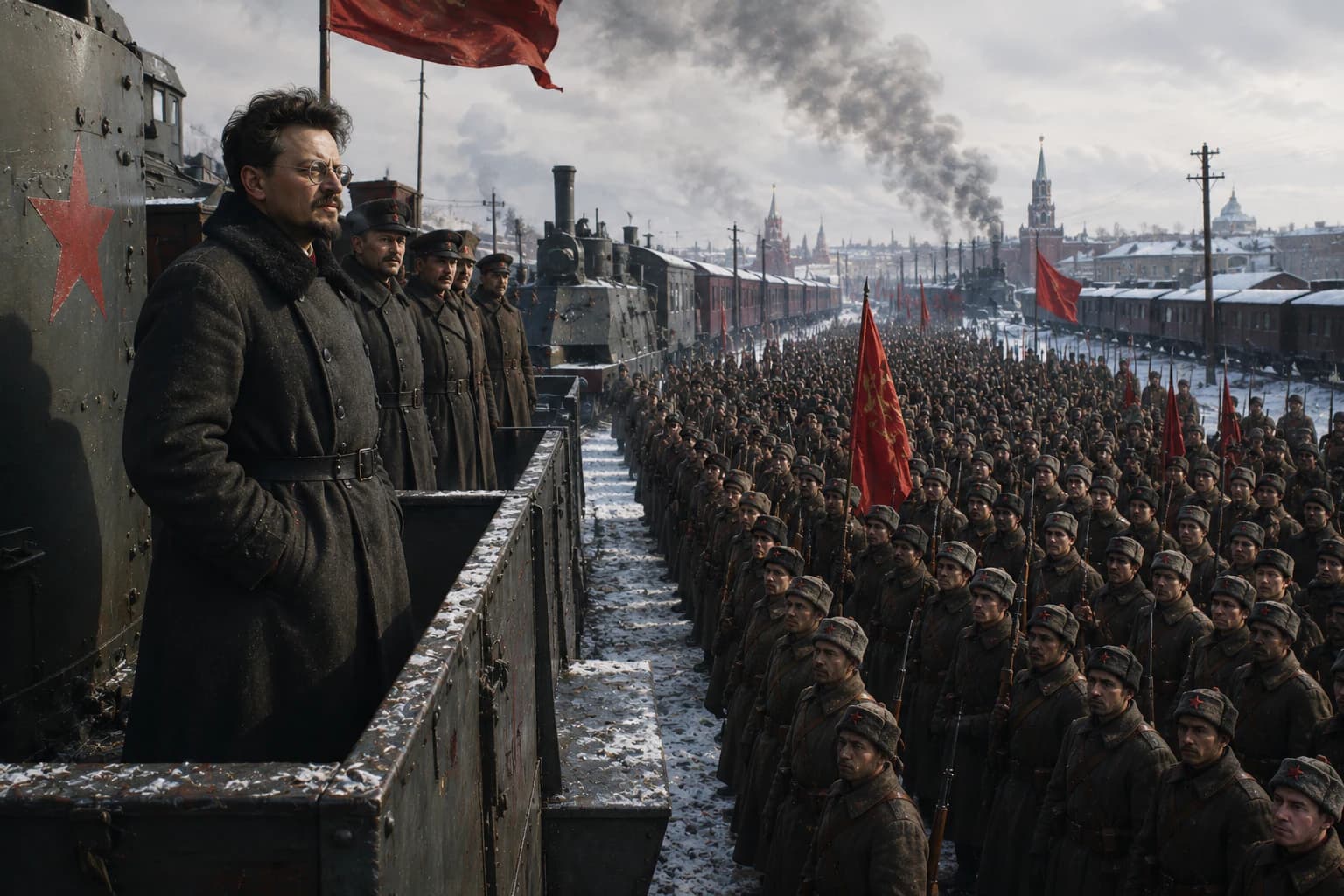
The Bolsheviks created the Red Army under Leon Trotsky, a ruthlessly effective fighting force built from scratch. They also created the Cheka — a secret police force that arrested, tortured, and executed suspected opponents.

This period introduced War Communism: the state seizing grain from peasants, controlling industry, and enforcing discipline at gunpoint. Famine killed millions.

When the Reds finally won, they had normalised something dangerous — the idea that terror, repression, and total state control were necessary tools of revolutionary survival. That mindset would define Soviet rule for decades.

The Soviet Union Is Founded
1922 CE
Step 3 of 101922 CEAccessible mode

The Soviet Union Is Founded

In December 1922, the Soviet Union was officially born. But what kind of state was it, and who was really in charge?

The Union of Soviet Socialist Republics brought together Russia, Ukraine, Belarus, and the Caucasian republics under a single government. On paper, it was a federal state where different nations had their own republics and cultural rights.

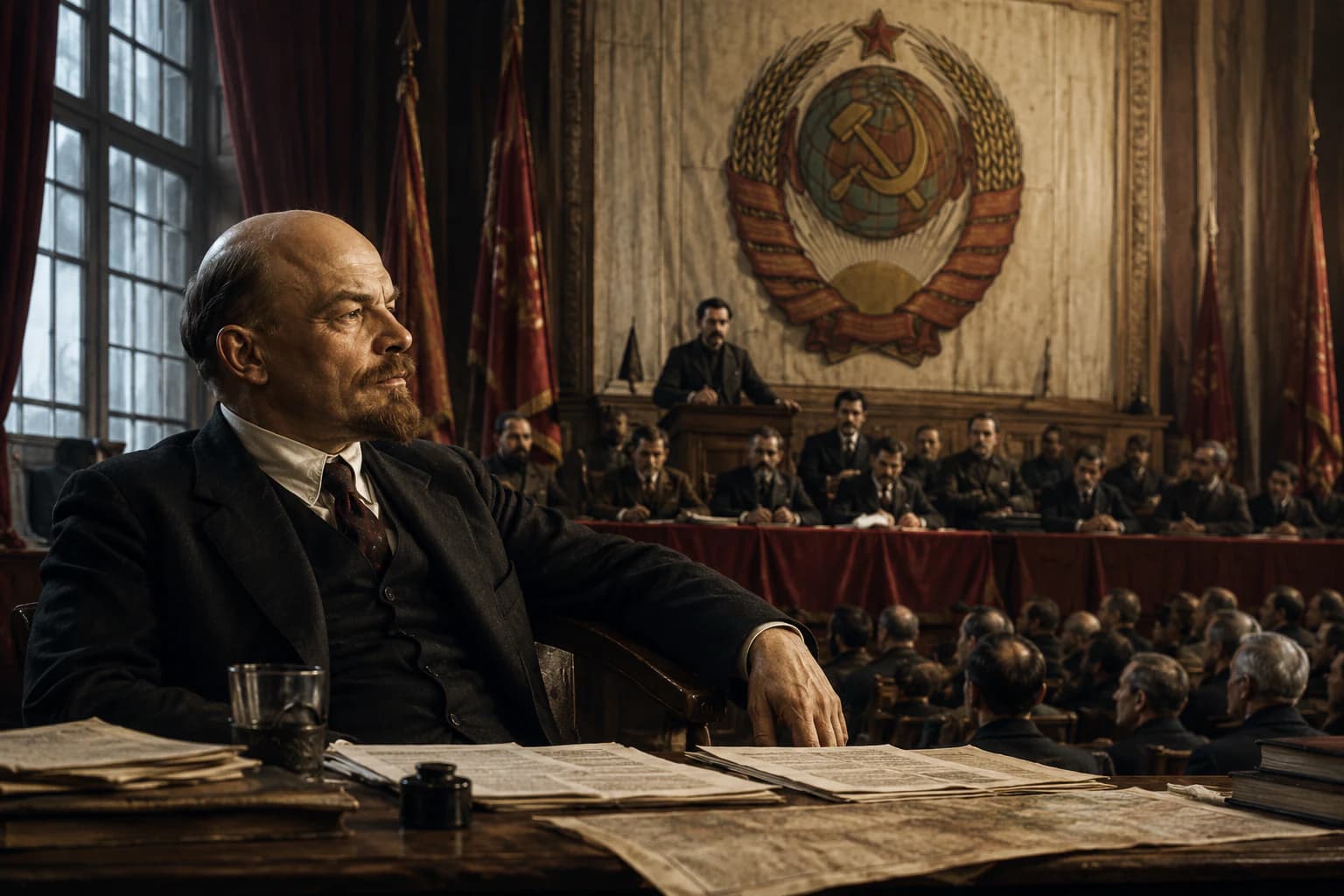
In practice, one institution ran everything: the Communist Party. The party controlled the government, the army, the press, and the economy. Without party membership, real power was simply out of reach.

“The Soviet Union called itself a union of free peoples. In reality it was a one-party state dressed in federal clothes.”

Lenin had designed this system. He believed the party represented the working class, so the party's decisions were by definition correct. Organised dissent was not permitted.

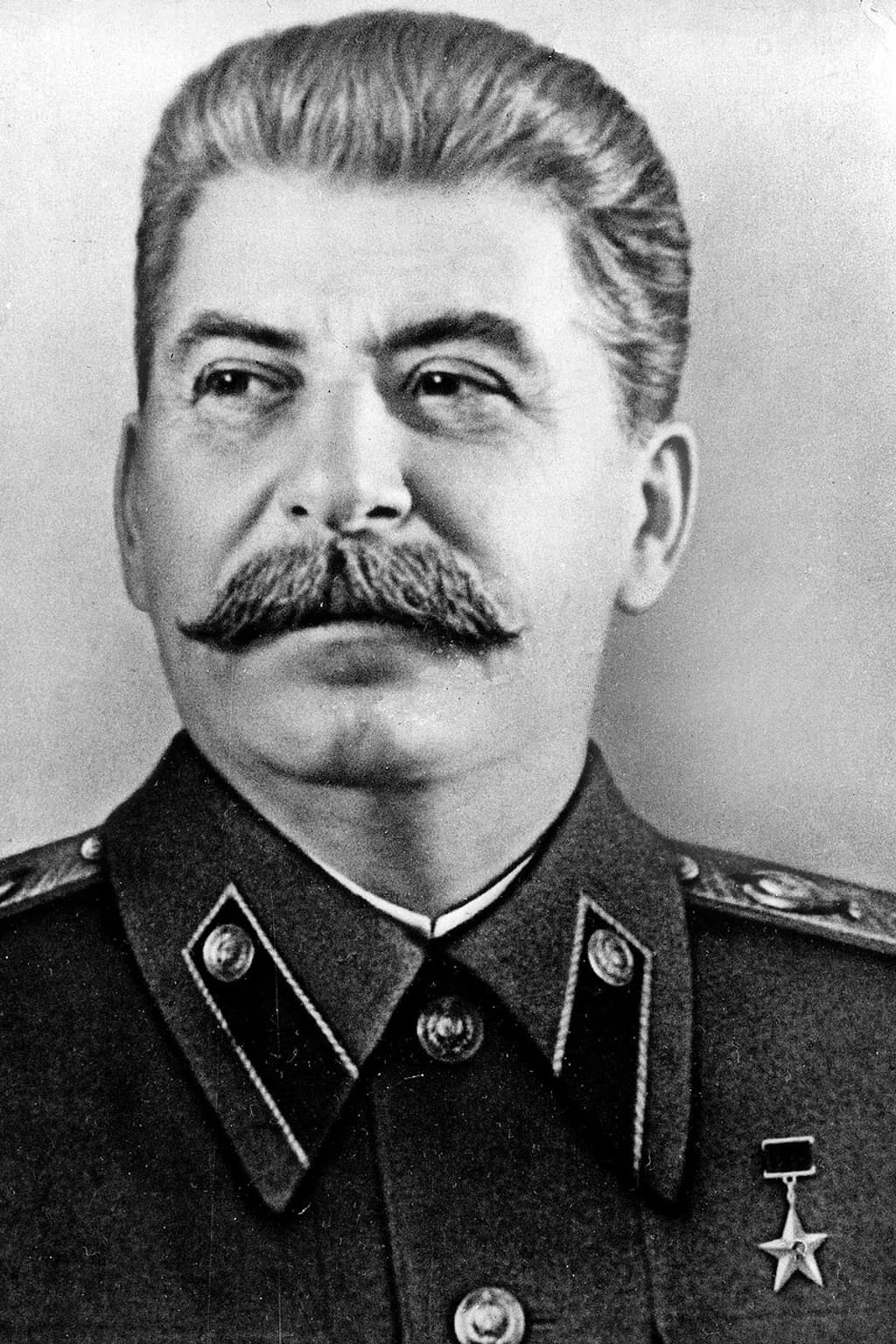
By 1922, Lenin was already gravely ill. A succession struggle was beginning. The state he had built would soon pass to a man who would push its logic much further — and with far more brutal consequences.

Premium3 of 10 chapters read

Stalin's Revolution from Above

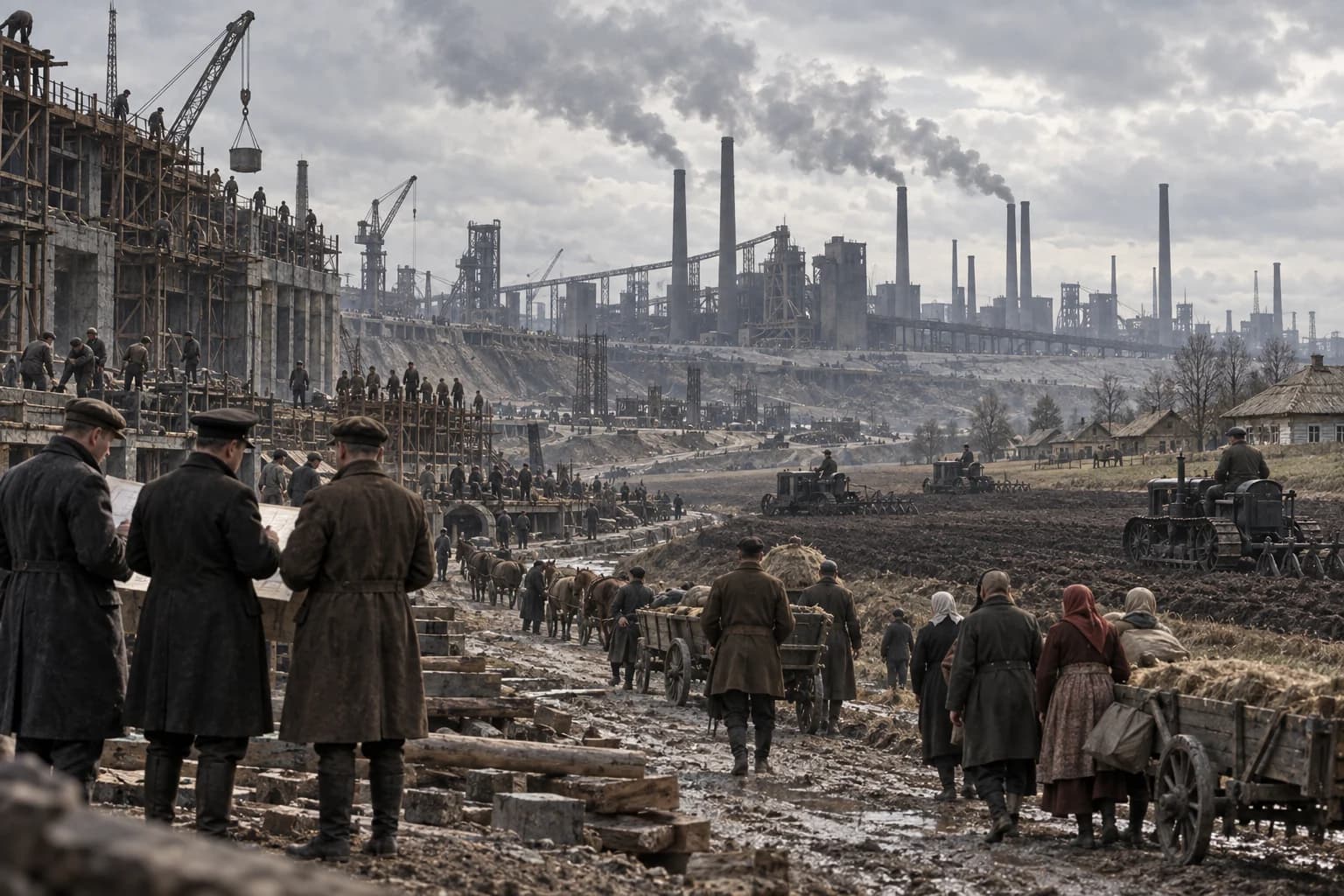
The opening chapters show revolution becoming a new state. Premium follows the Soviet project at its most consequential and brutal: Stalin transforms society by force, terror reaches into everyday life, victory over Nazi Germany creates an empire, and the system eventually exhausts itself.

Continue the story with Premium

Coming next

  1. Chapter 4Stalin's Revolution from Above
  2. Chapter 5The Great Terror
  3. Chapter 6The Great Patriotic War

And 4 more chapters to follow.

Explore connected stories

Follow the connected history

Explore closely connected stories and free figure profiles. Premium stories open with a public preview.

Unlock full storyBrowse stories

References

Sources & Further Reading

Reliable sources, primary-source collections and reading paths connected to this page.

Sources used

  1. Michigan State University, “Seventeen Moments in Soviet History,” Open source
  2. Library of Congress, “Revelations from the Russian Archives,” Open source

Further reading

  1. Sheila Fitzpatrick, Everyday Stalinism, Oxford University Press.

Primary sources

  1. Wilson Center Digital Archive, “Soviet Union,” Open source

Reviewed claim sources

Loading reviewed claim sources...

A monthly route through history

Find out first about the latest published stories, feature notes and occasional Premium offers in one monthly email.