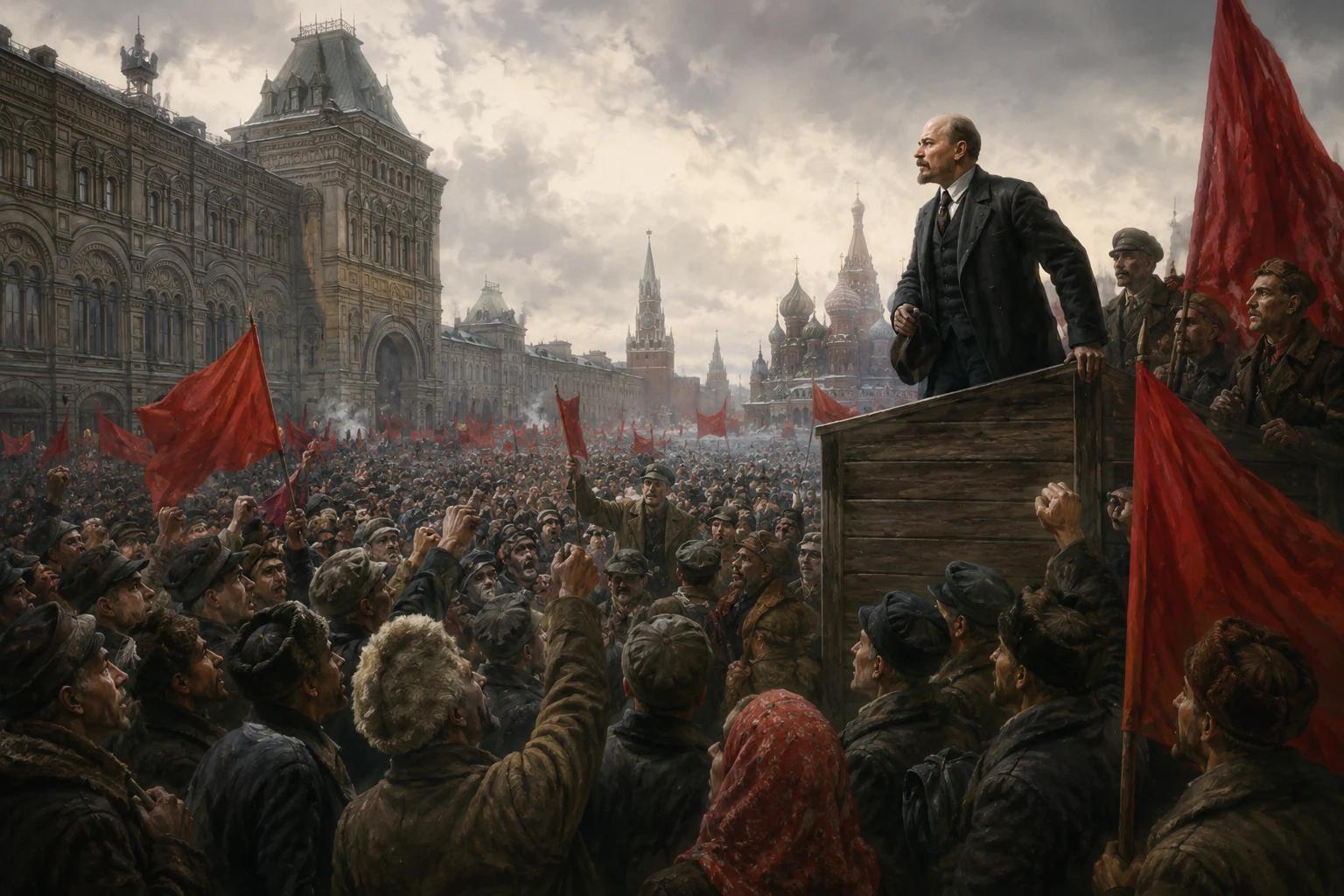
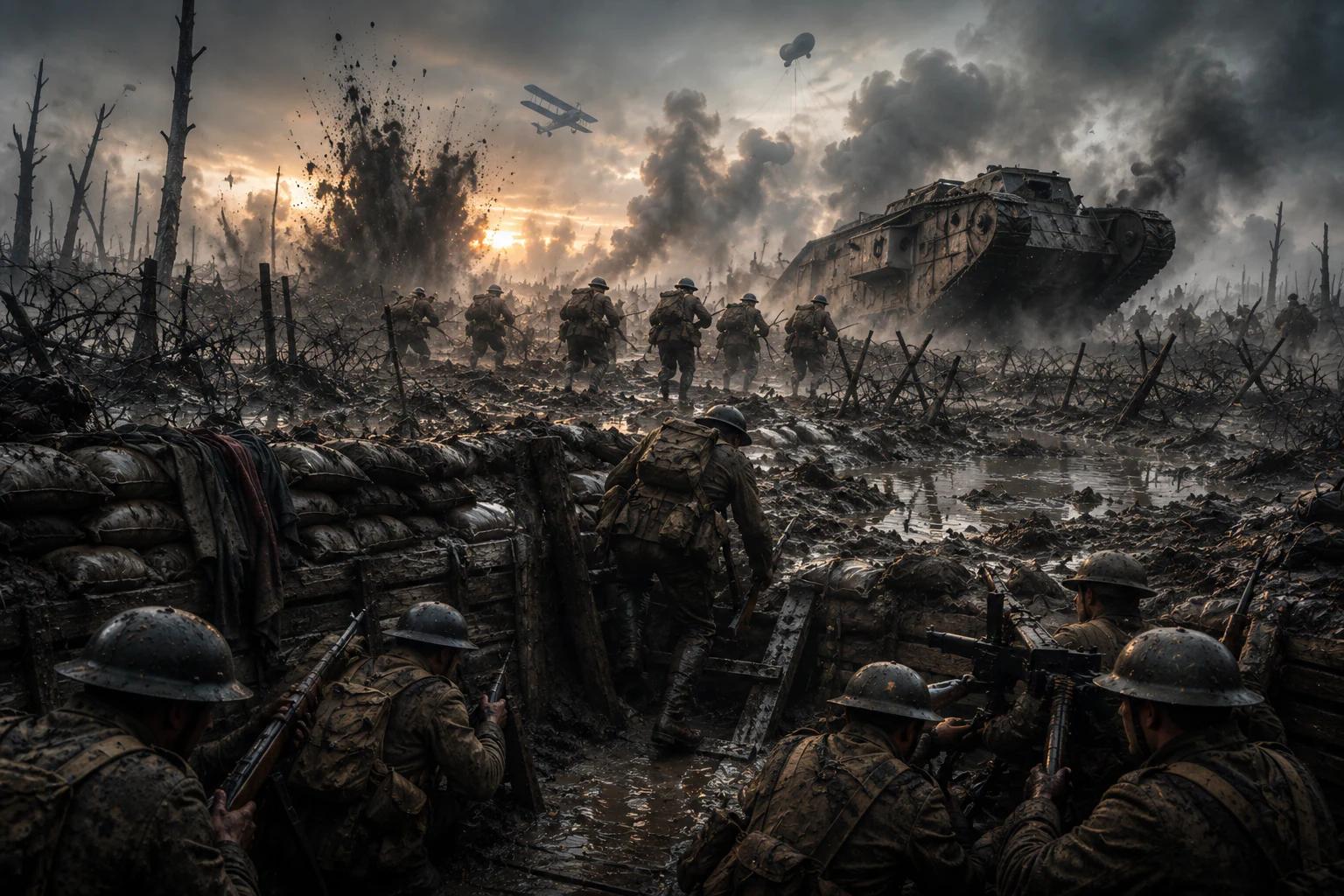
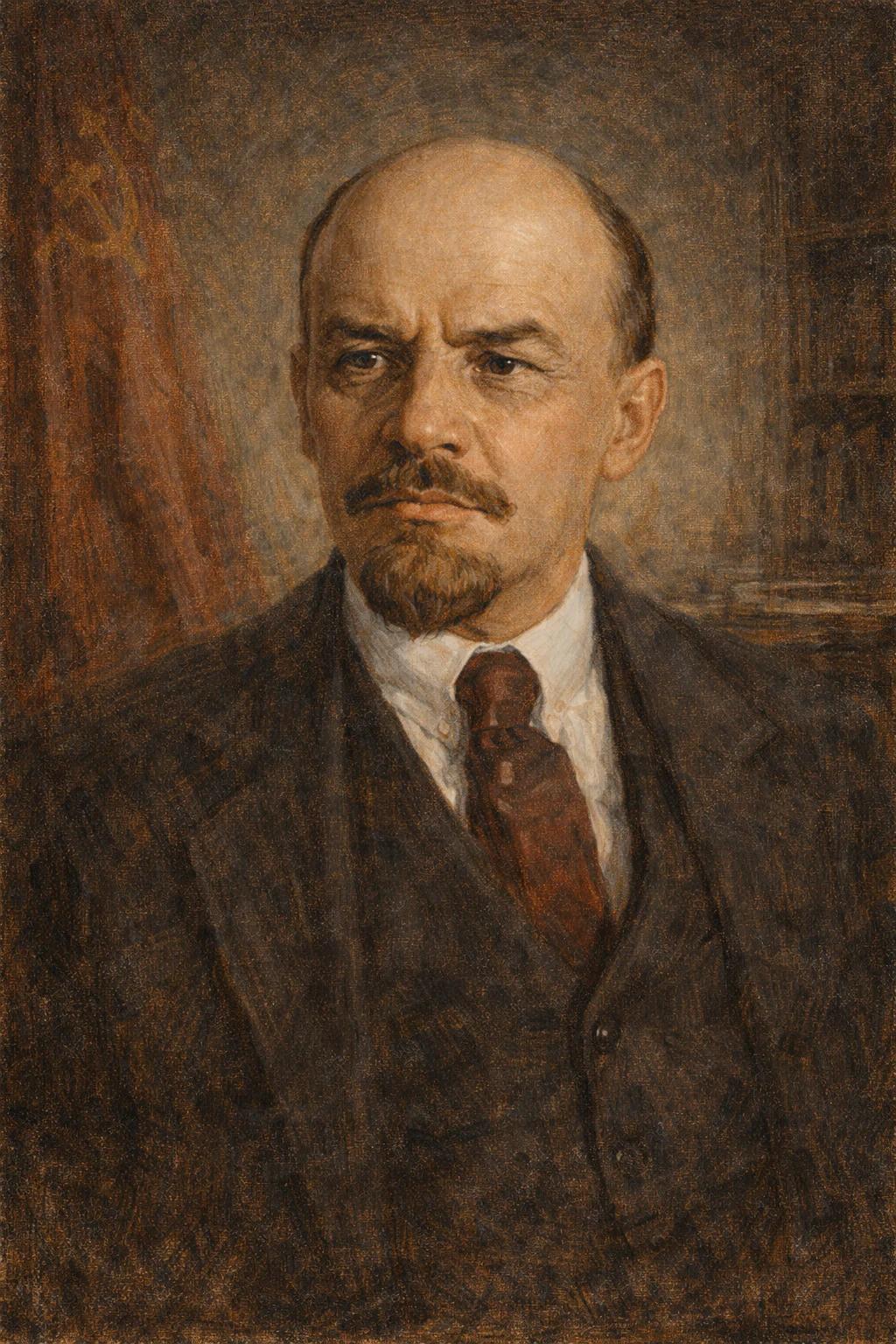
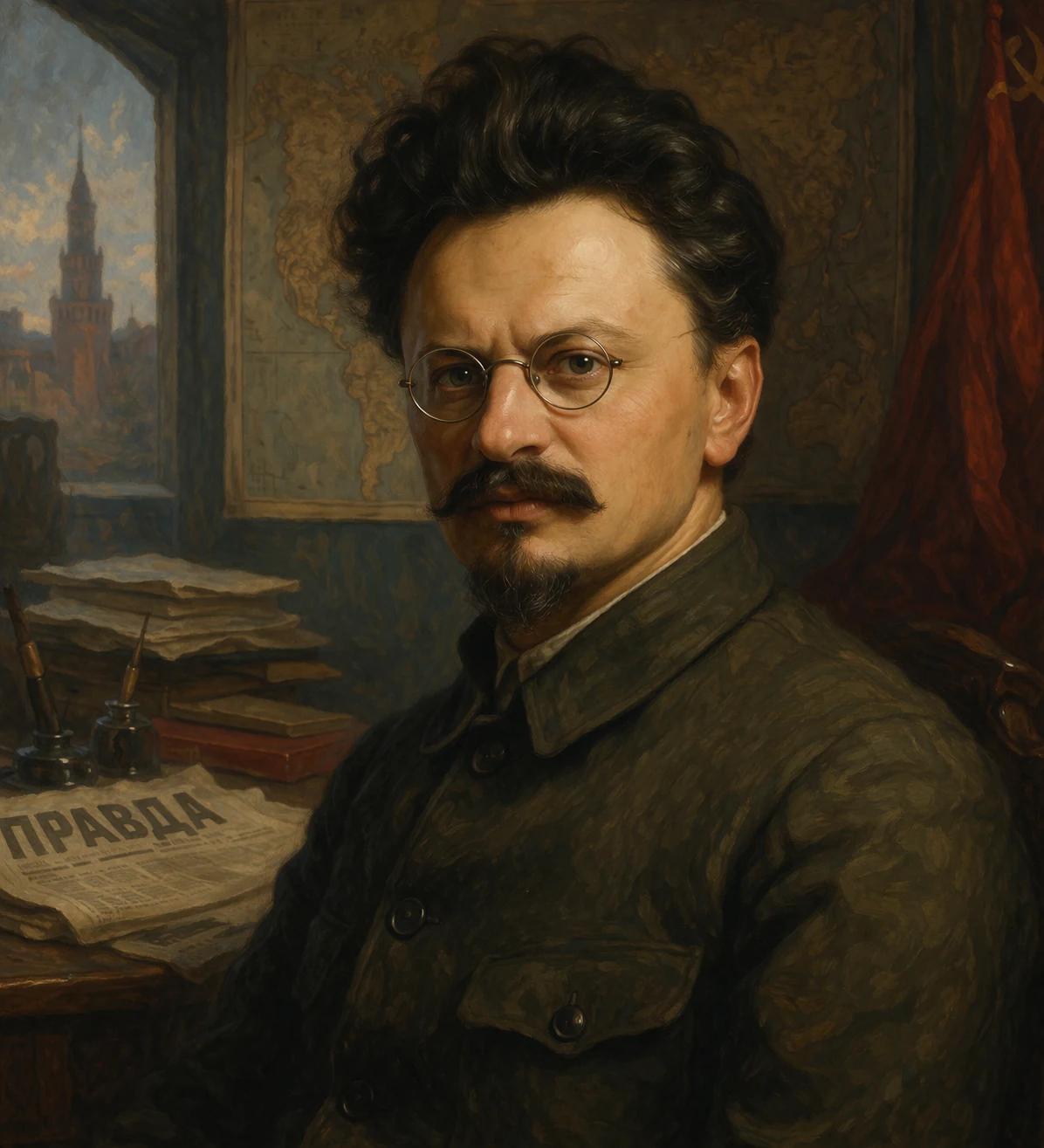
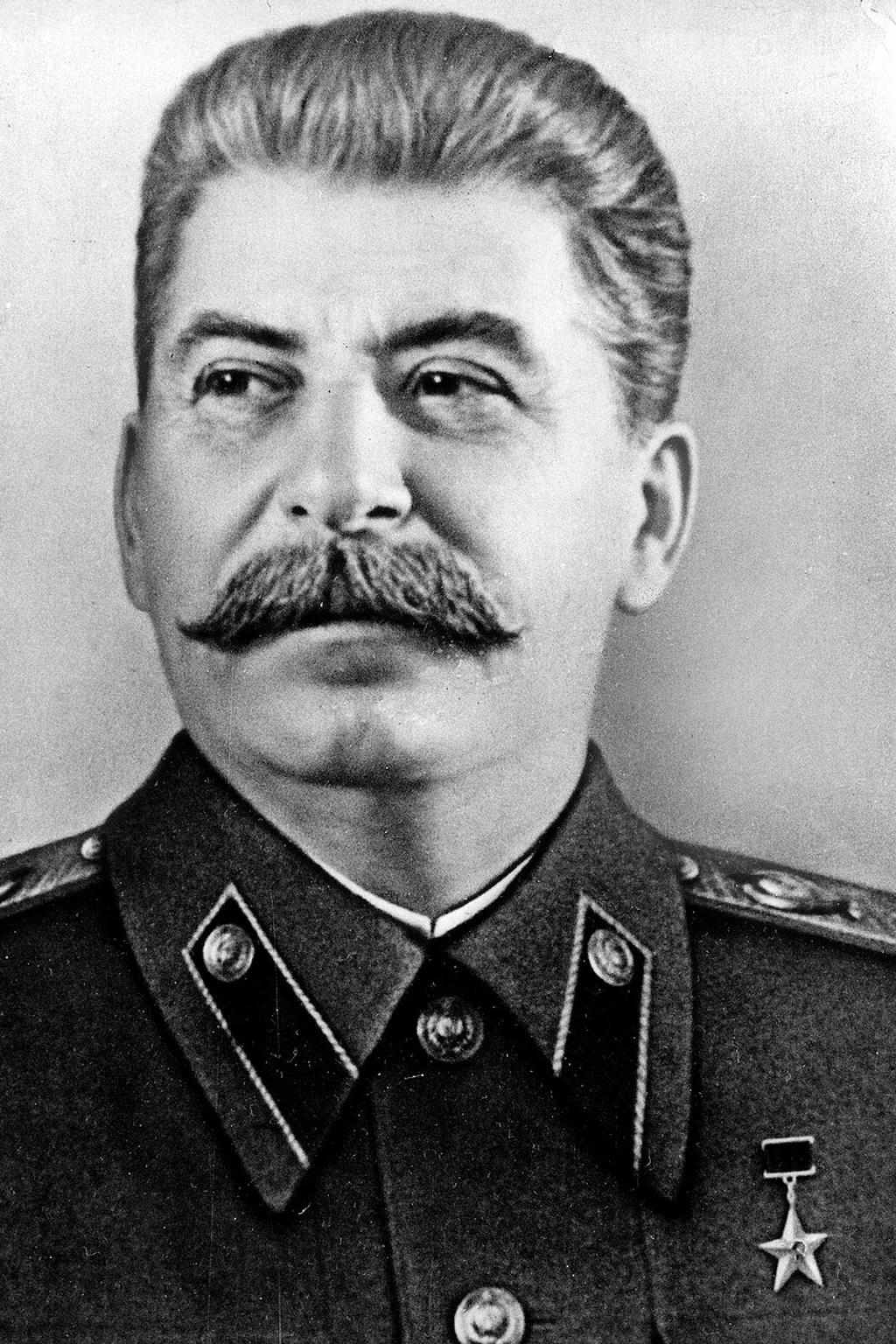
From the 1905 crisis to the creation of the USSR, the Russian Revolution transformed imperial collapse into a new one-party socialist state.
The 1905 uprising revealed the Romanov state's deep fragility long before 1917.
World War I intensified military, economic, and political breakdown across the empire.
Common questions
What caused the Russian Revolution?
The revolution was caused by autocracy, land hunger, worker unrest, military disaster in World War I, food shortages, political repression, and the collapse of confidence in Nicholas II.
In October 1917 — November in the Gregorian calendar — Lenin's Bolsheviks seized power from the Provisional Government. They promised peace, land and Soviet authority; one-party rule developed through subsequent repression and the defeat of political rivals.
How did the Russian Revolution lead to the Soviet Union?
Bolshevik victory in civil war let the Communist Party build a new state. In 1922, the USSR was formally created from Soviet republics under party control.
The Bolsheviks seized power in October and survived through civil war, coercion, and centralized control.
1905 CE
Step 1 of 101905 CEAccessible mode
The Tsarist Autocracy Under Strain
In 1905, Russia looked powerful on paper, but one year of protest showed how fragile the tsar's system really was.
The crisis exploded after Bloody Sunday, when troops fired on peaceful marchers in St Petersburg. Many Russians stopped believing the tsar would protect them.
Strikes spread across factories and railways. Workers formed soviets to coordinate demands. In the countryside, peasants attacked estates and demanded land reform.
But the monarchy kept real power. Election rules were changed, opposition voices were contained, and police repression returned quickly.
So 1905 solved little. It taught workers, peasants, and soldiers that protest could shake the regime, and it showed that reform from above would remain limited.
1914 CE
Step 2 of 101914 CEAccessible mode
Russia Enters the Great War
When war began in 1914, many Russians supported it. Within two years, that support had turned into anger and exhaustion.
The government mobilized millions of men quickly. Crowds cheered in major cities, and leaders hoped war would unite society around the throne.
Early optimism faded as Russian armies suffered major defeats, especially during the retreat of 1915. The record was uneven: Russia also won important victories against Austria-Hungary.
Severe shortages of weapons and shells hampered the army, especially in 1915. Production later improved, but losses, transport problems and distrust of leadership continued to take their toll.
Railways were overwhelmed. Food and fuel reached fronts unevenly, while cities faced shortages and rising prices. Everyday life became harder each month.
Instead of strengthening tsarism, the war exposed weak leadership and weak institutions. Pressure on the empire grew until the political system could no longer absorb it.
1916 CE
Step 3 of 101916 CEAccessible mode
War Weariness and Social Breakdown
By 1916, many Russians believed the state was failing at the front and at home. Daily life became a struggle.
Food shortages hit major cities hard. Families waited in long bread lines, and rumors spread that officials were hoarding supplies.
Prices rose much faster than wages. Inflation wiped out workers' pay and hurt soldiers' families, increasing strikes and social anger.
At the front, desertion grew as units suffered losses and poor supply. Soldiers questioned why they were still fighting.
Nicholas II made things worse by taking personal command of the army in 1915. Defeats now damaged his authority directly.
In the capital, distrust of the court deepened around stories of corruption and chaos. By late 1916, faith in the old regime was collapsing.
PremiumFree preview: 3 of 10 chapters
Continue The Russian Revolution
Sign up to a Premium account to read the remaining chapters of this story.
A paid Premium subscription also gives you full access to every other Premium story.