Accessible gives a lighter overview. Deep Dive tells the fuller story.
Quick Answers
How did Christianity rise?
Christianity began among Jewish followers of Jesus and spread through missions, letters and communities across the Roman world. Imperial toleration and patronage later gave churches greater public influence, and Christian institutions developed in many different settings.
At a glance
The story covers roughly 30 to 1500 CE, with a focus on the Roman world and medieval Europe.
The Roman government’s treatment of Christianity changed from intermittent persecution to toleration and support for particular forms of the faith.
Christianity began within first-century Judaism and spread through communities across the Roman world.
The belief that Jesus had been crucified and raised from the dead gave the earliest Christians their central proclamation and communal identity.
Common questions
Where did Christianity begin?
Christianity began among Jewish followers of Jesus in and . was an early centre. The movement then spread through Jewish and Gentile communities around the eastern Mediterranean and beyond.
How did Christianity spread through the Roman Empire?
Christianity spread through missionaries, trade routes, urban communities, letters, scripture, charity, household networks, and the appeal of belonging to a disciplined religious community.
Who was Paul the Apostle?
Paul was an early Christian missionary whose letters and journeys helped bring the Jesus movement to Gentile communities and shape Christian theology.
When did Christianity become legal?
Galerius issued a toleration decree in 311 CE. In 313, Constantine and Licinius agreed on wider freedom of worship and the return of confiscated Christian property. Later emperors used laws and patronage to favour particular Christian teachings.
Context
Introduction
Overview
Christianity began among Jewish followers of Jesus in and . It spread through communities, letters and travel around the Roman world. Imperial persecution, toleration and patronage changed its public position over time. Churches later helped shape medieval European life in different ways.
Key forces
Christianity began within first-century Judaism and spread through communities across the Roman world.
The belief that God had raised Jesus after his crucifixion was central to the early movement.
Roman persecution varied by place and period. Christians remembered martyrs as witnesses to their faith.
Imperial toleration and patronage changed the public position of Christian churches.
30 CE
Step 1 of 1030 CEAccessible mode
The Ministry of Jesus
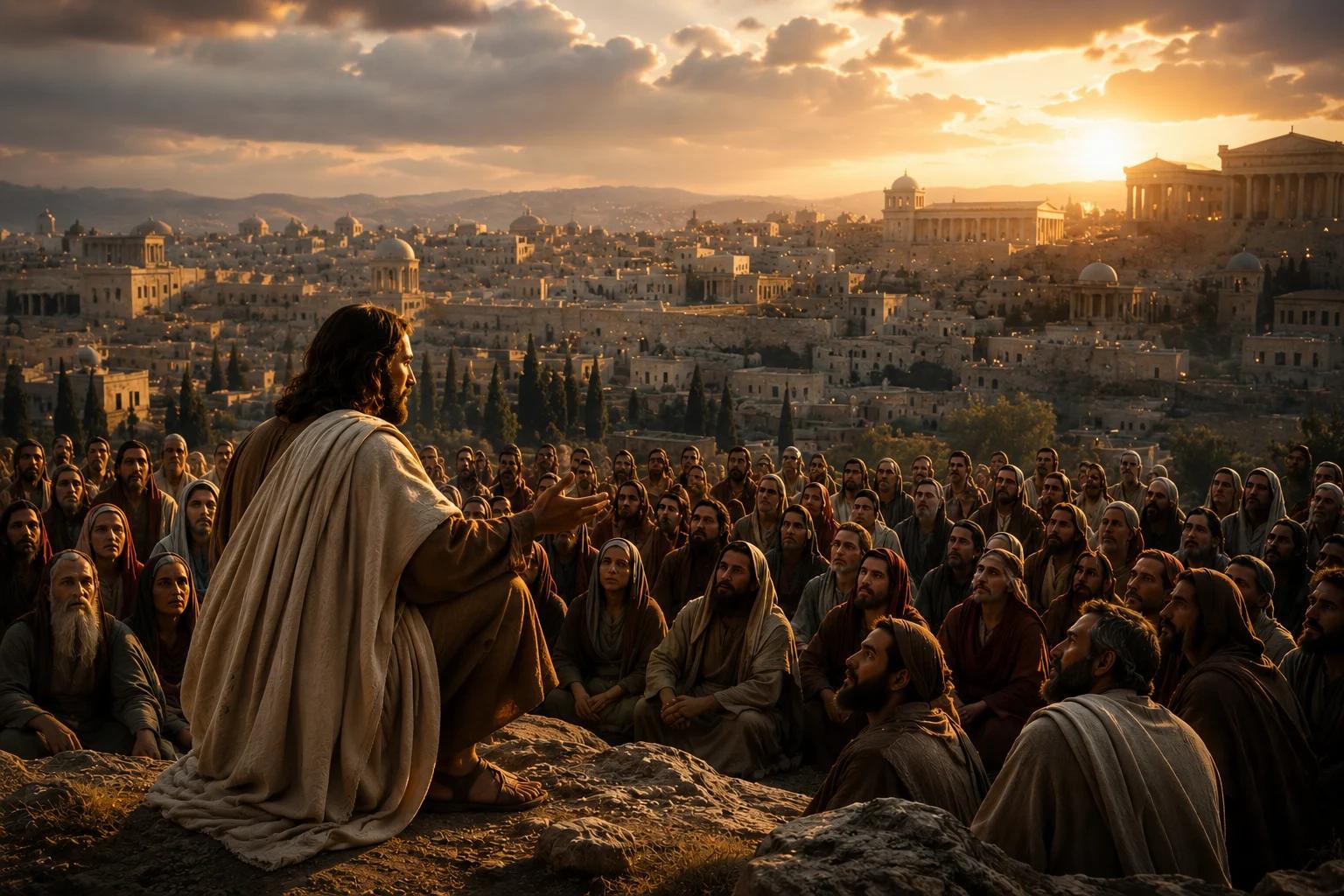
Around the late 20s or early 30s CE, Jesus of Nazareth gathered followers in . The Gospels describe him calling people to repentance and announcing that the kingdom of God was near.
Jesus lived in a Jewish world under Roman power. His teaching drew on Jewish scriptures and traditions.
He taught through parables, healed the sick according to the Gospel traditions, gathered disciples and welcomed people who were often pushed to the edges of respectable society.
In the Gospel accounts, Jesus teaches about forgiveness, care for the poor, love of neighbour and the coming of God's reign.
The people who had gathered around Jesus carried on his teaching after his death. Their communities became the beginnings of Christianity.
c. 30–33 CE
Step 2 of 10c. 30–33 CEAccessible mode
The Crucifixion and Resurrection Faith
Jesus was crucified in under the Roman prefect Pontius Pilate. The exact year is uncertain. For his followers, the execution became the starting point of a new proclamation.
Crucifixion was a Roman punishment designed to shame and terrify. It marked Jesus as defeated in the eyes of imperial power.
But the first Christians came to believe that God had raised Jesus from the dead. That belief transformed grief into mission.
The resurrection faith gave meaning to the cross. Jesus' death was understood as sacrifice, victory and the fulfilment of God's plan.
Early Christian writings describe communities gathering to pray, share meals, baptise new believers and proclaim Jesus as Messiah and Lord.
49 CE
Step 3 of 1049 CEAccessible mode
Paul's Mission to the Gentiles
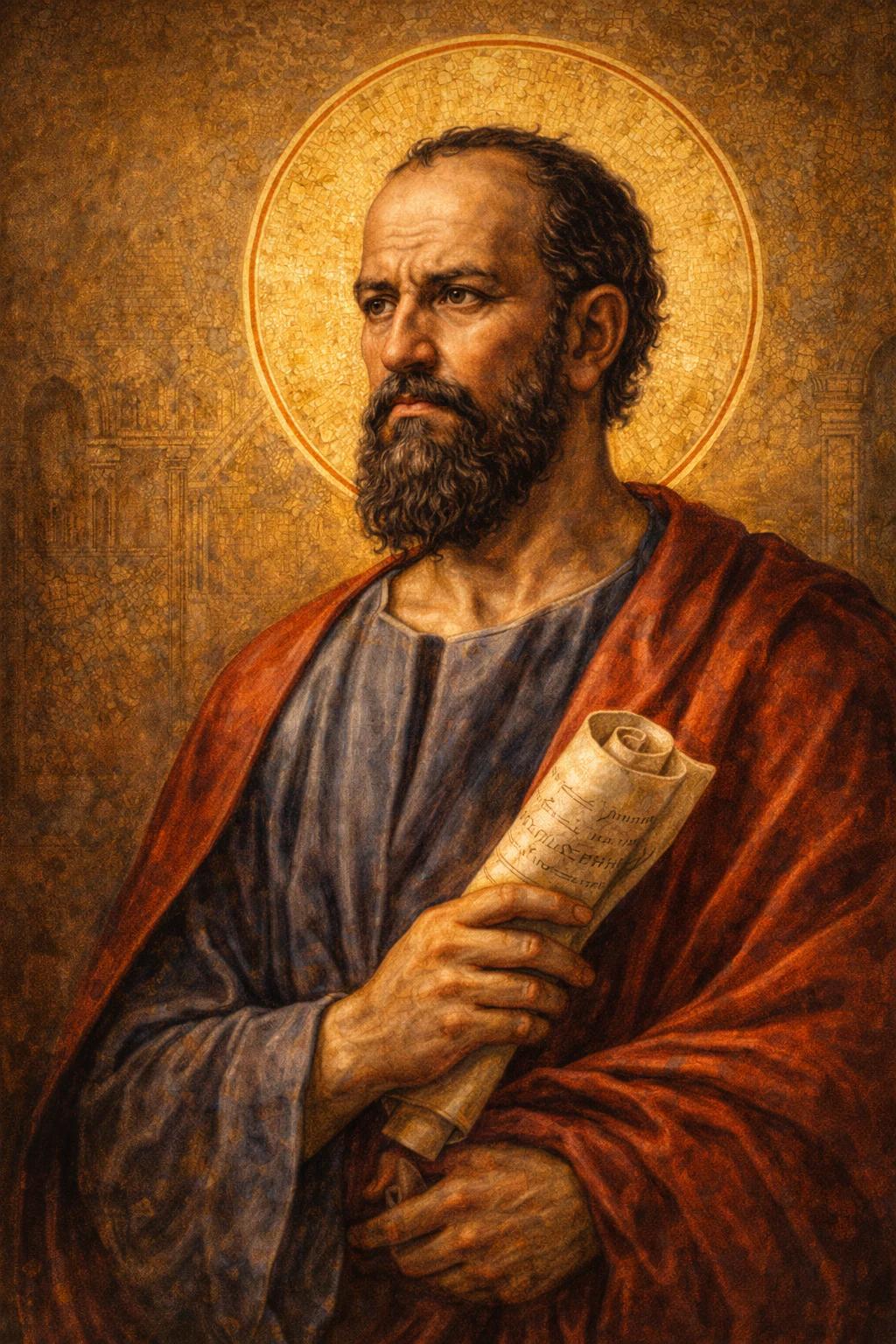
By the middle of the first century, Paul was preaching among Gentiles, or non-Jews, across the eastern Mediterranean.
Paul believed the promises of Israel's God extended to Gentiles through Jesus. Christians disagreed over whether those converts had to be circumcised and follow the same practices as Jewish believers.
Acts describes a meeting in where leaders decided against requiring circumcision of Gentile converts. Paul's own account describes recognition of his mission. The exact relationship between the accounts is debated.
Paul helped build communities in cities such as and wrote to believers in before going there. His letters addressed worship, disputes and daily life.
Letters and travellers helped communities stay in touch across the Roman world. Paul was one of several missionaries who made those links possible.
64 CE
Step 4 of 1064 CEAccessible mode
Persecution Under Rome
After the fire of in 64 CE, the Roman historian Tacitus says Nero blamed and punished Christians.
Christians were still a small and unusual movement. They refused to worship the traditional gods and gathered in communities that outsiders often misunderstood.
Tacitus describes events in . In later centuries, treatment of Christians varied by place and by who was in power.
Martyrs became examples of courage. Their deaths were remembered as witness, a testimony stronger than fear.
Christians could come into conflict with officials over demands to honour the gods. At other times, they lived for long periods without an organised campaign against them.
313 CE
Step 5 of 10313 CEAccessible mode
Constantine Embraces Christianity
In 313, Constantine and Licinius agreed on freedom of worship. The measures traditionally called the Edict of Milan also provided for the return of Christian property.
The agreement followed a toleration decree issued by Galerius in 311. It gave Christians greater security alongside people who worshipped other gods.
Confiscated church property was restored. Christians gained new freedom to worship, organise and build public churches.
The emperor supported bishops, funded churches and treated Christian unity as a matter of imperial concern.
Christianity moved from the margins of Roman law toward the centre of imperial life. The church became an institution rulers could not ignore.
325 CE
Step 6 of 10325 CEAccessible mode
The Council of Nicaea
In 325, Constantine called bishops to to resolve a major dispute about the identity of Christ.
The controversy centred on Arius, a priest from Alexandria, who taught that the Son was not eternal in the same way as God the Father.
The council rejected that view and affirmed that the Son was of the same divine substance as the Father.
The creed of 325 gave bishops a shared formula. The longer creed used in many churches today is associated with the Council of in 381.
The council also revealed the growing relationship between church and empire. Emperors now cared about theology because religious unity seemed tied to political unity.
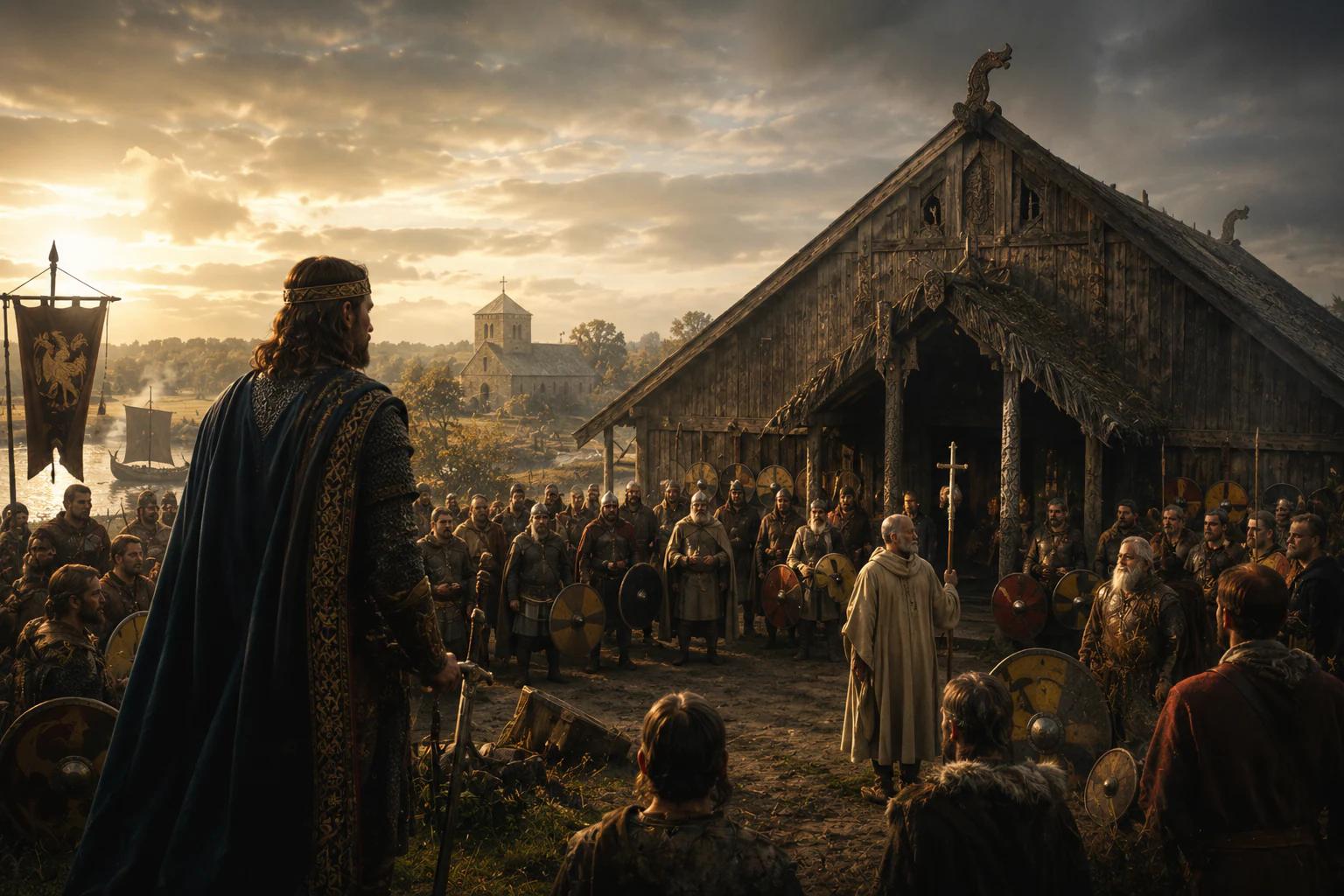
Similar processes unfolded across Europe. Missionaries worked among Germanic, Slavic and Scandinavian peoples, often with the support of rulers.
Christian kingdoms became part of wider networks of learning, worship and diplomacy. Those networks included Greek and Slavonic traditions as well as Latin ones.
1054 CE
Step 9 of 101054 CEAccessible mode
The Great Schism
In 1054, a dispute between papal envoys and the patriarch of became a landmark in the long separation of the eastern and western churches.
The split had been building for centuries. East and west used different languages, followed different customs and lived under different political worlds.
Disputes over papal authority and the wording of the creed deepened mistrust between and .
The penalties of 1054 were directed at particular people. Over time, the dispute came to symbolise a wider separation.
The Latin and eastern churches continued to deal with one another. Later conflicts, including the sack of in 1204, widened the division.
1500 CE
Step 10 of 101500 CEAccessible mode
Christianity Shapes Western Civilisation
By 1500, Christian institutions and ideas had helped shape law, learning, art and public life across much of western Europe.
Monasteries and cathedral schools preserved books and taught students. Universities grew in different ways around groups of teachers and scholars.
Christian ideas influenced law, marriage, charity, hospitals, poor relief and the moral duties of rulers.
Its influence was not always gentle. Church power could be coercive, exclusionary and deeply entangled with politics.
Christian beliefs and institutions continued to shape how people argued about education, government and the duties they owed each other.
Keep exploring
Finished The Rise of Christianity?
Choose the next story, follow a connected moment, or explore the people behind this story.
Suggested stories
You have already explored some closer links, so these include unread paths from the wider catalogue.