Accessible gives a lighter overview. Deep Dive tells the fuller story.
Quick Answers
What was the Maya civilization?
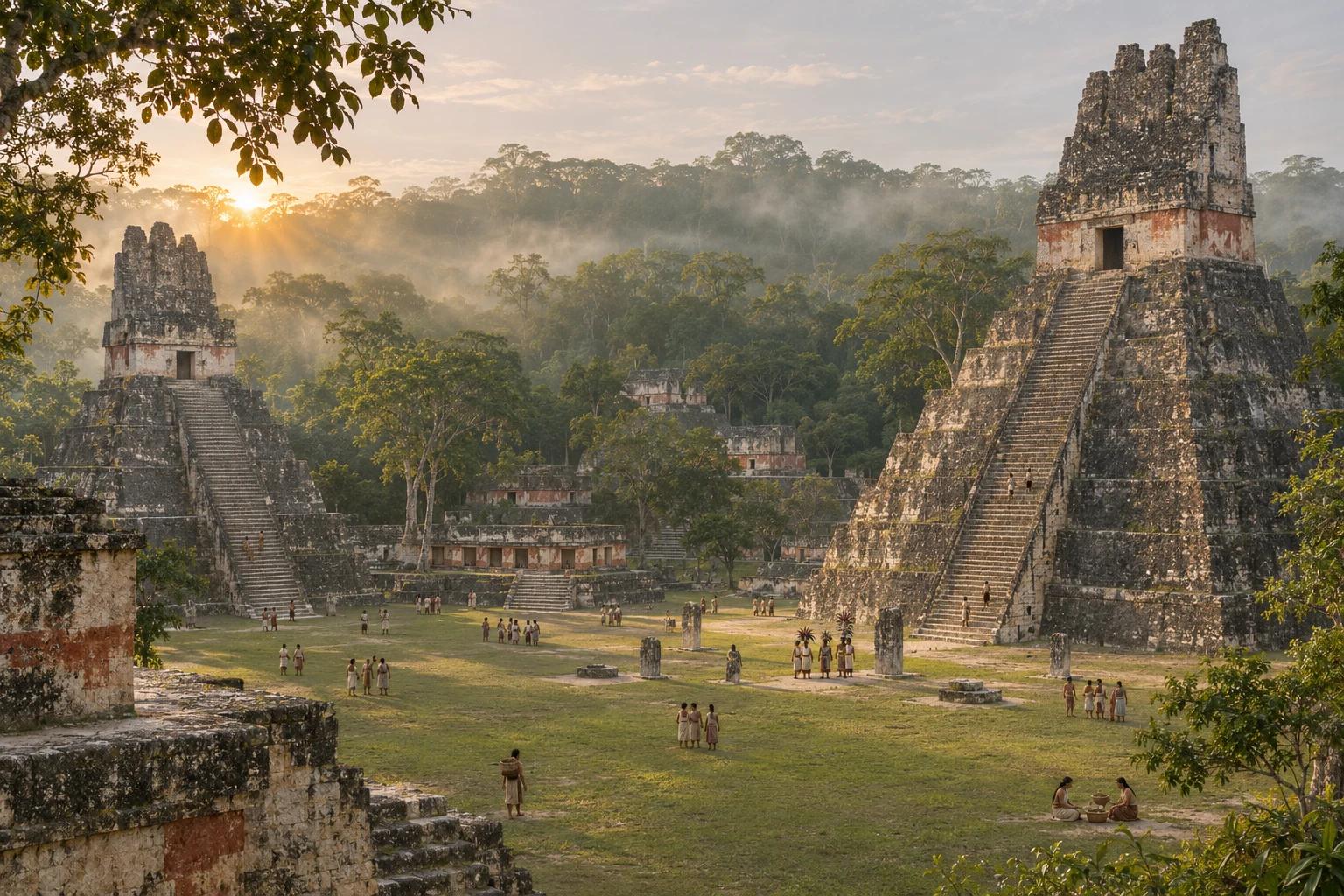
The Maya civilization developed across what is now southern Mexico and parts of Central America. Its people built cities, developed hieroglyphic writing and used several calendars. During the Classic period, rulers governed from competing courts such as , and . Maya peoples and languages continue today.
At a glance
The main timeline runs from around 2000 BCE to 1697 CE, with a closing look at Maya life today.
Maya settlements spanned parts of present-day Mexico, Guatemala, Belize, Honduras and El Salvador.
During the Classic period, around 250 to 900 CE, regional rulers recorded their reigns and alliances on monuments.
Many southern cities lost population towards the end of the Classic period. Northern centres such as continued to grow.
Spanish troops took , the Itza capital, in 1697.
Common questions
Where did the Maya live?
The Maya region included the Yucatán Peninsula, the southern lowlands and the Guatemalan highlands. It covered parts of what are now Mexico, Guatemala, Belize, Honduras and El Salvador.
When was the Classic Maya period?
Historians commonly date it from around 250 to 900 CE. Many Maya royal courts built temples and palaces and kept written records during these centuries. The dates vary with the history of each region.
Why did many Maya cities decline?
Drought, warfare and political conflict all placed pressure on cities in the southern lowlands. The timing and importance of each factor varied by place. Important cities in northern Yucatán continued to grow during some of the same centuries.
Do Maya people still live in the region today?
Yes. Millions of Maya people live in and beyond the region, and many communities speak languages such as K’iche’, Yucatec Maya and Q’eqchi’.
Context
Introduction
Overview
The Maya built cities across southern Mexico and Central America. Their rulers raised monuments, scribes wrote in glyphs and astronomers tracked cycles of time. Follow the history from early farming communities to , and , then into the northern cities of Yucatán and the centuries of Spanish conquest.
Key forces
Farming communities laid the foundations for the first Maya cities.
Classic Maya kings ruled from competing cities, including , and .
Maya writing and calendars preserved records of rulership, ritual and astronomy.
Many southern cities declined while important centres continued to grow in the north.
2000 BCE
Step 1 of 102000 BCEAccessible mode
Farming Takes Root
Around 2000 BCE, farming communities were taking shape across the region that would become the Maya world.
The Maya heartlands stretched from the Yucatán Peninsula into the highlands of what is now Guatemala, with settlements across parts of present-day Mexico, Belize, Honduras and El Salvador. Some communities lived near rivers and wetlands. Others farmed on slopes or in places where rain could disappear quickly into the limestone beneath their feet.
Maize became central to daily life. It could be dried and stored, then ground into food. Beans and squash added variety, and families hunted, gathered and used local resources as well as tending crops. The balance between these activities differed from place to place.
Farming gave households reasons to return to the same plots and invest in homes and storage. When settlements grew, there was more work to share and more to argue over, from access to water to the use of productive land. Connections between neighbouring communities also grew as people moved goods and passed on techniques.
Farming changed how people used the land over many generations. The villages that took shape over those years laid the foundations for larger settlements and public spaces.
1000 BCE
Step 2 of 101000 BCEAccessible mode
Communities Build on a New Scale
Between about 1000 and 800 BCE, people in what is now Tabasco reshaped the land at a place called .
They built a long, flat platform out of earth and clay. It stretched about 1.4 kilometres, with raised routes leading away from it. From ground level today it can be hard to see where it ends. A laser survey from the air helped reveal the outline, and excavations established when it was built.
Large numbers of people had to move earth and organise supplies. The site shows how early communities could bring people together for work and ceremony on a scale usually associated with later kingdoms.
Over the following centuries, centres in the Maya lowlands built pyramids and laid out plazas. At in present-day Guatemala, fragments of painted plaster preserve early writing and a sign for a day in a calendar. The murals for which the site is best known also show the importance of maize in Maya beliefs about creation.
By the end of the Preclassic, some communities had built cities with temples and public spaces. The rulers who later put their names on monuments inherited centuries of experience in bringing people together.
PremiumFree preview: 2 of 10 chapters
Continue The Maya Civilization
Sign up to a Premium account to read the remaining chapters of this story.
A paid Premium subscription also gives you full access to every other Premium story.