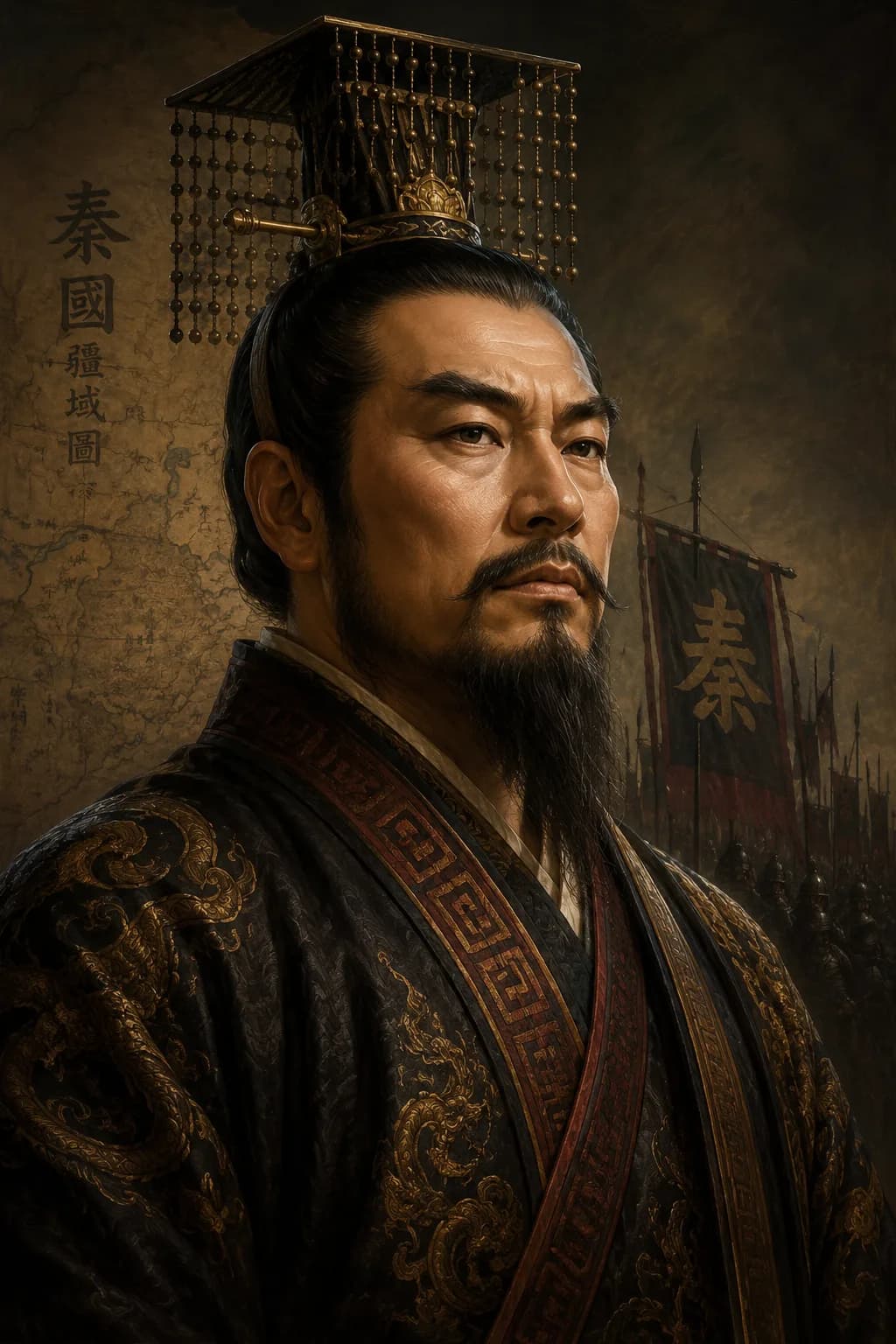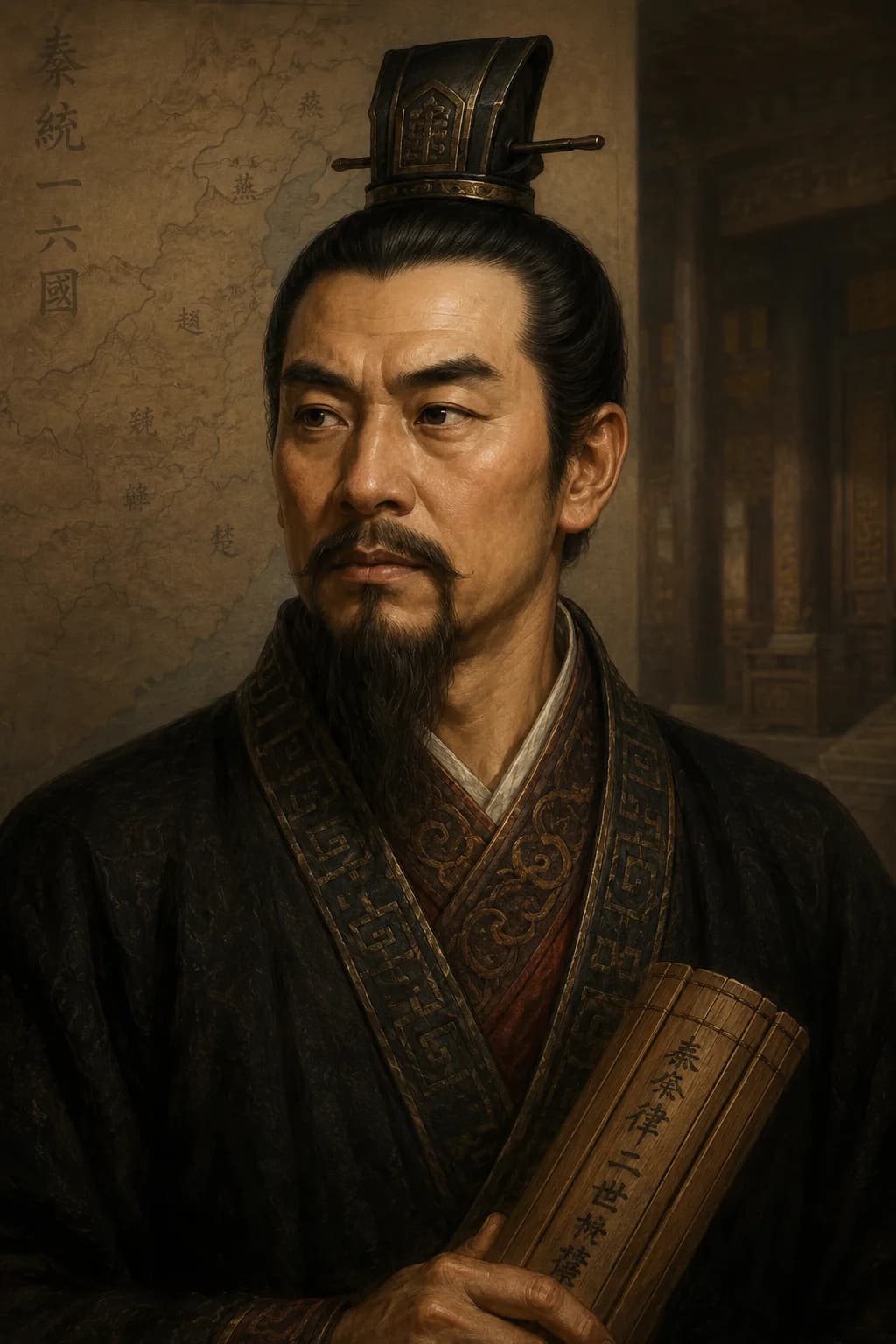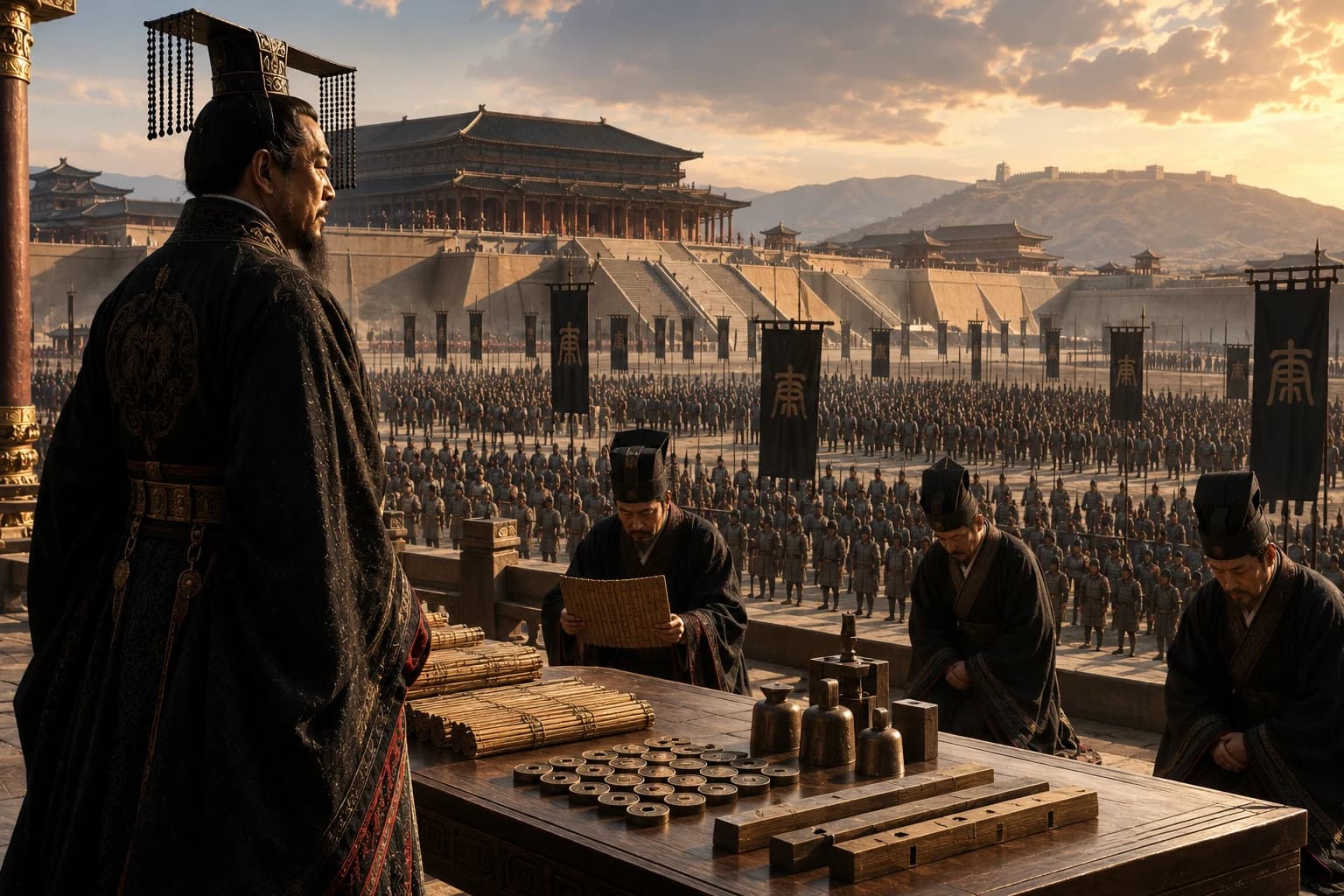
Qin Shi Huang overlooking officials, soldiers, standard weights, coins, and bamboo records after the unification of China.
Premium Story

Qin China and Unification

Follow Qin from Warring States rivalry to Legalist reform, conquest, imperial unification, harsh rule, rapid collapse and enduring legacy.

Start the storyExplore Premium

11 chapters

Next
Context

Introduction

Overview

For centuries, rival states fought over the political future of China. Qin rose through military organisation and Legalist reforms, then conquered its neighbours and created the first unified empire. Its rule was brief and often coercive, but the institutions and standards it imposed shaped the dynasty that followed.

What you'll learn: You will follow how Qin turned warfare and reform into conquest, why Qin Shi Huang's empire was both astonishingly powerful and dangerously brittle, and how Qin's brief rule shaped the long history of imperial China.

Key forces

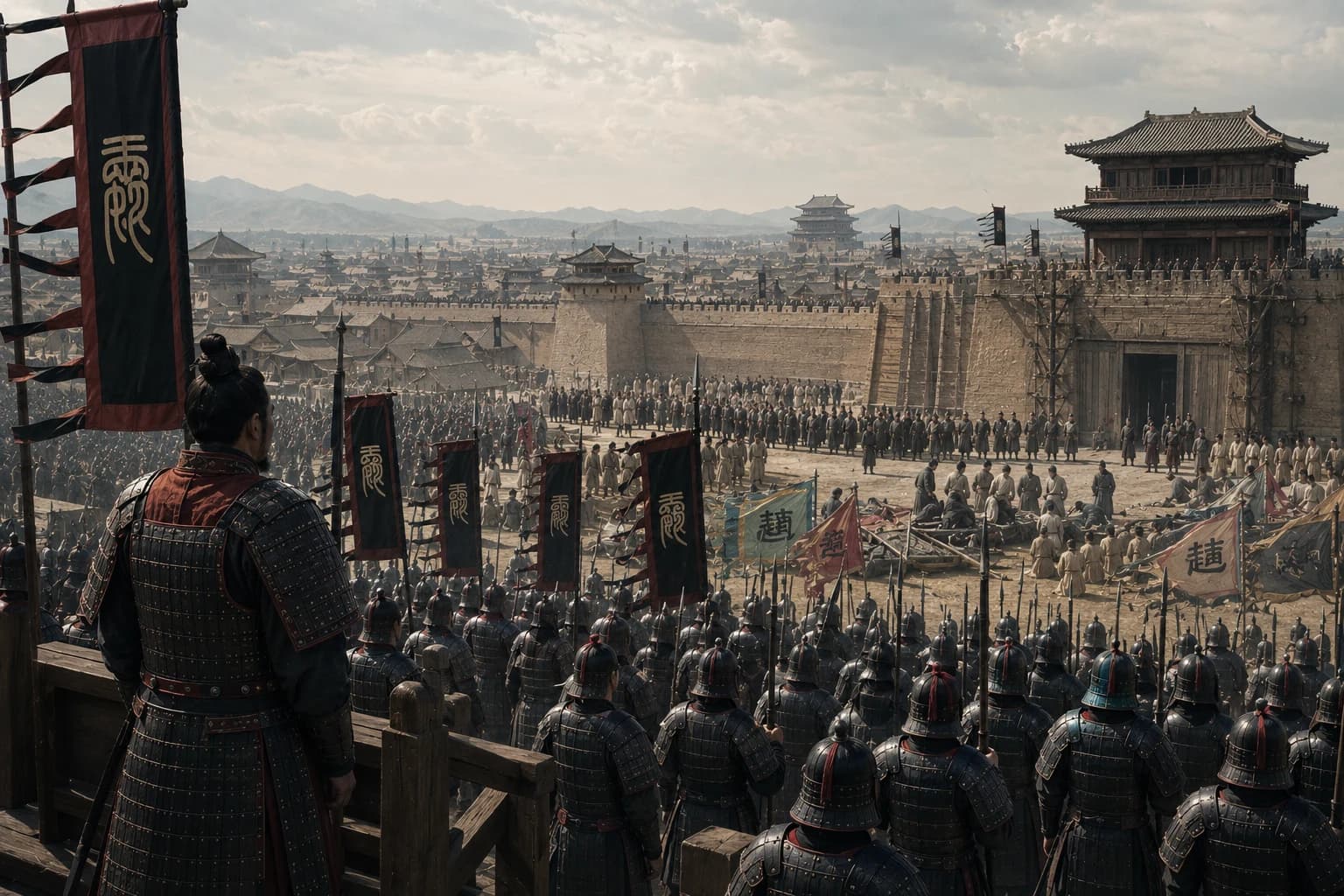
Qin officers looking across a fortified Warring States landscape filled with armies, banners, and rival strongholds.
403 BCE
Step 1 of 10403 BCEAccessible mode

The Warring States Rivalry

By 403 BCE, the old Zhou world had fractured into a hard age of rivalry.

The Zhou kings still mattered as symbols. Their dynasty had once given order to a network of regional lords, rituals, and inherited duties. But symbolism could no longer command armies.

Real power had moved to states such as Qin, Chu, Qi, Yan, Han, Zhao, and Wei. These rulers made alliances, broke them, absorbed weaker neighbours, and treated war as a permanent condition of politics.

Constant conflict changed how states worked. Chariot warfare gave way to larger infantry armies, cavalry became more important, crossbows and iron weapons spread, and rulers needed systems that could supply soldiers year after year.

“The Warring States did not only produce destruction. They produced stronger states.”

To survive, rulers counted households, taxed land, rewarded military service, appointed officials, and tried to weaken aristocrats who stood between the throne and the population.

Qin, on the western frontier, was not always the most admired state. But its position, discipline, and willingness to reform gave ambitious rulers a chance to turn war into a ladder toward supremacy.

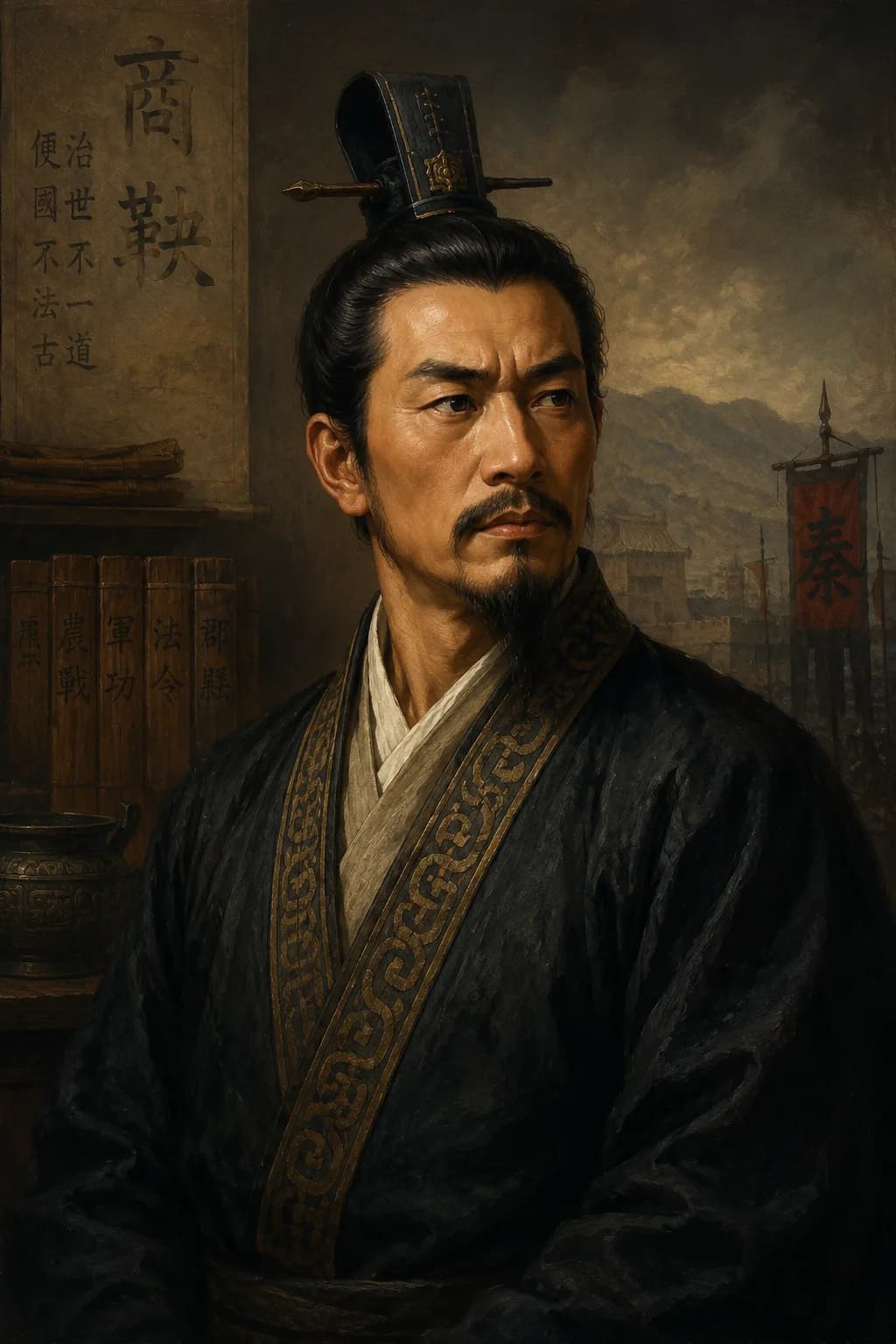
Shang Yang announcing Legalist reforms as officials record land boundaries and Qin soldiers supervise registration.
356 BCE
Step 2 of 10356 BCEAccessible mode

Shang Yang's Legalist Reforms

In 356 BCE, Shang Yang began reforms that transformed Qin from a powerful frontier state into a disciplined engine of conquest.

Shang Yang served Duke Xiao of Qin and brought ideas later associated with Legalism. The aim was not gentle persuasion. It was to make the state stronger through clear laws, strict enforcement, rewards, and punishments.

Land and farming became central. Qin encouraged agricultural production, weakened old aristocratic privilege, and allowed landholding to be tied more directly to tax and service obligations.

Military service became a ladder. Soldiers could gain rank through battlefield achievement, while hereditary status mattered less than what a man delivered for the state.

“Shang Yang's reforms made Qin dangerous because they turned ordinary service into state power.”

Administration also changed. Counties, officials, household registration, mutual responsibility, and taxation gave Qin rulers a clearer view of the population they governed.

Shang Yang himself fell victim to court politics after Duke Xiao's death, but his reforms endured. Qin had learned how to mobilise land, people, law, and war more effectively than its rivals.

The young King Zheng seated in the Qin court as senior officials discuss maps and policy around him.
246 BCE
Step 3 of 10246 BCEAccessible mode

Zheng Becomes King of Qin

In 246 BCE, Zheng became king of Qin while still a boy.

He inherited a state that was already the strongest in the Warring States world. Qin had disciplined armies, productive farmland, a harsh legal system, and officials trained to serve central authority.

But a young king did not automatically control that power. Senior figures, including Lu Buwei, shaped government during Zheng's minority. Court politics could be as dangerous as enemy armies.

Outside Qin, the rival states understood the danger. They still had armies, fortresses, diplomatic networks, and deep regional identities. Qin was powerful, but victory was not inevitable.

“Before Zheng could conquer the rival states, he had to become master of Qin itself.”

As he grew older, Zheng removed internal threats and drew on capable ministers and generals. Qin's political machine became increasingly focused on one goal: ending the rivalry permanently.

His reign began in uncertainty, but the state he inherited gave him the tools to attempt what no previous ruler had achieved.

Premium3 of 10 chapters read

The Conquest of the Six States

From the Warring States to the rise of the Han, Qin unification ended centuries of interstate rivalry and created the centralised imperial model that shaped Chinese history for more than two thousand years.

Continue the story with Premium

Coming next

  1. Chapter 4The Conquest of the Six States
  2. Chapter 5Qin Shi Huang Creates an Empire
  3. Chapter 6Rule Through Legalism

And 4 more chapters to follow.

Explore connected stories

Follow the connected history

Explore closely connected stories and free figure profiles. Premium stories open with a public preview.

Unlock full storyBrowse stories

References

Sources & Further Reading

Reliable sources, primary-source collections and reading paths connected to this page.

Sources used

  1. Encyclopaedia Britannica, “Qin Dynasty,” Open source

Further reading

  1. Mark Edward Lewis, The Early Chinese Empires: Qin and Han, Harvard University Press.
  2. Yuri Pines, The Book of Lord Shang: Apologetics of State Power in Early China, Columbia University Press.

Primary sources

  1. Chinese Text Project, “Records of the Grand Historian,” Open source

Reviewed claim sources

Loading reviewed claim sources...

A monthly route through history

Find out first about the latest published stories, feature notes and occasional Premium offers in one monthly email.