Accessible gives a lighter overview. Deep Dive tells the fuller story.
Quick Answers
What was Early China?
In this story, Early China runs from farming villages around 5000 BCE to the fall of the Western Zhou in 771 BCE. It follows larger settlements, early states, Shang ritual and writing, and the Zhou idea that the right to rule depended on Heaven’s favour.
At a glance
The story covers approximately 5000 BCE to 771 BCE.
Farming developed in several regions, including millet-growing communities in the Yellow River basin and rice growers farther south.
was a major early Bronze Age centre. Its dynastic identity is debated.
The oracle bones of late Shang preserve the earliest substantial surviving body of Chinese writing.
Common questions
Who were the key Shang and Zhou rulers in Early China?
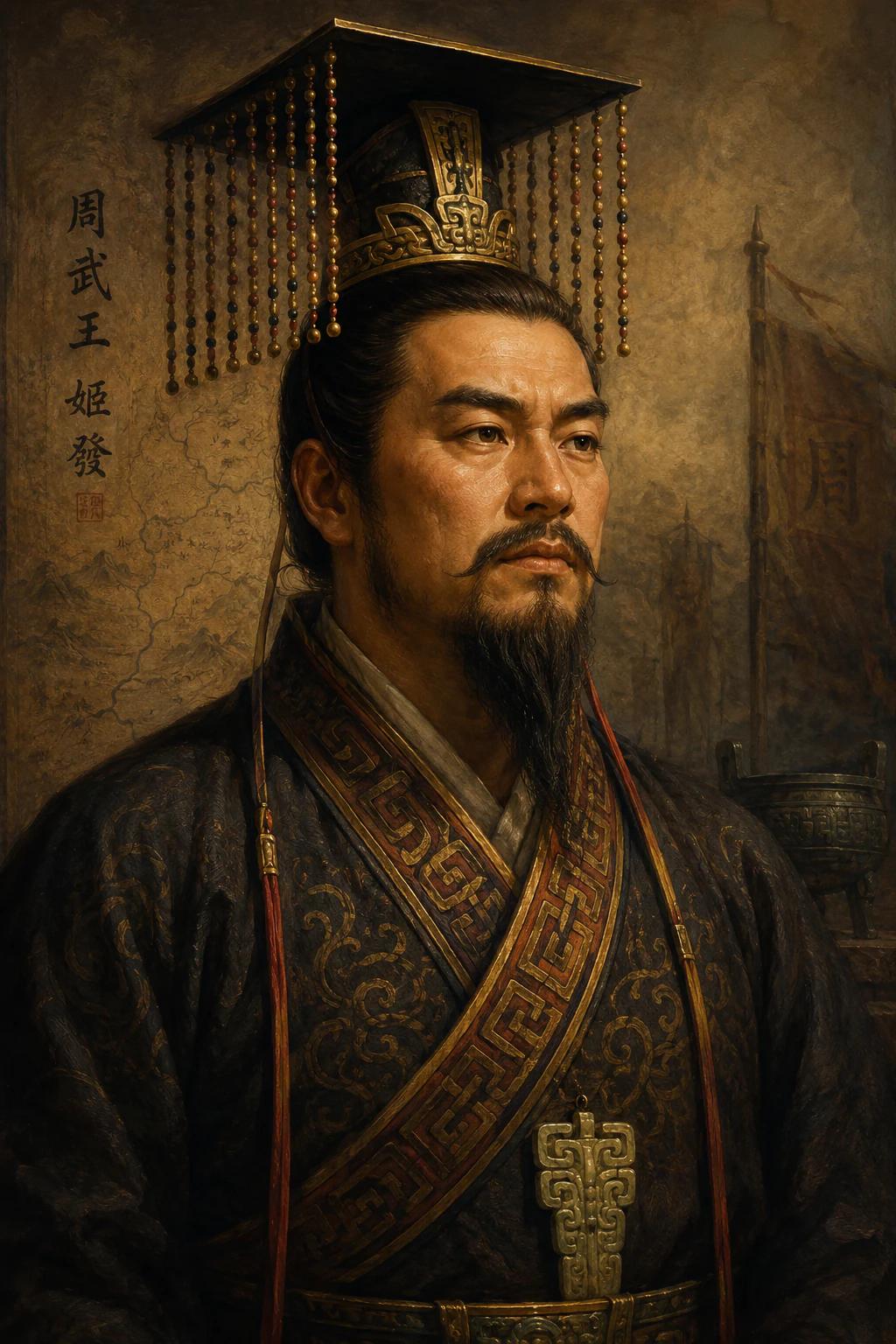
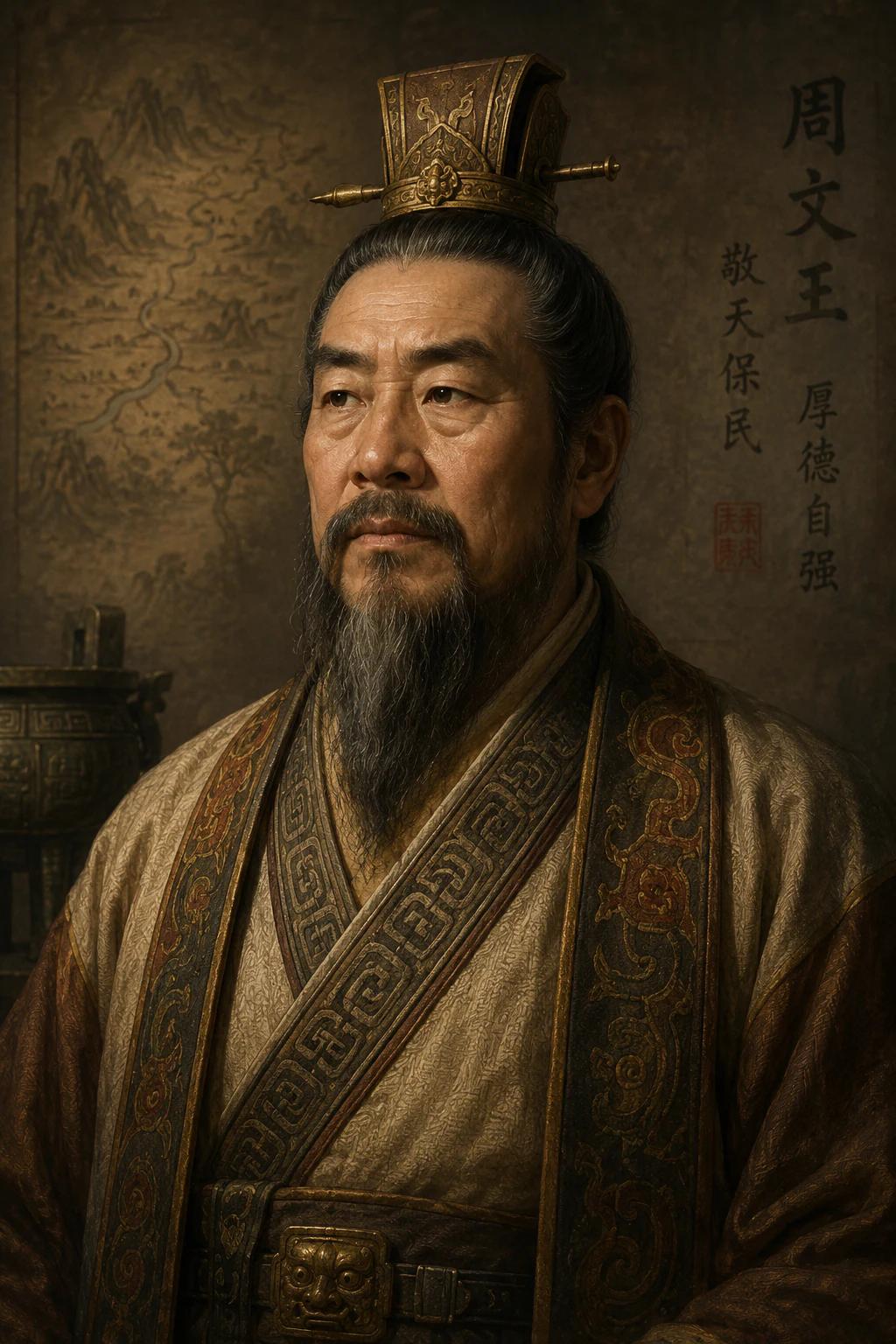
The late Shang evidence includes Fu Hao, a royal consort who led campaigns. Later histories associate Pan Geng with the move to Yin and name Di Xin as the last Shangking. The Zhou remembered King Wen as a model ruler, and an early bronze inscription records the victory of his son King Wu.
What was the Shang dynasty known for?
The late Shang capital at is known for royal tombs, ritual bronze vessels and oracle bones. The bones preserve records of divination about warfare, childbirth, harvests and other concerns of the court. Earlier walled centres such as show Shang power developing in the Central Plain.
Why did the Zhou overthrow of the Shang matter?
The Zhou conquest, conventionally dated here to about 1046 BCE, ended Shang rule. The Zhou argued that Heaven had transferred the right to rule to their house. That idea became a durable way to explain dynastic change.
Where did early Chinese civilisation begin?
The Yellow River basin was a major centre of early millet farming and is the focus of this story. Other regions also developed their own early cultures and centres of power, including rice-growing communities in the Yangtze basin.
Context
Introduction
Overview
Millet-farming villages, royal tombs and words carved into bone trace the rise of early states in the Yellow River region. The Shang and Zhou courts used bronze and ancestral rites to express their power. The Zhou gave later rulers a new way to explain why a dynasty deserved to rule.
Key forces
Millet supported established farming communities in the Yellow River basin by around 5000 BCE. Rice farming developed in parts of the Yangtze basin.
’s large buildings and workshops are evidence for early state organisation. Its identification with the Xia dynasty is debated.
Late Shangoracle bones preserve the earliest substantial surviving body of Chinese writing.
The Zhou used the Mandate of Heaven to explain their victory and the conditions under which a dynasty could retain power.
5000 BCE
Step 1 of 105000 BCEAccessible mode
The Yellow River Foundations
By around 5000 BCE, farming villages dotted parts of the Yellow River basin. Their houses, pots and graves preserve traces of life long before the first dynasties.
Millet was an important crop in northern China. People could grow it on the windblown soils of the region and store the grain for later use.
At villages such as Banpo, archaeologists have found houses, storage pits and burials. Painted pots give the Yangshao communities a distinctive place in the record.
Some graves contain objects laid beside the dead. These finds tell us that burial mattered to the living, even though we can seldom tell what a family believed.
Other regions followed their own paths. Farther south, rice farming supported settlements in the Yangtze basin.
The Yellow River communities are the starting point of this story. Over centuries, some of their settlements grew into much larger centres.
2600 BCE
Step 2 of 102600 BCEAccessible mode
The Rise of Longshan Communities
By around 2600 BCE, some communities in northern China were building walls and burying their dead with strikingly different displays of wealth.
Archaeologists use the name Longshan for several related traditions. Fine black pottery is especially associated with Longshan sites in what is now Shandong.
Some settlements had walls of tightly packed earth. Building them took planning and the labour of many people.
A small number of graves held costly objects such as fine pottery and jade. Simpler burials show how unevenly these goods were shared.
Walls could protect people and mark out important places. Their size shows how much work local leaders and communities could organise.
The growth of walled centres and specialist crafts changed the scale of life in parts of northern China. Later rulers could draw on skills that these communities had already developed.
1900 BCE
Step 3 of 101900 BCEAccessible mode
Erlitou and the Rise of Early States
In the early second millennium BCE, grew into a major centre in what is now Henan. Its roads, large buildings and workshops show what a powerful court could organise.
Builders laid out large compounds on platforms made of packed earth. Their size and layout suggest that some had ceremonial or palatial uses.
Craftworkers cast bronze vessels and made fine objects in other materials. The workshops help explain how the centre displayed its wealth.
Objects and styles associated with also turn up elsewhere. They show that the centre had connections beyond its immediate surroundings.
Later Chinese accounts tell of a first dynasty called the Xia. Some scholars identify with it. No known inscription from the site gives its rulers a name.
’s place in the story rests on the city itself. Its roads, compounds and workshops show how much labour and skill an early centre could bring together.
1600 BCE
Step 4 of 101600 BCEAccessible mode
The Rise of the Shang
From around 1600 BCE, new centres of power grew in the Central Plain. Archaeologists associate many of their remains with the early Shang.
Later histories say a ruler named Tang defeated the last Xiaking. Excavated cities show how power shifted, although their remains cannot confirm the story of a single conquest.
At , thick earthen walls enclosed a large settlement. Workshops and bronze finds show how much labour and skilled work the city could support.
Objects in the same styles appear far beyond . They help trace links between settlements, even where the nature of the relationship is uncertain.
Much of what we know about Shang kings comes from later records at , where their names and activities were written on bones and shells.
The early cities show the scale of Shang power taking shape. At , the remains of a later capital let us see how the kings used it.
1300 BCE
Step 5 of 101300 BCEAccessible mode
Bronze Power at Anyang
By around 1300 BCE, the late Shang capital was taking shape near modern . Its tombs, workshops and bones reveal a court at the height of its power.
Archaeologists call the site Yinxu, the ruins of Yin. They have uncovered foundations for large buildings, areas where craftspeople worked and a royal cemetery.
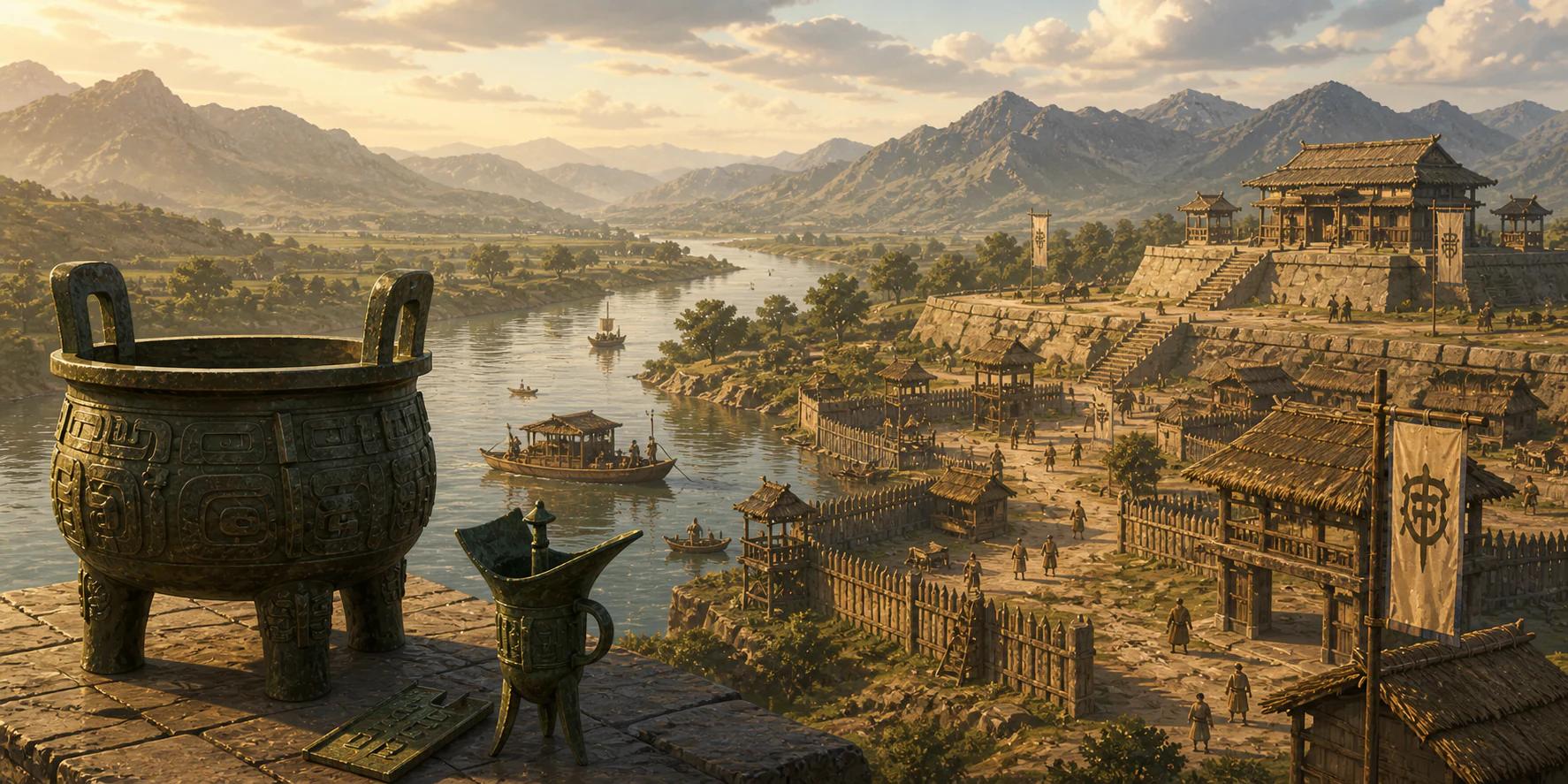
Bronze vessels held food or drink for ceremonies. Their size and decoration show the labour and skill that wealthy households could command.
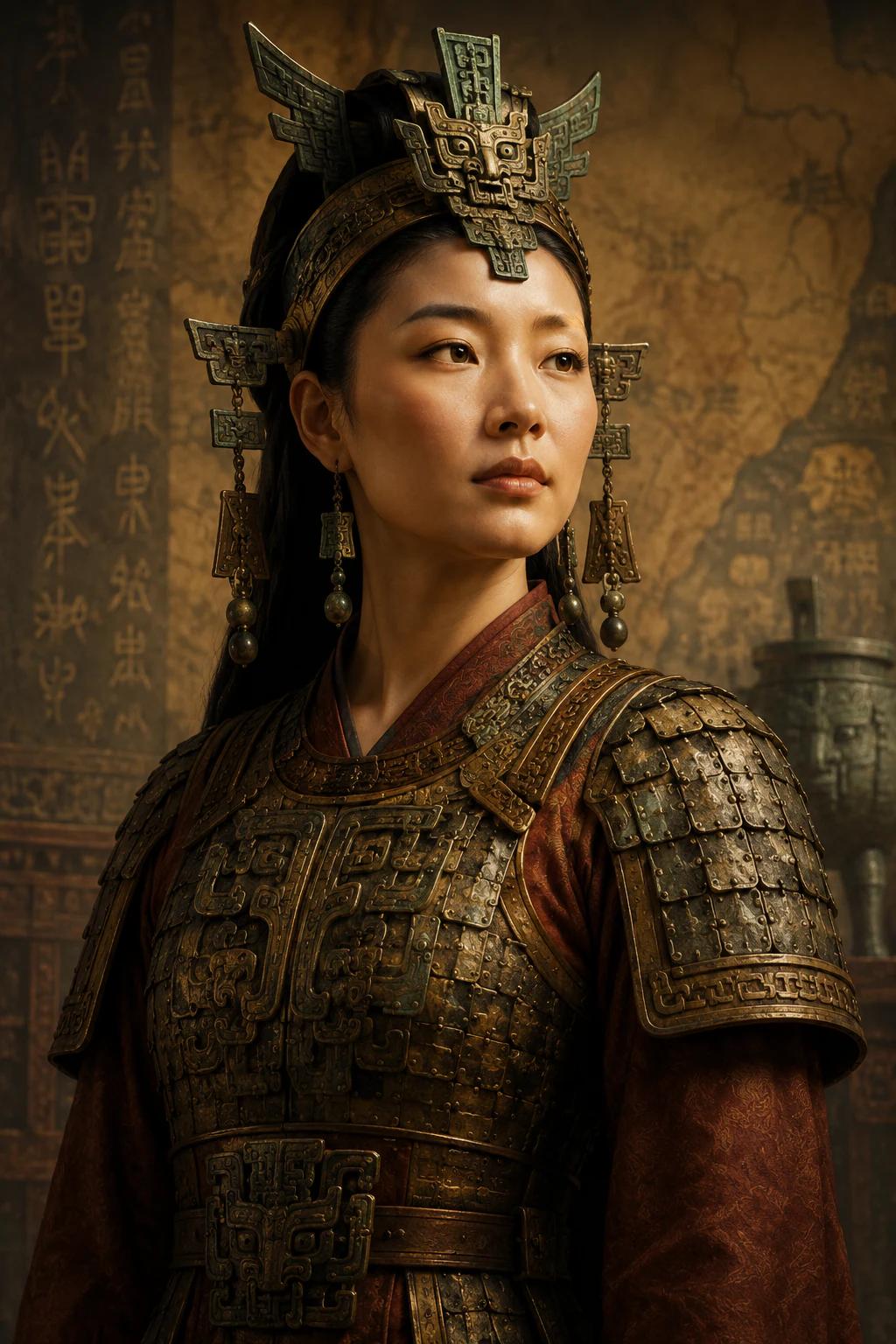
The tomb of Fu Hao, a royal consort who led military campaigns, contained fine bronzes and jade. Human and animal remains also bear witness to sacrifice in burial rites.
Burials of chariots and horses give another glimpse of the court. Chariots belonged to the world of elite ceremony and warfare.
The objects show what the royal household valued and what it could command. The inscriptions bring some of the people who lived there into view.
1250 BCE
Step 6 of 101250 BCEAccessible mode
Oracle Bones and Royal Divination
At , diviners used bones and turtle shells to ask about the future. Some still bear the words carved into them more than three thousand years ago.
A diviner made small hollows in an ox shoulder blade or the underside of a turtle shell. Heat applied to a hollow caused a crack on the other side.
The people conducting the rite read the cracks as signs. Some inscriptions record the question under consideration, a prediction or what happened later.
The court asked about rain, harvests, illness, births and campaigns. The records make it possible to glimpse the choices and worries of a Shangking.
Together, the bones preserve the earliest large body of securely readable Chinese writing. They show a script that could already record names, dates and complicated statements.
The writing gives the Shang court a voice. For the lives of people outside the court, archaeologists often have to look elsewhere.
1046 BCE
Step 7 of 101046 BCEAccessible mode
The Zhou Overthrow the Shang
Around 1046 BCE, forces led by the Zhouking defeated the Shang. The battle at Muye became the turning point between the two dynasties.
The Zhou had built their power to the west, in the Wei River valley. King Wu led the campaign after the death of his father, King Wen.
A bronze vessel made soon after the victory records King Wu’s campaign. It is one of the closest surviving witnesses to the change of rule.
Later stories cast Di Xin, the last Shangking, as a cruel ruler. They tell us a great deal about how later writers wanted the defeat to be understood.
The Zhou took over a world of bronze casting and ancestral ceremony. Those traditions continued even as a new ruling house put them to work.
The Zhou explained the change of rule by saying that Heaven had transferred its favour. That claim became an enduring way to account for the rise and fall of dynasties.
1045 BCE
Step 8 of 101045 BCEAccessible mode
The Mandate of Heaven
To explain their authority, the Zhou looked to Heaven. They argued that its favour gave their dynasty the right to rule, an idea known as the Mandate of Heaven.
That authority came with responsibilities. A dynasty that failed to govern justly or keep order could lose Heaven's favour.
For the Zhou, this made sense of the Shang defeat. They said their victory showed that Heaven had chosen a new ruling house.
The idea also held a warning for the Zhou. Their own descendants could lose Heaven’s favour through misrule.
Later rulers used the same idea to explain why their dynasties had taken power. Writers could use it to judge the rulers who came before them.
A family could inherit a throne. The Mandate gave people a way to ask whether that family still deserved to hold it.
1000 BCE
Step 9 of 101000 BCEAccessible mode
The Western Zhou Order
The Zhou court placed relatives and allies in charge of regional centres. Their positions helped the kings govern far beyond the western heartland.
The kings retained lands of their own. In other places, powerful families exercised local authority and owed duties to the court.
Some officials and nobles had their appointments or rewards cast into bronze vessels. The words could be read at ancestral rites and kept as a record for descendants.
The inscriptions name offices, gifts and services. They show both the work done for the king and the importance of public signs of favour.
The network gave the Zhou reach. It also gave regional rulers resources and ties of their own, which mattered when the royal court came under pressure.
The system helped spread shared forms of ceremony and record-keeping. Regional centres could continue using them even when the court’s authority weakened.
771 BCE
Step 10 of 10771 BCEAccessible mode
The Fracturing of Royal Power
In 771 BCE, King You was killed and the Zhou lost their western centre of power. The dynasty carried on from a new base in the east.
Later accounts describe a succession dispute and an attack in which western groups took part. They disagree in ways that make the crisis hard to reconstruct in detail.
A famous story says King You lit warning fires to make his consort Bao Si laugh. The tale became a warning about bad rule, and its details are uncertain.
King Ping and the surviving court were established farther east, near modern Luoyang. The move is traditionally dated to 770 BCE.
Zhou kings kept their royal title and a place in ritual life. In time, regional states gained more room to make alliances and fight wars on their own terms.
Centuries later, thinkers such as Confucius looked back to Zhou traditions while asking how rulers should govern in their own times.
The fall of the western court closes this story. Its inscriptions, ceremonies and ideas about the right to rule endured long after the move east.
Keep exploring
Finished Early China?
Choose the next story, follow a connected moment, or explore the people behind this story.
Connected stories and suggestions
You have already explored some closer links, so these include unread paths from the wider catalogue.