← People

Joan Clarke

Joan Clarke (1917–1996): A naval Enigma specialist in Hut 8, Clarke combined statistical skill with years of secret service and later became a distinguished researcher of Scottish coinage.

Born
1917 CE
Died
1996 CE
Role
Mathematician and codebreaker
Full name
Joan Elizabeth Lowther Clarke
Also known as
Joan Murray

Mathematician and codebreaker (1917–1996)

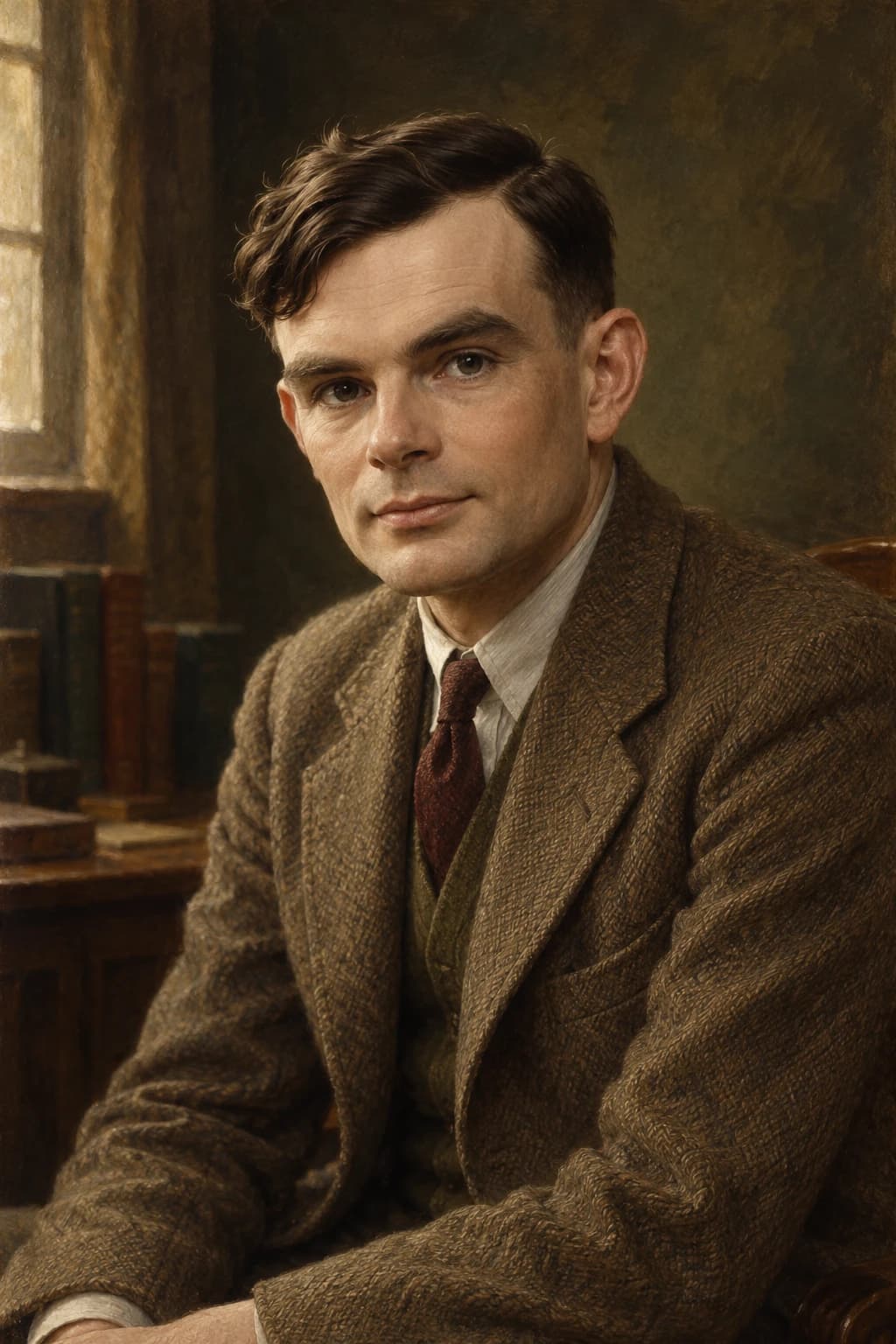
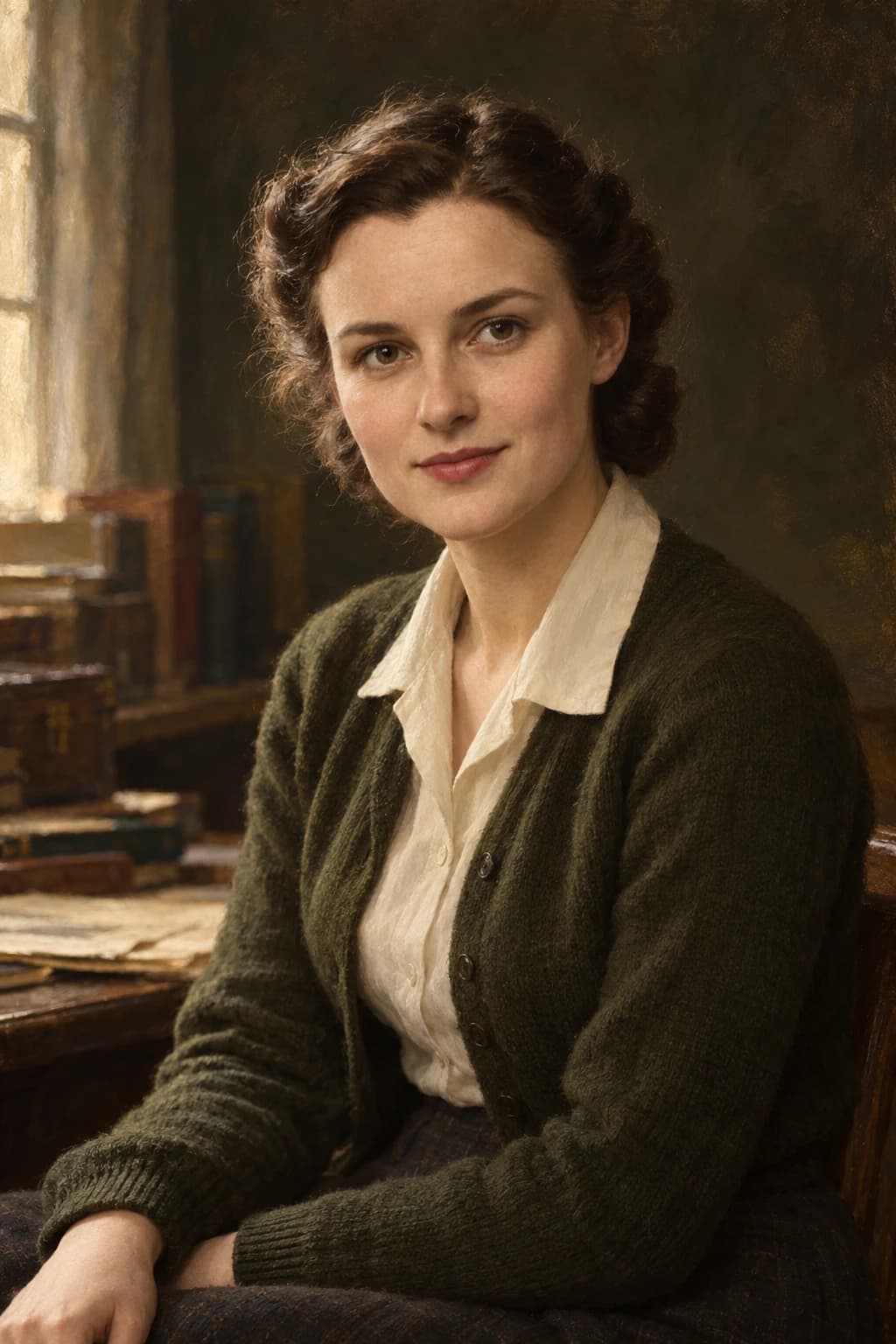
AI-generated portrait of Joan Clarke in 1940s civilian clothing; an illustrative historical reconstruction, not a documentary likeness
AI-assisted historical reconstruction

An illustrative reconstruction based on historical context. It is not a photograph or documentary likeness. Image policy Attribution

Life Journey

The mathematician behind the naval messages

Follow Clarke from Cambridge to Hut 8, a long codebreaking career and a second field of historical discovery.

Complete chronology

1917–1936

A talent for mathematics

Joan Clarke grew up in Dulwich, south London. Success at school led to a scholarship to Newnham College, Cambridge, in 1936. Clarke’s education opened a route into advanced mathematics at a time when academic opportunities remained unequal. The move from school to Newnham placed her among women pursuing demanding subjects within a university that still withheld full membership from them.
1936–1940

Distinction without equal standing

Clarke achieved a double first in mathematics. Cambridge still denied women full degrees, despite examining their work. Her supervisor Gordon Welchman recognised her ability. Her mathematical training prepared her for work whose purpose could not be openly advertised. Newnham educated women for intellectual achievement even while Cambridge restricted their formal status. The university began awarding women full degrees in 1948, after Clarke had already made her wartime contribution.

1940

Recruited to Bletchley Park

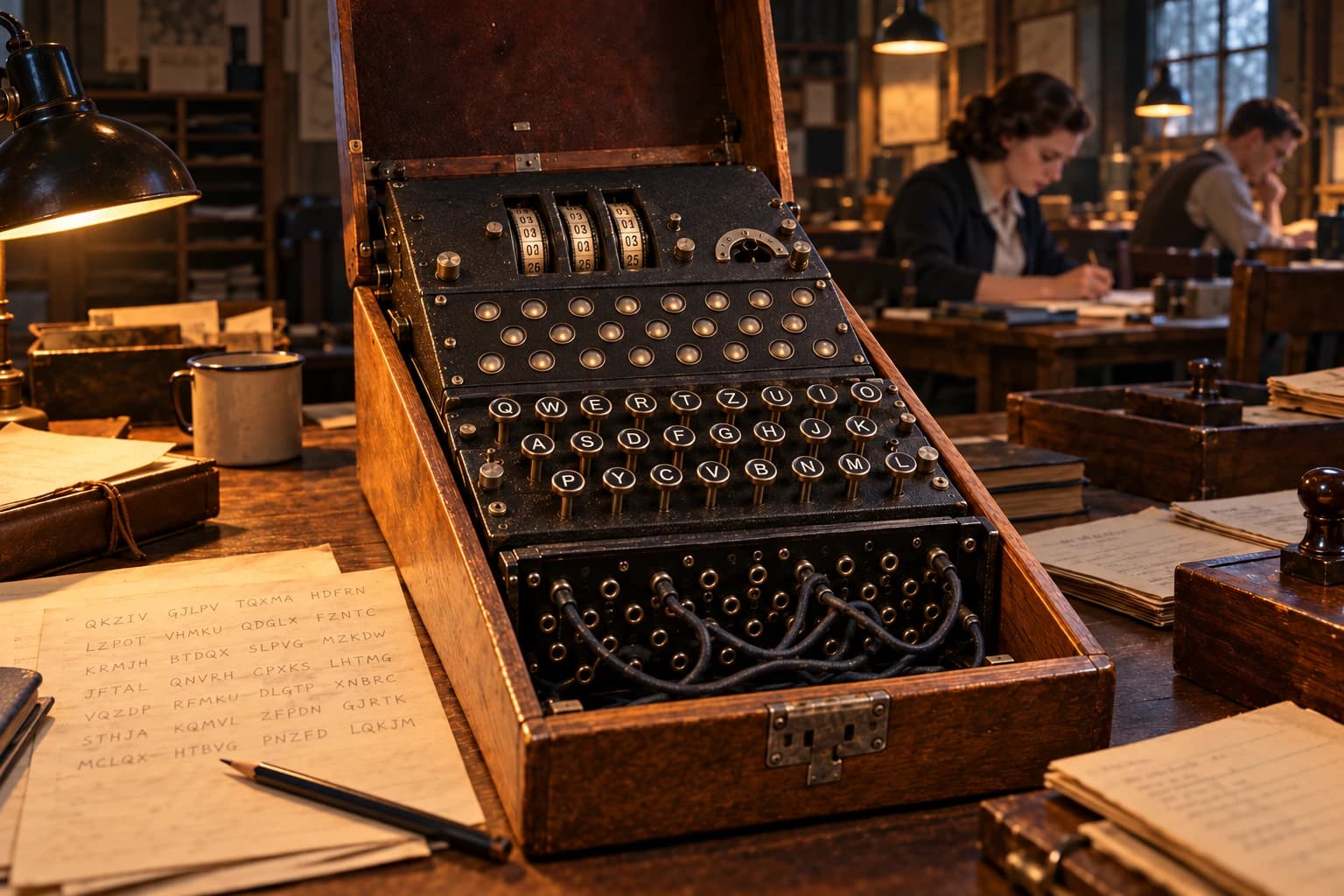
Welchman recruited Clarke for secret work. She joined Hut 8, where Alan Turing and colleagues were attacking the German navy’s Enigma messages. She arrived with mathematical skills that could be applied to uncertain evidence. Naval encryption protected orders and information essential to the U-boat war. Clarke joined a chain of work that connected intercepted radio signals, cryptanalysis, machine operations and the interpretation of readable messages.

1940–1943

Weighing the clues

Clarke became skilled in Banburismus. This statistical technique compared intercepted messages to help identify promising Enigma rotor arrangements and save time on the Bombes. Codebreaking required deciding which possibilities deserved attention. Banburismus treated patterns as evidence of differing strengths, helping the team narrow a very large search. Clarke’s contribution lay in analytical judgement as well as persistence; machinery still depended on people who could frame the right questions.

1941

Friendship with Alan Turing

Clarke and Turing became engaged in spring 1941. The engagement ended later that year after they discussed his homosexuality, but their friendship continued. Their private relationship grew alongside demanding professional work. Turing trusted Clarke, and she remained an important friend after their plans to marry ended. Their continued friendship outlasted their brief engagement.

1944–1945

Responsibility in Hut 8

Clarke became deputy head of Hut 8 in 1944 and remained there until the war ended. She was among Bletchley Park’s senior female cryptanalysts. The need for usable intelligence continued after early Enigma breakthroughs. Changing procedures and daily operational demands required experienced staff. Clarke’s long service helped preserve expertise within the naval section. A leadership role carried responsibility for sustaining that work, not merely celebrating an earlier success.

1946–1982

A career behind the secrecy

Clarke received an MBE in 1946 and continued in government codebreaking. She married Jock Murray in 1952 and returned to work at GCHQ in 1962. The Murrays spent years in Scotland before returning to Cheltenham. Much of her Cold War work remains outside the public record. Her working life continued long after the events that later made Bletchley Park famous.

1960s–1986

Reading the evidence in coins

Under her married name, Joan Murray, she became an important researcher of Scottish coins. The British Numismatic Society awarded her its Sanford Saltus medal in 1986. Her studies combined close examination of surviving coins with documentary research. They clarified the sequence of late medieval Scottish issues and advanced understanding of currency under Robert II and the Jameses. Careful attention to small differences served another field in which incomplete evidence had to be made to speak.

1980s–1996

Helping recover the history

Clarke helped correct accounts of Enigma’s Polish, French and British contributions. She also recorded her experience of Hut 8. She died in 1996, aged 79. As wartime secrecy lifted, Clarke supplied evidence for the history of work she had helped perform. Her contribution to Codebreakers appeared in 1994. Recovering that collective history matters: Enigma’s defeat involved many specialists, and Clarke deserves recognition for her own expertise as well as her association with Turing.

Continue in context

Connected stories

Move from the profile into the wider events and settings this figure belongs to.

Keep exploring

Content note

This profile is written for educational use and connects to related Stories of History pages. The main portrait is an AI-assisted historical reconstruction, included as an illustrative aid rather than documentary evidence. Image policy Image attribution

References

Sources & Further Reading

Reliable reference works, archives and reading paths connected to this profile.

Sources used

  1. English Heritage, “Joan Clarke (1917–1996),” accessed 23 October 2026.

    Education, senior wartime role, MBE and later career chronology.

    Open source
  2. GCHQ, “Joan Clarke,” accessed 23 October 2026.

    Recruitment, Banburismus, friendship with Turing and historical corrections.

    Open source
  3. British Numismatic Society / Lord Stewartby, “Obituary: Mrs J. E. L. Murray,” accessed 23 October 2026.

    Contemporary account of her life, Scottish coinage research and Saltus medal.

    Open source
  4. Newnham College, Cambridge, “Cracking the code,” accessed 23 October 2026.

    Clarke within the wider contribution of Newnham women at Bletchley Park.

    Open source

Further reading

  1. Encyclopaedia Britannica, “Search results for Joan Clarke,” accessed June 2026.Open source
  2. WorldCat, “Books and library holdings for Joan Clarke,” accessed June 2026.Open source

Primary sources

  1. Library of Congress, “Search results for Joan Clarke,” accessed June 2026.Open source

Reviewed claim sources

Loading reviewed claim sources...

A monthly route through history

Find out first about the latest published stories, feature notes and occasional Premium offers in one monthly email.