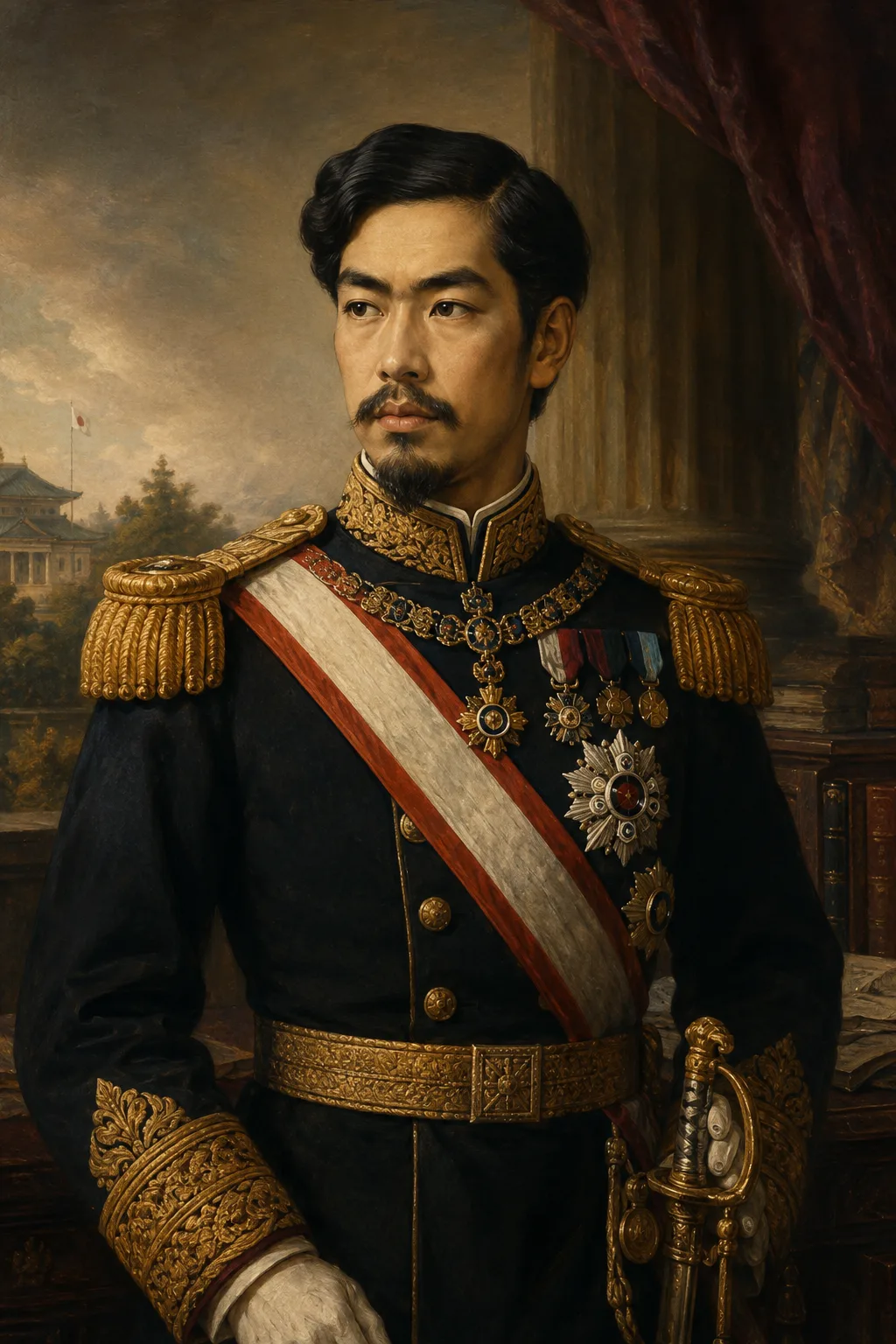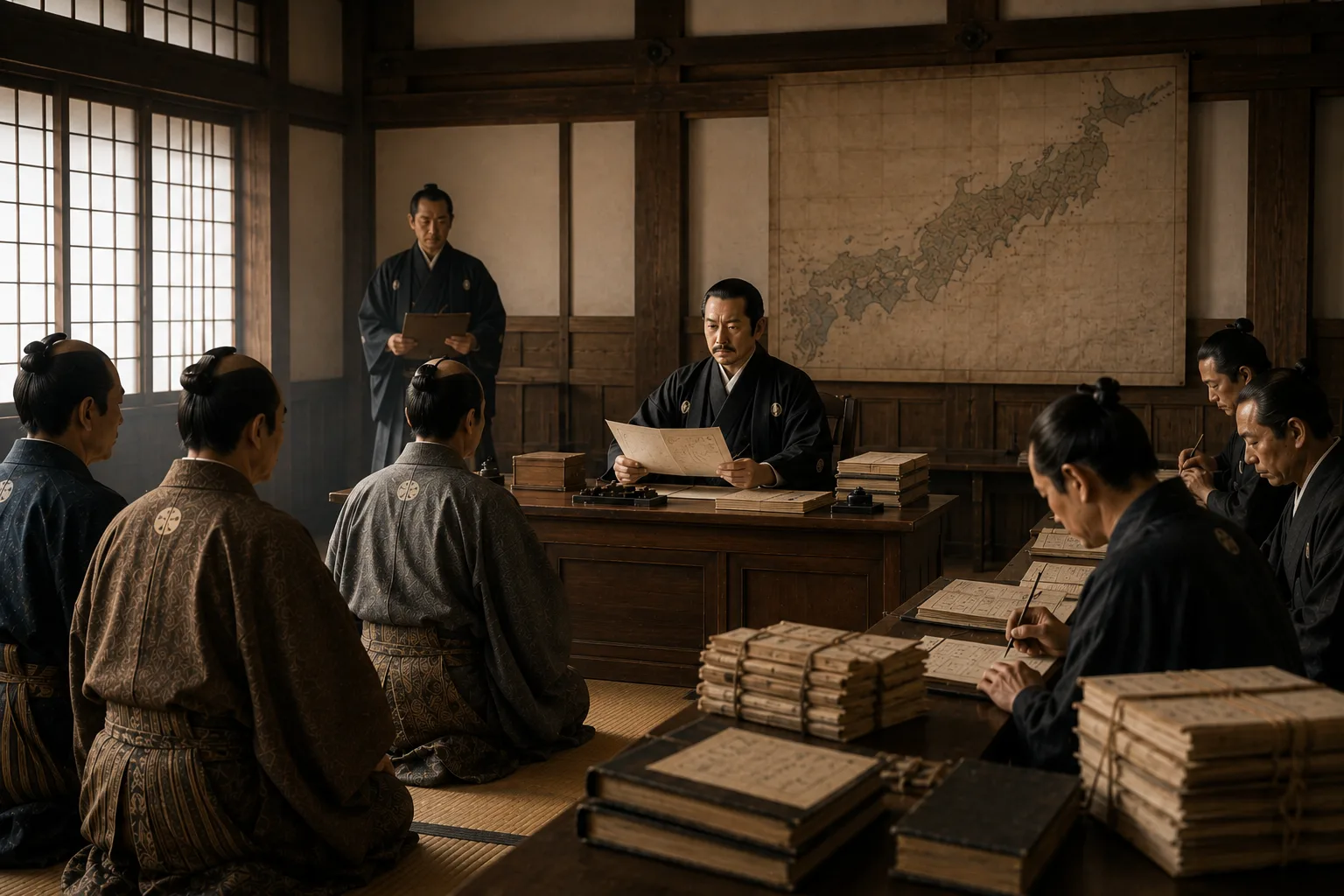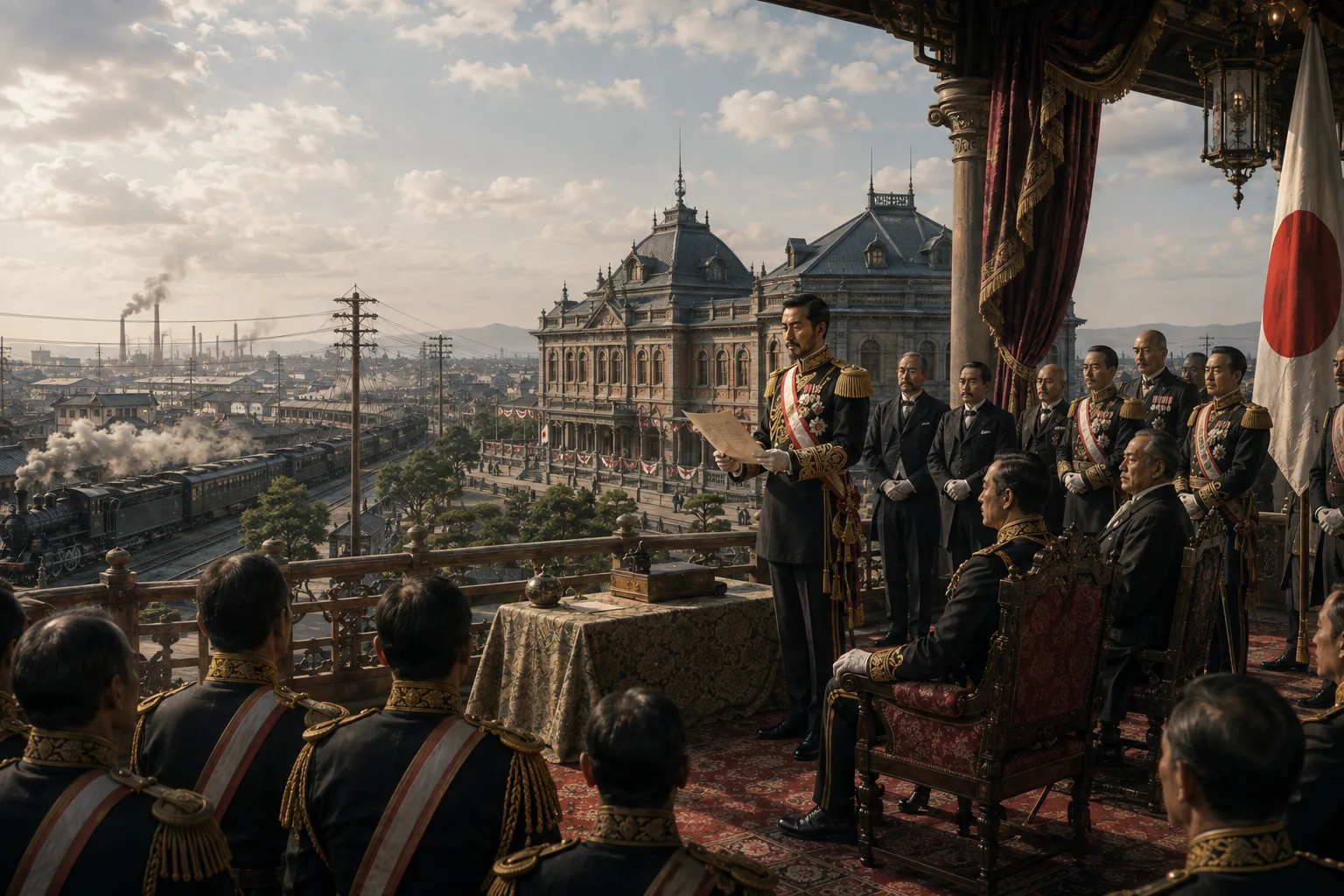
Emperor Meiji and officials overlooking a modernising Japanese city with railways, factories and imperial ceremony.

Premium Story

The Meiji Restoration

Follow Japan from Tokugawa rule and the shock of Western gunboats to imperial restoration, state reform, industrialisation and victory over Russia.

11 chapters · 20 min read

Next
Context

Introduction

Overview

Western pressure exposed the limits of Japan's Tokugawa order in the mid-nineteenth century. Leaders acting in the emperor's name dismantled the shogunate and rebuilt the state through new schools, armed forces and industry. Their reforms secured Japan's independence while setting it on a path toward imperial expansion.

Key forces

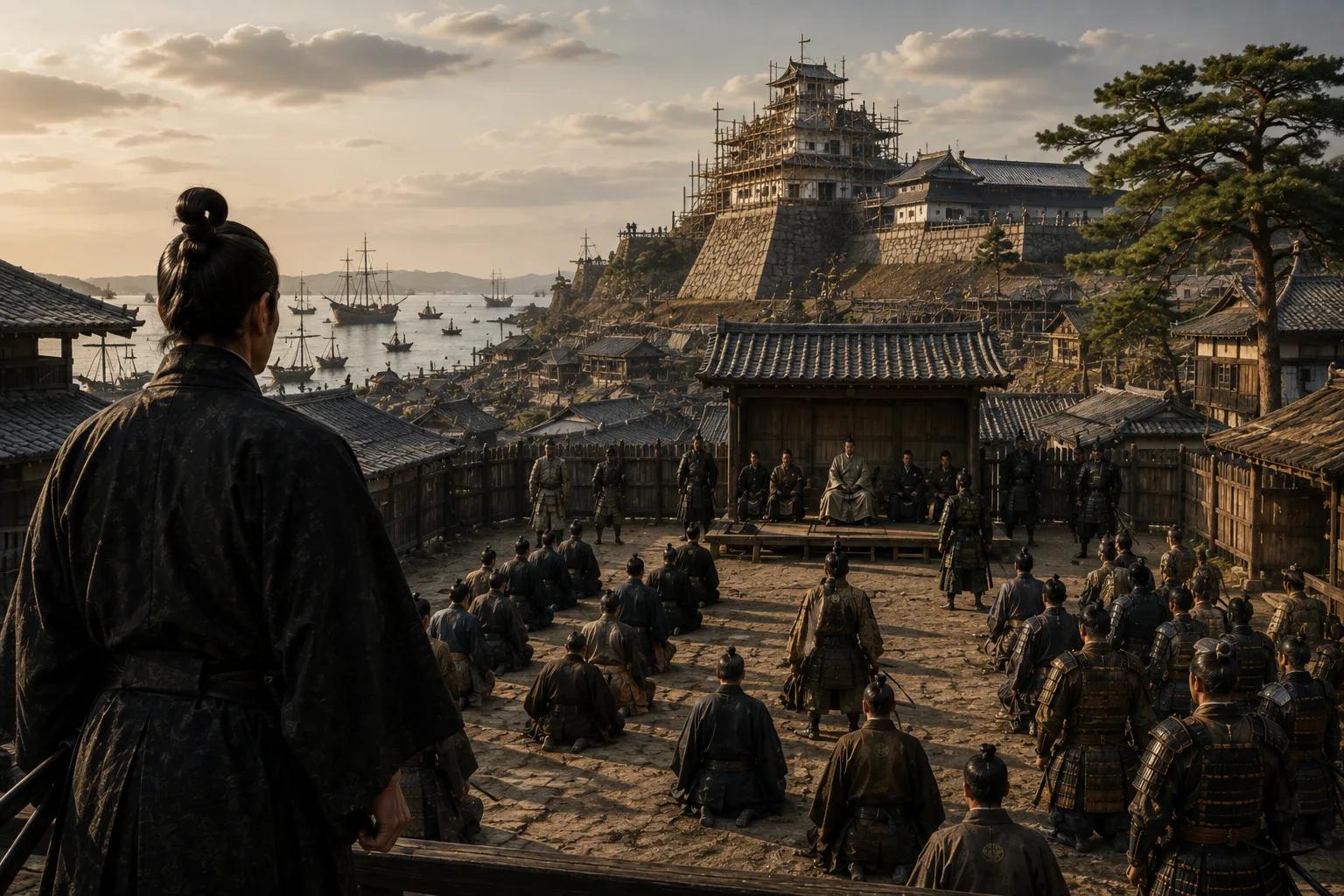
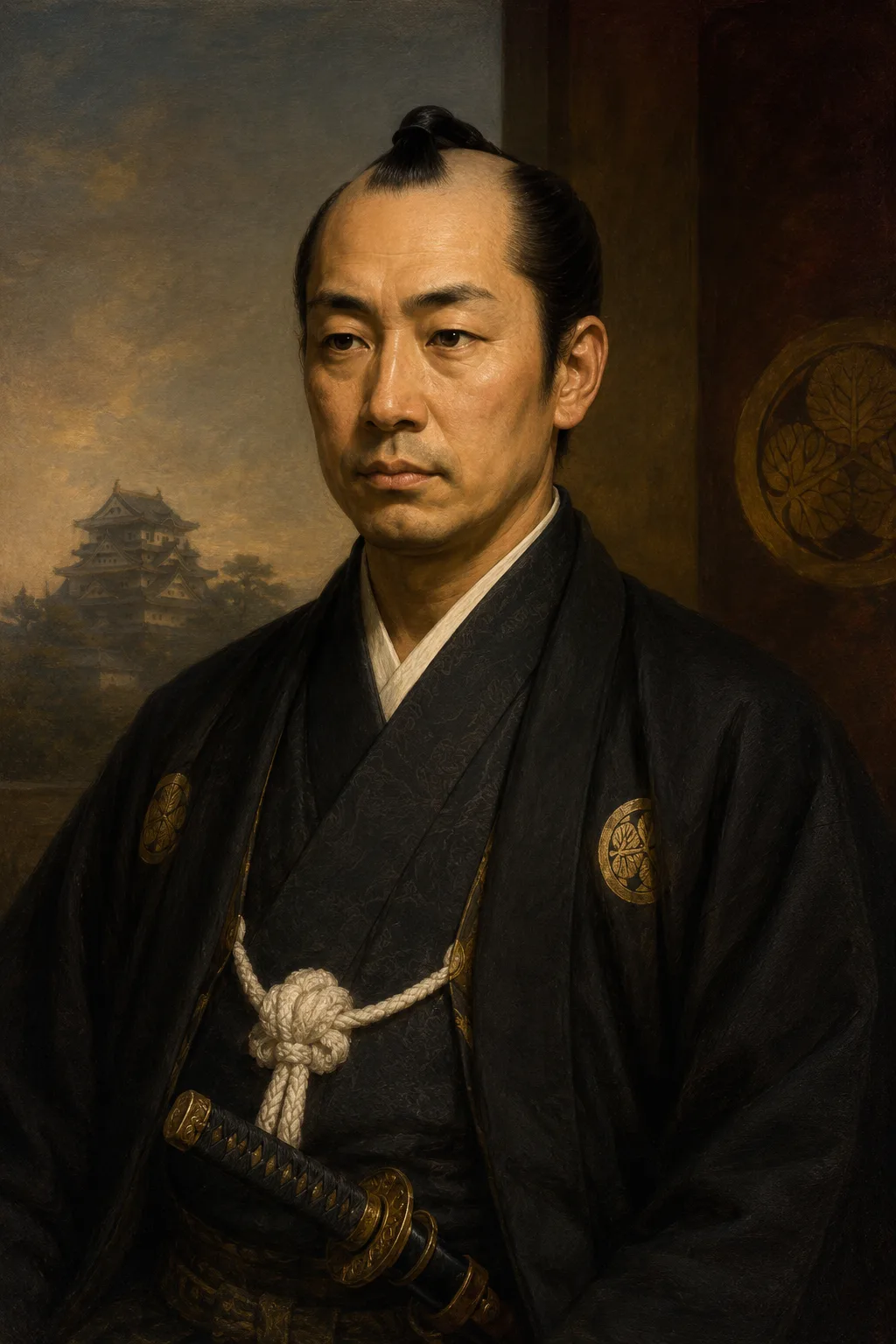
Samurai and retainers kneeling before Tokugawa authority near a fortified Japanese castle and harbour.
1603 CE
Step 1 of 101603 CEAccessible mode

The Tokugawa Order

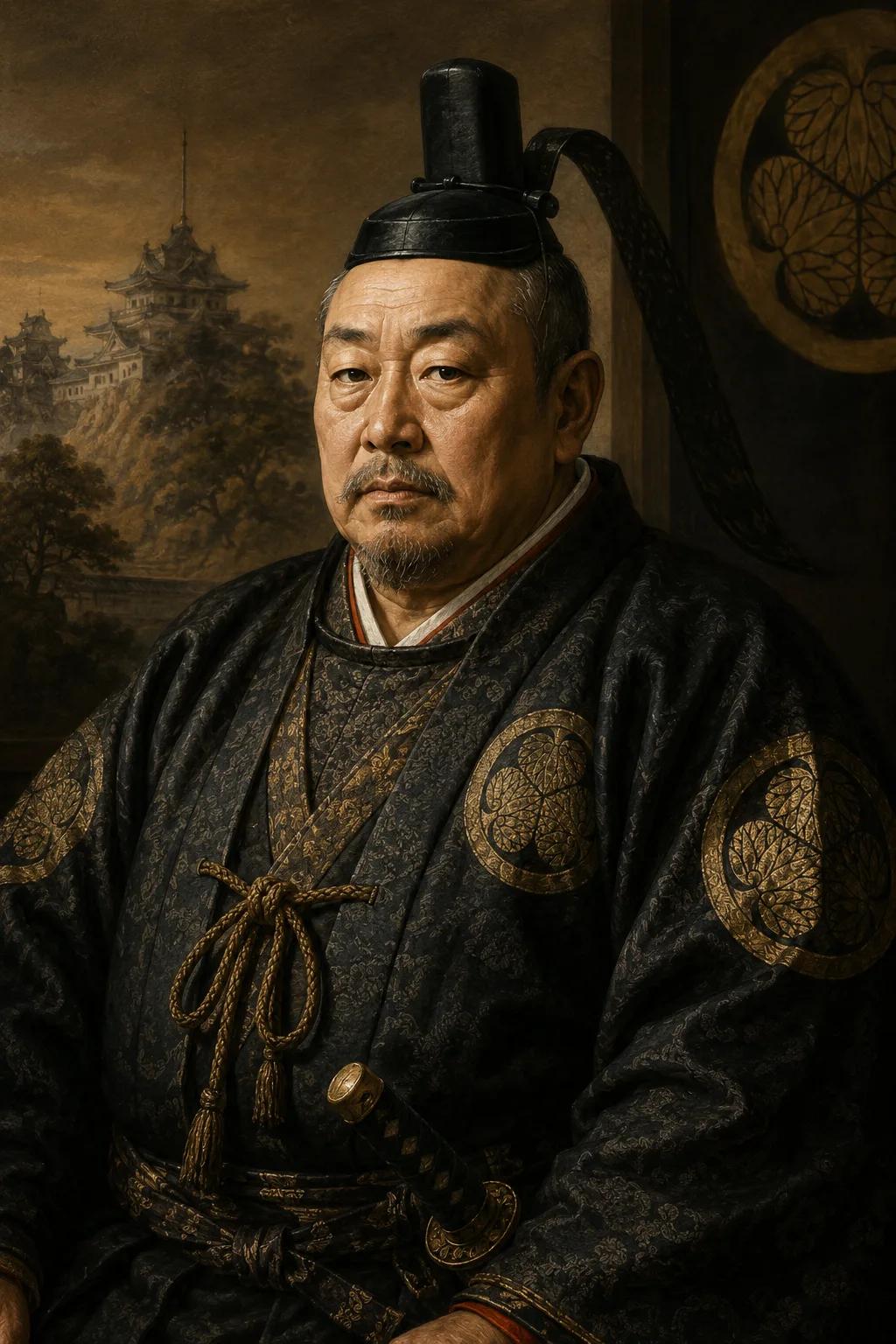
In 1603, Tokugawa Ieyasu became shogun and created a system that would keep Japan largely at peace for more than two hundred years.

The emperor remained in as a sacred and symbolic figure, but real political power belonged to the shogun in . The shogunate controlled national policy, foreign relations and the balance of power among the domains.

Japan was divided among daimyo, powerful lords who governed their own domains. They kept armies, collected taxes and ruled locally, but the shogunate watched them carefully. Alternate attendance forced many daimyo to spend regular time in , leaving families and resources within reach of Tokugawa power.

Society was organised by status. Samurai held the prestige of the warrior class, even though long peace meant many became officials, teachers or stipended retainers rather than battlefield fighters. Farmers, artisans and merchants had their own places in the social order.

Foreign contact was restricted. Trade with the Dutch and Chinese continued through , but the shogunate tried to prevent uncontrolled outside influence. The system was not closed to the world, but it was tightly managed. That careful order was exactly what later reformers would overturn.

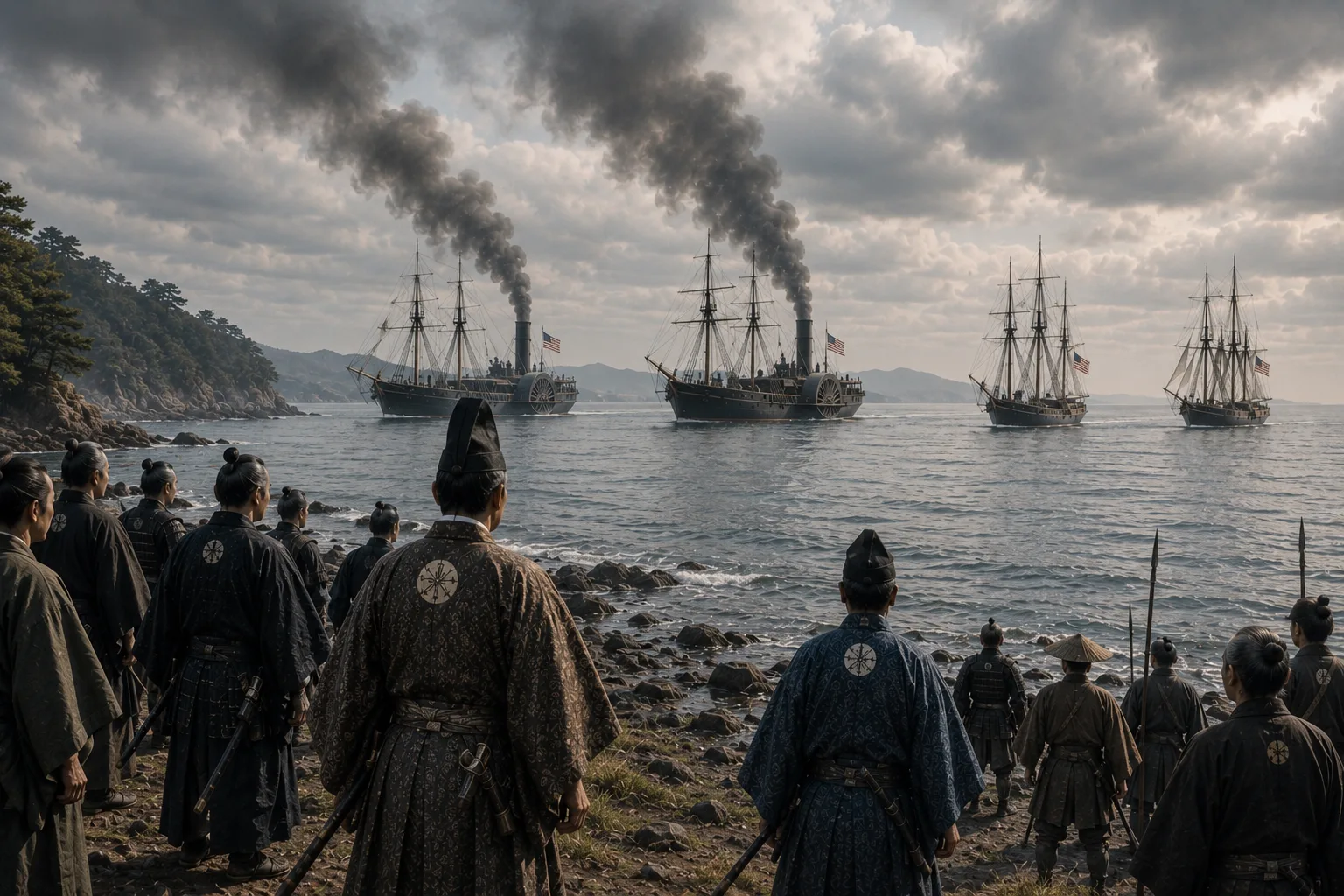
Japanese officials and samurai watching American black ships steam into Japanese waters.
1853 CE
Step 2 of 101853 CEAccessible mode

The Black Ships Arrive

In 1853, American warships entered Bay. Their black hulls and steam-powered vessels brought the threat of foreign power close to the capital.

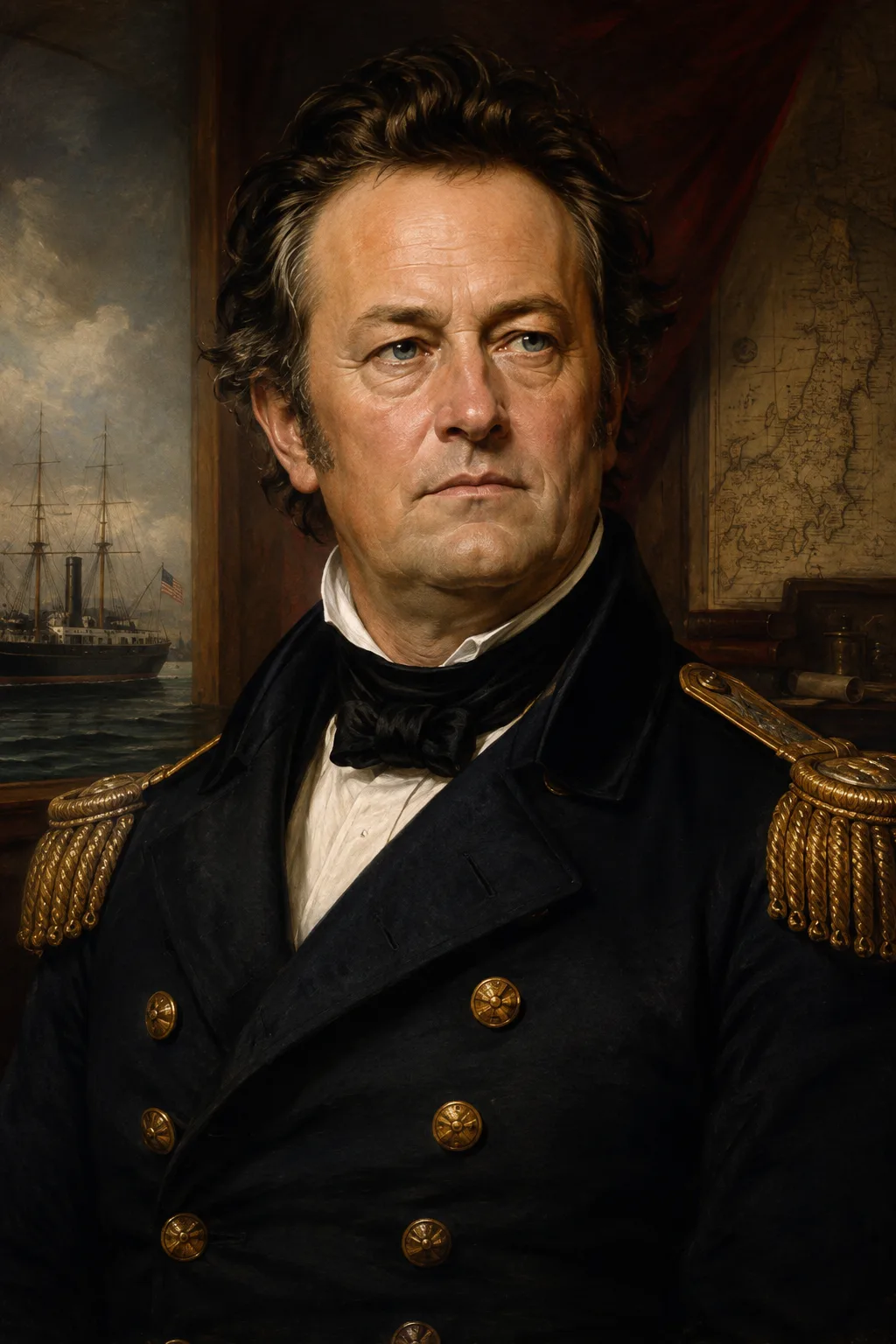
Commodore Matthew Perry carried a demand from the United States: Japan should open ports, treat shipwrecked sailors properly and allow American ships to obtain supplies. He did not come as an equal visitor. He came with naval power.

The shogunate faced an impossible choice. Refusing might lead to war against a technologically stronger opponent. Accepting would break long-standing restrictions on foreign contact and expose the government to criticism at home.

Perry left and returned in 1854 with more ships. The shogunate signed the Treaty of Kanagawa, opening limited ports to American vessels.

Japan now had to ask a frightening question. Could an old political order defend the country in a world of steamships, cannon and imperial demands?

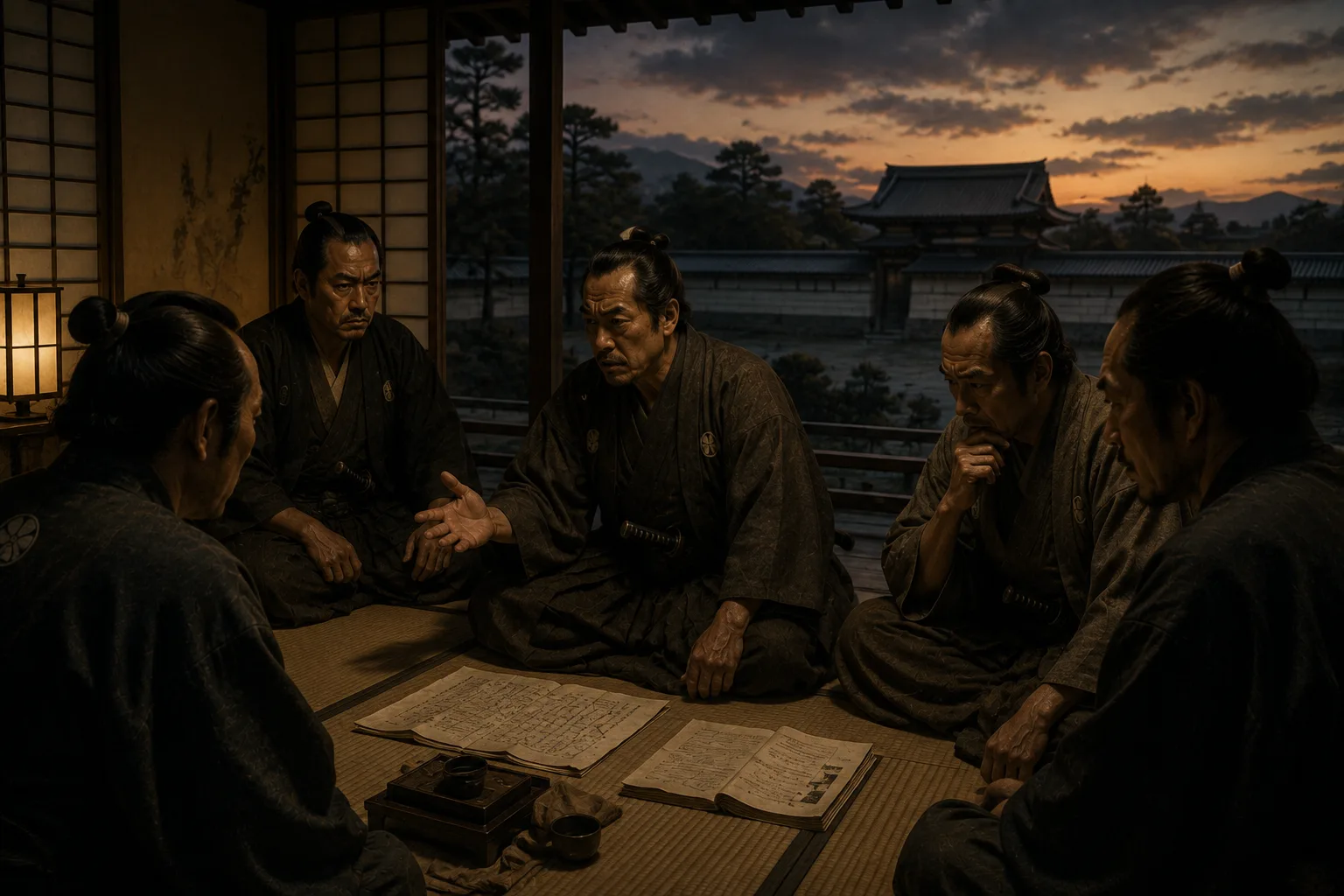
Tokugawa-era samurai leaders debating treaty documents in a dim room as political authority weakens.
1858 CE
Step 3 of 101858 CEAccessible mode

The Shogunate Loses Authority

By 1858, the shogunate had agreed to treaties that many Japanese saw as humiliating and dangerous.

The new agreements opened more ports to foreign trade and gave Western powers special legal privileges. Japan could not fully control tariffs or easily judge foreign residents under its own laws.

These were called unequal treaties because they limited Japanese sovereignty. The shogunate had signed them under pressure, but pressure did not protect it from blame.

Opposition grew among samurai, court nobles and powerful domains such as Satsuma and Choshu. Some demanded that foreigners be expelled. Others understood that Japan needed military and political reform first.

Calls to honour the emperor and strengthen imperial authority gave the opposition a powerful language. The shogunate was no longer facing only foreign ships. It was facing a crisis of legitimacy inside Japan.

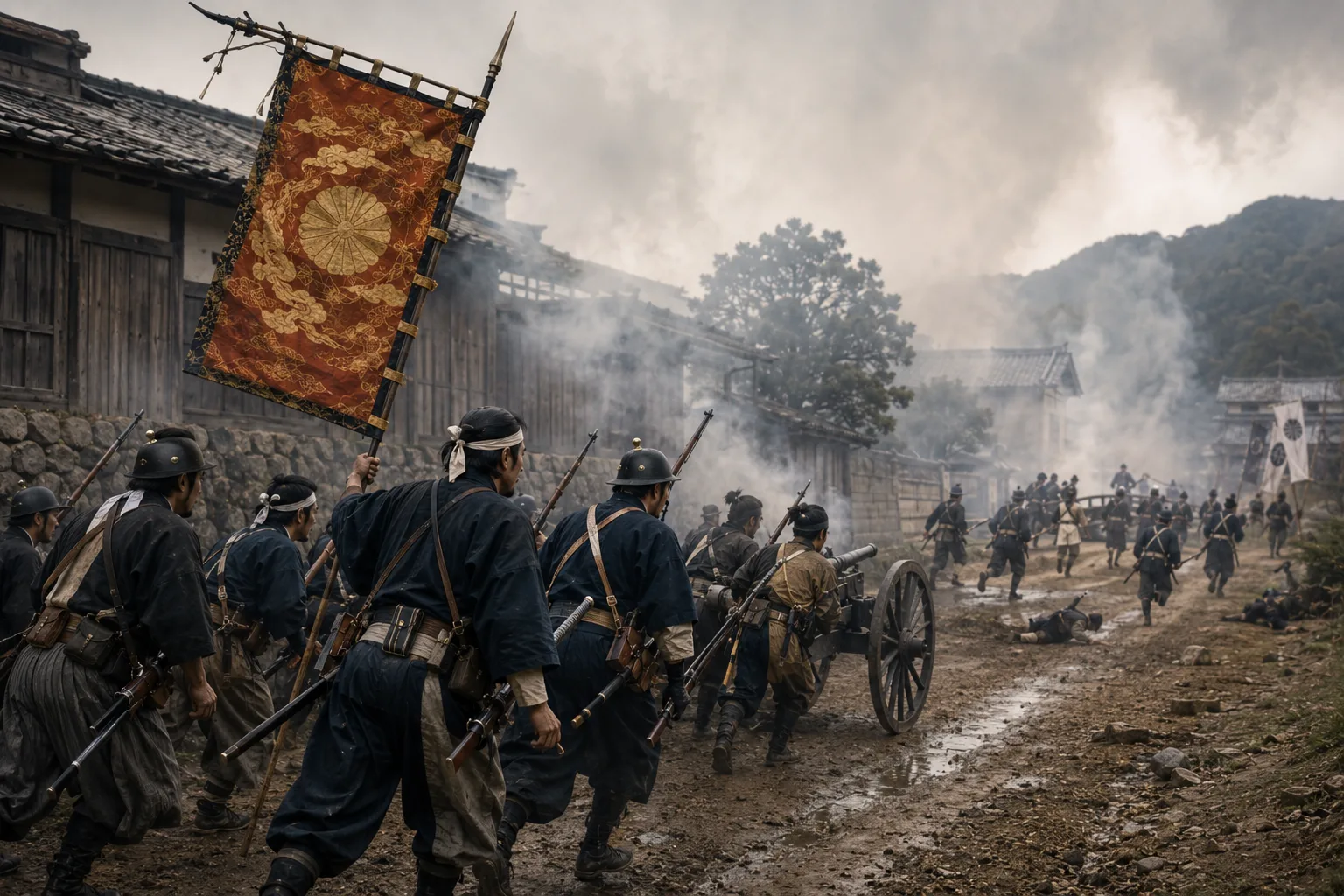
Imperial loyalist troops advancing through smoke during the Boshin War under an emperor's banner.
1868 CE
Step 4 of 101868 CEAccessible mode

The Meiji Restoration

In 1868, Japan's old warrior government fell and a new regime claimed to rule in the name of Emperor Meiji.

The last Tokugawa shogun, Tokugawa Yoshinobu, tried to preserve influence by returning governing authority to the emperor. But anti-Tokugawa leaders from Satsuma, Choshu and their allies wanted more than a symbolic transfer.

Fighting broke out in the Boshin War. Imperial forces defeated Tokugawa supporters and pushed northward until the old regime's resistance collapsed.

The emperor became the public centre of the new state. was renamed , meaning eastern capital, and the court moved there. The symbols of rule changed quickly.

The new leaders did not simply bring back an old imperial system. They used the emperor's authority to rebuild Japan from the centre: stronger government, stronger army, stronger economy and greater independence from foreign pressure.

PremiumFree preview: 4 of 10 chapters

Continue The Meiji Restoration

Sign up to a Premium account to read the remaining chapters of this story.

A paid Premium subscription also gives you full access to every other Premium story.

See Premium options

Coming next

  1. Chapter 5Building a Centralised State
  2. Chapter 6Creating a Modern Military
  3. Chapter 7The Industrial Transformation

And 3 more chapters to follow.

Keep exploring

Follow the connected history

Explore closely connected stories and free figure profiles. Premium stories open with a public preview.

References

Sources and historical notes

Sources used to check this page, selected recommendations and historical notes.

Sources used

  1. Office of the Historian, U.S. Department of State, “The Opening to Japan, 1853–1854,”

    Perry’s mission, the limited 1854 treaty, and the later commercial treaty.

    Open source
  2. Columbia University, Asia for Educators, “The Meiji Restoration and Modernization,”

    Political centralisation, institutions, industrialisation and restricted suffrage.

    Open source
  3. University of California Press, “From Home Work to Corporate Paternalism,”

    Women’s labour in the early silk and cotton industries.

    Open source
  4. Office of the Historian, U.S. Department of State, “The Treaty of Portsmouth and the Russo-Japanese War, 1904–1905,”

    The war and settlement concerning Korea, Manchuria and Sakhalin.

    Open source
  5. Office of the Historian, U.S. Department of State, “U.S. correspondence on Korea, 1905,”

    Contemporary American correspondence on Japan’s control of Korea’s foreign relations.

    Open source

Additional sources and notes

Loading reviewed claim sources...

Our editorial approach · Report a historical error

A monthly route through history

Find out first about the latest published stories, feature notes and occasional Premium offers in one monthly email.