This story discusses genocide, persecution, mass killing, and crimes against humanity in an educational historical context.
Reading mode
Accessible gives a lighter overview. Deep Dive tells the fuller story.
Quick Answers
What was the Holocaust?
The Holocaust was the systematic persecution and murder of six million Jews by Nazi Germany and its collaborators between 1933 and 1945. Millions of other people, including Roma, disabled people, Soviet prisoners of war, Polish civilians, and political opponents, were also targeted and killed.
At a glance
Date range: 1933 to 1945.
The Holocaust traces the persecution and murder of six million Jews, alongside the wider history of Nazi mass violence against other targeted groups.
The Holocaust was the systematic persecution and murder of approximately six million Jews — around two thirds of Europe’s pre-war Jewish population. Nazi Germany and its allies and collaborators also persecuted and murdered millions of other people.
Persecution developed through overlapping policies: exclusion and violence from 1933, ghettoisation after 1939, expanded mass shootings in 1941, and killing-centre operations beginning in late 1941.
Common questions
When was the Holocaust?
The Holocaust developed from Nazi persecution after 1933 into systematic mass murder during the Second World War, especially from 1941 to 1945.
Who were the victims of the Holocaust?
The central victims were Europe's Jews, six million of whom were murdered. Roma, disabled people, Polish civilians, Soviet prisoners of war, and political opponents were also targeted.
What was the Final Solution?
The Final Solution was Nazi Germany's plan for the systematic murder of Europe's Jews, carried out through shootings, ghettos, deportations, extermination camps, and forced labour.
How did the Holocaust end?
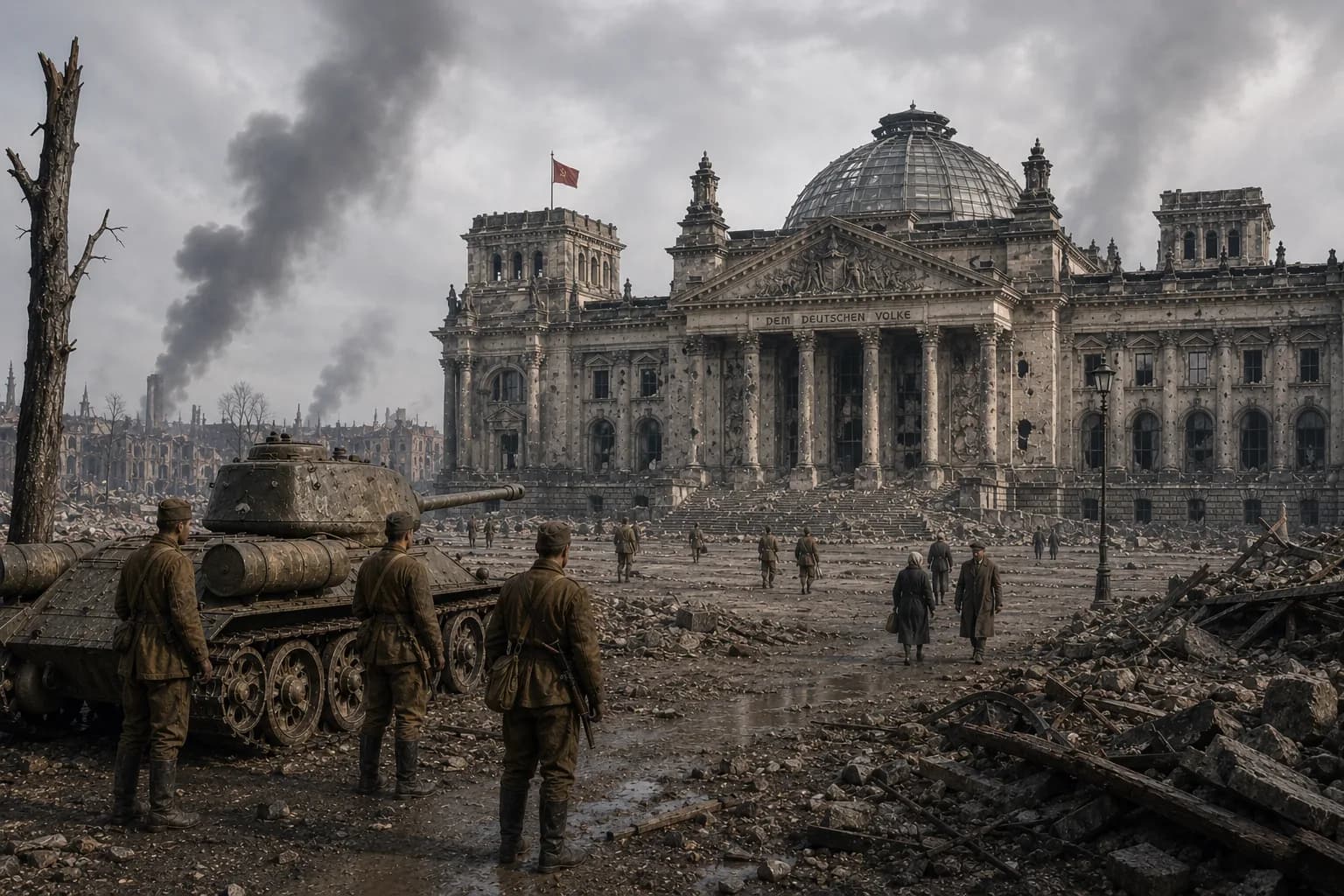
The Holocaust ended as Allied armies defeated Nazi Germany and liberated camps in 1944-1945, but survivors faced displacement, trauma, and the long struggle for justice and memory.
Context
Introduction
Overview
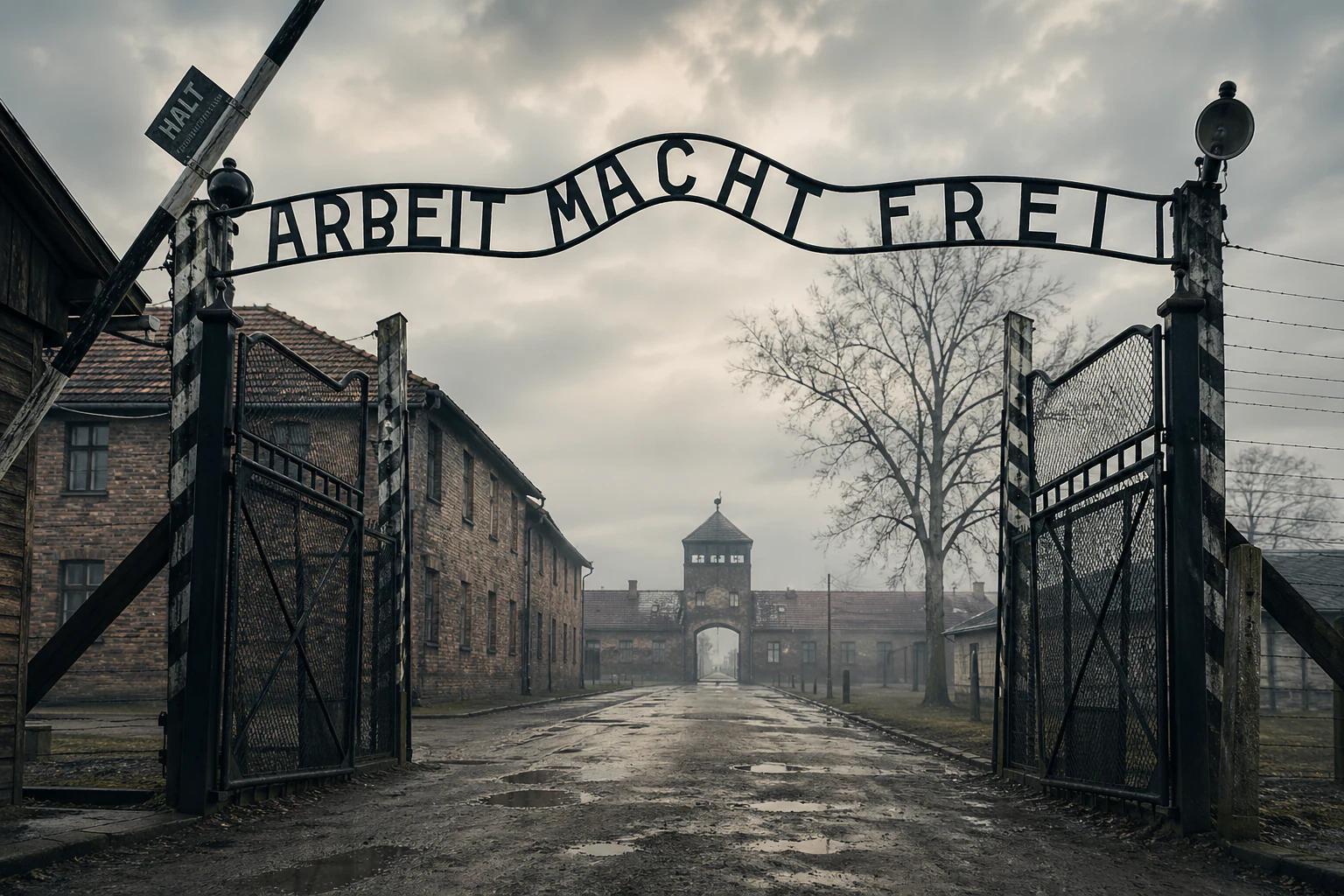
The Holocaust was the systematic persecution and murder of six million Jews by Nazi Germany and its collaborators between 1933 and 1945. Millions of other people, including Roma, disabled people, Soviet prisoners of war, Polish civilians, and political opponents, were also targeted and killed. The Holocaust was built through law, propaganda, bureaucracy,ghettos, deportations, killing centres, and war, making it one of history's central warnings about state violence and dehumanisation.
Key forces
The Holocaust was the systematic persecution and murder of approximately six million Jews — around two thirds of Europe’s pre-war Jewish population. Nazi Germany and its allies and collaborators also persecuted and murdered millions of other people.
Persecution developed through overlapping policies: exclusion and violence from 1933, ghettoisation after 1939, expanded mass shootings in 1941, and killing-centre operations beginning in late 1941.
The Nazi regime used modern bureaucratic,industrial, and transportation systems to organise genocide on a continental scale, requiring the active participation and passive complicity of thousands across multiple countries.
The Holocaust continues to shape international law, human rights frameworks, collective memory, and the understanding of how genocide becomes possible — and how it might be prevented.
1933 CE
Step 1 of 101933 CEAccessible mode
Nazi Antisemitism Takes Power
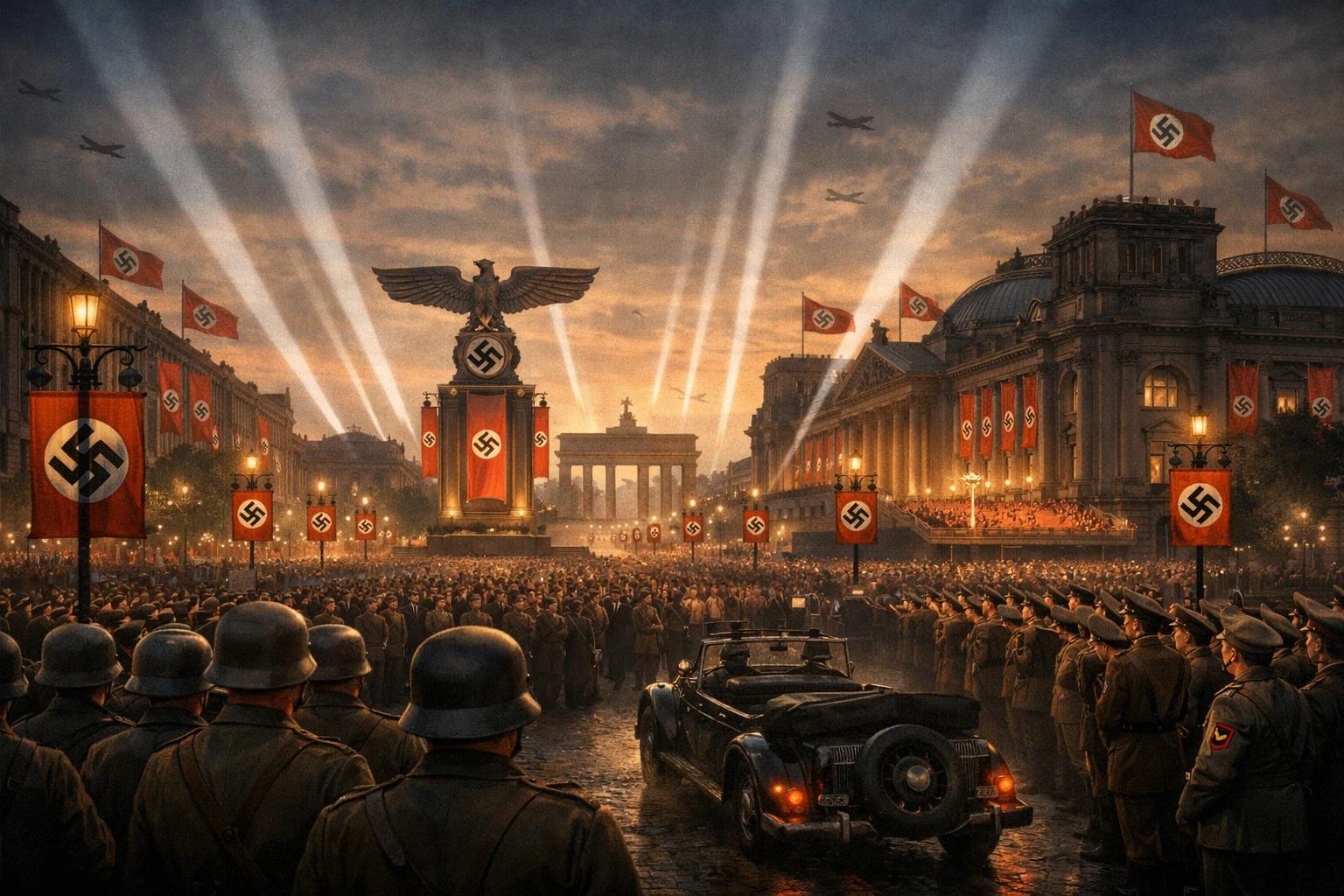
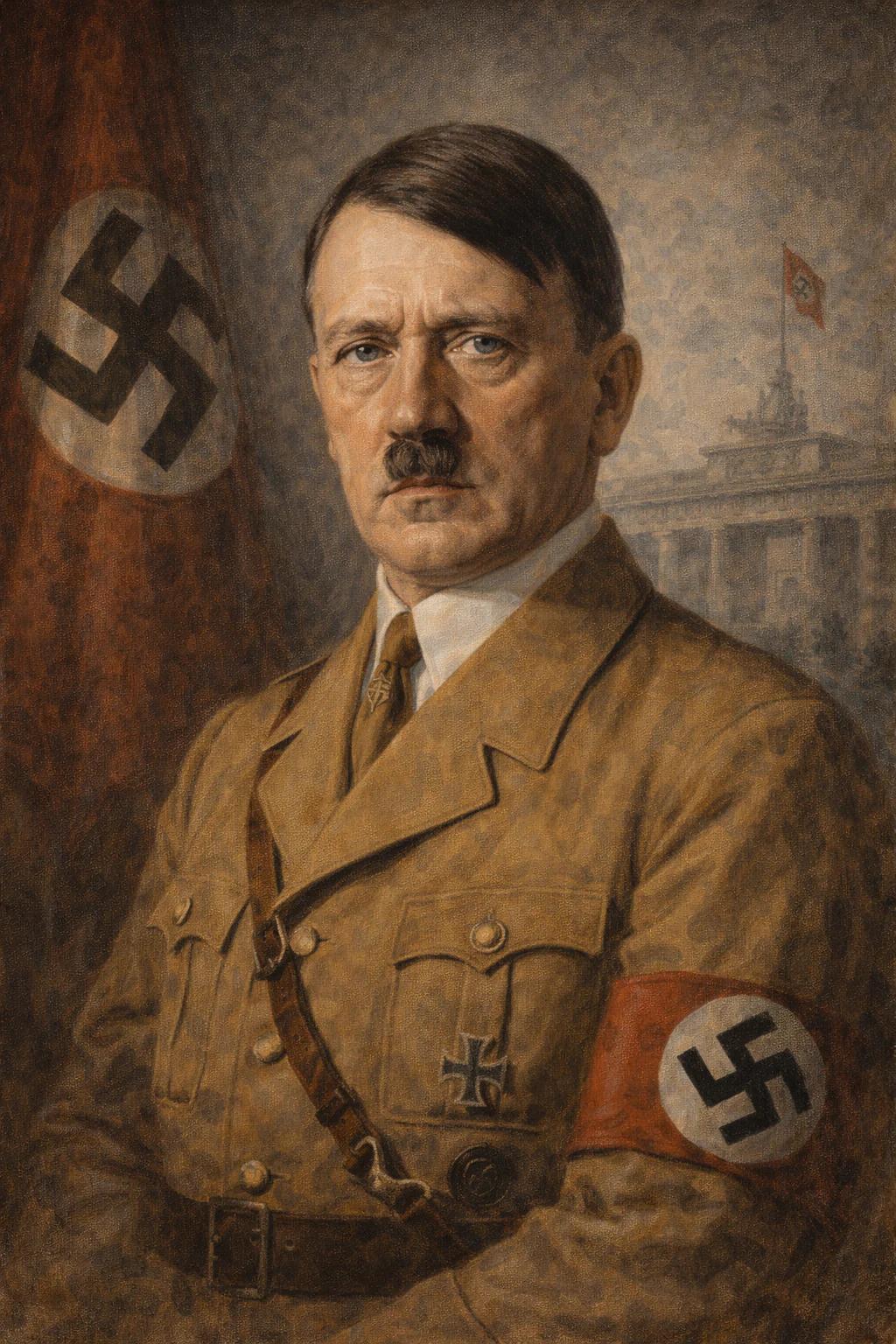
Adolf Hitler became Germany's chancellor in January 1933. For Jewish people in Germany, that moment began twelve years of persecution that would end in genocide.
Antisemitism — prejudice against Jewish people — had a long history in Germany and elsewhere. The Nazis made it central to government policy. In April 1933, Jewish businesses faced a nationwide Nazi-organised boycott. Jewish professionals lost their jobs. The state was acting against its own citizens.
The Nazis believed Jews were enemies of Germany — responsible for military defeat, economic collapse, and national humiliation. With power in hand, they could act on those beliefs. Jews were publicly cast as threats to the German nation.
In 1933, concentration camps opened for political prisoners — communists,trade unionists, journalists. The instruments of terror were taking shape. Jews were already in danger. But the worst was still to come.
1935 CE
Step 2 of 101935 CEAccessible mode
The Nuremberg Laws
In September 1935, Nazi Germany extended its antisemitic legislation through new racial laws. Jewish people lost their citizenship. Discrimination was now bureaucratic, official, and permanent.
The Reich Citizenship Law declared that only those of German blood could be citizens. Jews became mere subjects — residents of Germany with no political rights whatsoever.
A second law banned marriages and extramarital sexual relations between Jews and people classified as of German or related blood. Racial identity was determined through official classification based on the religion of a person's grandparents.
The Laws showed that a modern state could institutionalise racial categories through bureaucracy alone. Hundreds of thousands of people suddenly found themselves legally classified as less than full human beings in the country where they were born.
1938 CE
Step 3 of 101938 CEAccessible mode
Kristallnacht
On 9–10 November 1938, mobs across Germany burned synagogues, smashed Jewish businesses, and dragged Jews into the streets. The Nazis called it a spontaneous uprising. It was organised by the state.
The trigger was the assassination of a German diplomat in Paris by a young Jewish man whose family had been expelled from Germany. The Nazis used it as justification for a nationwide pogrom — an act of coordinated mass violence.
Over 1,400 synagogues were destroyed. Around 7,500 Jewish businesses were smashed. Hundreds of Jews died during the pogrom and its aftermath. Tens of thousands of Jewish men were arrested and sent to concentration camps.
Afterwards, the German government fined the Jewish community one billion Reichsmarks for the damage — not the perpetrators, but the victims. The message was unmistakable. There would be no accountability, no recourse, and no safety.
PremiumFree preview: 3 of 10 chapters
Continue The Holocaust
Sign up to a Premium account to read the remaining chapters of this story.
A paid Premium subscription also gives you full access to every other Premium story.