Accessible gives a lighter overview. Deep Dive tells the fuller story.
Quick Answers
What was the Battle of Britain?
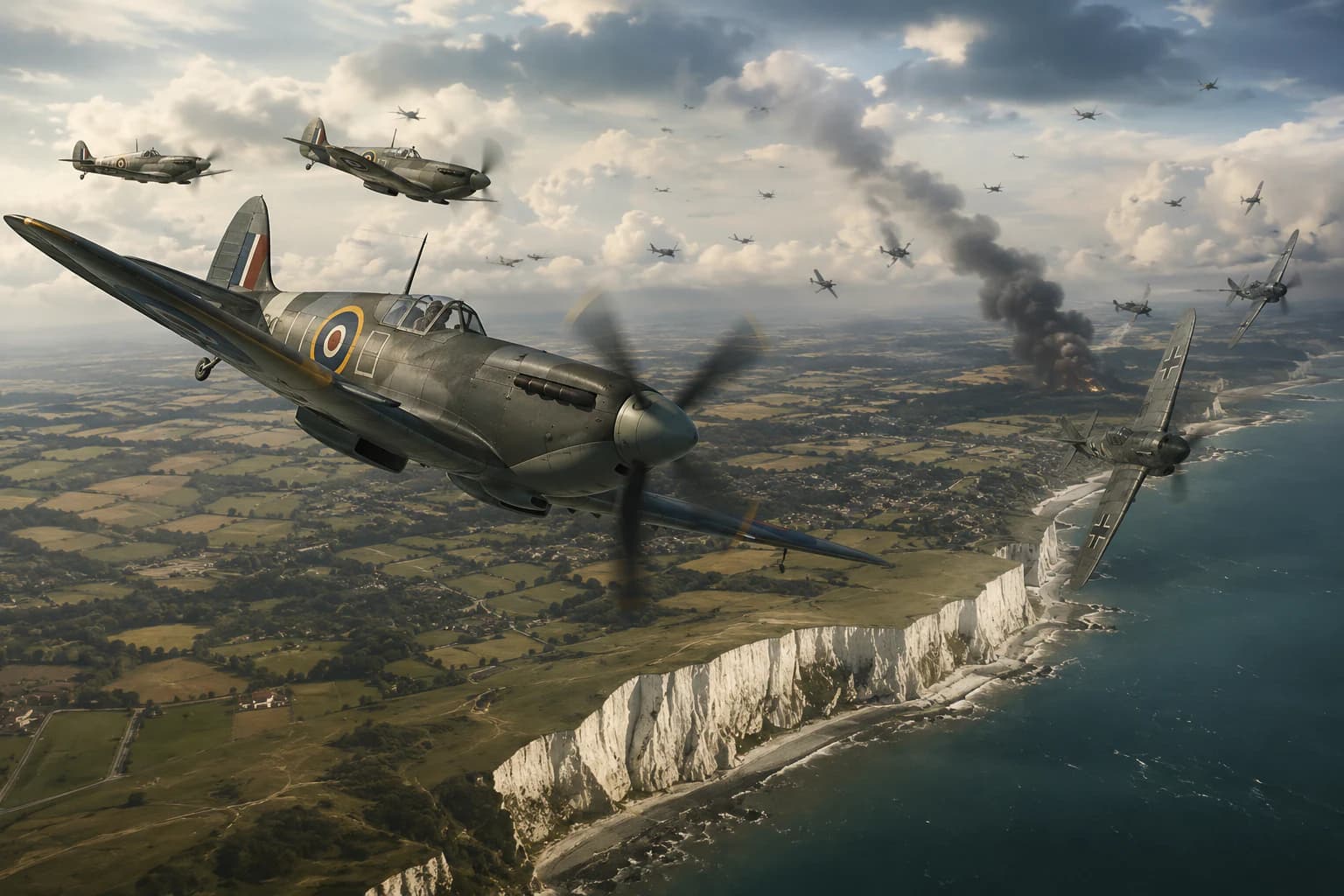
In 1940, after the fall of France, Britain faced a direct threat of invasion and defeat. The Battle of Britain became the first major campaign fought mainly in the air, where radar networks, command systems, pilots, and civilian endurance determined whether the island could remain in the war.
At a glance
Date range: 1940.
In 1940, Britain’s air defense held against German attack, blocking invasion plans and preserving a vital base for eventual Allied victory in Europe.
After France fell in 1940, Britain became the main obstacle to German dominance in western Europe.
The Battle of Britain was fought in 1940, mainly from July to October. It followed the fall of France and came before Hitler postponed plans to invade Britain.
Britain survived through radar, Fighter Command organisation, aircraft production, experienced controllers, determined pilots, and German strategic mistakes. The RAF was battered but not destroyed.
What was the Blitz?
The Blitz was Germany's bombing campaign against British cities, especially , after the air battle shifted toward attacks on civilians and urban targets in late 1940.
Who fought in the Battle of Britain?
RAF Fighter Command defended Britain against Nazi Germany's Luftwaffe. The RAF force included British aircrew and volunteers from occupied Europe, the Commonwealth, and other countries, supported by ground crews, radar operators, observers, controllers, and aircraft workers.
Who won the Battle of Britain?
Britain won the battle by preventing the Luftwaffe from destroying Fighter Command or gaining the air superiority required for invasion. The victory did not destroy the German air force, but it denied Germany its immediate strategic objective and kept Britain in the war.
Why was radar important in the Battle of Britain?
Chain Home radar gave early warning of approaching raids, but its value came from the wider Dowding System. Radar reports, the Observer Corps, filtering rooms, sector controllers, and radio communications helped Fighter Command send limited aircraft to the right place at the right time.
What aircraft were used in the Battle of Britain?
The RAF's principal fighters were the Hawker Hurricane and Supermarine Spitfire. Germany used Messerschmitt Bf 109 and Bf 110 fighters alongside bombers including the Heinkel He 111, Dornier Do 17, Junkers Ju 88, and the Ju 87 dive bomber.
What was Operation Sea Lion?
Operation Sea Lion was Nazi Germany's plan to invade Britain across . It depended on weakening the Royal Navy and gaining control of the air, conditions the Luftwaffe failed to secure. Hitler postponed the operation on 17 September 1940, and it was never launched.
How was the Battle of Britain different from the Blitz?
The Battle of Britain was the campaign for control of the air, officially dated in Britain from 10 July to 31 October 1940. The Blitz was the sustained bombing of and other British cities that began during the battle in September 1940 and continued into May 1941.
Why was the Battle of Britain important?
The battle prevented Germany from securing the conditions needed for an invasion, kept Britain fighting, and preserved a base for later Allied operations in Europe. It also showed that Nazi Germany's rapid expansion could be resisted.
Were all of the Few British?
No. Roughly one fifth of the recognized Battle of Britain aircrew were not British. Pilots and other aircrew came from occupied European countries, the Commonwealth, and elsewhere, with Polish and Czechoslovak personnel making especially important contributions.
Did Germany's decision to bomb London save the RAF?
The shift toward reduced sustained pressure on some Fighter Command airfields and gave parts of the defensive system time to recover, but it did not single-handedly save the RAF. German intelligence failures, aircraft range limits, Luftwaffe losses, British production and repair, and the resilience of the Dowding System all shaped the outcome.
After France fell in 1940, Britain faced the threat of German invasion. The Luftwaffe attacked in an effort to destroy RAF Fighter Command, while pilots, radar operators and command networks worked to hold the skies. Britain's defence kept the country in the war and denied Germany the air control an invasion required.
What you’ll learn: You’ll see why the Battle of Britain was a decisive struggle over air power, invasion risk, civilian morale, and Britain’s survival—and why its consequences shaped the wider war.
Key forces
After France fell in 1940, Britain became the main obstacle to German dominance in western Europe.
Britain’s integrated air defense system—radar, observers, and sector command—proved resilient under sustained attack.
The battle’s outcome preserved Britain, blocked invasion, and kept open the long-term possibility of Allied return to Europe.
1940 CE
Step 1 of 101940 CEAccessible mode
Britain Stands Alone
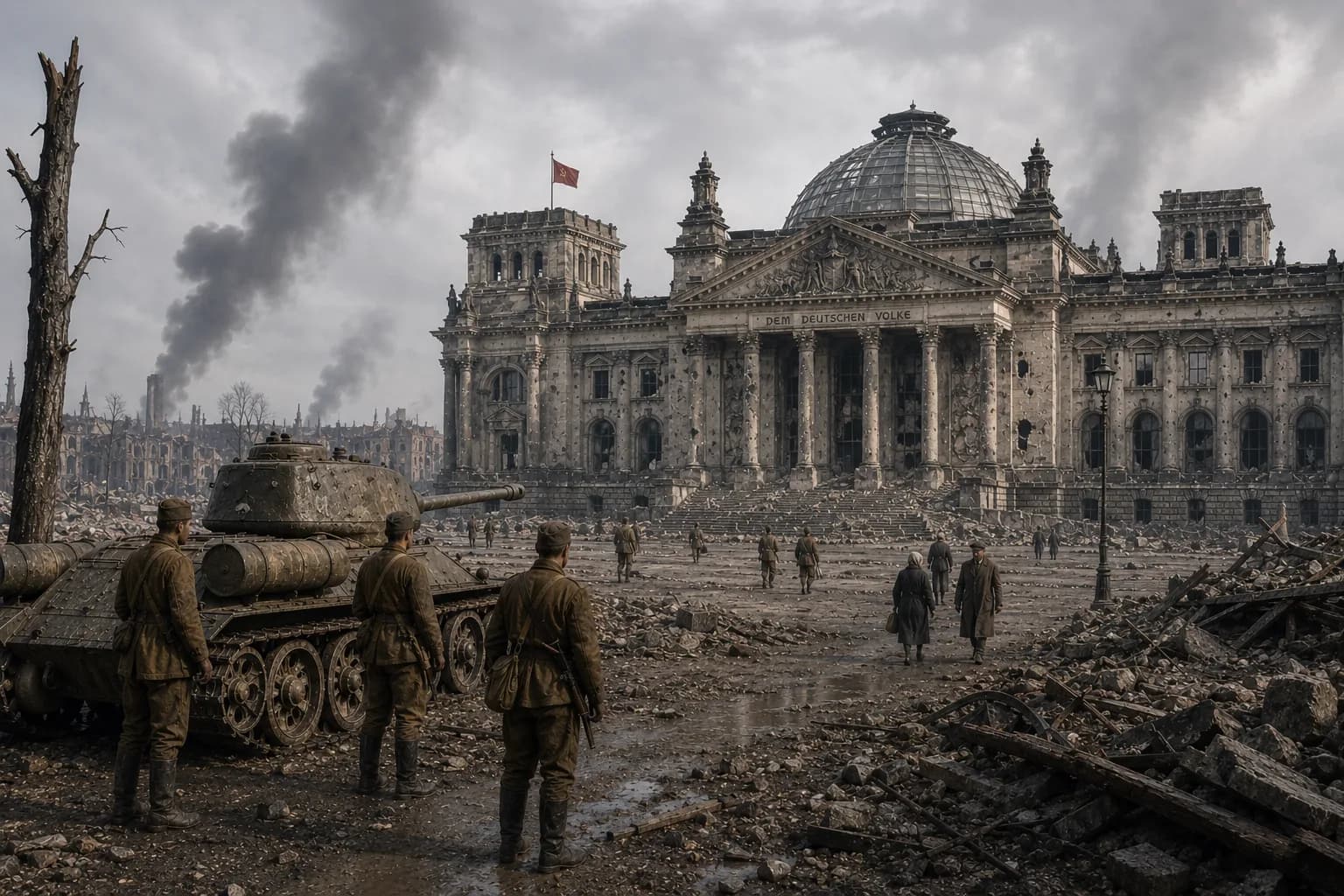
In summer 1940, Britain stood almost alone in Europe. France had fallen, and Germany seemed unbeatable after months of rapid victories across the continent.
The evacuation at saved many British and Allied troops, but most heavy weapons were left behind. Britain escaped destruction, not defeat in spirit.
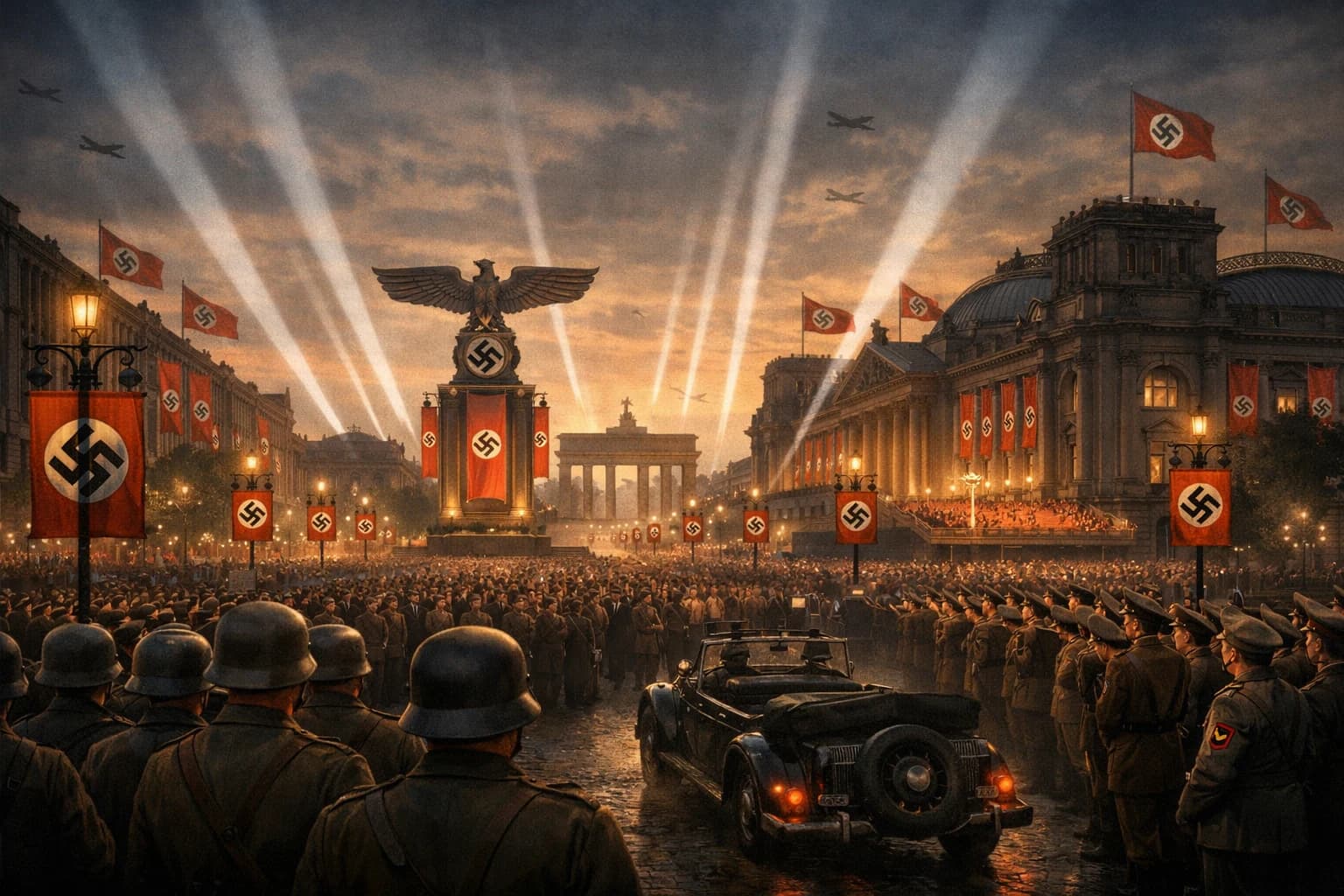
Hitler now controlled most of western Europe directly or through pressure. If Britain gave in, there would be no major base left for resistance nearby.
So the war changed shape. Britain was not just another opponent. It became the barrier between Nazi domination and any future liberation of Europe. It also showed why air defense now mattered: if Britain lost control overhead, invasion pressure and political isolation could quickly become existential threats.
1940 CE
Step 2 of 101940 CEAccessible mode
Operation Sea Lion
In 1940, Germany prepared Operation Sea Lion, a plan to invade Britain across . But ships and soldiers alone were not enough.
Any landing force would be vulnerable on open water. Without control of the sky, German barges could be attacked by RAF fighters and British warships.
This made the Battle of Britain decisive. If the RAF survived, invasion was too risky. If it failed, Britain could be forced to surrender. That is why this battle mattered immediately to ordinary people in 1940: control of the sky was tied directly to whether Britain stayed free or occupied.
Premium2 of 10 chapters read
Fighter Command Prepares
The opening chapters show Britain standing alone after France falls. Premium follows the fight over the skies: pilots and controllers absorb the pressure, cities brace for bombing, and invasion plans depend on whether Fighter Command can endure.