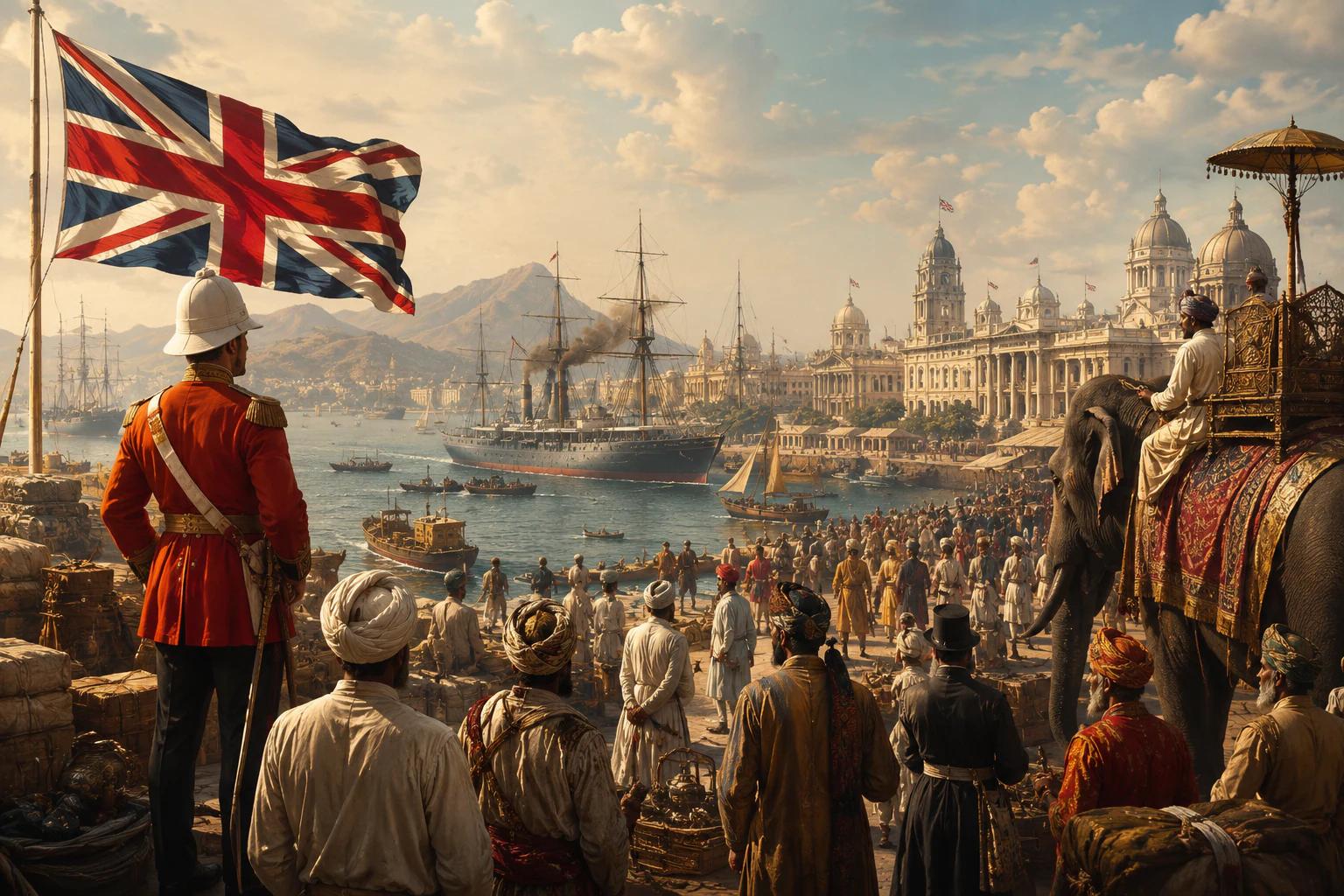
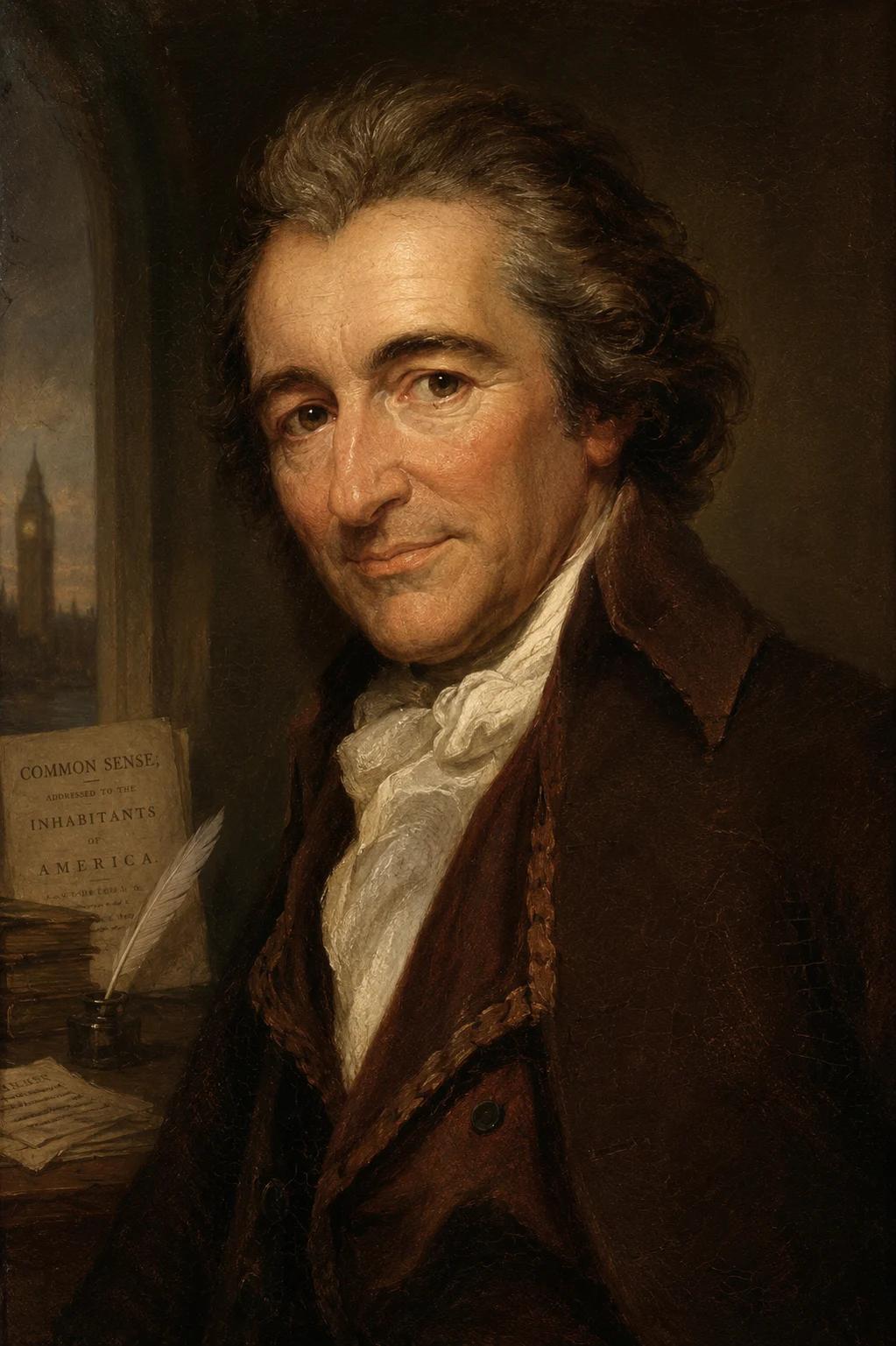
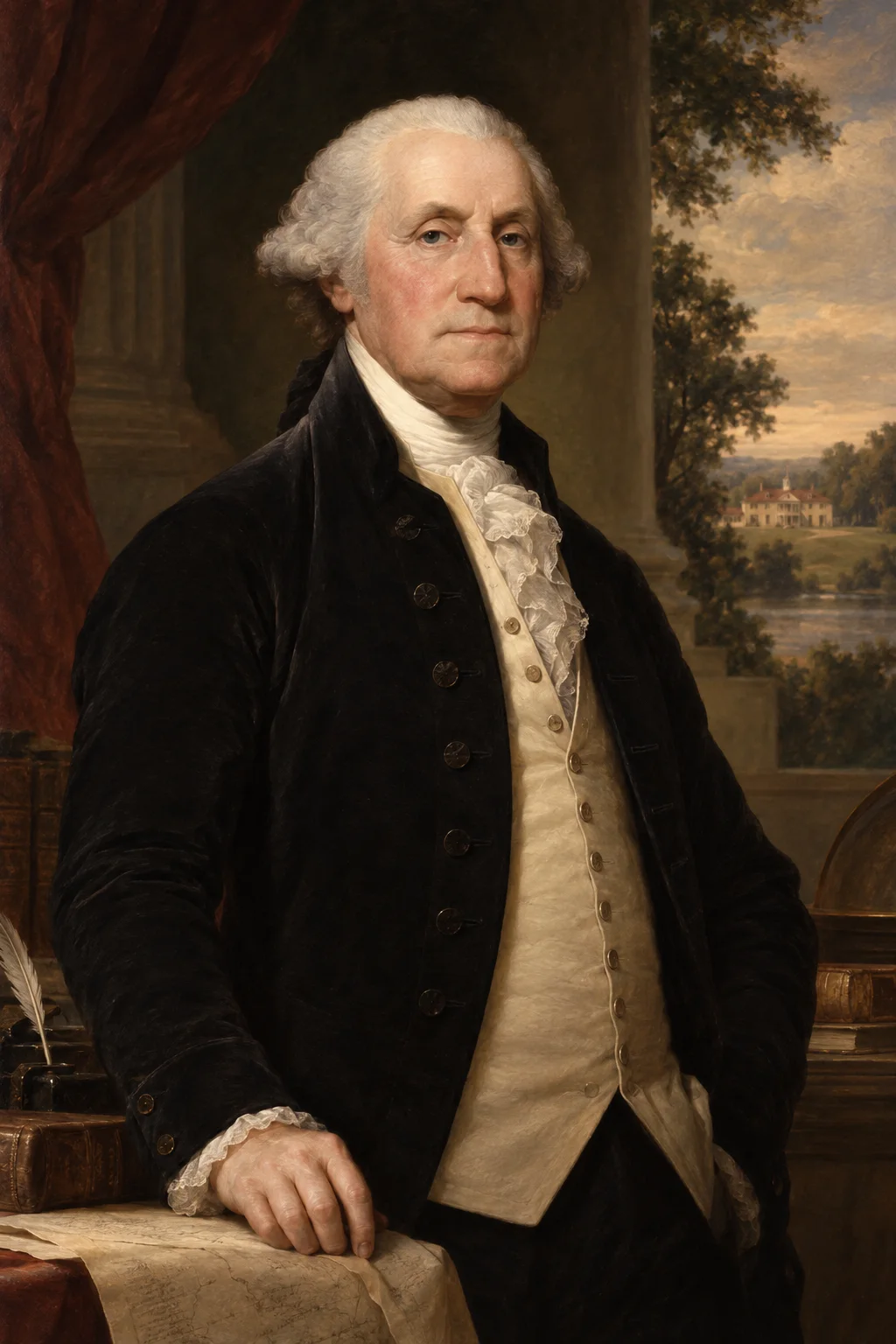
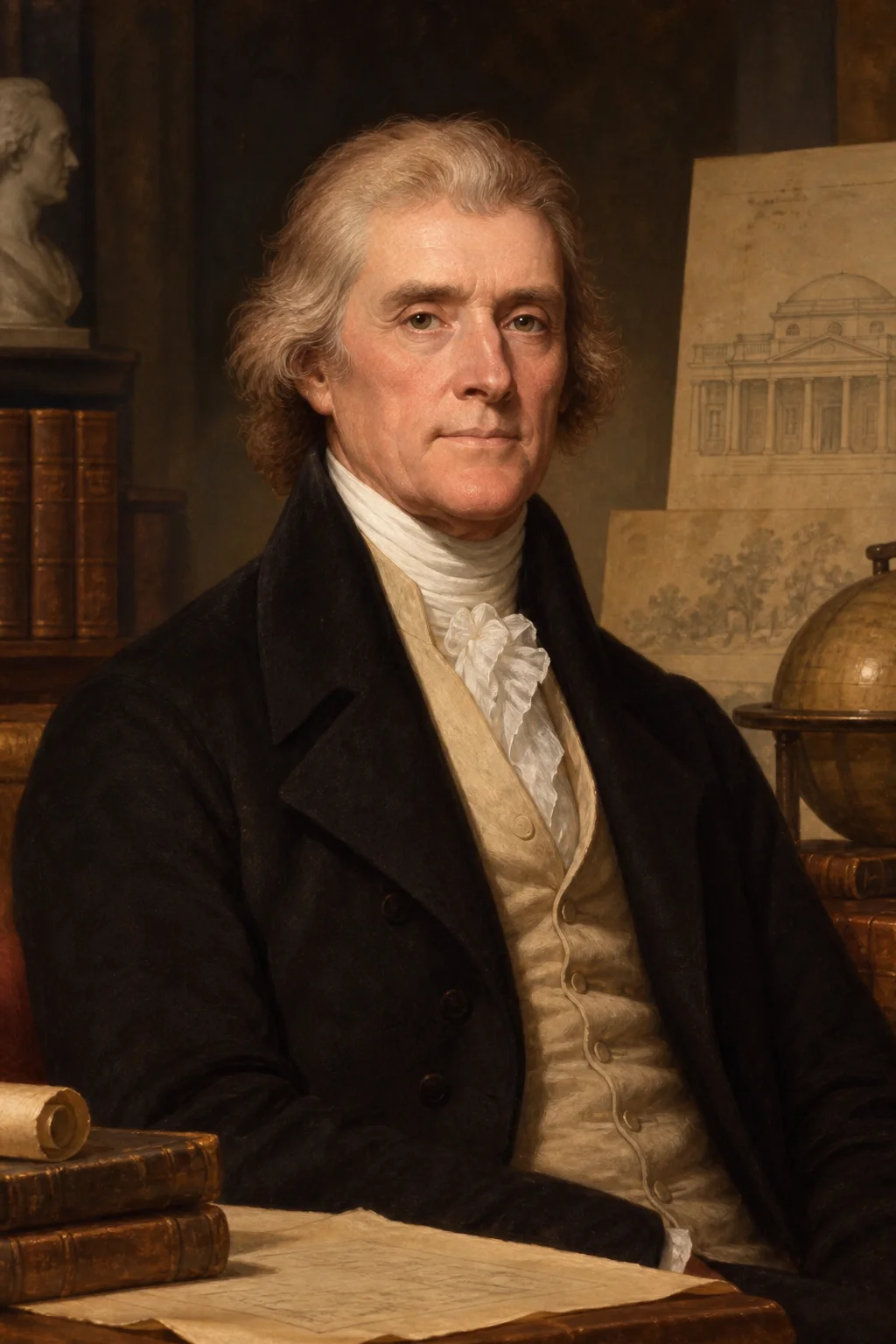
American revolutionaries and British troops facing each other during the struggle for independence.

Premium Story

The American Revolution and Early Republic

Enter the American Revolution, from colonial revolt to independence, constitution, and the republic’s first trials.

11 chapters

Next
Context

Introduction

Overview

The American Revolution was the struggle by thirteen British colonies in North America to win independence and create a new republic. Between protest, war, diplomacy, constitution-making, and political conflict, Americans challenged imperial rule while debating liberty, representation, slavery, and citizenship. The early republic that followed tested whether revolutionary ideals could survive the pressures of government, expansion, faction, and power.

Key forces

The Imperial Crisis Begins
1763 CE
Step 1 of 101763 CEAccessible mode

The Imperial Crisis Begins

Britain had just won a massive war. But winning left it deep in debt — and it looked to the colonies to help pay.

The Seven Years’ War ended in 1763. Britain had gained territory, but its debts and the cost of defending its empire had grown sharply.

The colonies seemed like the obvious place to find it. British soldiers had fought in America, so why shouldn’t Americans help cover the cost?

New laws followed. The Stamp Act taxed legal papers and newspapers. The Sugar Act tightened trade duties. Colonists were outraged — they had their own elected assemblies and believed only those bodies could tax them.

Britain also blocked western expansion, drawing a line along to limit conflicts with Native peoples. Colonists who wanted new land felt trapped.

These policies marked a turning point. After generations of limited oversight, Britain was tightening its grip — and the colonies were not ready to accept it.

Resistance Becomes Rebellion
1773 CE
Step 2 of 101773 CEAccessible mode

Resistance Becomes Rebellion

Tensions had been building since the Stamp Act. The Boston Tea Party brought a new confrontation — and a British response that made compromise harder.

After a decade of growing protests, Britain tried a new approach: allow a trading company to sell cheap tea directly to the colonies. Colonists saw it as a trick. Accept the deal, and you accept Parliament’s right to tax you.

In December 1773, protesters boarded ships in and threw 342 chests of tea into the sea. It was organised, deliberate, and impossible to ignore.

In 1774, Parliament closed ’s port and sharply restricted ’s self-government. Ministers hoped punishment would reassert imperial authority.

It backfired. The Intolerable Acts, as colonists called them, pushed the thirteen colonies closer together. Representatives from twelve of them met in in 1774 to plan a joint response. The road to revolution was now open.

The War Begins
1775 CE
Step 3 of 101775 CEAccessible mode

The War Begins

In April 1775, British soldiers marched out of to seize colonial arms. They did not expect what awaited them.

Riders had warned the countryside overnight. At on 19 April, shots were fired and eight militiamen died; who fired first remains uncertain. The British marched on to , then retreated under fire. Their losses across the day totalled 273 killed, wounded, or missing.
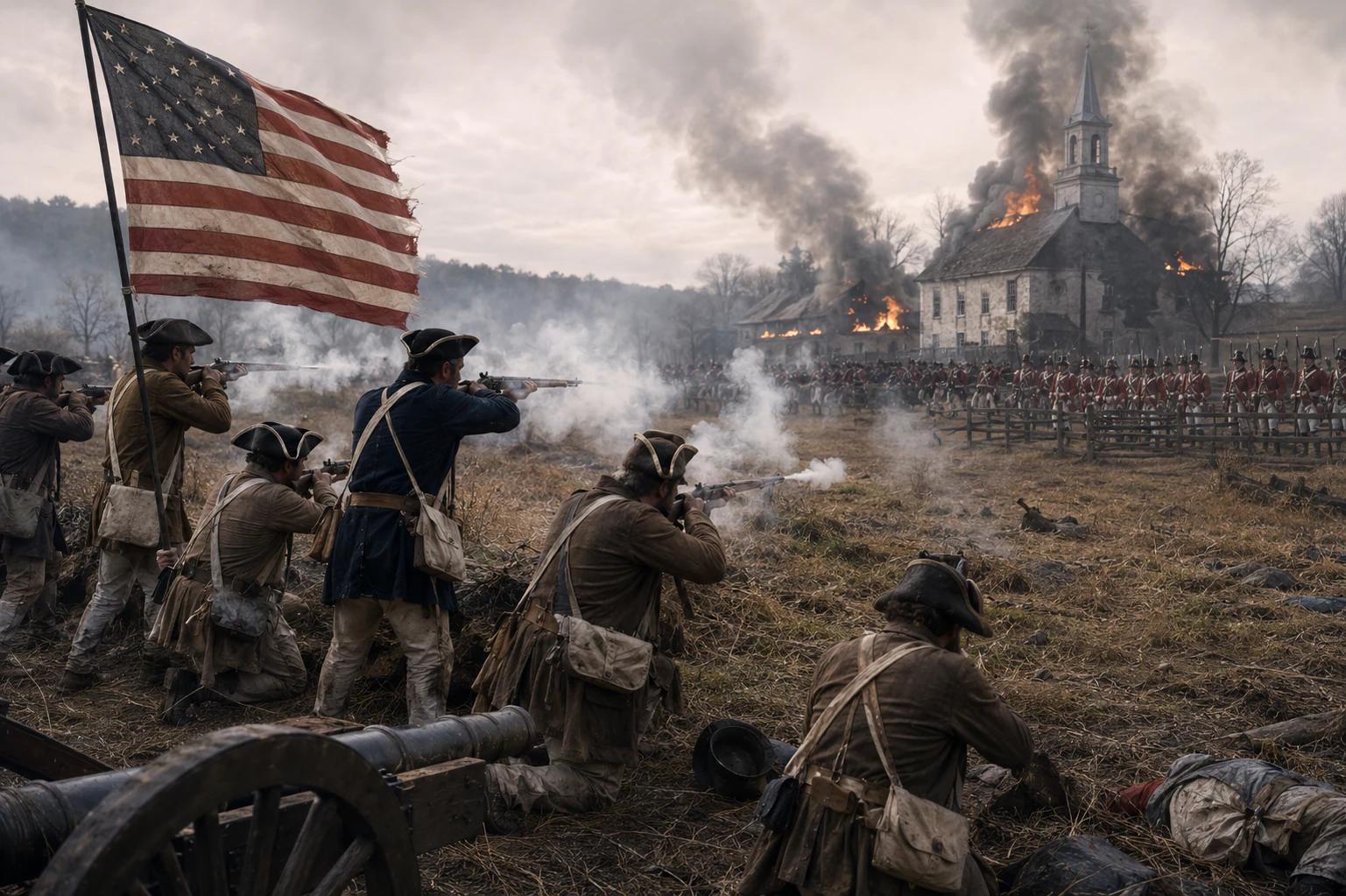
Colonial forces surrounded . The Continental Congress created the Continental Army and chose George Washington — a respected Virginia officer — to lead it.

His appointment sent a message to the southern colonies: this was a shared cause, not just a revolt.

The colonies had not yet declared independence. But armed conflict was now underway, and there was no easy return to negotiation.

PremiumFree preview: 3 of 10 chapters

Continue The American Revolution and Early Republic

Sign up to a Premium account to read the remaining chapters of this story.

A paid Premium subscription also gives you full access to every other Premium story.

See Premium options

Coming next

  1. Chapter 4Independence Declared
  2. Chapter 5The Revolutionary War Turns
  3. Chapter 6Victory and Fragile Union

And 4 more chapters to follow.

Keep exploring

Follow the connected history

Explore closely connected stories and free figure profiles. Premium stories open with a public preview.

References

Sources and historical notes

Sources used to check this page, selected recommendations and historical notes.

Sources used

  1. U.S. Department of State, Office of the Historian, “Parliamentary taxation of colonies, international trade, and the American Revolution, 1763–1775,”

    Debt, Sugar Act enforcement, Stamp Act and imperial disputes. Retired historical series; used for historical context, not current policy.

    Open source
  2. UK Parliament, “The Stamp Act and the American colonies 1763–67,”

    Taxation, colonial assemblies, British virtual representation, repeal and Declaratory Act. Its broad territorial shorthand does not establish British control over Native nations.

    Open source
  3. National Park Service, “Boston Tea Party Timeline,”

    16 December 1773, three ships and 342 chests; commercial and political tensions. The introductory error dating the Seven Years’ War’s end to 1764 is not adopted.

    Open source
  4. Commonwealth Museum, Massachusetts Secretary of the Commonwealth, “Intolerable Acts and Colonial Resistance,”

    Altered Massachusetts government, appointed council, restricted town meetings, trial removal, accommodation and twelve-colony Congress. Not a claim that all elected institutions were abolished.

    Open source
  5. National Park Service; Jim Hollister, “The Embattled British Column: Survival Against the Odds on the Battle Road,”

    Mission, estimated 700-person initial column, retreat and 273 British casualties including 26 missing. The count does not mean nearly 300 killed or wounded.

    Open source
  6. National Archives; primary document and archival context, “Declaration of Independence (1776),”

    Independence vote on 2 July, adoption on 4 July, engrossing and signing from 2 August. Primary political claims are distinguished from universal application or unanimous colonial support.

    Open source
  7. U.S. Department of State, Office of the Historian, “French Alliance, French Assistance, and European Diplomacy during the American Revolution, 1778–1782,”

    Covert aid before Saratoga, treaties of February 1778, French army and navy, Spain’s entry and diplomacy. Retired series.

    Open source
  8. National Park Service, “After Saratoga,”

    Surrender on 17 October 1777 and negotiated Convention Army terms. Different population and military counts are not collapsed into one exact total in the story.

    Open source
  9. National Army Museum, “American War of Independence: Key battles,”

    Selected Saratoga, Yorktown and global-war sections: Spain as France’s ally in 1779 and continuing fighting after Yorktown. Its unrelated Boston evacuation and Long Island dates are not adopted.

    Open source
  10. National Park Service, “Chronology of the Siege of Yorktown,”

    Siege from September and surrender on 19 October 1781. Chronology supports the event, not a claim that all global fighting ended immediately.

    Open source
  11. National Archives; primary treaty, “Treaty of Paris (1783),”

    3 September treaty, independence, boundaries and withdrawal commitments. Treaty provisions are distinguished from later compliance.

    Open source
  12. National Archives; primary constitutional text, “Articles of Confederation (1777),”

    Adopted 1777, effective 1781. Article IX permits specified courts; Article XIII provides unanimous-state alteration. Corrects no-courts and no-amendment overstatements.

    Open source
  13. National Constitution Center, “Articles of Confederation (1781),”

    Overview of taxation, state requisitions and unanimity for amendments. No separate judicial branch is distinguished from no national judicial functions at all.

    Open source
  14. University of Wisconsin–Madison, Center for the Study of the American Constitution, “The Shadow of Shays’s Rebellion,”

    Tax collection, debt relief, court closures and national political reaction. Interpretations of the rising are distinguished from automatic proof that stronger federal power was the only possible answer.

    Open source
  15. National Archives; primary ordinance, “Northwest Ordinance (1787),”

    Confederation Congress’s territorial government and admission framework, a concrete achievement qualifying a portrayal of total paralysis. Legal promises are not treated as complete implementation.

    Open source
  16. National Archives; primary document, “The Constitution of the United States: A Transcription,”

    Articles I, IV, V and VII: representation and direct taxation, slave imports, fugitive service, amendments and ratification. The Three-Fifths Clause concerned population apportionment, not a grant of rights to enslaved people.

    Open source
  17. National Archives; primary amendments, “The Bill of Rights: A Transcription,”

    Twelve proposed amendments, ten ratified in December 1791; text of protected freedoms and Tenth Amendment’s states-or-people reservation. Original federal restrictions are distinguished from later incorporation.

    Open source
  18. National Archives; Center for Legislative Archives, “The Compromise of 1790,”

    Assumption of outstanding state war debts, Funding Act and Residence Act. The post explicitly qualifies how decisive the celebrated dinner meeting was; no dinner anecdote is added.

    Open source
  19. U.S. Department of State, Office of the Historian, “U.S. Debt and Foreign Loans, 1775–1795,”

    Wartime borrowing, postwar payment difficulties and improved federal credit in the 1790s. Funding and debt management do not mean immediate repayment of all obligations. Retired series.

    Open source
  20. National Archives, “The Founding Fathers: New York,”

    Hamilton’s financial proposals and ratification role. Its definite 1757 birth date is not adopted; the AOC record explicitly acknowledges the dispute.

    Open source
  21. George Washington’s Mount Vernon, “The Farewell Address,”

    Retirement, party spirit, public credit and permanent foreign alliances. Does not support the draft’s claim that every part of the advice was abandoned within years.

    Open source
  22. U.S. Department of State, Office of the Historian, “The XYZ Affair and the Quasi-War with France, 1798–1800,”

    Limited undeclared naval war, Adams’s diplomacy and termination of the French alliance. Retired series; selected events used without adopting every claim about motive.

    Open source
  23. National Archives; primary statutes, “Alien and Sedition Acts (1798),”

    Four acts distinguished; the Sedition Act’s specified writings, intent and truth defence are not an unqualified ban on all criticism. Opposition prosecutions are treated separately from the statute’s formal wording.

    Open source
  24. Thomas Jefferson Foundation, Monticello, “Kentucky and Virginia Resolutions,”

    Jefferson’s and Madison’s different formulations, state rejection and later interpretations. No agreed constitutional power of unilateral nullification is asserted.

    Open source
  25. Thomas Jefferson Foundation, Monticello; James Horn, “Election of 1800,”

    Jefferson–Burr tie, House resolution on 17 February 1801, thirty-six ballots and March inauguration. Its reported Washington crowd estimate and rhetorical claims of inevitability are not adopted.

    Open source
  26. National Archives; primary treaty, “Louisiana Purchase Treaty (1803),”

    Treaty and financial conventions, $15 million total and Article VI’s treatment of Native treaties. The overview’s assertion of inevitable civil war is not adopted.

    Open source
  27. Thomas Jefferson Foundation, Monticello, “The Louisiana Purchase,”

    European claims, New Orleans, Saint-Domingue, approaching war, negotiations and constitutional doubts. Approximate doubling of U.S. territorial claims is distinguished from complete possession or Native consent.

    Open source
  28. Thomas Jefferson Foundation, Monticello, “Brief Biography of Thomas Jefferson,”

    Slavery throughout Jefferson’s adult life and its scale; avoids a precise unsupported count tied to the moment he drafted the Declaration or a superlative claim about his moral understanding.

    Open source
  29. Architect of the Capitol, “Alexander Hamilton — U.S. Capitol Statue,”

    Explicit 1755-or-1757 birth uncertainty and death in 1804. Unrelated compressed service chronology is not adopted.

    Open source
  30. National Park Service, “What Happened at Valley Forge,”

    Disease, supply reform, an experienced army and von Steuben’s training qualify the familiar starvation-and-one-man-transformation narrative.

    Open source
  31. National Park Service; official collection metadata, “Saratoga National Historical Park Brochure,”

    Catalogue locality coordinates 42.9943008422852, -73.6440963745117 support a rounded battlefield-area pin at 42.99, -73.64. Metadata inspected; brochure artwork is not reproduced or represented as rights-cleared.

    Open source
  32. Brandeis University, Robert D. Farber University Archives and Special Collections; Kenneth Hong, “Thomas Paine’s Common Sense, 1776,”

    Collection essay on a surviving 1776 edition, publication, circulation and argument. Exact sales estimates and the essay’s sweeping claims of unanimity or novelty are not adopted.

    Open source
  33. Thomas Jefferson Foundation, Monticello; primary testimony, “Extract from Thomas Jefferson’s Notes of Proceedings in the Continental Congress,”

    Jefferson’s explanation for removal of the slavery passage, including southern objections and northern trade interests. Treated as his attributed account, not an exhaustive neutral record of every delegate’s motive.

    Open source
  34. University of Virginia, Miller Center; Peter Onuf, “Thomas Jefferson: Domestic Affairs,”

    Selected discussion of smaller government, military reductions and agriculture. The page’s erroneous two-year presidency shorthand and cash-payment simplification are not adopted; the Louisiana financial conventions control the transaction.

    Open source
  35. National Archives, Pieces of History; Tracy Baker, “Lexington and Concord: 22 Hours and a Shot Heard Around the World,”

    Selected discussion of the uncertain first shot, eight Lexington fatalities, alarm riders and casualty categories, linked to surviving depositions. Its Boston population claim and compressed quartering description are not adopted.

    Open source
  36. U.S. National Archives, “Founding Documents,” Open source
  37. Library of Congress, “American Revolution, 1763-1783,” Open source
  38. Yale Law School, “Avalon Project: 18th Century Documents,” Open source

Additional sources and notes

Loading reviewed claim sources...

Our editorial approach · Report a historical error

A monthly route through history

Find out first about the latest published stories, feature notes and occasional Premium offers in one monthly email.