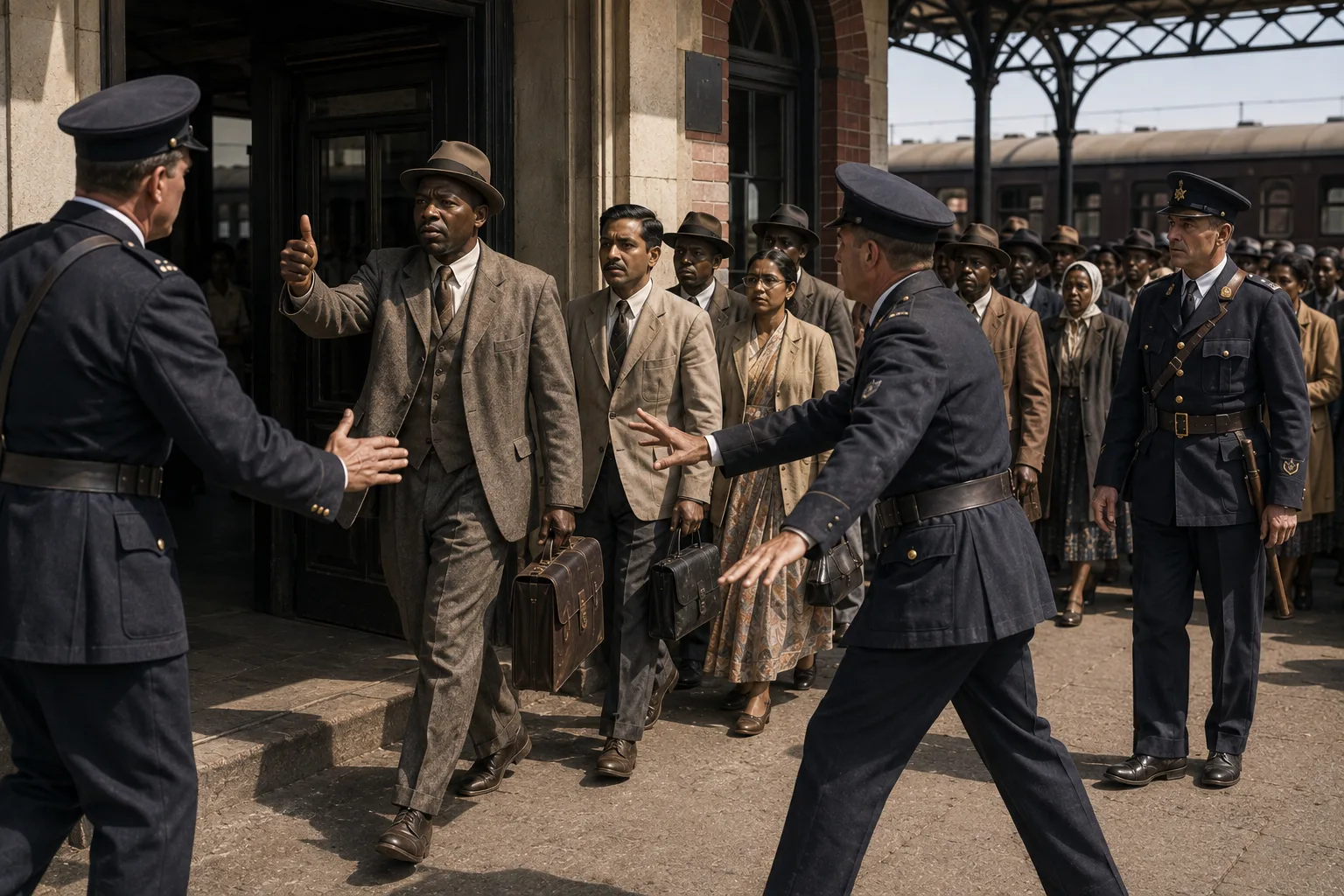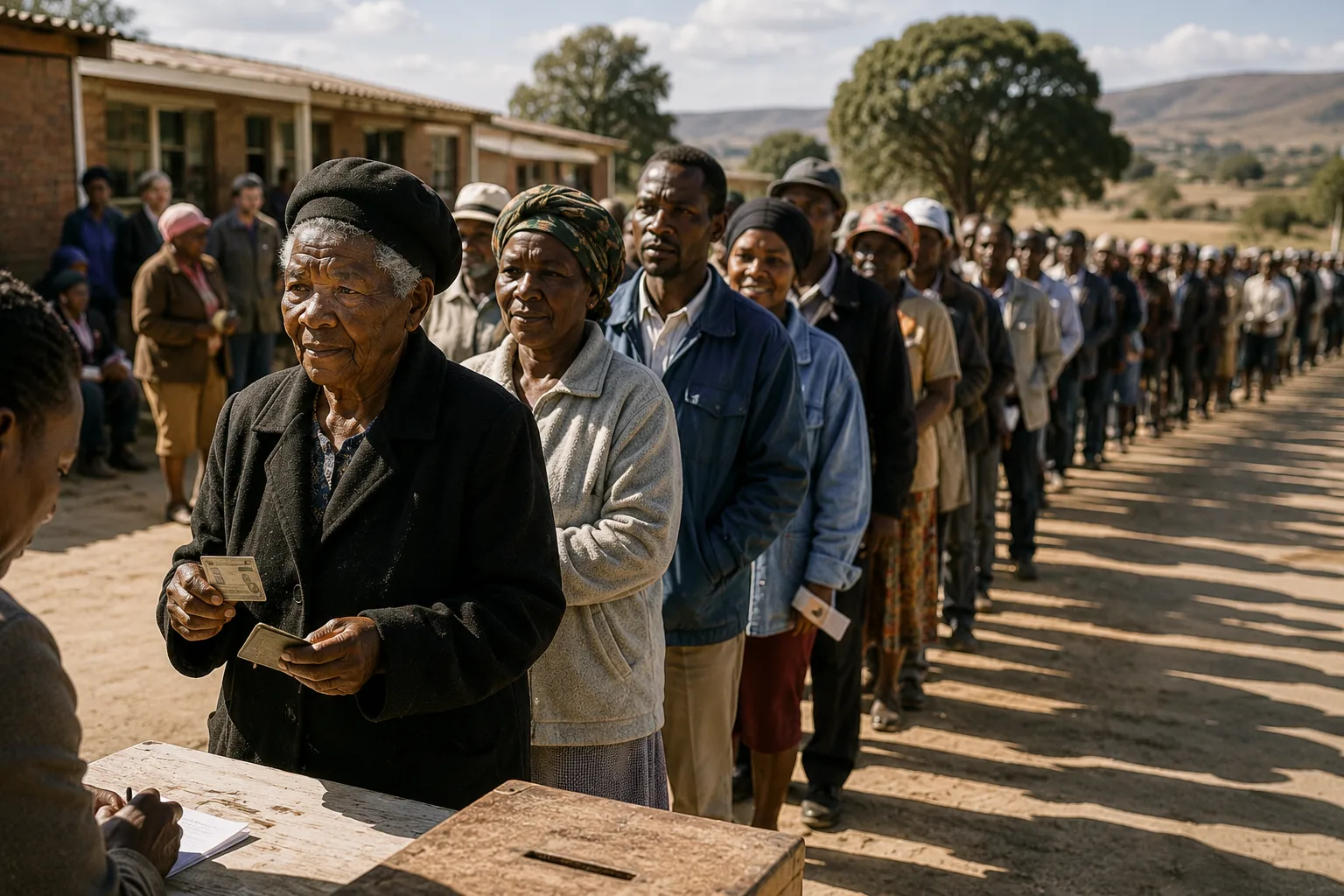
South Africans queueing with identity documents in a rural setting during the transition from apartheid rule.

Premium Story

Apartheid South Africa

Follow South Africa from the foundations of white minority rule to apartheid law, resistance, repression, negotiation and democratic election.

11 chapters · 20 min read

Next
Context

Introduction

Overview

Apartheid grew from older systems of conquest and segregation into a state programme that denied most South Africans political rights. Laws controlled where people could live, work and travel, while resistance spread through communities, workplaces and international networks. The democratic election of 1994 ended apartheid rule, but the damage it caused remained.

Key forces

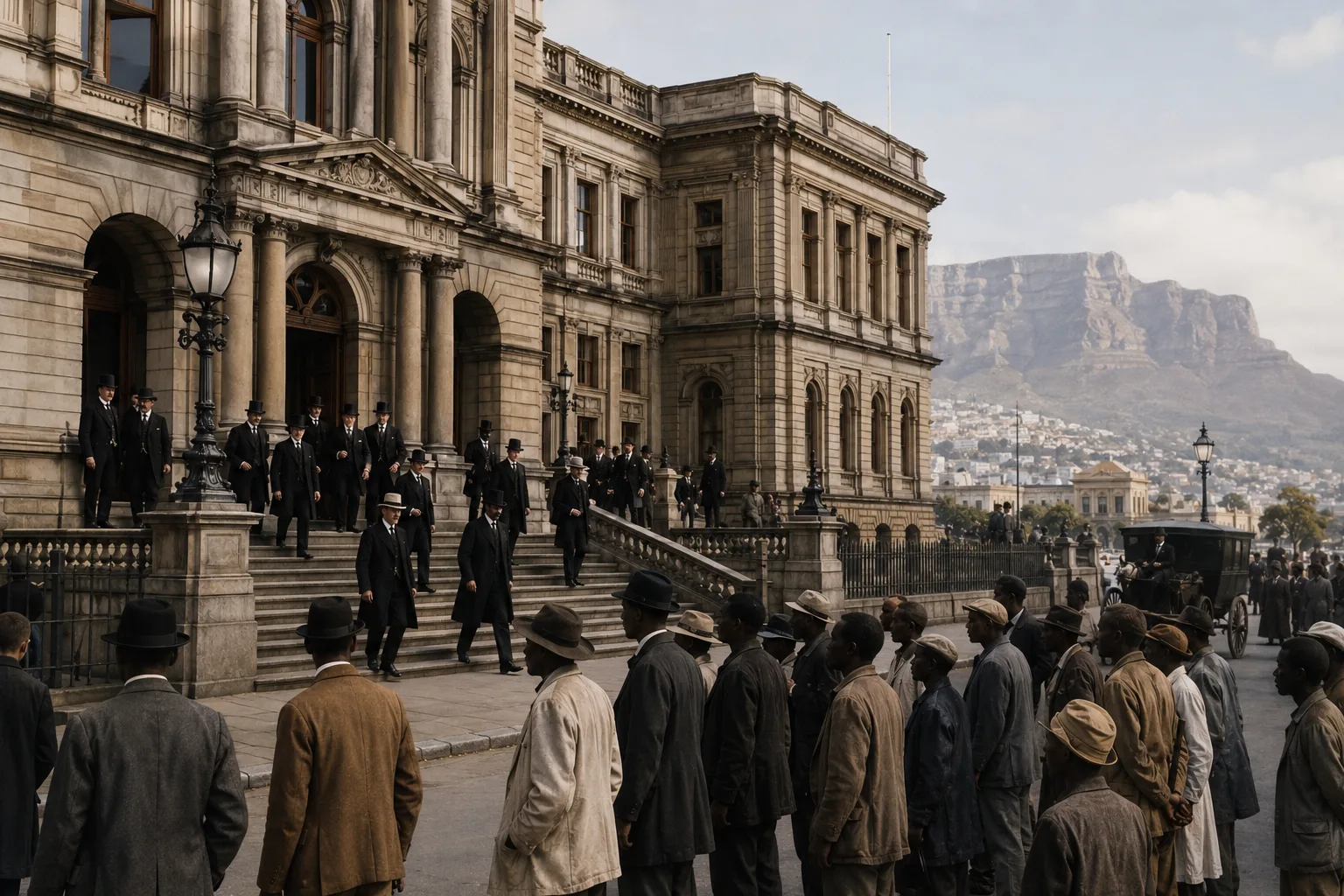
Black South Africans line up outside a Cape Town government building while white officials leave the steps
1910 CE
Step 1 of 101910 CEAccessible mode

The Foundations of Minority Rule

In 1910, the Union of South Africa brought four colonies into one state. It also confirmed who would hold power.

The new Union joined , , and under a single government. It was presented as a step toward stability after war, but that stability was built around white political control.

Most Black South Africans had no vote in the new system. kept a limited property-based franchise that some Black and Coloured voters could still use, but and excluded them, and the Union parliament could narrow those rights later.

Land inequality was just as important. White farmers, mining interests and the state already controlled most productive land and labour. In 1913, the Natives Land Act would restrict African land ownership to small reserved areas, deepening dispossession.

The Union therefore created more than a new country. It created a political order in which the Black majority could be governed, taxed, moved and employed without equal power over the state.

Politicians, reporters, police, and newspaper sellers gather outside a Cape Town government building after the 1948 election.
1948 CE
Step 2 of 101948 CEAccessible mode

Apartheid Comes to Power

In 1948, the National Party won South Africa's white-only election and turned apartheid into official policy.

Segregation already existed. Black South Africans faced restrictions on land, movement, work and political rights. But the National Party promised to organise those restrictions more completely.

The party drew support from many Afrikaner voters who feared Black urbanisation, competition for jobs, cultural decline and the loss of white control. Its answer was apartheid, an Afrikaans word meaning apartness.

Apartheid did not simply mean separation in daily life. It meant using the state to classify people by race, assign rights by race and preserve white minority rule through law.

The National Party had not won permission from South Africa's majority. Most South Africans could not vote. That contradiction shaped the whole apartheid period.

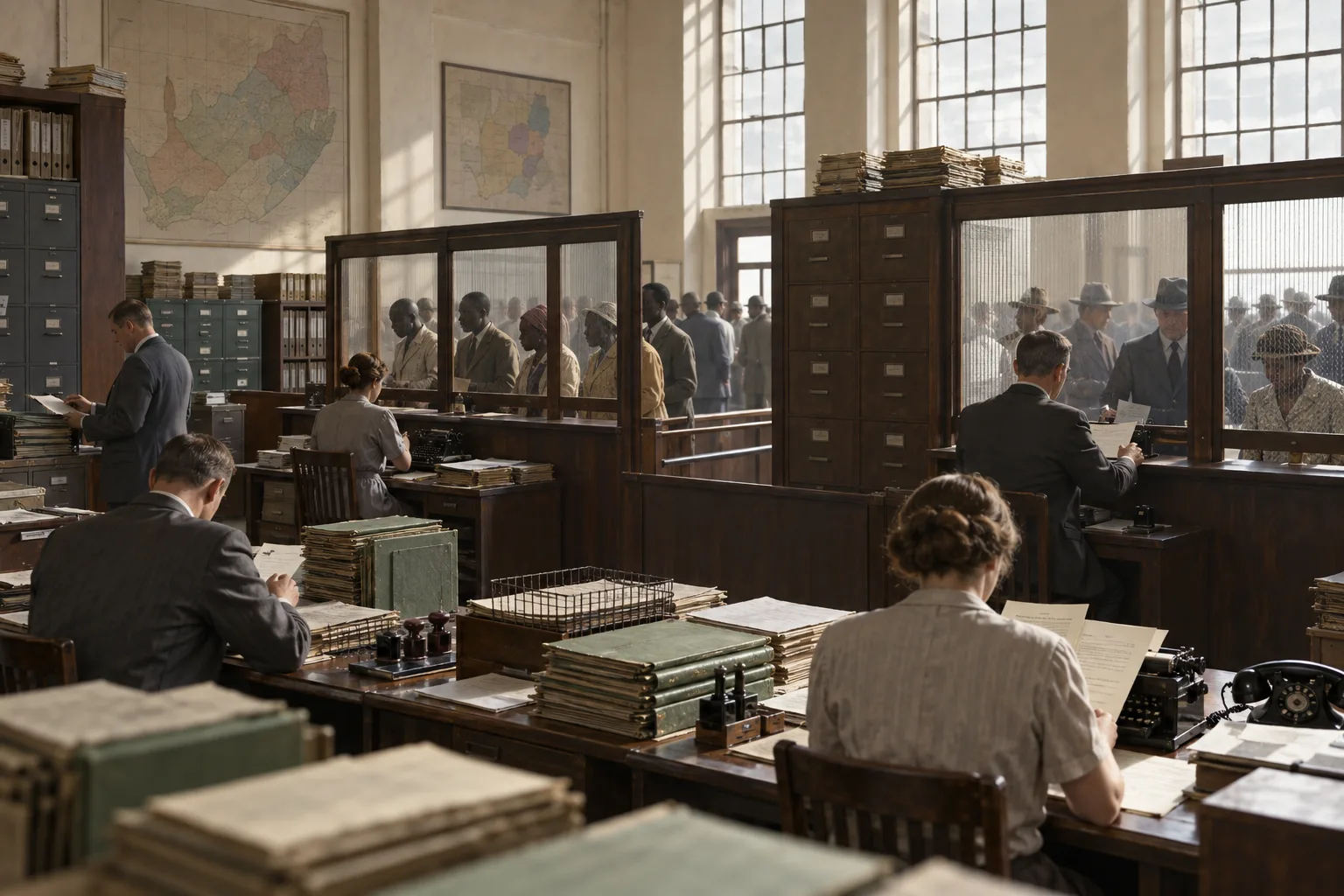
South Africans queue at administrative counters while clerks file race-classification documents in a government records office.
1950 CE
Step 3 of 101950 CEAccessible mode

Apartheid Becomes Law

In the early 1950s, apartheid became a chain of laws that reached into almost every part of life.

The Population Registration Act classified South Africans by race. A person's official category could shape where they lived, whom they could marry, which school they attended and what rights they had.

The Group Areas Act forced racial separation in towns and cities. Communities could be removed from homes and neighbourhoods if the state declared an area reserved for another group.

Pass laws and labour controls restricted Black movement. The state tried to decide who could enter cities, who could remain there and who would be treated as belonging to rural reserves or later homelands.

Other laws attacked political rights and resistance. The state could ban organisations, silence activists and punish opposition as a threat to order. Separation was enforced by police, courts, documents and fear.

PremiumFree preview: 3 of 10 chapters

Continue Apartheid South Africa

Sign up to a Premium account to read the remaining chapters of this story.

A paid Premium subscription also gives you full access to every other Premium story.

See Premium options

Coming next

  1. Chapter 4The Defiance Campaign
  2. Chapter 5The Sharpeville Massacre
  3. Chapter 6Mandela Sentenced to Life

And 4 more chapters to follow.

Keep exploring

Follow the connected history

Explore closely connected stories and free figure profiles. Premium stories open with a public preview.

References

Sources and historical notes

Sources used to check this page, selected recommendations and historical notes.

A monthly route through history

Find out first about the latest published stories, feature notes and occasional Premium offers in one monthly email.