This story discusses war, violence, persecution, and death in an educational historical context.
Reading mode
Accessible gives a lighter overview. Deep Dive tells the fuller story.
Quick Answers
Who was Napoleon Bonaparte?
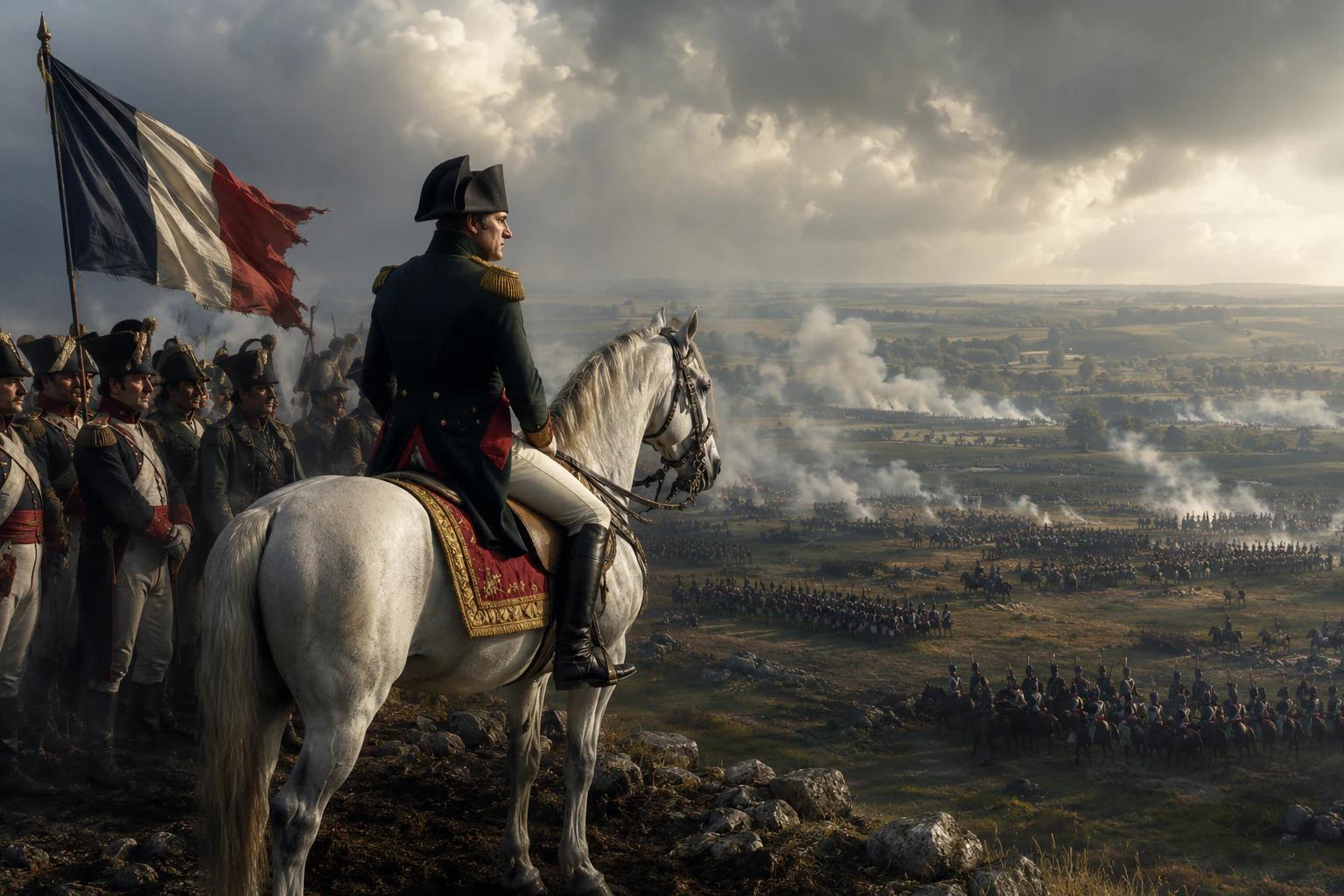
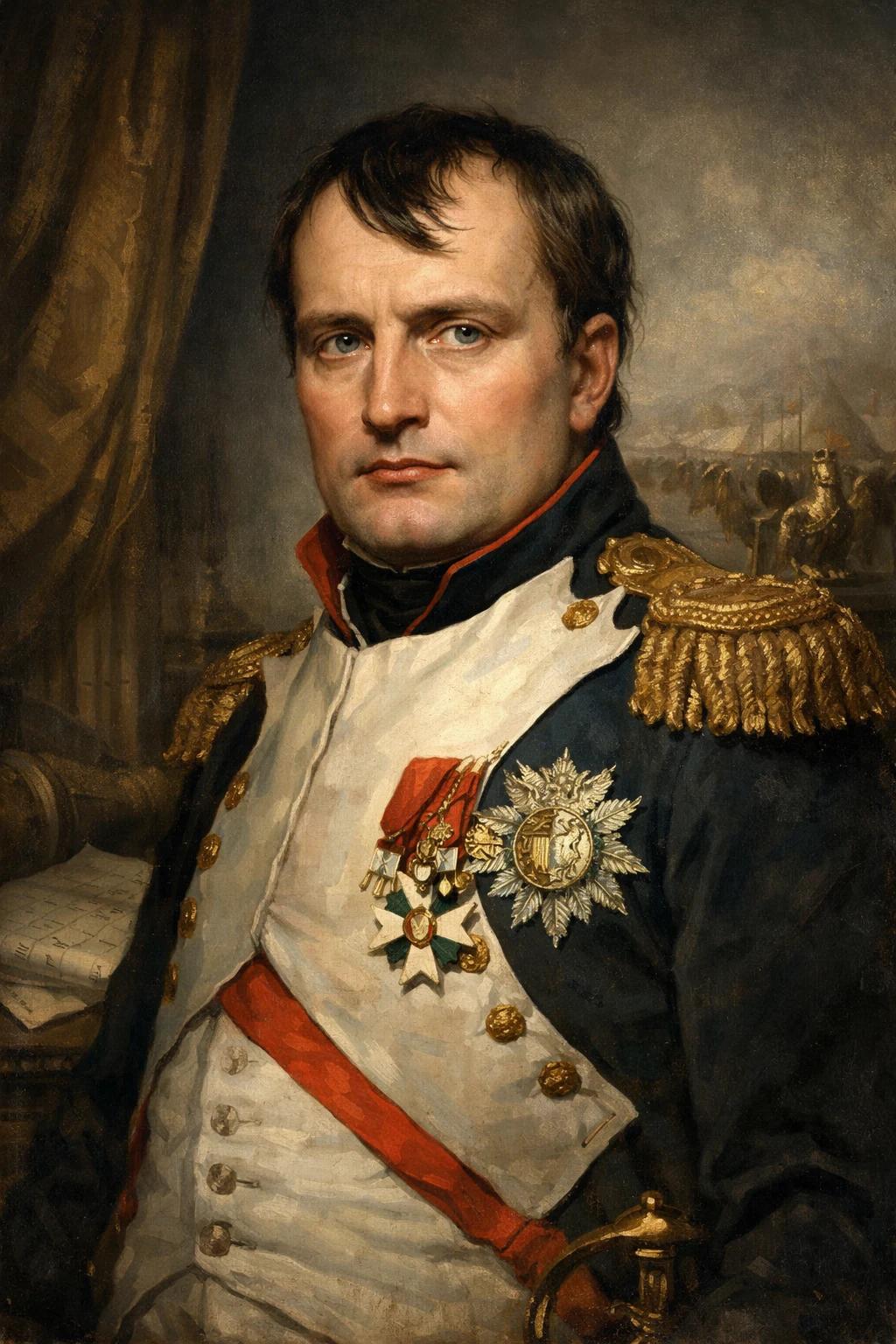
Napoleon Bonaparte was a French general and emperor who rose out of the French Revolution, seized power in 1799, and reshaped Europe through war, law, administration, and empire. His rule ended after defeat at in 1815.
At a glance
Date range: 1789 to 1815.
Napoleon turned revolutionary opportunity into continental empire, then lost it in prolonged warfare that still transformed European politics, states, and nationalism.
The French Revolution opened military and political pathways that made Napoleon's rise possible.
Napoleon combined military brilliance, propaganda, and state reform to dominate much of continental Europe.
Common questions
How did Napoleon rise to power?
Napoleon rose through the revolutionary army, gained fame at and in Italy, and used political crisis to seize power in the coup of 18 Brumaire in 1799.
What were the Napoleonic Wars?
The Napoleonic Wars are usually dated from the renewal of war between Britain and France in 1803 to Napoleon's final defeat and the peace settlements of 1815. They followed the French Revolutionary Wars of 1792–1802; together, these conflicts reshaped Europe.
What was the Napoleonic Code?
The Napoleonic Code was a legal code introduced in 1804. It standardised civil law, protected property rights, strengthened state authority, and influenced legal systems far beyond France.
How was Napoleon defeated?
Napoleon was weakened by the failed invasion of Russia in 1812, defeated and exiled in 1814, returned during the Hundred Days, and was finally beaten at in 1815.
Context
Introduction
Overview
Napoleon Bonaparte rose from the upheaval of the French Revolution to become Emperor of the French and one of history's most influential military leaders. His campaigns redrew Europe, spread legal and administrative reforms, and extended the mass mobilisation begun during the Revolution. The Napoleonic Wars ended with his defeat at in 1815, but the political, military, and nationalist forces they unleashed continued to shape Europe.
Key forces
The French Revolution opened military and political pathways that made Napoleon's rise possible.
Napoleon combined military brilliance, propaganda, and state reform to dominate much of continental Europe.
His empire reshaped borders and institutions but triggered resistance, nationalism, and prolonged mass warfare.
The disasters in Spain and Russia destroyed French supremacy and enabled final defeat at .
1789 CE
Step 1 of 101789 CEAccessible mode
The Revolution Opens the Army
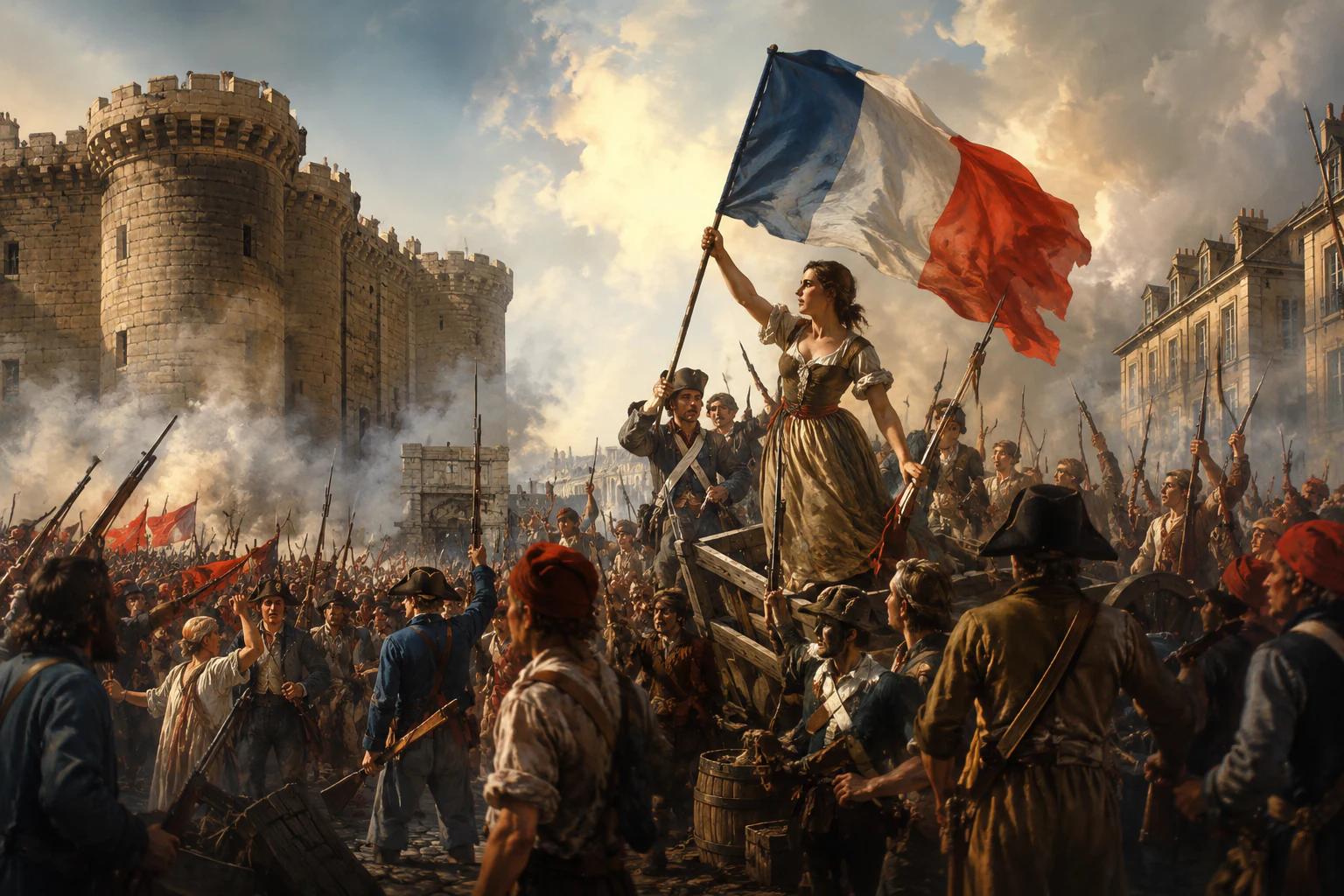
In 1789, the French Revolution broke old rules and unexpectedly opened the army to new men.
Before the revolution, top military jobs usually went to nobles by birth. Talent mattered less than family name.
When the old system collapsed, many aristocratic officers fled France. Suddenly, the army needed capable replacements fast.
From 1792, France faced war with European monarchies. The revolutionary government raised huge citizen armies to survive, including through the levée en masse of 1793.
This emergency rewarded skill, speed, and confidence. Young officers who could organize artillery and inspire soldiers moved up quickly.
Napoleon Bonaparte came from minor Corsican nobility and had become an artillery officer in 1785. The Revolution gave him opportunities for rapid advancement that the old army had offered far more slowly.
That change mattered far beyond one career: modern mass armies began to value proven ability, and politics started rewarding generals who could deliver results quickly.
1793 CE
Step 2 of 101793 CEAccessible mode
The Siege of Toulon
In 1793, the port of gave Napoleon his first real chance to stand out.
Royalists in rebelled against the Revolution and invited British and Spanish forces into the harbor. Losing the city was a major humiliation.
Napoleon, then a young artillery officer, argued that the key was not a direct assault but control of the high ground above the port.
Under General Dugommier, French troops captured positions overlooking the harbour. Napoleon's artillery planning helped make the allied anchorage untenable and force an evacuation.
When fell, revolutionary leaders noticed him. He was promoted to brigadier general while still very young.
The victory showed his style early: technical skill, aggressive confidence, and smart political alliances that converted one success into a career leap.
It also proved to politicians that he could solve urgent crises, a reputation that followed him into every later command and helped him outpace older rivals.
1796 CE
Step 3 of 101796 CEAccessible mode
The Italian Campaign
In 1796, Napoleon took command in Italy and turned a struggling army into a winning force.
French troops in northern Italy were poorly supplied and tired. Napoleon moved fast, struck isolated enemy units, and kept momentum.
He beat and allied armies in a series of rapid battles, forcing opponents to retreat before they could fully combine.
Napoleon also mastered publicity. His bulletins praised French heroism and presented every victory as proof of his genius.
Campaign success weakened 's position in Italy and pushed the war toward negotiations favorable to France.
By the end, he was no longer just a talented officer. He was a European celebrity whose military reputation could influence French politics.
His enemies now faced not only French armies but a commander who could shape public opinion as effectively as he shaped campaigns.
PremiumFree preview: 3 of 10 chapters
Continue Napoleon and the Napoleonic Wars
Sign up to a Premium account to read the remaining chapters of this story.
A paid Premium subscription also gives you full access to every other Premium story.