Early sixteenth century
Esigie’s claim to the throne
Edo accounts give Idia an important role in a disputed succession. Much of the evidence takes shape around her son’s reign, leaving many of the details of her childhood and early life unknown.
Idia helped strengthen her son Esigie’s position as oba and became the first iyoba, or queen mother, of the Kingdom of Benin.
Queen Mother of Benin (early sixteenth century)
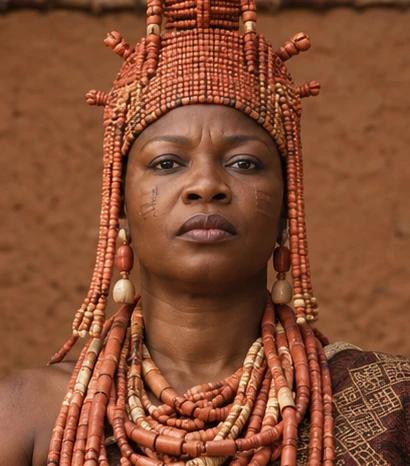
A real historical or editorial image is used here. Source, licence and transformation details are publicly recorded. Image policy Attribution
Idia helped strengthen her son Esigie’s position as oba and became the first iyoba, or queen mother, of the Kingdom of Benin.
Edo accounts give Idia an important role in a disputed succession. Much of the evidence takes shape around her son’s reign, leaving many of the details of her childhood and early life unknown.
Accounts of Idia’s wartime role describe leadership and spiritual knowledge. These traditions help show what kinds of authority later generations associated with her. They give less certainty about her actions in a particular battle.
Later holders could maintain their own palace, attendants, regalia and altars. By establishing the office, Esigie gave Idia a position that outlasted both their lives.
The Metropolitan Museum of Art associates its pendant with Idia and suggests that Esigie may have worn it in ceremonies. The carving ties the image of a queen mother to Benin’s courtly materials and overseas contacts.
Move from the profile into the wider events and settings this figure belongs to.
This profile is written for educational use and connects to related Stories of History pages. The main portrait uses a real historical or editorial image, with source and licence details recorded for attribution review. Image policy Image attribution
Find out first about the latest published stories, feature notes and occasional Premium offers in one monthly email.