← People

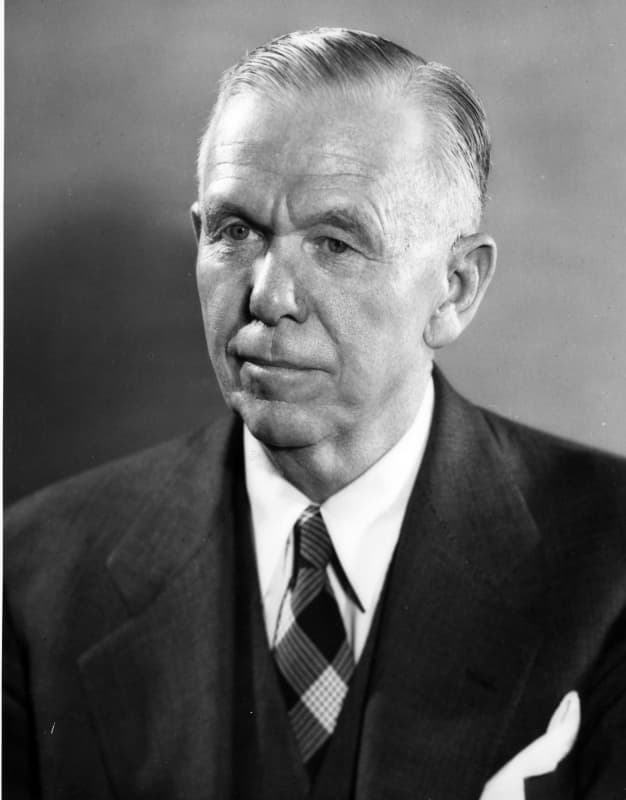
George Marshall

George C. Marshall (1880–1959) was U.S. Army Chief of Staff, Secretary of State and Secretary of Defense. His European recovery programme earned him the 1953 Nobel Peace Prize.

Born
1880 CE
Died
1959 CE
Role
American general and statesman
Full name
George Catlett Marshall
Also known as
George C. Marshall, George Catlett Marshall Jr.

American general and statesman (1880–1959)

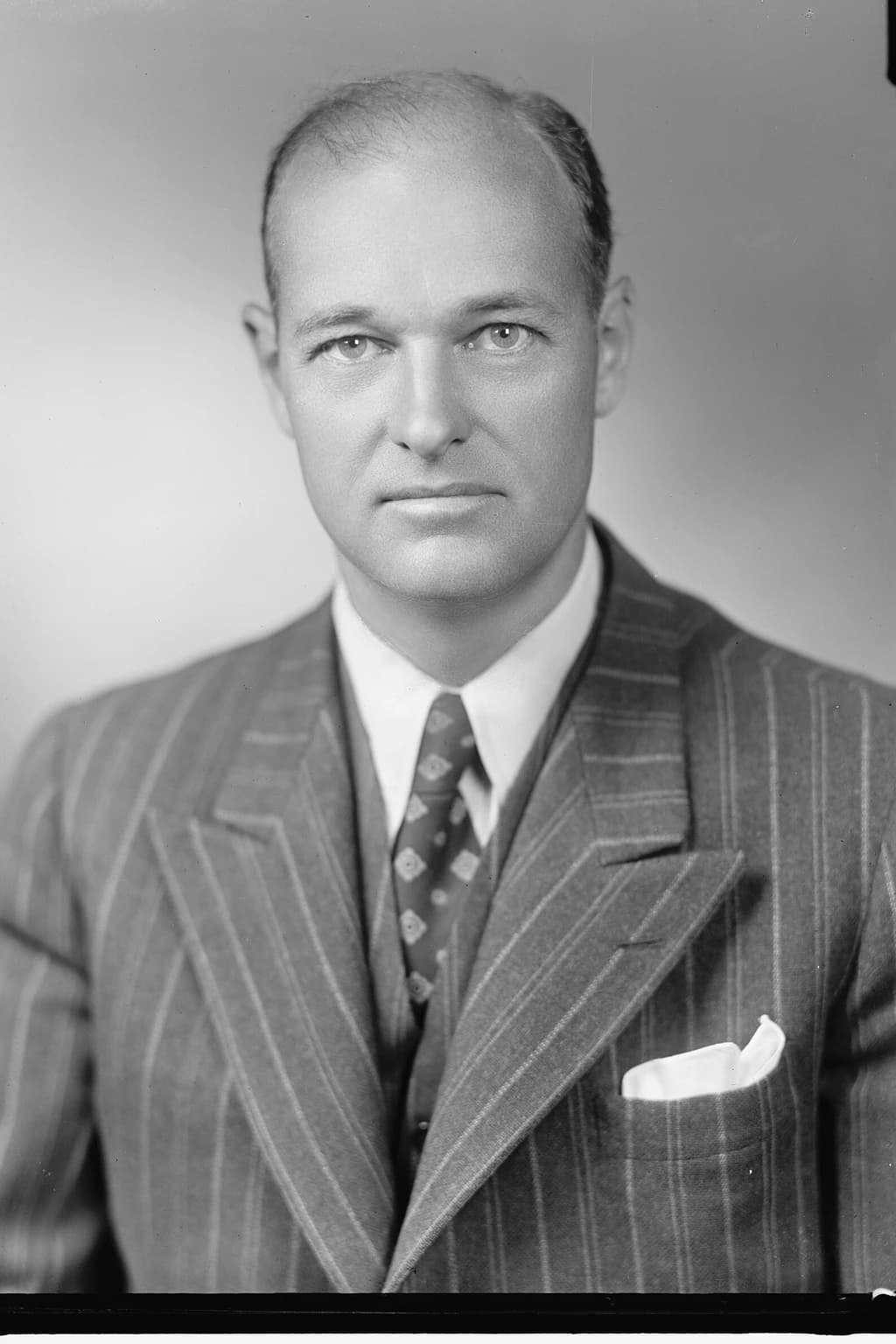
U.S. Army portrait photograph of George C. Marshall in civilian clothes, 25 September 1950
Historical photograph

A real historical or editorial image is used here. Source, licence and transformation details are publicly recorded. Image policy Attribution

Life Journey

From organising war to rebuilding peace

Follow George Marshall’s military service, diplomacy, and role in European recovery.

Complete chronology

1880–1902

From Pennsylvania to the army

Marshall chose a military education at the Virginia Military Institute before entering the army in 1902. Early service in the Philippines and at American posts gave him experience of an expanding military institution. His later influence would rest on organisation, training, and the ability to make large institutions work.
1917–1918

Learning to organise a modern war

Modern warfare required more than battlefield courage: supplies, transport, orders, and timing had to fit together. Marshall developed his reputation through this demanding staff work in France. The experience helped prepare him for the much larger responsibilities he would carry in the next world war.

1939–1941

Building an army

Marshall became Chief of Staff as war began in Europe. He had to expand the army, develop its leadership, and secure support in Washington. His work depended on cooperation with civilian leaders as well as military expertise: raising an army meant winning decisions about people, equipment, and resources.

1941–1945

Coordinating Allied victory

From Washington, Marshall helped connect American mobilisation with Allied operations across several theatres. He worked with Roosevelt and other Allied leaders while supporting commanders overseas, including Dwight D. Eisenhower. His importance lay in strategic coordination rather than personally commanding an army in the field.

1945–1947

A mission that could not secure peace

The China mission tested whether the authority of a respected American general could bridge a civil conflict. Marshall sought agreement between rival movements with competing political goals and armed forces. His failure showed the limits of outside diplomacy when the parties could not sustain a shared settlement.

1947

A proposal for European recovery

European recovery became central to American strategy as damaged economies faced shortages and political uncertainty. Marshall presented reconstruction as an international problem requiring organised cooperation. His speech opened the way for a major aid programme, developed with colleagues and European governments rather than by Marshall alone.

1948–1949

Turning a proposal into a programme

The programme supported reconstruction, trade, and economic cooperation in Western Europe. It also served American strategic interests by strengthening societies Washington feared might become vulnerable to communist influence. Soviet opposition prevented participation by the Soviet bloc, so recovery efforts became intertwined with Europe’s growing division.

1950–1951

Returning during the Korean War

Truman brought Marshall back into the cabinet at a time of military crisis in Korea. The task again involved coordinating armed forces, resources, and civilian authority. His return connected the reconstruction efforts of the late 1940s with an early Cold War increasingly shaped by military commitments.

1953–1959

A soldier recognised for peace

The Nobel award recognised the importance of rebuilding societies after war, not only winning battles. Marshall’s career crossed military command, diplomacy, relief, and defence policy. His legacy joins those fields: the organiser of wartime strength became a leading advocate of economic recovery as a foundation for peace.

Continue in context

Connected stories

Move from the profile into the wider events and settings this figure belongs to.

Keep exploring

Content note

This profile is written for educational use and connects to related Stories of History pages. The main portrait uses a real historical or editorial image, with source and licence details recorded for attribution review. Image policy Image attribution

References

Sources & Further Reading

Reliable reference works, archives and reading paths connected to this profile.

Sources used

  1. Office of the Historian, U.S. Department of State, “George Catlett Marshall (1880–1959),” accessed 24 October 2026.Open source
  2. Office of the Historian, U.S. Department of State, “Marshall Plan, 1948,” accessed 24 October 2026.Open source
  3. Nobel Prize, “George C. Marshall – Facts,” accessed 24 October 2026.Open source
  4. U.S. Department of Defense Historical Office, “George C. Marshall,” accessed 24 October 2026.Open source
  5. National Park Service, “George C. Marshall,” accessed 24 October 2026.Open source

Further reading

  1. Encyclopaedia Britannica, “Search results for George Marshall,” accessed June 2026.Open source
  2. WorldCat, “Books and library holdings for George Marshall,” accessed June 2026.Open source

Primary sources

  1. Library of Congress, “Search results for George Marshall,” accessed June 2026.Open source

Image references

  1. Harry S. Truman Presidential Library & Museum / U.S. Army, “Portrait of George C. Marshall, 97-1841,” accessed 24 October 2026.

    Public-domain photograph dated 25 September 1950.

    Open source

Reviewed claim sources

Loading reviewed claim sources...

A monthly route through history

Find out first about the latest published stories, feature notes and occasional Premium offers in one monthly email.